

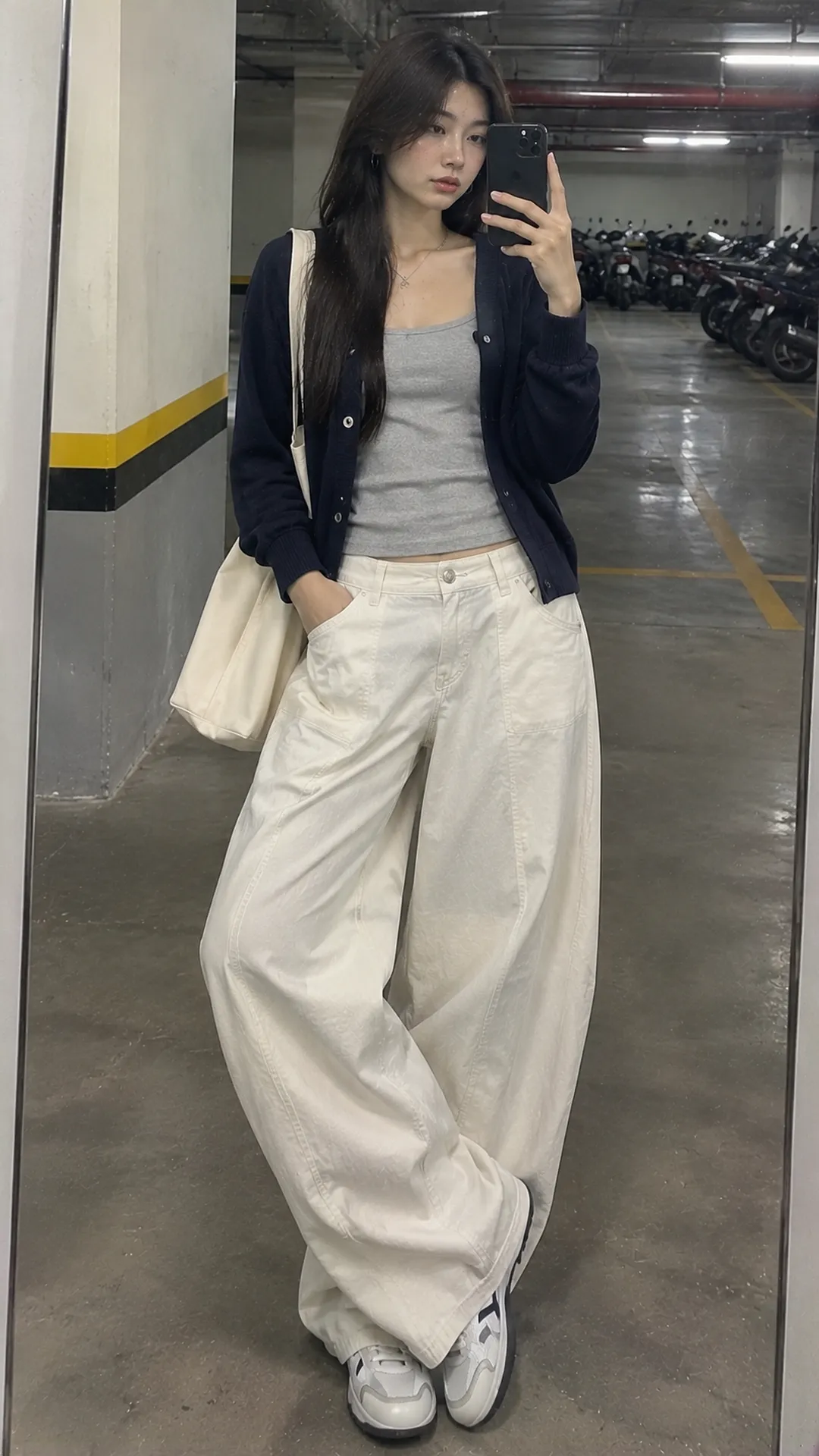
Where is the curve in the trousers?
From the front, trace the outer leg widening around thigh or knee before narrowing. The shape should remain visible standing relaxed without spreading your legs or special posing. One posed product image can misrepresent actual curvature.
Barrel commonly labels this construction internationally. For example, Levi's Baggy Dad Barrel model is described with curved legs, room at hips and thighs and tapered hems. This illustrates construction, not universal specifications for all barrel trousers.
Seams, pleats, cutting and fabric structure contribute volume. Sizing up straight trousers generally enlarges waist and hips without reproducing the shape. Find your desired leg construction first, then size.
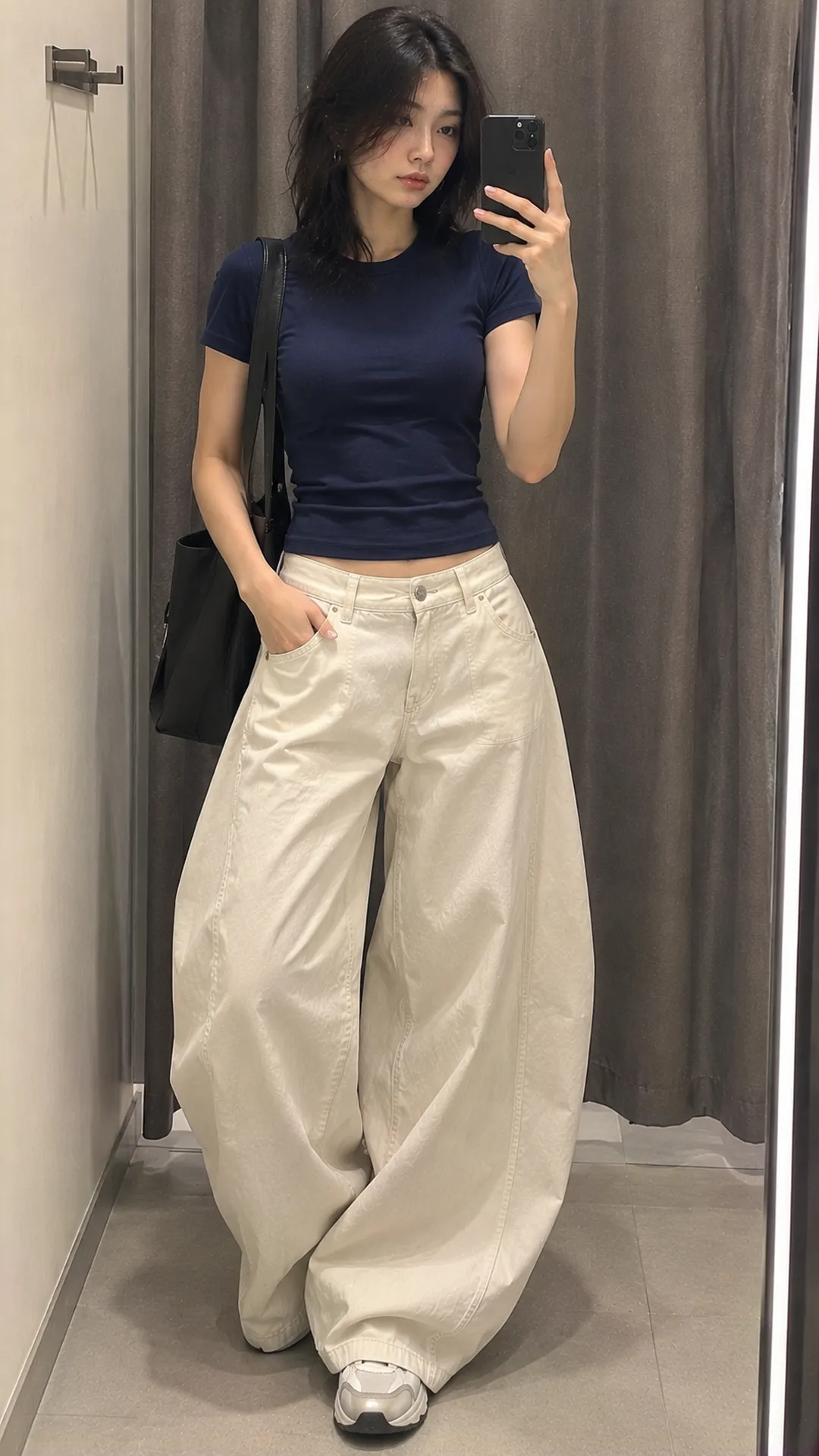
Barrel versus wide, straight and baggy legs
| Label | What to observe | Common confusion |
|---|---|---|
| Barrel or curved leg | Leg widens then narrows to form a curve | Not merely wide at the thigh |
| Straight leg | A relatively straight line to the hem | Can be wide without emphasizing curvature |
| Wide leg | Room through the leg, varying by model | The name alone does not establish straight or curved lines |
| Baggy | Overall room and relaxed fit | Can overlap with barrel; inspect the specific product |
Shop labels can overlap. Baggy and barrel together are not contradictory: one describes room, the other leg lines. Relaxed photos and measurements establish more than names.
To compare with existing cuts, see the Women's Trousers Item Guide. Individual guides are more useful than one styling tip for straight trousers, leggings and knee-volume designs.
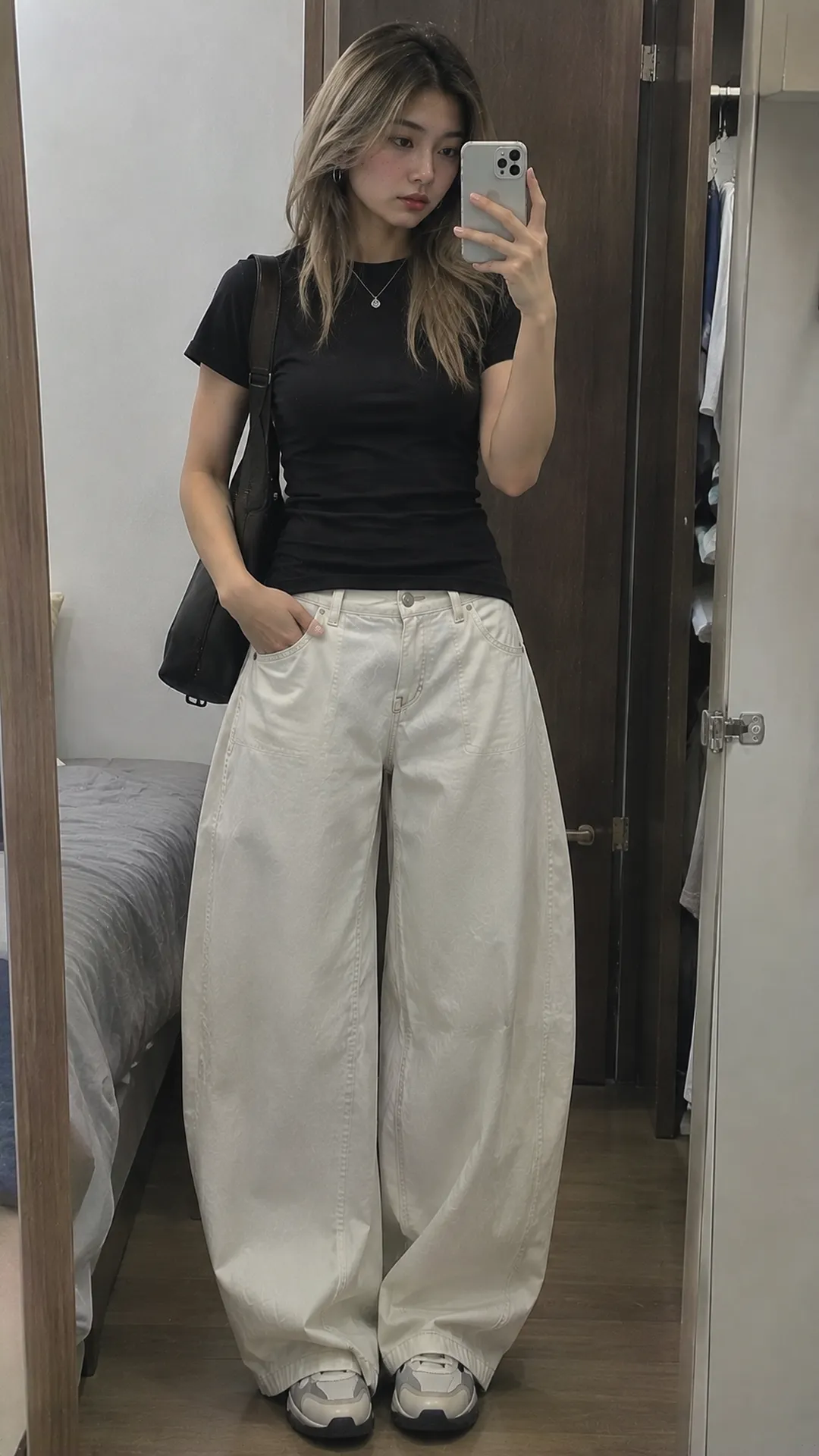
Choose a subtle or pronounced curve
A gentle curve is accessible if accustomed to straight legs. Moderate outward expansion pairs with owned tees, shirts or cardigans, introducing shape without replacing all shoes and outerwear.
Pronounced curves concentrate volume below. To emphasize the trousers, try a relatively neat top or visible waistband. Tightness is unnecessary; a loose, suitably short top can still divide upper and lower halves.
Strong curves are not reserved for one body type. Assess where expansion sits relative to your hips, thighs and leg length. The same pair may place it differently on two people, changing top and shoe choices.
For bold volume in daily wear, begin with plain color and limited surface detail. The curve already leads; strong washes, large pockets and many straps add attention. Add them only if you want more impact.
Three fit points: waist, hips and hem length
The waistband positions the whole shape
A secure waistband keeps the curve where designed. Unexpected slipping lowers knee and hem positions, changing the silhouette. Fasten, sit and stand; do not accept a tight waist merely to preserve a flattering standing position.
Hips and thighs need movement room
Wide lower legs can still accompany tight hips. Check gaping pockets, zipper tension and natural steps. Curved volume should come from construction, not stretched folds caused by insufficient ease.
The hem controls the meeting with footwear
Above-ankle hems create a break; shoe-touching lengths connect differently. Some designs intentionally fold at the hem, but distinguish this from excess length. Try regular shoes for a more reliable assessment.
Do not shorten before inspecting shaping seams. Cutting can alter the tapered section's proportions. Explain the shape to preserve to a tailor rather than only centimeters to remove.
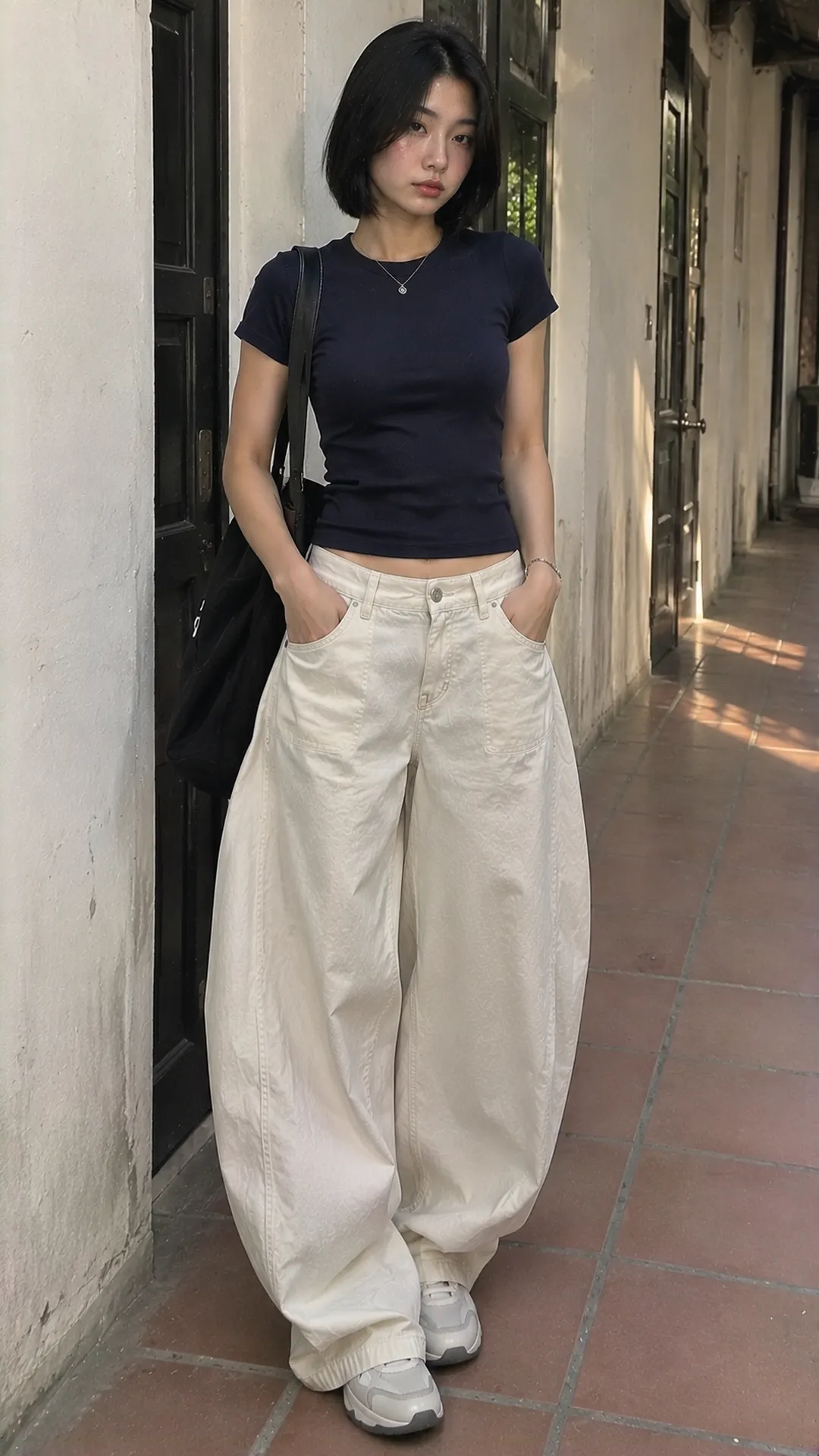
Four top combinations that reveal the curve
A well-fitting T-shirt
A neat tee supports lower volume. Choose near-waistband length or tuck if not overly thick. If too short for comfort, use a partial tuck rather than insist on cropping.
With blue curved denim, white or black makes shape easy to assess. Once proportions work, change top color without rebuilding the structure.
A shirt with an intentional waist point
Loose shirts can work with deliberate waistband visibility. Try a front tuck with draped sides or a shorter shirt. If both pieces puff around the hips, inspect tucked fabric before dismissing the combination.
A neat knit or cardigan
Choose length that reveals where trousers begin. Partial cardigan fastening can create an opening, but check seated pulling. Soft upper texture contrasts clearly with structured trousers.
A short jacket
A jacket ending near the waistband leaves the curve visible. With broad shoulders, keep the inner top neater for one quieter area. The women's layering guide handles layer lengths instead of merely adding outerwear to a formula.
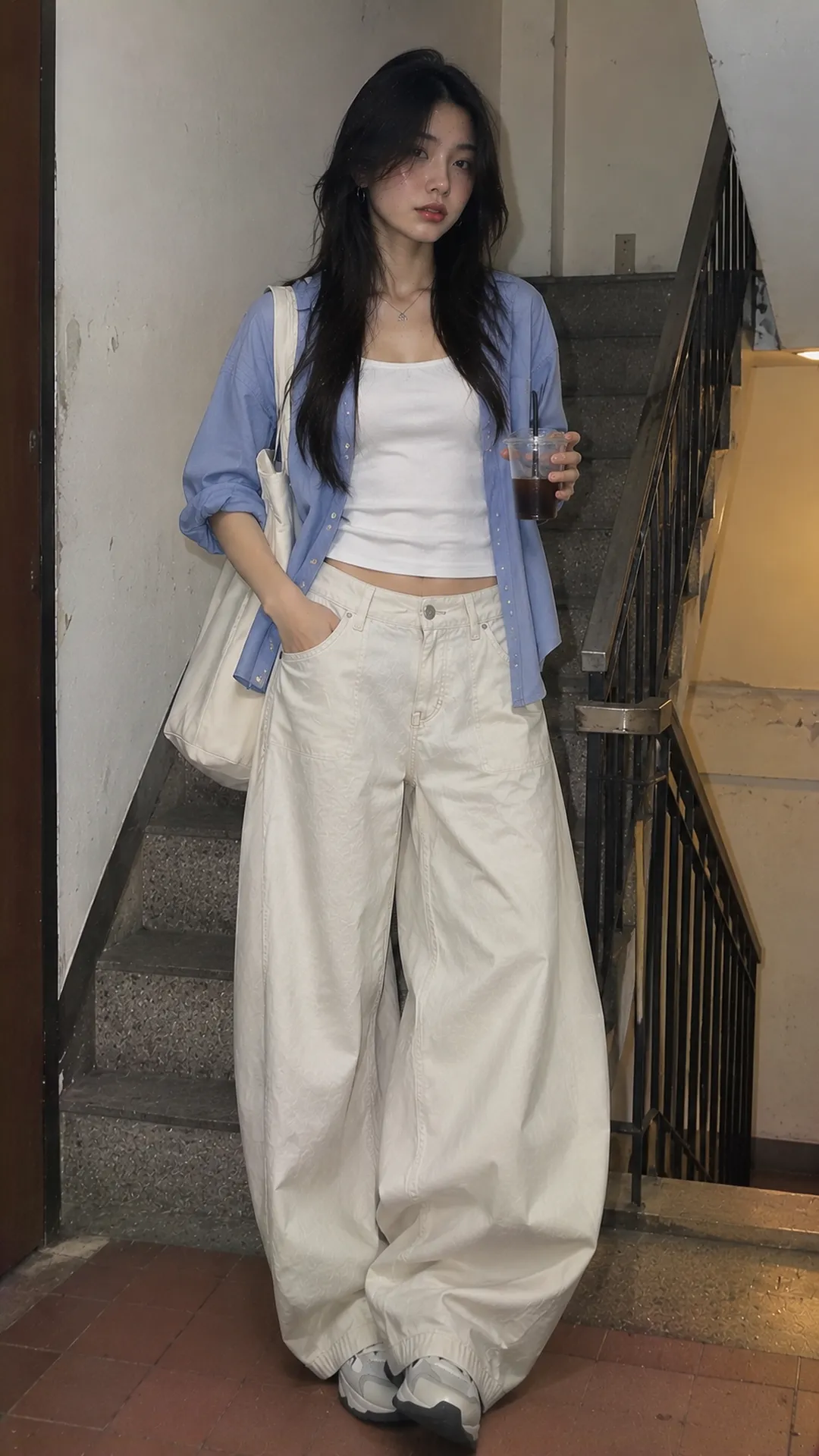
Choose shoes for the opening and hem
With a tapered, slightly short hem, loafers or neat uppers clarify the ankle gap. Socks become visible seated and belong in the palette. Related trouser tones transition gently; contrast adds a break.
Moderately substantial sneakers can balance pronounced curves, but consider upper, toe width and hem length alongside sole height. If hems catch, adjust their relationship before adding accessories.
Boot shafts should fit under the opening. A wide shaft can push a narrow hem upward and change the silhouette. Try the actual shaft if boots will be frequent.
Barrel trousers do not require heels. Suitable shoes allow the hem to work and movement to remain practical. A length working with low shoes is often more useful than one dependent on a special pair.
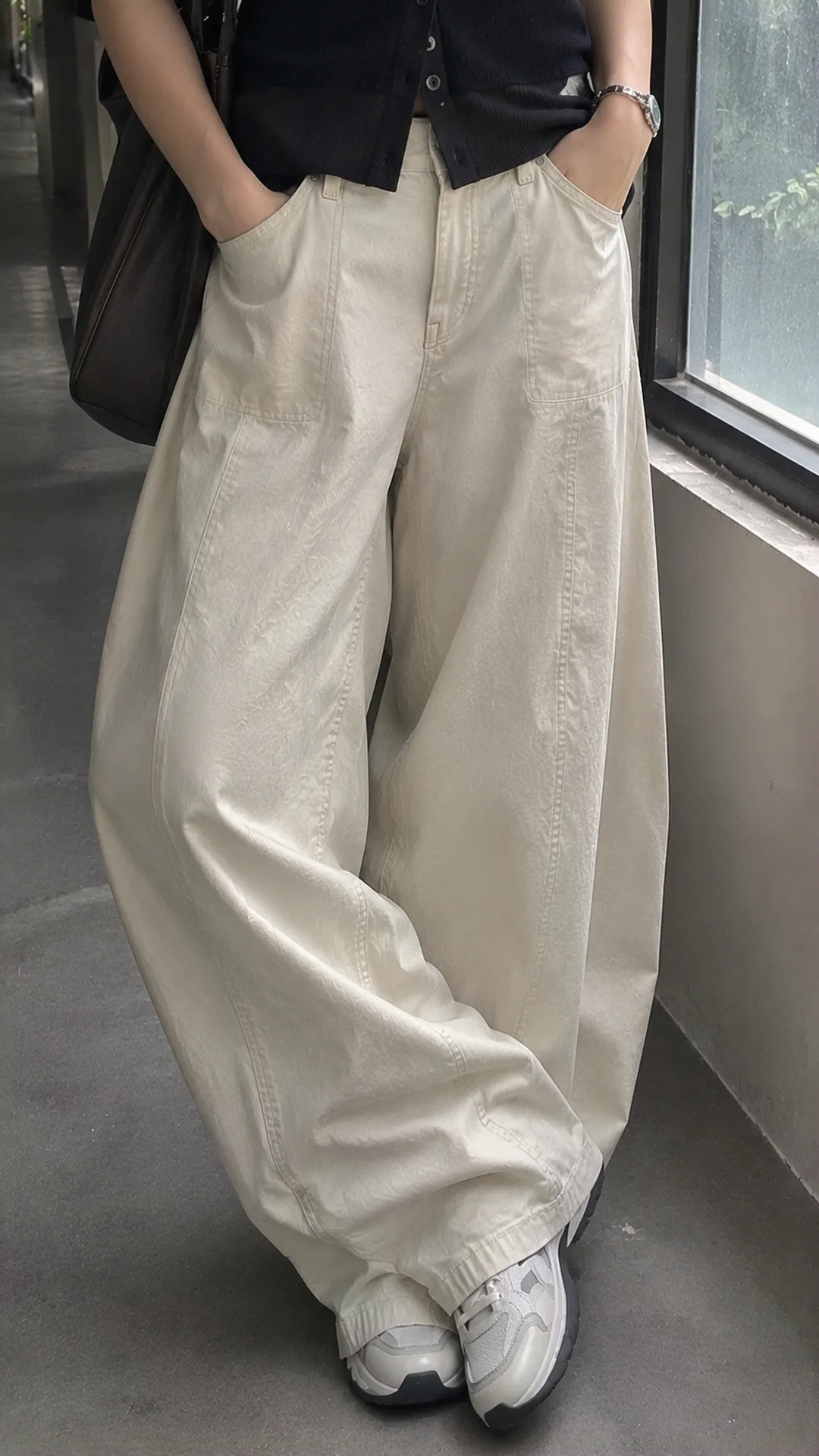
Online: inspect construction before labels
Search barrel trousers, curved jeans or subtle curved legs to explore variations. This broadens structural choices without guaranteeing consistent naming. Return to the actual model's images and dimensions.
Request waist, hips, thigh, length and hem width, clarifying flat versus circumference measurements. Compare a comfortable pair while accounting for different shape. The guide to choosing clothing sizes online explains why S, M and L alone are insufficient.
Inspect rear views and walking video where available. A beautiful front curve does not solve poor back-hip fit. Model measurements cannot promise an identical shape on you.
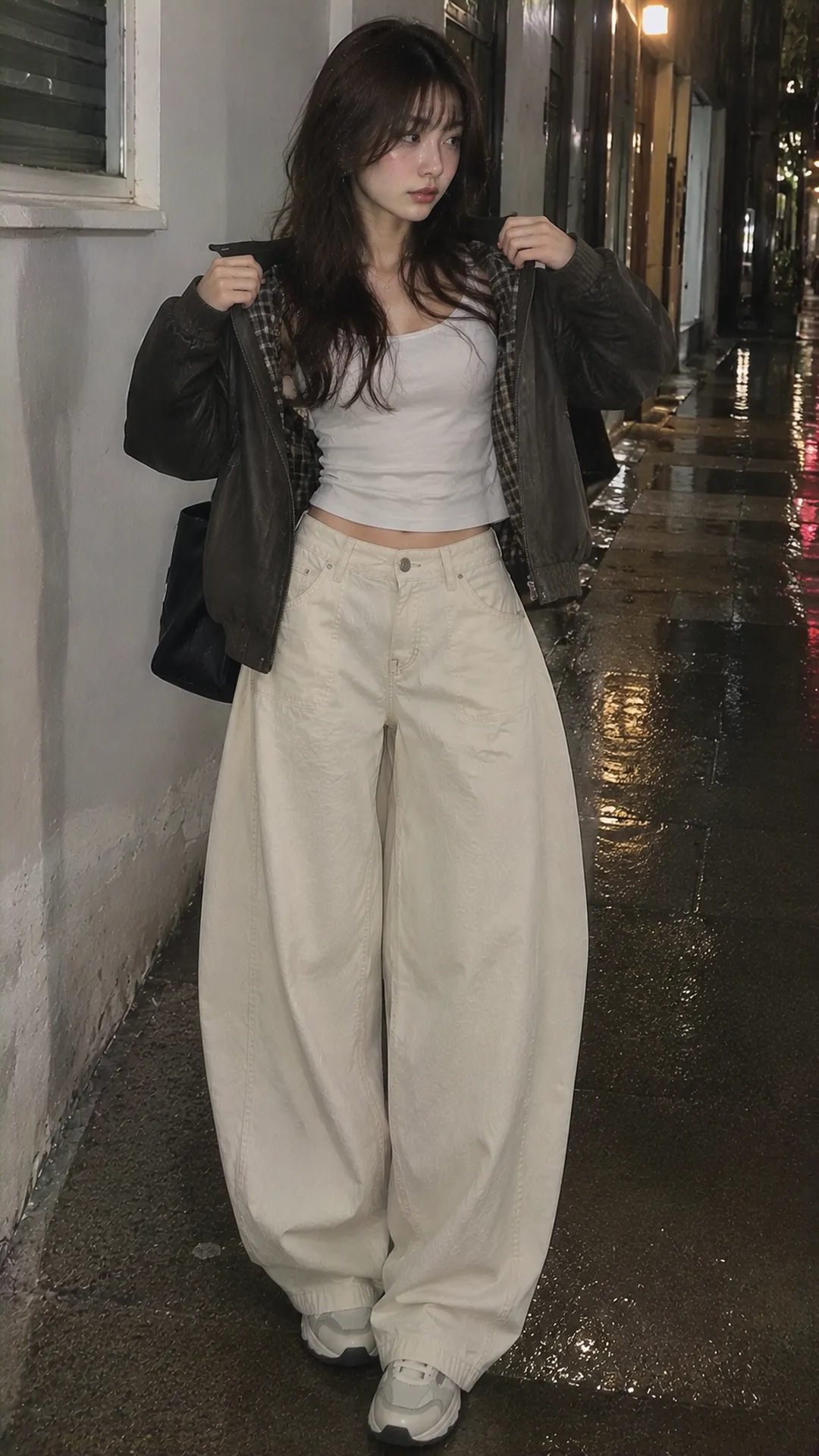
Rebalance an outfit without replacing the wardrobe
Fabric deserves attention if the result differs from your aim. Firm cloth holds visible volume; softer fabric drapes and changes in motion. For a structured reference, ask for unposed video rather than predicting wear from hanging or flat images alone.
If the lower half feels heavy, first try a shorter or neater top. For fragmented legs, review sock color, hem and shoes for excessive breaks. If curves disappear, the top may hide the widest point or fabric may gather at the hem.
For beginners, let trousers lead and keep the rest familiar. The one-main-piece approach in the introductory Alt Fashion guide suits pronounced volume. A large bag, graphic top and heavy shoes are unnecessary on the first try.
Photograph relaxed standing and seated. Shape should work in movement beyond one pose. Once waistband, visible curve and shoe-compatible hem are right, vary tops or colors step by step on a reliable base.