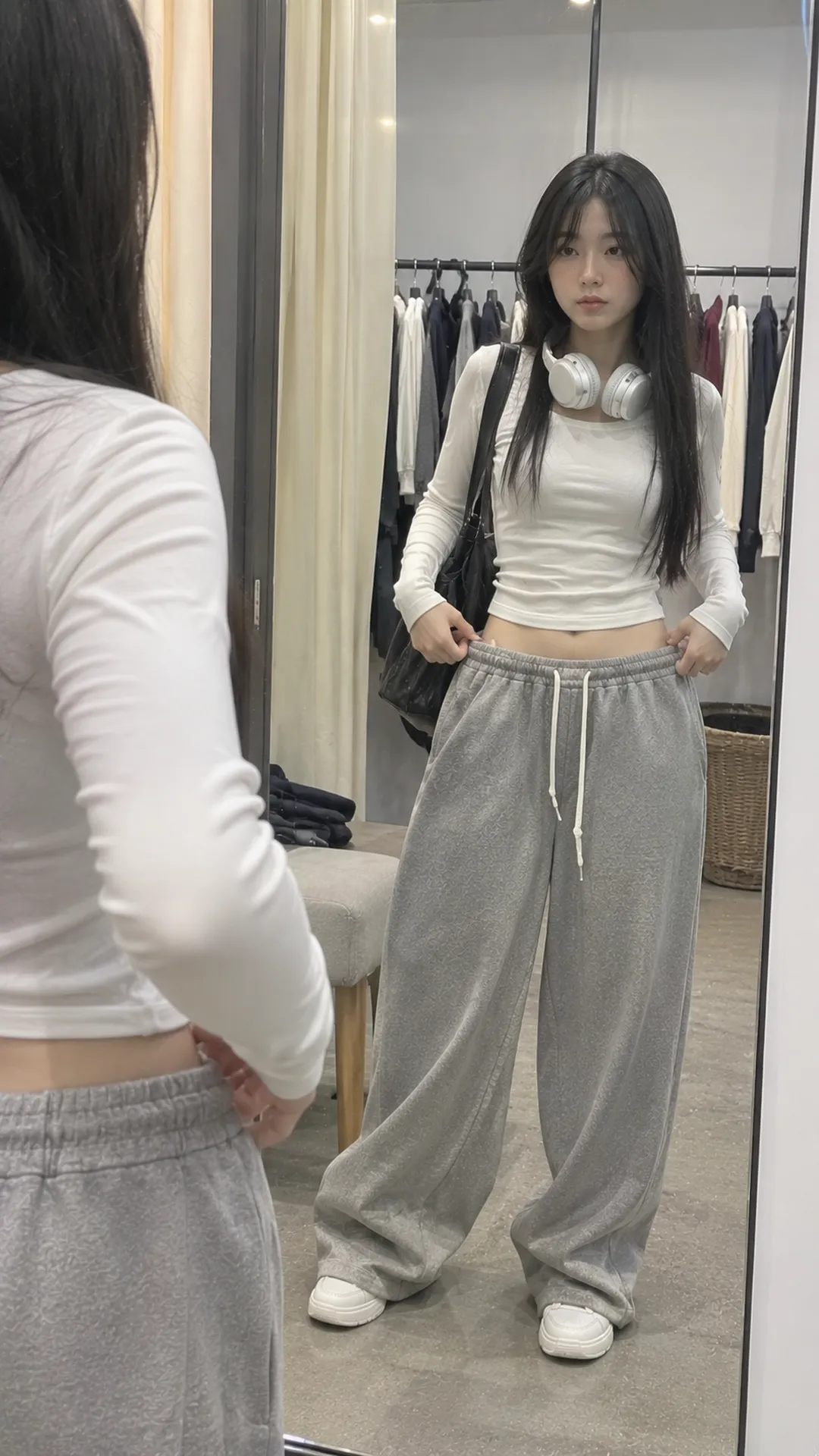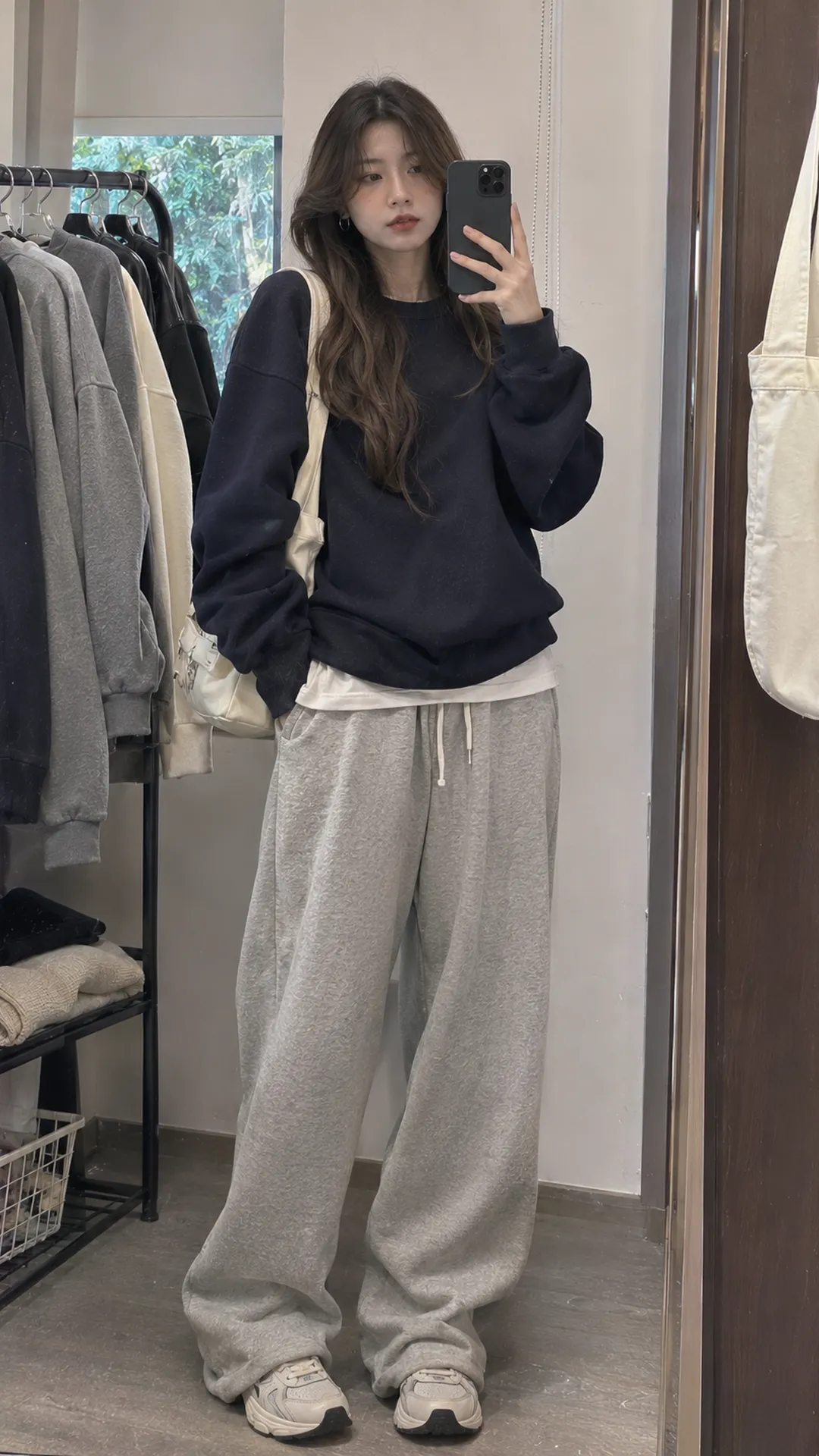
Are sweatpants and joggers the same thing?
In fashion retail, sweatpants generally means soft, sportswear-inspired pants, often with an elastic waist or drawstring. In Vietnamese, they’re commonly called “quần nỉ,” but the name alone tells you little about the inner surface. Check the fiber content, fabric structure, and close-up photos for the specific pair.
Joggers are defined more by their silhouette. They usually taper toward the ankle and end in a cuff or a closely finished hem. Sweatpants can come in a jogger cut, while joggers can use fabrics other than sweatpant knits. Sweatpants also come with straight or wide legs and uncuffed hems, so the categories overlap.
If you’re comparing the leg shape and ankle finish, our guide to what joggers are explains that construction in more detail. If you’re choosing sweatpants for comfort, start with surface feel, thickness, and drape. Two pairs with the same cuffs can feel quite different if the fabrics differ.
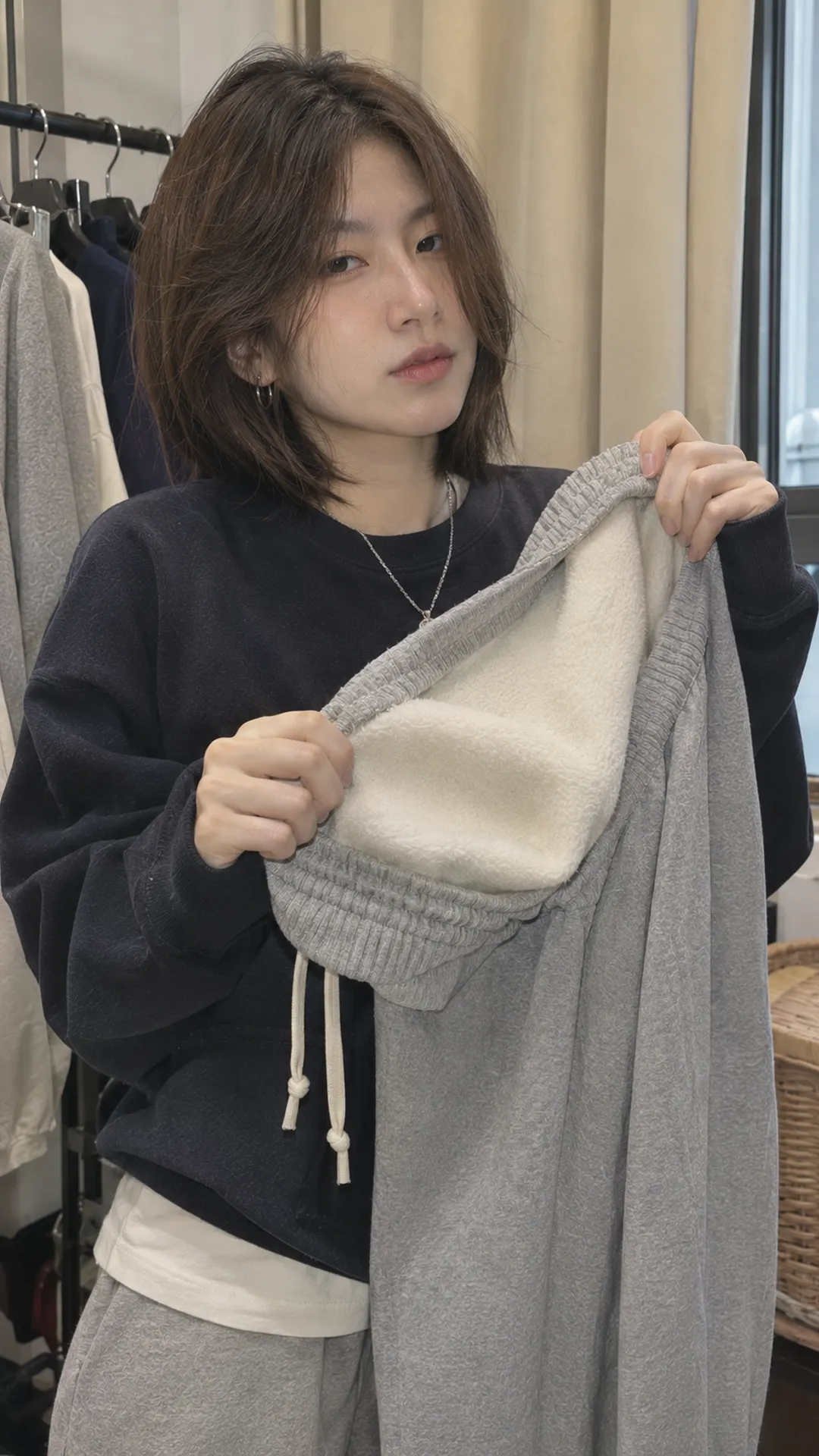
Look at the inside of the fabric first
When shopping in person, turn up a section of the hem to see the inside. You might find a looped surface, a brushed pile, or another finish. For example, Nike’s French terry description for one product specifically mentions unbrushed loops on the inside. Read how the fabric is made, since terms such as “fleece” can appear on garments with different inner surfaces.
Look at and feel the fabric to see whether you like it. Breathability also depends on thickness, fit, outer layers, and where you’ll wear the pants. If you’re shopping online, ask for a close-up of the inside and a description of thickness. That will tell you more than asking whether sweatpant fabric feels hot in general.
Check the fiber percentages on the label if they’re available. A blend can work just as well as a single-fiber fabric, depending on what you need and how you’ll care for it. Gray coloring, a smooth finish, or the price won’t tell you which fibers are in the garment.
For a long stretch in air conditioning, you might prefer a thicker pair. If you’ll walk outside before stopping at a café, think about the hottest part of the trip. Where possible, sit and stand in the pants for a while before deciding based on how soft they feel in your hand.
Choose a waistband and size you can sit in comfortably
An elastic waist still needs to fit. Check whether it stays where you want it without cinching the drawstring hard. If tightening it makes the fabric bunch up significantly, the waist may be too big. Likewise, a stretchy waistband can still feel too tight.
Sit down, take a moderately long stride, and pay attention to the rise. Strain lines across the thighs or a waistband that pulls down when you sit are reasons to reconsider the size or rise. Sizing up may make the waist too loose without fixing the rise. If that happens, try a different cut.
On a size chart, distinguish your body waist circumference from the width of the waistband measured flat. Ask whether the garment measurement is taken relaxed or stretched. Our guide to sizing alt fashion online explains how to compare like measurements. A comfortable pair you already own can serve as a reference, provided you account for differences in stretch and cut.
Pockets can affect the fit in use. Put your phone in a pocket and walk a few steps to see whether the opening pulls or the pants shift. If you carry several small items, pick pockets built for them or use a separate bag. A waistband loaded with belongings can feel quite different from how it did in the fitting room.
Wide legs, straight legs, or cuffed hems?
Straight legs give you a fairly continuous line from thigh to shoe and work with tops of several lengths. Look from the side. Does the fabric cling to the thigh and suddenly flare below it? Does the hem touch the ground? A clean line depends on how the fabric falls, even in a roomier cut.
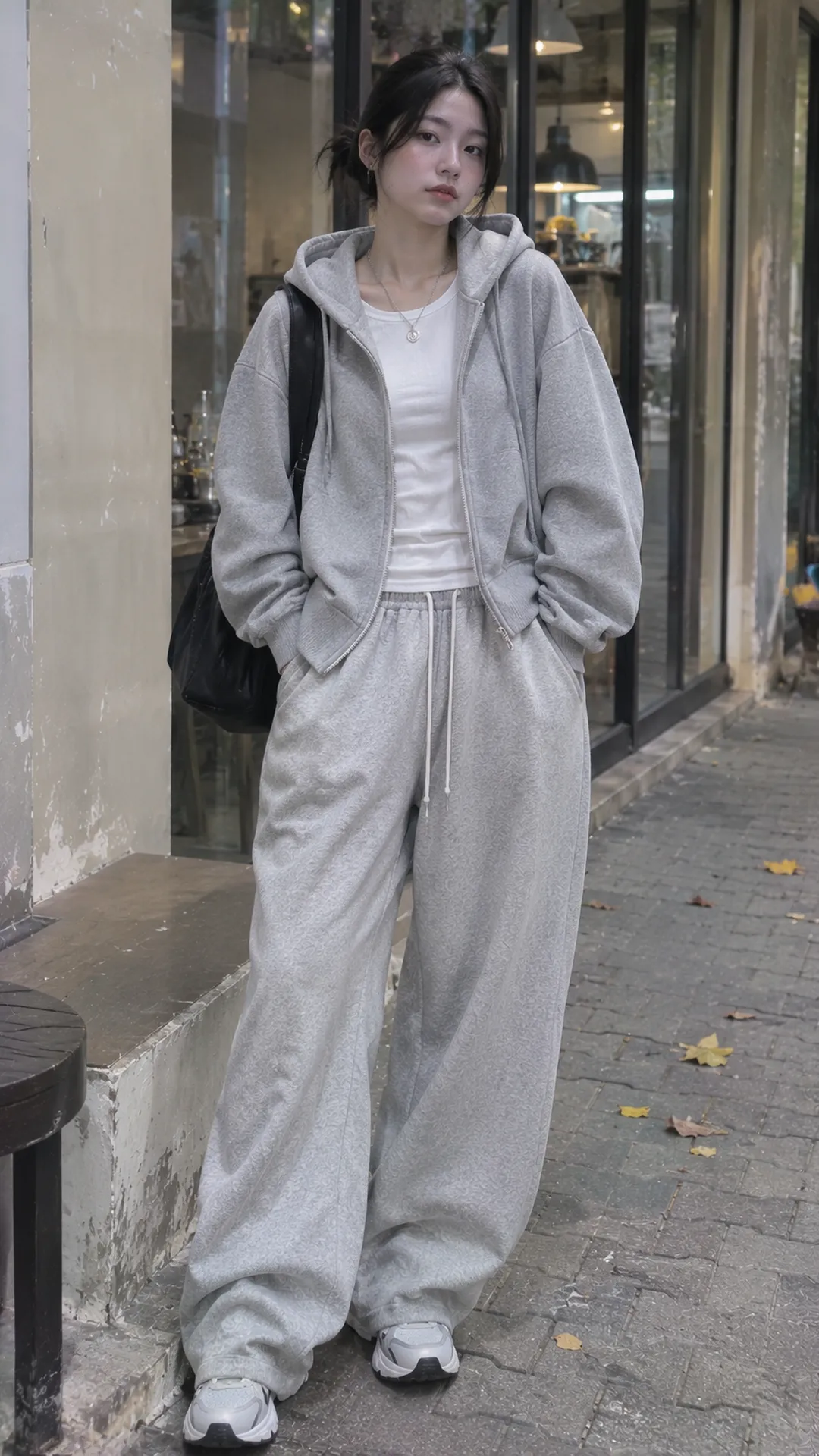
Wide legs are useful when you want the volume of the fabric to be part of the outfit. Length and fabric weight matter more here. An overly long pair can pool over your shoes and drag if you change into flat sandals. Try the pants with the shoes you’ll wear most often before deciding whether they need hemming.
Cuffs define the shape at the ankle. Check how snug they are and how much fabric bunches above them. For outfits built around that shape, see our guide to styling women’s joggers. Sweatpants are available with several hem finishes, so choose the one that works for you.
Choose a top that works with the shape of the pants
With wide pants and a defined waistband, a fitted tee or a top that ends at the waist keeps the proportions visible. A partial tuck can work if it doesn’t leave a thick lump at the front. To define the waist with a thick hoodie, choosing a shorter one is usually easier than tucking in the whole hem.
A loose top can work with loose pants. Give one edge a clear finish: sleeves that sit neatly at the wrists, for example, or a top that ends above the widest part of the pants. Step back from the mirror, then sit down. An outfit that looks good standing can still bunch up uncomfortably at the waist over a long day.
To make the outfit feel less like loungewear, try an open shirt over a tee or a jacket with a defined shoulder. Contrasting textures can make the outfit look considered without adding lots of details. Our guide to layering women’s outfits shows how to balance thickness across layers so the top and pants don’t both add more volume than you want.
With a matching sweats set, keep the palette simple and add one accessory with a defined shape, such as a small bag or a pair of glasses. If you combine two blacks, check them under the same light because the depth of color and sheen may differ. A deliberate difference in texture can make the pairing work without an exact color match.
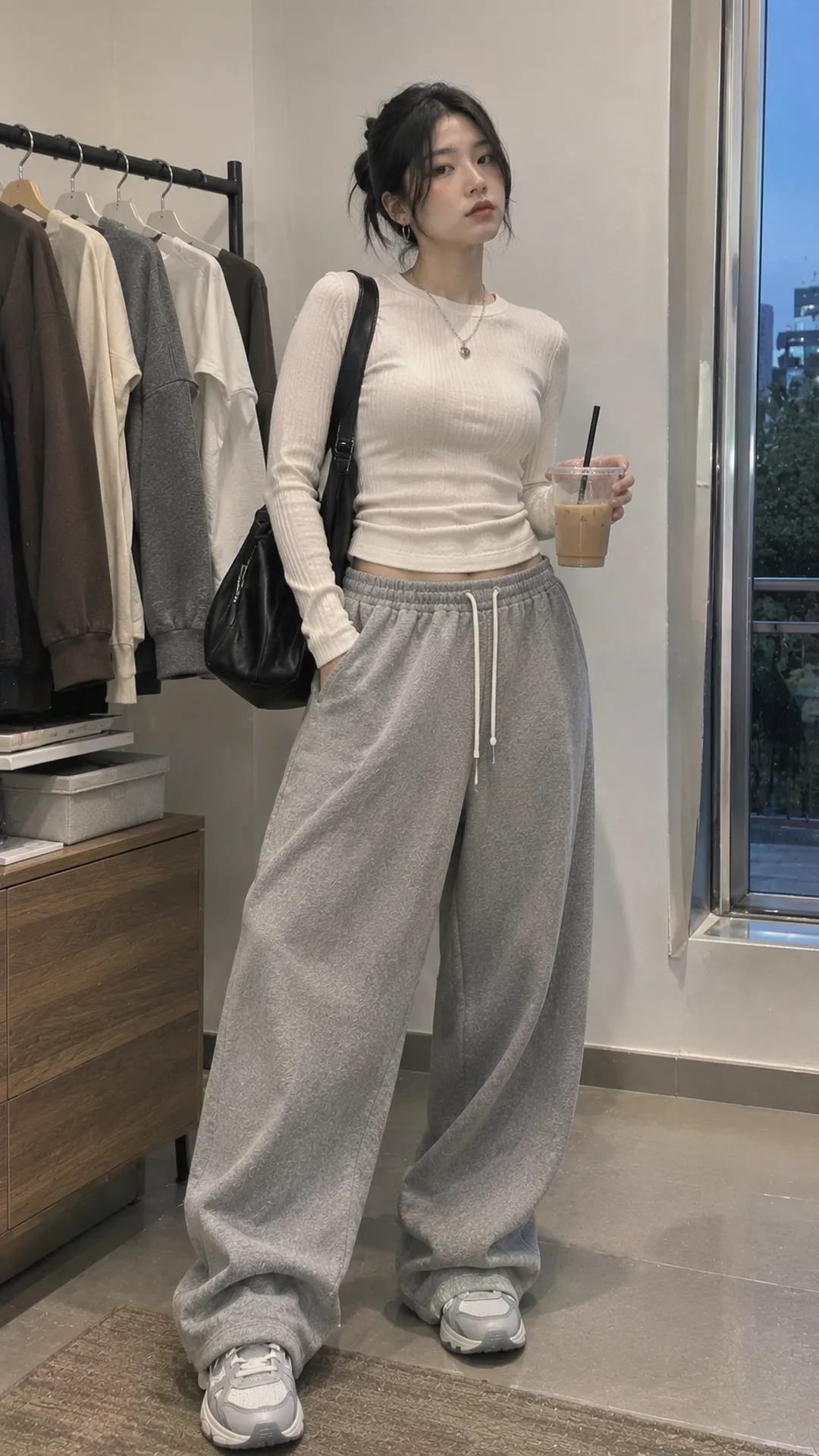
Pick shoes for what you’ll be doing
Slim sneakers keep the lower half visually light when the pants are wide. Chunkier soles make a stronger statement, but check whether the hem hides the shape of the shoe. Walk a few steps and look from the side at where the two meet. If you see only a mass of fabric hitting the ground, adjusting the length will do more than adding another accessory up top.
For coffee near home, try a simple outfit with a small bag. For a long trip, look for a waistband that’s comfortable while seated, handy pockets, and a layer you can take off when the temperature changes. Check the venue’s dress expectations before wearing sweatpants somewhere that calls for a polished outfit. Changing shoes may not be enough for that setting.
If you’re deciding between sweatpants and another pair you own, our women’s pants styling guide compares silhouettes, waistbands, and fabrics. Choose for what you’ll do in the outfit first, then pick the look you want to try. This also helps you avoid buying several similar pairs you rarely wear.
Follow the care label on your sweatpants
Read the label before the first wash, especially if the pants have a print, drawstring, zipper, or mixed materials. Wash at the temperature specified for the garment. If machine washing is allowed, follow the product instructions and keep hard hardware on other clothes from rubbing heavily against the fabric.
Let the pants dry completely before storage and hang them in a way that doesn’t pull them out of shape. If you fold them in a drawer, tuck in the drawstring so the pair is easy to take out. If the fabric pills or changes texture, check what treatment is appropriate for that material. Aggressive scraping with an unsuitable tool can damage the knit.
Try on a complete outfit before you keep them
Put on the top and shoes you plan to wear with the pants, fill the pockets as you normally would, then sit and stand. Check the waistband, rise, hems, and warmth. Ask yourself whether you can name at least two situations where you’ll wear this pair. That tells you more than seeing them look good on a model.
Women’s sweatpants are easy to wear when the fabric suits the setting, the cut allows movement, and the length works with shoes you own. You can get a streetwear look without extra width or thickness. A pair that fits your routine and works with a few considered details can give you plenty of outfits on repeat.