

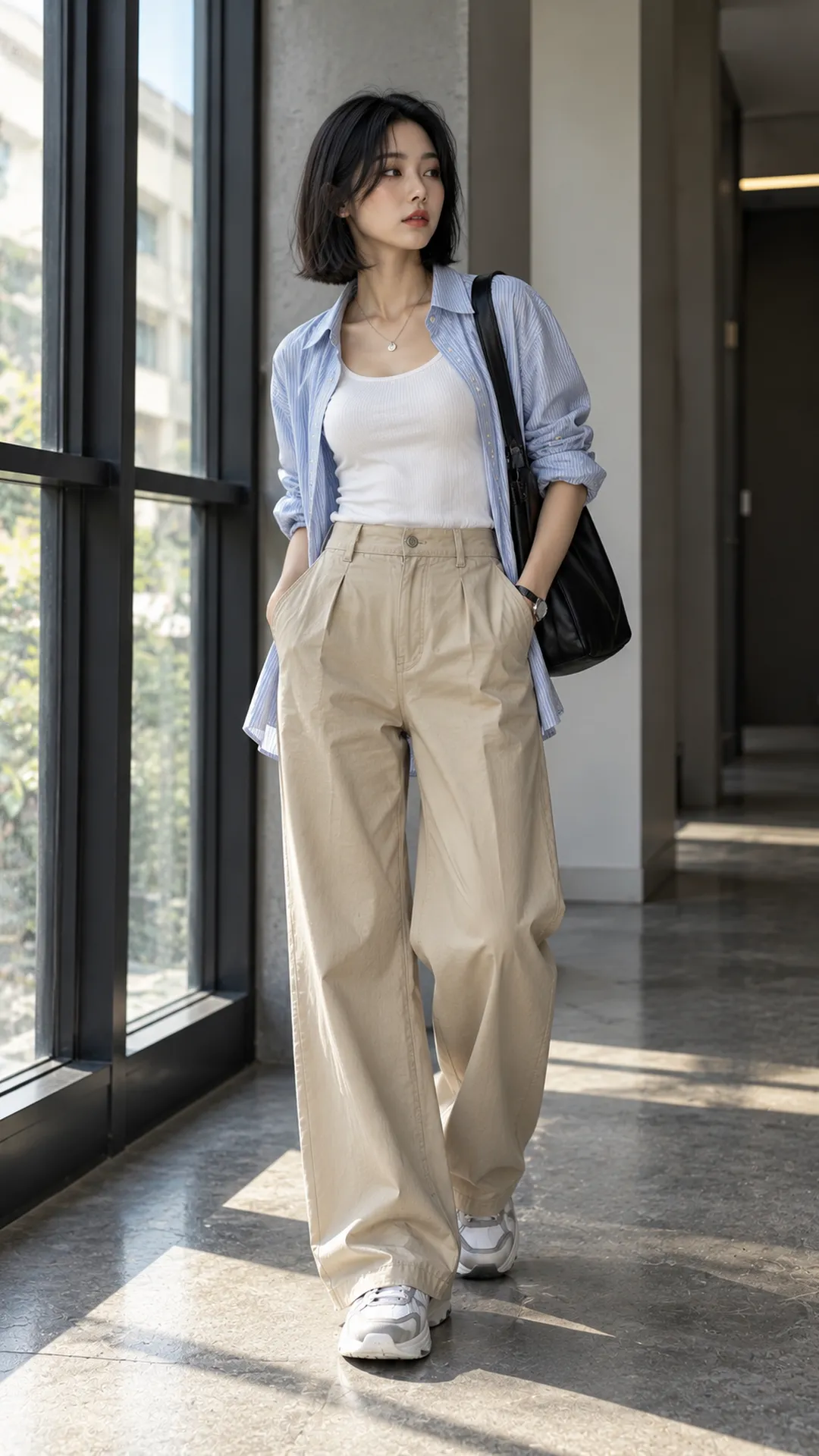
Read the fabric before choosing color
For 'premium khaki fabric,' seek composition, stretch information and close-ups. Some are structured, others soft or stretch-blended; do not assume all are thick or stiff. Identically beige, wide-leg trousers can create very different shapes in motion through fabric alone.
Firm fabric defines the leg but needs enough room for sitting. Soft drape gives lighter lines but may cling to pockets or underwear. Choose your desired shape instead of declaring structured trousers inherently better. Evaluate cut and fabric together.
In person, handle a leg section, inspect the inside and sit after dressing. Online, request movement video if images are unclear, but retain the composition label: video cannot verify fibers. Trade labels such as Korean-style khaki cannot replace actual specifications.
In hot weather, do not choose a light color while ignoring thickness. Check pockets, lining, closeness and outdoor wearing time. The guide to choosing summer clothing materials explains why color is only one factor; dark trousers with a suitable cut can still be worth trying.
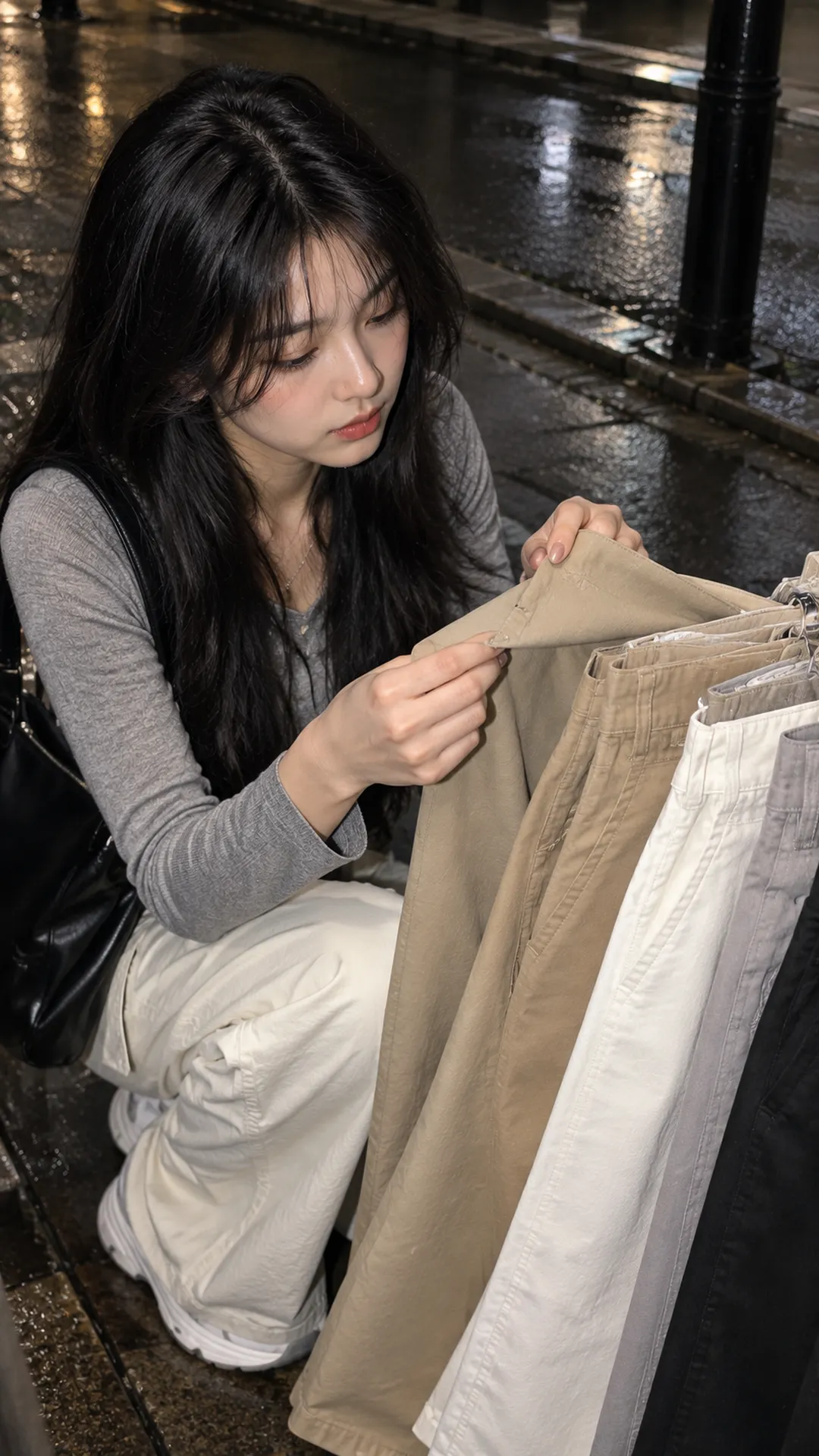
How do straight and wider leg shapes differ?
Straight legs: defined lines with little widening
Straight-leg trousers remain relatively straight for a neat but non-clinging lower half. Inspect thigh to hem, not only a front photo. A tight thigh and narrow hem may not produce your intended line. Take a longer step to locate tension.
Try well-fitting tees, shirts and short cardigans. Hems may approach the ankle or touch shoes according to design. If rolling, try one or two neat folds and assess thickness. Repeated rolls in thick fabric can create unintended ankle weight.
Relaxed straight cuts: read measurements, not labels
Shop descriptions of straight or relaxed cuts can cover several widths. Ask for thigh, knee and hem widths to distinguish them from other designs. Falling straight from the hips differs from fitting the thighs then widening below. The women's trouser-shape styling hub helps identify the silhouette before choosing a formula.
Wide legs: consider volume and hem
Firm wide-leg fabric can create substantial hip and leg volume. For lighter drape, try softer fabric or less width. A loose top and trousers can retain proportions through a visible waistband, open jacket or neck space. A fitted upper half is not compulsory.
Try shoes before altering hems. A length suitable for thick soles may sweep the ground with flats. Use your main shoes as a reference; for varied pairs, choose a length not dependent on one unusual heel height.
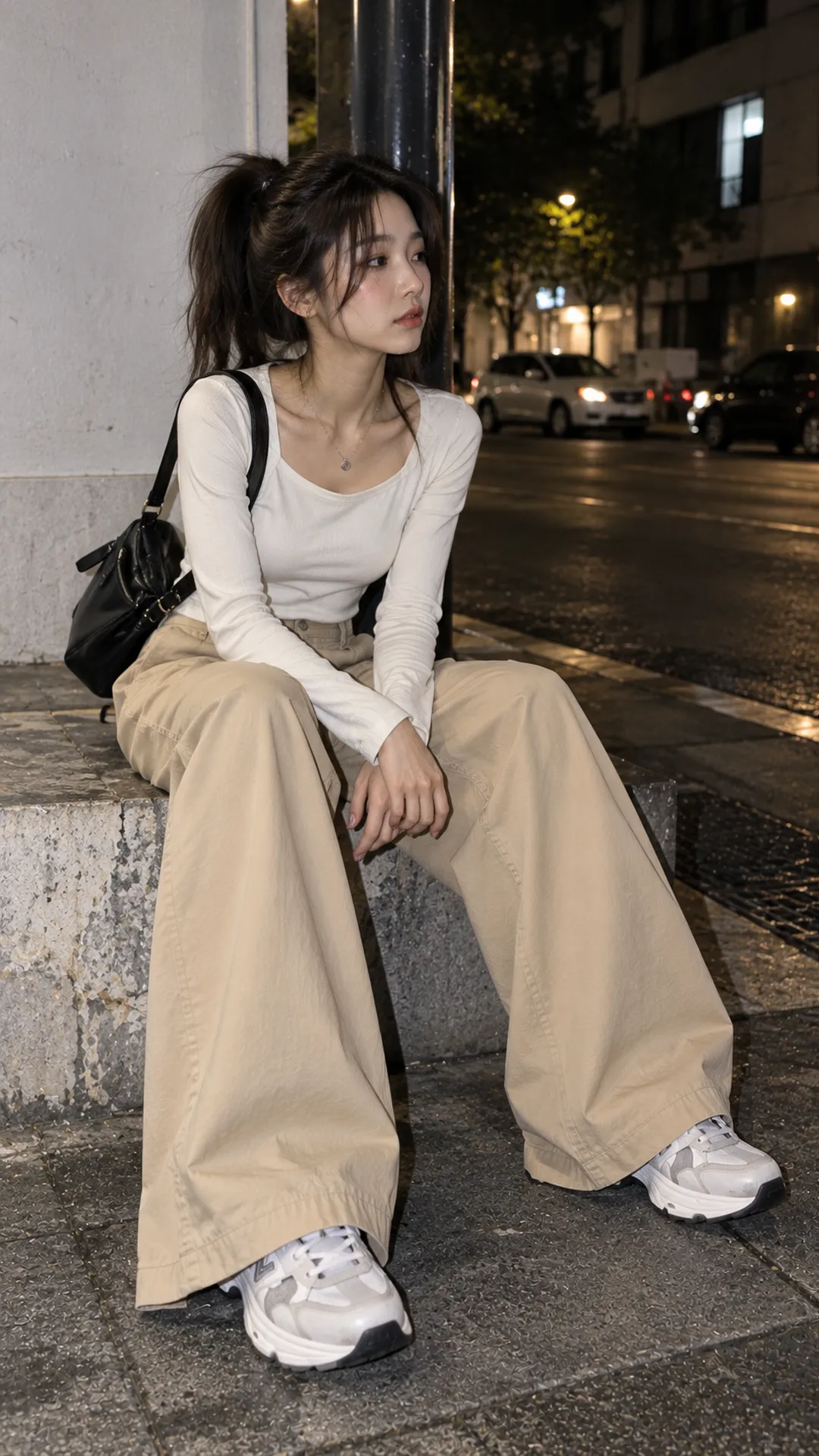
Check waist, hips and rise while seated
Fasten the waistband relaxed, then sit. It should hold without requiring stomach tension. If the waist fits but hips pull, another size or cut may be needed. If hips fit but the waist gaps, sizing down is not automatically right; a suitable waist alteration can retain hip comfort.
Inspect tension around zipper, crotch and thighs. Natural seated folds differ from persistent stiff pulling while standing. A short rise can hurt despite enough waist width; an overly long rise can create unwanted bulk. One waist measurement cannot establish fit.
Try high waists with the tops you usually tuck. Thick fabric changes waist feel. For back elastic, inspect gathering beneath your top. Elastic offers limited adjustment but cannot replace correct hip room and rise.
Online, record inseam, overall length and intended waist position. The guide to choosing trouser sizes online uses measurements rather than S, M or L alone. Compare comfortable existing trousers and read returns before deciding.
Five women's chino outfit formulas
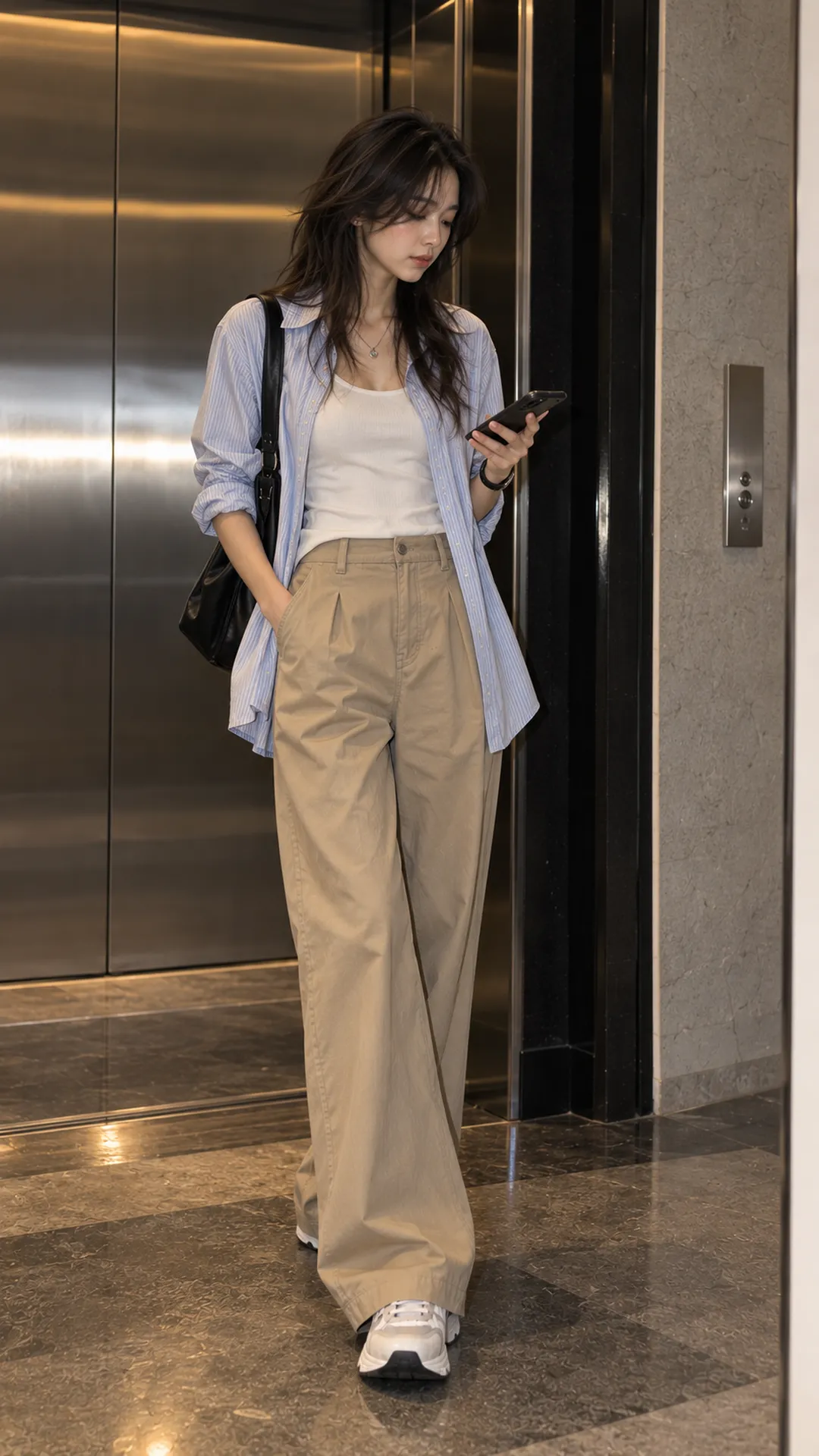
Straight beige chinos, white top and sneakers
White and beige give an easy base. Partly tuck to show the waistband or choose a near-waistband hem to leave out. White sneakers connect with the top; a black bag adds darkness if needed. With folded hems, keep the top neat to limit bunched areas.
Try fine stripes or pale blue for variation without changing trousers. Inspect whether the actual beige leans yellow, pink or gray. An absolute palette is unnecessary; compare the pieces in everyday light rather than relying on shop names.
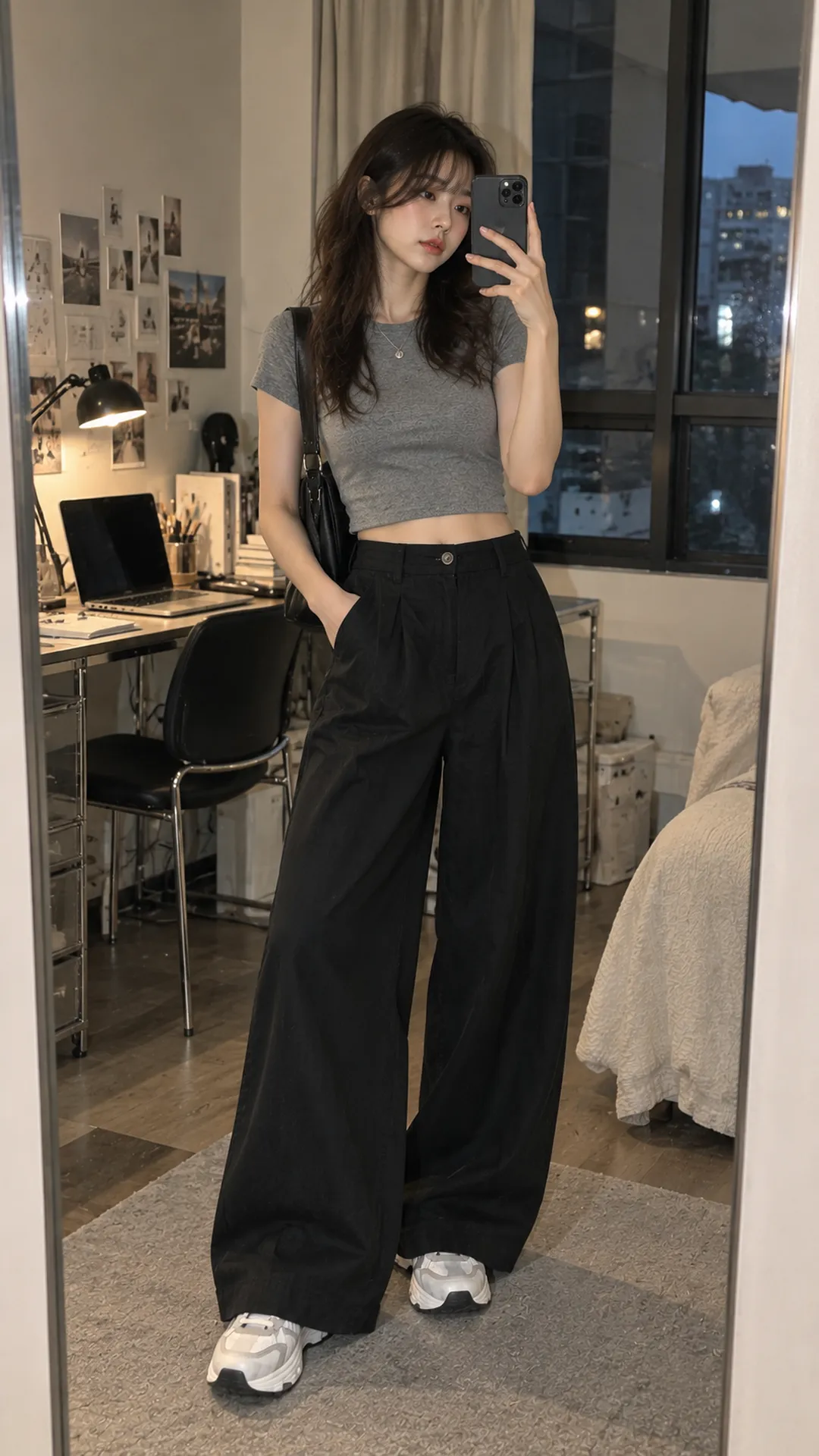
Wide black chinos, a neat top and defined shoes
A neat top contrasts with width, while visible toes and sufficient sole presence establish an endpoint beneath hems. Try black with another surface or a light top for separation. Match belt width to loops and waistband; an oversized buckle or band can unexpectedly dominate.
For character, add a metal accessory or structured jacket without simultaneously introducing chains, many pockets and huge shoes. Plain chinos need not become cargos. A few reasoned details encourage more reuse than a purely posed outfit.
Wide white chinos with a blue shirt
Pale blue and white make a light palette where appropriate. Try a neat front tuck or moderate shirt length so the waistband remains visible. Light-brown shoes finish gently; black increases contrast. Before accessories, check opacity standing, seated and in strong light.
Underwear color and outlines may show depending on fabric. Do not check only fitting-room light. Inspect front and back pocket bags too. If transparency bothers you, another fabric or color is simpler than adding many layers.
Brown chinos, a cream top and short cardigan
Brown gives a muted base, cream adds light and the short cardigan places the break near the waist. Try brown or black shoes. If both cardigan and trousers are thick, reduce one piece's width for movement. The base should remain complete without the cardigan in hot weather.
Relaxed chinos with an open shirt over a neat base
A neat base and open shirt create two vertical lines connecting trousers and torso. Try a light shirt against structured trousers or a firmer shirt for more overall definition. The guide to women's layering manages top lengths; avoid three closely spaced hems if you do not want many horizontal lines.
Choose shoes and bags for the leg line
Straight legs reveal more toe, lacing or straps. Wide legs cover more upper, making hem length and toe projection important. Walk to check for heel catching or dragging. High soles are unnecessary merely to compensate for an unsuitable hem.
A structured bag adds definition to soft trousers, while a soft bag can relax firm chinos. Bag size is another outfit volume: with a wide coat and trousers, try a moderate bag before a large one. The footwear-by-outfit guide compares shoes beyond aesthetic names.
Wash, dry and alter for repeat wear
Read the specific label before washing, drying or ironing. No single temperature suits all kaki-labeled products because fibers and finishes vary. Check pockets, zipper and stains. For dark trousers, follow product guidance rather than increasing cleaning chemicals to rush results.
For waist or hem alterations, bring your usual shoes and top so the tailor can assess proportions. Do not cut based on a model with different height and footwear. Afterward, sit and walk to ensure no new waist, rise or drape issue.
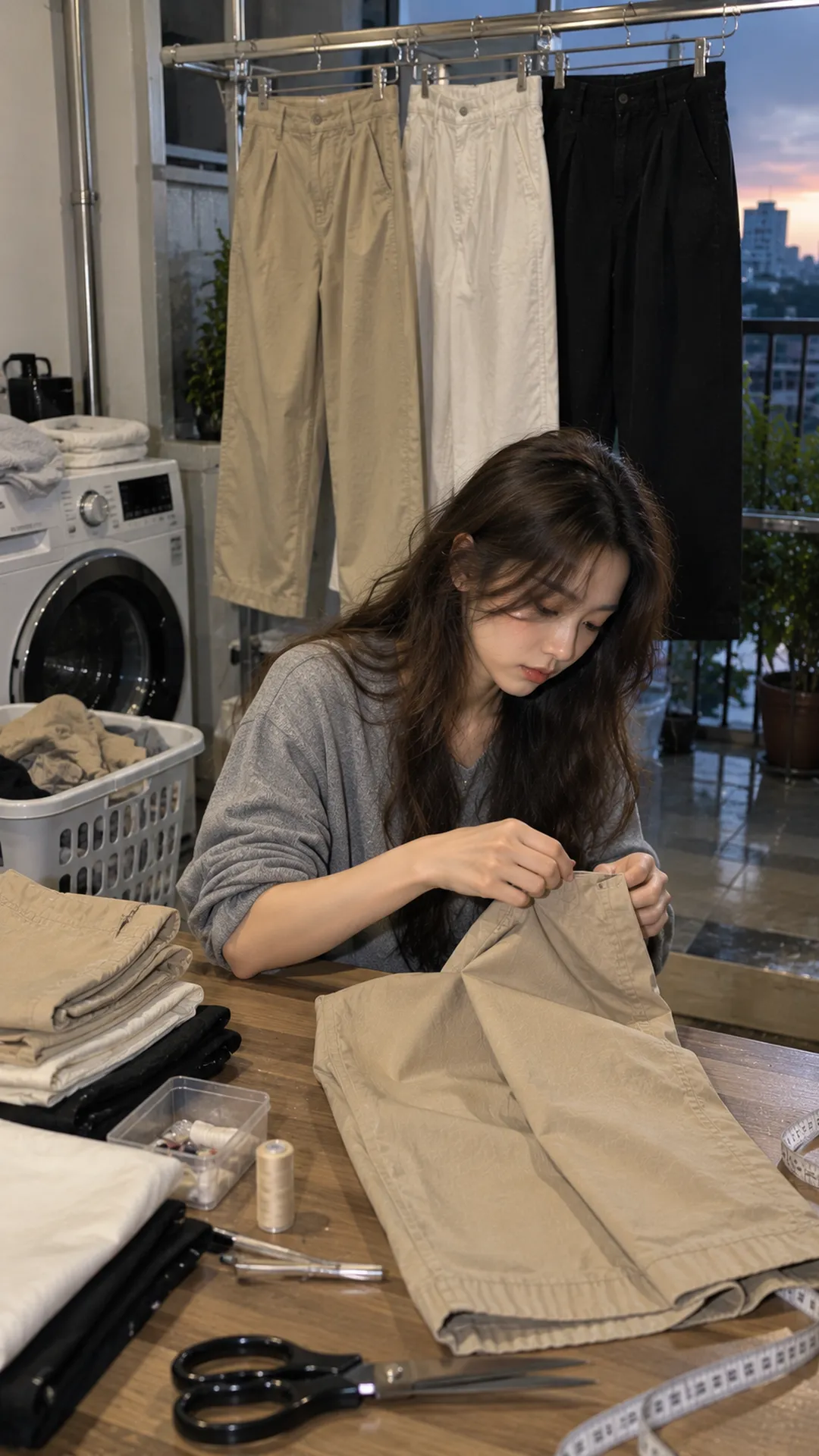
Before buying more, establish whether the new pair creates a different useful outfit. If only slightly different in color with the same function, prioritize altering or restyling existing trousers. A pair worth keeping fits key areas, serves your routine and works with several wardrobe pieces beyond one reference.