Identify the construction and length
On a short wrap-front design, a front panel looks like a skirt and shorts sit underneath. A diagonal line, buttons, pleats, or an asymmetric panel may be the main detail. A long untucked top can hide those features and change how the outfit looks.
With wide-leg skirt-like pants, the legs flare and drape like a skirt when your feet are together. The separation shows more as you walk. Try standing and walking to judge how much flare you like.
Check whether a short, cropped, or long hem hits where you want on your body. The same waistband-to-hem length can fall differently depending on the rise. Compare the measurements and the shoes you plan to wear.
Our women’s pants guide compares cuts and rises. With skorts and skirt-like pants, also decide which details you want to leave visible.
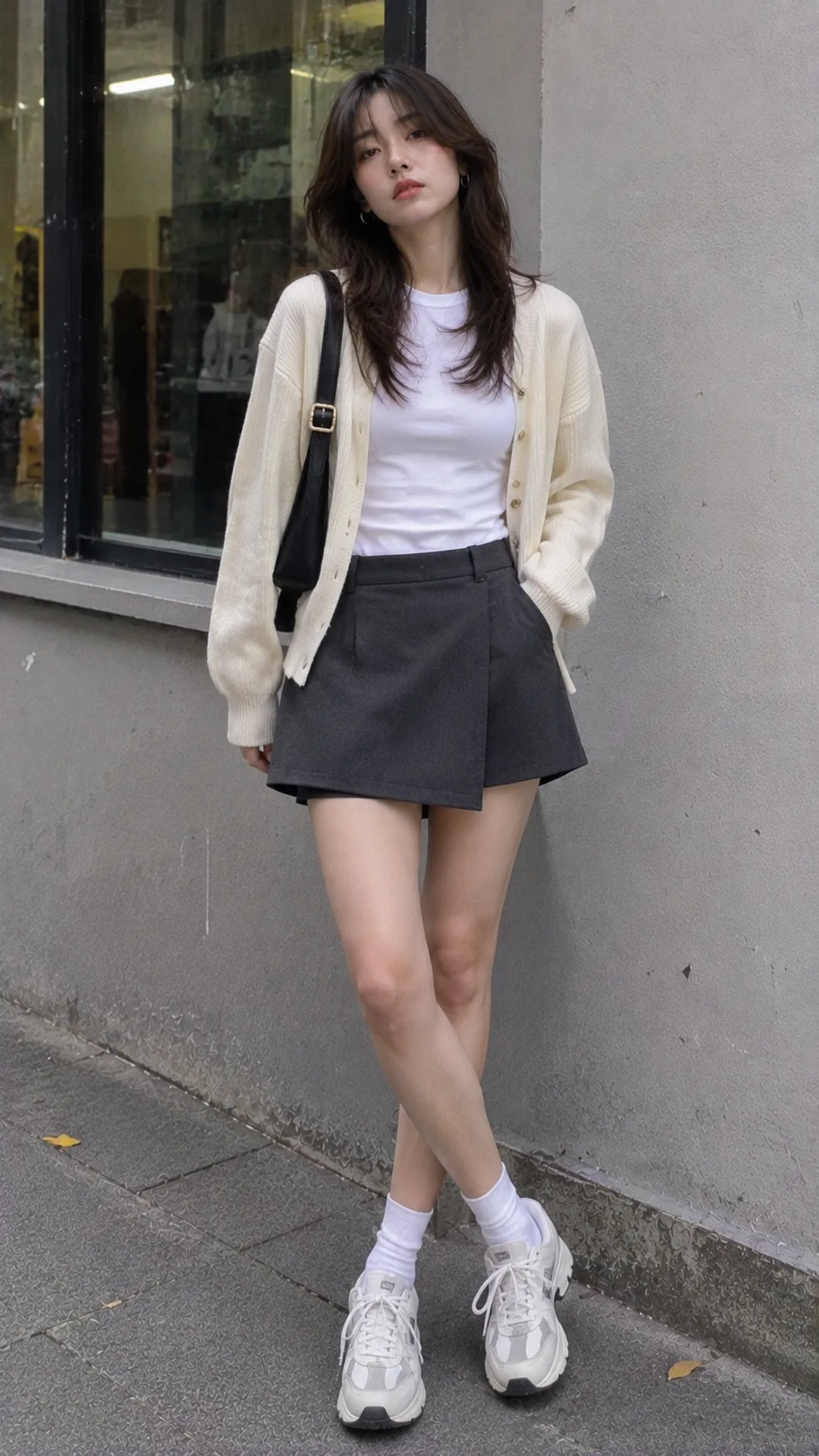
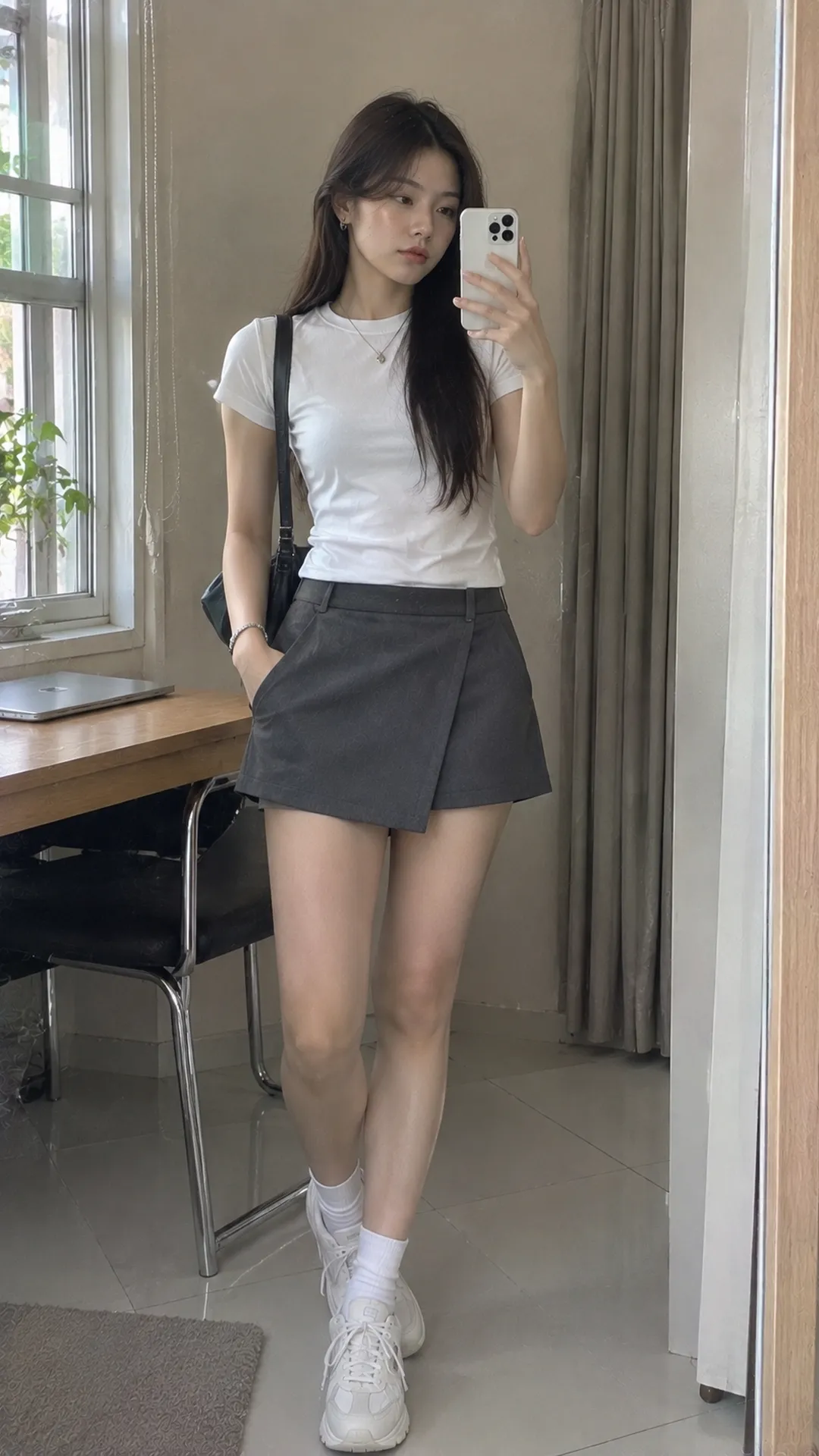
Short wrap-front skorts: show the front detail
Plain tee or fitted top
A plain tee is easy to try with buttons or a diagonal panel. Tuck a long tee just enough to reveal the waist and overlay. Spread the fabric flat behind any prominent buttons so the front detail stays clear.
A fitted top can outline the panel without pulling tight. Raise your arms, sit, and check from the side. If the tee keeps coming untucked, try a different length or one that sits at the waistband.
Choose the length of a cropped top deliberately
A hem near the waistband creates a clean edge without a bulky tuck. Check the gap when standing and reaching. If you want more coverage, let the edges meet or choose a slightly longer top. Use the actual length as your guide.
With short, flared bottoms, puff sleeves or boxy shoulders add volume above. Keep the colors or surfaces simple if you want the shapes to show. One strong detail can be enough.
Cropped wide legs: check where the top meets the waistband
Cropped skirt-like pants create a wide shape ending partway down the leg. A slim waist-length top defines where it begins. For a roomier top, try a small partial tuck or short hem and check the side for bunching.
A roomy top and wide bottoms can give a relaxed outfit. Keep one line visible at the shoulder, wrists, or front waist. A long wide tee with elbow-length sleeves creates more continuous volume than a short boxy one.
Cropped lengths can work at different heights. For a continuous leg line, try shoes closer in color to your skin or pants and compare full-length photos from the same angle. Use contrasting shoes if you like a clear break at the ankle.
Try cropped black pants, a cream knit at the waist, and loafers for three distinct sections. A long untucked shirt extends the upper half. Choose the silhouette you prefer.
What tops work with long skirt-like pants?
With long flowing pants, a slim top lets the movement show below. Try a fitted tee, a plain crew neck, or a tucked soft shirt. A crisp fabric can add definition next to a flowing one.
With structured full-length pants and large pleats, keep the tuck light. Thick fabric at the waist can push the pleats open. Stand and sit to check the waistband, crotch, and overlay for a comfortable fit.
A long untucked top and long pants make a continuous line. Try a side slit or a hem that drapes over the hips. Walk to see whether it catches on pockets or pleats.
If the pants come close to the shoes, try the exact pair you’ll wear. Consider hemming or trying another length if you usually wear flats and the pants need heels to clear the ground.
Button-ups: choose a tuck for the fabric and placket
A shirt with defined shoulders and moderate width is usually easier to tuck than a long, full shirt. With an angled overlay, keep the placket sitting straight. If you tuck one side, check for bunching at the back.
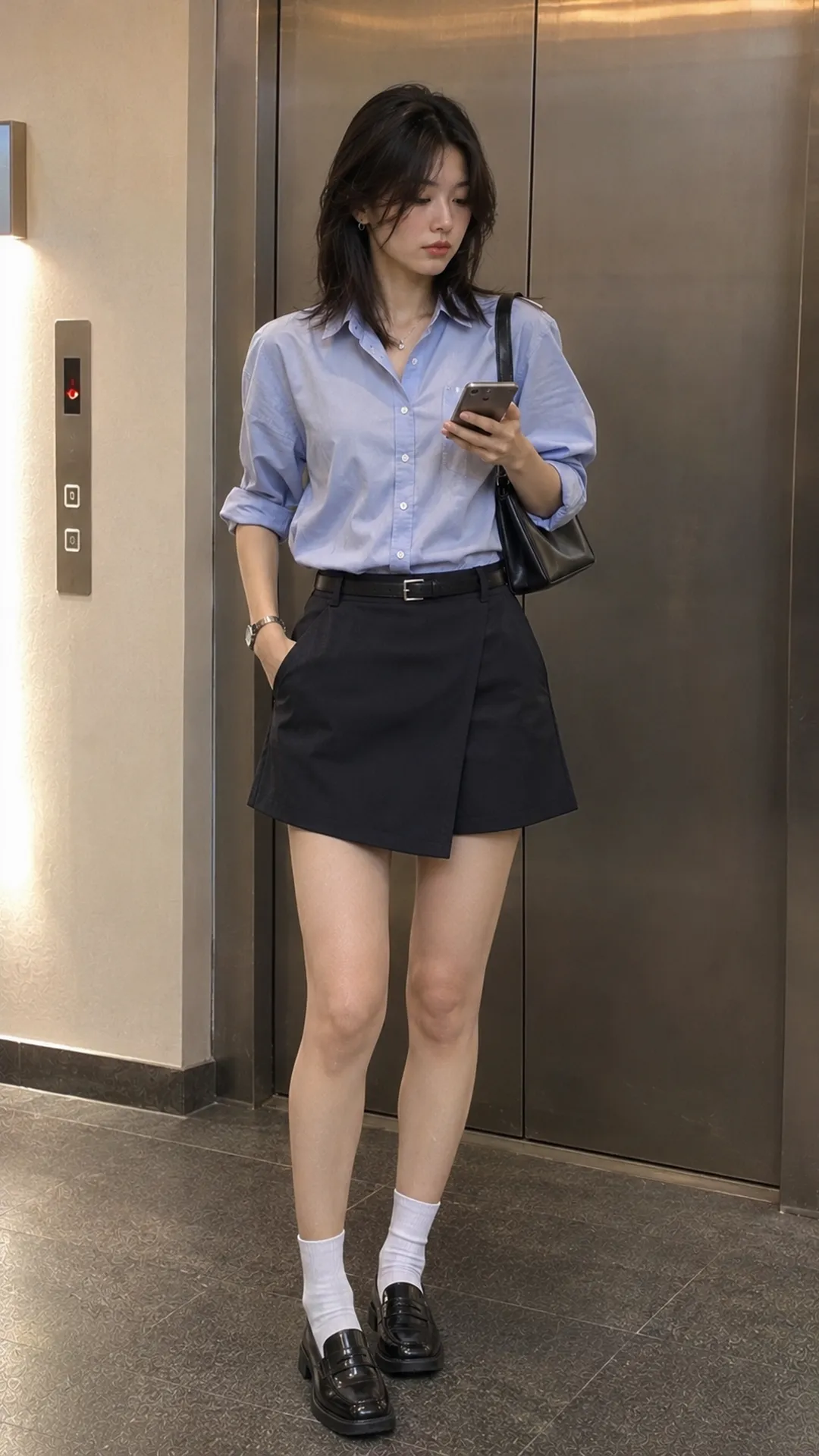
A soft shirt echoes the drape of wide legs, while a crisp one gives contrast. With black bottoms, try white, pale blue, gray, or another dark shade. Settle on one main light-dark contrast first.
For the shoulders, hem, and placket, see our guide to styling and tucking women’s button-ups. Try the shirt again with the skort or wide-leg pants, since an overlay and waistband can change how it sits.
Knits and cardigans: keep the waistband smooth
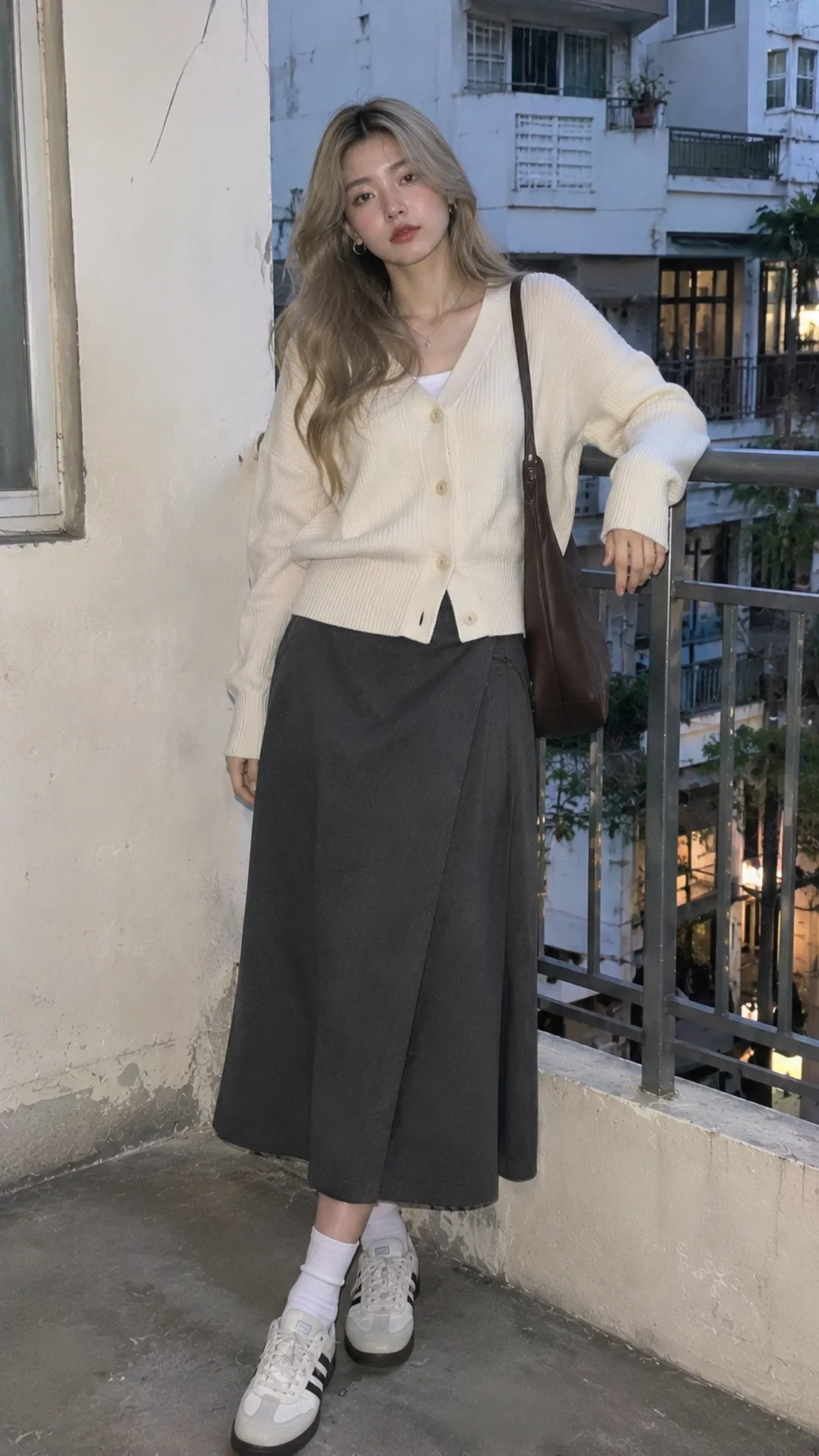
A fine hip-length knit can tuck in neatly when the waistband has room. Leave a chunky knit loose or try a shorter one. If the top hem meets the overlay, check whether it covers a detail you want to show.
For a cardigan worn buttoned as a top, check for gaps when you sit. If you wear it open, a simple base layer keeps the waistband visible. A short open cardigan can define the waist without a belt.
A long open cardigan creates vertical lines over wide pants and adds fabric. Check sleeve room and body length with a bag on. Our guide to choosing women’s cardigan cuts compares lengths for layering.
Choose shoes and a bag after the top
A short skort leaves the shoes, socks, and shaft height visible. If the top and skort already have detail, try plain shoes. If the outfit is mostly solid, let the shoes or bag draw attention.
With cropped pants, check the gap above the shoes as you step onto a low stair. With long pants, see whether the hem covers the toes or touches the ground. Choose a sole you can move in for your plans.
A crossbody bag can cover the skort’s front panel. Move it to one side or higher if you want the detail visible. For other pieces, use our item-by-item styling guide to find what the outfit needs.
Try a short gray wrap-front skort, slim black tee, and white sneakers for class. For a more polished outfit, switch to a pale blue button-up, leave the waistband visible, and wear loafers. The shoulders, placket, and shoe contrast change the look on their own.
With long brown skirt-like pants, compare a waist-length cream knit with a tucked cream shirt. The knit adds a soft surface, and the placket and collar add straight lines. Keep the front of the top simple if the pants already have large pleats.
Try the whole outfit before buying
Check the back, sit, and take a long step within a comfortable range. The shorts underneath can give coverage while the outer panel still shifts when sitting or in wind. Check opacity, thigh room, and length in person if possible.
When shopping online, ask for the waist, hip, and length measurements, how the overlay is made, and where it fastens. If the listing only shows the front, ask for a back view and a video in motion.
Try two hem treatments with a top you already own before buying another. Take photos from the same angle with the same shoes. Adjusting the length or the amount of fabric tucked in can change the outfit enough on its own.