

Recognize a platform by its sole
Oxford Learner’s Dictionaries gives “platform” a footwear sense referring to a thick raised sole or a shoe with one. The feature is under the foot. It can go with different toe shapes, straps, and shaft heights.
In a side view, check under the forefoot as well as the heel. A raised heel with a thin forefoot differs from a shoe with a visible platform under the front. Heel height alone won’t tell you whether a shoe has a platform.
Platform heels combine a thick forefoot sole with a higher heel. Shoes with the front and back at roughly the same height are often called flatforms. Retailers use the names differently, so look at side photos and the specifications.
“Chunky” describes a large, heavy-looking shape. A shoe can be both chunky and a platform. A more streamlined platform can add height without heavy tread or metal hardware. Decide which sole construction and visual effect you want separately.
Choose a shoe style for the outfits you wear
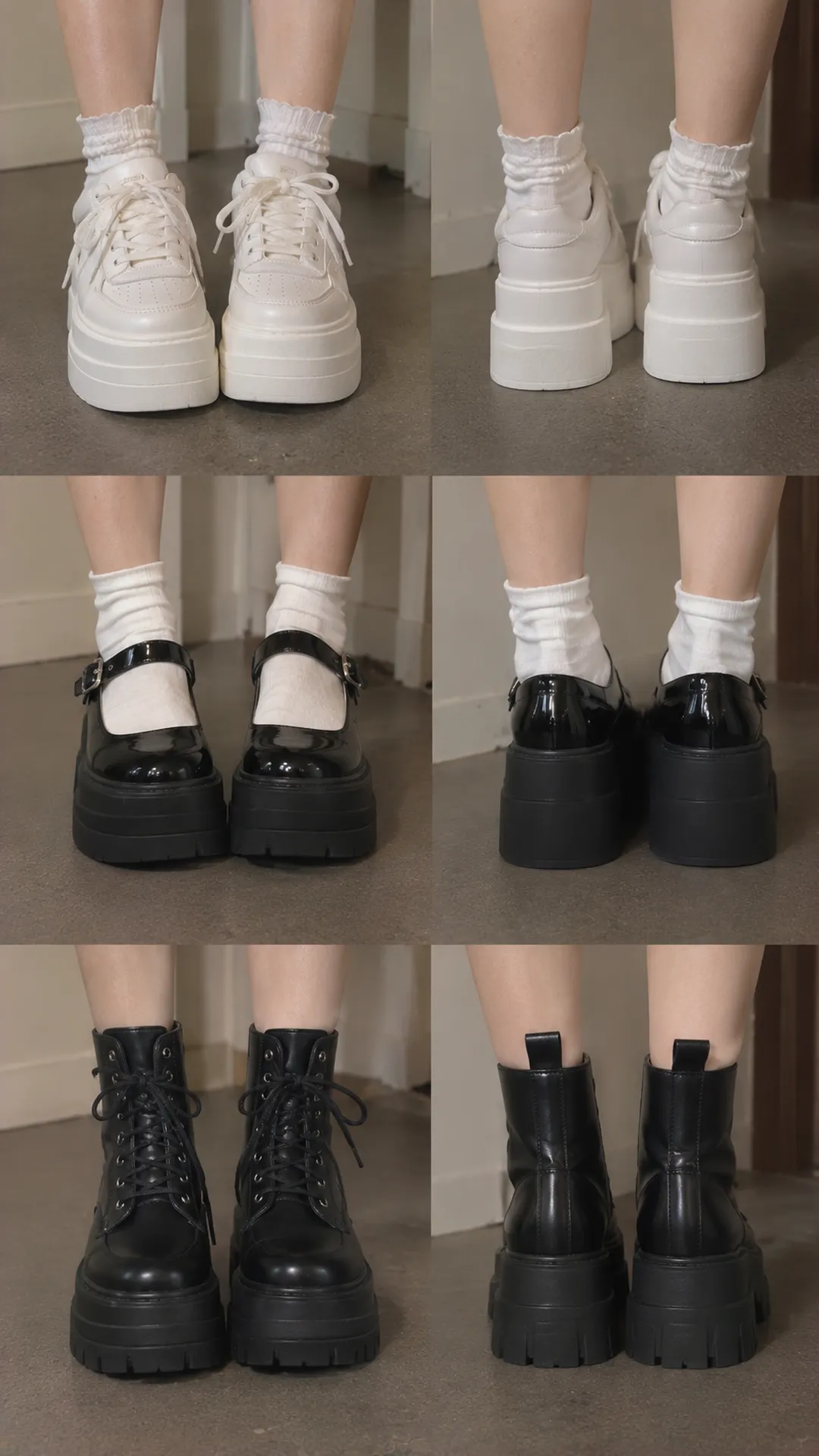
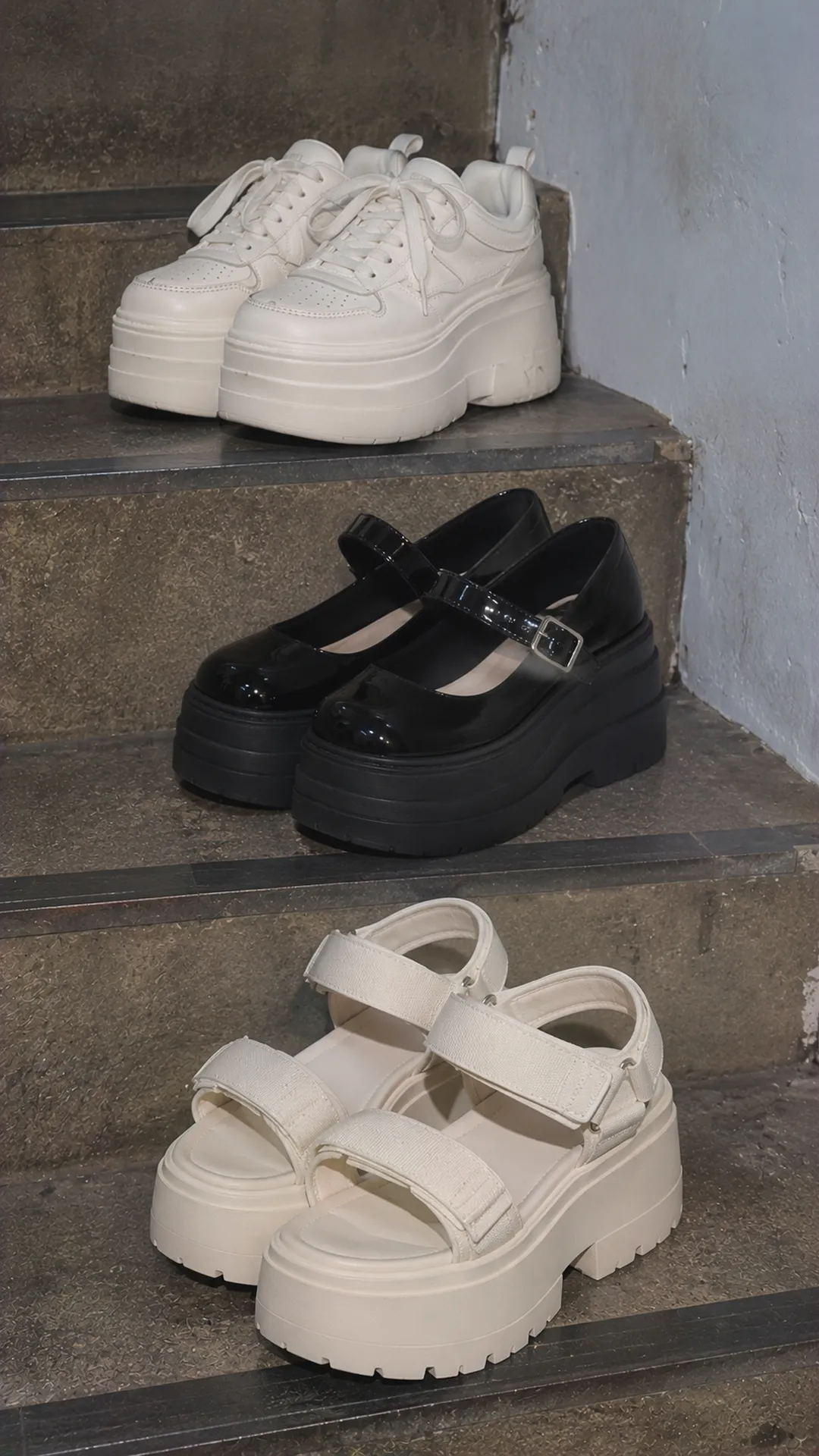
Platform sneakers for casual outfits
If you mostly wear jeans, casual pants, and tees, try a platform sneaker. Laces let you adjust the fit across the instep within the shoe’s design. Check that the toe box and length fit too. Try both shoes with the socks you’ll wear.
A simple upper lets you get used to the volume of the sole without changing the whole outfit. A multicolored sneaker draws more attention to your feet. Start with a plain top and trousers with few pockets, then see whether you want to add a print.
Platform Mary Janes or loafers for a defined shape
Mary Janes have an instep strap. Loafers generally cover more of the instep and slip on without sneaker-style laces. With thicker soles, check both the height and how the shoe holds your foot. A decorative strap may offer little heel hold.
With Mary Janes, adjust the strap and walk to check whether the heel lifts too far. Our guide to recognizing Mary Janes explains variations in the upper and strap. A platform is one sole option within that style.
Platform sandals and heels for the right occasion
Sandals make it easy to see where your toes, heel, and straps sit. Stand up to check whether the foot stays on the sole, whether the straps press, and where the buckle rubs. A sandal that fits while seated can feel different when you put weight on it.
For platform heels, compare the front and back heights to get a better idea of the pitch. A thick forefoot sole alone won’t make a pair easy to walk in. Check the fit, heel construction, and how it feels to take a step.
Platform boots for more volume at the foot
Boots add shaft height to the raised sole, which changes how trouser hems sit and how much leg shows under a skirt. For more detail, see our comparison of combat boots and platform boots. A boot can have both features. Combat describes the upper style, while platform describes the sole.
Try the shoes in a few steps
Put on your usual socks, then lace or fasten the shoes as you would to wear them. Try both and stand naturally. If your toes feel squeezed, the heels slip noticeably, or you have to curl your toes to keep the shoes on, try another pair.
- Stand: Check the toe box, sides of the foot, and strap placement. You should be able to stand without tilting your foot to avoid pressure.
- Walk in a straight line: Take a few passes on a clean surface where try-ons are allowed. See whether the shoe moves with your foot or slips at the heel.
- Change direction: Turn slowly and take a step sideways. If it’s hard to control the shoe, try a lower or more compact design.
- Try your outfit: Check whether the trouser hems catch, the skirt shortens your stride, or the bag leaves you without a free hand when you need one.
- Take the shoes off: Check the areas that felt uncomfortable so you can tell whether the issue came from a seam, strap, or the shape of the shoe.
A photo can’t tell you how heavy the shoes feel. In a store, pick them up and try both on. Online, ask about weight and returns. A bulky-looking shoe can be lighter than you expect, and a heavy sole can be tiring to lift with each step.
If the heel slips and the toes already feel tight, another shape may work better than a smaller size. Our guide to sizing alt fashion online explains how to compare measurements and check seller information before ordering.
With trousers, check the hem before adding accessories
Straight or wide-leg trousers: Try the platforms when you check the trouser length. The hem can cover part of the upper, but make sure you don’t step on it. Look from behind too. A neat front view can hide fabric caught at the heel.
Try straight blue jeans, a white tee, and plain platform sneakers. The sole adds volume and the top stays simple. If the jeans have heavy fading, a low-contrast shoe helps you see whether the effect comes from color or proportion.
Cropped or tapered trousers: More of the shoe shows, so look at the gap between the hem and shoe top. Contrasting socks create another area of color. Socks close to the shoe color give a more continuous line. Choose the gap and contrast you like.
Shorts: The platforms will be easy to see. Try a moderately loose top and a compact bag to balance the shoes. If the outfit already has several zippers, chains, and prints, remove one detail and see what stands out.
If you’re unsure whether the issue is the trousers or the shoes, see our women’s pants guide. A change in hem length or leg width may do more than adding height to the sole.

With skirts and dresses, balance the weight of the sole
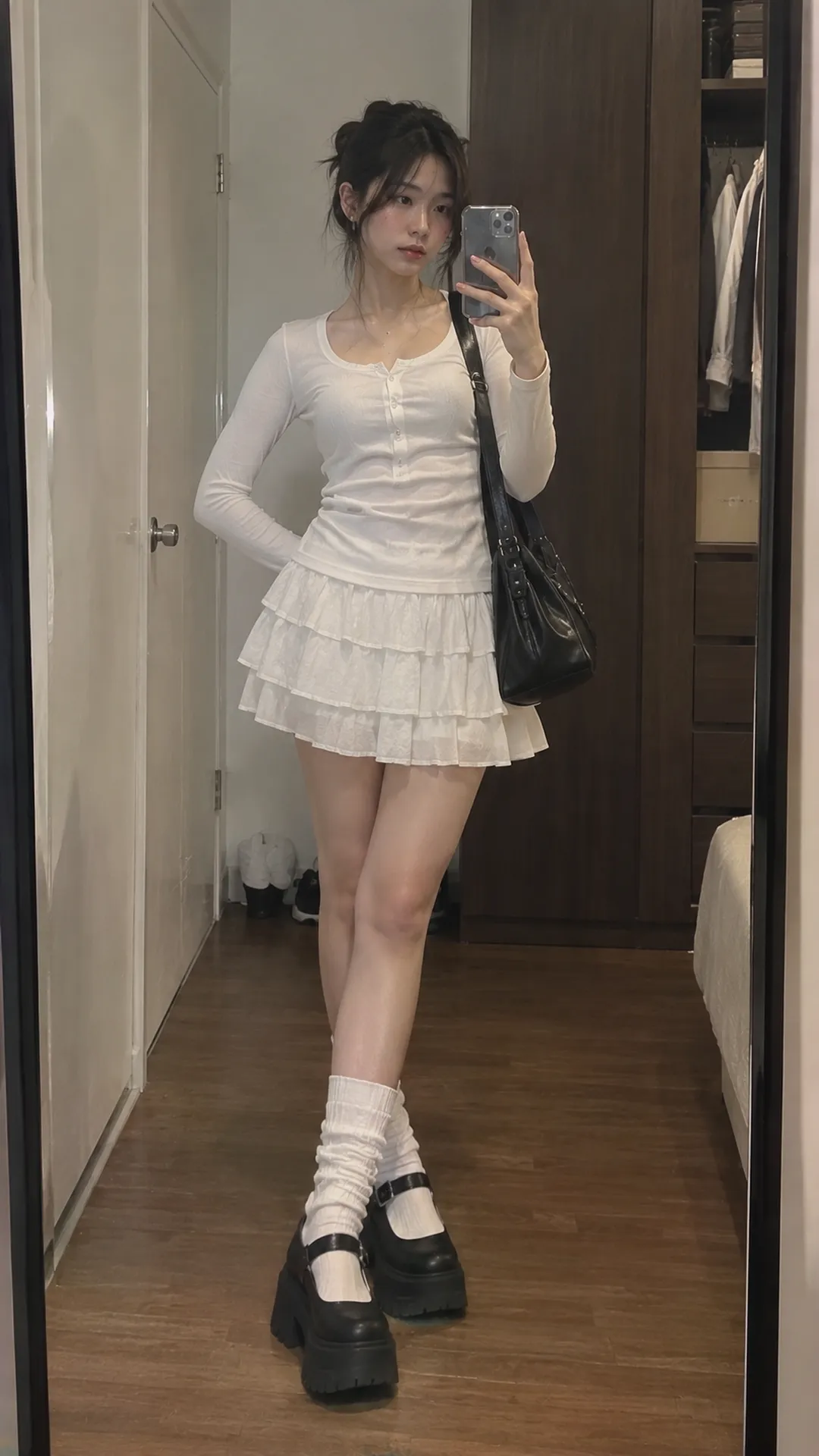
A short skirt with platform Mary Janes shows the strap, socks, and sole. Choose a top that ends where you want it relative to the waistband, then decide whether to wear socks. If the socks have a print, plain shoes can keep that detail visible without extra jewelry at the neck.
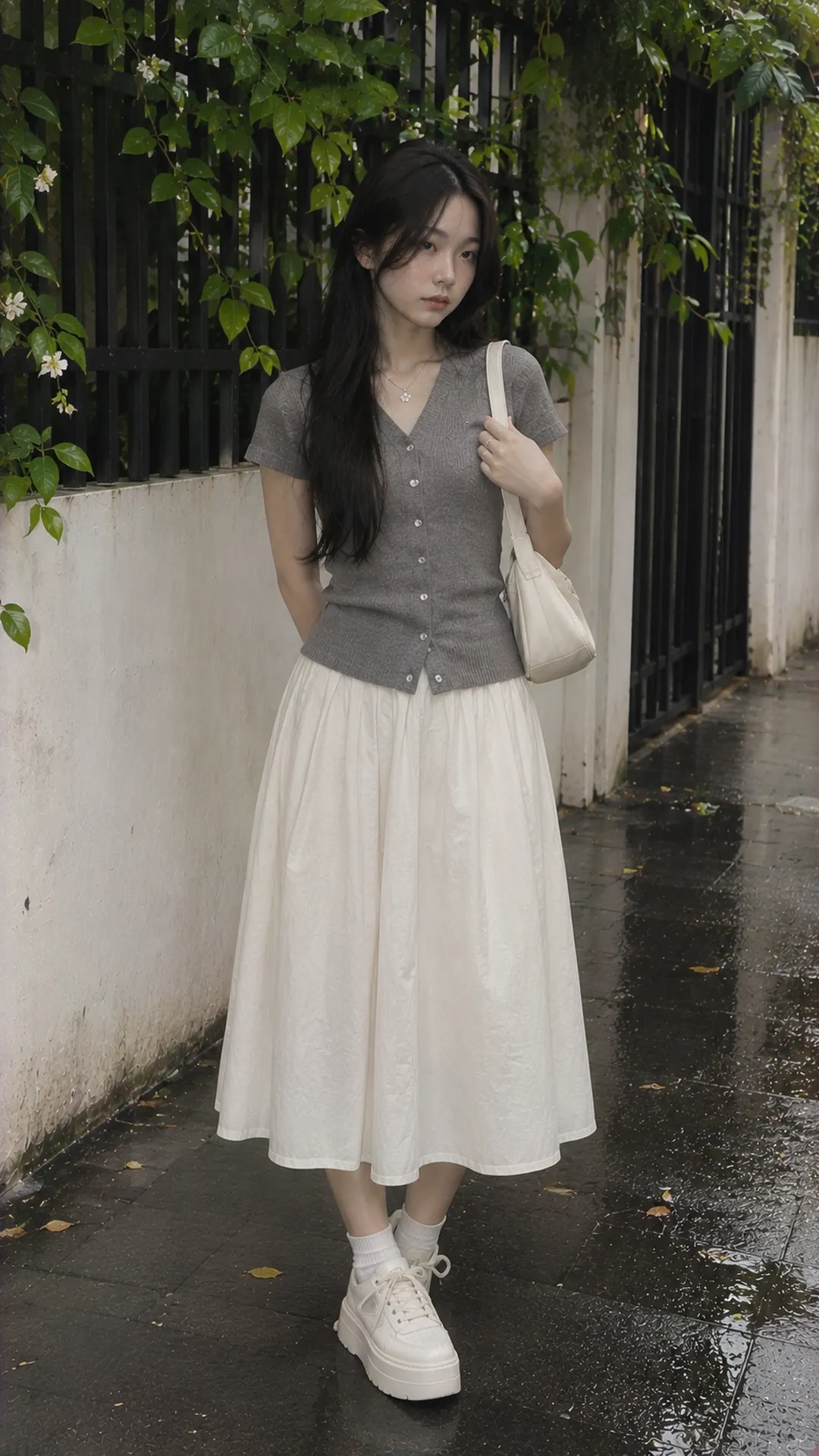
A midi can cover part of the upper while you stand and reveal more in motion. Walk and sit to check. A large sole can draw a lot of attention beneath a soft, full skirt. If you want a quieter finish, try a slimmer sole or a simpler upper.
A plain dress lets the straps of platform sandals show. If the dress already has ruffles or puff sleeves, a simple sandal gives those details room. A heavy sole can also be an intentional contrast with a delicate dress.
Color changes how much volume you see. Black shoes give a clear endpoint under a light skirt, while shoes close to the outfit color can make the transition softer. Compare them in person, since sheen, texture, and light can make shoes of the same color look different.
Choose for your walking plans and care routine
If you’ll change transport often or walk a long way, choose shoes you’ve already worn on shorter trips. A pair you’ve only stood in for photos may feel different over several hours. If you keep changing your stride to manage the shoes, try another design.
In hot, humid weather, consider socks, lining, and the time the shoes have to dry between wears. After use, check for dirt and follow the maker’s guidance for the materials. Uppers and soles can need different cleaning and drying methods.
A thick sole doesn’t establish waterproofing, and deep tread doesn’t guarantee grip on every surface. For wet or uneven ground, check the product information and how the shoes actually feel to walk in.
Try your first pair with three outfits you own
Try one outfit with trousers, one with a skirt or shorts, and one you wear often. Keep the accessories simple. If you’d need to change several pieces to make each outfit work, compare another upper or platform height first.
Identify what’s wrong: the hem catches, the heel slips, a strap presses, or the color doesn’t suit the outfit. Each problem calls for a different change. A different size won’t fix the color, and thicker socks won’t make room in a shoe that’s too short.
For other shoe styles, see our women’s footwear guide. A platform can add height, draw attention, or change the proportions of an outfit. Pick a pair that does what you want and still lets you move comfortably.