

What Are Mary Janes? Recognizing and Styling the Shape
What are Mary Jane shoes? The clearest feature is one or more straps across the instep. From classic flats to alternative platforms, that strap structure is the defining detail.
Recognize the shoe's construction first, then choose a version for Coquette, Vintage, Goth, or Dark Feminine styling.
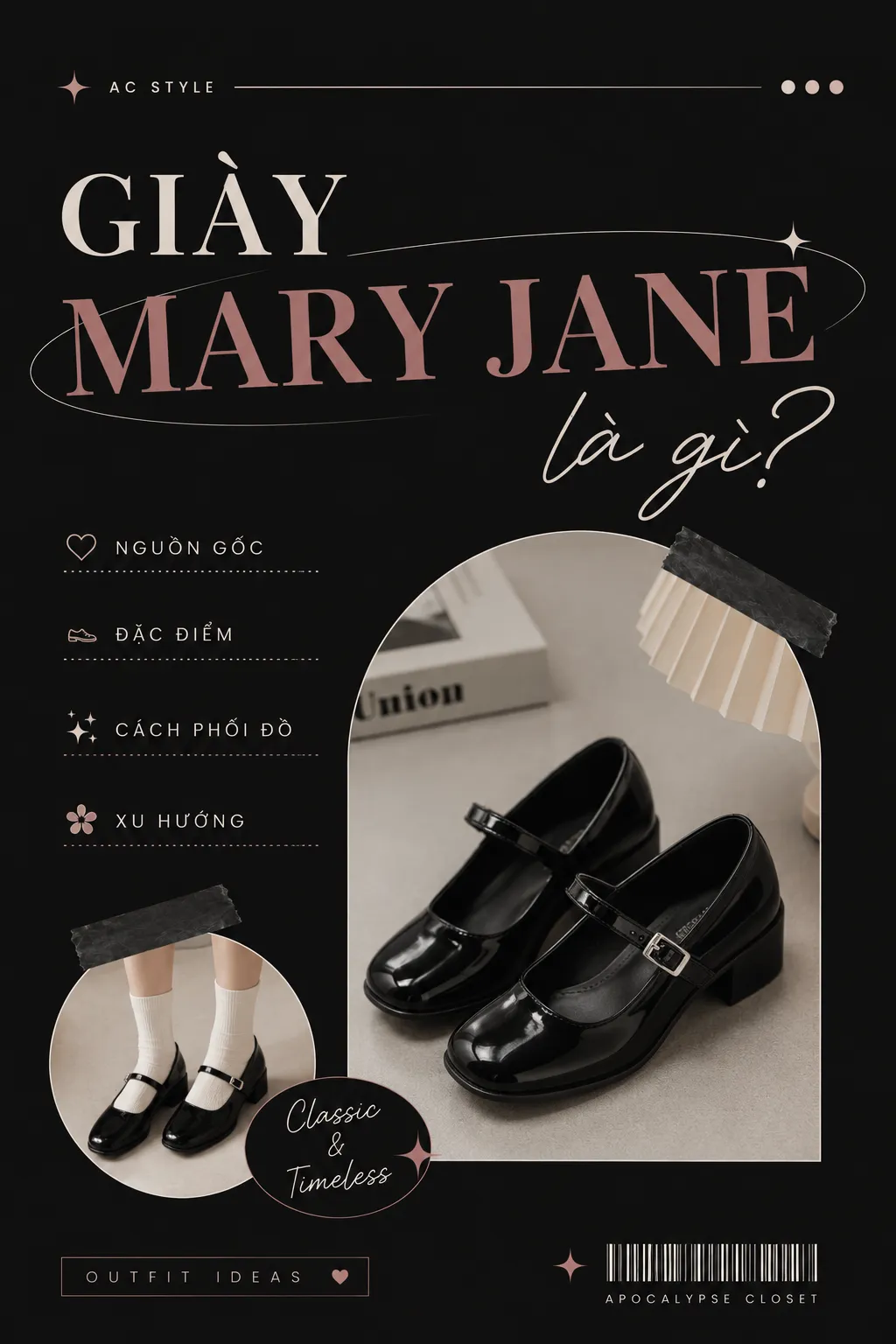
Guide collection: Women's Footwear Guide: Shape, Outfits, and Care
What Are Mary Jane Shoes?
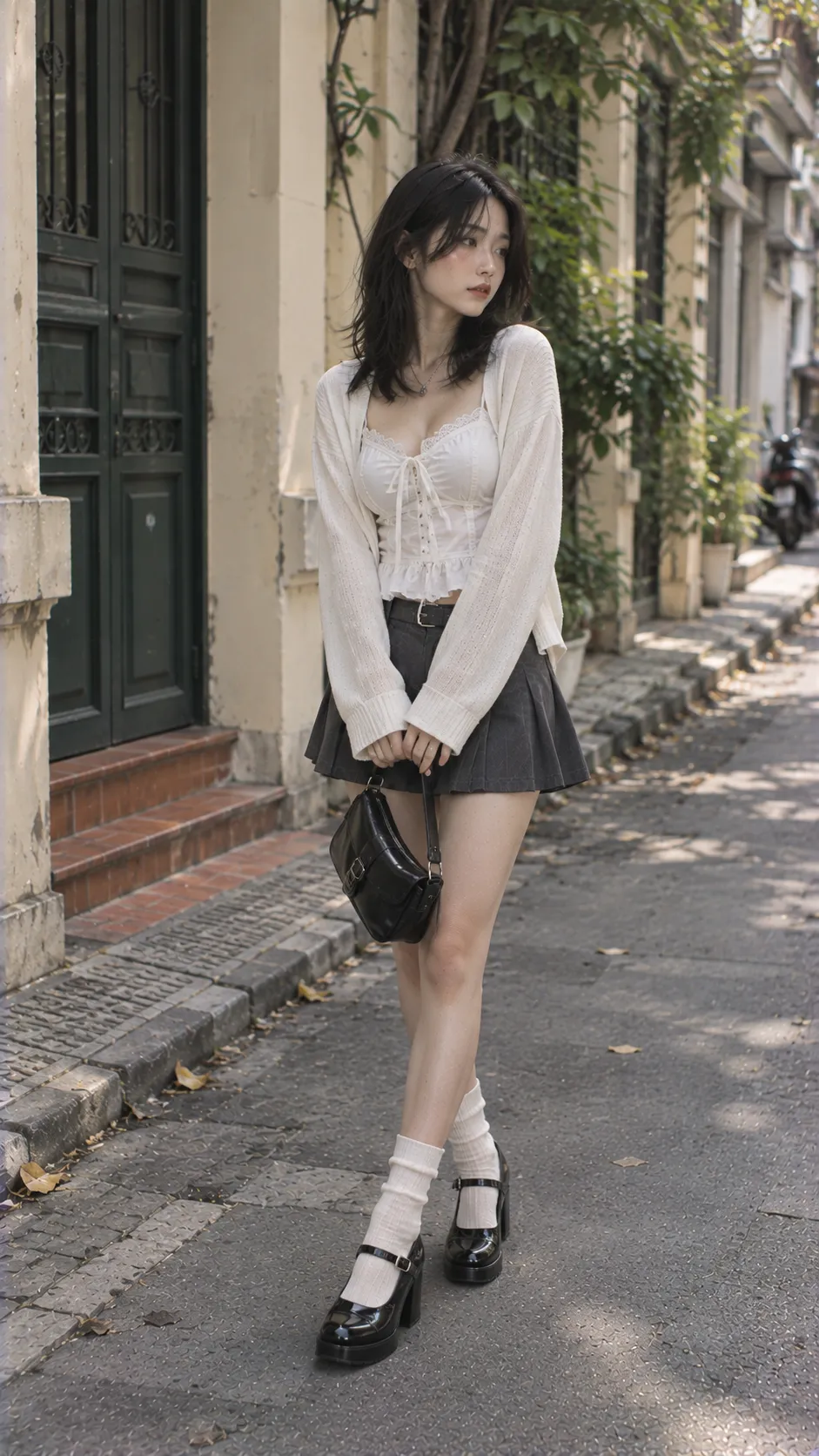
Mary Janes are shoes with a closed or mostly closed toe, a low upper, and one or more straps across the instep. That instep strap is the strongest identifying feature. Classic versions often have a rounded toe, low heel, and narrow strap; contemporary designs include square toes, block heels, lug soles, platforms, and multiple straps.
Mary Jane therefore names more than one aesthetic. It is primarily a footwear construction. The same foundation can suggest Preppy, Vintage, Coquette, Gothic, Dark Feminine, or alternative styling according to sole thickness, toe shape, material, color, buckles, socks, and clothing.
Quick answer
Look for a low upper with a main strap crossing the instep. A rounded toe or doll-like appearance alone is insufficient: ballet flats can have round toes without instep straps, while ankle-strap flats fasten higher around the ankle.
Why Are They Called Mary Janes?
Instep-strap shoes predate the name Mary Jane. Similar designs have been called bar shoes or strap shoes. In the early twentieth century, the name became associated with the Mary Jane character in the Buster Brown comic strip and gradually became familiar shorthand for the strapped shoe.
The shoe was not originally exclusive to women. Strapped versions appeared in children's clothing for boys and girls before repeated reinterpretations in womenswear. Current designs may retain schoolwear references or change the mood through platforms, substantial hardware, patent finishes, and sharper toe shapes.
How to Recognize the Mary Jane Shape
An ankle strap without an instep bar does not automatically make a shoe a Mary Jane. Conversely, a thick-soled or strongly Goth-looking design can still be one when the low upper and instep strap remain recognizable.
When shopping online, inspect overhead and side photographs rather than relying on listing names. Sellers may use Mary Jane loosely for various strapped flats; actual construction is more informative.
Common Mary Jane Variations
| Variation | Feature or preference | Visual effect | Possible style connections |
|---|---|---|---|
| Classic flat | Round or almond toe, low heel, one strap | A compact, retro outline; actual weight varies | Preppy, Vintage, minimal |
| Block-heel | A moderate block heel and more structured upper | Feminine with a more tailored finish | Casual office outfits or restrained Dark Feminine |
| Platforms | Thick sole and substantial visual weight | Adds lower-body emphasis and sole height | Goth, E-Girl, Alt |
| Multi-strap | Two, three, or more straps | Repeated horizontal lines and more decoration | Dark Coquette, Gothic, Lolita-inspired |
| Square-toe | Square toe and compact upper | A more angular alternative to a doll-like outline | Minimal, Y2K, fashion-forward |
| Mary Jane sneaker | Sneaker sole with an instep strap | A more casual, sporty interpretation | Street casual, sporty mix |
For a flexible first pair, consider suitable classic flats or low block heels. Platforms or lug soles may provide a stronger anchor for alternative or Goth outfits with pleats, dark layers, and metal details. Choose around your actual wardrobe and fit rather than the style name alone.
Choosing Mary Janes by Shape, Size, and Comfort
An instep strap may help retain the foot compared with an unstrapped flat, but it introduces another possible pressure point. Consider more than foot length.
- Length: toes should not press against the front while standing. Compare your measurements with the specific model's size chart where available.
- Toe-box width: assess the actual available space; a rounded shape is not automatically wider than every square or almond toe.
- Instep height: a higher instep may need a greater adjustment range. A short strap can press even when the shoe's length is suitable.
- Heel fit: a strap does not compensate for an excessively long shoe. Substantial heel lift with each step may indicate an unsuitable fit.
- Sole: assess pitch, ground contact, weight, and forefoot flexibility rather than judging walkability from platform height alone.
Try the socks, lace socks, or insoles you intend to wear. Extra thickness changes internal space and can affect pressure beneath the strap.
Mary Jane Materials for Vietnam's Climate
Smooth leather or matte imitation leather can be straightforward to coordinate and wipe clean, but stiff uppers or enclosed linings may feel warm during prolonged use. Patent leather creates a reflective finish for Coquette, Dark Feminine, or Goth; creases and scuffs may be more visible depending on the surface. Canvas or textiles can provide a more casual, lighter-looking interpretation, with performance depending on construction.
In humid heat, consider lining, ventilation, weight, and intended wearing time. A closed platform with a heavy sole and synthetic lining may be less practical for extensive walking than the photograph suggests. For everyday use, manageable weight, adjustable straps, and appropriate care may matter more than elaborate decoration.
Which Styles Work with Mary Janes?
Coquette / Dark Coquette
Mary Janes can connect socks, skirts, lace, and bows without using every reference together. A pair with lace socks and a simple skirt may be enough; keep the top quieter if desired. Read Coquette vs. Dark Coquette to compare lighter and darker interpretations.
Vintage / Preppy
Classic versions pair with cardigans, blouses, midi or pleated skirts, and cropped trousers for retro or Preppy references. If the clothes already carry many period details, simpler shoes can keep the result contemporary. The Vintage Style (Vietnamese) guide explains how to use a historical reference without recreating a complete costume.
Goth / Alt
Black platform or multi-strap Mary Janes can provide an alternative to boots when you want more ankle exposure with substantial visual weight. Lace, mesh, sheer tights, silver hardware, and dark skirts can reinforce the direction. A chunky sole does not require equally prominent buckles and chains everywhere else.
Dark Feminine
Black or burgundy block-heel and square-toe versions can work with midi skirts, straight trousers, compact corset-inspired tops, or square-neck blouses. A lower upper exposes more ankle than boots, while the strap creates a clear horizontal detail. Explore Dark Feminine Looks (Vietnamese) for complete outfit references.
Mary Janes, Platform Boots, and Pointed Boots in Dark Outfits
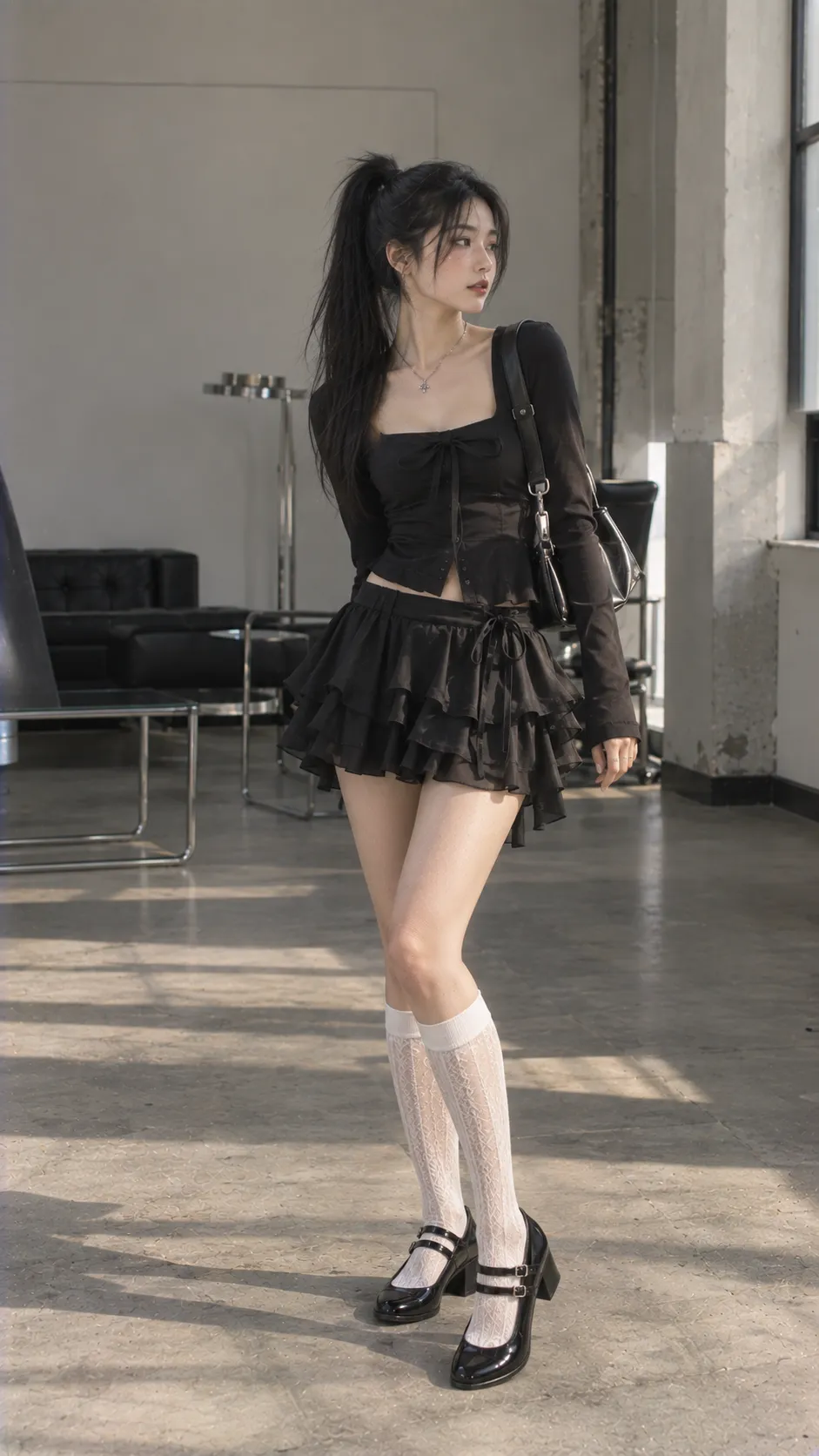
The Closet examples include one actual Mary Jane look and two footwear comparisons. Placing them together shows how the low upper exposes the ankle and how the strap adds a horizontal rhythm distinct from a boot.
Example scope: only Look #22 uses Mary Janes; the other two illustrate different footwear.
| Footwear | Accent | Silhouette effect |
|---|---|---|
| Mary Janes | A strap across the instep | A compact retro outline with an exposed ankle |
| Platform boot | A substantial sole and boot shaft | More visual weight below |
| Pointed boot | An elongated toe | A sharper, extended lower line |
Outfits for Proportion Comparison


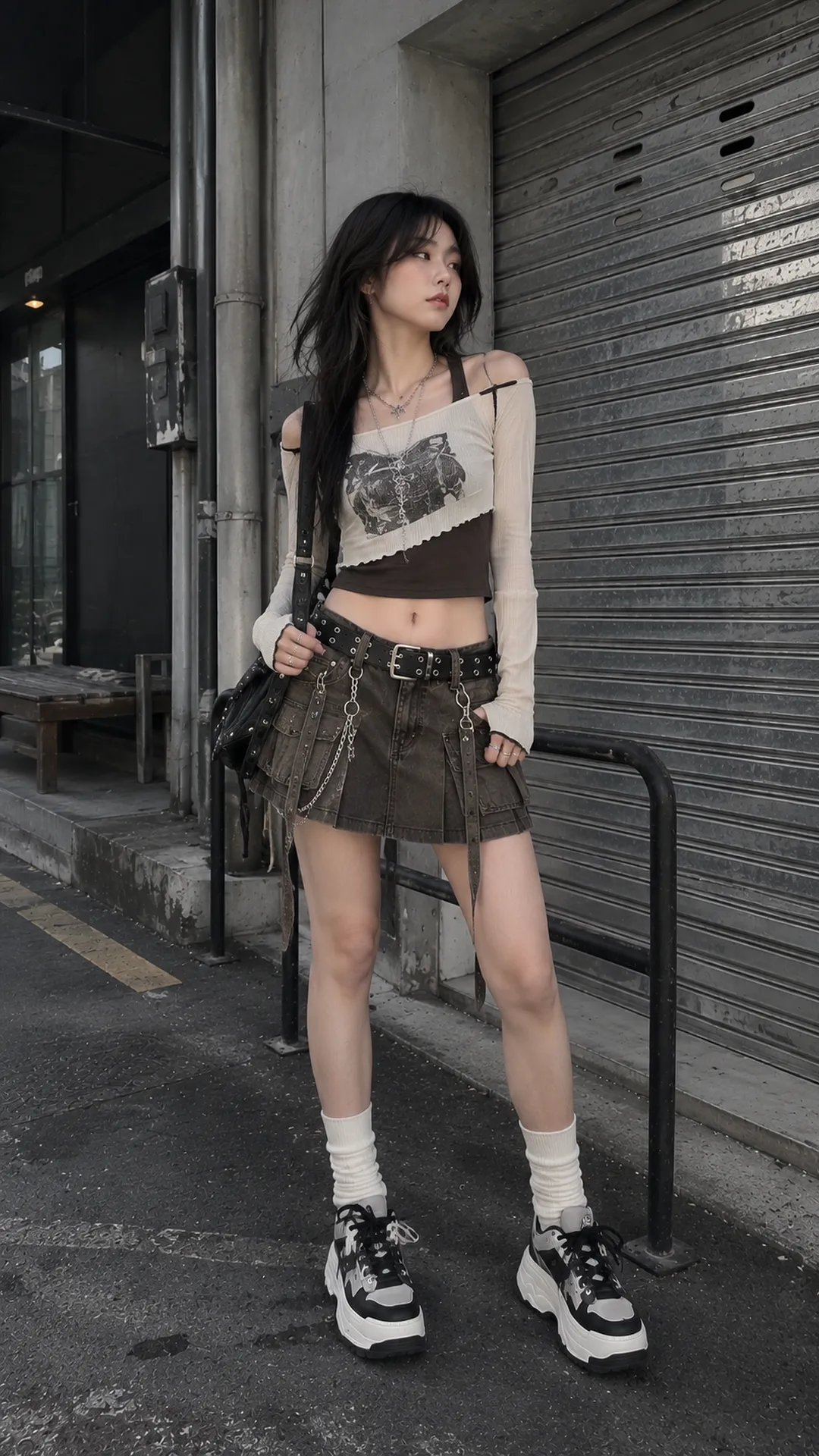
- LOOK #22 (Vietnamese): black Mary Janes with lace-trimmed jeans—the actual Mary Jane example. The strap adds a small horizontal detail while the upper remains lower than a boot.
- LOOK #46 (Vietnamese): platform boots with a pleated skirt—a comparison showing stronger lower-body anchoring.
- LOOK #108 (Vietnamese): pointed boots with a brown skirt—a comparison showing a sharper extended toe line for another Dark Feminine interpretation.
Socks, Skirts, and Trouser Proportions
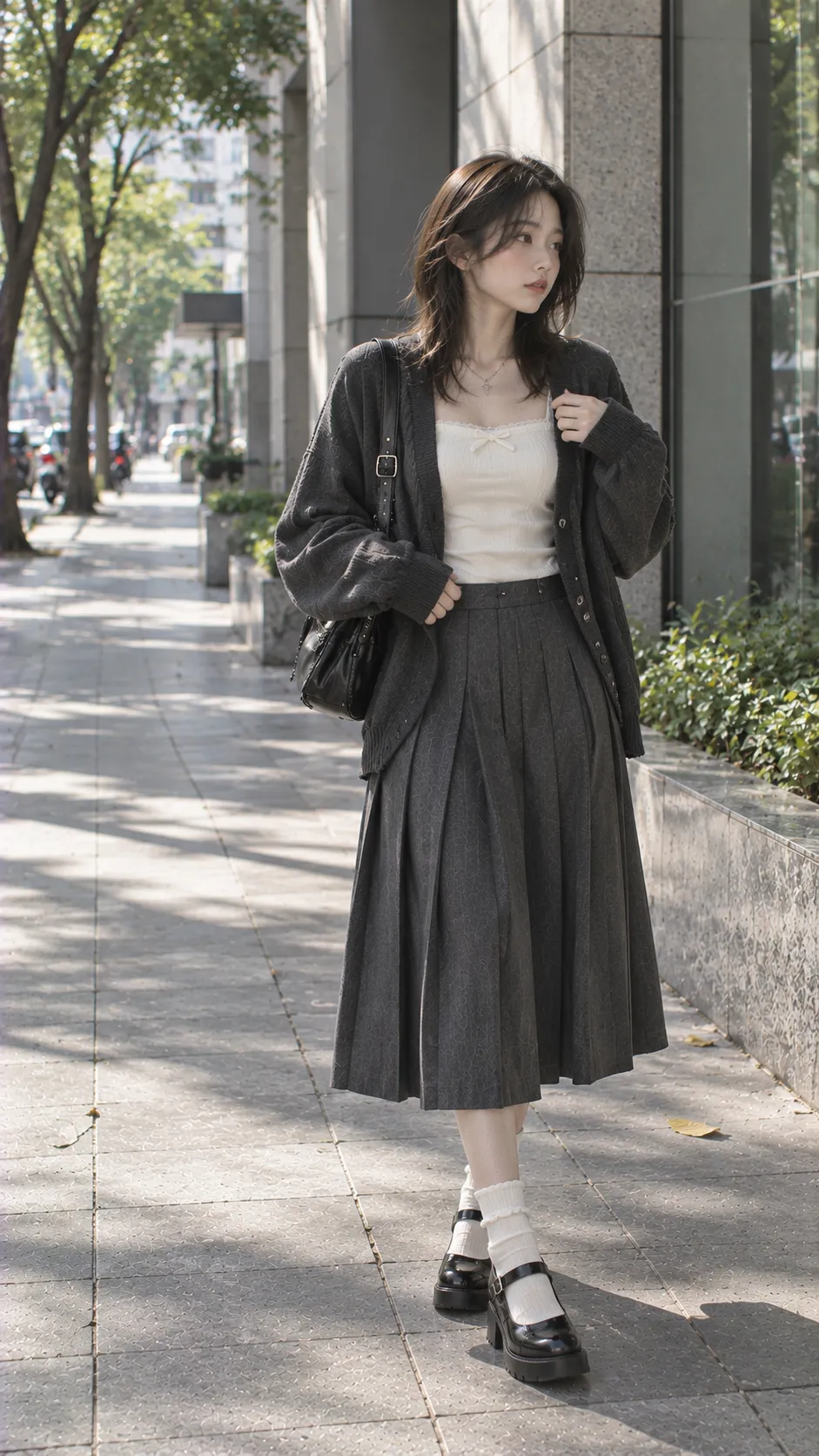
The strap creates a horizontal line across the instep. Sock cuffs, hems, leg warmers, and additional straps can introduce more breaks. That can be deliberate; decide whether you want continuity or visible segmentation.
| Direction | Approach | Details to reconsider |
|---|---|---|
| A more continuous lower line | Similar sock and shoe colors, with a clear, less layered skirt hem | Contrasting socks, multiple straps, and several hem tiers together |
| Emphasize the shoes | Contrast socks or leave the ankle bare, with simpler bottoms | Trousers long enough to conceal the whole strap |
| Wear a midi skirt | Try a compact upper or moderate block heel | A hem at the widest calf area with a broad strap if fewer horizontal breaks are the goal |
| Wear trousers | Cropped, straight, or wide legs with length that reveals the toe and strap | Completely covered uppers when the aim is to show the Mary Jane construction |
For midi or pleated skirt combinations, explore midi skirt outfit ideas and pleated skirt outfit ideas to assess hem placement and footwear weight.
Mary Janes vs. Ballet Flats, Loafers, and T-Bars
| Shoe type | Defining feature | Difference from Mary Janes |
|---|---|---|
| Mary Janes | Low upper with an instep strap | The instep strap is the defining feature |
| Ballet flats | Very low upper, often flexible and unstrapped | A cleaner upper with fewer horizontal structural lines |
| Loafers | A higher or more enclosed vamp, often slip-on | Stronger menswear or Preppy references; no instep strap required |
| T-bar / T-strap | A vertical strap connects the vamp to a cross strap | A visible T-shaped axis rather than only a horizontal bar |
| Ankle-strap flats | A strap around the ankle | Retention is positioned at the ankle rather than the instep |
Modern designs can combine categories: Mary Jane loafers, sneakers, and pumps exist. Assess strap position, upper coverage, and sole construction rather than forcing every pair into a rigid category.
If comparing ballet flats, read What Are Ballet Flats? Balletcore and Alternative Styling. Both can have a soft, feminine appearance, but an instep strap changes the upper's structure and may alter retention and pressure.
Caring for Mary Jane Straps and Shape
Straps and buckle attachments take repeated stress. Unfasten or loosen them before removing the shoe rather than forcing your foot out. For leather or imitation leather, follow material-specific instructions, wipe suitable surfaces gently after light moisture, and dry naturally with ventilation. Avoid direct high heat.
Store patent finishes away from surfaces that may transfer color and reduce rubbing. Spot-clean canvas or textiles unless the manufacturer allows washing or immersion. Suitable clean paper or an appropriate lightweight shoe tree can help retain a structured round or square toe; avoid stretching the upper excessively.
Seven Common Mary Jane Selection and Styling Mistakes
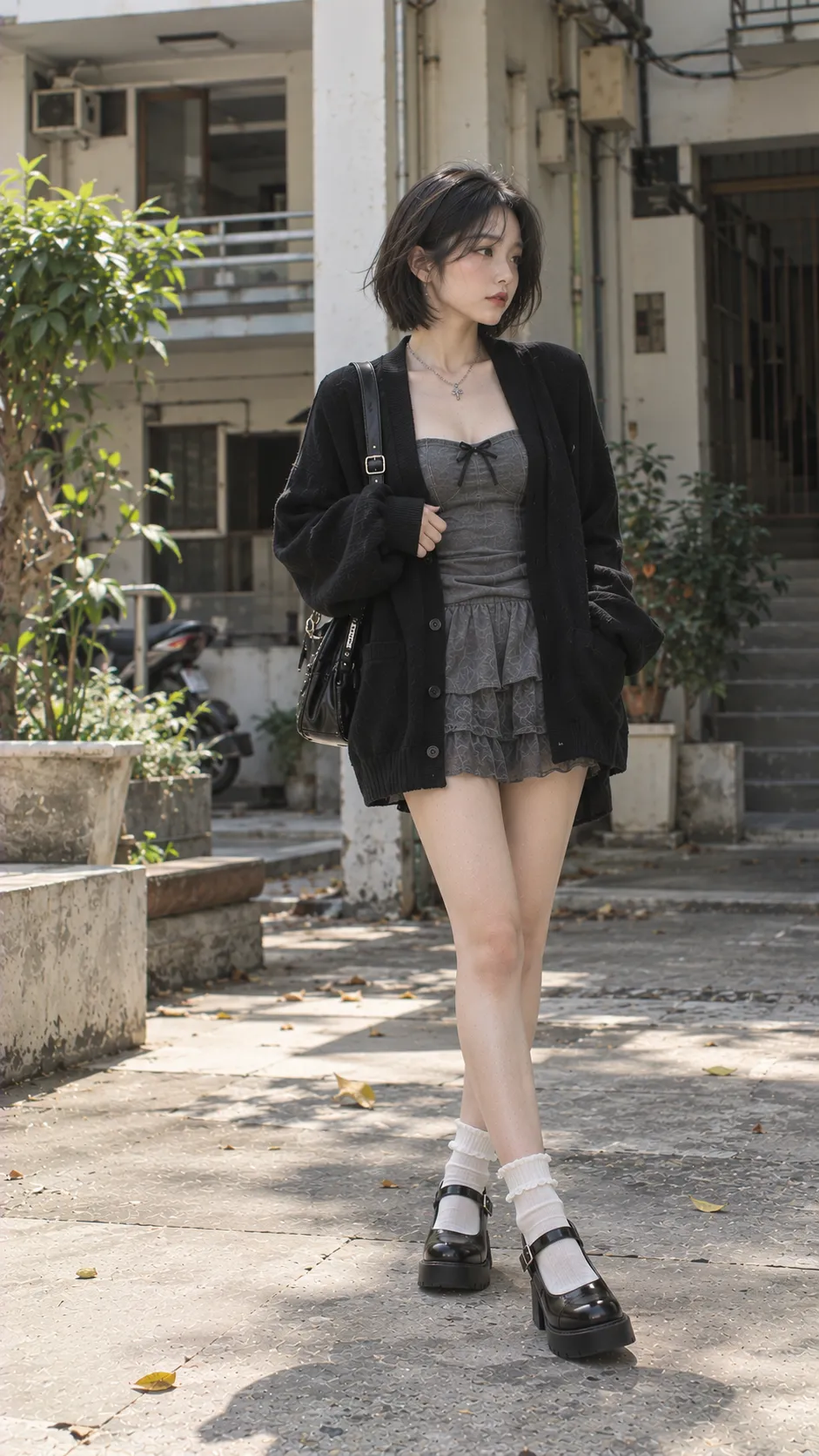
- Calling every flat a Mary Jane: identify the instep strap first.
- Relying on one numbered size: consider length in centimeters, width, and instep height.
- Overtight straps: a suitable length does not guarantee comfortable contact over a higher instep.
- Heavy platforms without another visual anchor: the footwear can dominate a lighter outfit more than intended.
- Every doll-like reference together: bows, lace, socks, minis, and multiple straps can create a more theatrical result; choose that deliberately.
- Hiding the strap beneath long trousers: the characteristic construction becomes less visible.
- Buying only for a trend: if loafers, flats, or boots already serve your needs, add Mary Janes when you specifically want their strap and visual mood.
Are Mary Janes a Wardrobe Essential?
No. Consider them when you want a combination of feminine references and visible structure. Their lower upper can offer a different outline from boots, loafers, and unstrapped flats. They may be useful across Coquette, Vintage, Preppy, Dark Feminine, and alternative wardrobes, depending on the design.
If you are unsure how they work with existing clothes, compare combinations in the Online Outfit Styling App (Vietnamese) against boots or loafers. A useful pair should support several outfits rather than only one moodboard photograph.
Frequently Asked Questions
What are Mary Jane shoes?
Mary Janes typically have a low upper with one or more instep straps. Classic designs often use a rounded toe and low heel; modern variations include block heels, platforms, square toes, and multiple straps.
Are Mary Janes the same as ballet flats?
They may overlap with the wider flat-shoe category, but not every ballet flat or low shoe is a Mary Jane. The instep strap remains the clearest distinguishing feature.
What can you wear with Mary Janes?
Try midi or mini skirts, dresses, cropped trousers, jeans, and tailoring. Classic flats can suggest Vintage or Preppy; platforms can support Goth or alternative outfits; block heels or square toes can connect with Dark Feminine.
How do Mary Janes differ from ballet flats?
Ballet flats often have low unstrapped uppers. Mary Janes are recognizable by their instep strap, which can change foot retention and pressure. Check adjustment room for a higher instep.
Can Mary Janes work for wider feet?
Yes, with sufficient toe-box space and suitable strap adjustment. Assess actual width and the specific model's chart rather than automatically sizing up or assuming a particular toe shape guarantees room.
Are platform Mary Janes difficult to walk in?
Not necessarily. Pitch, weight, flexibility, ground contact, fit, and your activities all matter. A broad platform may feel different from a narrow heel of similar height, but neither appearance nor height guarantees stability or comfort.
References
Footwear history and construction are cross-checked against the resources below. Outfit proportion analysis is Apocalypse Closet editorial interpretation.