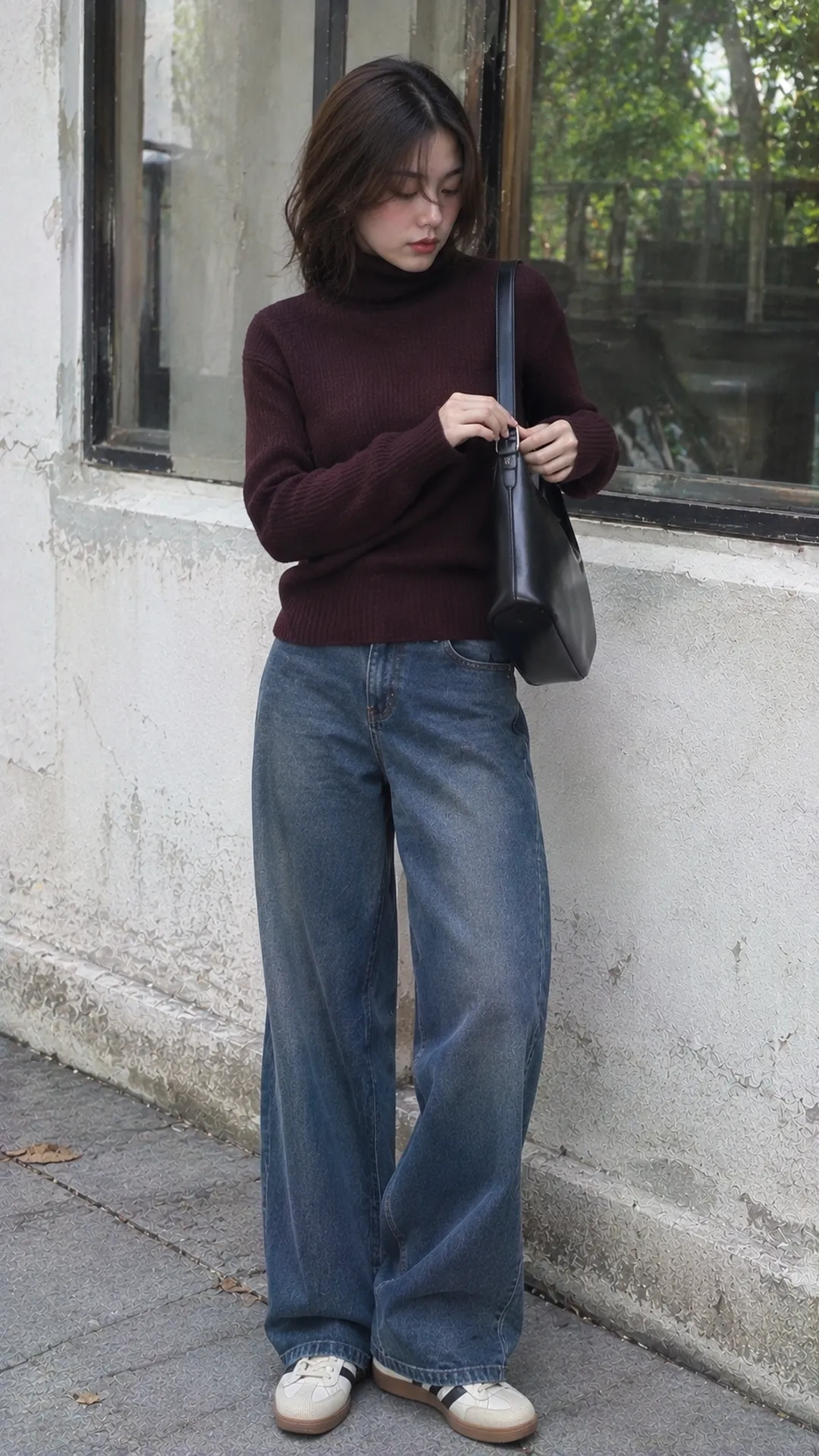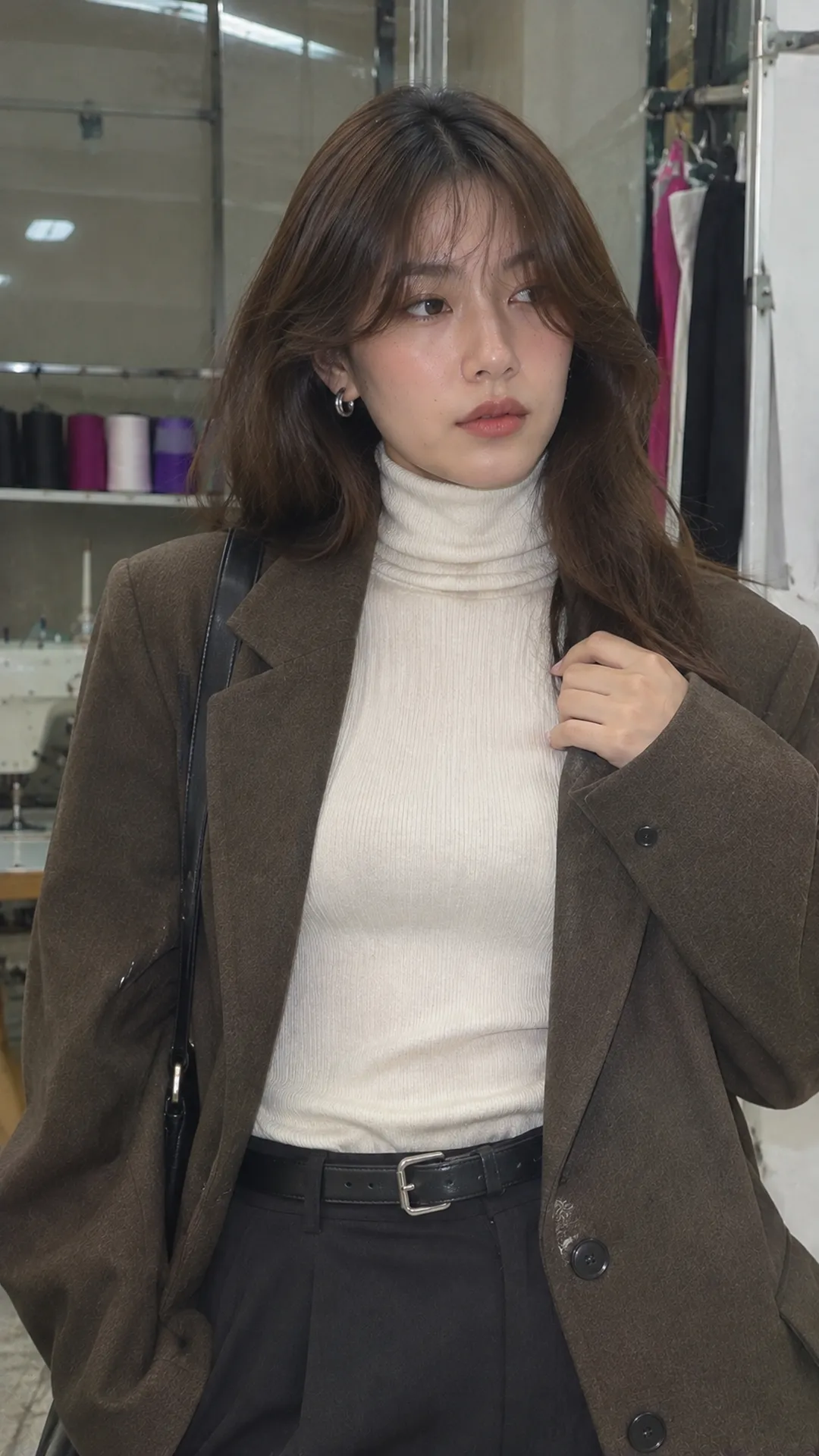
Check the collar before choosing pants and layers
A folded turtleneck adds a band of fabric around your neck. In a chunky knit, the fold can become the main feature. If it touches your chin or bunches, fold it as designed. Try a lower collar if it still feels uncomfortable.
A fine fitted neck usually sits more easily under a shirt, cardigan, or blazer. Check opacity at the bust, shoulders, and elbows when the fabric stretches, especially with a light color or loose ribbing.
A low mock neck covers part of the neck and leaves more space below the chin. Check collar height, the neck seam, and a side photo before buying.
If you’re comparing top styles, our guide to choosing and styling women’s tops covers each category. Start with the turtleneck collar before choosing pieces that sit near it.
Hair and earrings change the space around the neck
Long hair worn in front can cover both sides of the collar. To show the fold or color, tuck one side behind an ear, tie a low ponytail, or move the hair behind your shoulders. A small opening can make the collar edge visible.
Shoulder-length hair can rest on the collar. Check from the back for ends that flip up or catch on the knit. A lower collar or smoother finish changes the effect even when the sweater body is the same.
Studs leave the collar and hair in focus. Long earrings create another line near the neck. Turn your head to check whether they touch the fabric. With a large collar and earrings, keep the hair clear so both details show.
If you wear a necklace, place it where it sits clearly on the sweater below the fold. A heavy pendant can pull a fine knit, and a short chain may disappear into the collar. Check how it sits on the actual garment.
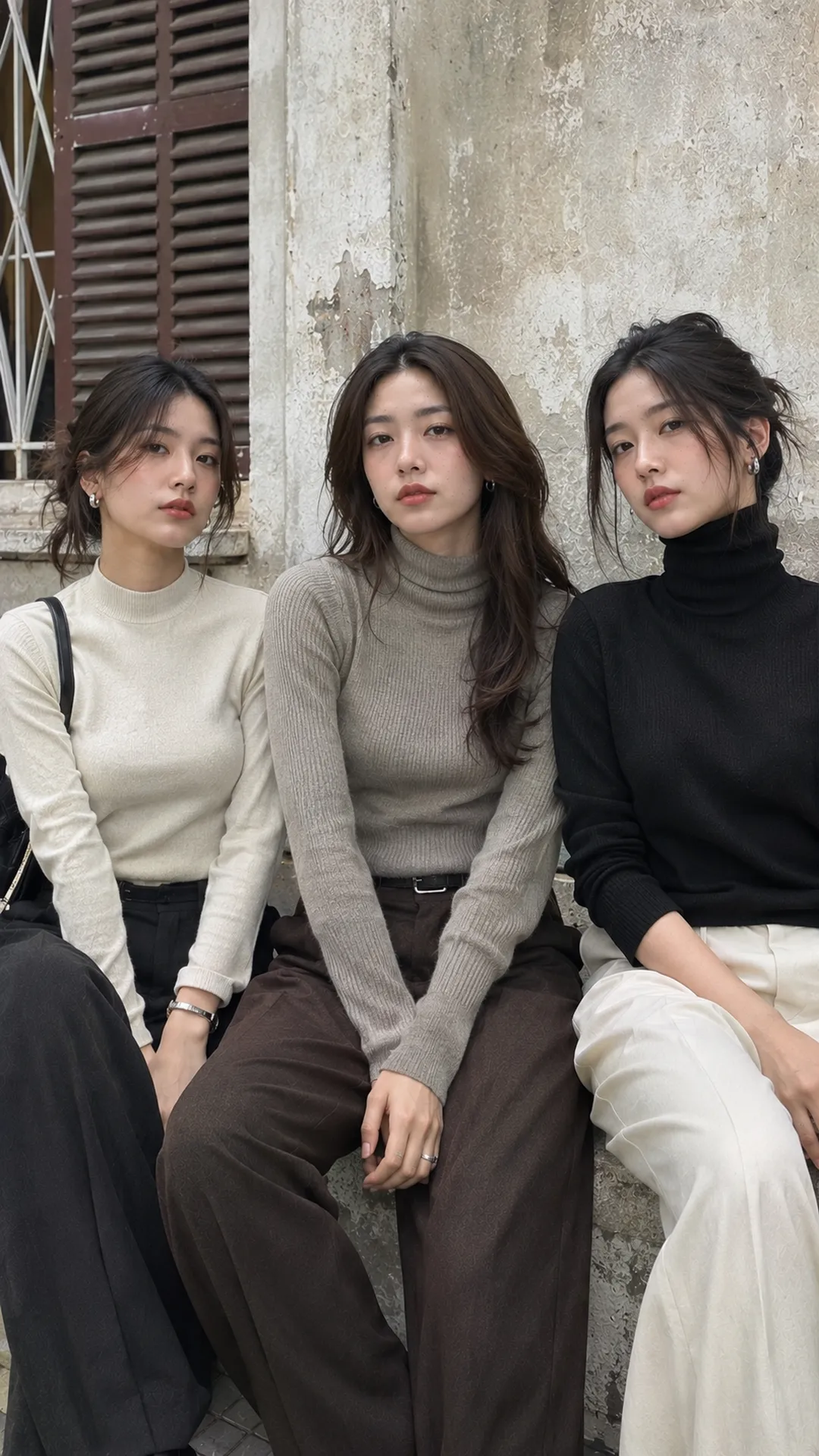
Fine turtlenecks: show the waist and keep the base smooth
A fitted turtleneck and straight pants contrast a slim upper half with a roomier leg. With black, try gray trousers, blue denim, or another dark piece. Different finishes can distinguish the garments within a close palette.
For a tuck, smooth the top before fastening the waistband, then sit. A long top can bunch at the stomach and hips, while a short one can come out when you raise your arms. Choose a length that stays where you want it.
If you leave it untucked, check where the hem falls relative to pockets and the widest part of the pants. A hip-length hem makes a clear break, while a longer top extends the upper half. Pick the proportion you like.
A fine turtleneck keeps the waist smooth under a flared or pleated skirt. Choose smooth underlayers and check in daylight. If the fabric only lies flat in one position, try a different fit or tuck.
Chunky turtlenecks: find a clean line without a bulky tuck
Raised stitches, wide sleeves, and a folded neck all add volume. Balance it with straight pants, a straight skirt, or a little wrist showing. A clear outline in one area can give the outfit definition.
A full tuck with thick knitwear can leave a bulky ring at the waist. Leave the top loose if the hem already sits where you want it. For a partial tuck, use a small section and check both sides for uneven pulling.
A roomy hip-length sweater and long straight pants can look relaxed. Choose shoes that show enough below the hem and keep cuffs clear of your hands if you want a neater line. Slim or chunky shoes can both work, depending on the outfit.
To compare leg widths, see our guide to women’s pants by cut and rise. Look at where the waistband and sweater hem meet when deciding which pants to wear.
Three outer layers that frame a turtleneck differently
Open blazer
Open lapels frame the center of the turtleneck with two vertical lines. A fine knit leaves room at the shoulders and underarms. Button the blazer, reach forward, and sit to check the fit both ways.
With a black blazer and turtleneck, try matte knit against smooth tailoring. To highlight the collar, choose cream or light gray. The turtleneck itself already adds a layer at the neck.
Open or partly buttoned cardigan
A V-neck cardigan can reveal a V-shaped area of knit beneath the turtleneck. With two thick layers, check the shoulders and elbows. Choose enough sleeve room and check the length as well.
A short cardigan leaves the waist visible. Keep a longer one open so the turtleneck shows through the middle. See our guide to styling short and long cardigans for help choosing the outer layer’s cut.
Collared or zip-up jacket
Two high collars can touch or push up your hair. Lower the zipper a little or try a lower turtleneck. If you need both collars up for warmth, check that you can turn your head comfortably.
With a short jacket and visible waistband, a long turtleneck can show below the jacket as a band. Tuck it in or choose a different length if you prefer. See our guide to layering women’s outfits for more on arranging layers.
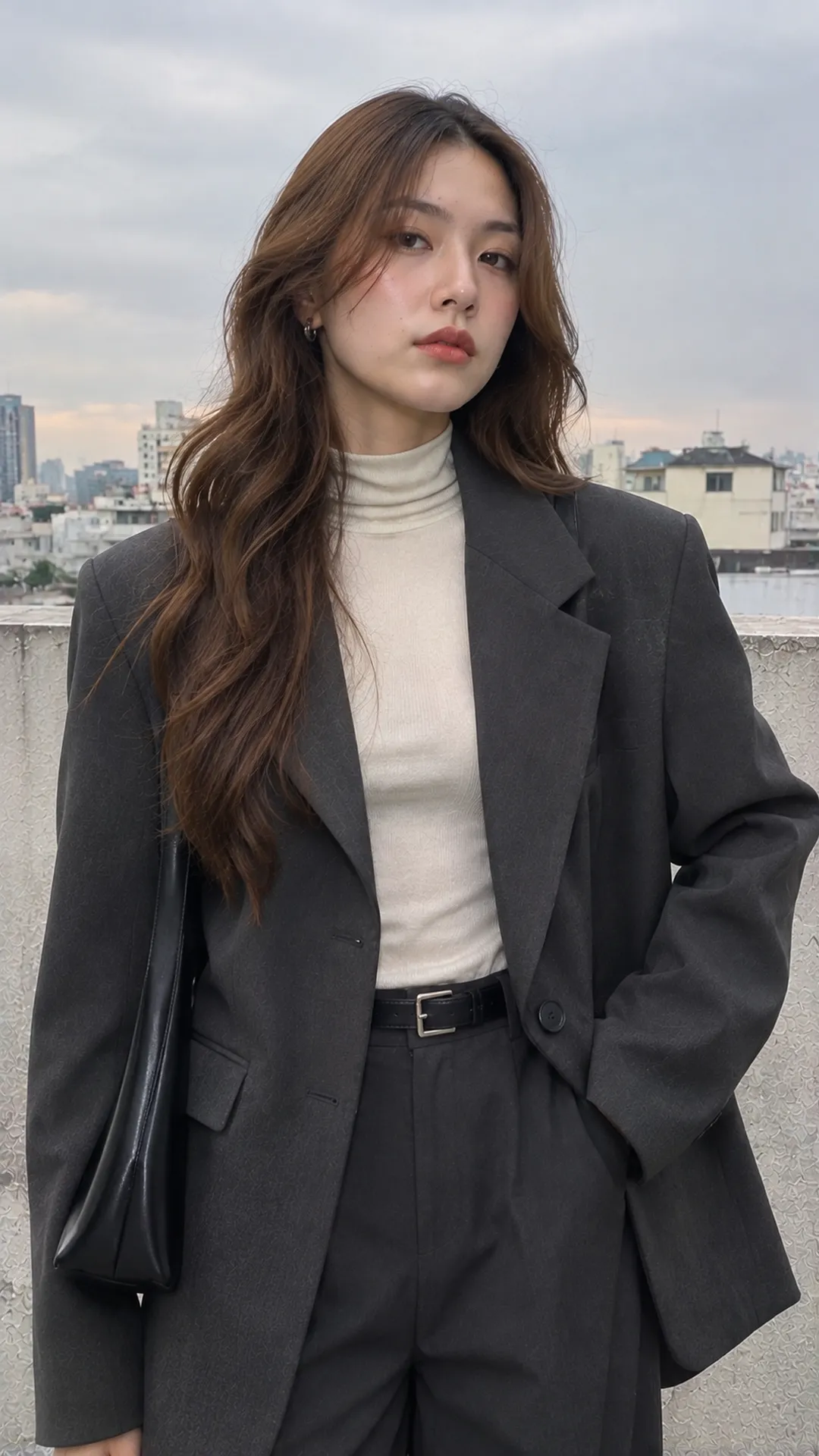
Compare the colors near your face under the same light. If the collar is the brightest area, decide whether you like the focus there. Choose a shade close to the jacket for a softer effect or two different lightness levels for contrast. Use the same camera angle without filters and judge comfort in person.
Three outfits to try with a turtleneck you own
For class or work in a cool room: Try a fine gray turtleneck, straight black trousers, loafers, and an open blazer. The waistband gives a clear break and the lapels show the knit. Change the base or remove the jacket if you’ll be outdoors in the heat for long.
For a casual outing in cool weather: Try a cream turtleneck sweater, straight jeans, simple sneakers, and a shoulder bag. Leave the hem loose if it hits where you want, and tie your hair low to show the collar. Check that the strap stays in place.
For a clean, dark outfit: Try a black turtleneck, straight gray skirt, boots, and one small metal detail. Check the gap between the skirt and boot shaft when standing and walking. A visible zipper or belt can supply enough detail.
Use these outfits to test proportions. Swapping a fitted fine knit for a boxy chunky one changes how it tucks, how it fits under a jacket, and how much it stands out. Adjust the other pieces to the sweater.
Check the collar, sleeves, and hem before going out
Turn your head, bend slightly, and raise your arms to check whether the collar shifts. Sit with the jacket on. Check folds at the stomach, shoulders, and underarms for excess fabric.
In hot, humid weather, consider time outdoors, knit thickness, and whether you can remove the jacket. A sleeveless top with a high collar can still feel stuffy. Check construction and comfort as well as color and fiber names.
When buying online, ask for collar height after folding, sleeve length, body length, and garment width. Read the care label. Handle the collar gently and support a heavy sweater so the shoulders keep their shape. A collar that stays in place makes the outfit easier to wear.