

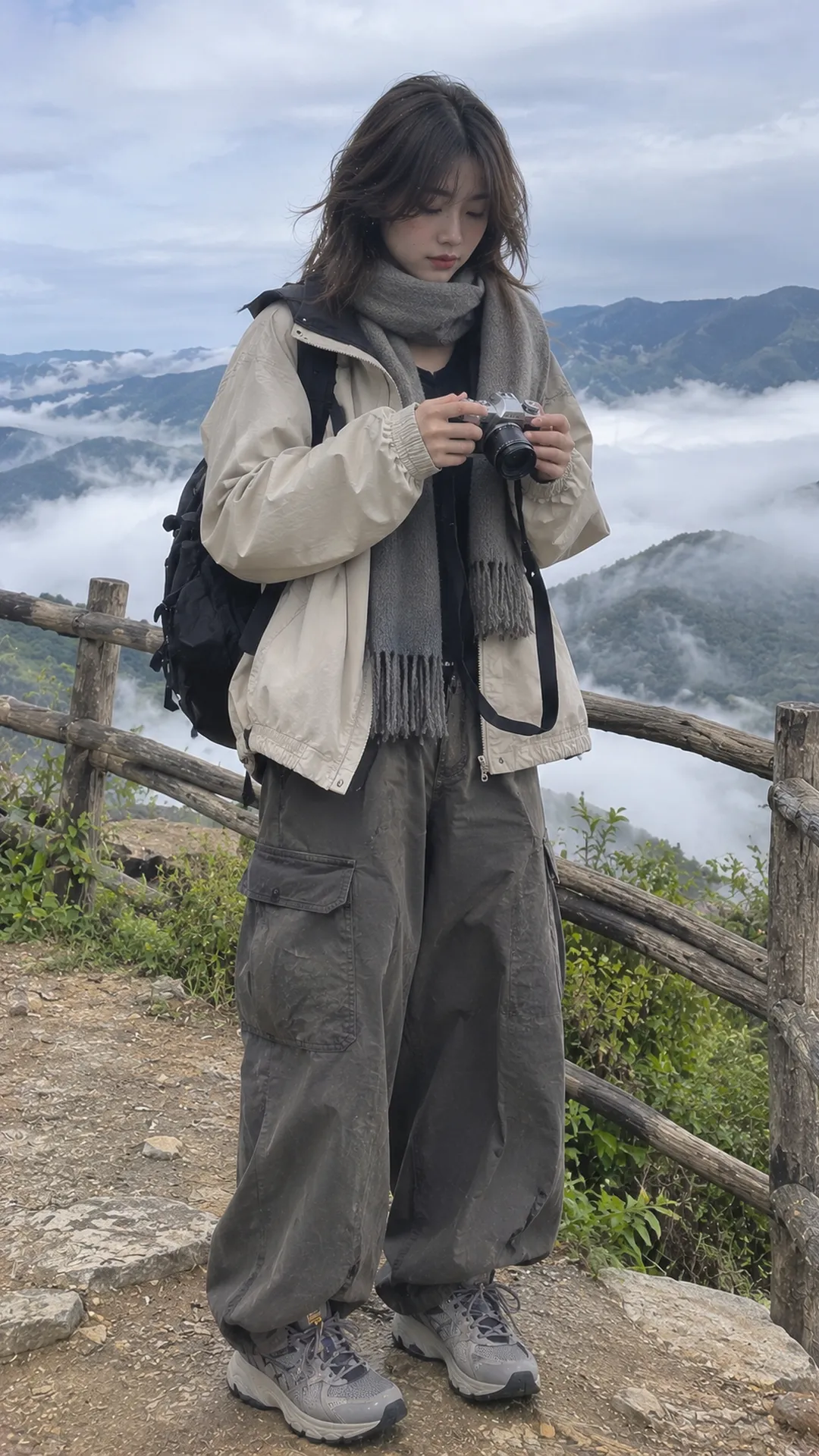
Separate travel needs from photo needs
Divide clothing into travel base and stop-specific adjustments. Travel needs seated comfort, an easy waistband and no hard back-pressure details. Adjustments may be one jacket or scarf rather than many complete sets.
For dirt-path walking, do not adopt an indoor café formula by default. Ground-touching hems, smooth soles or handheld bags can inconvenience. Choose for the most demanding section you actually intend to use.
For flights or long vehicle rides, see choosing women's airport outfits for travel clothing, then add destination-appropriate outerwear. Easy seated clothing does not automatically meet prolonged outdoor needs.
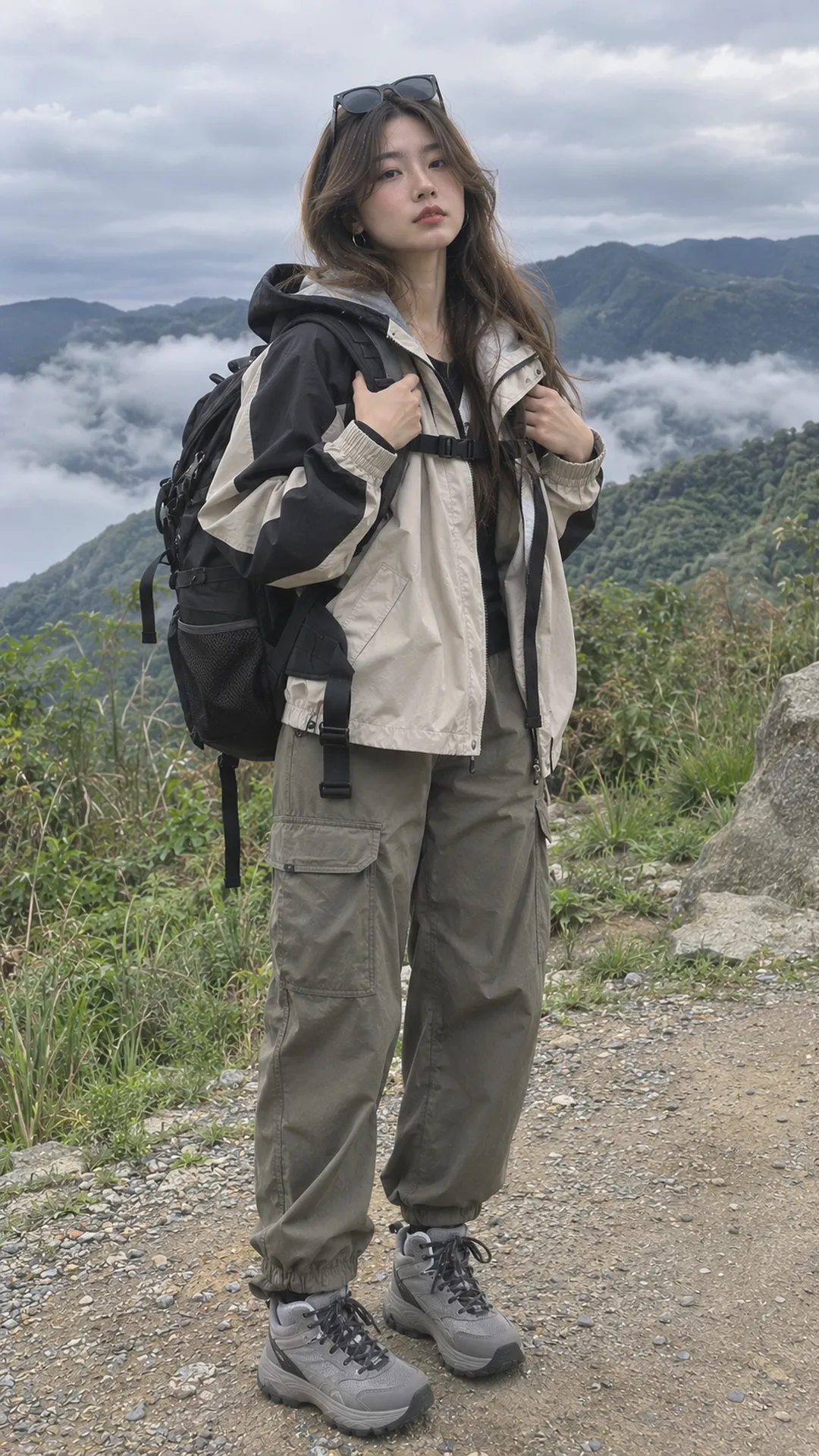
Give every layer a clear role
REI's layering guide distinguishes a moisture-managing base, insulating middle and wind/rain-protective outer layer. These are functions, not a requirement for three simultaneous garments. Change worn layers with conditions and activity.
Try the intended order together. The middle should fit within outerwear without shoulder tension or tight armholes. Individual trials can miss sleeves rolling and fabric bunching.
For neatness, let one layer define shape and simplify others. A roomy jacket can frame a fitted base; short outerwear needs inner-length checks. The women's layering guide balances visible proportions.
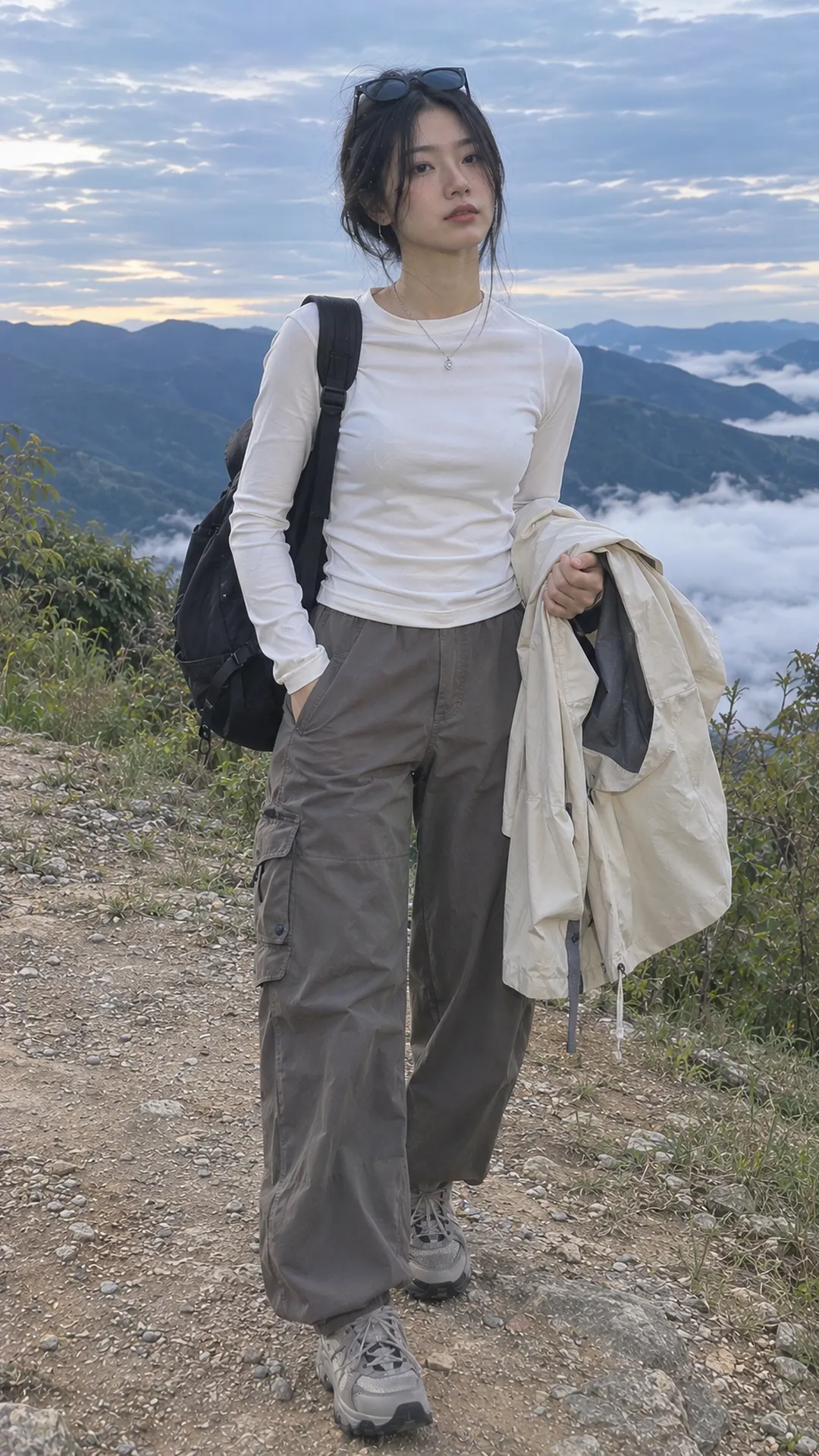
Summer: adaptability rather than minimal clothing
For forecast warmth and light activity, try a well-fitting tee, straight trousers with neat hems and packable light jacket. Prefer clothing already comfortable rather than infer performance from photos or fiber names.
With sun and prolonged outdoor stops, keep the jacket accessible without unpacking everything. Check bag room after removal. Practical stowage beats a jacket always carried by hand.
Pale trousers photograph lightly but need consideration of seating and dirt or water. Medium gray, olive or brown below with light above is another option. This distributes color by activity rather than imposes summer colors.
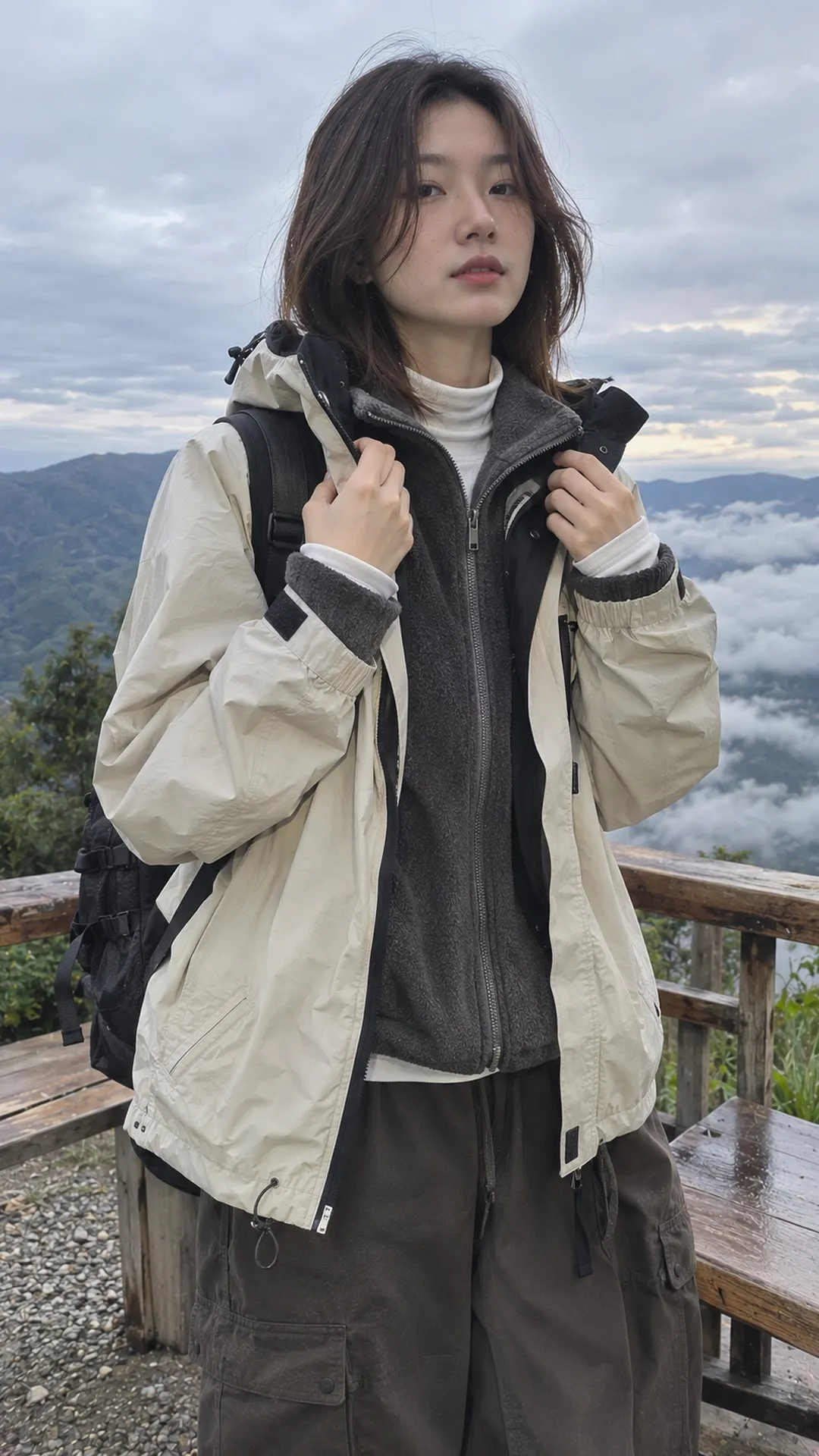
Winter: try the whole outfit before packing
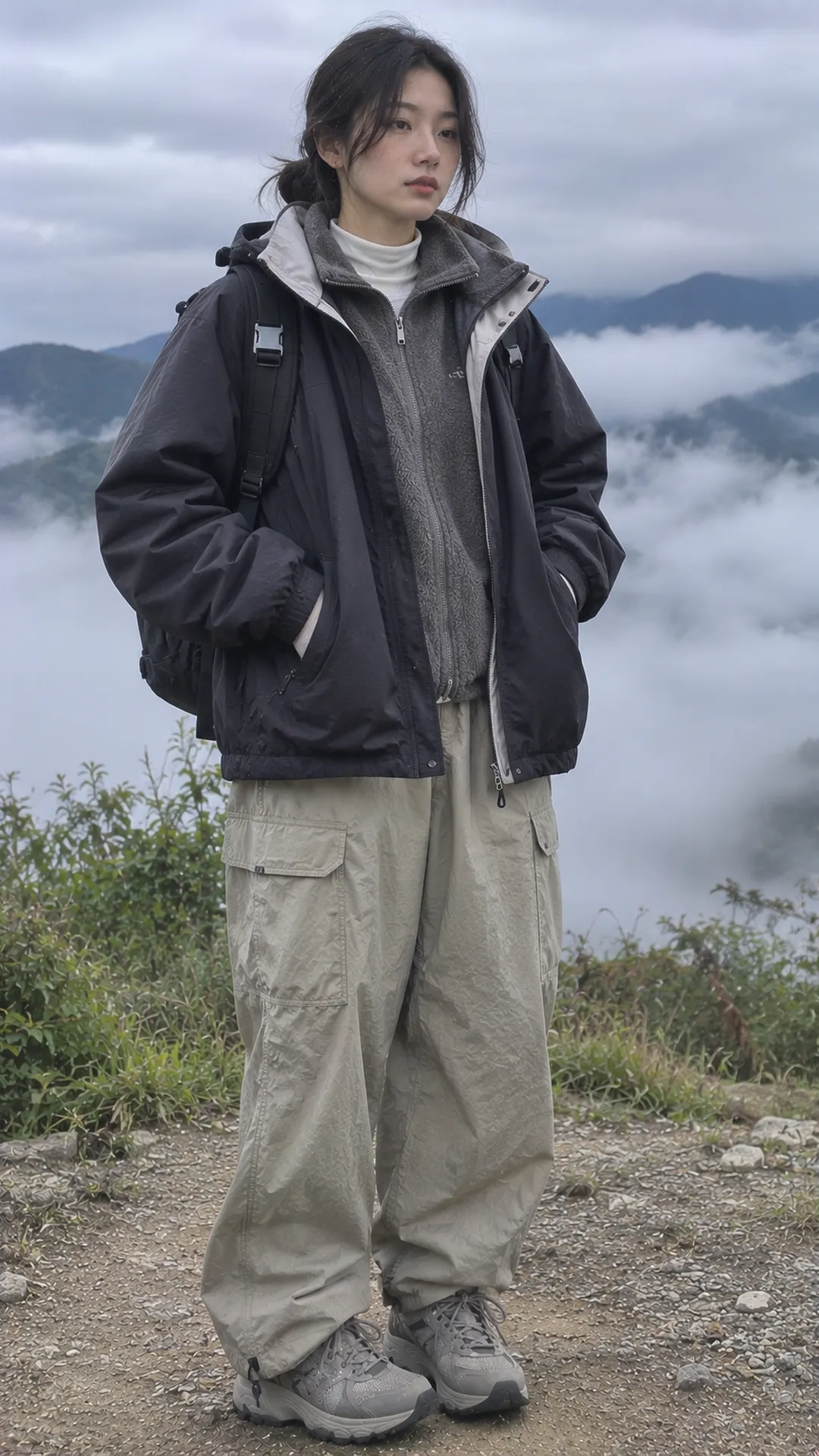
For forecast cold, start with a fitted base, add suitable warmth and test outerwear fully fastened. Reach as for a backpack and sit. If inner layers rise, reassess the combination's length and width.
Puffers, sweatshirts and knits create different volumes. Appearance alone cannot determine warmth. Read product information against expected conditions; large outerwear does not necessarily replace needed weather protection.
Substantial coats can pair with straight or gently tapered trousers. For wide legs, keep hems off the ground and an identifiable inner waist when the coat comes off. Tight lower clothing is unnecessary to balance a roomy jacket.
Trousers and skirts: stride before imagery
Straight trousers or sufficient hip and knee room offer an easy start. Use a low step, squat within comfort and check waistband slipping or pressure. Fill pockets as intended because contents can limit movement.
Comfortable jeans may suit vehicle travel and light walking. For intensive activity or likely wetness, reassess weight, movement and the actual item's information. Shared names do not guarantee shared features.
Skirts suit manageable stops and surfaces. Test stride, sitting and wind stability. Constant hem holding suggests another travel outfit, reserving the skirt for a suitable stop.
For cut comparisons before packing, see the women's trouser styling guide. Resolve hems and stride before decoration. A defined leg line gives neatness without many accessories.
Shoes must suit surfaces and intended socks
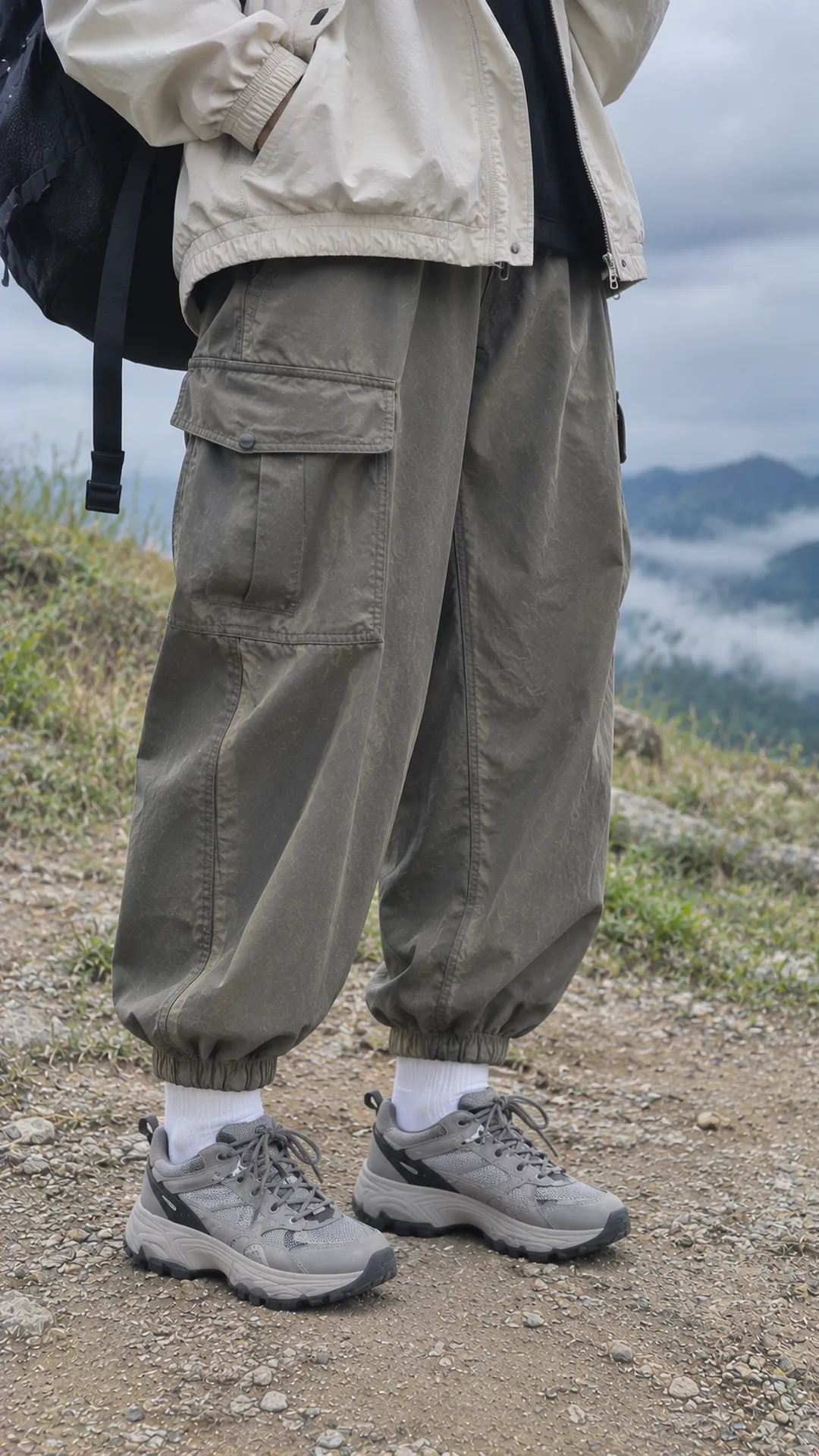
Use intended socks, walk and step up and down. Check heel sliding, toes crowding forward and secure lacing. Familiar size numbers cannot establish fit across models.
For uneven ground, inspect intended use and outsole specifications. Fashion boots or thick-soled sneakers are not automatically suitable for wet dirt. If specialist footwear is required, prioritize it before trouser and top colors.
Women's shoe-based outfit styling balances collars and hems. Once activity-compatible shoes are chosen, adjust trousers against bunching or dragging. Avoid an untested pair selected only for jacket color.
Three adaptable formulas
A light top, dark trousers and neat outerwear for light plans
A cream tee, deep-gray straight trousers and short jacket brighten above and simplify below. Use a secure practical bag. Swap outerwear without the entire palette, while its protection still needs to suit the day.
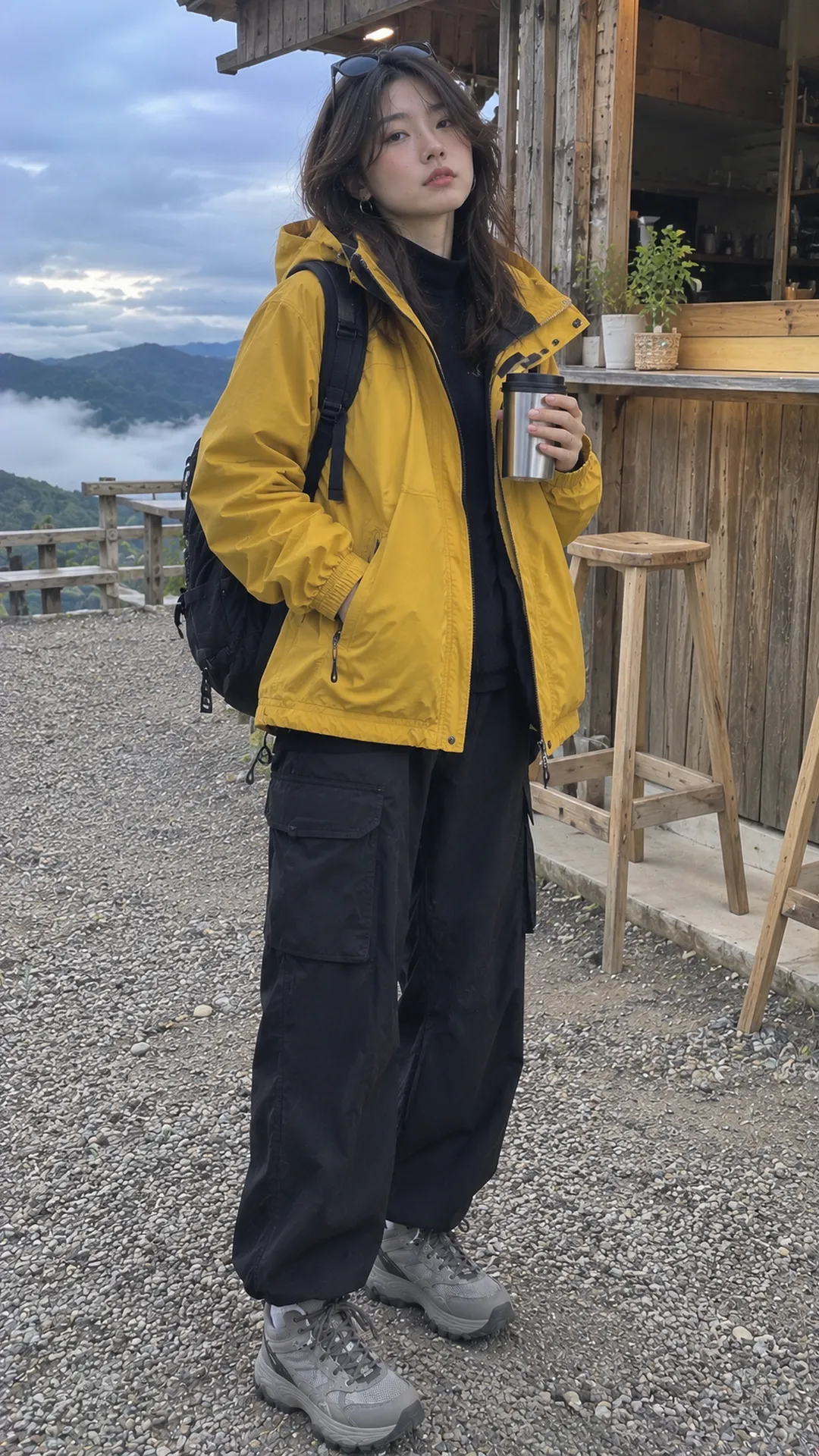
A dark base with colored outerwear
Dark top and trousers support a burgundy, blue or preferred-color jacket. With large coat volume, simplify bag and scarf. The base should remain complete and fitted appropriately after removal.
A knit, straight trousers and neutral outerwear
Textured knitting with plain trousers contrasts without large motifs. Choose simple outerwear and sufficient combined sleeve room. This is surface styling; assess warmth and protection independently for each product.
Express personality through controlled color and details
Against foliage or busy landscapes, one defined color area often reads more clearly than many small patterns. Try neutrals plus one colored top. For full darkness, separate through cut or surface rather than abundant metal.
Test scarves and hats with collar, hair and straps. Long snag-prone details or constant hand support may not suit travel. Clothing should permit correct motorbike-helmet use; store accessories unused during that leg.
See expressive women's going-out outfit formulas for your preferred image, then retain one statement and adapt everything else to actual activity. A complete photo set is unnecessary when pieces do not serve the trip.
Pack for recombination
Lay intended pieces together, pair every top with at least one bottom and test main shoes. A bulky item serving only one frame may yield to something versatile. Related colors make layer changes easier.
Prepare changes for days and activities, keeping clean dry clothing separate from used items. Avoid compression or folding contrary to labels. Place en-route layers accessibly for removal or addition.
Before finalizing, recheck forecast, complete fit, walking distance and removed-layer storage. Once these work, color and accessories can vary more freely without constant wardrobe repairs during travel.