

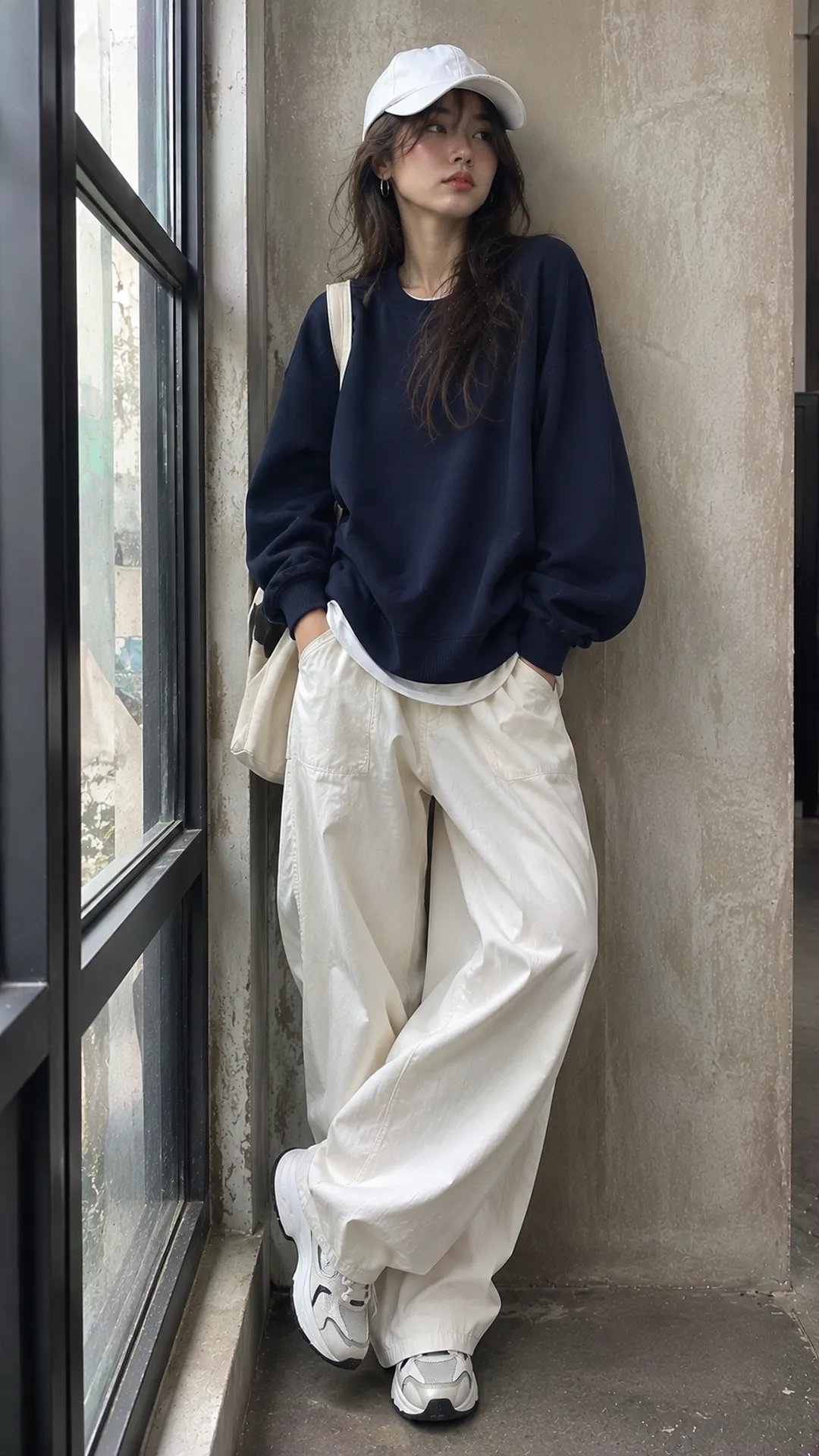
Read cap shape through four components
High or low crowns
The crown surrounds the head. Tall designs stand above the forehead; low ones sit closer. If you dislike enlarged head volume in photos, compare heights instead of only tightening one cap's rear strap.
Soft and structured crowns also differ. Soft fabric follows the head more; a firm front creates a defined area. This concerns appearance and fit, not one universally better type.
Brim and curvature
A broad brim creates a clear horizontal line; a small one is compact but may not balance an oversized crown. Check front and side projection. Do not reshape a new brim without appropriate manufacturer instructions.
Curvature changes the opening beside the face. A moderate curve frames it differently from a flat brim. This guide covers everyday caps; specialized snapback constructions need model-specific assessment.
Adjustment strap
Check sufficient range and retention after movement. Tuck excess strap if designed to do so. With long hair, inspect catching during removal, particularly with low ties.
Inner contact band
Inspect internal seams and wear long enough to notice pressure. Stability does not require tightness. If repeated pulling or loosening remains uncomfortable, try another cut before another color.
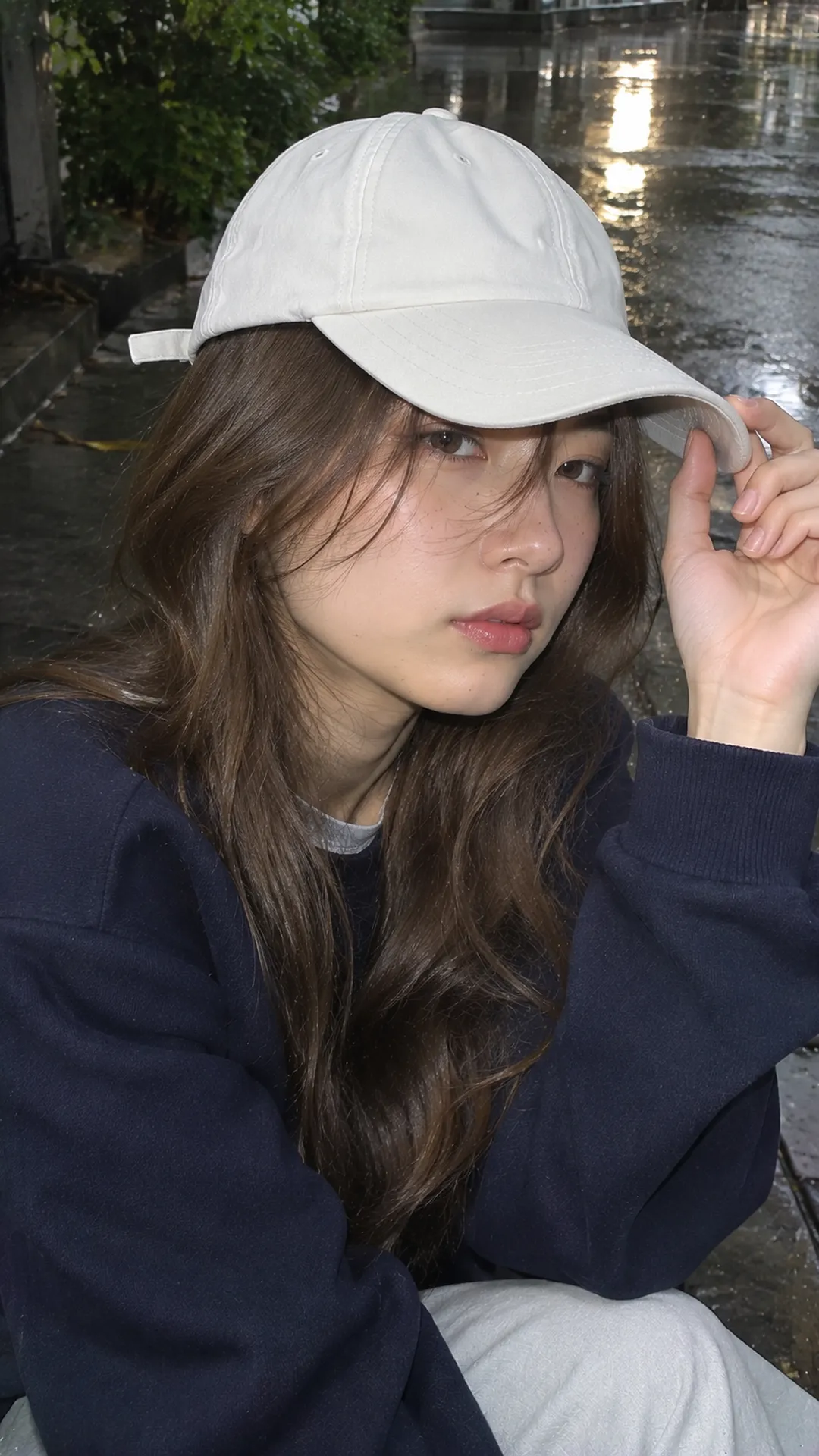
Try a cap to establish actual fit
- Keep hair close to actual use: loose, low-tied or braided. Hair volume beneath changes feel.
- Adjust gradually for stability without forehead or side pressure.
- Turn, look down and walk. Check sliding, blocked vision or constant hand support.
- Use a side view to assess excessive depth, nape pressure or hair-clip contact.
- Include glasses if regularly worn. Temples and cap edges should coexist comfortably rather than tolerate one for the other.
Online, read head measurements and the seller's method. Women's or one-size labels cannot guarantee fit. Ask crown depth if caps previously felt too high or fell toward your ears.
Face shape can suggest experiments, not one permitted cap. For more horizontality, reveal a broader brim; for compactness, try a low crown near hair color. The opposite remains valid if preferred.
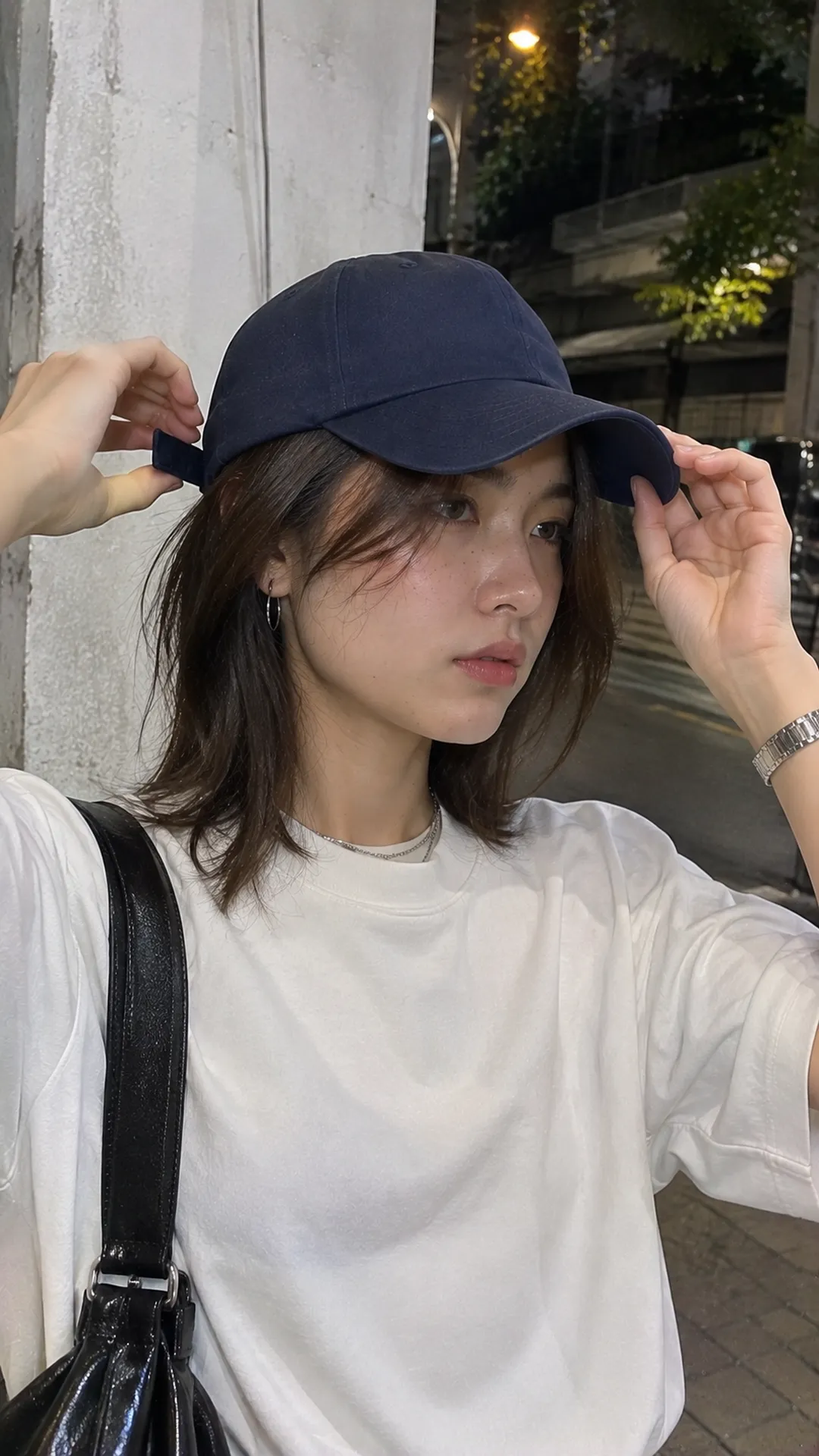
Wear caps with long and short hair
Long loose hair
Arrange hair beneath the cap, then decide front or rear shoulder placement. Two thick front sections plus a large cap increase upper volume. Move one side behind ear or shoulder for space instead of hiding all hair.
A very low brim is unnecessary for character. Preserve sight and movement, adjusting tilt within those limits. Full-length photos reveal clothing proportions better than face-only views.
Low ponytails or braids
Low ties generally coexist more easily with rear adjustments than a bun directly at the clasp. Use the opening as designed. Forcing a large bun through a small gap can displace the cap and require excessive tightening.
A low braid creates a vertical line behind or over the shoulder. With many clothing ties or accessories, keep it simple. Aim for no clasp catching and an even cap when turning.
Bobs or short hair
Leave some hair around ears or nape to retain the cut if desired. Concealing it creates a different but valid image. Check whether edges push ends awkwardly or demand constant adjustment.
Try fringe to the side and in front. A thick fringe plus low brim can darken the eye area in photos; raise the cap slightly instead of compensating with many bright accessories.
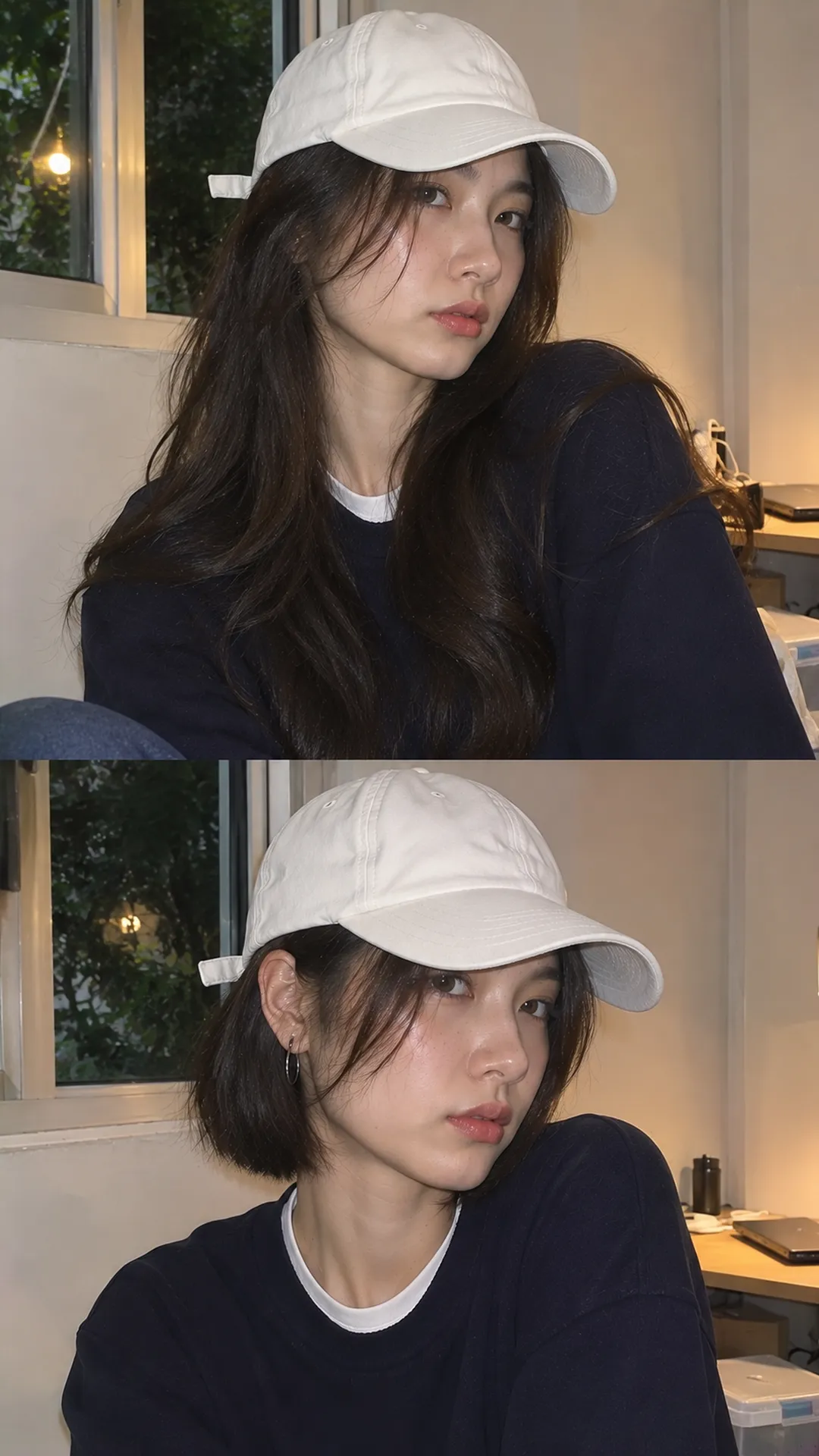
Choose white, pink or dark colors
White caps: highlight dark hair and clothing. Repeat white in top or shoes if useful without requiring all three. Check model-specific cleaning because a cap's construction differs from a white shirt.
Pink caps: pale pink differs from vivid pink. For a gentle test, try plain tops and denim. For a leading cap, retain neutral clothing and less face-area detail.
Black, navy or brown caps: relate to owned bags or shoes. Hair-adjacent colors reduce outline contrast; a dark cap above a light top anchors clearly. Test the complete outfit rather than buying a supposed match-everything color.
Large lettering or embroidery already creates a focal point. Zoning in the expressive women's accessories guide clarifies whether prominent earrings, glasses and necklace are needed simultaneously.
Four everyday cap outfits
A tee and jeans
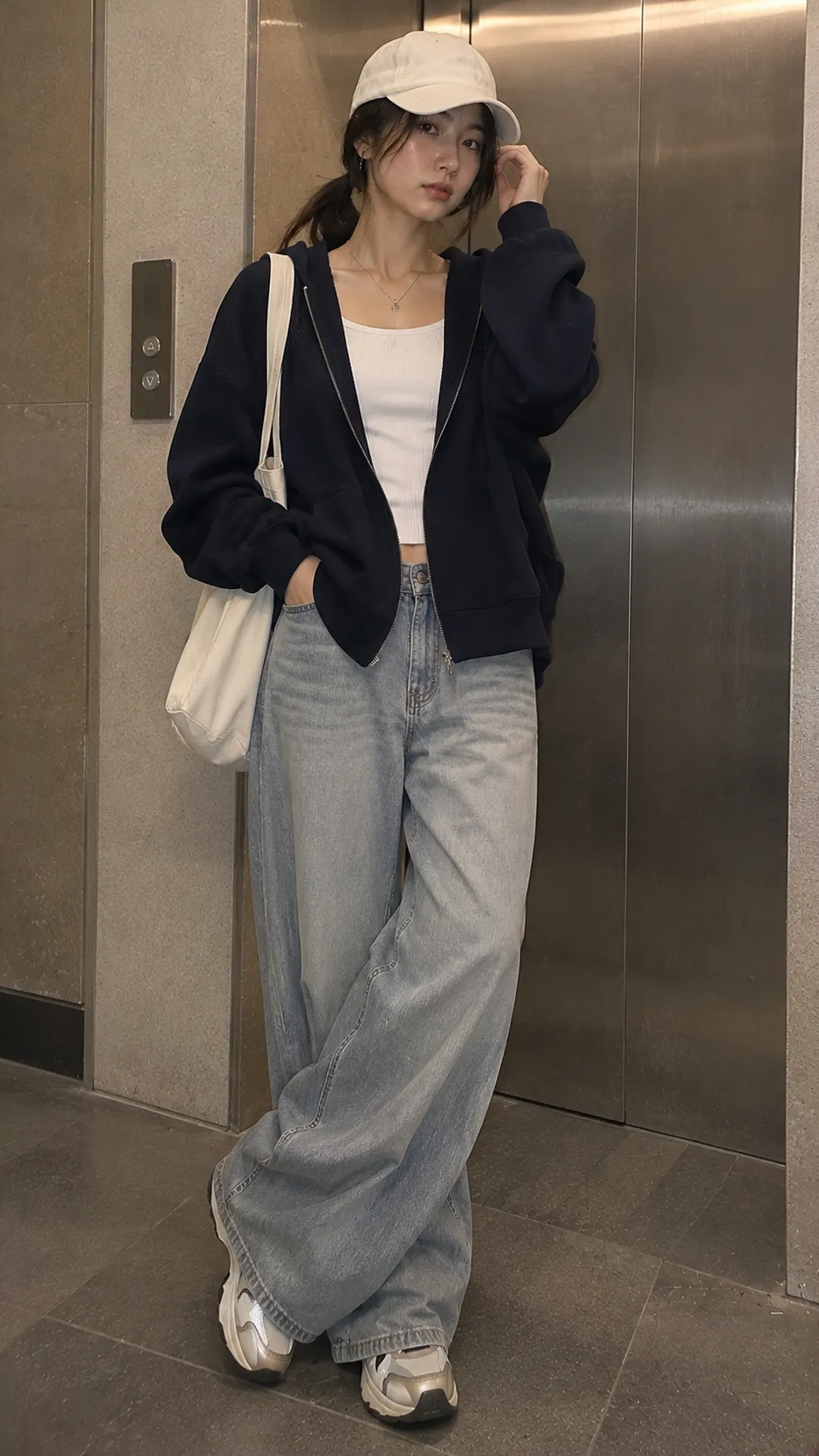
This simple base reveals the cap's effect. Choose a well-fitting top or waist definition with wide jeans. A cap can repeat shoes, but retain at least one simple piece with a large tee graphic.
A neat top and wide trousers
Wide trousers place volume below; a cap adds emphasis above without a larger top. With a tall crown, assess shoulder width for balance. A low crown is worth trying for a neat upper half.
A plain dress and practical shoes
A cap relaxes a plain dress. Try few ruffles, a simple cap and shoes for your walking distance. With dense patterns, take a small existing shade for the cap rather than introduce another color.
Light outerwear over a simple base
With broad shoulders or collars, choose the cap after wearing all layers. A cap attractive with a tee may add excess volume with a jacket. Principles in the women's layering guide balance neckline, hem and surface before accessories.
For character, read starting Alt Fashion with base pieces. Caps support an image but do not single-handedly define an aesthetic; clothing shape and shoes still need connections.
How does a visor differ from a full crown?
A visor has a front brim and headband without covering the crown. Hair on top remains visible and strongly affects the overall shape.
For gathering all hair under a cap, a visor serves a different role. Its opening can suit high buns or crown volume, but band fit and stability still need movement tests.
Do not infer sun protection from color or category. For a stated protective property, check the exact product. In styling, choose an open or covered crown before color.
Buy selectively and maintain shape
If placing caps in your bag indoors, assess storage practicality. Soft crowns can help in some situations, but protect brims as directed. Test your actual bag before choosing rigid structure for looks alone.
Ulzzang, fashionable or designer labels cannot replace fit, seams or material details. For branded caps, check seller source and policy; a logo image cannot prove quality or authenticity.
Before another cap, review your existing Alt Fashion accessories. If bag, glasses and necklace already stand out, a plain cap may work more easily than more detail.
Read care before washing or soaking, especially structured crowns and brims. Avoid crushing in storage, keep straps tidy and follow the actual product's instructions. One well-fitting, versatile, shape-maintained cap is more useful than several front-photo-only choices.