

Model Off-Duty Style: Pared-Back Outfit Composition
Model Off-Duty styling uses familiar basics, deliberate proportions, and a selected focal piece such as a blazer, shaped jacket, denim, bag, glasses, or footwear.
The useful reference is not a model's body or clothing budget. It is the process of editing the outfit: a simpler base, chosen silhouette, fewer competing details, and clothing that supports the actual day.
In this guide: read Model Off-Duty as an outfit approach. For a more layered, textured urban interpretation, compare Downtown Girl; for a smoother, more polished visual vocabulary, compare Clean Girl (Vietnamese).
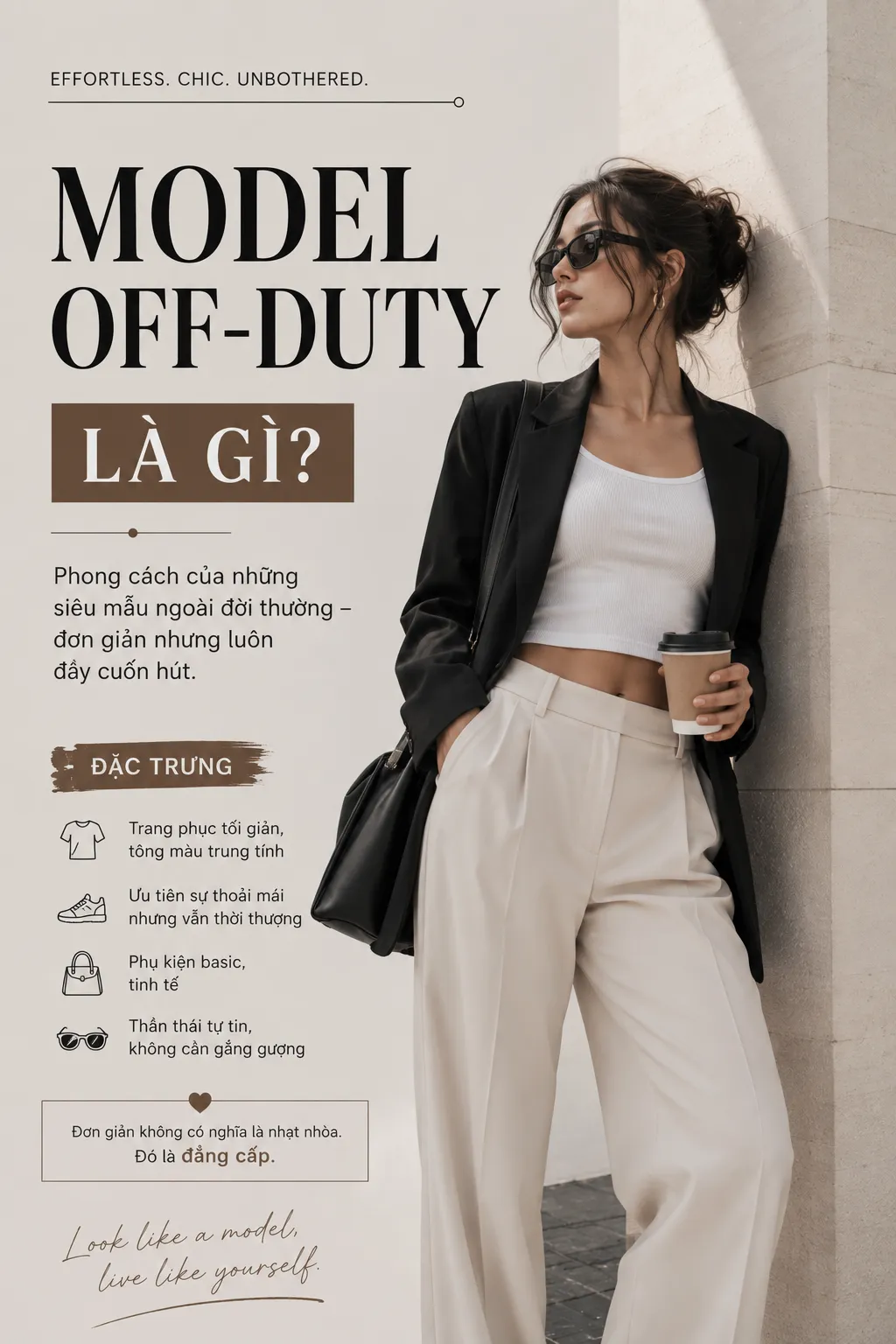
Guide collection: Aesthetic Dictionary: Fashion Style References (Vietnamese)
This approach does not require expensive clothes or a model's appearance. Compare proportions, a simpler base, a focal feature, and practical movement in your own clothing.
What Does Model Off-Duty Mean?
Model Off-Duty refers to fashion inspiration drawn from models' clothing away from runway or studio work. Here it means a relatively pared-back combination with deliberate proportions: tanks, tees, denim, trousers, shaped outerwear, bags, glasses, and suitable everyday shoes provide possible components.
It is not a fixed uniform. A 1990s-supermodel-inspired reference might use a tank, denim, and a jacket, while other interpretations add roomier jeans, bombers, longer skirts, shirts, cardigans, or graphics. The useful comparison is the relationship between relaxed and structured areas.
. Familiar basics can create that result through their actual fit, length, volume, and supporting details; no label makes the outfit correct automatically.
Why the Off-Duty Reference Is Useful
The reference suggests clothing that can move between city appointments, changes, and ordinary activities. Basics and removable layers offer practical possibilities, while street-style photographs turn those everyday combinations into fashion references. Treat a photographed look as an example to adapt rather than proof of how all models dress.
A useful feature is its repeatability. You can compare an existing tank's neckline, jean length, jacket shoulder, and shoe shape without buying a runway garment. Those relationships remain useful even when the preferred denim or outerwear silhouette changes.
Four Outfit Roles
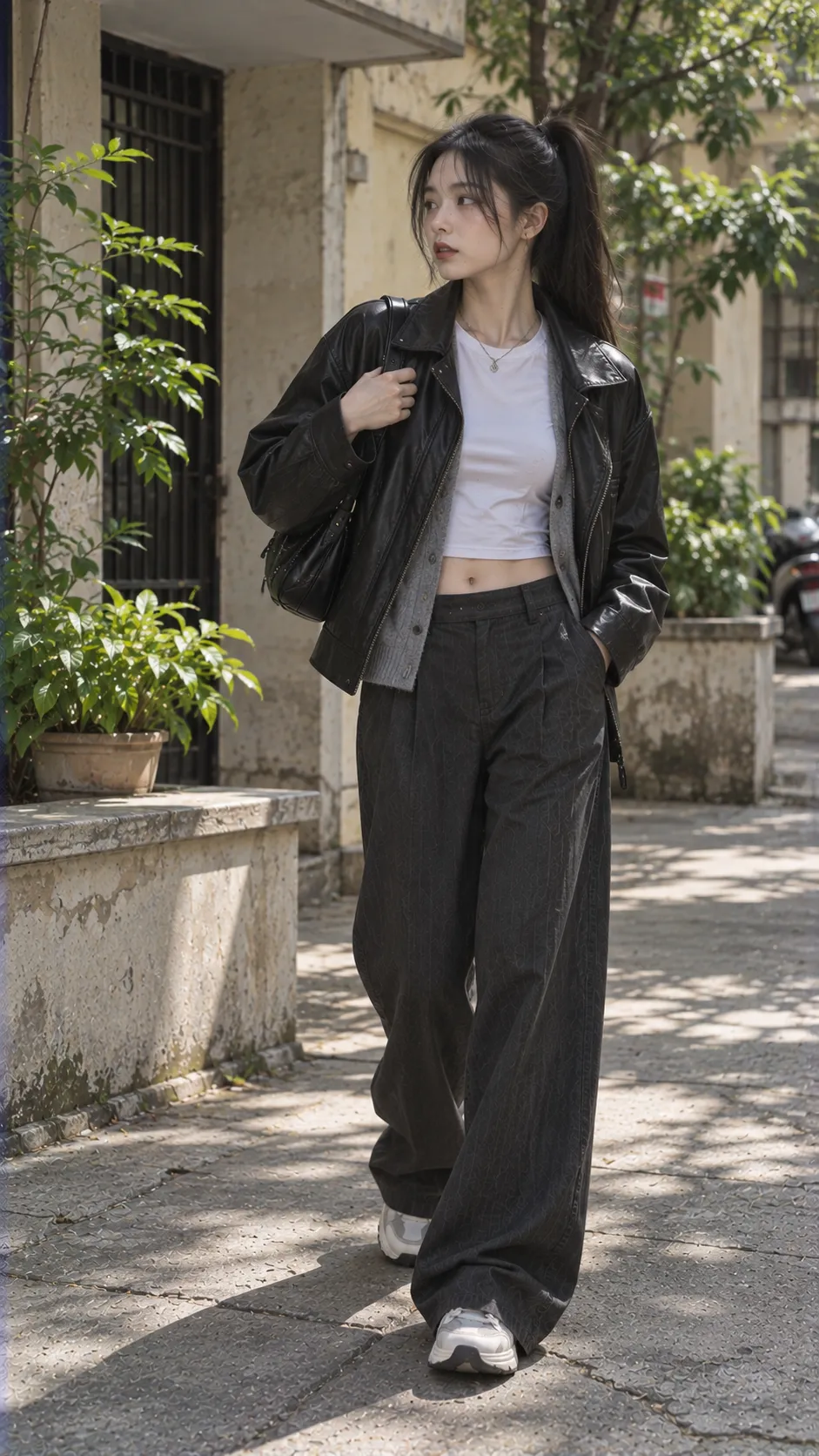
You do not need all four roles as separate pieces. In heat, a base and lower garment can use the bag or footwear for structure. If a jacket already supplies strong shoulders and a prominent surface, compare quieter supporting details.
Try removing a piece and looking again. If the composition becomes clearer, the addition may not serve your intention. The approach emphasizes editing down rather than adding several styling techniques simultaneously.

Choose Proportions before a Labelled Item
Different lengths can change the result even with the same garment categories. Compare three related features: width, waistband position, and garment endpoints.
A Defined Area beside a Roomier One
A shorter or tucked top makes one line visible beside baggy denim. An oversized blazer can contrast with straighter jeans or a defined inner base. A fully roomy outfit is also a choice; decide whether you want a visible inner edge or a continuous silhouette.
Choose the Waistband Relationship
Higher, mid-, and lower rises place the visual division differently. Compare the top and jacket lengths with your preferred coverage rather than assuming one rise suits everyone. For shorter-wearer fit questions, see baggy-pants length and fit (Vietnamese).
Outer-Layer Endpoints Change the Frame
A cropped jacket raises one boundary; a longer version creates another outer line. A blazer ending near the hips changes its relationship with roomier trousers. Assess the actual shapes rather than banning a hem position or choosing solely from a trend label.
Wardrobe Starting Points
| Piece | Possible role | What to inspect |
|---|---|---|
| Tank or Defined Tee | A simpler base | Neckline, shoulders, body length, and actual fabric behavior |
| Jeans | The lower silhouette and denim surface | Rise, crotch placement, leg width, and hem-to-shoe relationship |
| Tailored Trousers | Another drape and finish from denim | Pleats, waistband, fabric fall, and hem length |
| Blazer | An outer frame | Shoulders, length, lining, and stiffness |
| Leather-Look or Bomber Jacket | A shaped shoulder or stronger surface | Volume, length, fastenings, and weight |
| Glasses | A smaller focal accessory | The proportions and function you want; a large logo is unnecessary |
| Bag | A finishing shape and useful storage | Capacity, strap, closures, and structure |
| Footwear | The lower endpoint | Actual fit, use, and visible shape against the trousers or skirt |
You need not own every category. Compare a few existing tops, two lower garments, a suitable layer, tested shoes, and a bag before adding anything. For how bags change the silhouette, read pairing bags with clothing.
Five Model Off-Duty Outfit Formulas
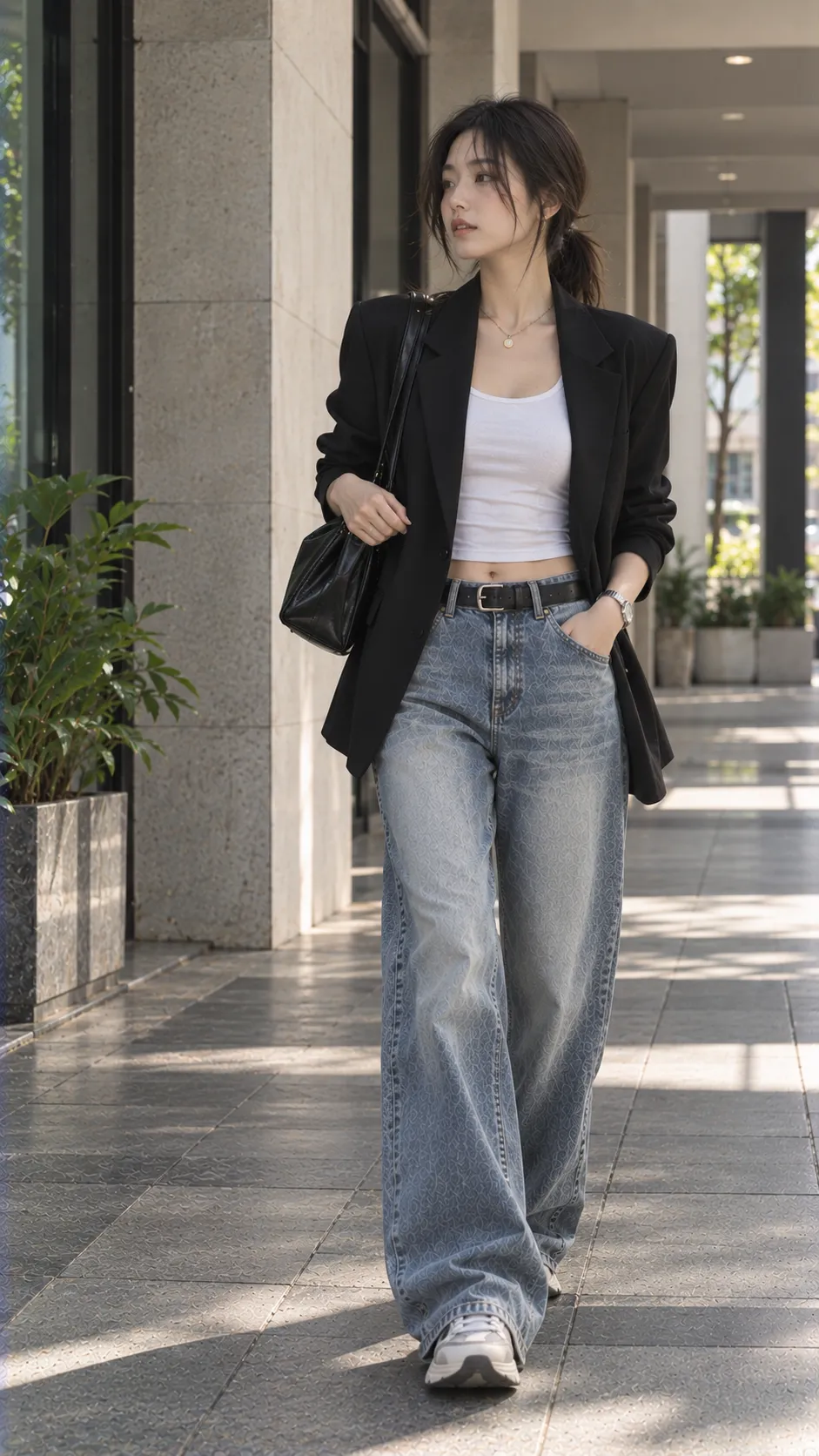
1. Tank + Straight Jeans + Loafers or Sneakers
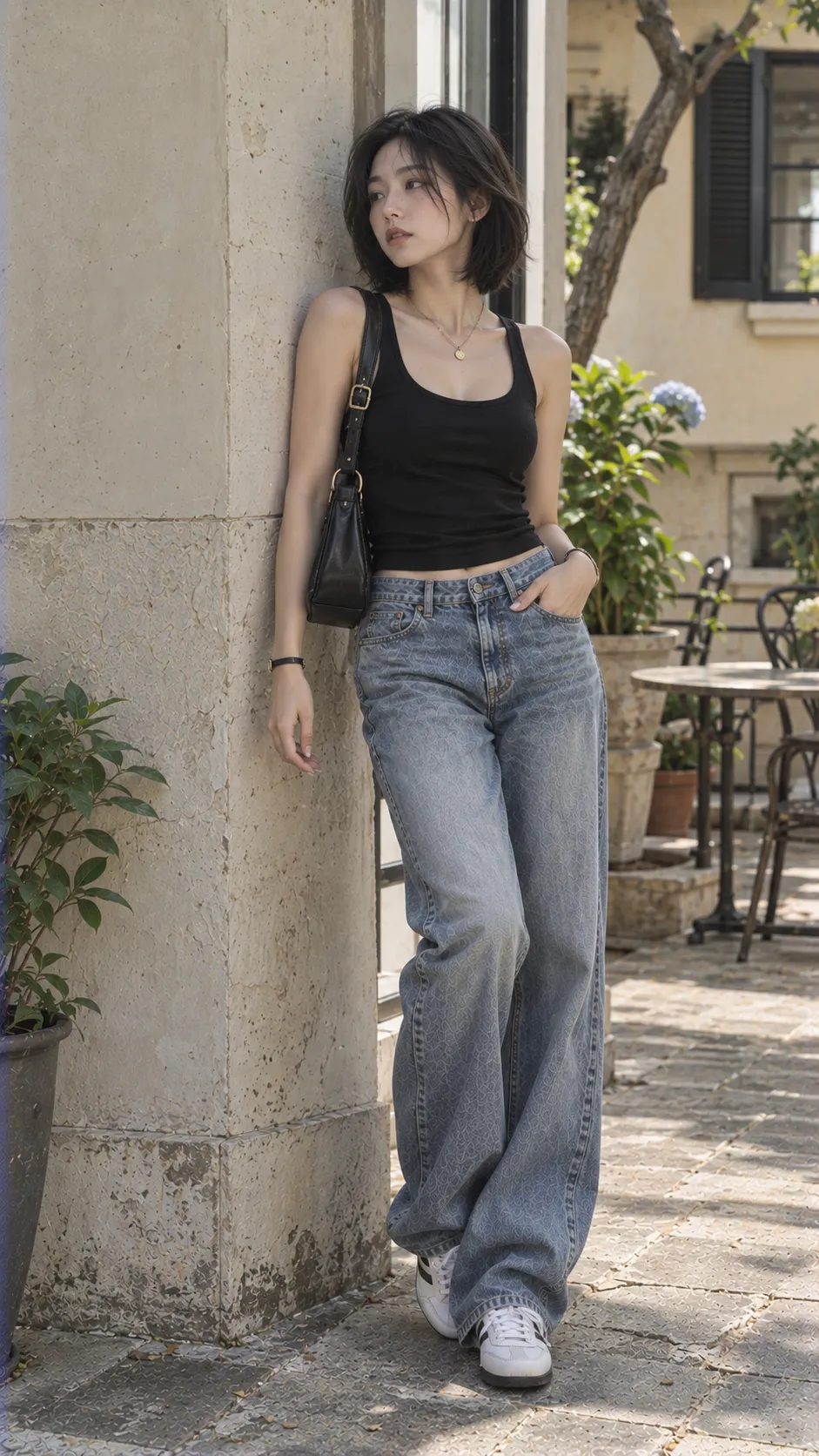
A tank defines the upper section, denim creates the leg line, and quieter shoes retain a pared-back finish. A bag or glasses can supply the focal detail. Mid-blue denim and a simpler belt offer one nostalgic interpretation without requiring a period costume.
2. Fitted Tee + Baggy Jeans + Shaped Jacket
The base contrasts with the roomier lower section while a bomber or biker-style jacket supplies an outer frame. If the jacket should lead, reassess whether a large tote or dense scarf adds useful detail. Different footwear or a stronger bag can shift the same base toward Baddie Streetwear.
3. Tank + Tailored Trousers + Blazer
The trouser drape and blazer shoulders provide structure around the simple base. Loafers, slingbacks, or suitable sneakers change the finish according to the actual setting. Choose a base that still works if the blazer is removed.
4. Open Shirt + Tee or Tank + Jeans
An open button-up provides a different frame from a blazer. Compare its actual weight, weave, and fit for the conditions. A defined inner top separates the layers; choose the denim volume you want rather than automatically narrowing the bottom.
5. Tank + Midi or Maxi + Jacket or Cardigan
A skirt adds a different continuous line and movement. A shaped jacket or softer cardigan changes the upper frame, while flats, loafers, or boots change the endpoint. Jeans are not required for this approach.

Model Off-Duty, Clean Girl, Quiet Luxury, and Downtown Girl
| Styling label | This guide's working emphasis | Possible clothing references |
|---|---|---|
| Model Off-Duty | Proportions, everyday movement, and pared-back basics | Tank or tee, denim, shaped layer, glasses, and bag |
| Clean Girl | A smoother, more polished visual presentation | Quieter basics, related colors, and selected accessories |
| Quiet Luxury | An understated presentation emphasizing perceived material and finish | Tailoring, knitwear, leather-look surfaces, or fewer visible logos |
| Downtown Girl | Lived-in urban surfaces and layering | Denim, cardigan, graphics, boots, or more visible layers |
Clean Girl (Vietnamese) can share many basics while emphasizing a smoother presentation. Quiet Luxury places more attention on understated material and finish in this comparison. Downtown Girl adds more washed surfaces and layering in this guide's interpretation. These are overlapping labels; the off-duty approach need not sit at one fixed point between them.
For another polished everyday comparison, explore Casual Chic and adapt its formality to the actual setting.
Price Does Not Define the Approach
Start with fit, drape, and proportions. Existing jeans, a suitable tank, and a shaped layer can communicate the idea without prominent branding. If you plan a purchase, identify which garment actually changes the silhouette you want before assigning your budget.
Try another combination with an existing jacket first. If you need a separate purchase assessment, use the women's leather-jacket selection guide (Vietnamese) for construction and shopping questions beyond this styling definition.
Adapt for Vietnam's Conditions
Dense blazers, heavy jackets, and several layers may be unsuitable in heat and humidity. Retain the proportion relationships while reassessing materials and layer count.
- Compare suitable tees, tanks, finer knits, or lighter shirts as bases.
- Inspect unlined blazers or open shirts alongside heavier outerwear; the label alone does not establish ventilation.
- Compare actual denim weight, trouser construction, or skirt drape for the day.
- If omitting outerwear, use a bag, belt, or shoe shape for a different structured detail if desired.
- Select accessories for function and the focal point you want rather than adding them all.
A black tank, gray trousers, tested sneakers, and shaped shoulder bag offers one warm-weather starting point. The composition does not depend on keeping a blazer in every setting.
Seven Common Styling Problems
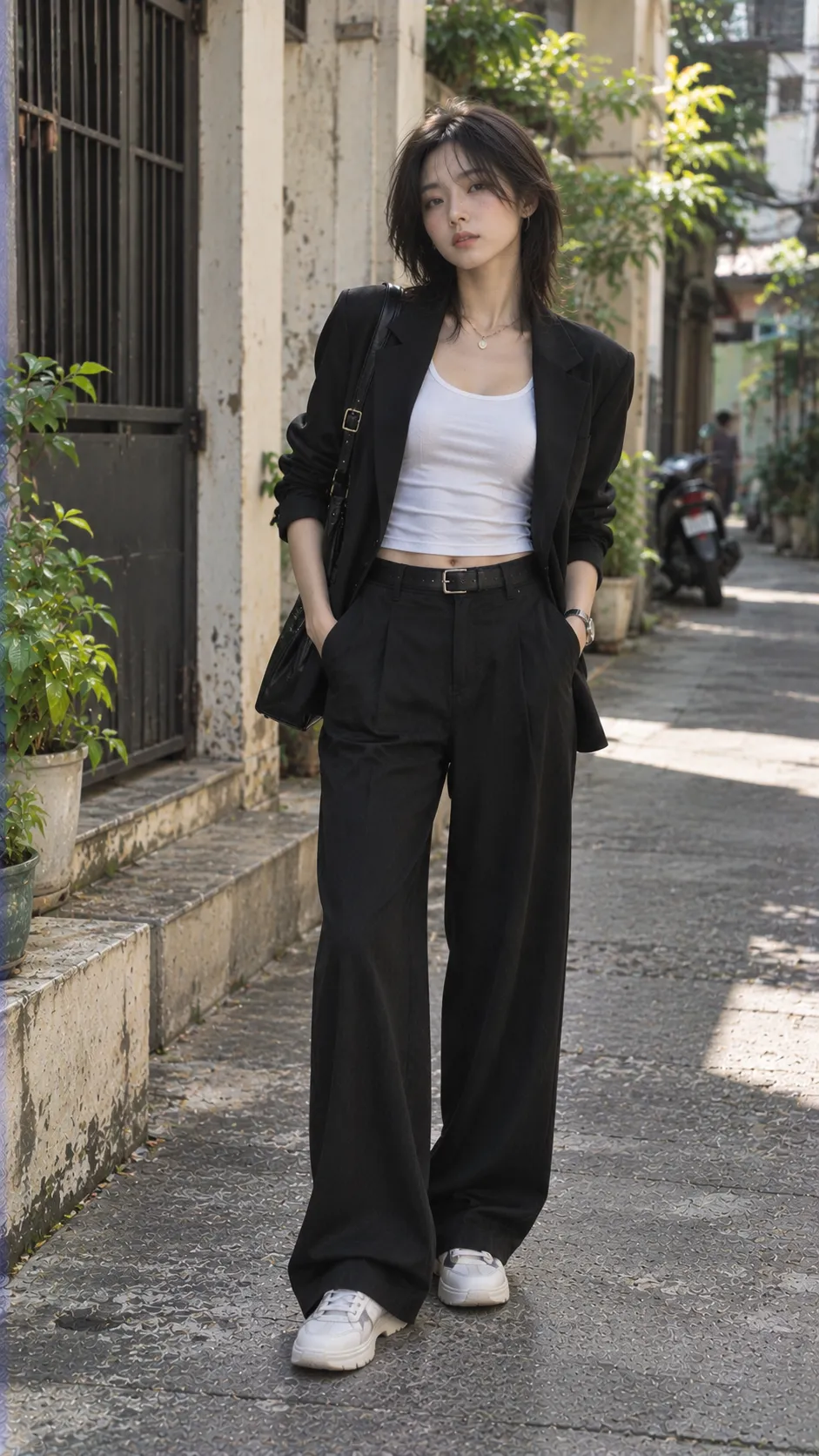
- Roomy pieces without a chosen organizing line: compare whether you want a continuous silhouette or more visible transitions. Try: a defined area, inner edge, or clearer waistband relationship.
- Labelled pieces with unsuitable actual fit: a familiar blazer, tank, and jeans still need compatible lengths and movement. Try: compare shoulders, waistband, and hems.
- More accessories to make basics feel styled: several focal areas can compete with the pared-back approach. Try: choose one detail to lead if that is your intention.
- Treating neutrals as compulsory: black, beige, and white are not the only palette. Try: compare an accent within a clear silhouette.
- Copying a body or coverage choice: an uncomfortable low rise or short crop is not a requirement. Try: retain the contrast while changing the waistband or top length.
- Footwear differs from the intended lower-body weight: inspect whether the contrast supports the effect you want. Try: compare shoe shape and hem together, alongside actual walking needs.
- Prioritizing the photograph over the day: a standing pose does not establish seated fit or mobility. Try: choose clothing that works while you sit, walk, and move.
Frequently Asked Questions
What Does Model Off-Duty Mean?
Model Off-Duty is a styling reference drawn from models' everyday clothing away from work. Here it uses familiar basics, deliberate proportions, fewer competing details, and a focal feature such as a jacket, bag, glasses, or shoes.
Do you need a model's body?
No. Compare rise, top and jacket length, garment volume, and your own coverage and movement needs. The technique does not depend on one body type.
Are jeans required?
No. Tailored trousers, cargo pants, skirts, or shorts provide other lower shapes beside a simpler base and selected structure.
Do the clothes have to be expensive?
No. Actual fit, drape, length, and the relationship between pieces matter more to this composition than a logo or price.
How does it differ from Clean Girl?
This guide uses Model Off-Duty for pared-back proportions and street-style structure, while Clean Girl emphasizes a smoother, polished presentation. They share basics and can overlap in the same outfit.