

Choosing Bags for Alternative Outfits: Shape, Scale, and Practicality
Choosing a bag for an outfit starts with use, then proportion, shape, surface and hardware, and finally color. A matching color cannot resolve unsuitable capacity or an unwanted strap position.
This guide focuses on alternative and dark fashion, while its principles of silhouette, visual weight, texture, and use also apply to everyday clothing.
Guide collection: Women's Alternative Fashion Accessories (Vietnamese)
A Thirty-Second Bag Choice
Before choosing by color, follow five steps: what to carry → clothing volume → soft or structured bag → existing focal details → color. This helps distinguish a color match from a bag whose scale and role actually serve the outfit.
| Step | Question to answer | Quick decision |
|---|---|---|
| 1. Use | Phone, wallet, and small essentials, or a tablet or laptop too? | Set minimum capacity first |
| 2. Silhouette | Fitted, straighter, or voluminous clothing? | Choose bag size and structure |
| 3. Carrying position | Does it finish at the waist, hip, or lower? | Adjust the strap to place the visual break deliberately |
| 4. Visual weight | Are chains, zips, belts, or graphics already prominent? | Decide whether the bag supports or leads |
| 5. Color / texture | Should it blend in or attract attention? | Choose tonal continuity, an accent, or contrast |
Five Principles for Bags and Clothing
1. Compare Bag and Clothing Proportions
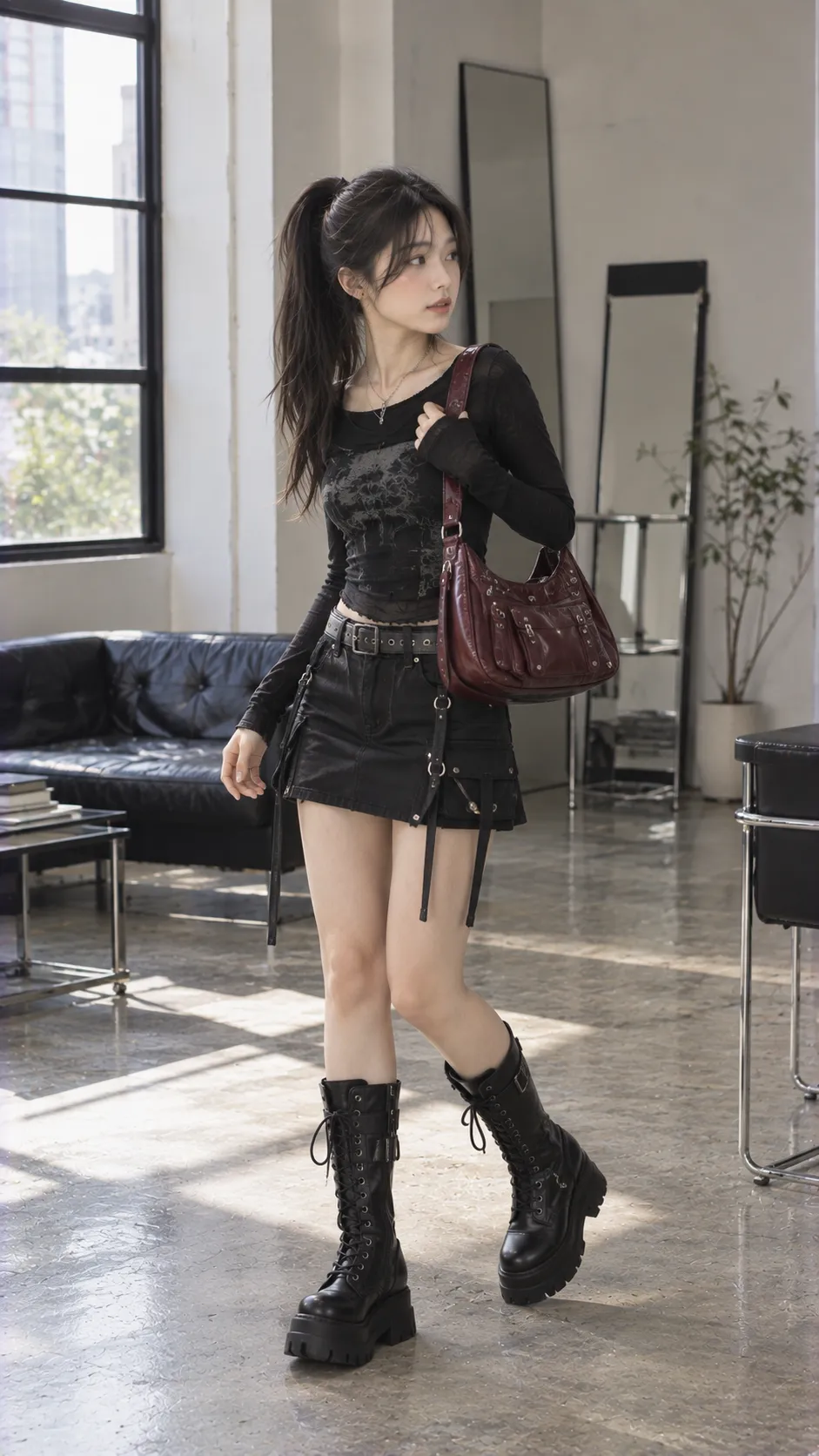
A bag need not follow a fixed body-size rule. Inspect its relationship with clothing and carrying position. A roomy top, cargos, and substantial shoes already create several larger areas. A large soft tote adds more volume; a compact shoulder bag or crossbody can provide a quieter contrast.
A fitted top and straight jeans can also carry a larger bag if contrast is intended. Do not choose a small bag solely because the wearer is small; assess its area within the whole silhouette.
2. Strap Length Places the Visual Break
A crossbody ending at the waist differs from one dropping toward the thigh. Waist-level carrying draws attention to the middle; a lower hip position extends the diagonal. A long strap can obscure a crop or corset-inspired waist, while a very short one can crowd a longer jacket's lapel area. Adjust around the actual layers.
3. Add Structure or Softness Deliberately
A structured bag holds clearer edges and can contrast with soft draping clothing or continue existing tailored lines. A hobo or slouchy bag adds a softer relaxed outline beside denim, knit, or roomy tees. A baguette or compact shoulder bag stays closer to the upper body and can contrast with fuller trousers or skirts.
4. Give Hardware a Related Role
Silver closures, chains, buckles, eyelets, and zips all add visual weight. If belt, necklace, and boots already lead, reduce bag hardware or repeat metal selectively. Beside a plain black tee, jeans, and boots, the bag's closure or chain can instead become the focal detail.
Metals need not match exactly. Silver and gunmetal can relate within a deliberate alternative palette.
5. Capacity Determines Practical Use
If the bag routinely requires a second bag for essentials, reassess the intended capacity before choosing by appearance.
Choose Around the Outfit's Shape
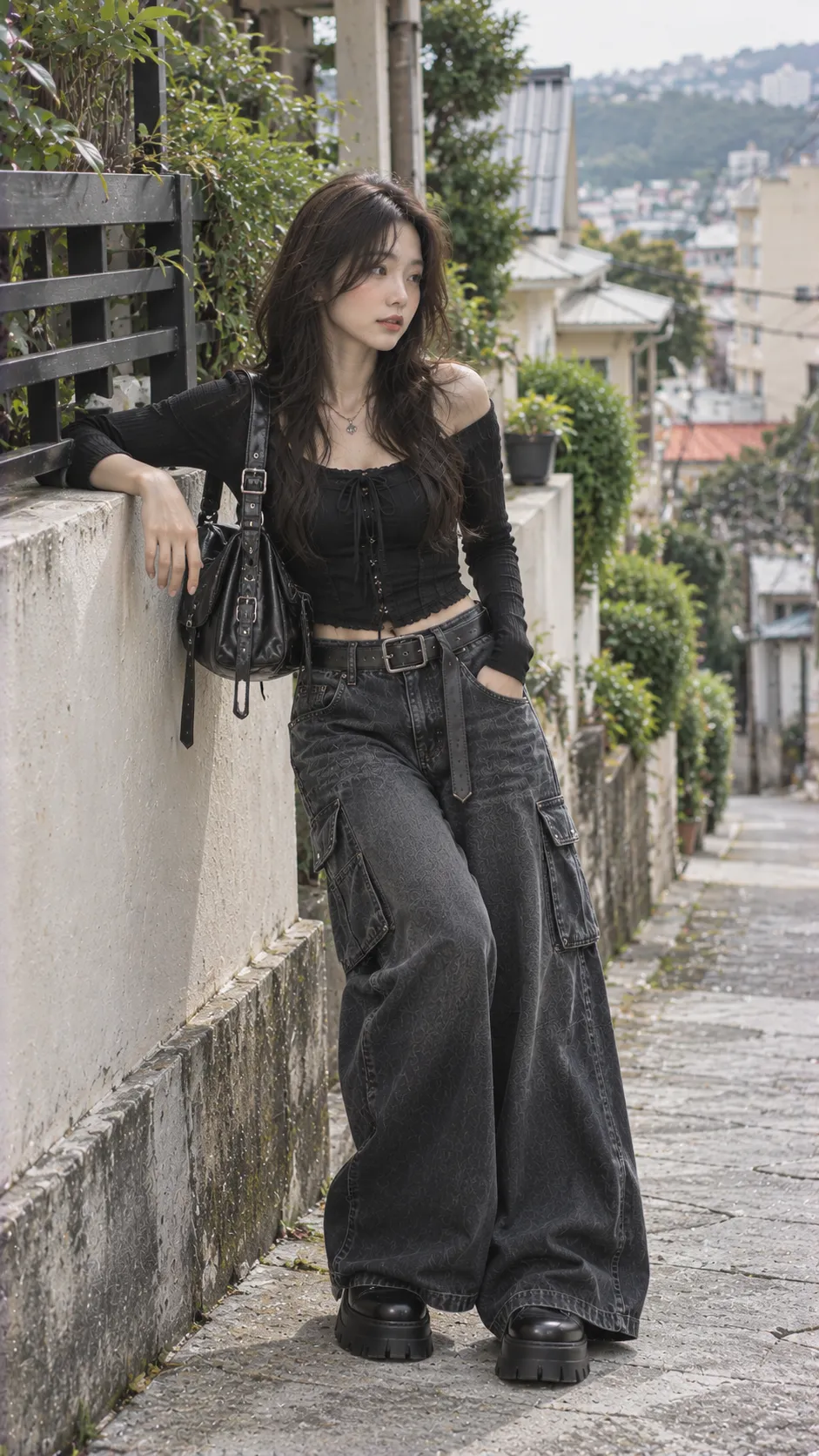
Cargos, Parachutes, or Wide Jeans
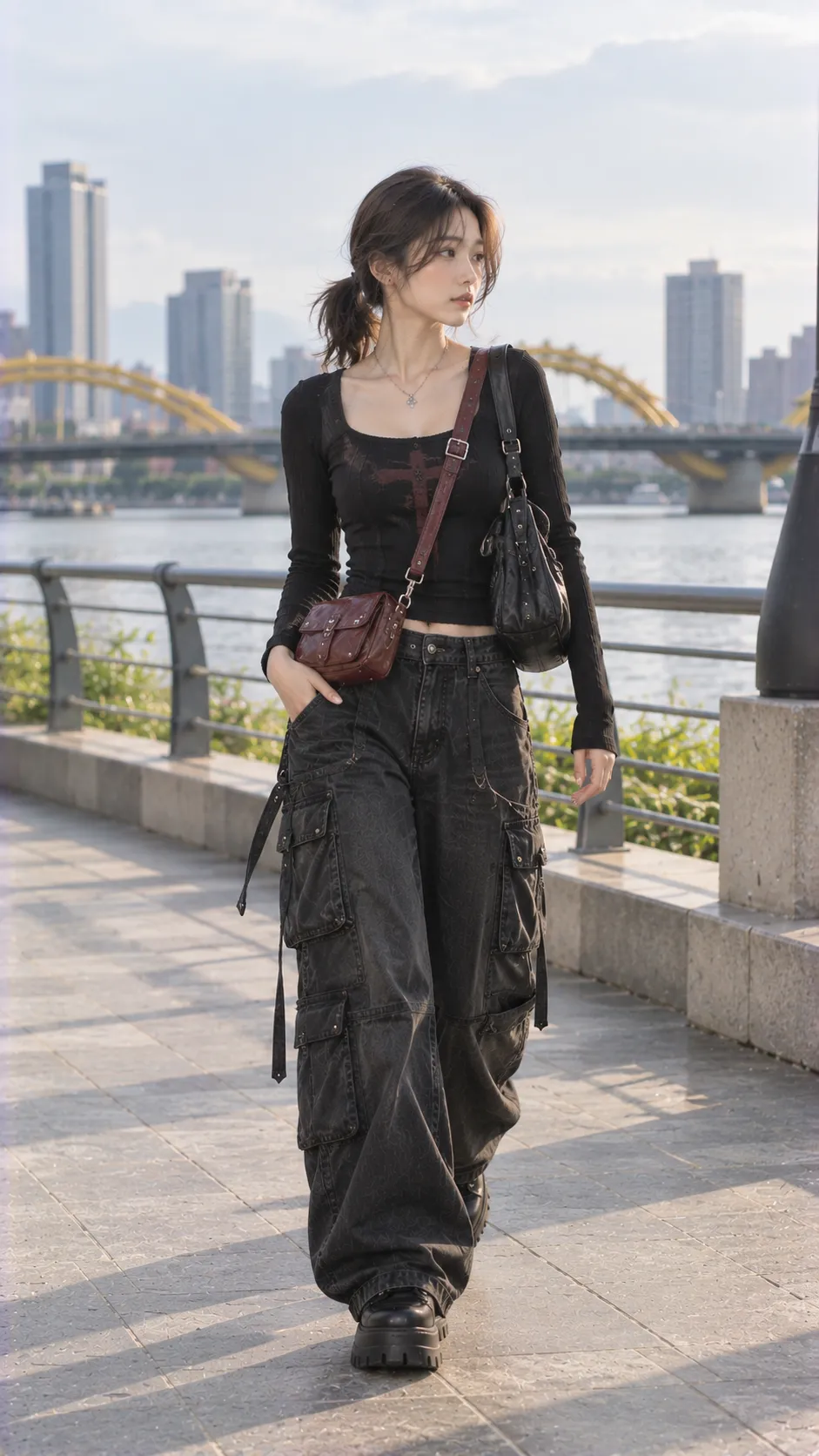
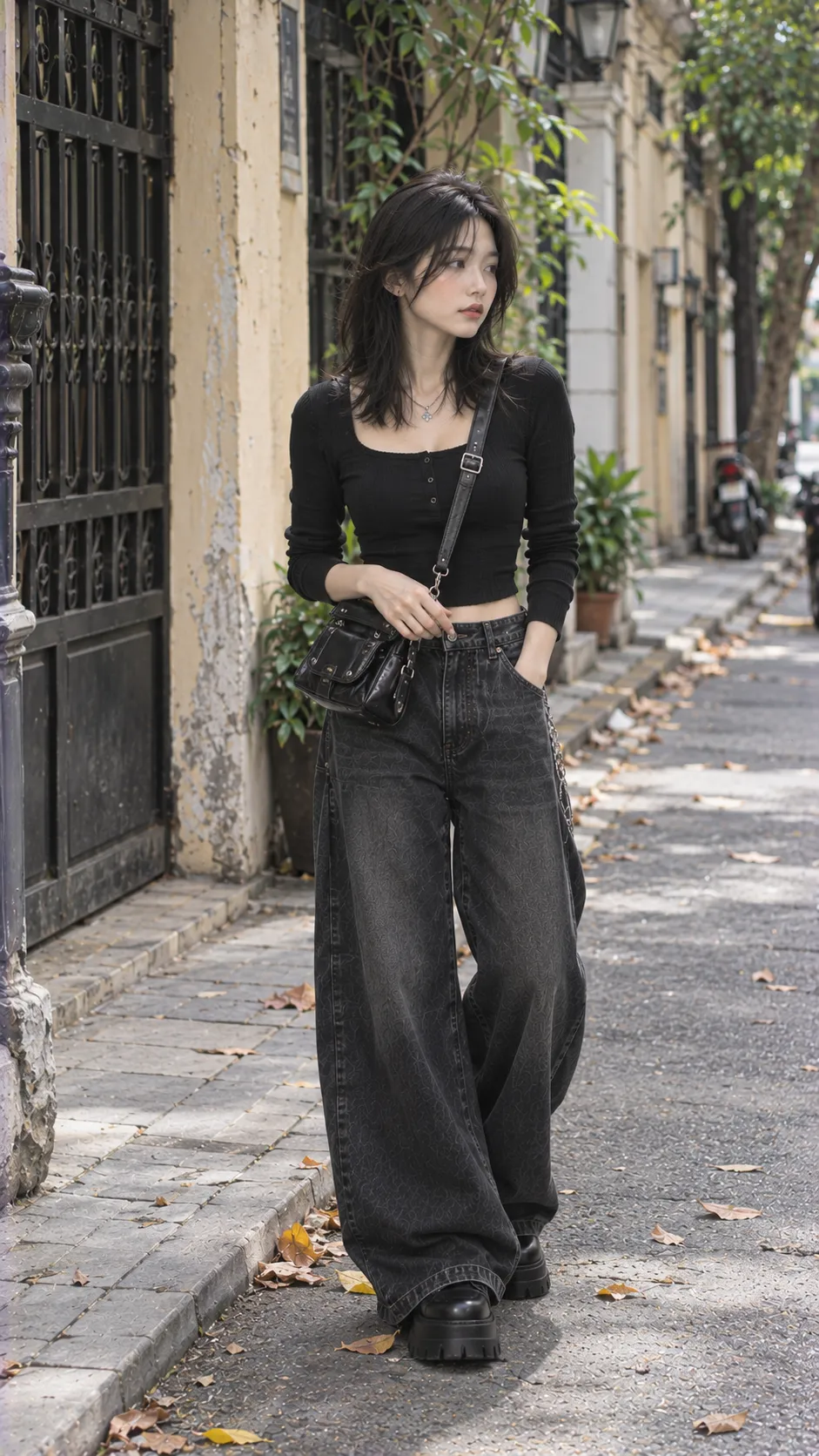
A compact shoulder bag, baguette, or moderate crossbody contrasts with lower-body volume. A higher bag position can shift emphasis upward. For layered streetwear, a suitable nylon crossbody provides practical carrying without automatically adding many metal details.
Long or Maxi Skirts
A smaller shoulder bag, compact top handle, or structured shoulder shape can leave the longer vertical area clearer than a large low-hanging soft bag. With a long black skirt, try a different black surface or a darker burgundy or gunmetal accent.
Minis or Shorts
Compact baguettes, shoulder bags, and crossbodies can balance the shorter lower area. If the top already carries graphics, lace, or charms, a plainer bag reduces upper-body detail. A simpler outfit leaves room for an unusual shape or prominent buckle.
Leather Jackets, Bombers, and Blazers
Outerwear adds shoulder and torso volume. A quieter bag can contrast with a hardware-heavy biker jacket. Nylon crossbodies or soft shoulder bags can support bomber streetwear; a structured bag can continue a blazer's clearer edges. These are starting points rather than exclusive pairings.
For an outfit built around a leather jacket, explore Women's Leather Jacket Outfits to assess the garment separately from the bag decision.
Corset-Inspired and Fitted Tops
A long crossbody can cross the waist structure you want to reveal. A compact shoulder or top-handle bag offers another option. Smooth or lightly glossy structure can contrast with lace, corset-inspired shaping, or satin in Dark Feminine styling.
Bag Color and Materials
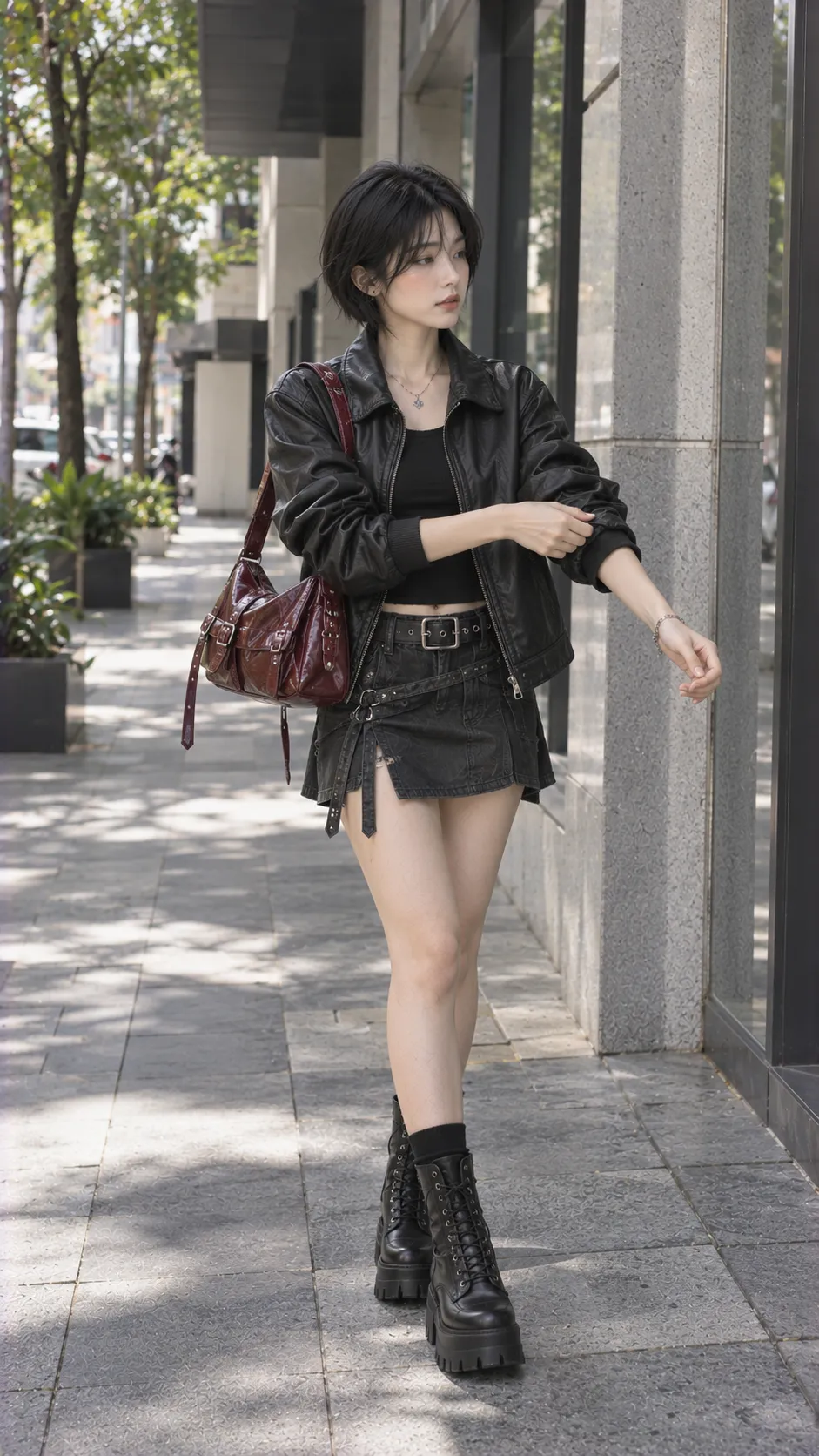
Color is immediately visible, but within darker outfits, texture can matter as much. Cotton, denim, and leather can remain distinct in an all-black palette through their different surfaces.
Strategy 1: Similar Tones, Different Surfaces
Black denim and a glossy bag create surface contrast; satin and matte leather create another relationship. Use this when silhouette should remain central within a continuous palette.
Strategy 2: A Darker Accent
Burgundy, oxblood, chocolate, dark olive, or gunmetal can enter a darker wardrobe without a large bright area. Repeat the tone selectively at nails, makeup, a clip, or footwear if desired; exact matching is optional.
Strategy 3: Metallic Detail
Silver bags or hardware can support E-Girl, Y2K, Goth, or alternative references beside quieter clothing. If belts, zips, and jewelry already supply extensive metallic areas, black with selected silver hardware offers a less dominant bag.
Strategy 4: Deliberate Bright Contrast
Red, cobalt, or white can lead a dark outfit. Give the bag that focal role or connect it with a small color detail elsewhere.
Materials for Vietnam's Climate and Everyday Use
For frequent movement, lighter nylon or canvas provides casual options. Structured leather or imitation leather supplies another shape but needs a weight and care check. For leather or PU in repeated use, explore women's leather care.
Bag Starting Points for Alternative and Dark Styles
| Style | Adaptable shape | Surface / detail | When to simplify |
|---|---|---|---|
| Dark Feminine | Structured shoulder or compact top handle | Smooth leather, burgundy or black, selected hardware | When corset-inspired structure, lace, and jewelry already lead |
| Baddie | Compact shoulder or baguette | Glossy finish, metallic accent, compact shape | When tops or jeans already have prominent rhinestones or logos |
| E-Girl | Baguette or mini crossbody | Selected charms, silver, or graphic detail | When chains and clothing layers already dominate |
| Punk / Grunge | Crossbody, hobo, or canvas tote | Worn-looking texture and selected buckles or chain | When jacket and belt already carry extensive hardware |
| Goth | Structured black or top-handle bag | Black leather-look surface, antique-style silver, darker motif | When the clothing silhouette already makes a strong statement |
These are adaptable starting points. For the broader accessory system, explore the women's alternative accessory directory (Vietnamese).
Choose by Setting
| Setting | Bag shape | Practical priority | Visual consideration |
|---|---|---|---|
| Café / street plans | Shoulder or baguette | Phone, wallet, small essentials | The bag can lead if desired |
| Study / work | Structured tote or moderate crossbody | Capacity, secure closure, suitable handles | Avoid insufficient capacity requiring an unplanned extra bag |
| Concert / crowded event | Permitted compact crossbody | Hands-free carrying and secure closure | Strap clear of snagging layers; current event bag rules checked |
| Evening plans | Compact shoulder or top handle | Essential capacity | Stronger surface or metallic details possible |
| Outfit photography | Statement or mini bag | Scale and silhouette | Visual role can lead during the photograph; plan practical carrying separately |
One bag per outfit is unnecessary. Assess a few roles your existing bags can cover: compact shoulder carrying, practical crossbody or tote capacity, and an optional statement piece.
When Should the Bag Lead?
A burgundy, metallic, or distinctive-buckle bag can lead a black tee, jeans, and boots. Beside a corset-inspired top, leather skirt, statement belt, and substantial jewelry, a plainer surface gives another option. If clothing already has two strong focal areas, try the bag as a supporting piece first.
Seven Bag Styling Mistakes and Adjustments
- Color before proportion: a matching bag can still be too large or finish at an unwanted position. Adjustment: choose size and carrying position first.
- A crossbody hiding the waist: may obscure crop or corset-inspired structure. Adjustment: shorten the strap where appropriate or compare a shoulder bag.
- Competing hardware: chain, belt, zips, and bag charms all lead equally. Adjustment: choose one main metal group and simplify others.
- Rigid exact matching: repeating identical shoes, bag, belt, and clip colors can create a more coordinated effect than intended. Adjustment: try related tones or materials instead of exact replication.
- Insufficient practical capacity: a visually appealing bag needs an extra tote for essentials. Adjustment: filter by required contents before aesthetic.
- Equal soft volume in bag and clothing: many large draping layers accumulate weight. Adjustment: compare a more structured bag or reduce one volume area.
- A trend unrelated to the wardrobe: the bag works alone but not with existing clothes. Adjustment: imagine at least three actual outfits before buying.
Before-Leaving Bag Check
- Enough room for required contents?
- Where does the bag's base fall: waist, hip, or lower?
- Does it create the intended overall volume?
- Does its hardware compete with belt, jewelry, or zips?
- Does the color or texture support or deliberately lead?
If the outfit feels unresolved, compare it with and without the bag. Scale, carrying position, or detail density may explain more than the color alone.
Frequently Asked Questions
What is the easiest way to match a bag with clothing?
Start with capacity and proportion. Choose size and carrying position, then surface, hardware, and color. This establishes the practical role before the color relationship.
What bag colors work with all black?
Black with a contrasting surface, burgundy, oxblood, gunmetal, silver, or dark gray are options. A bright bag can work as a deliberate focal point.
Must a bag match shoe color exactly?
No. Related tone, material, reflectivity, or hardware can connect them. Exact matching is a choice rather than a requirement.
Are smaller or larger bags better with oversized clothing?
Compact bags provide contrast, while larger bags can deliberately extend the oversized silhouette. If both are large, simpler layers or details elsewhere may clarify the result.