

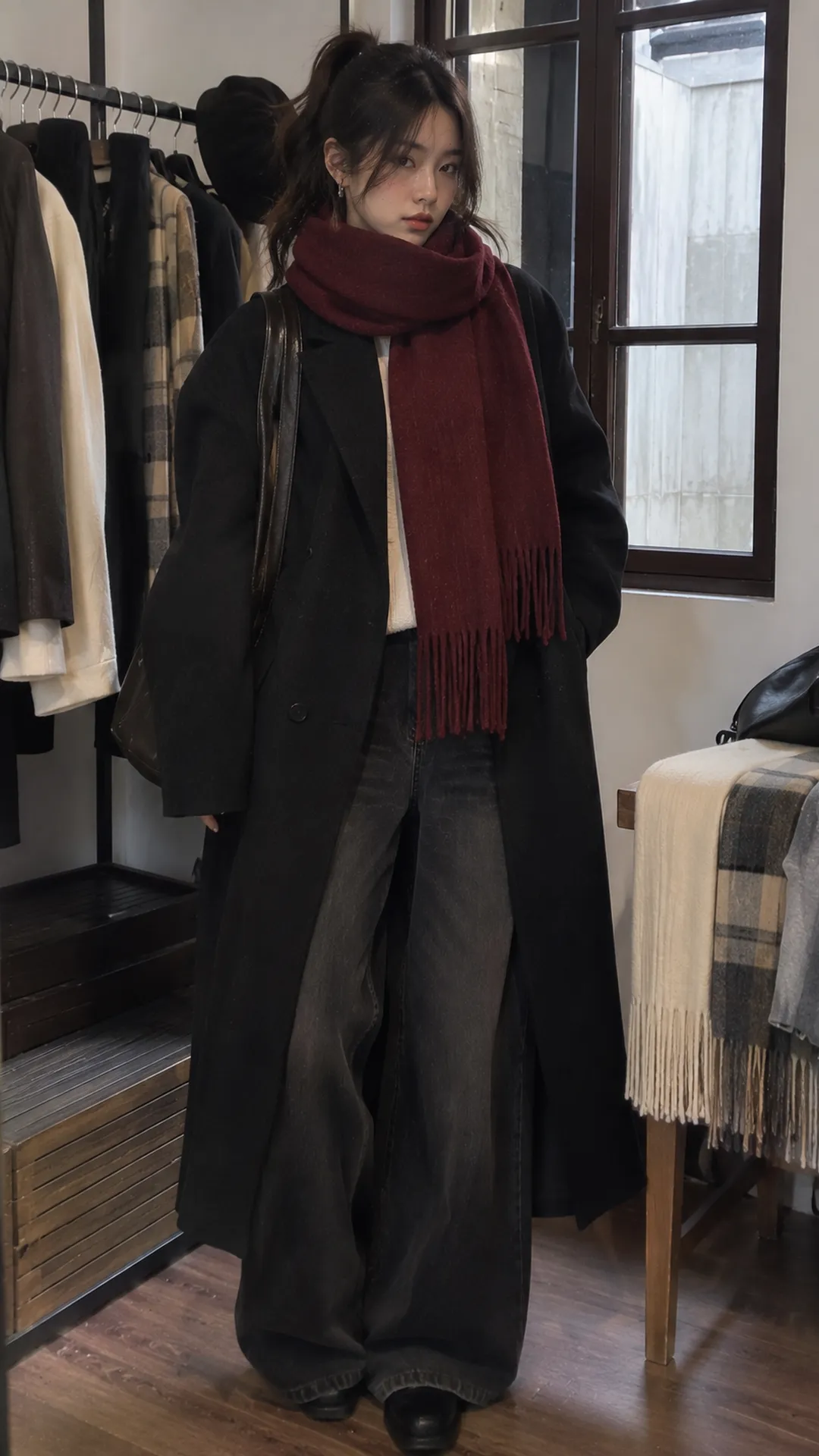
What should your scarf do?
Warmth in cold weather
Assess required coverage and room within your coat collar. Thickness may work over a simple top but crowd an already enclosed neck. Zip the coat to check whether all layers allow comfortable head turns.
Do not choose only through a warm claim. Read composition, thickness and construction and consider the setting. Outdoor cold differs from predominantly indoor use. A scarf too thick for your routine may spend the day in your hands.
An accent around the neck
For decoration, prioritize folded size and visible colors. A large pattern may become a small area around the neck, while borders show most. Try the intended arrangement rather than only the fully opened design.
Scarves sit beside hair, glasses and earrings and can compete. The expressive women's accessories guides identify one main area. With a clear scarf pattern, start with simpler face-area pieces.
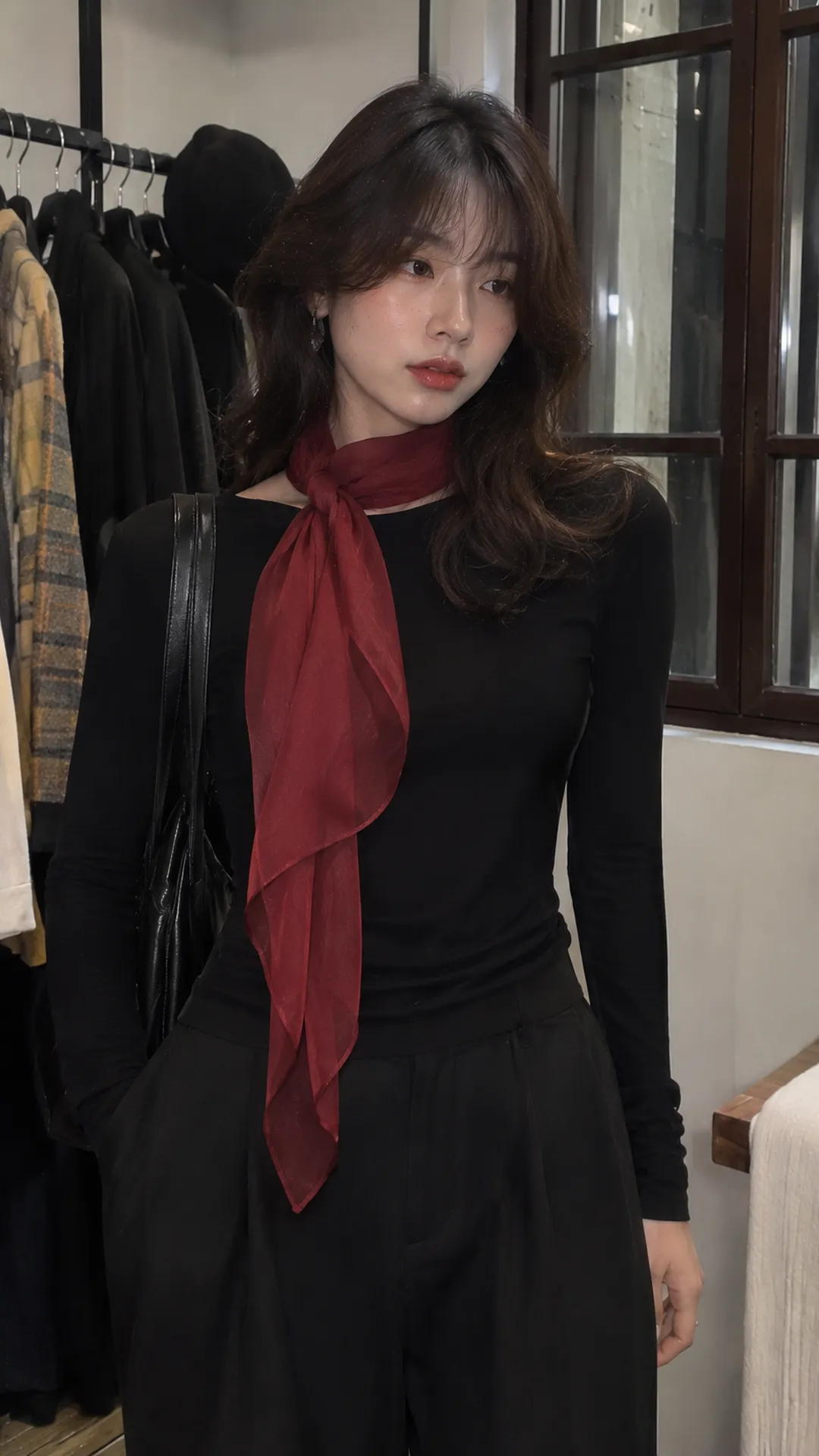
Choose materials through labels and actual feel
Silk: shine is not composition evidence
Read fiber percentages instead of identifying silk through a glossy surface. Smooth reflection cannot prove silk. For soft-silk or premium-silk descriptions without composition, request label photos before comparing prices.
A thin scarf can add color without much neck volume. Still check unwanted slipping and folded edge placement. Constant readjustment may not suit a busy day despite an attractive photo.
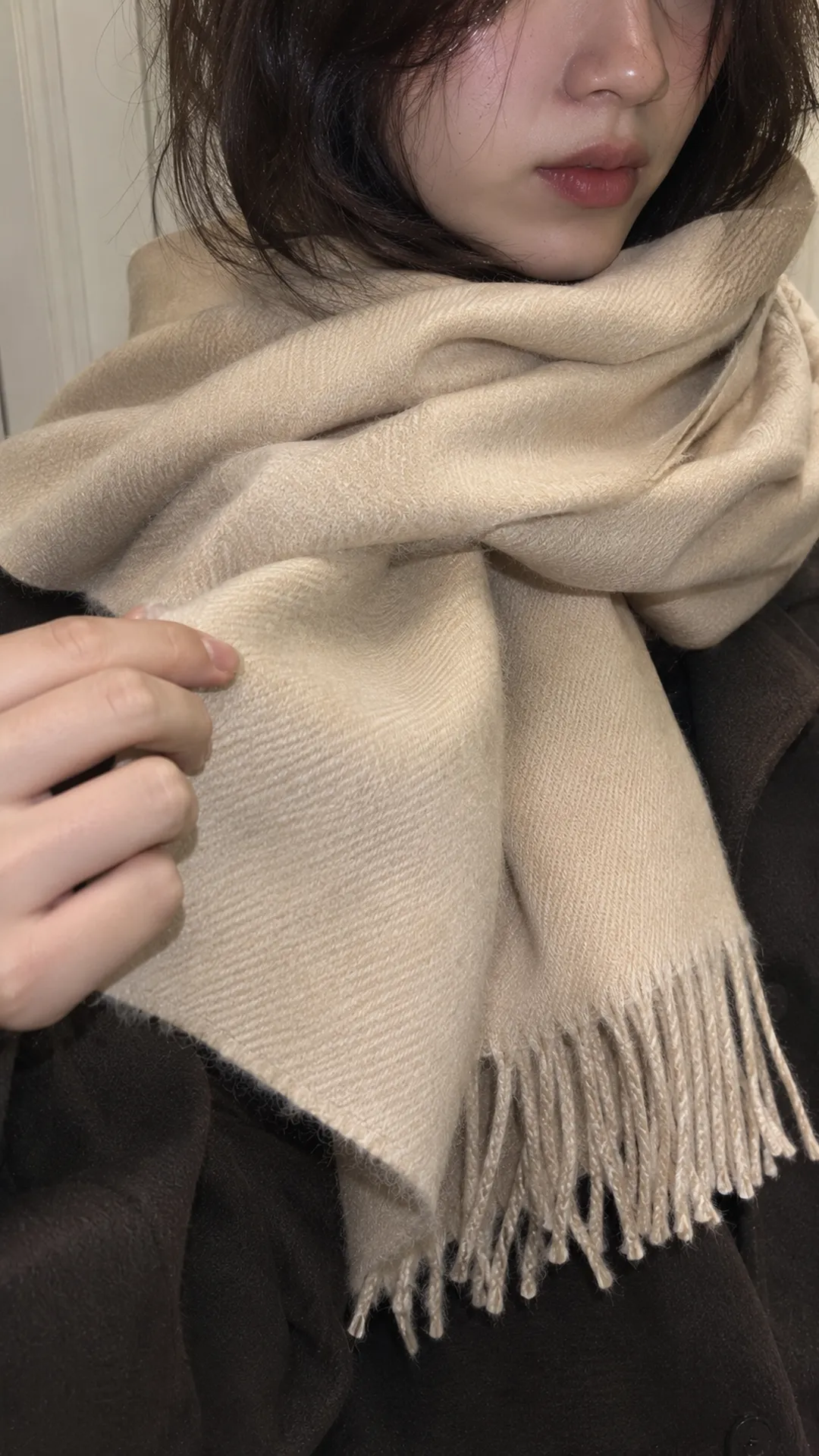
Wool-style scarves: read fibers beyond the label
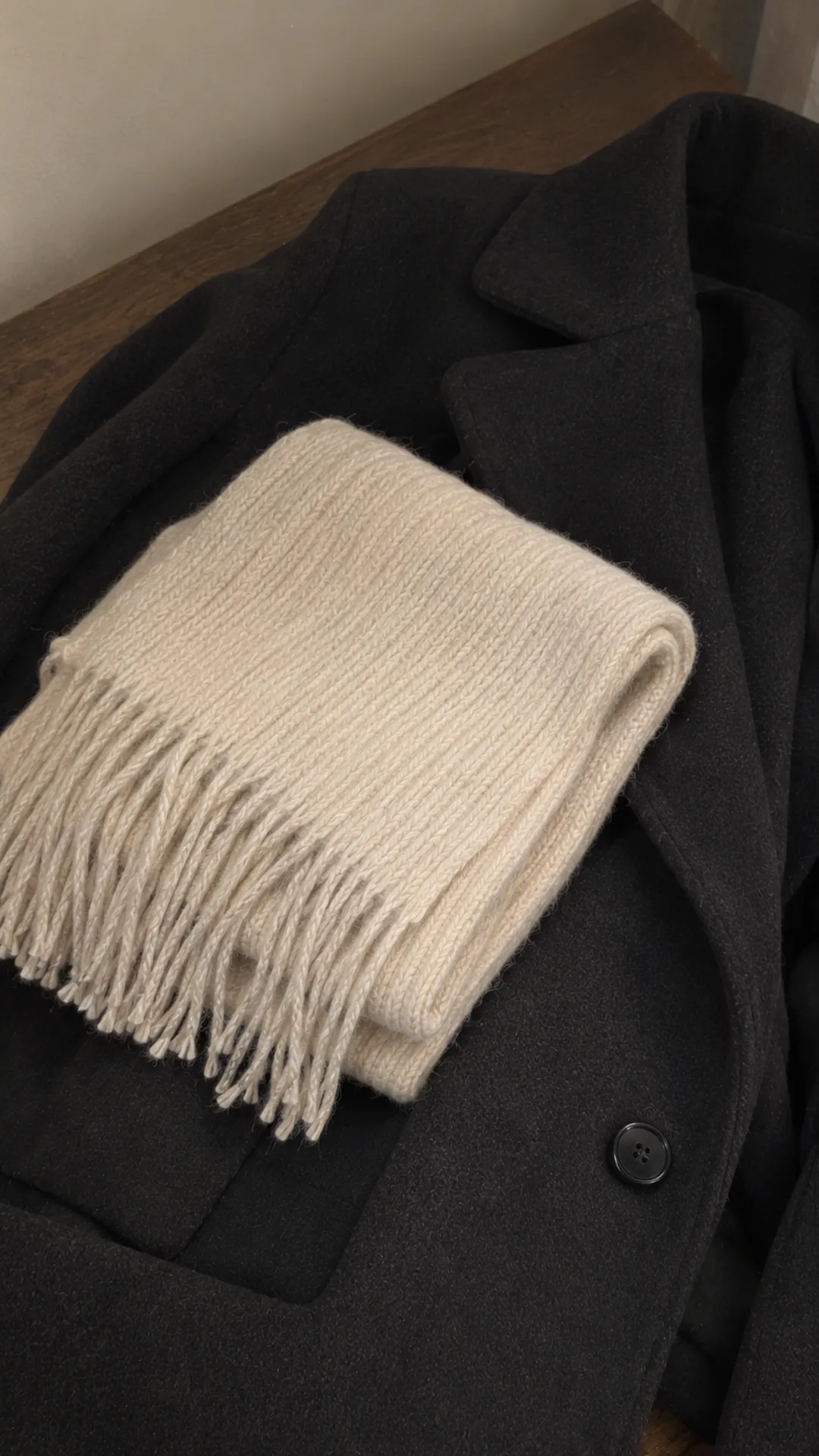
Retail wool-style scarf terms can cover varied knitted constructions and compositions. Check wool, acrylic, polyester and blend percentages. Softness and photos cannot establish the fiber.
Where permitted, test at the neck, not only by hand. You may enjoy a knit's appearance but dislike contact there. Check borders and fringe for rubbing clothing or skin. An advertised desirable material need not be endured.
Cashmere: the fiber name needs percentages
CCMI defines cashmere as fine fibers from cashmere goats' undercoats, with specific technical criteria. It is not a synonym for every soft scarf. Read blend percentages before deciding.
For material value, favor comparable information and a seller who explains clearly. Avoid burning or forceful stretching as home tests. Needs, finishing and manageable care still matter alongside composition rather than letting one fiber name decide everything.
Read dimensions according to intended use
Square scarves: consider what remains after folding
Small squares make compact accents; large ones create more coverage and folded layers. Explain whether you want a light neck arrangement or shoulder coverage rather than asking only if it is long enough. Equal flat dimensions can create different volume in thick and thin materials.
For online planning, use similarly sized existing fabric to visualize proportions. This does not reproduce the new product's drape, but helps establish whether you need more or less area.
Long scarves: consider width and both ends
Width determines coverage and neck bulk; length determines the ends remaining after wrapping. Ask whether dimensions include fringe if important. Very long scarves can photograph well yet catch with bags, walking and frequent removal.
No universal size follows height. Ends may stop near the chest or extend along the torso according to preference. Try coats open and closed. If a scarf hides a collar you want to preserve, consider narrower or thinner.
Solid colors, checks and patterns: choose what will show
Solid scarves add clear color. With dark clothing, contrast can brighten or close shades can emphasize texture. Exact matches are unnecessary; compare in ordinary light for your preferred difference.
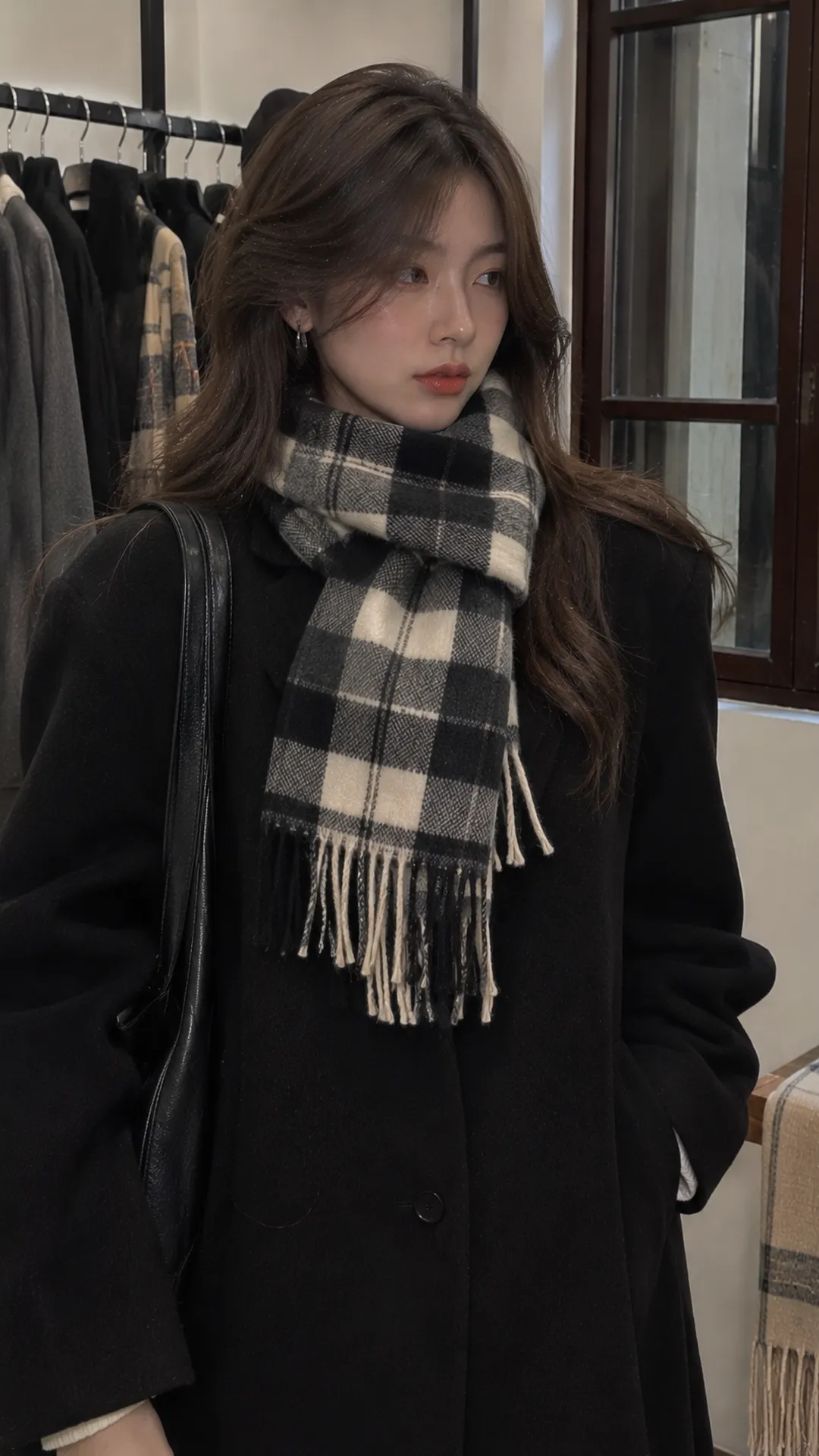
Black-and-white checks create intersecting lines. Assess check size after folding: large cells form distinct areas; small ones may blend into texture from a distance. With striped or patterned tops, trial each as the focus before combining.
For multicolored patterns, find one connection to top or bag. Every scarf color need not reappear. Sometimes only the border shows, making fold placement as relevant as the central flat image.
Style around collar construction
Shirts and blazers: keep necklines readable
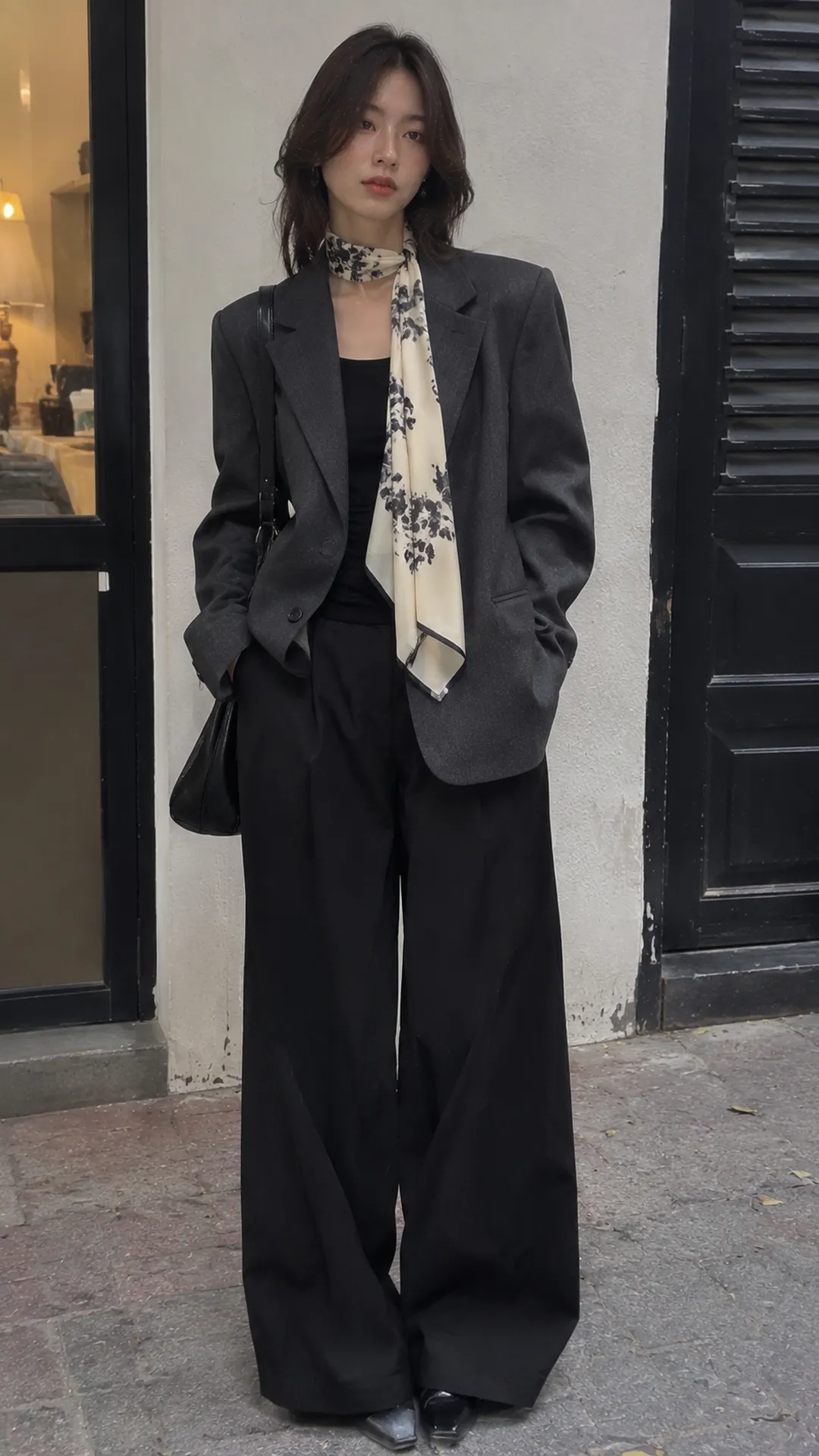
For workwear, start thin or moderate in size to avoid excessive neck layers. Broad lapels may need a compact scarf to retain their shape. With a prominent standing collar, keep the scarf quiet or move the accent elsewhere if crowded.
A scarf can add color over a plain top without replacing the outfit. View at conversational distance to see whether it emphasizes the face or hides desired lines. The women's tops styling guide establishes top structure before neck accessories.
Crew necks: check upper-body volume
A simple crew neck is an accessible base, but combined thickness matters. Raised knitting plus a thick scarf can create intended or unwanted volume. To reduce it, try narrower width or quieter texture before only changing color.
Coats: treat the scarf as a functional layer
With large coats, scarves add color and coverage, but test bag straps and zipping. Expose some inner collar if useful to distinguish layers. The women's layering guide examines each contribution instead of merely increasing layer count.
Try your actual everyday accessories
Wear regular glasses, earrings, bag and hairstyle with the scarf. Drops may touch knit texture; straps can displace it. Identify these contacts before deciding, especially for long days.
A leading scarf does not require a necklace. Move a metal detail to wrist or bag to distribute accents. The Alt Fashion accessory groups choose roles so the scarf has space while preserving personality.
During travel, check long ends against bags, zippers and equipment. Secure them around vehicles or moving parts. This practical criterion belongs alongside appearance, particularly with long or fringed designs.
Read care instructions before buying
Woolmark emphasizes reading care labels for washing and drying wool. One formula cannot cover every wool-labeled scarf. Silk, cashmere and blends likewise need their own product directions.
Inspect borders, fringe and snag-prone areas before washing. Store dry as appropriate for the material, away from other hooks or fasteners. Do not yank caught fibers to flatten them; seek suitable treatment or expert help.
Choose fewer scarves with different roles
A beginner need not buy many similar scarves. One light color accent and one cold-weather option can meet clearer needs than several equally thick designs. Identify what a new one adds beyond existing pieces.
Premium composition does not automatically establish suitability or long use. The lifecycle perspective in sustainable fashion includes repeat wear and care. Keep scarves with clear information, enjoyable feel and proportions working with your actual wardrobe.