

Inverted-Triangle Outfits: Shoulder and Lower-Body Proportions
Inverted-triangle styling is often reduced to making broad shoulders look smaller. You do not need to do that. Shoulders can lead a silhouette; if you prefer balance, adjust volume, necklines and lower-body focal points.
This guide offers three routes: balance the outline, emphasize the shoulders or create a column. Each is a styling choice rather than a way to correct a body.
Guide collection: Alternative Outfits for Women: E-Girl, Baddie, Goth and Grunge (Vietnamese)
Inverted Triangle Describes a Shoulder-to-Hip Relationship
The term generally describes shoulders or an upper back appearing wider than the hips. It does not specify height, weight or permitted clothes. Two people with broad shoulders can have different torso and leg proportions and preferences.
So inverted-triangle outfits start with the desired effect. For Balance, increase lower-body presence or direct the neckline inward. For Emphasize, highlight shoulders with a halter, a defined shoulder line or neater bottoms. For Column, combine boxy and straight or wide pieces in a continuous palette.
Body shape need not become a permission list. It is simply one way to anticipate the placement of horizontal lines, volume and focus when changing garments.
Three Routes for Different Results
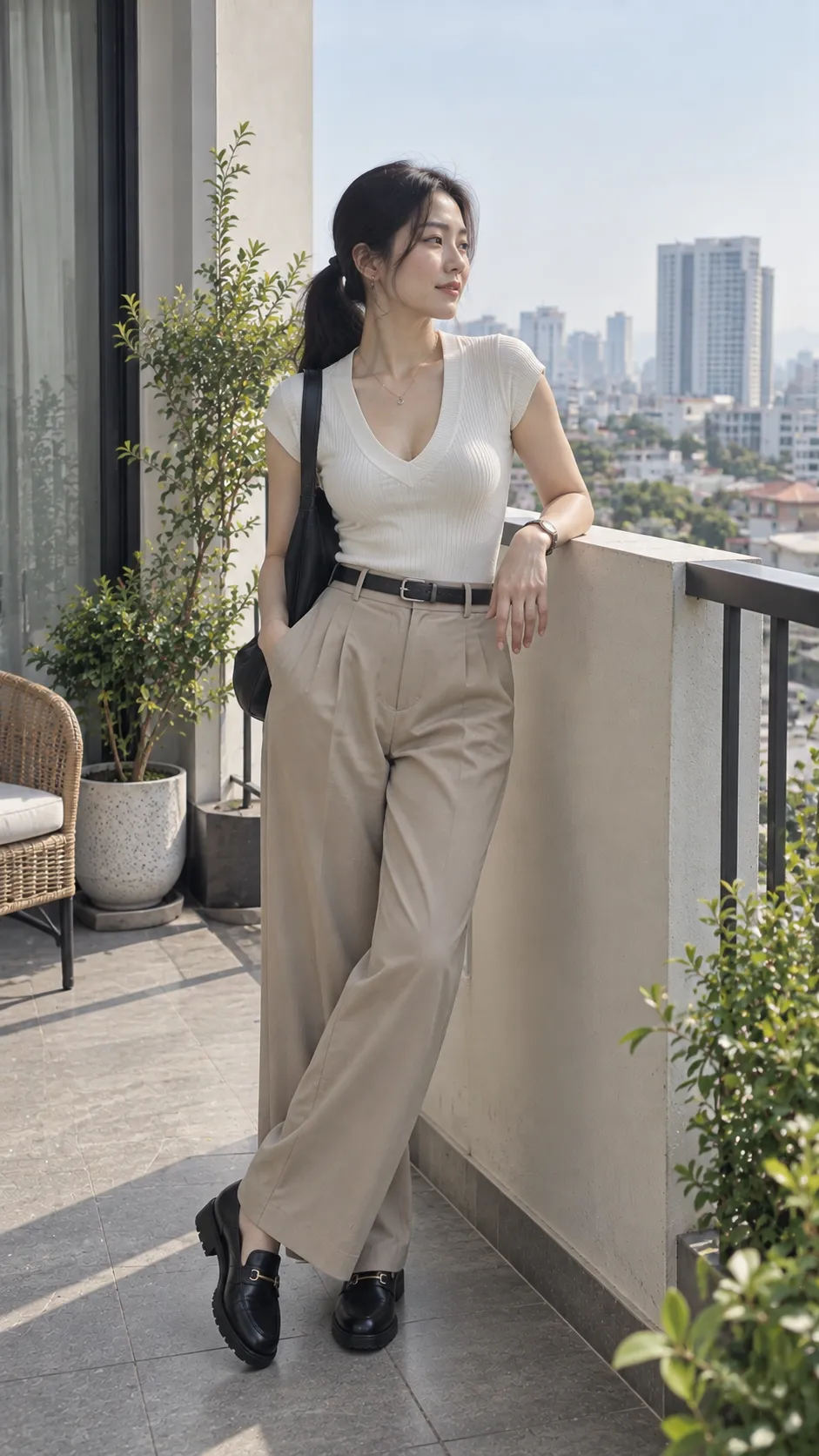
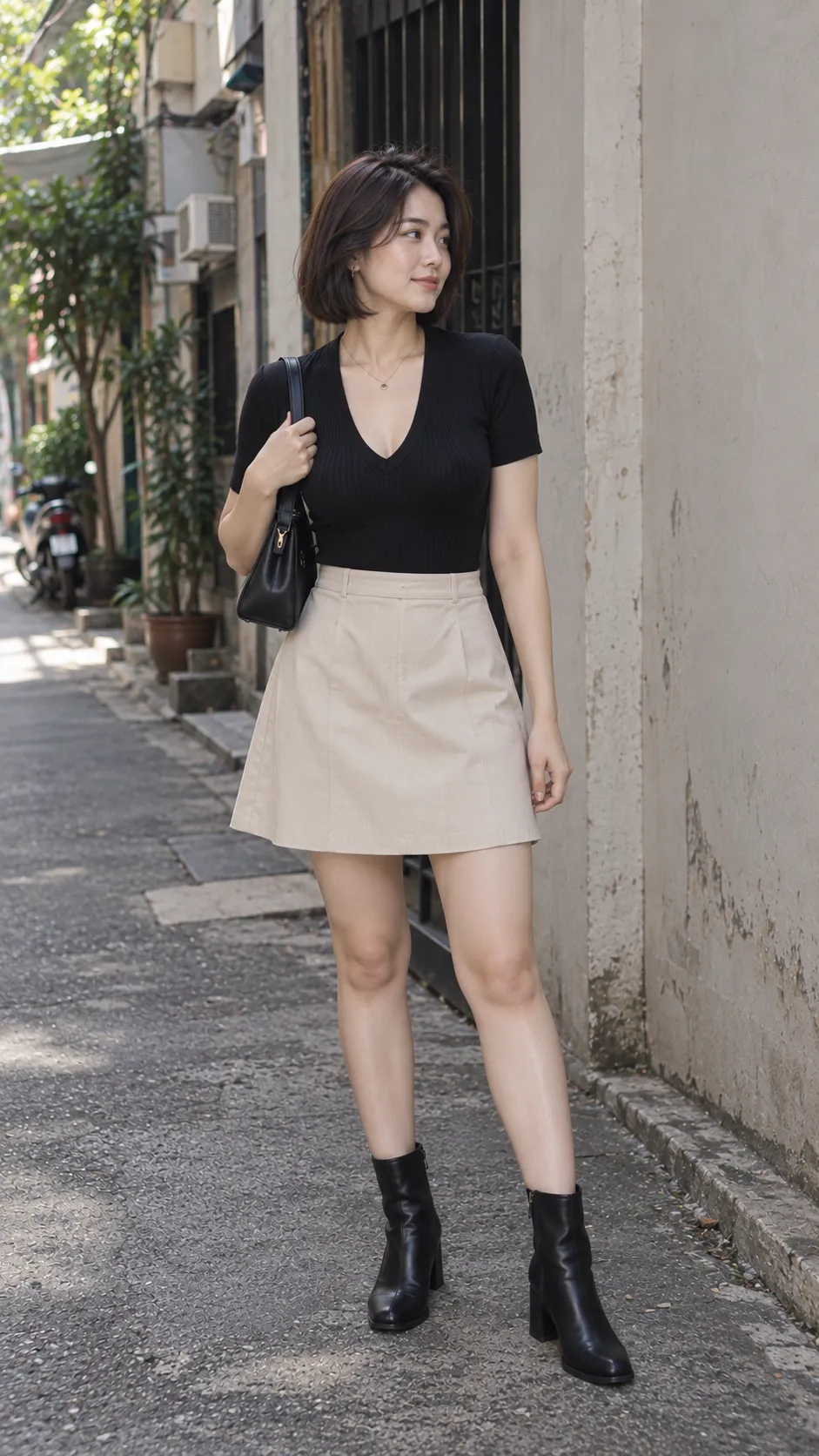
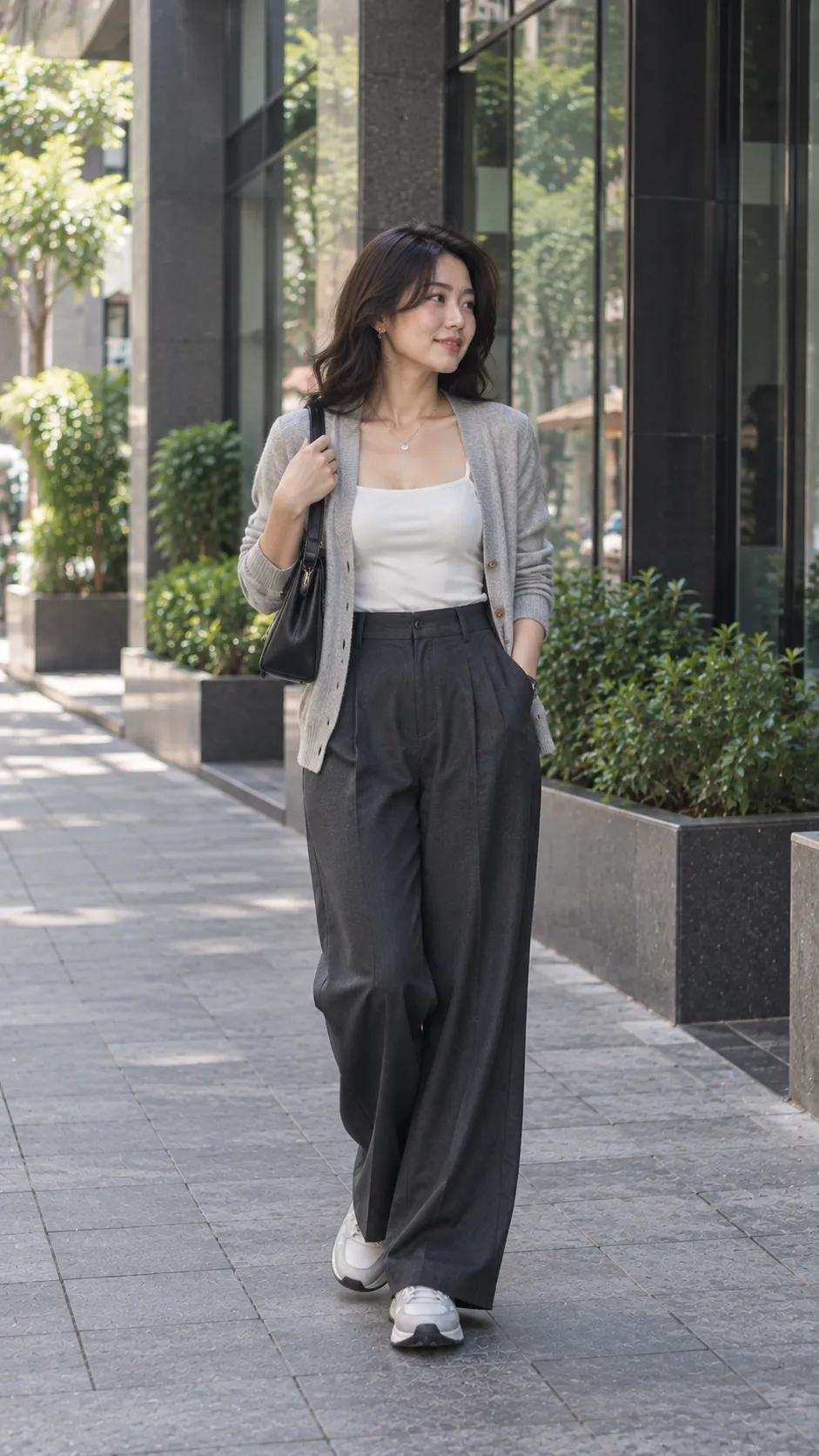
Balance: try a vertical or diagonal neckline, less shoulder volume and an opening lower shape. Wide trousers, pleated skirts, A-lines or lower-pocket cargos can add visual weight below. Shoulders remain visible; attention is redistributed.
Emphasize: halters, defined-shoulder tanks, off-the-shoulder tops or sharply shouldered jackets can highlight the upper outline. Straight or slim bottoms support a pronounced V shape in streetwear, athletic-inspired styling or tailoring.
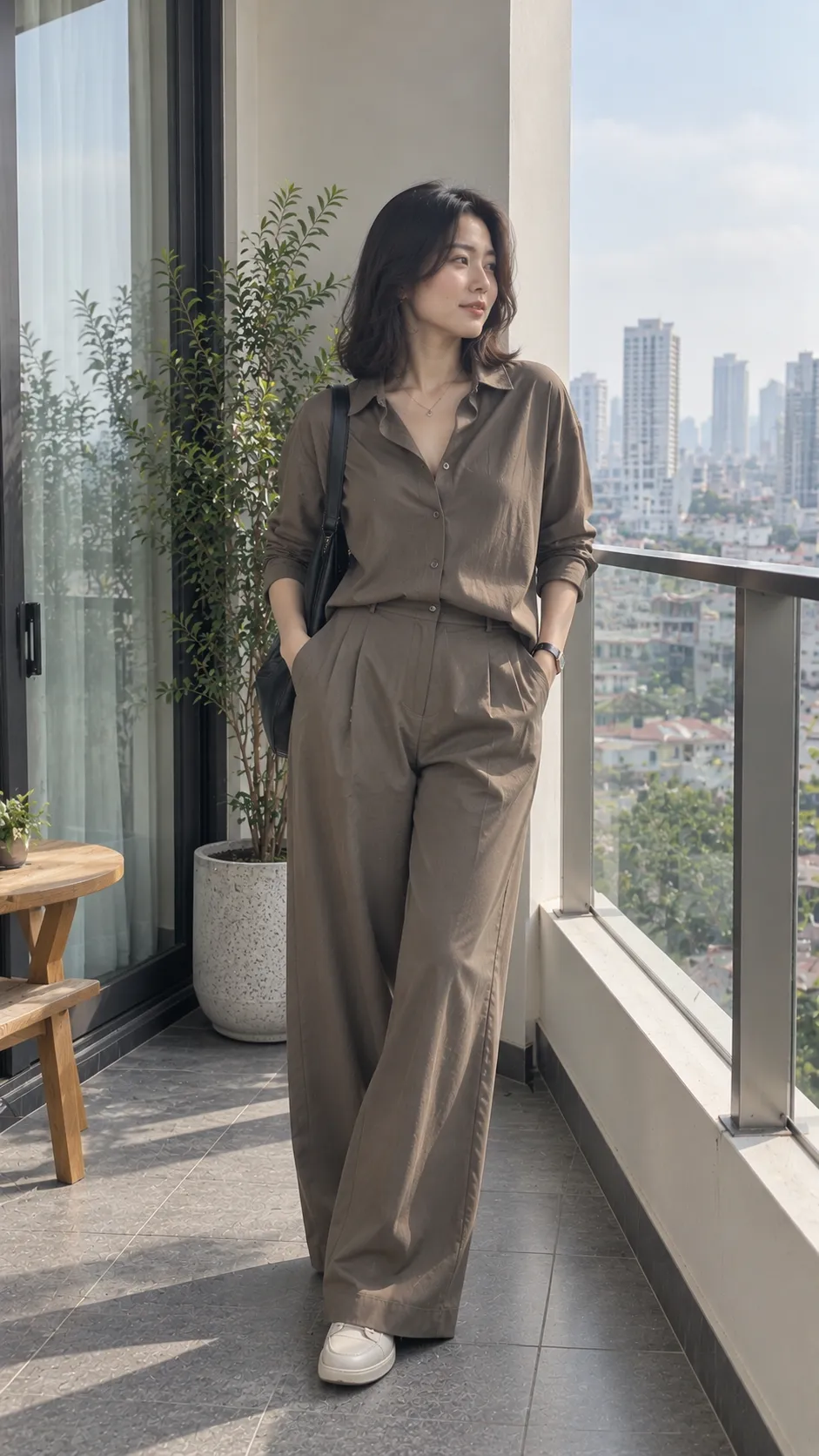
Column: a boxy tee or shirt with straight or wide trousers, a tonal dress or a long coat can create a vertical shape when you prefer less focus on body-shape relationships.
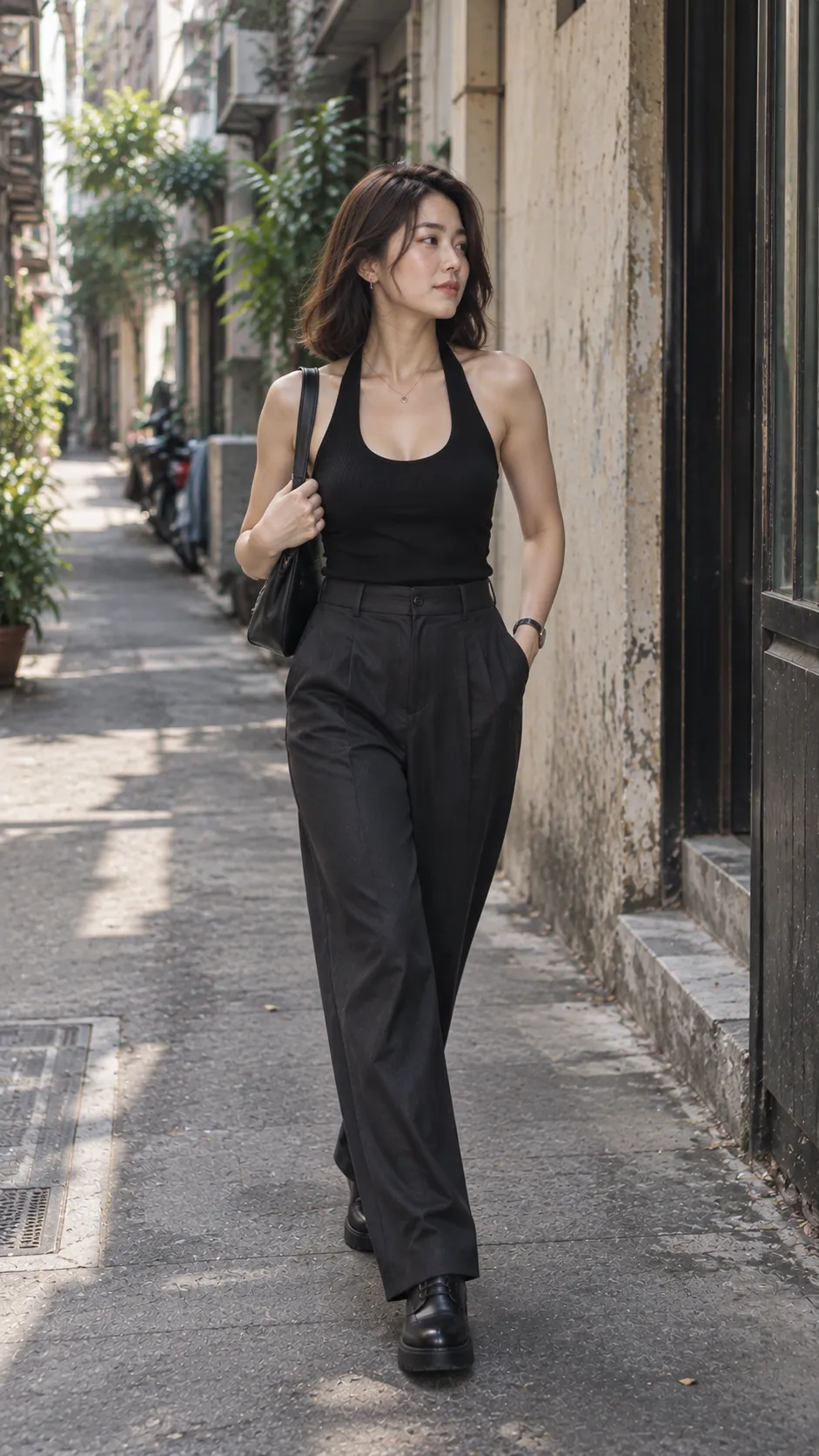
The same wide trousers can suggest Balance with a fitted V-neck, Column with a boxy shirt or Emphasize with a shoulder-focused halter. A garment does not belong permanently to one body type.
Necklines and Sleeves: Redirect Attention Rather Than Shrink Shoulders
Fullness at the sleeve head adds upper volume, while volume nearer the cuff places movement lower. If you like puffed sleeves but want Balance, respond with a skirt or trousers offering similar presence instead of excluding the sleeve.
For necklines and tops by garment, see the women’s tops guide collection. Here, the focus stays on shoulder-to-hip proportions.
Use Bottoms to Add Movement and Volume
Wide trousers need not have a high rise. Mid or low rises change apparent torso length and can suit Y2K styling. For Balance, the overall lower shape matters more than one compulsory waistband height.
Pattern, light color and texture can draw attention downward without a very full cut. A silver satin midi under a black tank uses shine; a light denim mini uses contrast.
Neat bottoms are also valid. Slim trousers or a pencil skirt let the shoulder line stand out in the Emphasize route. Understanding the effect gives you a choice.
For individual skirt shapes, see the women’s skirt and dress guide collection.
Layers Can Strengthen or Soften the Shoulder Line
Padded blazers define shoulders for Emphasize or power tailoring. Draping cardigans, dropped-shoulder overshirts and raglan jackets offer softer lines. Cropped jackets make a higher break; long coats extend a vertical line.
For Balance with a blazer, add enough lower-body presence through pleated or wide trousers, a maxi or cargos. You need not find a blazer with no shoulder structure; compare the two major shapes.
An open layer adds two vertical torso edges, interrupting a broad horizontal area. A closed layer reads more as one block and makes the base neckline less visible.
Eight Formulas Across the Three Routes
Fitted V-neck top + wide trousers + loafers
Balance: the neckline directs attention inward, trousers add lower volume and loafers finish the hem.
Scoop-neck tank + A-line midi + ankle boots
Soft balance, adaptable to Dark Feminine or casual styling through texture.
Simple tee + cargos + chunky sneakers
Streetwear balance: pockets and footwear add lower visual weight.
Halter + straight jeans + pointed boots
Emphasize: shoulders lead, with a neat lower half and a sharp footwear finish.
Defined-shoulder blazer + slim skirt
Tailored emphasis: a strong, deliberate line without treating shoulders as a problem.
Boxy shirt + tonal wide trousers
Column: a continuous straight shape makes body-shape balancing less central.
Dropped-shoulder hoodie + pleated mini
Relaxed movement: the hoodie softens the seam line and the skirt adds lower rhythm.
Slip dress + long cardigan
Long line: the dress establishes a vertical axis and the cardigan frames it with less rigid shoulder structure.
Shoes, Bags and Accessories Distribute Visual Weight
Chunky sneakers, platforms and substantial boots add weight at the feet for Balance. Loafers and pointed shoes offer a neater defined shape. Ballet flats keep the feet visually light, allowing upper-body emphasis or a softer composition. Choose comfortable, stable footwear for your plans.
A hip-level bag adds lower detail or contrast; a crossbody strap makes a diagonal; a high underarm bag keeps focus higher. Each position has an effect rather than being wrong for a body shape.
Statement earrings draw attention toward face and shoulders, a belt to the waist, contrasting footwear downward. Choose one or two points if desired; you need not use every tool to balance a body.
If height is another variable, the petite alternative outfit guide covers vertical proportions. Avoid combining separate goals into one rigid rulebook; choose the goal for this outfit.
Broad-Shoulder Rules You Can Question
“No off-the-shoulder tops”
This neckline is useful if you enjoy defined shoulders. Add lower presence if you want more Balance.
“No shoulder pads”
Shoulder pads create a strong silhouette that you can choose deliberately.
“Always wear wide trousers”
Wide trousers are one Balance tool. Slim bottoms support Emphasize.
“You must wear dark tops and light bottoms”
That is only one way to distribute attention. Tonal dressing or a light top can also work.
“Body shape matters more than style”
Style, setting and comfort lead; body-shape descriptions only help anticipate proportions.
Fabric and Print Can Shift Emphasis Without Changing the Cut
Similar cuts can distribute attention differently through ribbing, satin, coated denim or graphics. For Balance while keeping straight trousers, choose a more visible wash, light color or texture below rather than automatically switching to wide legs.
For shoulder emphasis, reverse the approach: a shiny, graphic or textured top with matte, quiet bottoms. This can highlight the upper half without adding puffed sleeves or padding.
Dresses: Read from Shoulder Line to Hem
A-lines open below, slips drape near the body, bodycon follows shoulders, waist and hips, and shirt dresses can form a column. Assess volume placement and the footwear finishing point rather than searching for one correct dress type.
A halter or shoulder-focused dress leans toward Emphasize; a V-neck with a gently flared skirt toward Balance. A straight dress with a long coat can shift the focus to Column.
Fit Check: Broad Shoulders Do Not Automatically Require Sizing Up
Do not increase every dimension simply because one garment’s shoulder area is tight. Patterns vary, and a larger size may distort neckline, armholes or torso without solving shoulder fit. Compare shoulder and bust measurements, sleeve construction and actual stretch.
In a blazer, reach forward and gently hug yourself to check upper-back movement. With tanks and halters, check that straps do not dig or pull. A dropped seam is intentionally outside the shoulder, so do not judge it by a tailored seam position. Comfort and movement are more useful than the size label.
A Quick Balance Adjustment Without Replacing the Outfit
Try moving emphasis lower through color, texture or footwear before changing the top. A lower bag, moving skirt or more substantial shoes may be enough. For less shoulder emphasis, compare a V or scoop neckline with a horizontal one, or open an outer layer.
If the upper half then feels too quiet, return to Emphasize with earrings, a halter, structured jacket or light top. The aim is choosing an effect, rather than achieving a standard ratio.
When viewing outfit photographs, also consider torso length, waistband position and shoe weight. These can change how the same neckline reads across different outfits.