

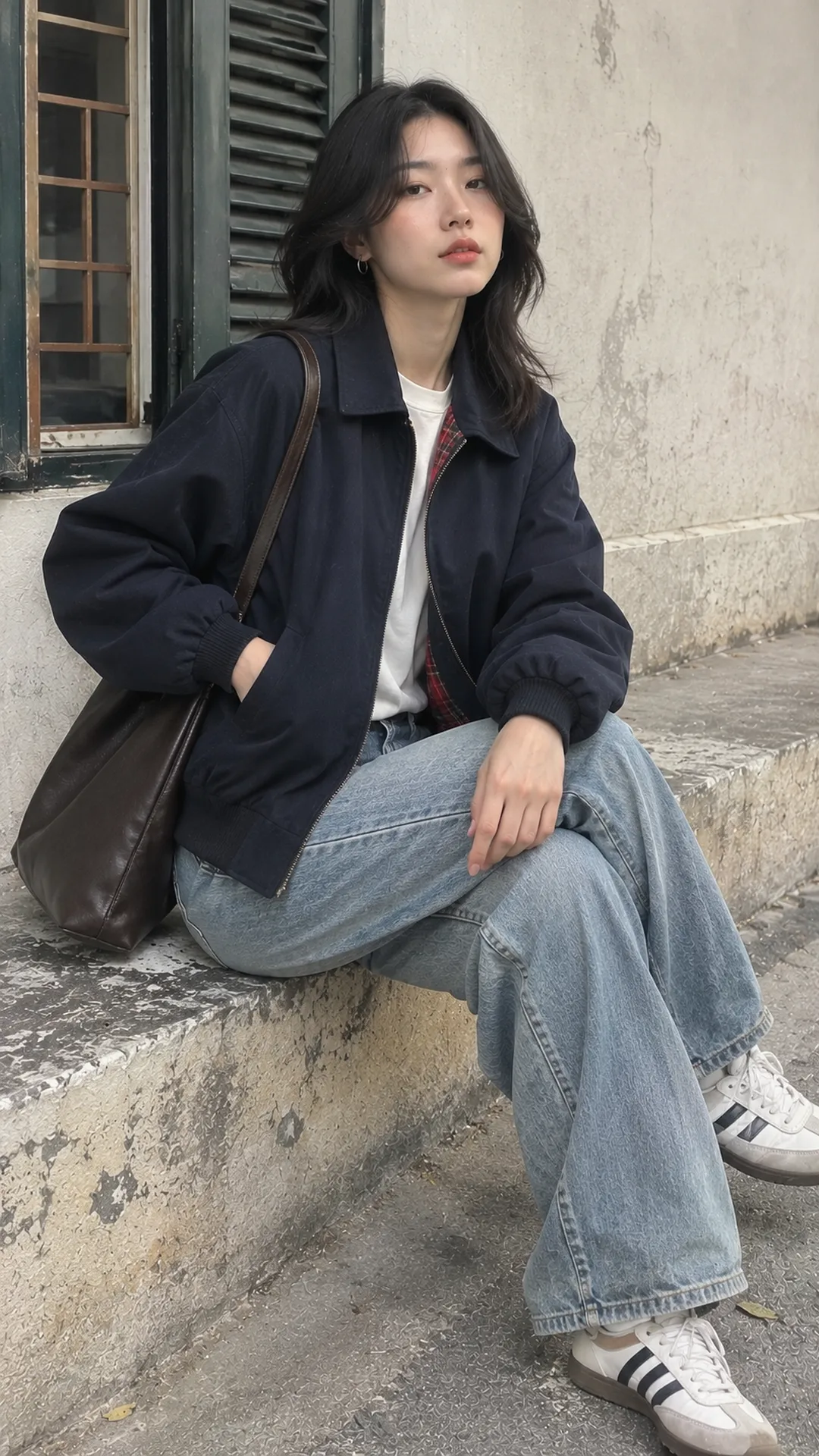
Recognize the Harrington before choosing an outfit
Baracuta describes its G9 through details including a two-button collar, angled buttoned pockets, ribbed cuffs and hem, an umbrella back yoke and Fraser Tartan lining. This describes the G9; not every jacket sold as a Harrington shares all its features or materials.
For another model, inspect front, back, collar and interior photos. Does the collar retain its shape open? How much does the hem gather? Is the body puffy or fairly straight? These directly affect styling. One fully zipped front photo cannot show its open behavior.
Harringtons are often compared with bombers because both have short, ribbed-hem versions. Examine collar and body construction rather than using the names interchangeably. Parkas form another group, often longer and designed for more coverage. Prioritize the actual garment over labels.
If comparing several outerwear types, the Women's Tops Item Guide leads to specific guides. This article focuses on Harrington hems, collars and length rather than reusing every bomber or long-coat formula.
Choose fit through shoulders, chest and hem
A good fit need not be tight
Try it over your intended inner top. Reach forward as if holding handlebars, gently cross your arms and sit. The body needs movement room without zipper tension. If it fits only over a thin tank but you usually wear shirts, account for your actual habit.
Raglan seams do not sit where conventional shoulder seams do, so one shoulder measurement cannot apply to every model. Also check finished chest, body length and sleeves. The online sizing guide helps organize measurements before comparing individual charts.
The hem determines the proportion break
Compare hems at the waistband, just below it and at the hips. Short designs reveal the waist; longer bodies with tight ribbing may balloon at the stomach. This is not a bodily fault. Choose gentler ribbing or another length instead of constantly pulling downward.
For a loose look, choose an intentionally roomy version rather than increasing many sizes. Sizing up also lengthens sleeves, widens the neck and shifts pockets without guaranteeing your desired proportions. A roomy body with neat cuffs is often easier than constant rolling and adjustment.
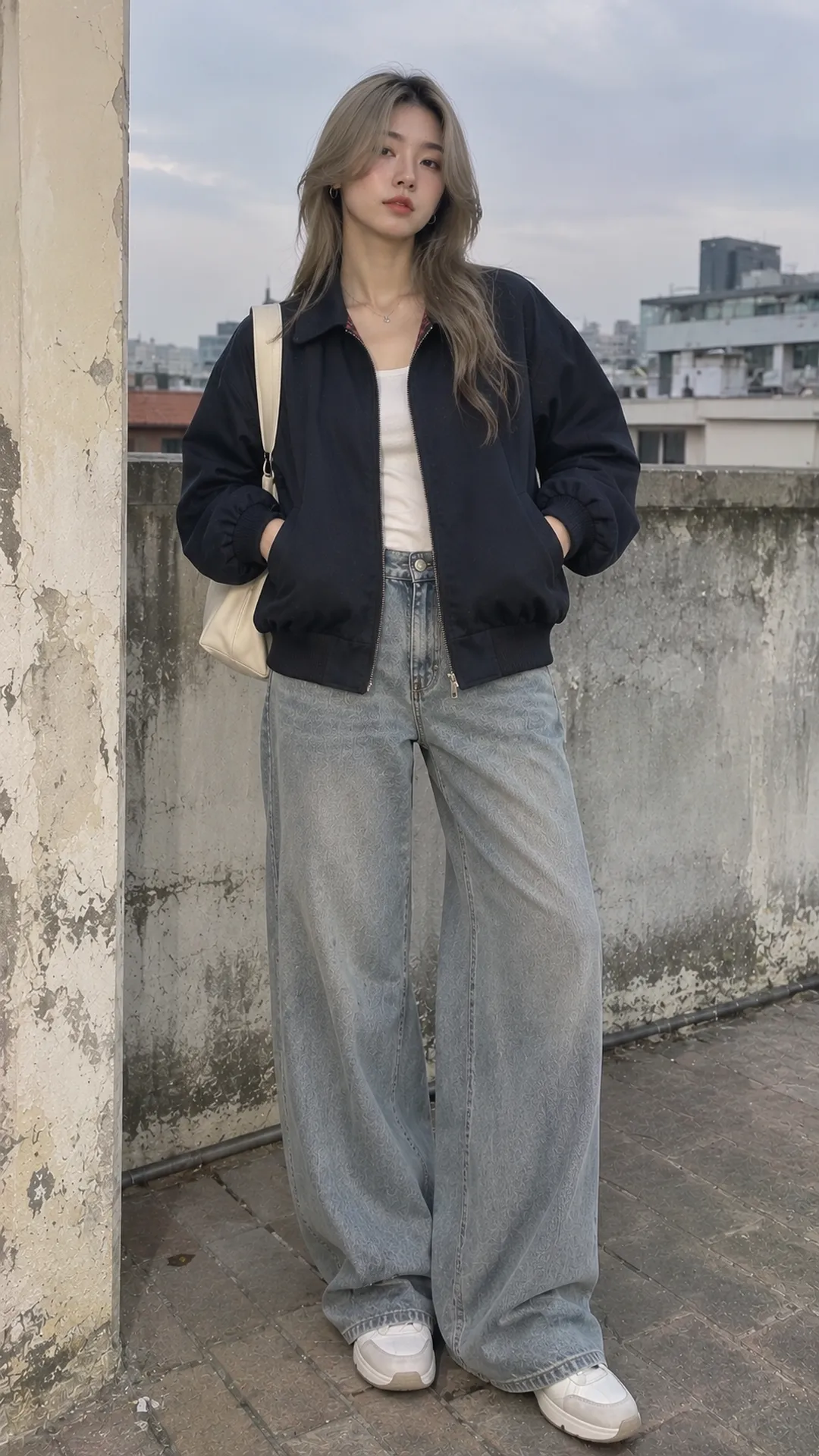
Four everyday Harrington jacket outfits
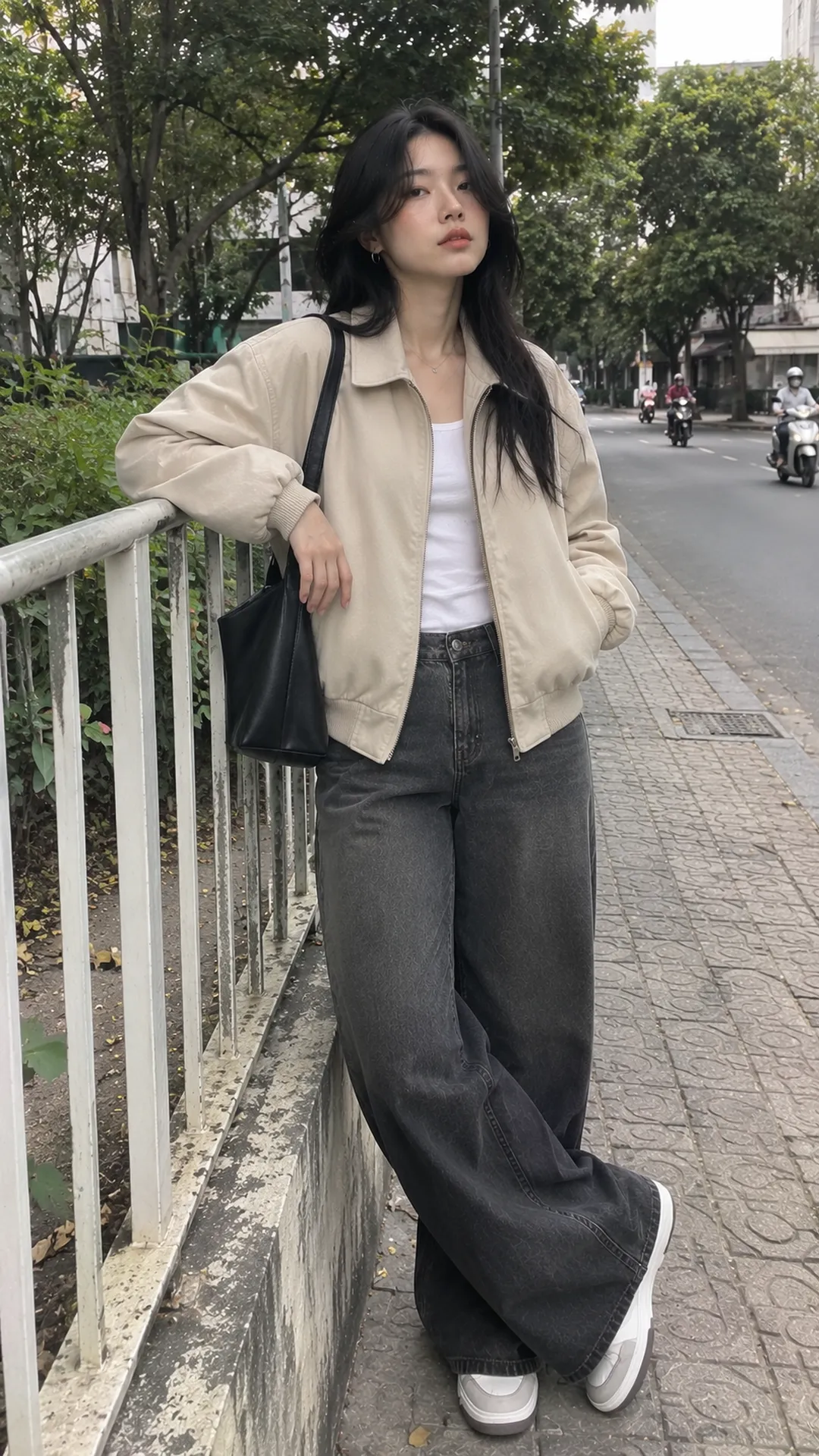
A white top, straight jeans and beige Harrington
White creates central lightness, denim adds an everyday surface and beige frames the torso. Choose an inner top long enough to tuck or ending near the waistband to limit horizontal breaks. White, brown or black shoes can work according to your bag and denim; a new pair is unnecessary.
Unzip to create vertical front lines for lightness. Partially zip for a neater feel, checking that the inner collar does not bunch. With heavily distressed or contrasting denim, a plain tee gives the jacket a clear role without extra torso detail.
Dark straight trousers and a fine knit
For workplaces allowing smart casual, try navy with cream and charcoal trousers. A fine knit keeps the base neat; straight trousers continue the leg line. Defined shoes increase polish, while minimal sneakers relax it. Check the workplace code rather than assuming a Harrington replaces a blazer.
An excessively long inner hem can create a large light band at the hips. Unless intentional, tuck it or choose a shorter top. Unzip more while sitting if fabric gathers at the stomach; comfort matters more than remaining closed all day.
An A-line skirt and low shoes
A short Harrington and A-line skirt form two volumes meeting at the waist. Keep the inner top neat so the ribbing contains little excess fabric. Low shoes and simple socks aid easy movement. With large skirt pleats, try a less puffy jacket first to avoid too much expansion at torso and hips.
For more character, try a black top, dark skirt and one small metallic accessory. The outfit need not become an aesthetic uniform. Starting with silhouette in Alt Fashion styling for beginners helps retain the Harrington as a base and choose one useful accent.
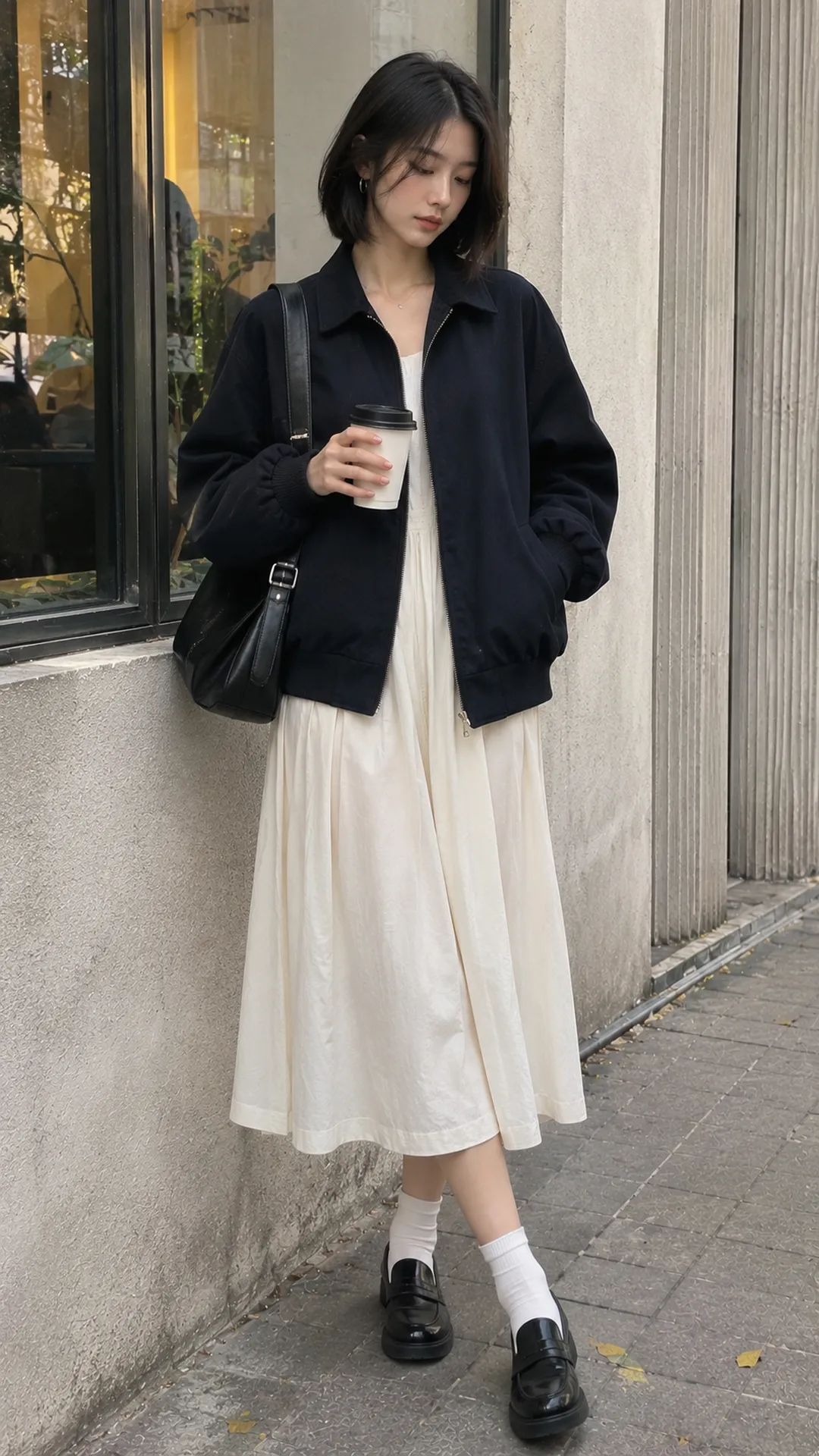
A soft midi dress and dark Harrington
Draping fabric contrasts with a gathered jacket. Try black over a muted or small-patterned dress. Leave it open to preserve the dress line, with a moderate bag and simple shoes. With strong flare, check whether the jacket hem gathers the fabric at an awkward point.
A dress does not necessarily need a belt. Its existing cut and the jacket's shortness may divide proportions sufficiently. Stand and sit to check whether ribbing pulls the dress upward. Changing jacket length or width is easier than repeatedly smoothing the skirt down.
Coordinate colors from shell to lining
Beige, navy and black are accessible starting points with ordinary clothes but create different contrast. Beige and white feel light; navy and gray transition gently; black and white define the opening. Choose colors you already wear often for more use.
Treat a bold plaid lining as a pattern when unzipping or rolling sleeves. A plain inner top reduces competition. Repeat a small lining shade in socks or bag if useful without exact matching. A partly exposed pattern can already connect the outfit.
Do not infer rain protection from the Harrington name or a closed-looking surface. Check the exact model and carry separate rain protection when needed. A lined fashion jacket may not suit hot midday conditions; assess total thickness, collar and closeness in context.
Layer in hot, humid weather: fewer functional pieces
For mainly indoor plans, a tee or thin shirt beneath may suffice. Do not add a thick hoodie solely from a cold-weather reference. Hood and Harrington collar can crowd the nape; test zipping, turning and carrying a bag before retaining both.
For repeated moves in and out of air conditioning, choose an inner outfit complete without the jacket. The section on layering by length and surface explains each layer's contribution. A neat base and shaping outer piece are often enough; three layers are unnecessary.
For motorbike travel, check that cuffs do not cover your hands and the hem does not interfere when seated. Bags should stay stable without pulling the collar. For specific protective or weather duties, choose a product explicitly designed for them rather than inferring performance from style.
Common problems and adjustments
Too much stomach volume: check ribbing tension and body length. Unzip or reduce inner fabric; if the shape still bothers you, change cut rather than repeatedly pulling the hem. Overlong sleeves: check cuff position with relaxed arms and while reaching. Many rolled turns can create a large wrist lump.
Loose upper and lower halves with no break: tuck the inner top, reveal a waistband or expose wrists. Loose clothing throughout remains valid when its lines are intentional. Too many lining colors: keep inner top and trousers plain before adding another accessory.
Before buying, try three existing outfits: jeans, straight trousers and a skirt if you wear them. Check open and closed, read the care label and inspect pocket, ribbing and zipper seams. The right jacket keeps your desired proportions during daily life, not only one photo pose.