

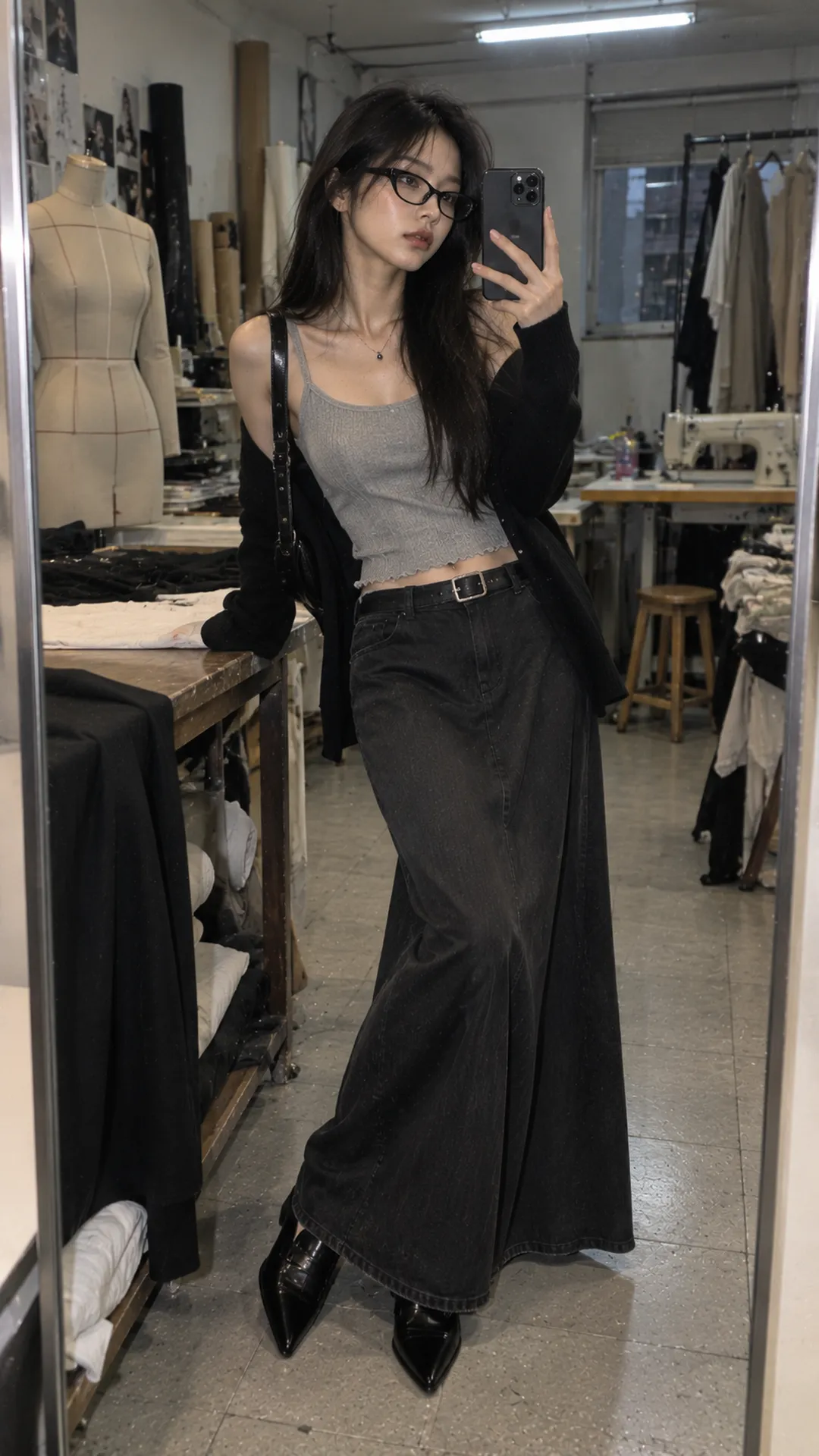
Look at outer corners rather than only the cat-eye label
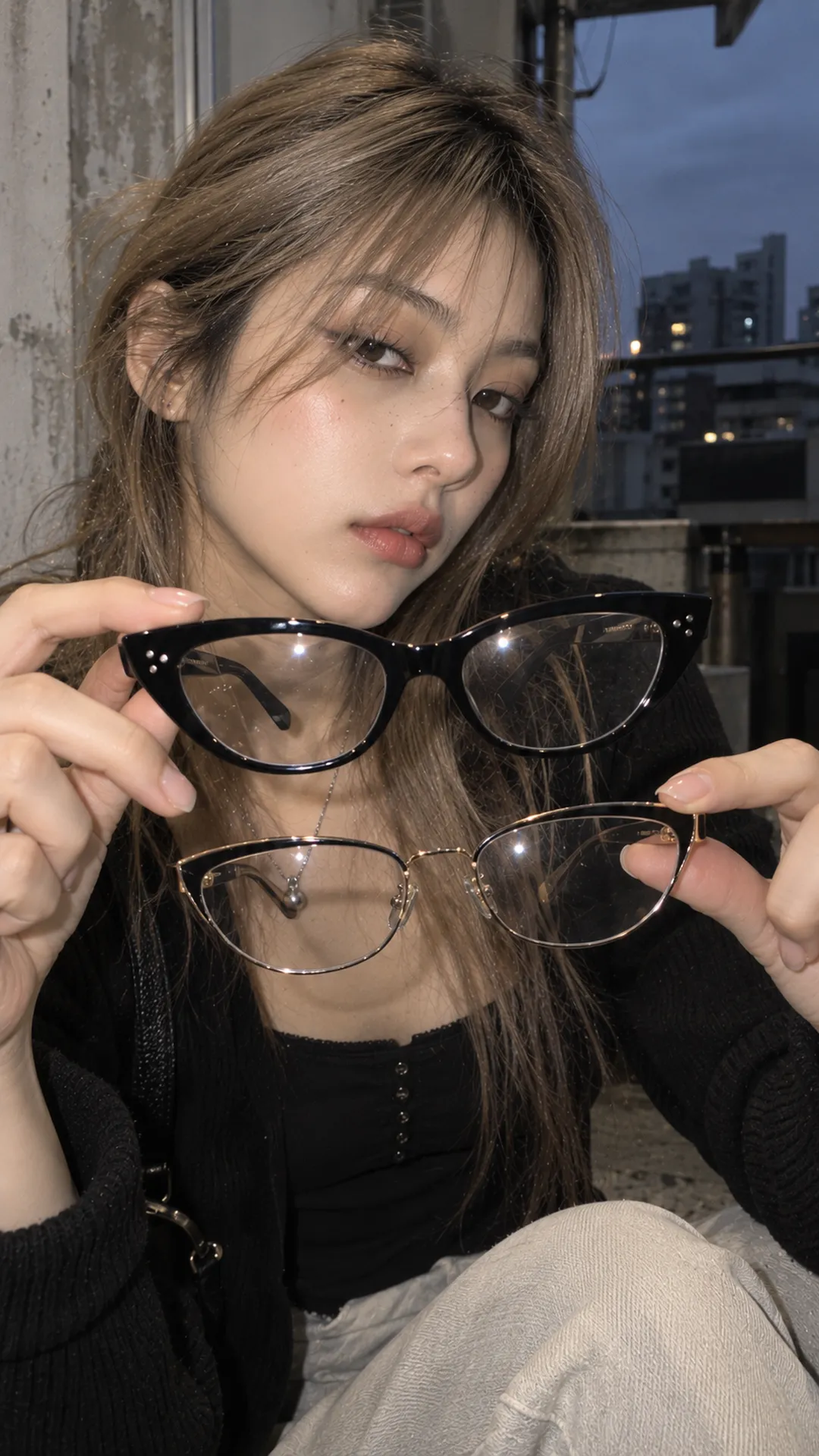
In Warby Parker's frame-shape guide, cat-eye frames are distinguished by upturned upper outer corners. This structural sign is more useful than relying entirely on a seller's model names.
A rounded lower rim with a slight outer lift differs from pointed peaks and a defined top edge. Both can be cat-eye variations. Compare straight-on photos without a head tilt so the camera angle does not masquerade as upsweep.
Upsweep and width are different. Sharp corners do not necessarily mean a wider frame: they may extend outward while the lens area remains small. Check the front and dimensions rather than only the outline.
If unsure which lift you prefer, compare three similar colors with gentle, moderate and pronounced corners. Keep hair and viewing distance consistent to identify the outer corner's actual effect.

Rim thickness changes the prominence of the same shape
Thin rims let the cat-eye line appear more subtly across outfits. Thick rims create a defined facial shape, especially in contrasting colors. Do not rely on 'small face, small frames'; test the presence you enjoy, then actual fit.
A thicker top than bottom can focus attention on the brow line. Even rims create a more continuous outline. Count corner embellishments as accents too, not just lens dimensions.
Metal and plastic-rimmed cat-eye frames can differ in bridge, nose-pad and finishing construction. Photos cannot establish lightness or durability. Read exact materials and try them if those factors matter.
Read acetate, metal and titanium descriptions component by component. Temples and fronts may differ. If only one generic material is listed, ask which parts use it rather than assuming the entire pair matches.
Check fit before deciding on style
Let the glasses sit naturally, then look forward, speak, smile and bend gently. Check sliding, cheek contact that pushes them up and pressure at the sides. Holding them throughout shape comparisons prevents you from assessing their actual resting position.
Warby Parker explains frame measurements as lens width, bridge width and temple length, usually in millimeters. These support comparison but cannot guarantee identical feel between equally numbered frames.
Outer cat-eye corners also affect visible width. Ask for total front width when comparing with a well-fitting pair. Lens width alone does not establish where the whole frame ends at your temples.
Have a qualified shop adjust temples or pads. Do not bend them yourself to resemble a photo or force an overly wide pair inward. Adjustments must suit construction, with appropriate size the starting point.
The women's prescription-frame guide gives a general selection framework. Once you want cat-eye, use that framework for fit, then compare upsweep and rims separately.
Round, angular or long faces: choose what to emphasize
On a curved face, cat-eye corners add a contrasting diagonal. Try sharper corners for definition or gentle curves and a slight lift for softness. A round face does not require extremely pointed or large frames.
With a defined jaw, repeat sharpness through clear edges or contrast it with softer frames. Both are aesthetic choices. Keep hairstyle consistent because covering or exposing the jaw changes what you notice.
For a long face where you want width, compare overall span and lens height together. Vertically shallow cat-eyes feel different from taller versions. Do not choose by one dimension while ignoring the bridge or cheek contact.
If your features span several categories, no single label is necessary. The guide to choosing women's glasses for facial proportions helps frame the questions. Here, the aim is a cat-eye variation you like that still fits securely.
White, black, clear and metallic frames
Compare white rims with your top
White cat-eye glasses can create a bright line near the face. Bright white and ivory differ, especially beside a white top. Compare them in everyday light to decide whether you like a match or a slight difference.
With prominent white frames, a plain top and small earrings are easy starting points. A white bag is unnecessary for coordination. Let the glasses be a separate highlight or repeat a little white in clothing without matching every accessory.
Black and tortoiseshell define the outline differently
Black creates a continuous line, while tortoiseshell adds smaller areas of pattern. View tortoiseshell from normal distance to see whether the pattern stays distinct or blends. Close-ups may exaggerate its prominence.
Clear and metal options can feel lighter
Clear rims still have thickness and reflections rather than disappearing. Thin metal can also stand out through color or corners. Check several lighting directions instead of assuming every thin rim is discreet.

Hair and earrings can hide or repeat the corners
A low fringe may obscure the top edge and cat-eye feature. To reveal upsweep, adjust your fringe in a way you already use daily. A new hairstyle is unnecessary merely to suit frames, especially if you do not want that maintenance.
Tucked or tied hair exposes temples and outer corners. Long or broad earrings then add a nearby accent. Try small earrings first to see whether the frame already provides enough shape around your face.
Styling expressive women's accessories helps assign roles around face and neck. With bold cat-eyes, choose one small metal point instead of sharp shapes in earrings, necklace and hair clip at once.
If you regularly use headphones or a helmet, test compatibility in a suitable setting. Frames comfortable alone may press beneath headphones or be displaced. Online try-on images rarely show this fully.
Three ways to integrate frames into an outfit
A shirt and straight trousers: try moderate upsweep in black or metal to taste. A collar already creates defined lines, so small earrings may suffice. Keep the bag simple if you want attention on the glasses.
A plain tee and jeans: thick or white rims can change the look without many layers. Compare the frames with any T-shirt print. A large chest graphic and prominent glasses may work together, but make it deliberate.
A plain dress for meeting people: choose upsweep and surface in relation to the neckline. Soft frames with soft fabric feel gentle; sharp frames create contrast. You need not name a historical style or celebrity reference to use the combination.
Photograph the same outfit with two frames. Do not change hair, makeup and lighting simultaneously and then judge the glasses. Similar conditions reveal the outline's actual effect.
Decide through measurements, handling and lens needs
For prescription cat-eyes, ask your lens provider whether the exact model supports the lenses you need. Fashion shape does not replace technical checks. Do not assume any frame suits every prescription or lens type.
Online, request front, side, bridge and temple photos with measurements. Check stated exchange, adjustment and warranty terms. The shopping and product-check guide helps compare evidence rather than relying on an elegant cat-eye label.
Clean and store according to both frame and fitted-lens instructions. Use a suitable case against crushing; do not set the lenses face down even temporarily. Have uneven frames or loose parts checked professionally before further self-adjustment.
Suitable cat-eyes offer an upsweep you enjoy, secure width and compatibility with daily pieces. Once those three are clear, color and accessories become simpler without prohibitive face-shape rules.