

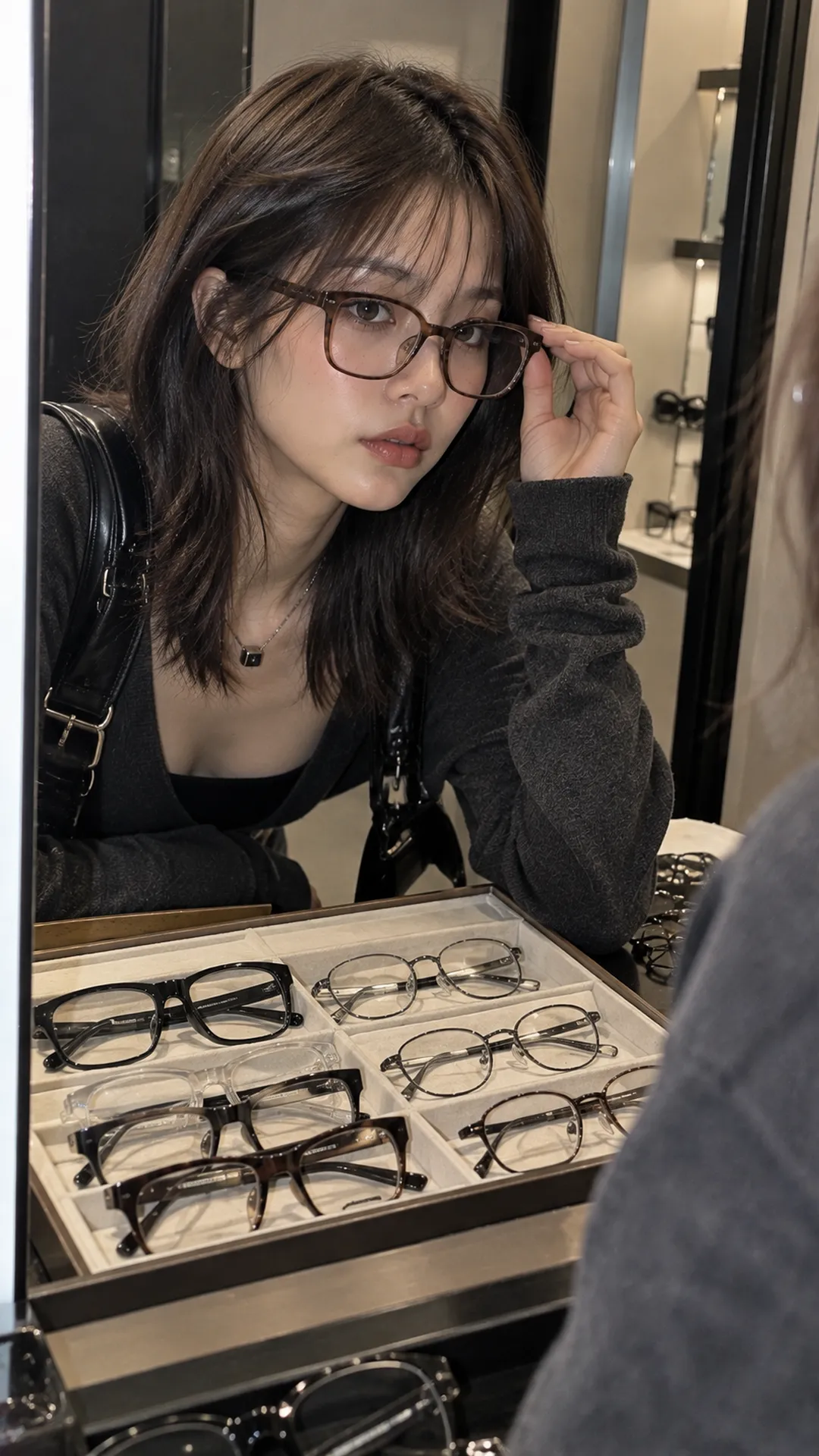
Start with fit rather than a face-shape label
Before comparing attractive frames, wear each briefly and observe them while talking, smiling and looking down. According to Warby Parker's fit guide, frames should not slide, squeeze the sides of your head or be pushed up by your cheeks when smiling. Ask a qualified person at the shop for adjustments.
For styling, assess overall width too. A large appearance can be intentional, but temples pulled outward or constant sliding are different issues. Do not use the label oversized to accept glasses that will not stay in place.
Try your most-used hairstyle and accessories. If you regularly wear earrings, include them; if you ride a motorbike, check compatibility with your helmet in a suitable fitting setting. This reveals practical conflicts an online try-on image may miss.
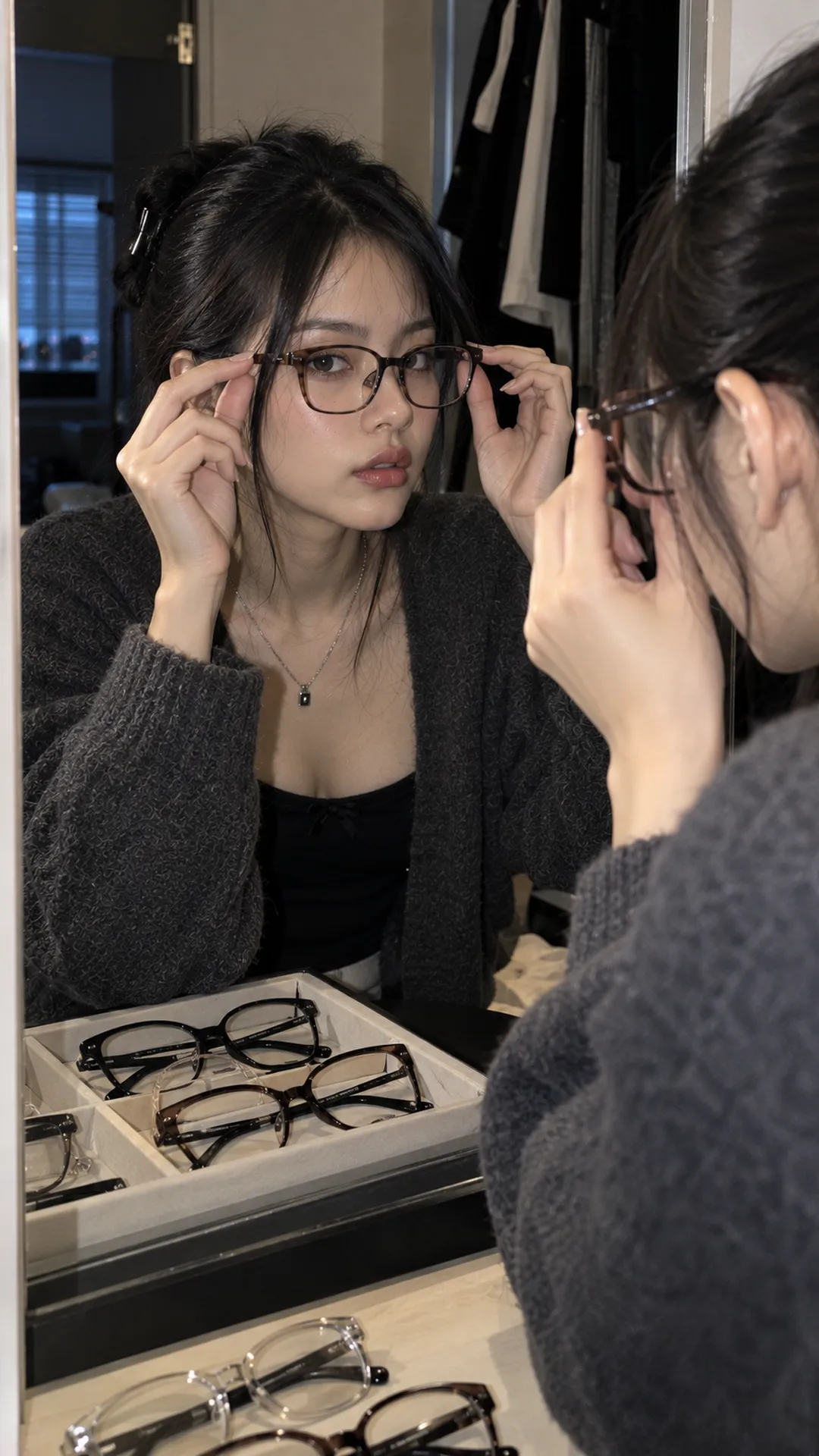
Five frame types with different visual effects
Rectangular frames: clear horizontal lines and an easy accent
Rectangular frames have fairly defined upper and lower edges, useful when you want the face to anchor a simple outfit. Thick black rims with a plain top, straight trousers and a minimally detailed bag connect the straight lines.
Rectangular does not necessarily mean very narrow. Moderate lens height feels different from an elongated horizontal shape. For softness, try rounded corners and translucent brown before switching shapes entirely.
Round and oval frames: choose your degree of softness
Round frames emphasize an even curve around the eyes; oval frames extend it horizontally. Both can repeat shapes in cardigans, round-neck tops or draping dresses. If you want less overall softness, add creased trousers or a defined-shoulder jacket.
Rim thickness matters as much as shape. Thin metal circles and large black round frames can take the same outfit in different directions. Compare geometry and boldness rather than asking only whether your face suits round glasses.
Cat-eye frames: notice the outer-corner upsweep
Cat-eye shapes direct attention toward the upper outer corners. A gentle upsweep works with shirts, square necklines or plain dresses; a dramatic one creates stronger emphasis with minimally decorated clothes. Large earrings are not necessary to establish it as a statement.
Check the front, then tilt your head. A sharp corner in a product photo may disappear behind your fringe in person. If that detail is what you like, move your hair aside before deciding the frame is unflattering.
Polygonal frames: use angles as decoration
Hexagonal and beveled designs make basic outfits more interesting without vivid color. Their small angles already create visual rhythm, so try plain earrings and a neat neckline. Avoid crowding the frame, hair and earrings with too many adjacent angular lines.
Clear frames: light in color, but still present
Transparent frames or translucent pink, tea and gray reduce the color boundary around the eyes compared with bold black. Thick rims still have volume and reflect light, however. Try them in daylight, especially if your goal is a low-contrast appearance.
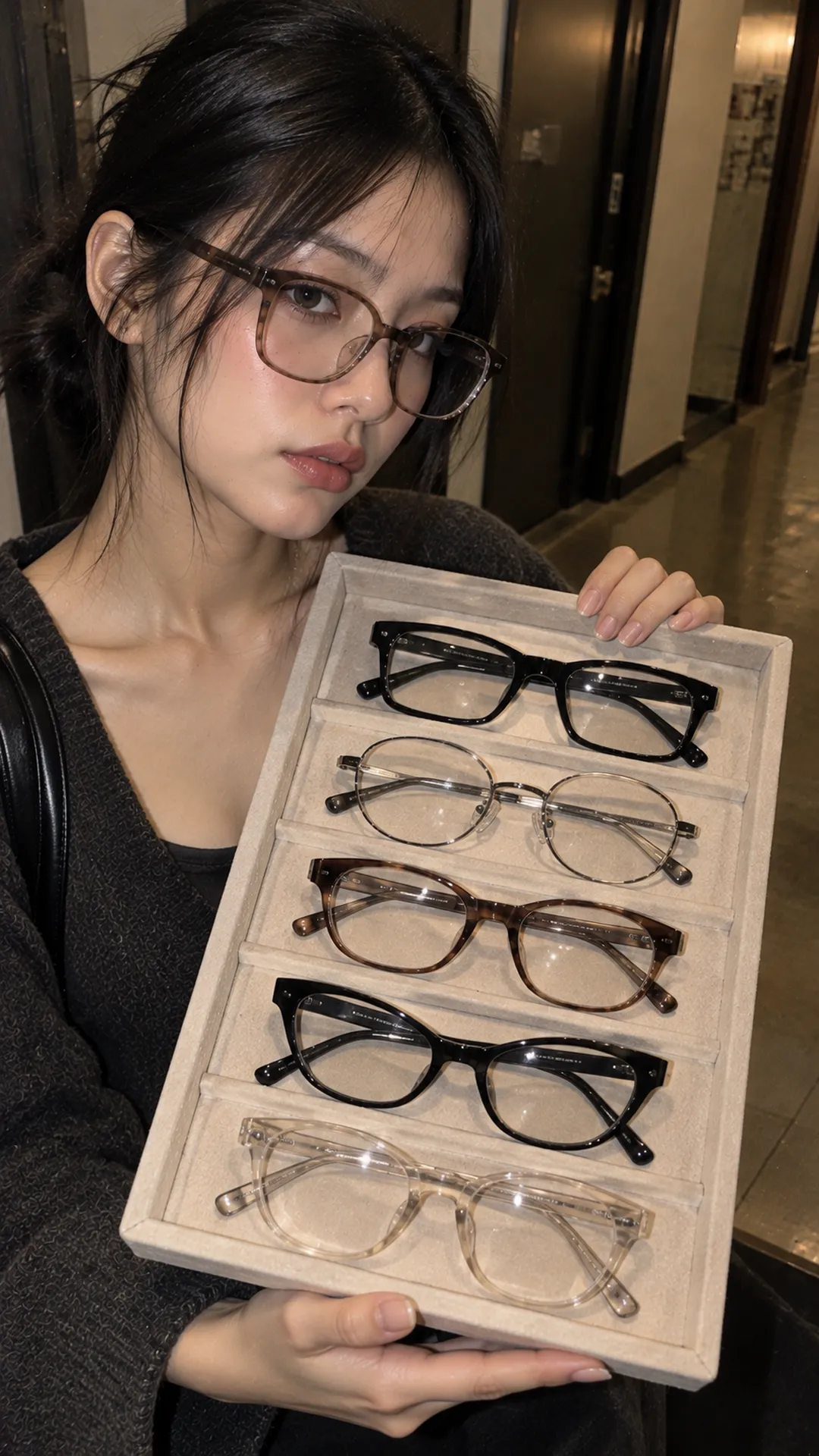
Choose frame colors from your existing wardrobe
With mainly black, white and denim, black frames are an easy repeated detail. To reduce weight around the face without a light color, try dark brown or translucent gray. With cream, brown and moss green, tea-colored frames connect shades without exact matching.
Silver metal frames create a small bright line and can relate to silver hardware on a bag or belt. Gold tones can repeat earrings or a bag clasp. These are ways to connect details, not rules against mixing metal colors.
Try burgundy, deep blue or translucent purple with at least three frequently worn tops. If the pair suits only one special outfit, consider its daily role. An unusual color can remain versatile when its depth relates to your existing palette.
For the role of glasses beside earrings, necklaces and bags, see the distribution of accents in the guide to expressive women's fashion accessories. Because glasses sit at the face, they often need fewer supporting details than you expect.
Face and hair: choose what to emphasize
On a face with many curves, angular frames create contrast while round ones reinforce softness. Both can work because they serve different aims. Likewise, a defined jaw can be softened by rounded rims or further emphasized with rectangles.
If the middle of your face seems too narrow in glasses, compare frame width and hair placement at the sides. Hair close to the cheeks may alter perceived proportions more than switching from oval to round. Use the same photo angle and distance for a fair comparison.
A heavy fringe and dark frames create two nearby dark bands. Keep the effect if you like a strong image, or reduce rim thickness, part the fringe slightly or tuck one side back to open the eyes. A whole new hairstyle is unnecessary just to wear a frame.
Tied-back hair exposes temples and earrings. Side details then matter: a large temple decoration may compete with long earrings. With hair down, front rims often lead while simple temples remain sufficient.
Four ways to style frames with clothing
Neat everyday style: thin ovals with a plain top
Try thin oval frames, a well-fitting white T-shirt, straight denim trousers and simple shoes. The glasses' curves lighten the upper half while trousers structure the look. With a loose top, a partial tuck keeps attention from concentrating only on the face.
Sharp lines: black rectangles with creased trousers
A neat square- or crew-neck top, gray creased trousers and black rectangular frames create defined edges. Repeat black in shoes or a bag instead of adding a large necklace. For softness, switch to a draping top and keep the glasses.
Feminine with an accent: cat-eye frames and a plain dress
Moderately upswept frames, a single-color dress and hair tucked behind the ears reveal the outer corners. If the neckline has a bow or ruffles, choose small earrings. With a completely plain dress, slim earrings can add a vertical line without competing with the glasses.
A subtle alt direction: bold rims over simple clothing
Try a fitted black top, wide jeans and bold-rimmed frames with one small metal accessory. Glasses support the image without determining the entire aesthetic. The guide to Alt Fashion outfits for beginners explains building a base through fit and accents before adding details.
If you like narrow glasses in Alt Fashion accessories, separate style inspiration from the requirements of actual prescription eyewear. Choose a model compatible with the needs established by your lens provider, then consider narrowness and color.
Try frames beyond one photo angle
- Choose three genuinely different options: thin rims, bold rims and a new shape. Three similar pairs offer little help in discovering preferences.
- Take front, side and full-length photos in the same light. Full-length views show whether the glasses connect with the clothing rather than only looking good on your face.
- Try hair both down and tied if you regularly alternate. Observe the temples and earring area too.
- Try collared and open-neck tops. A pair may look heavy beside a closed collar and lighter in another outfit.
- Record why you chose it: rim, color or proportions. This is more useful than saving an attractive image without identifying its appeal.
Collect try-on photos by creating a goal-led fashion moodboard. Keep a few everyday references; do not use only occasion looks for glasses you will wear to work or school.
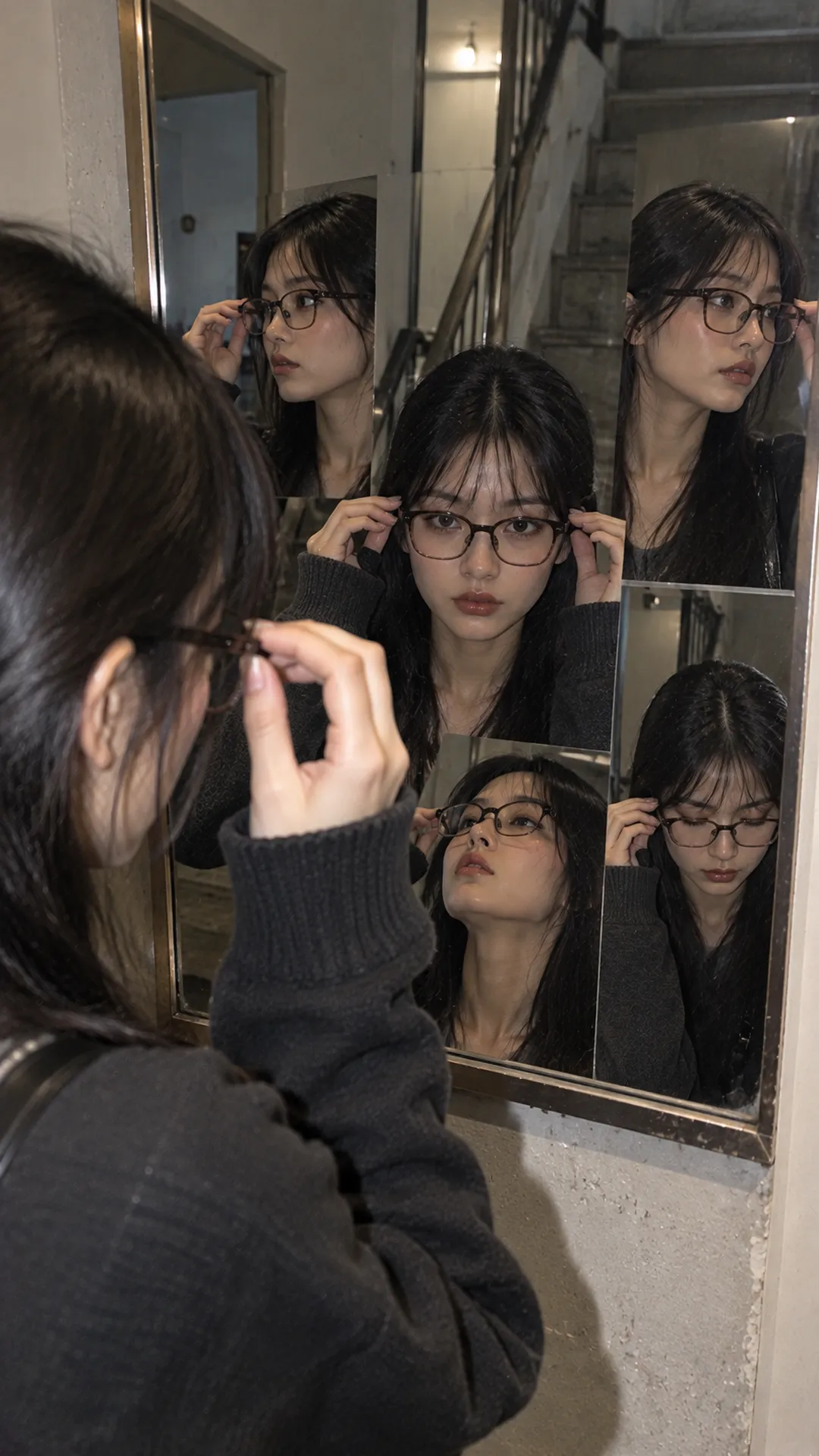
Mistakes that make a choice impractical
Choosing solely by face-shape labels: face categories are only a starting point. Brow definition, hair, collars and personal styling also affect the result. Try an option opposite to the usual advice to learn what you actually prefer.
Confusing thick rims with physical weight: visual weight does not establish wearing comfort. Slim-looking frames may still feel uncomfortable, while bold ones may fit better. Do not infer the experience from a photo or material name alone.
Buying a promise that they suit every outfit: no pair needs to do everything. Working with most of your wardrobe and habits is enough. Before deciding, check fit, three everyday outfit combinations and the shop's adjustment policy.