

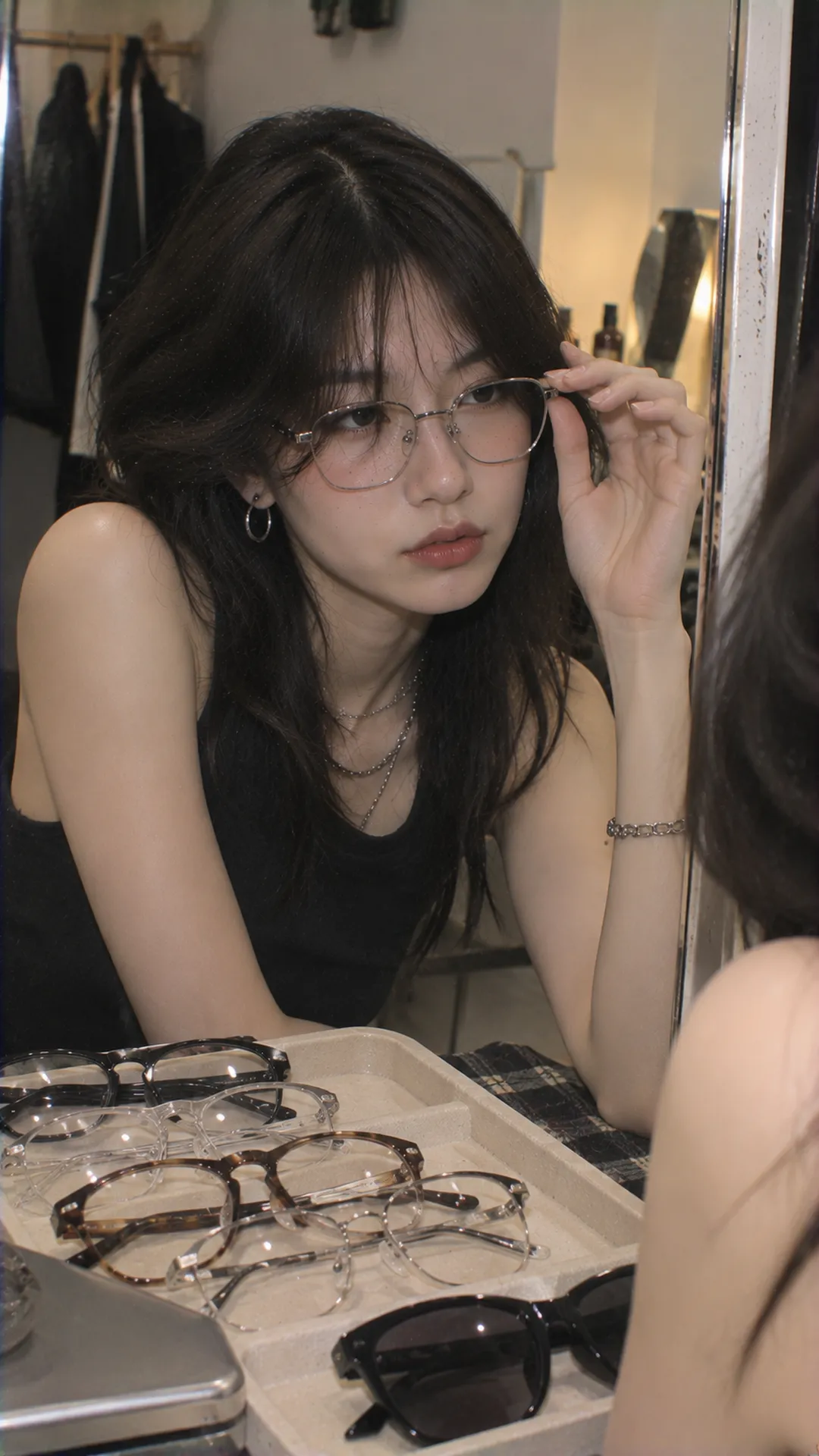
Look at your proportions before choosing a face-shape label
Move your hair away from your cheeks and forehead and look straight into a mirror from a comfortable distance. Compare length and width, see which area is widest, and look at whether your jaw is rounded or angular. Your face can have features from more than one group.
A close selfie or angled photo can change how the proportions look. When photographing frames to compare them, keep the lighting, angle, and distance similar. A straight-on photo with glasses and an angled photo without them make a difficult comparison.
Decide what you want to emphasize. You might want a stronger horizontal line, softer features, an upswept outer corner, or a frame that blends in. That gives an optician more to work with when suggesting frames.
Face shape is one part of the choice. Two people with round faces can need different frames because their nose bridges, head widths, and cheekbones differ. Use face shape to narrow the styles, then check the fit in person.
Check the fit before comparing styles
Put the glasses on, look straight ahead, talk, smile, and lean forward a little. See whether they slide, lift when your cheeks move, or press at the sides. If you keep pushing them back into place, ask an optician to check the fit.
An oversized look can work when the bridge and temples fit securely. A thin frame can still feel heavy or uncomfortable once the lenses are in. Try the whole pair and ask what the fitted lenses will change.
According to Warby Parker’s guide to frame measurements, the three numbers usually printed on a frame give the lens width, bridge width, and temple length in millimeters. A pair you already wear comfortably can be a reference, though two frames with the same numbers can feel different.
Have an optician check the frame material and construction before bending the temples or bridge. For prescription glasses, confirm your choice with whoever will fit the lenses.
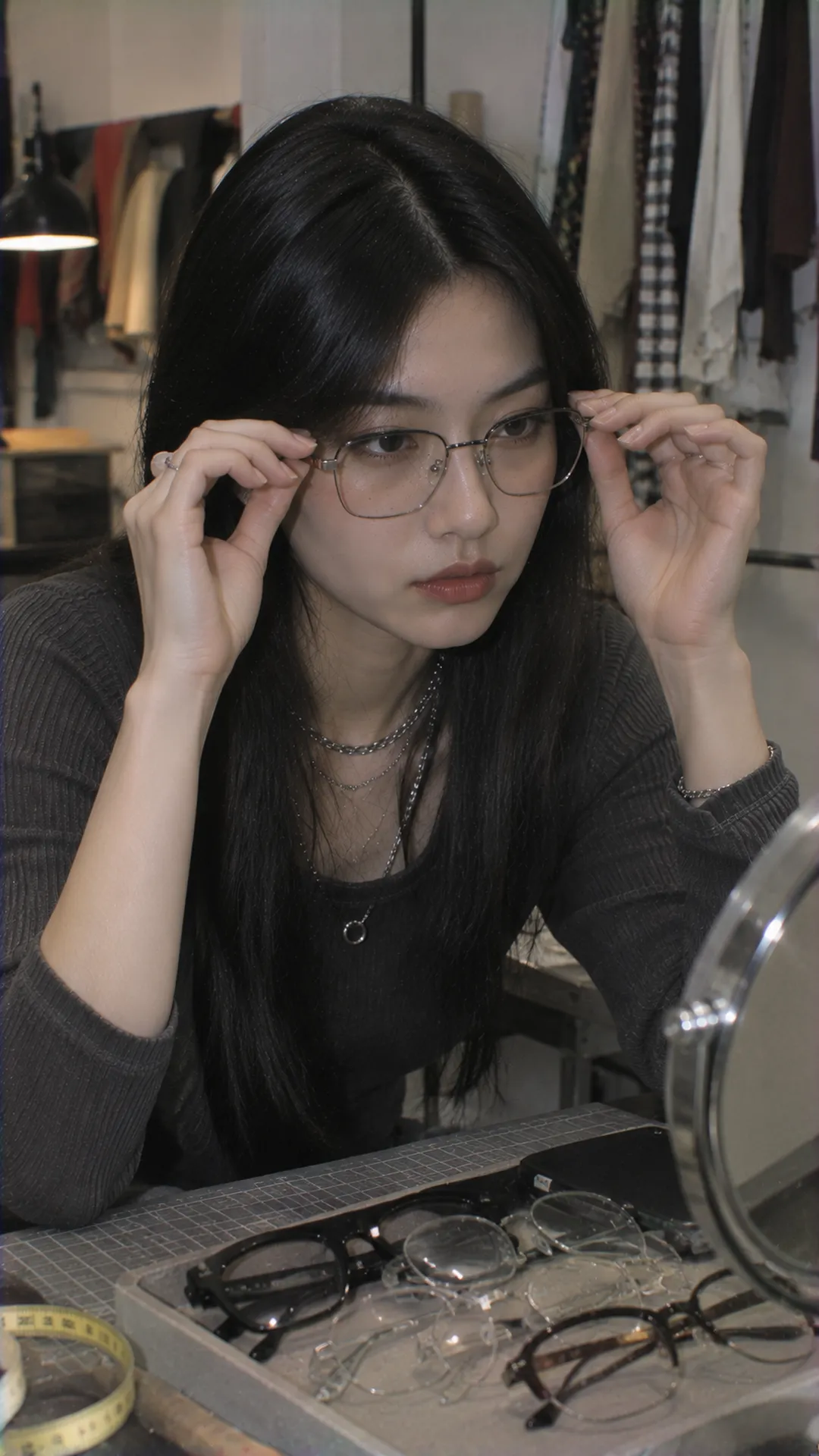
Round faces: Compare angles and curves
For more definition
Try rectangular or square frames with moderately defined corners. The horizontal lines and corners contrast with a rounded face. Start with translucent brown or a thin rim if you want less contrast than a bold black frame gives.
Look at lens height along with width. A shallow rectangle and a deep square can cover different amounts of your face even if they are about the same width. Try both to see which effect you prefer.
Can you wear cat-eye glasses with a round face?
Yes, if you like the upswept corners and the frame fits. Warby Parker also suggests cat-eye frames for round faces. Compare a subtle lift with a more pronounced one to see how each looks on you.
A fringe can hide the outer corners. Try moving your hair back or changing the part before switching frames. A small upsweep may give you all the definition you want.
If you like round frames
Keep the curves and compare rim thickness, color, or size. A thin round frame and a bold one create different looks. Choose the one that fits and gives you the effect you want.
Long faces: Look at frame height and proportions
If you want the glasses to occupy more vertical space, try a deeper lens before increasing the width. Rounded square frames, tall ovals, and some cat-eye shapes are good places to start. Pick by fit and how the frame looks from the front.
A shallow frame creates a narrow horizontal band across the face. You may like that effect or prefer more coverage. Compare two similar frames with different heights so you can see what height changes.
Hair around the forehead and cheeks affects the look. Try the glasses with your usual hairstyle. If you often switch between wearing your hair up and down, take a photo both ways.
An overly wide frame can slip or press even if you like the way it changes your proportions. Ask for a similar shape in a size that sits securely.
Square, oval, and mixed face shapes
An oval or softly rounded frame can contrast with a defined jaw. A square frame can emphasize angular features if you like that effect. Compare both and see which one you prefer.
With an oval face, try several shapes and check the width and bridge. A pair that looks balanced from the front can still touch your cheeks or slide when you talk.
If your forehead is wider than your chin, check whether you like the emphasis the top corners add. Thin or clear rims can make the frame less prominent. For a bold outline, try thicker rims and check them with your eyebrows and hair.
If you have both rounded cheeks and a defined jaw, compare one angular and one curved frame in a similar size. A side-by-side fitting can tell you more about your preference than a face-shape chart.

Color and thickness can change the same frame shape
Thick black rims create a distinct outline around the eyes. Brown, clear, and thin metal rims can give a quieter effect. Sheen, bridge shape, and trim on the temples can still draw attention.
To compare two shapes, start with similar colors. Once you like the shape, compare colors or thicknesses. Change one feature at a time so you can see what you prefer.
Bold glasses can give a wardrobe of plain tops a focal point. With large collars, dense prints, or statement earrings, try a lighter-looking frame and see which details stand out together.
Our guide to alternative accessories for women helps you see how glasses work with the other details around your face and neckline.
Use the same fitting process for each frame
- Pick three frames close to the right size with different shapes or rim thicknesses.
- Look straight ahead and to each side in each pair. Smile and lean forward a little.
- Take photos from the same angle and distance in the same light.
- Try them with the hairstyles, earrings, and necklines you wear most.
- Note a specific detail: an outer corner you like, a bridge that needs a different fit, or temples that press.
- Have an optician check the final fit with your lens requirements before you buy.
Other people can tell you what they notice. Choose a pair you find comfortable and can wear for the way you’ll use it, even if another frame got more compliments.
Use a virtual try-on to compare shapes and colors when shopping online. Ask for measurements, bridge details, adjustment options, and the return policy to assess the fit. Our alt-fashion shopping guide explains what to check before ordering.
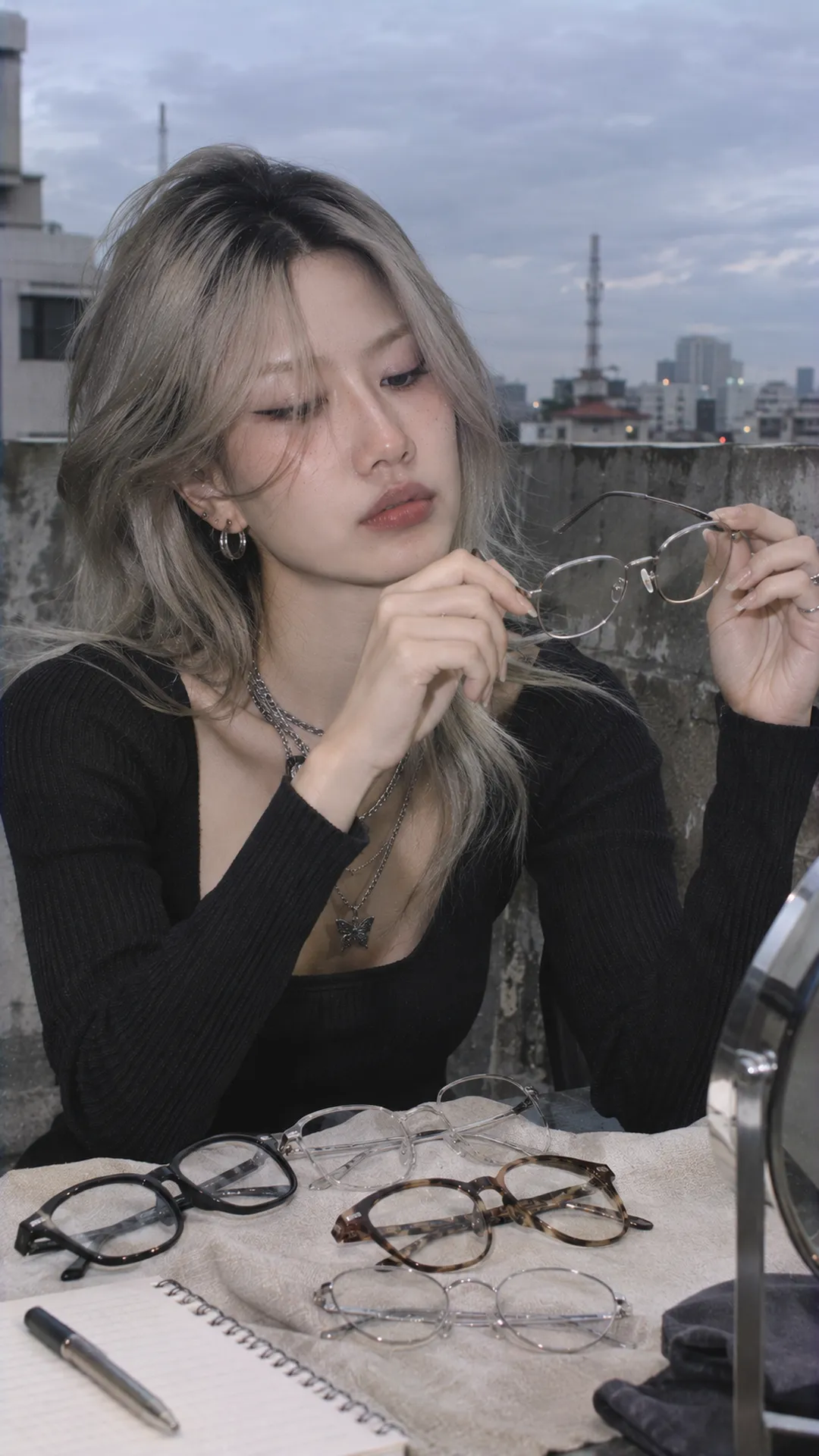
Prescription glasses and sunglasses have different requirements
With prescription glasses, have the optician confirm the frame size, position, and compatibility with your lenses. Check the finished pair once the lenses have been fitted.
For sunglasses, check the bridge, temples, and how securely the glasses sit when you move. Confirm the protective specifications from the product information or seller. Lens darkness and frame shape alone don’t establish protection. Choose for your intended use before comparing styles.
If you like a square shape, our square-frame glasses guide covers proportions and styling. For a broader comparison of frame styles with outfits, see our women’s prescription frame ideas.
Decide what matters most to you
Choose a frame that fits and gives you the look you want with the clothes you wear most. If two pairs work, compare care, convenience, and how often you’ll wear each.
Round, long, and square faces can all work with several styles. A consistent try-on helps you see whether you prefer softer lines, more definition, or an upswept corner while keeping the glasses comfortable for daily use.