

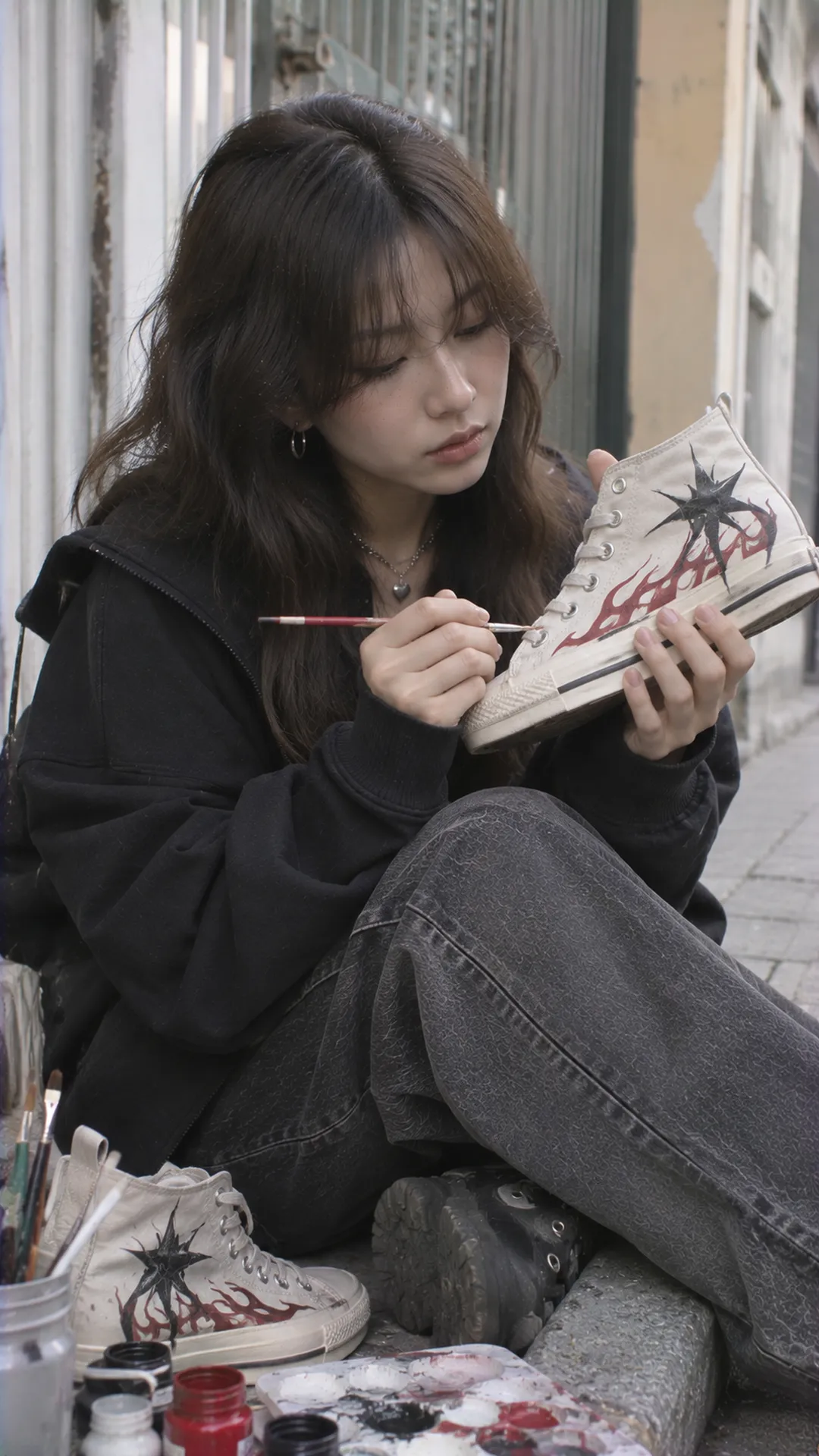
Three different requests people call customization
Cosmetic customization: Change the laces, add artwork, or revise the colors on a pair you own. This can make the shoes a focal point while keeping a pair that already suits your needs.
Cosmetic restoration: Address fading, scuffs, or worn details in a way that suits the material’s condition. This may take an experienced specialist. Paint over a damaged surface may do little to stabilize it.
Made-to-order construction or fit: Discuss construction separately from decoration. Artwork won’t fix a tight toe box, slipping heel, or poor fit. Find a specialist who can address the part of the shoe that needs to change.
When asking for a quote, describe the result in words and pictures: colors, placement, what to leave alone, and how you’ll use the shoes. A reference photo alone may leave the base shoe, material, and differences from the example unclear.
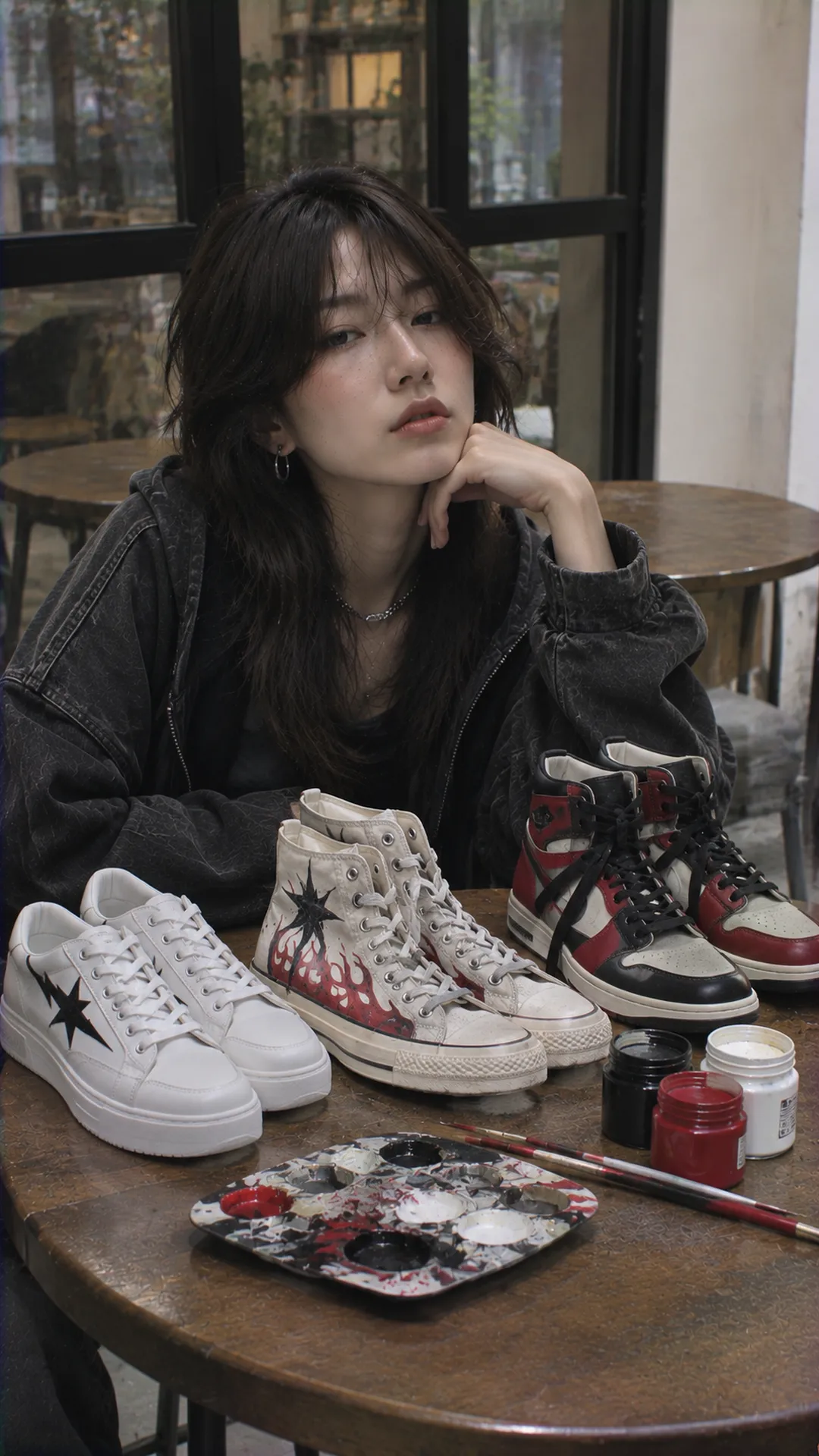
Choose a suitable pair before choosing the design
Check fit in both shoes with your usual socks. If you rarely wear them because they’re uncomfortable, address that first. Spending on decoration can make it harder to let go of a pair you still won’t use.
Inspect the sole, joins, upper, and coating. If the sole is separating or the upper is cracked or peeling, ask a repair specialist to assess it before commissioning artwork. New color can hide the damage in a photo without fixing the underlying issue.
Identify the material in each area. Coated leather, suede, canvas, mesh, plastic, and rubber may need different treatments. Check the maker’s information or ask a specialist if you’re unsure. Avoid using a strong solvent to guess what a material is.
Photograph the shoes from several angles before handing them over. Use the photos to agree on existing marks, starting condition, and areas to change. For a valuable pair, this record is especially useful before work that’s hard to reverse.
Five ideas from simple swaps to more involved changes
Swap the laces to pick up an outfit color
Try laces that echo a top or bag and fit the eyelets in width and length. A lace swap can change the look of a plain pair. Walk in the shoes to check that the knot holds and the loose ends stay out of the way.
Add one small block of color
Choose a simple panel to recolor and keep the rest of the shoe as a backdrop. Color a copy of a photo first so you can see whether the size of the accent works.
Use a simple line design
A few lines or colors can give you an accent you can see from a distance. Size it to the available space so the design remains clear without a close-up. Review the sketch at roughly the size it will appear on the shoe.
Give each shoe a related design
Use the same palette and vary the placement on the left and right. Agree on the difference in the sketch so it looks intentional. Compare the outer and inner sides with both shoes together.
Add a small personal detail
Put an original symbol or meaningful detail on a small area. If it uses lettering, check spelling and orientation. If you want to use someone else’s artwork, check whether you have permission to reproduce it.
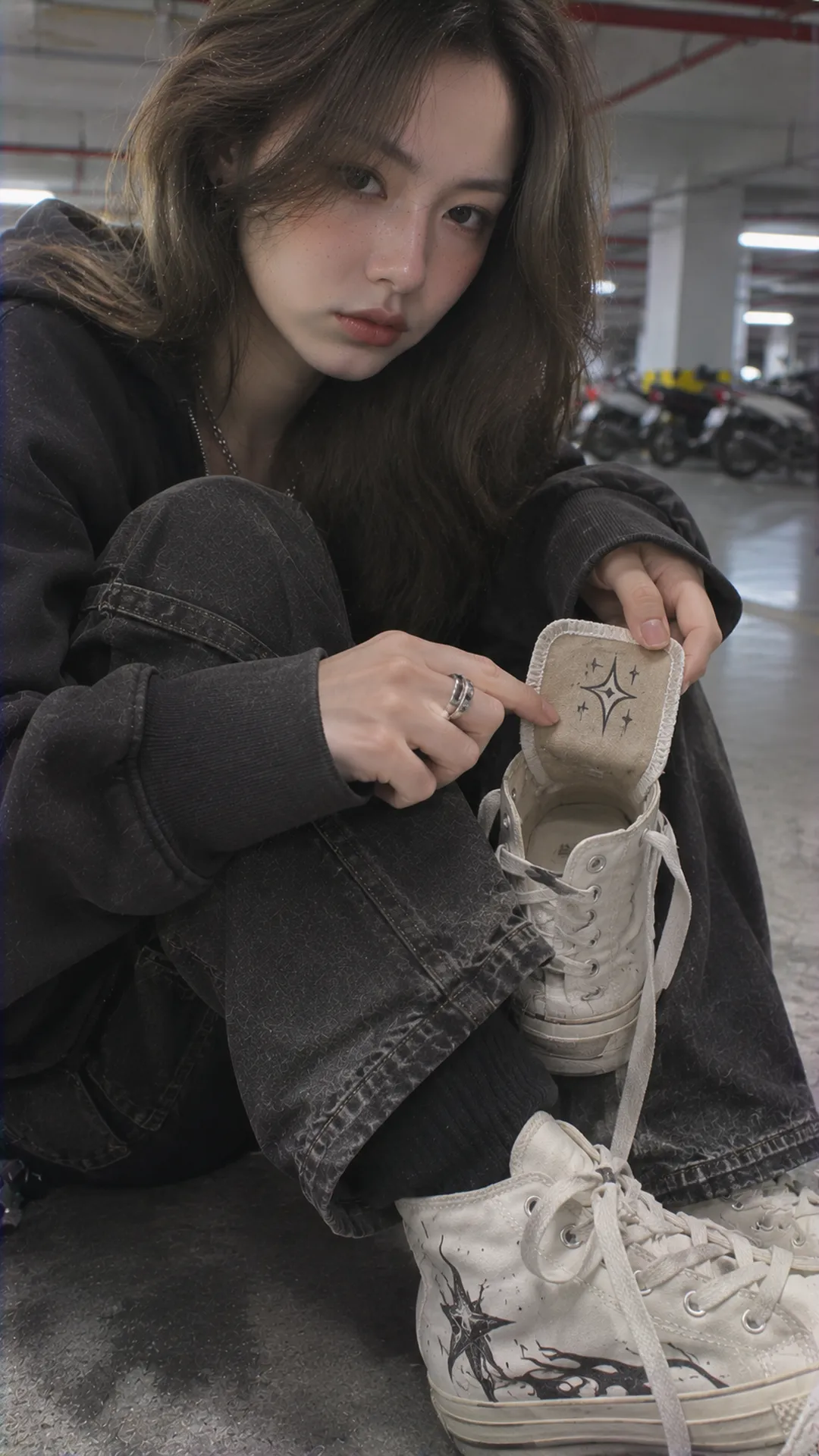
Do it yourself or hire a specialist?
Try it yourself if the idea is simple, you have time to learn about the materials, and you’re comfortable with some variation. A specialist can be useful for intricate artwork, a difficult surface, or a design you want to match closely across both shoes. Either approach takes preparation.
Start with a removable change or a test that won’t affect the pair you need to wear. Leave time to revise the sketch, test the color, and let the finish cure before using the shoes for an event.
Ask a specialist for close-ups and, if available, photos after wear as well as freshly finished shots. Ask how they handle the materials and what their warranty and care guidance cover. A promise that paint will never peel needs clear conditions.
Our alt-fashion shopping guide can help you balance the use and budget. Include shipping, time without the shoes, and possible design revisions.
Choose tools for the material
A kit can include brushes, masking material, paint suited to the surface, preparation products, and a compatible finish. Identify the shoe’s materials first, then buy what that particular job needs.
Angelus’s leather-painting guide distinguishes leather preparation from work on fabric and suede. It also calls for a test in a hidden spot, thin coats, and curing according to the product instructions. Check a separate process for mesh, canvas, or suede.
Read the instructions for ventilation, protective equipment, compatibility, and drying or curing time. Use the specified preparation product. A household cleaner can remove dirt and still leave the surface unsuitable for paint.
If a product calls for heat or special treatment, check whether the shoe and its trims can take it. Ask the supplier if you’re unsure about the heat setting or time. Material information matters as much as the artwork.
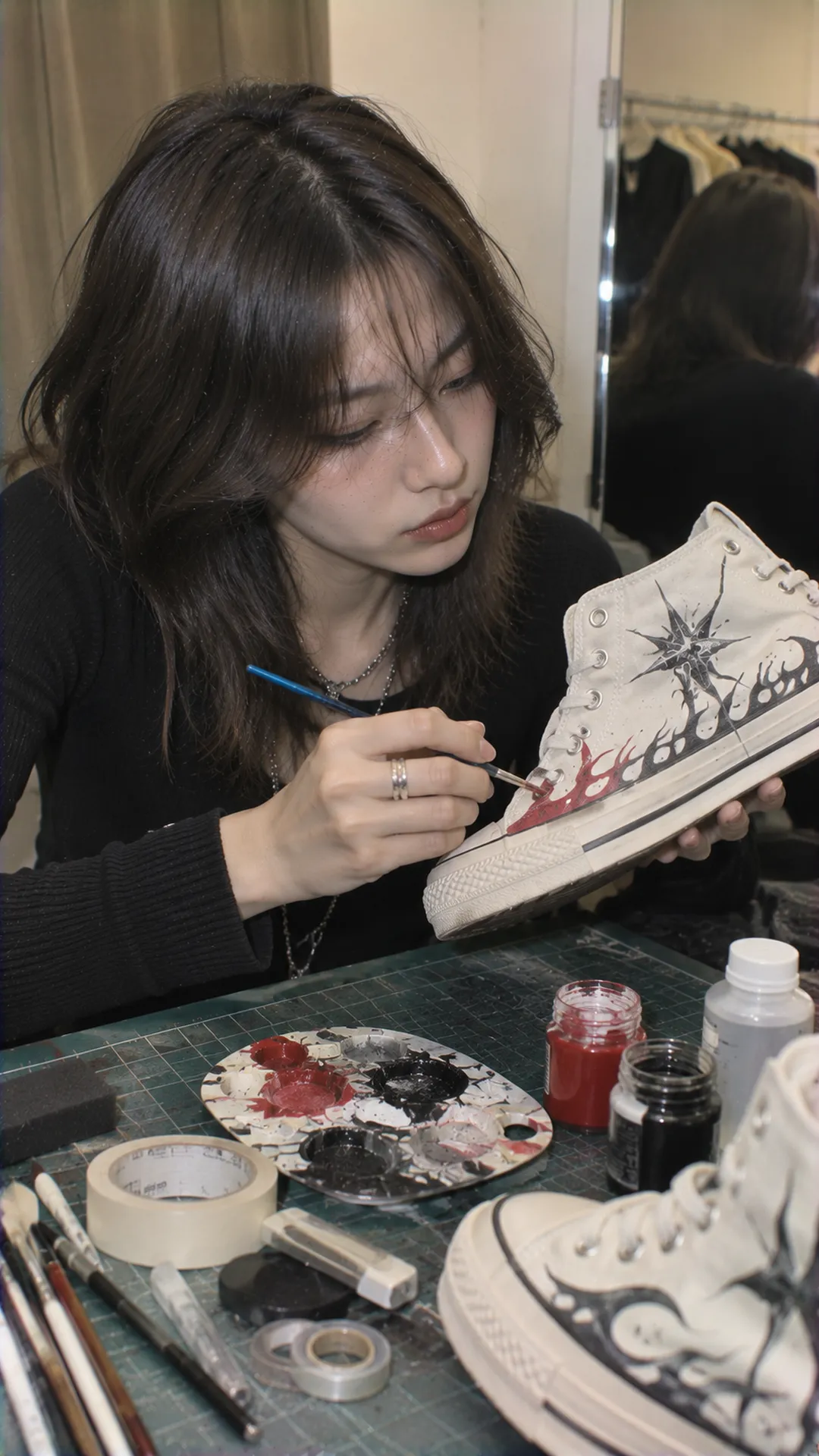
Plan the design before working on the shoes
Photograph the outer sides, inner sides, and backs. Mark the areas you want to change on a copy and note the colors, artwork, and areas to leave alone. The sketch only needs to make the desired result clear.
Try the palette with three outfits you own. A design that only suits one outfit may still be worth doing if you love it. Check how often you’ll use it before deciding. Our fashion moodboard guide helps you organize color and design references.
Shrink the sketch to roughly its actual size and look from a normal distance. Small details that look clear when enlarged can blend together on the shoe.
For commissioned work, agree on revision rounds, approval timing, and what happens if the color differs from the screen. Ask which decisions the specialist can make during the work and which changes they should check with you first.
Separate display from play when customizing sports shoes
For basketball or football shoes, say whether they’re for competition, practice, or display. Decoration that looks good may respond differently under athletic use. Make the intended use clear before the work starts.
Keep cosmetic changes away from outsoles, studs, lacing systems, and parts that secure the foot. Ask the manufacturer or a qualified specialist before changing a functional part of the shoe.
Flex, friction, and mixed materials can make a sports upper harder to decorate than a shoe worn lightly. Ask which areas can be customized, how long the finish is expected to hold under the intended use, and what to check before wearing the shoes again.
If you’ll play for a team or in a competition, check the relevant requirements before ordering. Confirm what’s allowed for the exact shoes with the organizer or manufacturer when needed.
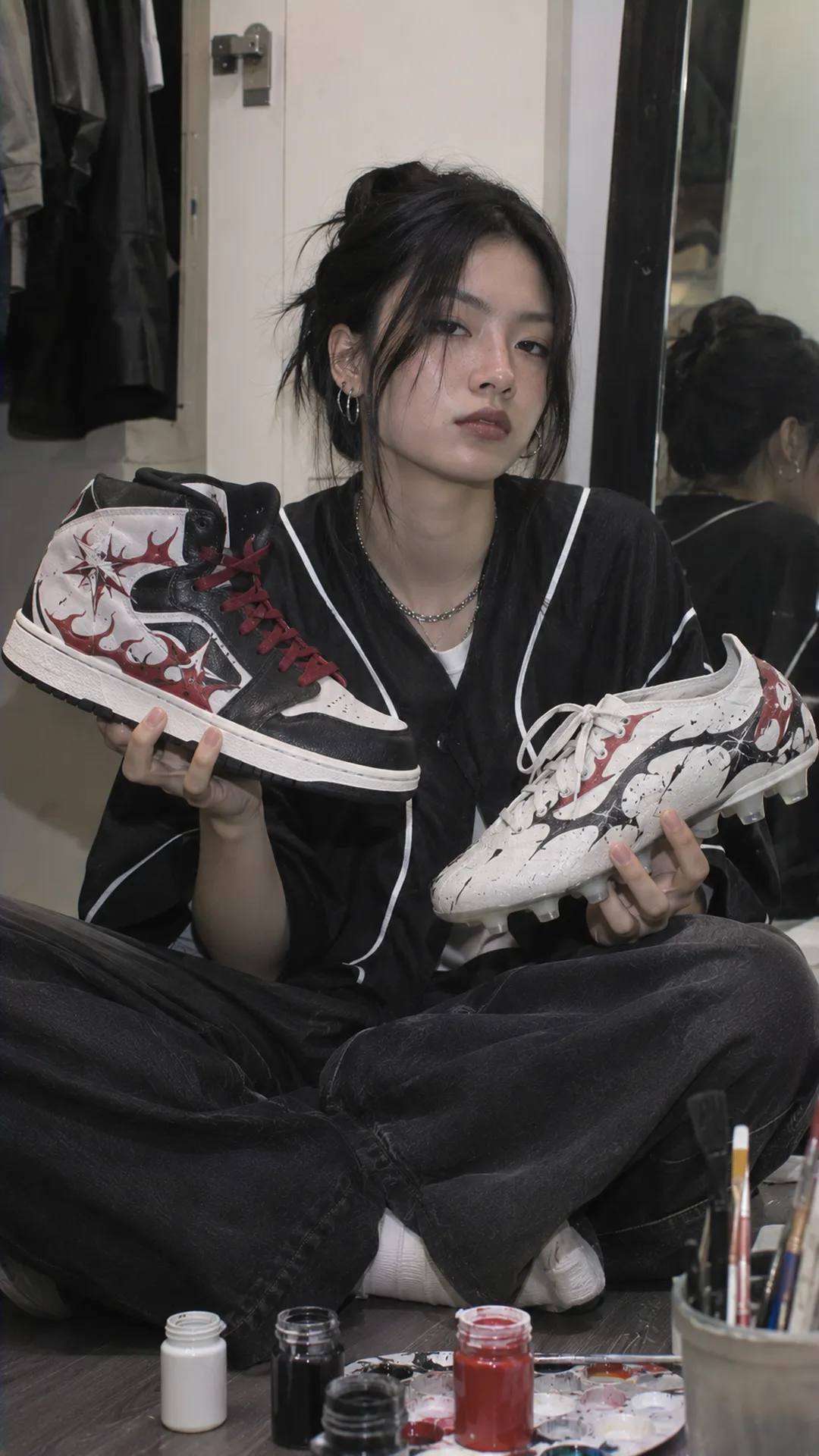
Inspect the finished shoes and ask how to care for them
Compare the shoes with the approved design. Check the left and right layouts, colors, lettering, and untouched areas in ordinary light. Photograph anything that differs and contact the specialist before wearing the shoes outside.
Ask when they’re ready to wear, how to clean them, and which products or treatments to avoid. A surface can feel dry before the finish has fully cured. Follow the instructions for the products used.
Try the shoes again to check for rubbing or anything that catches. If the laces changed, see how securely they hold and where the loose ends sit. Our women’s footwear guide helps you style the finished pair once it’s comfortable to wear.
Keep any color codes and service details so you can refer to them if a touch-up is needed. Check compatibility before adding another care product, since a new coating can change the sheen or finish.
Customize a pair you’ll want to keep using
A small change you like can give you more ways to wear a pair you own. If the shoes are damaged or fit poorly, consider repair or replacement before paying for decoration.
Our guide to sustainable fashion considers repair and how long you use an item. A customization can extend the use you get from a pair when it still suits your needs after the work.