

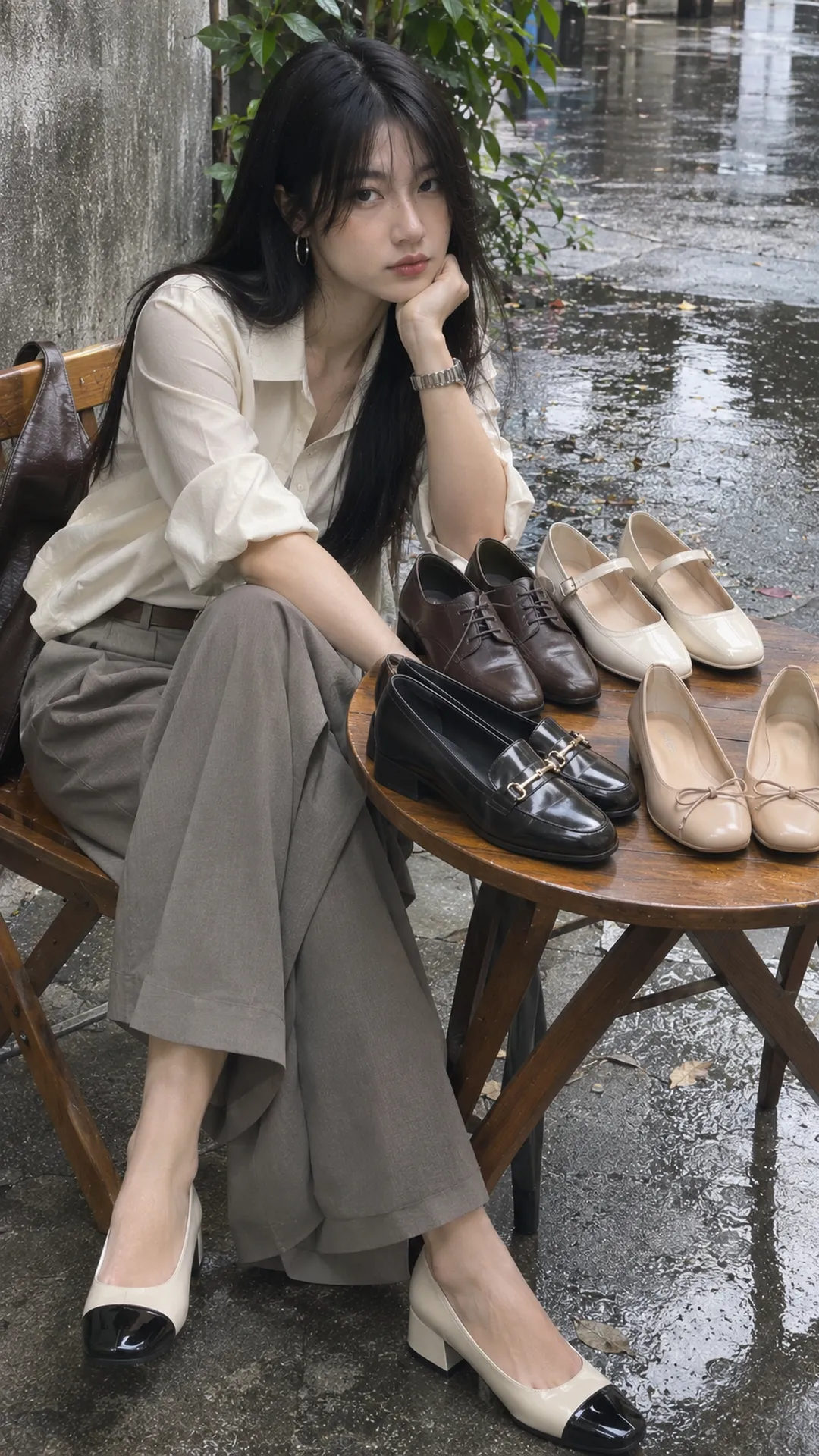
Read the workplace before shoe names
Check official requirements and similarly placed colleagues on meeting days. Plain sneakers may work in flexible offices without implying universal acceptance. Specialized clothing or protective-footwear requirements take priority over general styling.
Divide the day into commute, desk time, room-to-room movement, clients and return. Floors, stairs and distance matter more than a standing outfit photo. Meeting-only shoes may not serve a long journey.
The Business Casual guide for women establishes overall formality. Then ask whether toes or heels must be enclosed and whether color or sole types are limited. These questions prevent attractive but rarely usable purchases.
Compare construction and use
Loafers: easy-on, with secure heels
Without laces, instep and heel fit need to work during fitting. Fine soles sit neatly beneath tailoring; thick ones anchor wide legs more visibly. Walking still matters: visual thickness does not establish comfort.
If you prefer this type, the women's loafer guide explores fit, socks and proportions. Try intended work socks; barefoot fit can differ with thickness.
Oxfords: clear lines and adjustable laces
Oxfords have closed lacing, giving a neat shape often used with structured clothes. Many lace-ups are loosely labeled Oxford, so inspect lacing, instep height and opening during dressing.
Laces cannot repair every last mismatch. Excess tightening to retain heels or continued instep pressure fully loosened suggests another model. Tailored hems should reveal enough toe and shoe line rather than completely conceal it.
Mary Janes: straps add structure
Instep straps create a recognizable line with skirts and neat hems. Check length and buckle position standing and seated. Straps do not guarantee security if placed badly; they may press or distort the upper.
Read recognizing Mary Jane shoes to compare straps and ballet flats. Minimal office versions generally restyle easily; several straps or large soles need formality checks.
Flats and low heels: inspect toe and heel together
Flats vary in upper depth, sole rigidity and retention. Low heels vary in shape and contact width. Cushioned claims or the absence of high heels cannot replace actual movement tests.
Tapered styling must not compress toes. AAOS recommends attention to toe-box space and secure heels when choosing women's shoes. Prioritize fit before a longer-looking leg in photos.
A fitting needs more than a few mirror-side steps
Bring usual socks or hosiery and try both feet with actual fastenings. Stand, sit, walk slowly and turn. Notice toe gripping to retain shoes or repeated adjustments.
Record locations rather than only slightly tight: toe-side compression, instep pressure, edge rubbing or heel sliding. Each can relate to another shape issue. More length for width may loosen heels, so try width options or models.
Online, clarify foot-length versus insole charts. Choosing sizes online follows actual product measurements. Save measurements and the model's chart for exchanges rather than only remember a number.
Read returns before outdoor wear. Clean indoor trials reveal initial pressure without guaranteeing a full workday. Persistent pain or special foot needs call for professional advice rather than advertised pain-curing promises.
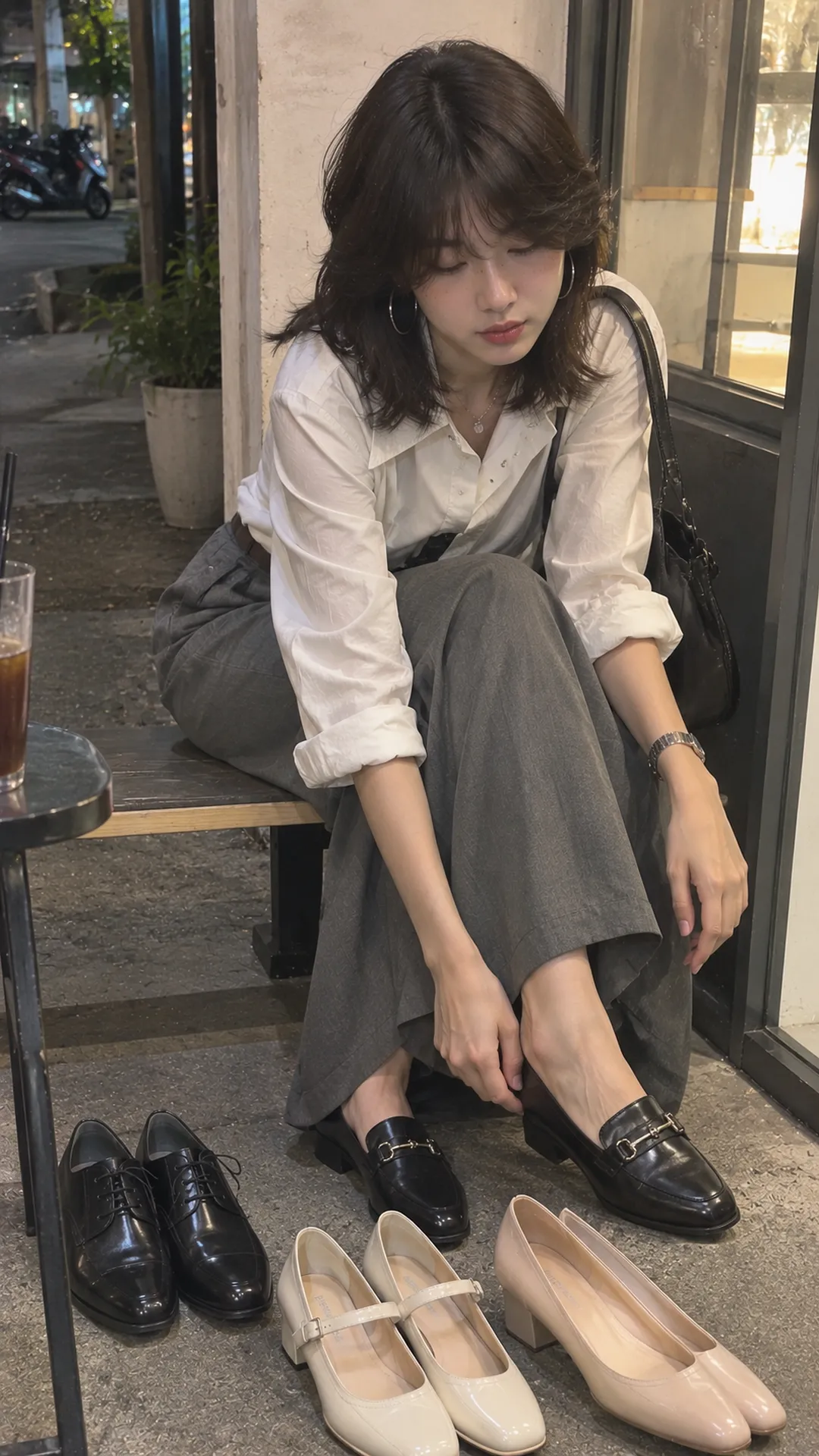
With trousers: manage hems first
Long straight trousers need room to fall over the upper without many folds. Measure with loafers or Oxfords on, not barefoot. Near-floor hems do not justify taller shoes incompatible with travel.
Cropped hems expose ankles or socks, making that transition deliberate. Related sock colors reduce breaks; contrast emphasizes ankles. For formal settings, a gentle transition is often easier than large sock patterns and detailed shoes.
With wide trousers and a neat top, reveal enough footwear through defined toes, mild contrast or hem adjustment rather than maximum soles. Inspect standing and seated because hem position changes.
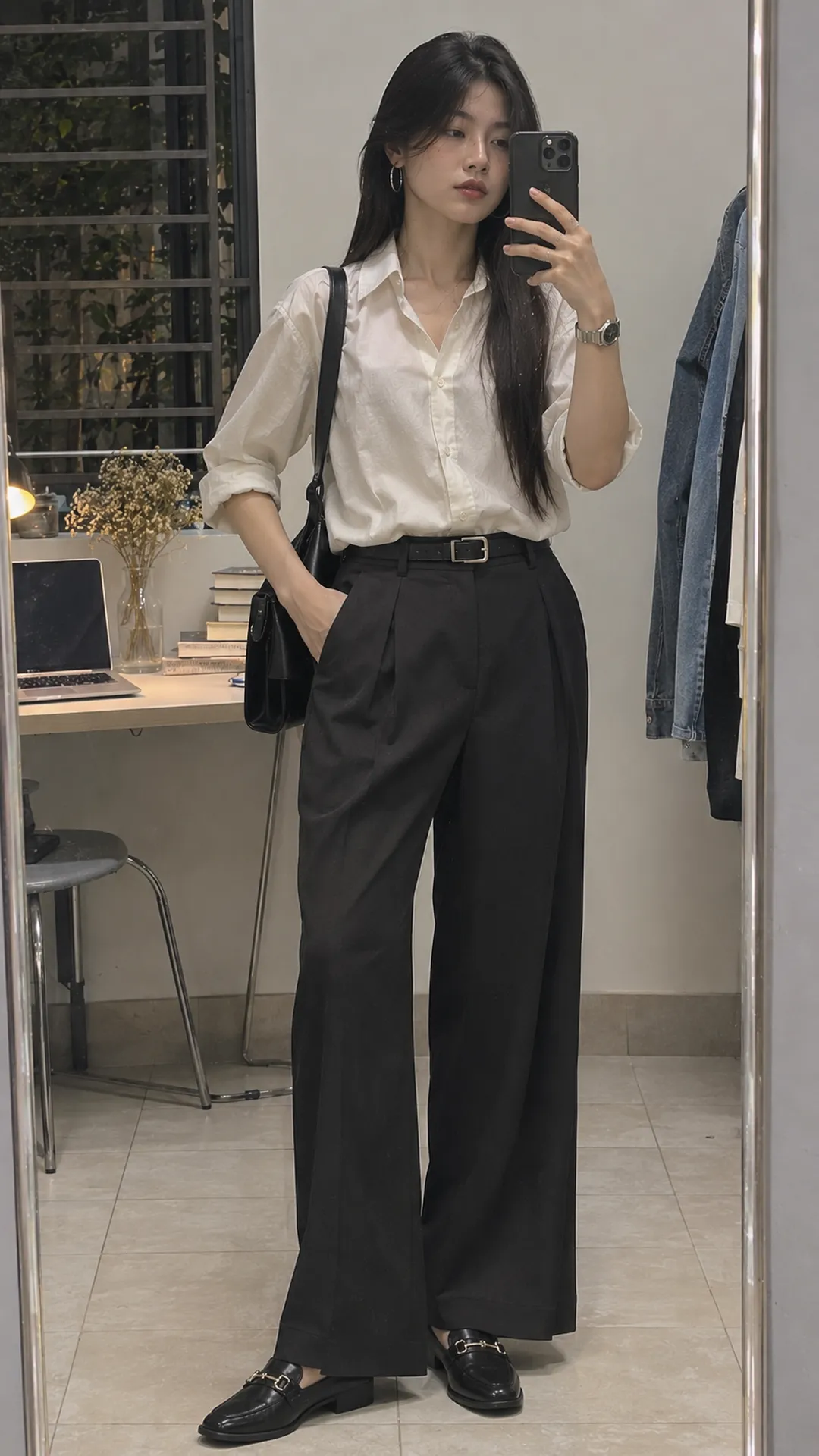
With skirts: choose the connection rather than a rigid formula
Straight skirts give a neat vertical line with defined loafers, Mary Janes or low heels as appropriate. For mid-calf hems, assess exposed leg and strap divisions. Straps or none follow your preferred effect without height-based prohibitions.
Pleats already move, so simple shoes reduce lower detail. With Mary Janes, strap width and socks are useful variables. With Oxfords, neat top and bag give structure without an overly elaborate uniform.
A single-color dress can take a small footwear accent through related color and different texture. Prominent shoe buckles may need quieter bag hardware. Choosing women's shoes for outfits compares visual weight and setting when exploring alternatives.
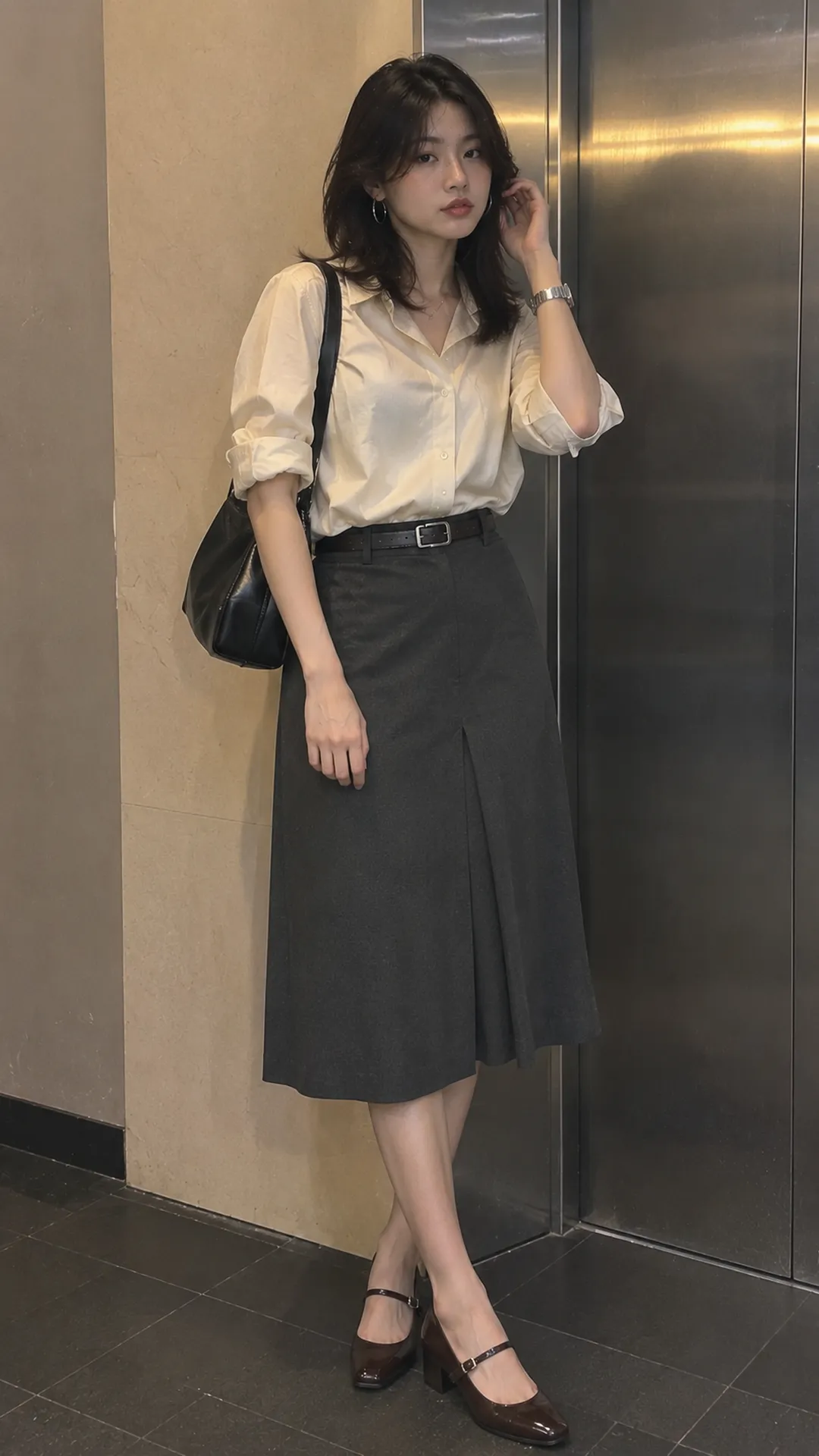
Build work footwear around two roles
Identify everyday needs and any genuinely different formal situation before buying several similar pairs. Daily shoes should serve repeated outfits; another pair should solve a distinct appearance or setting requirement.
For example, a walker in a flexible office may use commute footwear and change to loafers on arrival. A desk-based formal worker may prioritize neat closed toes. These are organization options, not a requirement for everyone to buy twice.
Before new colors, test current shoes with three real outfits. Trouser hems or a bag at the wrong formality may be the issue rather than footwear. One clothing adjustment can unlock existing shoes.
Maintain polish beyond a brand-new appearance
Store office spares in ventilation and carry in a clean bag when needed. Recheck fit after sock or insert changes; extra interior material can tighten a formerly comfortable shoe. Do not automatically add inserts for softness.
Clean for the actual material, especially coatings, suede and glued details. Dry appropriately after rain before storage rather than assume heat or strong sun is safe. Periodically inspect soles, heels and fastenings for early damage.
Suitable office shoes follow the workday, fit workplace formality and connect with your wardrobe. Choose through fitting and actual outfits rather than an office label alone.