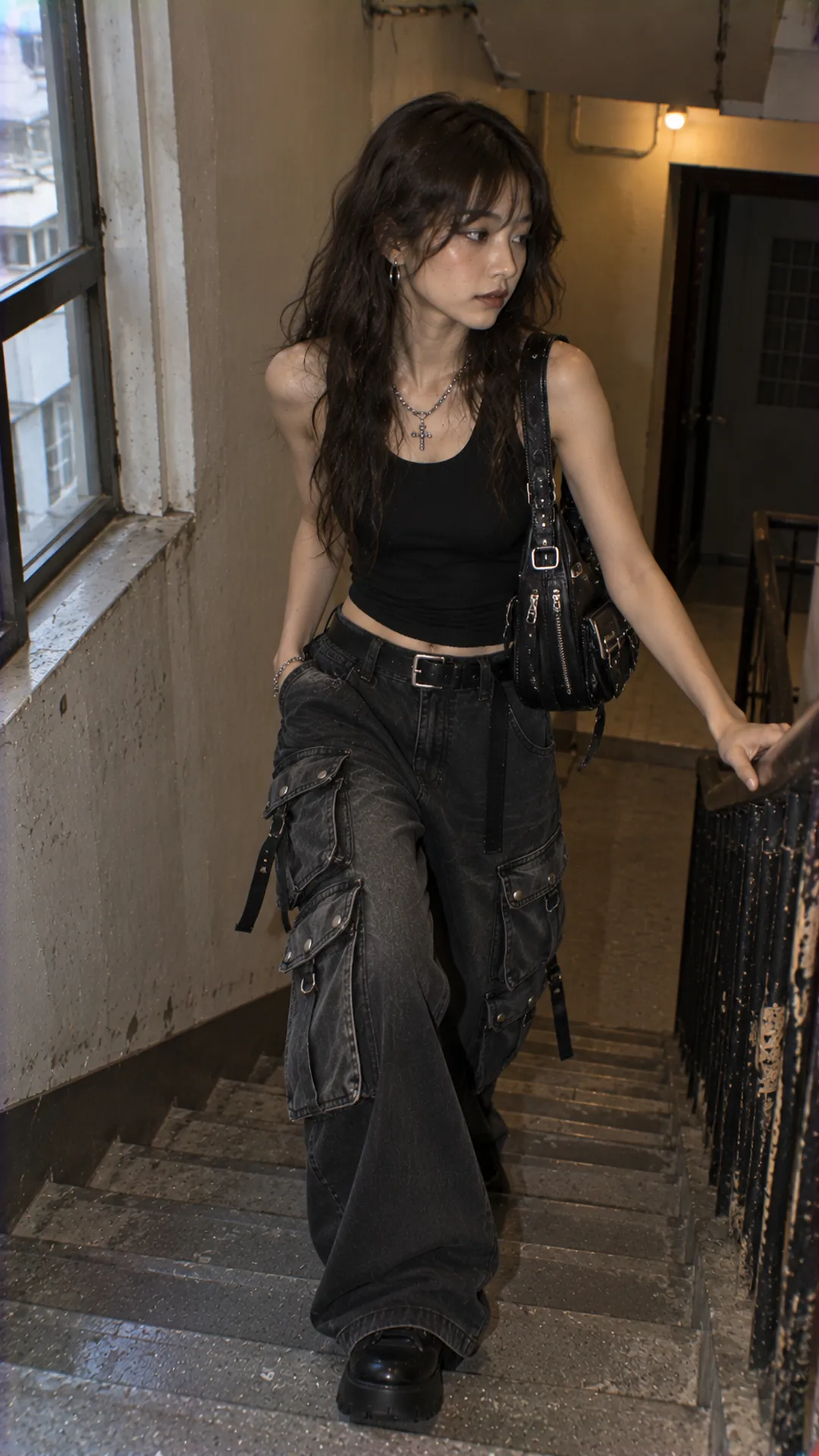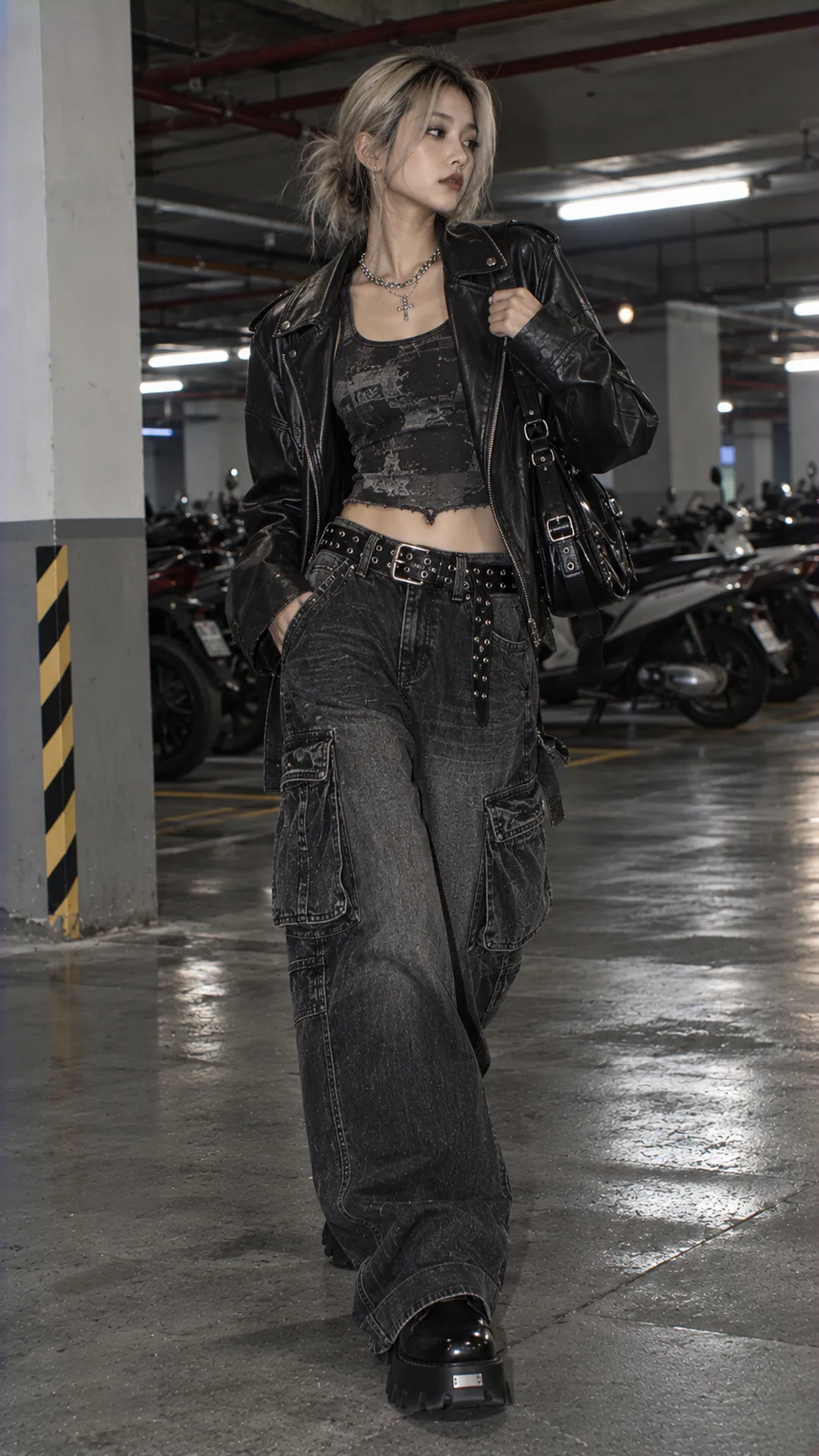
Edgy describes an effect, not a uniform
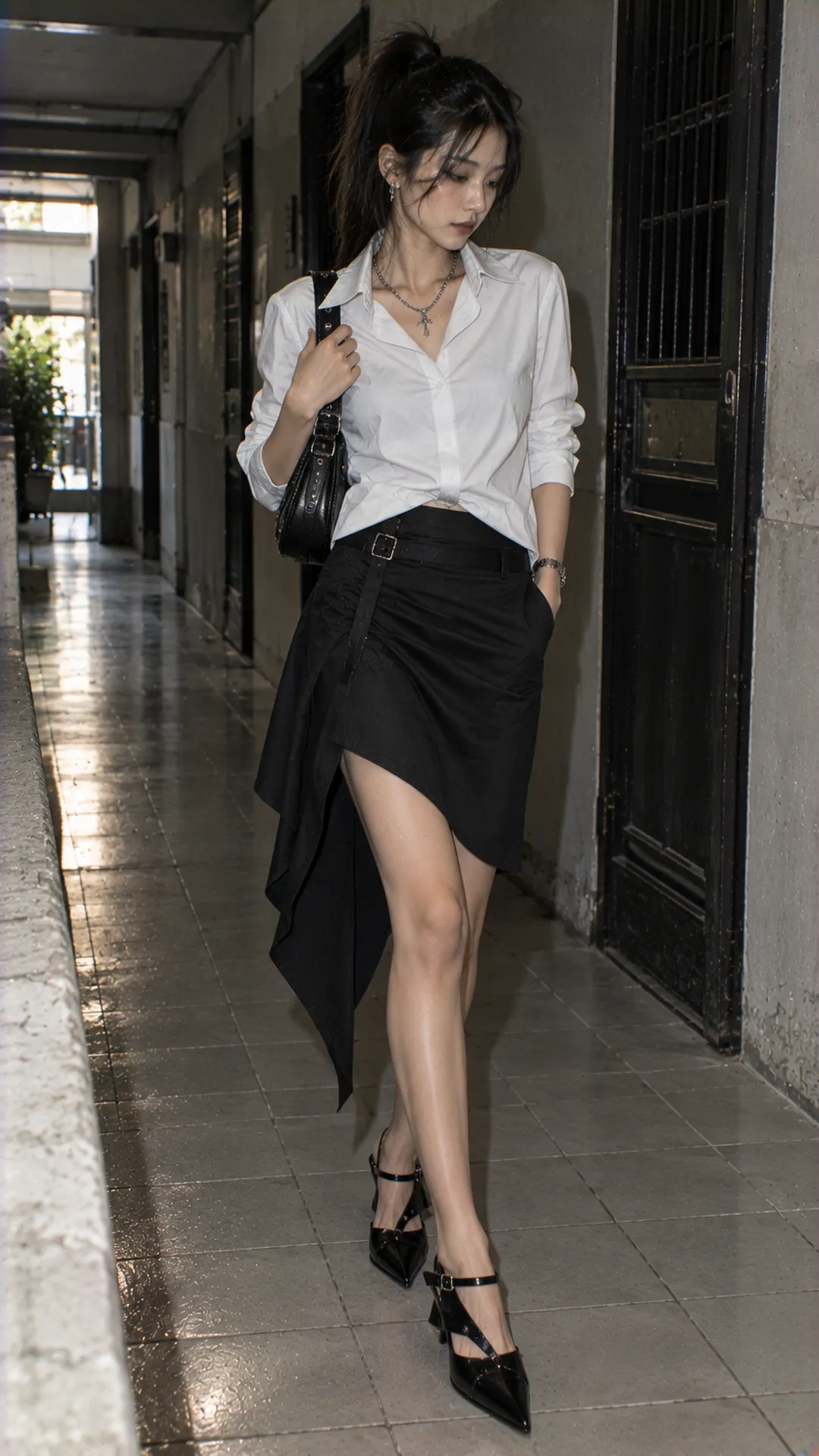
Edgy guides use many garment groups, from denim and leather to tailoring. The word works better as a description of styling than a unified rule system. The same white shirt can look basic in an evenly coordinated outfit or sharper with an asymmetric skirt and strongly shaped shoes.
Do not infer personality from clothing. Wearers do not need to appear cold or shocking to use a fashion detail. Tattoos, piercings and hair colors are not requirements for trying edgy fashion either. Clothes should support your expression rather than demand a role.
The concept of Alt style is broader and connects with many references, communities and ways of building an image. An edgy outfit may overlap with Alt, but sharing boots does not make every combination the same style.
Find the difference before adding accessories
In the mirror, identify where the outfit is uniform: identical widths, equally matte surfaces or all-horizontal hems. Change one element. If unsure, choose the piece you want to retain and find something with a different quality beside it.
A loose tee and wide trousers are not necessarily unexpressive, but may lack boundaries when color and fabric match. Try a partial tuck to reveal the waist, a structured bag or lighter shoes. Each adjustment affects a different area; testing separately reveals your preference.
You do not need all four techniques below in one outfit. Use them as separate adjustments. Once a change produces the effect you want, stop and check comfort before adding another piece.
Technique 1: contrast widths and lengths
A fitted top and wide trousers clarify the difference between upper and lower halves. Conversely, a loose jacket and streamlined skirt concentrate volume at the shoulders and torso. Neither formula is compulsory for a body type; choose the area to emphasize and adjust volume for comfort.
Length can also make a strong difference. A short jacket over a longer top creates two visible hems. If the hems almost coincide, the inner layer may look accidentally exposed. Try a clearer difference or conceal the inner hem completely so the choice reads intentionally.
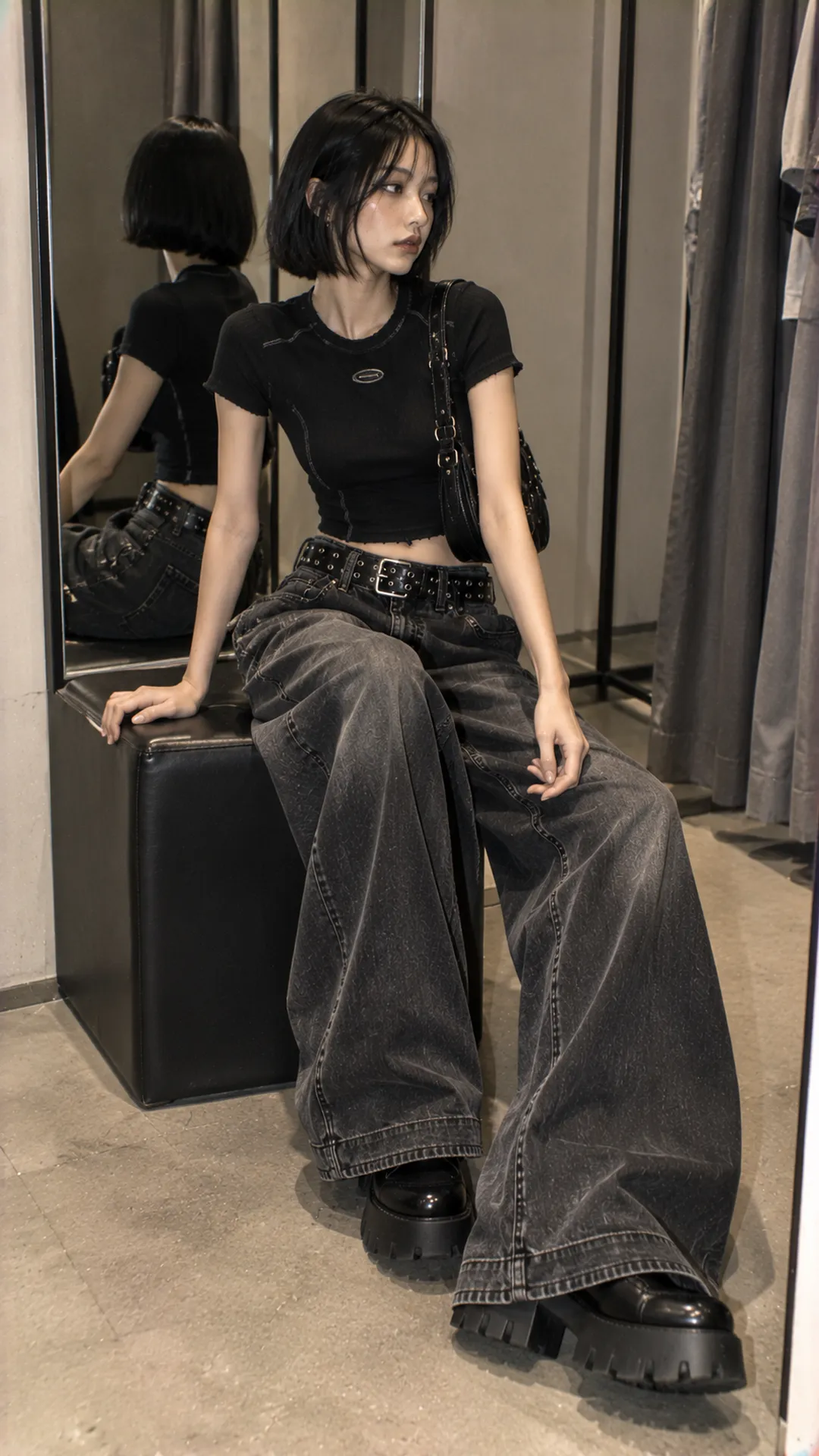
With wide trousers, check the hem against the shoes. Partial coverage differs from a hem above the shoe opening. If fabric piles at the feet, adjust length before trying heavier footwear. The issue may be a few centimeters of fabric rather than missing accessories.
Technique 2: replace a horizontal line with a diagonal
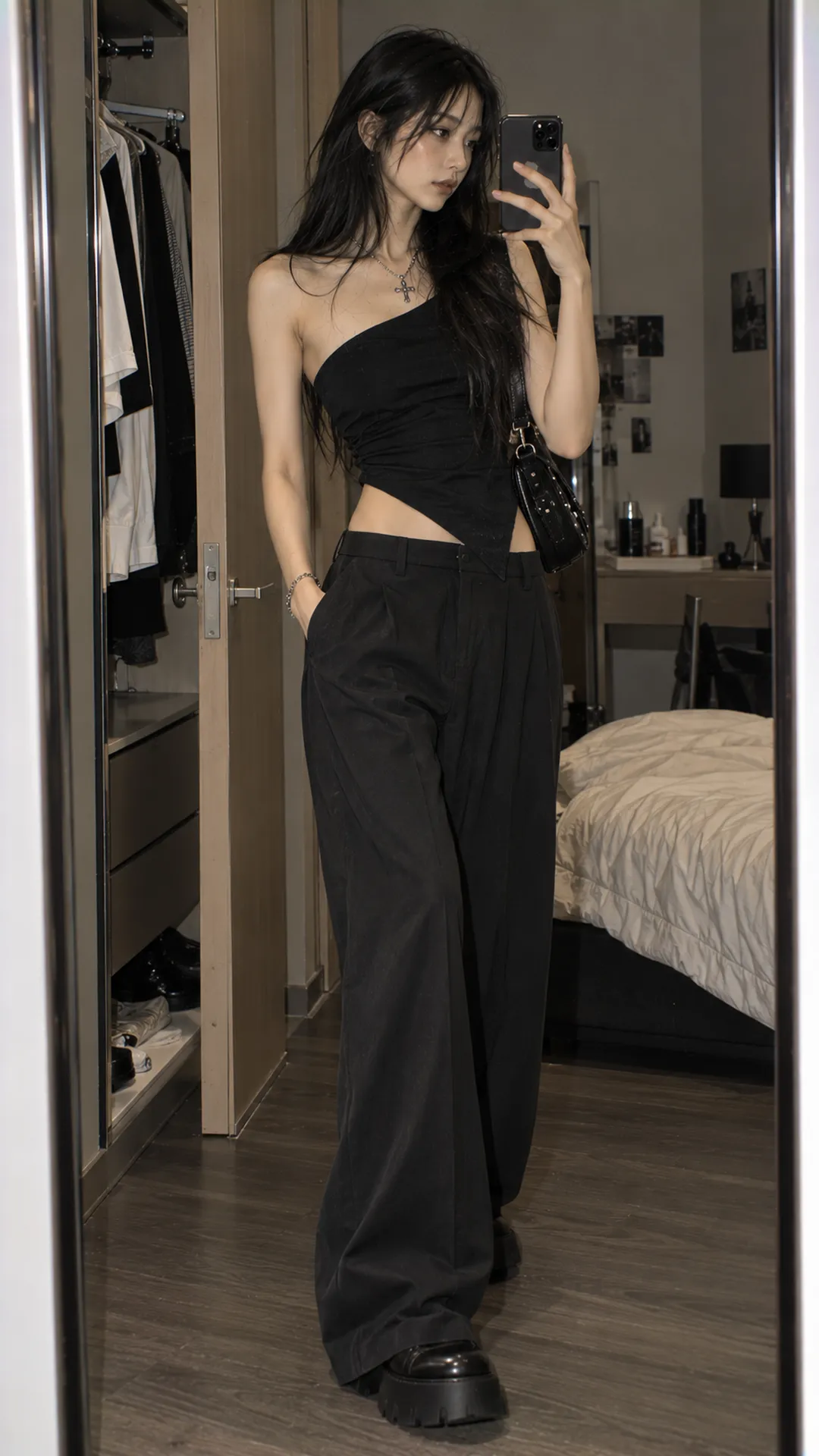
An off-center neckline, asymmetric hem or diagonal zipper redirects the eye from familiar straight lines. Start with a diagonal-hem top and plain trousers. When the cut leads, simple belts and bags keep its structure visible.
You do not need to cut a well-fitting garment for this effect. An uneven shirt tuck or diagonal bag strap can change the composition. The strap is supporting detail, however; if it hides the main feature, adjusting its length helps more than another accessory.
Test unusual cuts in motion. A diagonal hem may roll, an uneven neckline may need constant adjustment and a slit may open differently when seated. If you hold the outfit in place all evening, try another cut or simpler styling so the idea works beyond photographs.
Technique 3: combine surfaces with different reflectivity
Matte cotton beside a glossy coating contrasts even in the same black. Textured denim with a smooth top differs from denim with a coarse knit. Check surfaces under your usual lighting: trousers with a slight indoor sheen may reflect strongly in sunlight.
For a subtle start, place an unusual surface in a small bag, belt or shoe. For a stronger effect, use a whole skirt or jacket as the main area. Surface area substantially affects the result, so several simultaneous purchases are unnecessary.
Mesh, lace or sheer fabric can add depth, but account for underlayers and actual breathability. The guide to layering outfits for women discusses organizing layers. Here, the new layer should clarify surface contrast rather than simply increase the number of garments.
Technique 4: place color or metal in one clear area
Try gray clothes with a red bag, or cream with strongly shaped black shoes. The contrast shifts attention without an entirely dark outfit. For continuity, repeat the accent in a small detail such as a trim or hair accessory.
Metal works similarly. A large belt buckle or clearly shaped necklace can lead. Check the distance to jacket zippers and bag straps; several bright details too close together can crowd one area while leaving the rest without a role.
One metal color is an easy starting choice, not a ban on gold and silver together. If you enjoy mixing, arrange them as an intentional cluster. Assess relationships in shape, scale and placement rather than only product color names.
Three ways to give basics an edgy direction
A white shirt and a skirt with a distinctive hem
Keep the white shirt relatively plain and choose a black diagonal-hem skirt with clearly defined shoes. Tuck to reveal the waistband if the skirt should lead. A small structured bag continues the clean lines; a large soft bag relaxes them. Either works when intended.
If long cuffs meet several diagonals in the skirt, roll the sleeves neatly to simplify the upper half. This formula relies on construction rather than graphics, distressing or multiple necklaces.
A gray tee, wide trousers and a rigid bag
A fitted gray tee, wide black trousers and a small angular bag contrast softness and firmness. Choose shoes with toes visible beneath the hem. If the tee is also loose, try a front tuck to reveal the waistband and assess whether the outfit has your desired ease.
For more emphasis, switch to a dark-red bag or add a belt buckle. Change one item per attempt. When everything is new and forceful, identifying what actually sharpens the outfit becomes difficult.
A plain dress, strong shoes and geometric accessories
A neutral dress can support moderately thick-soled shoes and geometric earrings. Choose a hem revealing the shoes, then walk and sit. If a long dress hides them completely, their visual weight decreases; retain or change that length according to your goal.
A soft dress with substantial shoes creates clearer opposition than choosing every piece rigid. If the shoes tire your feet, use a lighter pair and move emphasis to the bag. Edgy styling organizes an image; it does not require discomfort.
Borrow references without merging every dark style
The Met has examined fashion's adoption of Punk imagery and DIY techniques. Distressing, patchwork and metal hardware have particular contexts. In a modern outfit, understand them as selected influences rather than certification of the wearer's entire identity.
Explore the Punk / Grunge collection to study those directions. To name a broader combination, the style dictionary helps compare related systems without treating all black clothing as one label.
Test the outfit in real situations
Photograph the front and side, then carry a bag, sit and raise your arms. Does the accent remain clear in motion? An attractive chain may catch on a chair; an oversized top may conceal the hem you worked to create.
On hot days, prioritize cut, color and accessories over thick layers. For a more restrained result, reduce distressing or move metal from clothing to the bag. For a stronger result, enlarge one contrast area before increasing item count.
Finally, note specific changes: “different shoes defined the feet,” “removing the necklace revealed the collar,” or “adjusting the hem reduced bunching.” These observations help you repeat useful choices. A wearable edgy wardrobe grows from such decisions rather than the quantity of items labeled bold.