

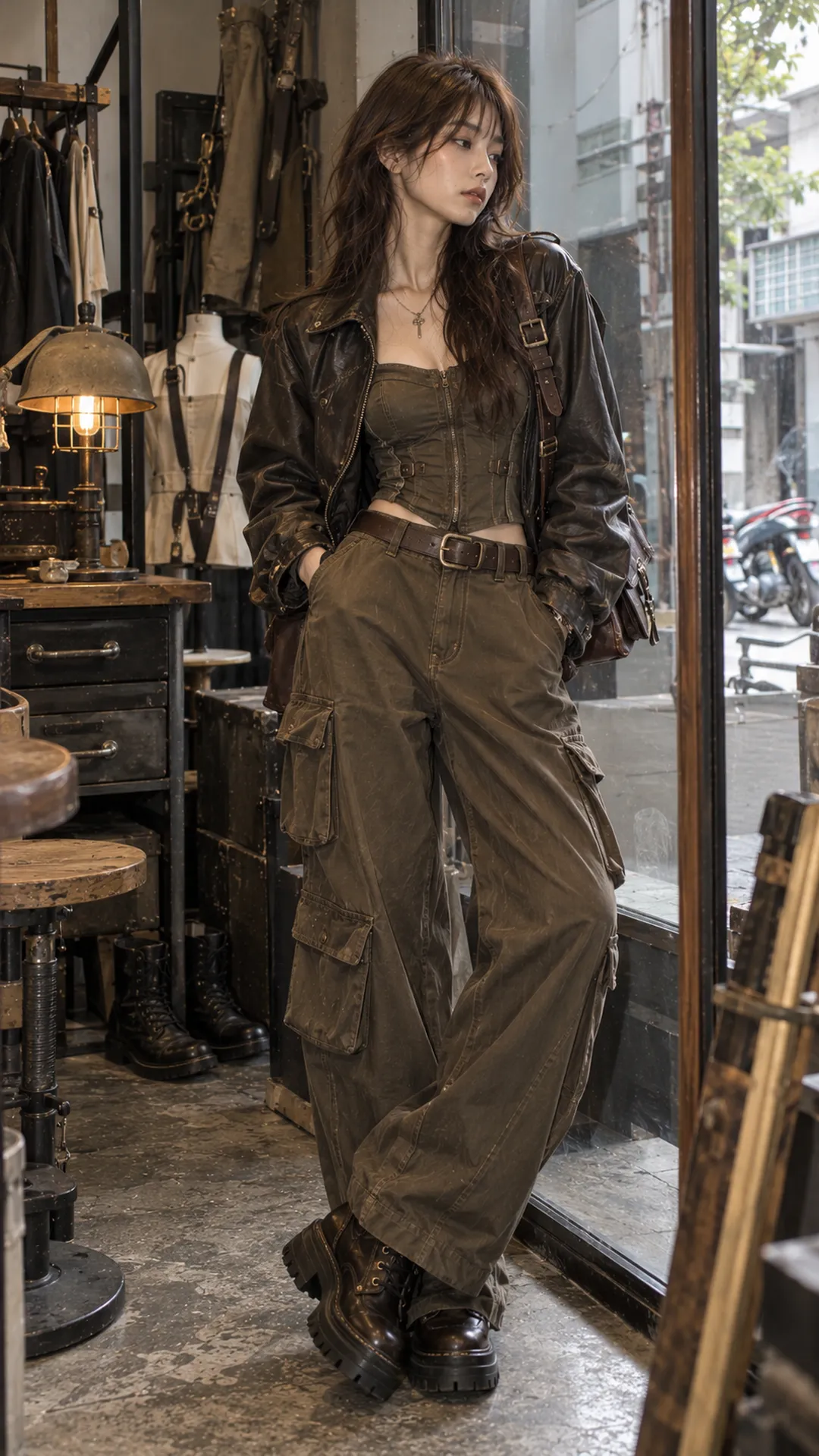
Where does dieselpunk take its inspiration from?
In Dieselpunk Milestones, Tome Wilson describes dieselpunk as contemporary creativity using influences from the 1920s–1940s. The key is reworking older cultural material rather than recreating a period exactly. Definitions may extend the timeframe, so this is not a historical dress code.
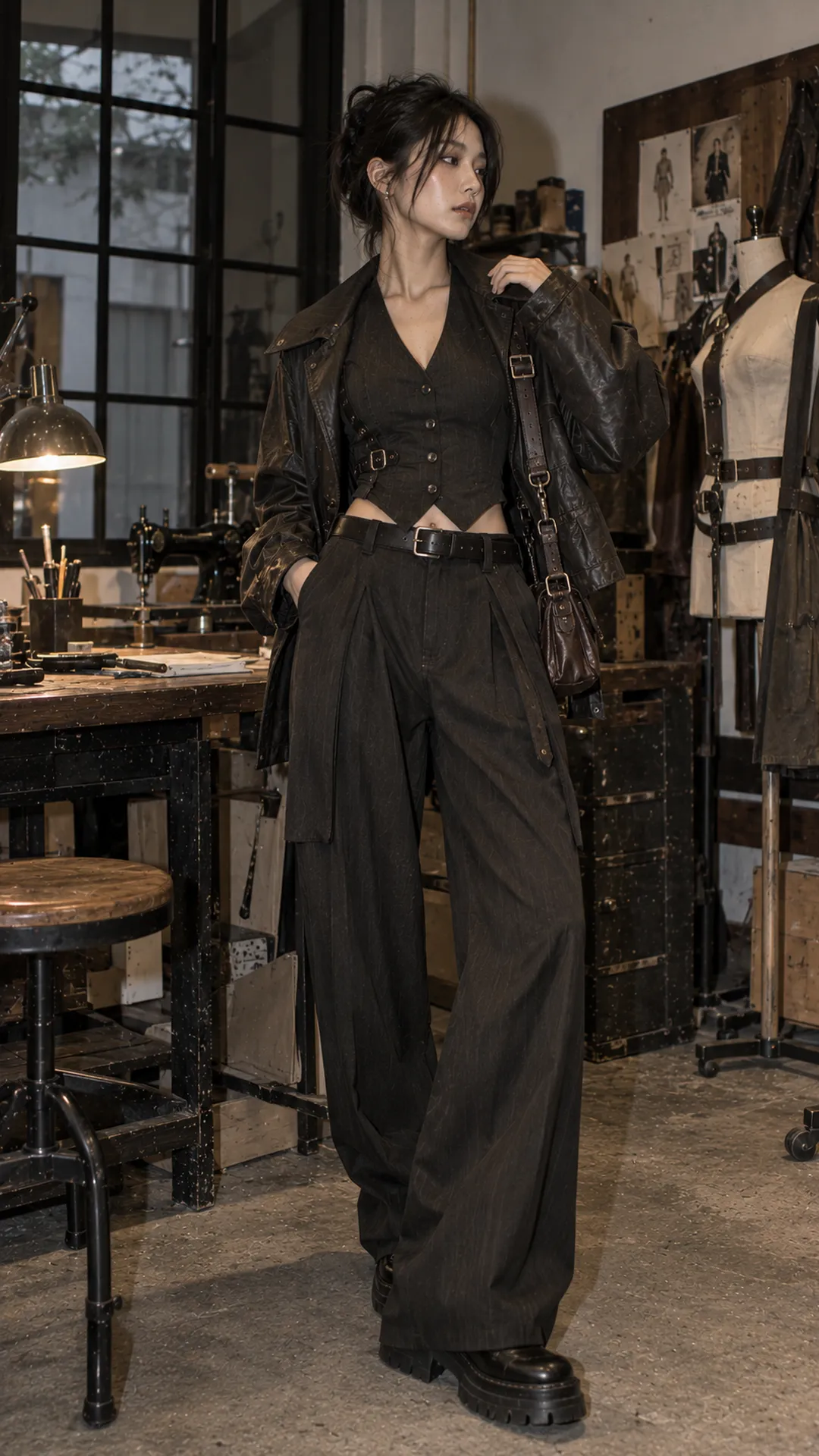
For your wardrobe, you might choose the strong lines of workwear, the polish of tailoring or the adventure associated with aviation. Pleated trousers with a patch-pocket jacket already bring together dressiness and practicality; you do not need to attach gears to everything.
Read dieselpunk through the whole outfit. A leather jacket alone can belong to many styles. Combined with a high waist, lace-up shoes and a muted palette, it adds an industrial retro association. This is an interpretation for everyday dressing, not a test of whether an outfit is “correct.”
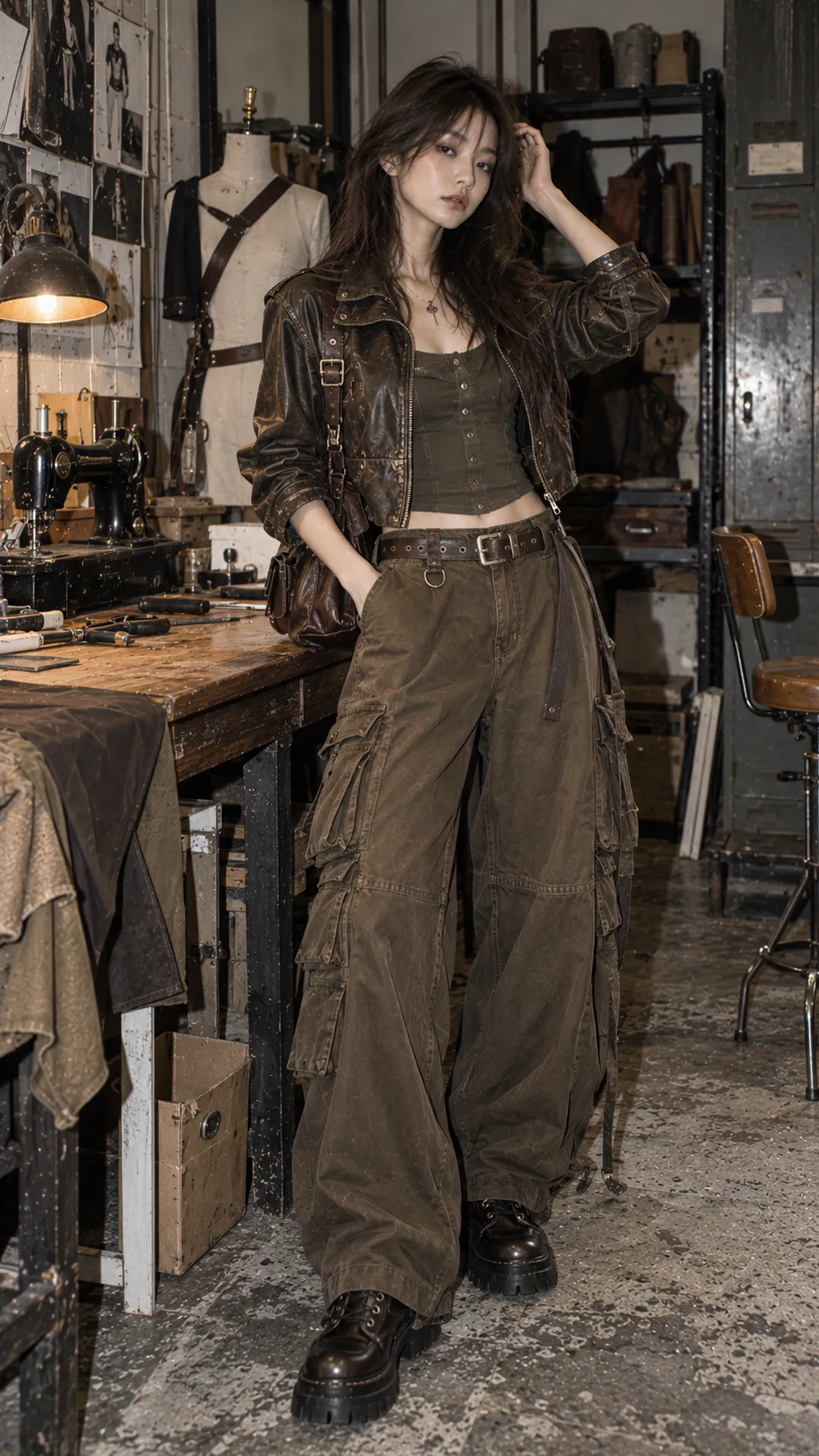
Read the silhouette before choosing accessories
Silhouette means the overall outline of an outfit. For dieselpunk, establish the waist position, shoulder width and the way the lower half falls first. When those three elements are clear, a simple belt buckle can be enough of an accent.
Short jackets, high waists and a clear transition
A jacket ending around the waist or upper hip reveals the construction of high-waisted trousers. The trousers may be straight or moderately wide, as long as layers of fabric do not bury the waistband. Tucking in a light shirt makes the transition between top and trousers easier to read.
If you prefer a longer jacket, wear it open so the inner layer creates a vertical line. You can keep a roomy outer layer without cinching the waist. Test the actual length on your body rather than following a compulsory ratio for a body type.
Structured shoulders with room to move
Defined shoulders can come from seams, a collar or the fabric's structure; thick shoulder pads are not essential. Reach both arms forward and sit down when trying on a jacket. If the back pulls, the armholes grip or the collar lifts excessively, try another cut before attempting to fix it with accessories.
Let the lower half set the rhythm
Wide pleated trousers offer room and structure. An A-line skirt preserves a waistline while allowing an easier stride than a very tight skirt. With a straight skirt, take longer steps and sit on a chair; the slit and fabric allowance should support real movement.
If the upper half has many pockets or a large collar, a simpler lower half makes the silhouette easier to see. Conversely, wide trousers with deep pleats work with a streamlined inner top and a jacket that does not add too much volume.
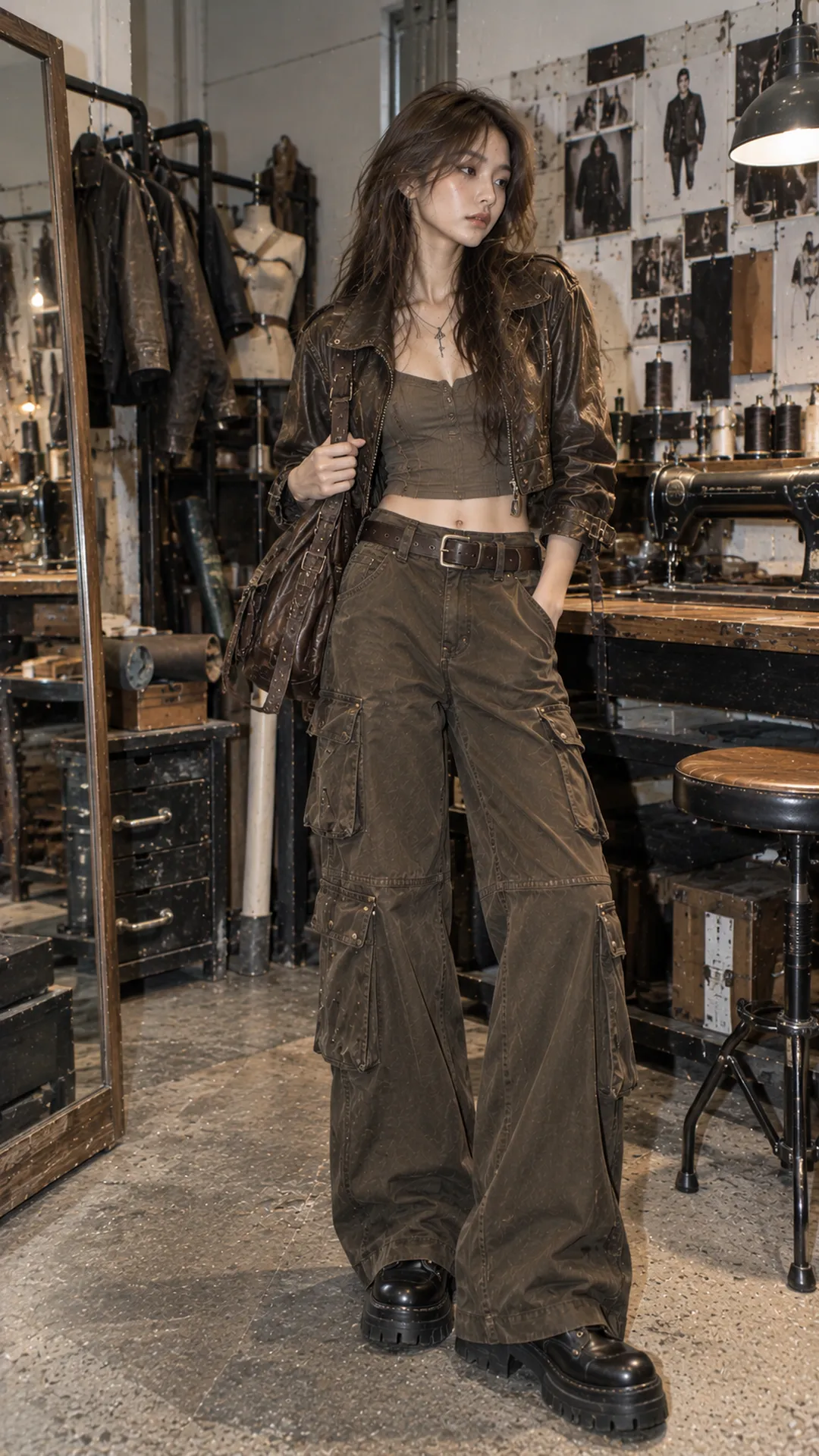
How fabrics and colors create an industrial mood
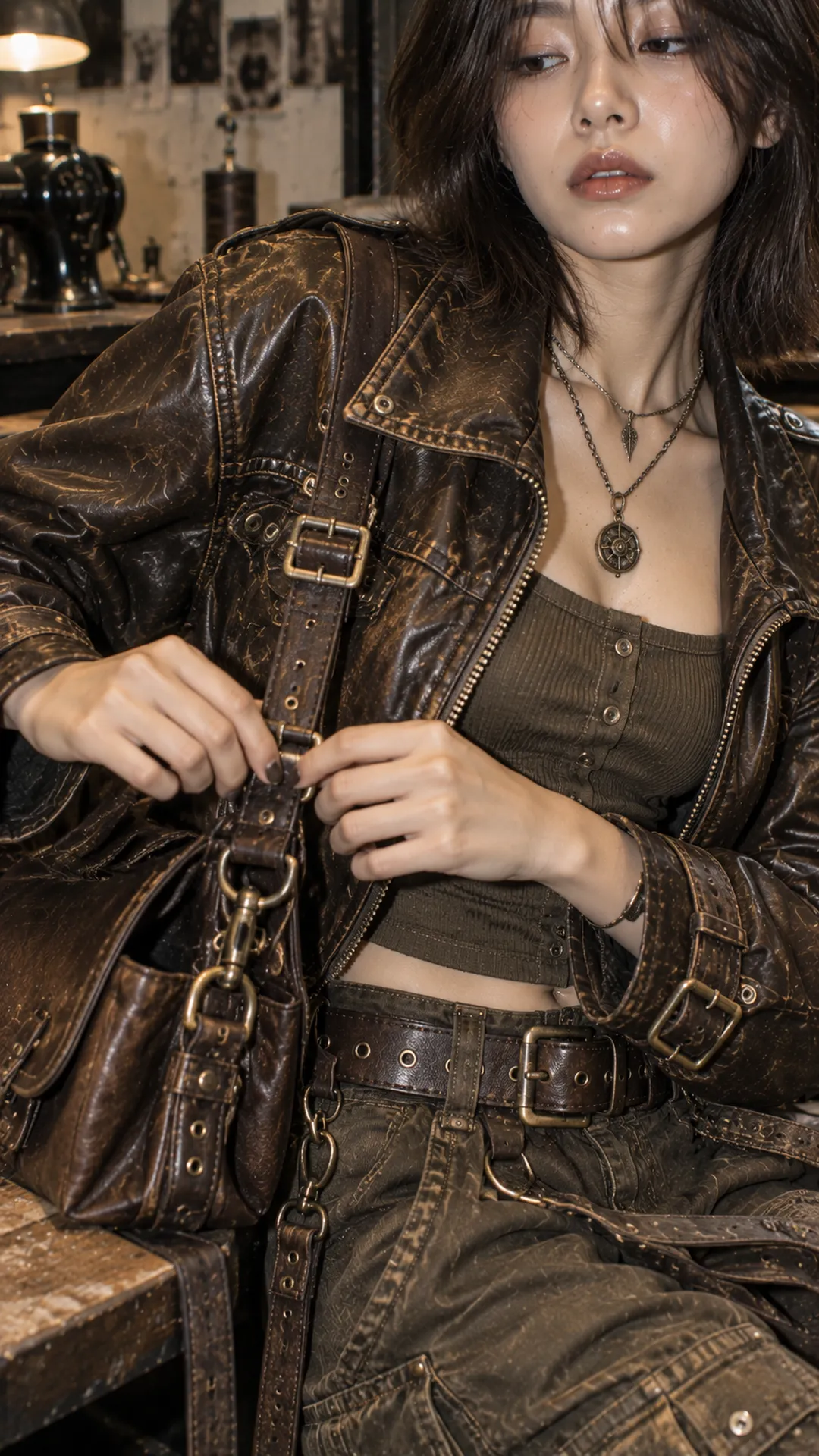
Instead of collecting everything black, contrast surfaces. Matte fabric beside slightly glossy leather gives the outfit depth. Two or three clearly chosen surfaces are usually easier to coordinate than many zippers, chains and studs appearing together.
Choose fabric for structure and comfort
Twill, denim or canvas can suit a workwear direction, but the fabric name does not tell you its exact weight. Handle it, make a fold and see how it falls. Trousers need enough body to hold their leg shape without being too stiff to sit in.
Leather or leather-look materials can provide accents in a jacket, bag or shoes. Softness, lining and thickness all affect comfort. Do not assume a faux-leather jacket will feel cooler simply because it weighs less; test the whole outfit under the conditions you expect to wear it in.
For a tailored direction, choose trousers with clean creases and a well-fitting waistcoat. If very soft fabric collapses the silhouette, keep structure in the jacket and let the trousers drape naturally. Every layer does not need to be stiff.
Leave some light in the palette
Dark brown, charcoal, navy and olive are useful bases to try. Cream or off-white in the inner top can separate your face from a dark jacket. A burgundy scarf or cognac bag can provide an accent without increasing the number of accessories.
An aged effect can come from surfaces and styling. You do not need to tear new clothing or add dirt to make an outfit look industrial. A lightly scuffed buckle, visible stitching or a structured bag already provides visual detail.
Three dieselpunk directions using wearable pieces
The combinations below are practical suggestions. Choosing the direction closest to your existing wardrobe makes regular wear easier than buying every item in a reference photograph.
Adventure: a short jacket and an A-line skirt
Try a short brown jacket, a cream crew-neck tee, a charcoal A-line skirt and lace-up shoes with moderate soles. The jacket creates volume above; the gently flared skirt keeps the outfit from feeling rigid. A medium-width belt connects the two with one simple detail.
Keep the tee's print minimal so the outer layer's collar and zipper remain visible. When choosing a jacket, the guide to women's leather jacket outfits explores the relationship between jacket length and the lower half. On hot days, switch to a lighter fabric jacket with the same shape.
Workwear: a patch-pocket shirt and pleated trousers
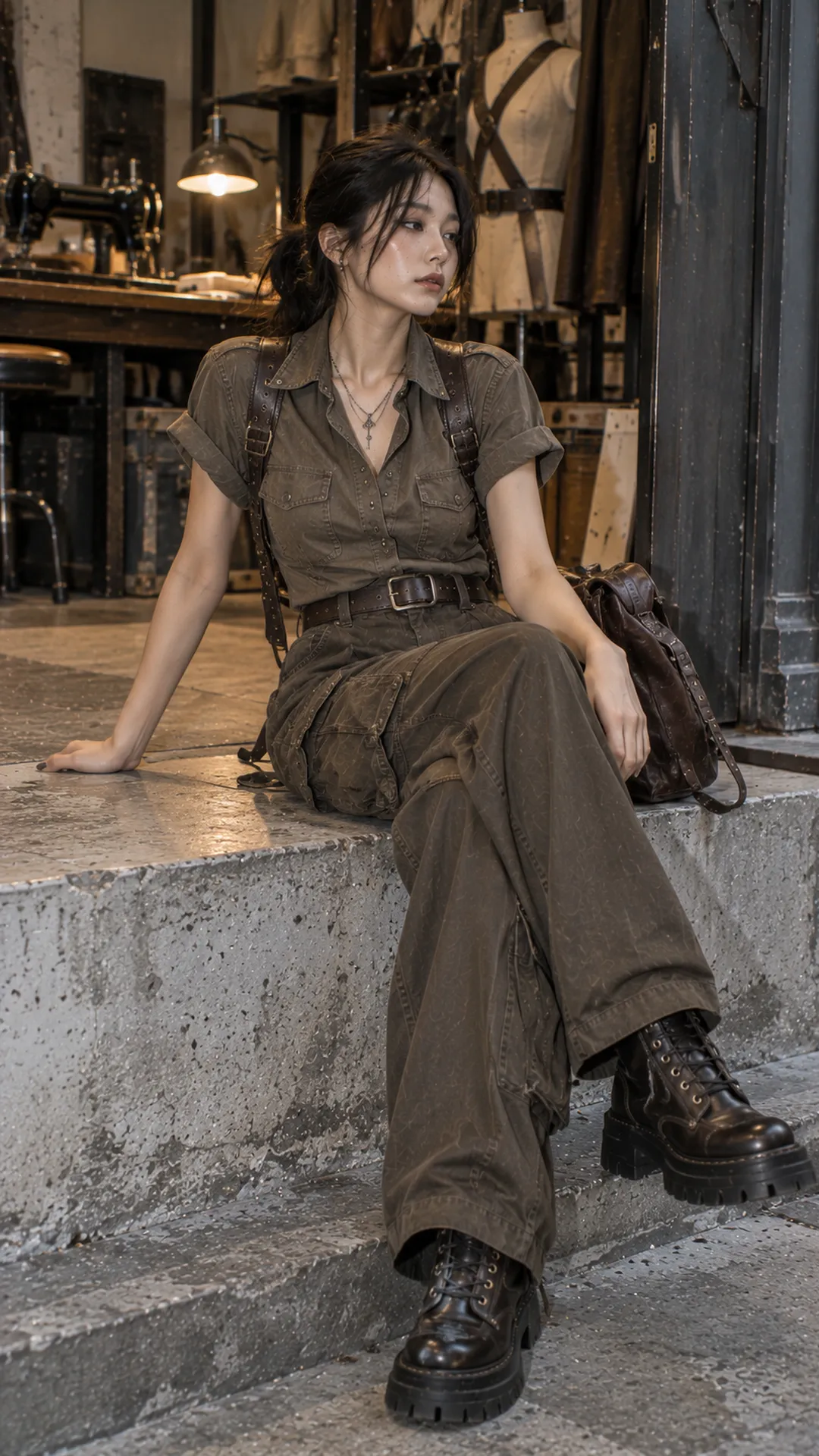
Pair an olive short-sleeved shirt with gray high-waisted trousers, a neat tuck and dark brown shoes. Patch pockets add practicality; trouser creases keep the outfit polished. Choose pockets that lie flat and avoid filling them until they distort or drag the shirt down.
If you want an outer layer, a waistcoat with few pockets is easier to manage than a heavy jacket. A boxy shoulder bag can provide the accent instead of multiple straps. Check the strap length so the bag does not keep hitting your hip as you walk.
Noir: dark tailoring and one glossy accent
Choose a cream shirt, straight navy trousers, a tonal waistcoat and lace-up leather shoes. This provides a foundation of classic tailoring; a bag with a metal clasp or a boxy fabric jacket adds an industrial note. Indoors, the waistcoat and shirt may be enough layering.
Keep the shine in the shoes or bag clasp, leaving the shirt and trouser fabrics quieter. If you want boots, see the advice on trouser hems in the guide to women's leather boot outfits. A tidy hem gives the shoe a defined shape without fabric piling around the shaft.
How it differs from vintage, steampunk and techwear
Vintage concerns garments from an earlier period; retro usually describes new designs recalling older styles. Dieselpunk is an imagined aesthetic direction, so new clothes can work perfectly well. You do not need antiques to begin. The guide to vintage style explains choosing and styling vintage pieces in more detail.
Steampunk usually evokes the steam age and nineteenth-century influences, while dieselpunk shifts toward early twentieth-century industry. Waistcoats or goggles can therefore appear in both; consider the silhouette, context and styling too. Brass or silver alone is not enough to classify an outfit.
Techwear should be assessed through a design's actual functions. A mechanical-looking jacket with many pockets may not meet your needs for rain or movement. If those qualities matter to you, read what techwear is and how to assess function before buying. In dieselpunk styling, a practical appearance is an aesthetic language; performance still needs a separate check.
Adjusting for hot days and getting around
Keep the recognizable cues in the silhouette rather than insisting on every layer. A short-sleeved shirt, high-waisted pleated trousers and a belt already create a retro foundation. Carry a jacket for the evening or air-conditioned spaces instead of wearing it throughout a day outdoors.
When buying, inspect the lining and coverage too. A jacket that looks thin can still feel stuffy if its lining is thick or movement allowance is limited. Try it with the top you intend to wear underneath, checking the wrists, armholes and back rather than just the front view.
Shoes also need to suit your schedule. If you will walk a lot, start with a familiar pair that fits well and has soles appropriate for the ground. Heavy boots are not a dieselpunk requirement. Low lace-up shoes can retain a firm, streamlined look with clearly creased trousers.
After wearing, care for clothing and shoes according to each product's label. For secondhand items, inspect seams, coatings and linings before buying; a worn appearance does not replace usable condition.
Start with one outfit, then adjust individual details
First, choose something you already own: high-waisted trousers, a short jacket or a structured shirt. Add two simple base pieces, then take a full-body photograph from an eye-level angle. It will help you see whether layers hide the waistband, trouser hems bunch up or accessories compete for attention.
If the outfit looks too much like a costume, first try removing goggles, a hat or straps. If it feels too heavy, add a lighter inner top or switch to low shoes. If the retro impression is unclear, adjust the waist placement and trouser drape before buying more decorations.
Aim for a dieselpunk outfit you actually want to wear again: a clear silhouette, intentional textures and enough comfort for your destination. Once that foundation works, add personal details to develop the style.