

Start with your role and the invitation
As a guest, you can usually choose among dresses, skirts, and pants. If you’re carrying ceremonial gifts, wear the outfit, colors, and accessories agreed with the organizers. Keep to the coordinated look when the group is expected to match.
Relatives greeting guests, setting things out, or moving around should think about practical details. Wide sleeves can catch while carrying trays, and long hems can get in the way on stairs. A simple, well-fitting outfit can be easier to manage.
Find out whether the ceremony is at a private home, restaurant, or event venue. Ask in advance if the family has a color preference or expects a particular level of formality. Their guidance is the most relevant to that event.
If there’s a wedding reception on the same day, check whether one outfit can work for both. You can keep tailored pants or a midi dress and change accessories later. Our guide to wedding guest outfits for women with an edge covers the reception. The options here are for engagement guests.
Six practical outfit options
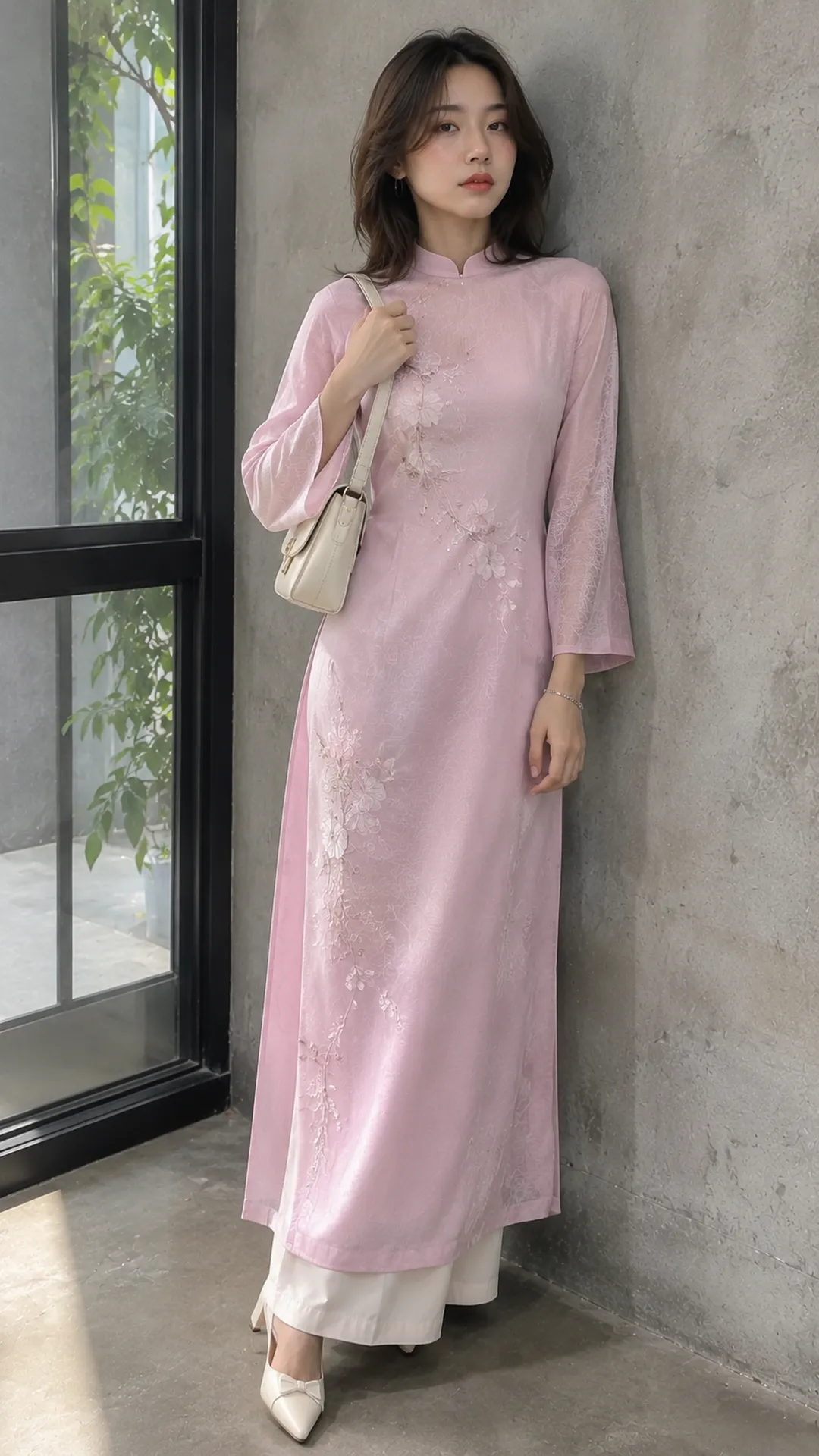
An ao dai for a formal or traditional ceremony
An ao dai is worth considering if the family prefers traditional dress or the ceremony calls for formal attire. Choose a design suited to your role and follow the hosts’ guidance about the bride’s outfit or the gift-bearing party’s coordinated look.
Try the tunic, pants, and shoes together ahead of time. Check that you can take the stairs without constantly lifting the panels and that the bust, underarms, and waist stay comfortable when seated. Check light or thin fabric and underlayers in daylight.
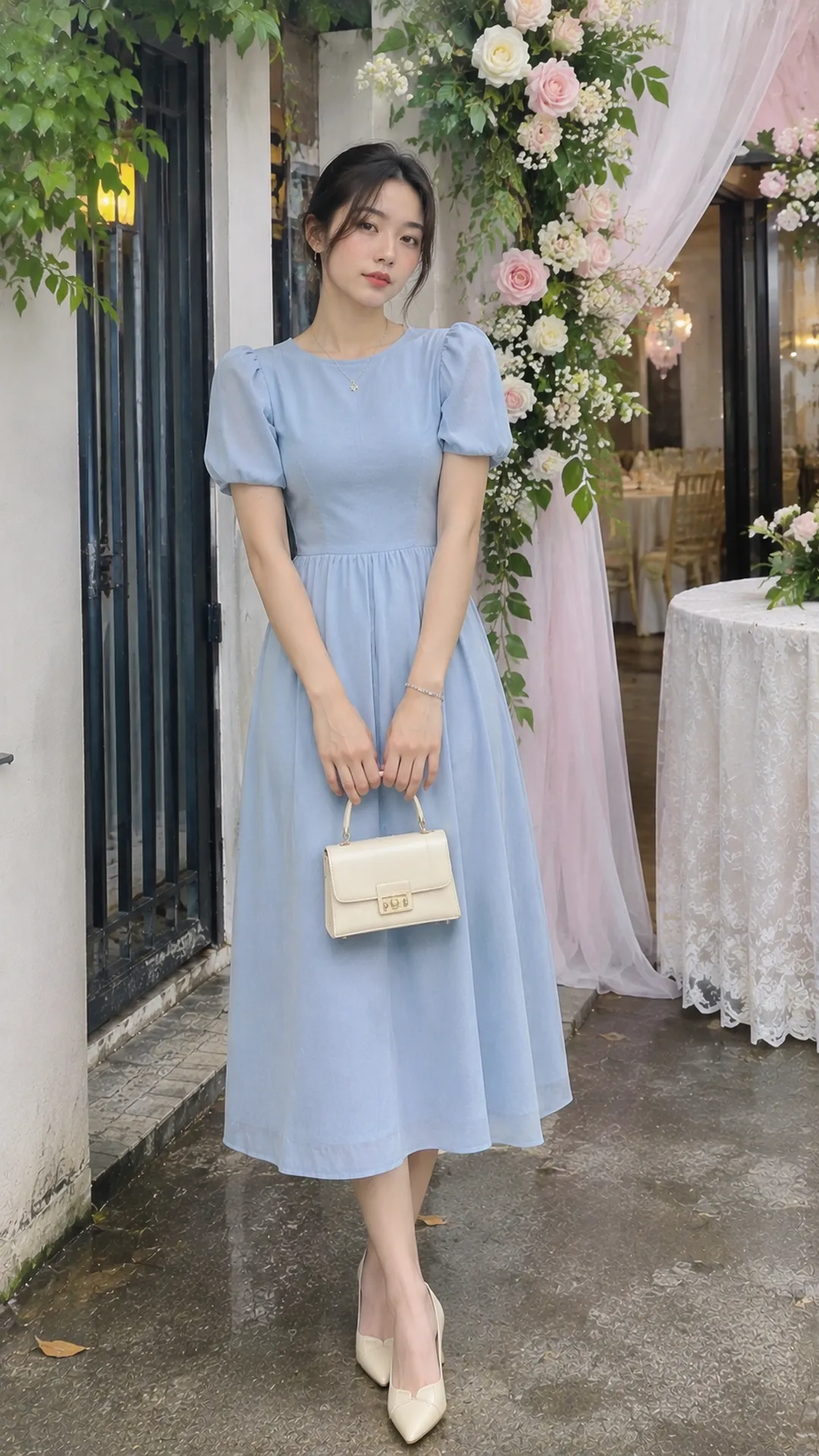
An A-line midi dress for sitting and walking comfortably
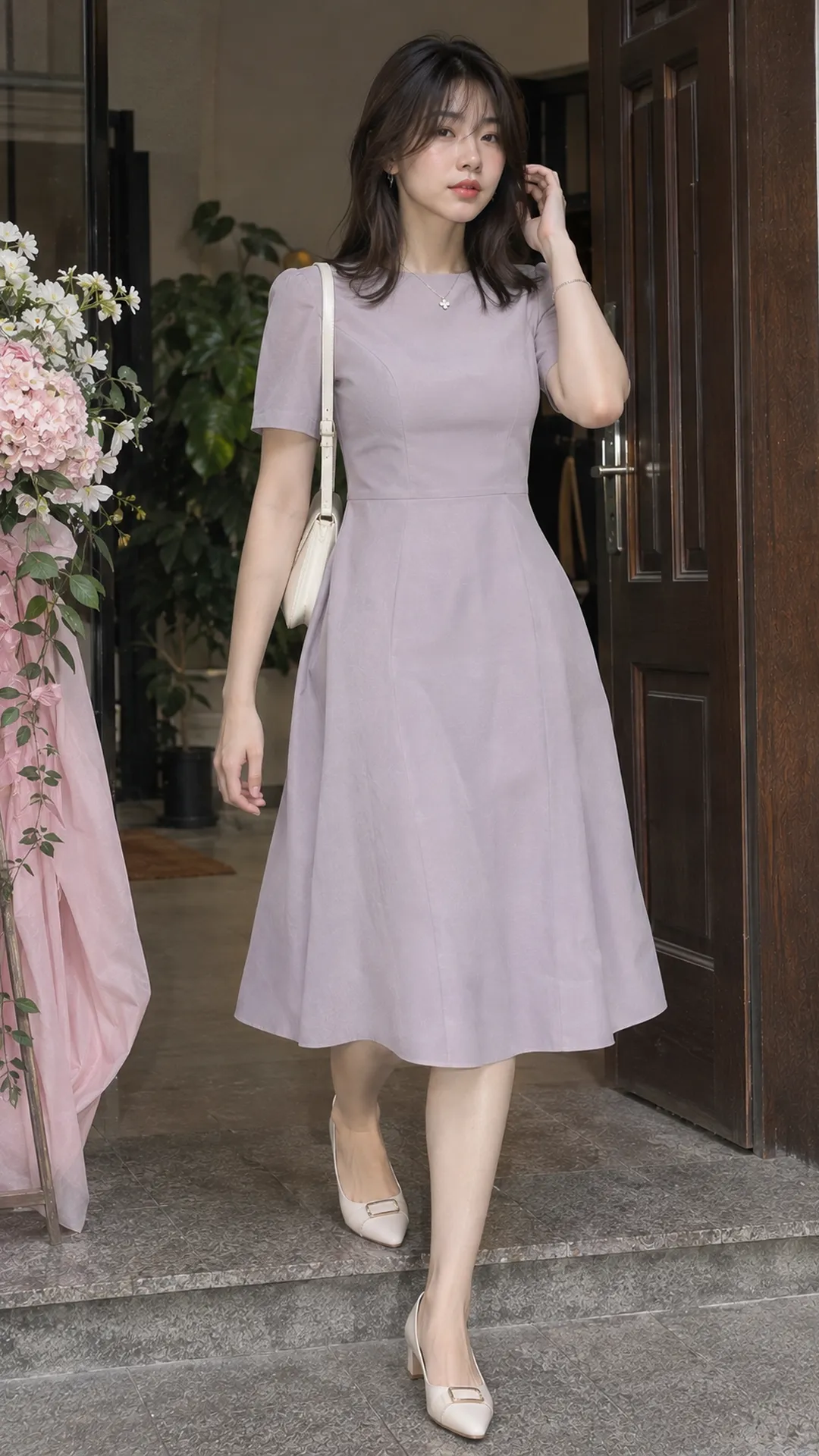
A moderately flared A-line is a practical one-piece option. Try a hem around or below the knee based on your taste and the setting. A little shaping at the waist can give definition and leave room to sit through a meal.
With small florals, try a plain bag and shoes. With a solid dress, earrings or a small necklace can add an accent. Choose lace, beading, or ruffles in a way that suits the venue as well as the photos.
A structured shift dress for a less defined waist
A straight dress looks polished when the shoulders, neckline, and hem sit cleanly. Look for a clear drape with room at the bust and hips. A medium clutch and simple shoes can give a roomy dress definition without a belt.
Sit down to check how high the hem rises, then reach forward to test the back. If the shoulders pull despite a roomy body, try another cut. Check the movements you’ll make at the ceremony.
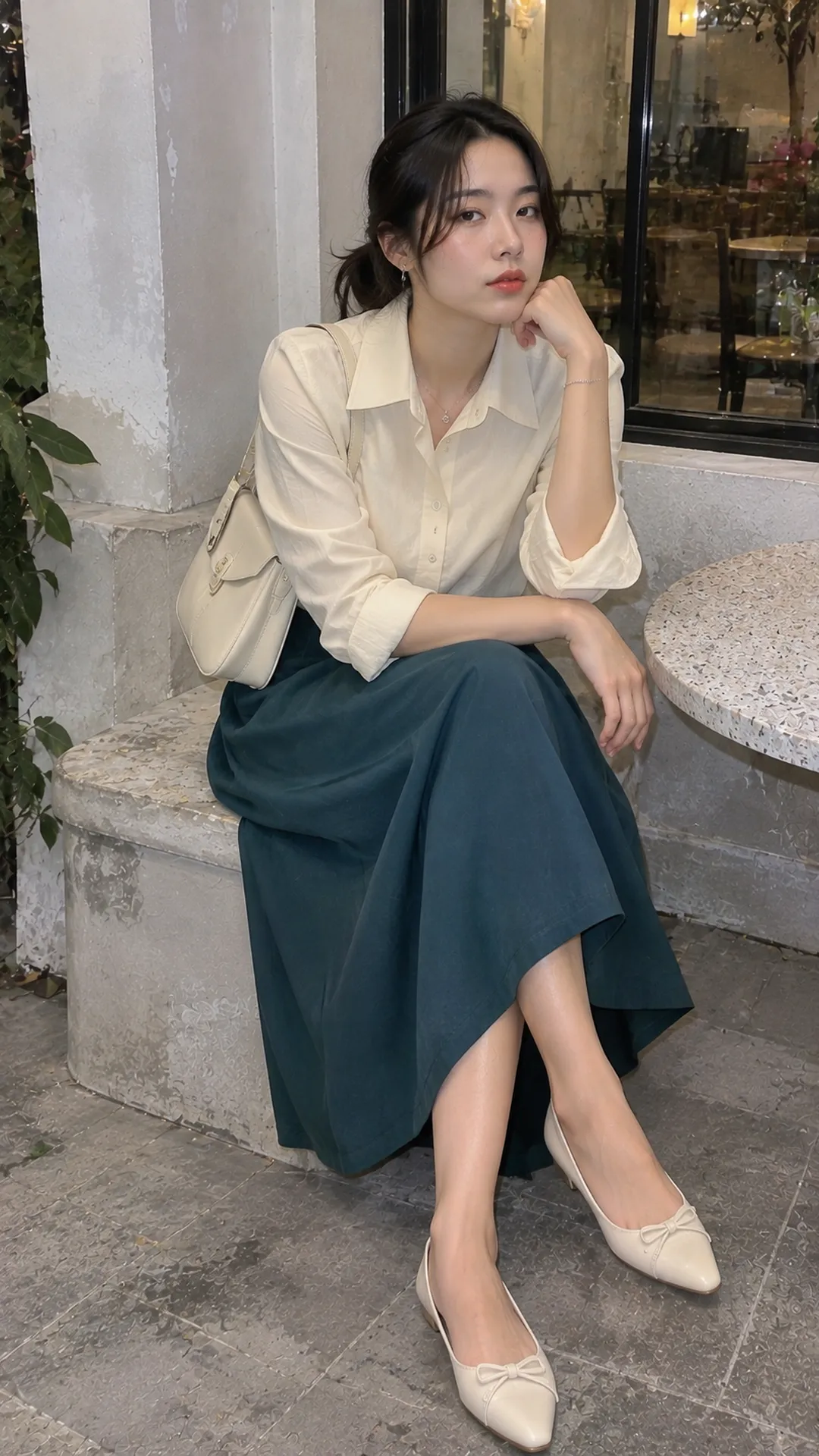
A button-up or blouse with a midi skirt
A softly colored shirt and midi skirt let you adjust the level of formality. Try a flowing solid skirt with a structured button-up, or a moderately flared skirt with a slimmer top. A smooth tuck shows the waistband without adding bulk.
If the top has a large bow or puff sleeves, keep the skirt simple. With pleats, check how they spread at the hips when you stand and sit. See our guide to skirt cuts and lengths to choose the silhouette alongside the color.
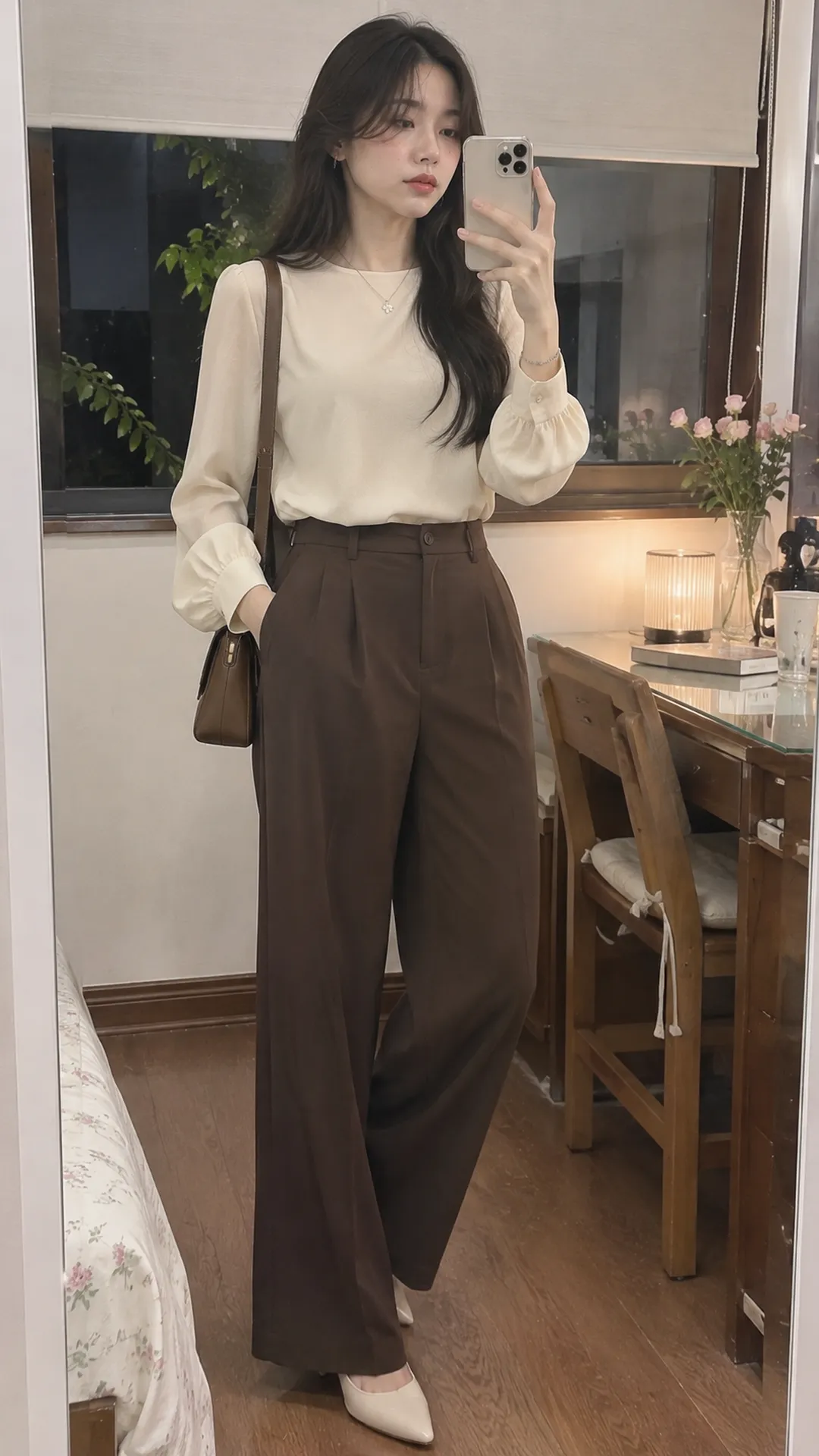
A blouse and tailored pants
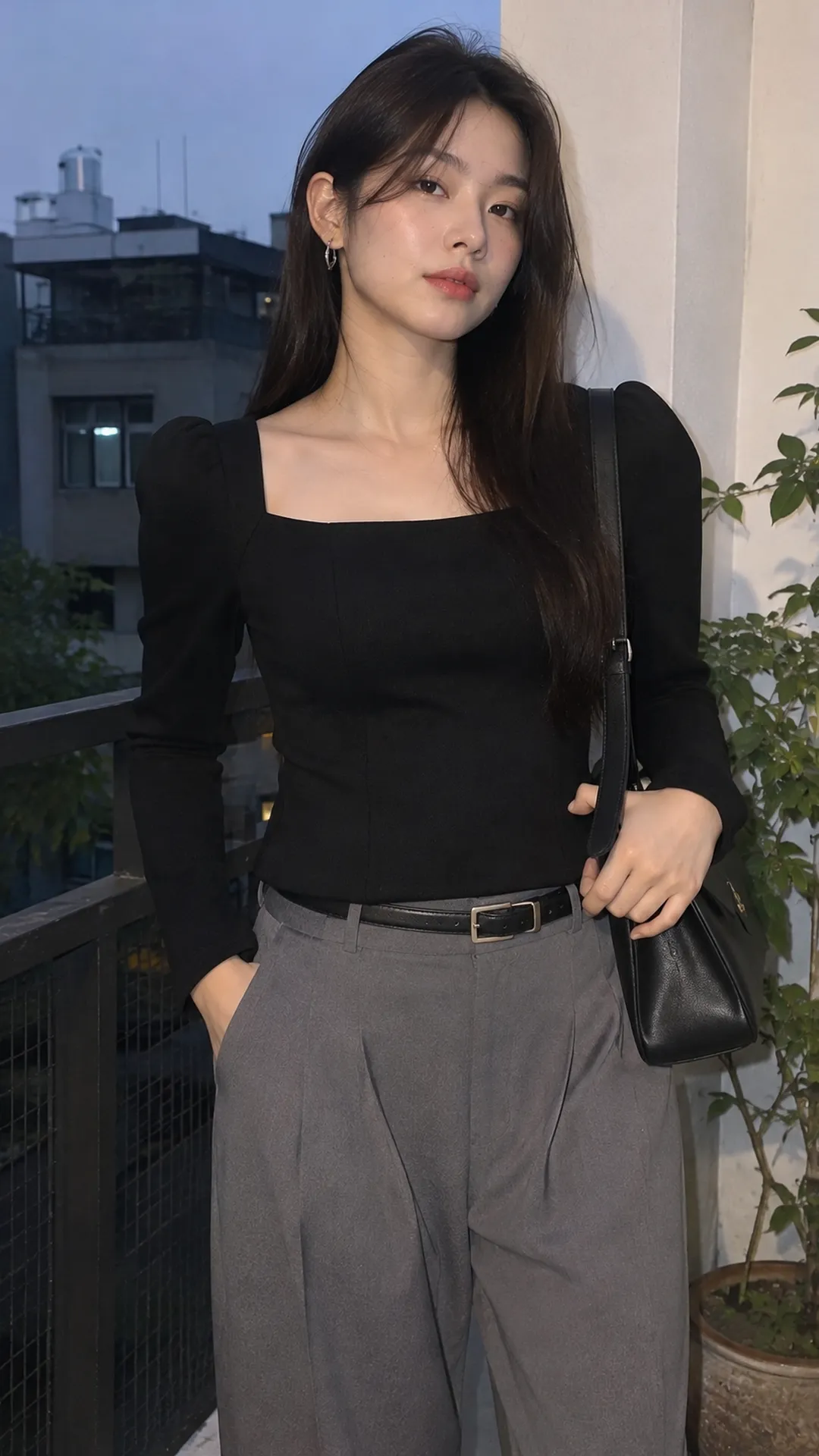
Try straight or moderately wide tailored pants with a square-neck blouse that gives the coverage you want, or a soft button-up. Fit the hem to the shoes so it clears the ground. Check that the waistband is comfortable for both the ceremony and the meal.
For a less workwear-like outfit, try a soft fabric, small earrings, or a compact bag. In warm weather, a neat outfit can work without a jacket. Well-hemmed pants can make a bigger difference than elaborate accessories.
Tonal separates or a jumpsuit for simple styling
Separates in one color family are quick to put together. Check the proportions. A long, loose top can hide the waistband of wide pants. Try a shorter top or partial tuck. With a pale outfit, structured accessories can add definition.
A jumpsuit can work when its neckline, back, and length suit the setting. Sit, stand, and check that you can work the zipper yourself, especially if you’ll travel or help the family during the event.
Take color cues from the hosts
Soft blue, dusty pink, beige, gray, and pale purple are easy starting points. Follow the palette if the family has specified one. With no guidance, a simple solid outfit is easy to adapt.
Whether red, white, or black is appropriate depends on the bride’s outfit, what the hosts prefer, and how you style it. If your clothes closely resemble the bride’s in color, cut, and accessories, choose a more distinct combination.
For a dark palette, try navy, deep brown, or muted green with small accessories. A lighter top can break up the dark colors. If you’re wearing a shade close to white, consider the cut and trim alongside the name of the color.
If you’re deciding how formal to go, the principles of cut, material, and occasion in our smart casual guide can help. Follow the family’s specific guidance first.
Choose shoes and length for the venue
At a private home
Plan for stairs, narrow walkways, or removing your shoes. Choose shoes that are easy to take off and put back on. Check that your outfit still works barefoot, especially if long pants were hemmed for heels.
If you may sit low, wear a skirt with enough length and room to sit naturally. Check the neckline when bending to greet someone or set something down. A light layer can help if you want more coverage.
At a restaurant or event venue
A level floor gives you more options. Choose shoes you’ve walked in before. Moderate heels, stable soles, and neat flats can all work. Check their condition and choose a pair you can stand in comfortably.
If the venue is air-conditioned, bring a layer that fits over the outfit without crowding your shoulders or arms. Our guide to layering women’s outfits helps you choose lengths that leave the waistline or skirt shape visible.
When the journey has several stages
Motorbike rides, long walks, and rain can change what’s practical. Keep hems and tunic panels clear when getting on or off a vehicle and use a bag that closes securely and leaves your hands free. If you bring spare shoes, try both pairs with the outfit.
Think about wrinkles on a long journey. Choose a cut that looks good with soft creases or arrange somewhere to hang the garment before the ceremony. Check how it looks after sitting for a while.
Keep your personal style in one or two details
An unusual neckline, geometric earrings, a structured bag, or shoes with a small detail can give the outfit some edge. Choose one accent that feels like you and works in family photos.
Try gray tailored pants, a black square-neck top with enough coverage, and small silver earrings. For a softer option, try a deep brown dress with a small bag and sleek flats. Both can look polished and feel comfortable to move in.
Choose hair and makeup for the length of the event. Keeping hair clear of your face can make it easier to bend or help the hosts. Check that large hair accessories won’t block anyone in group photos or catch on your sleeves.
Try on the full outfit before the ceremony
Put on the clothes, underlayers, shoes, and bag and sit for at least a few minutes. Reach, bend, and step onto a stair. Check for gaping buttons, a shifting neckline, or hems that catch. Fix any fit issues before buying more accessories.
Take a full-length photo in daylight to check color and coverage, then move around again. Compare the outfit with the hosts’ guidance and your role. Choose the combination you can wear through the ceremony without constant adjustment.