


Confirm the material before comparing styles
Sterling silver marked 925 contains 92.5% silver, as Tiffany’s guide to sterling silver explains. That number describes the composition. Check fit, ease of fastening, and the finish separately.
A bright silver color can come from silver, another metal, or a plated finish. Ask about the base material, finish, and what the clasp and pendant are made of if they come with the chain.
Treat a 925 stamp in a photo as something to verify against the description, documentation, and seller’s policies. If the product name and details disagree, ask for clarification before buying. Price and shine alone tell you little about composition.
Stones, pearls, and glued details may need their own care. A method suitable for plain silver may affect other materials. Check for plating, an oxidized finish, or other materials before choosing a cleaner.
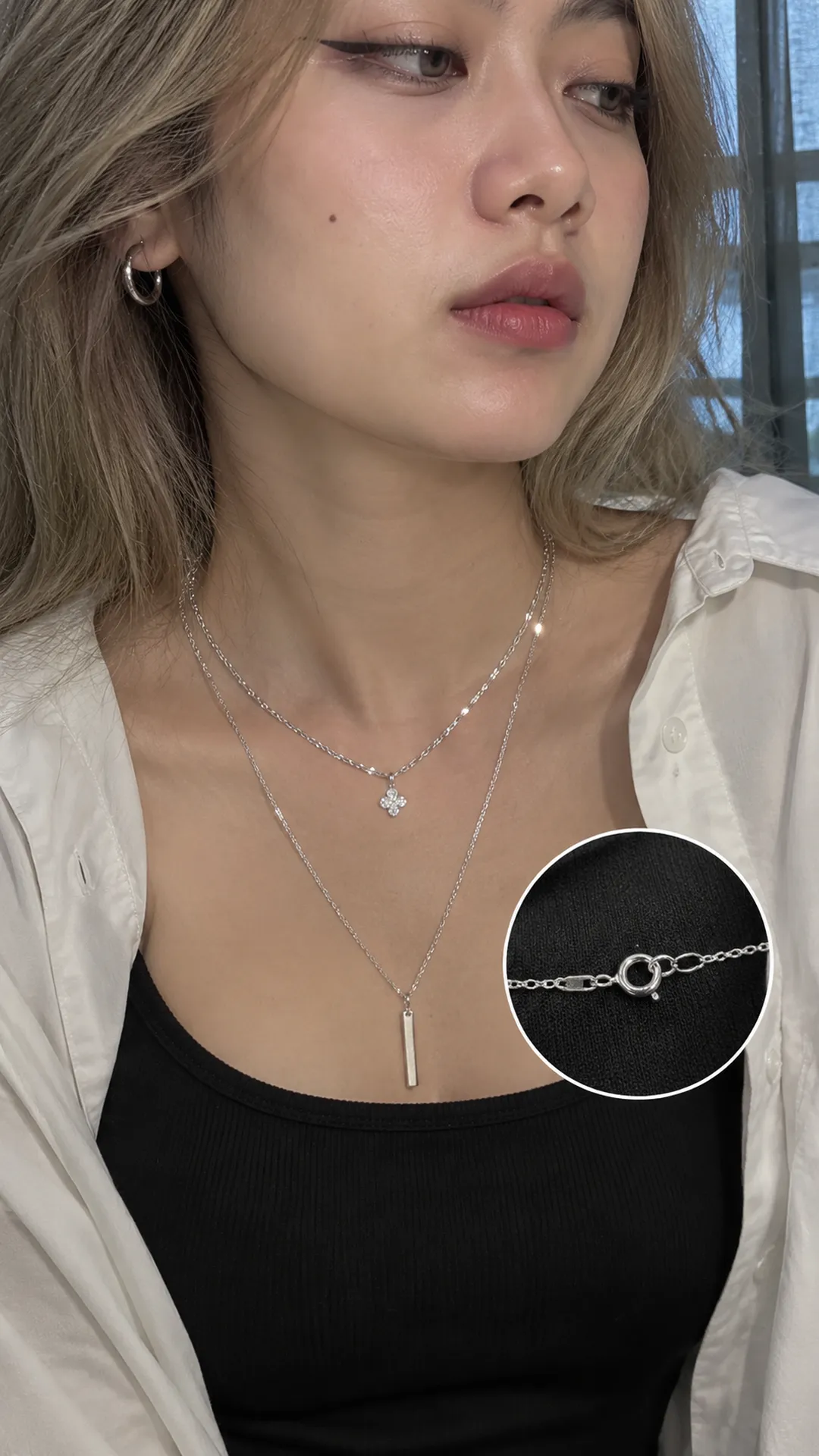
Find a length by deciding where you want the necklace to fall
Wear a top you use often and decide where you want the pendant or lowest point of the chain to sit. Use a flexible tape measure along that line, leaving comfortable room around your neck. Compare the estimate with the product measurements.
If you already own a necklace you like, lay it flat and measure it the way the seller does. Ask whether the stated length includes the clasp and extender. Two necklaces with the same stated length can have different adjustment ranges, particularly if they have several fastening rings.
For example, check what 40 cm plus a 5 cm extender means for that particular design. Where a pendant falls also depends on your neck circumference, the thickness of the chain, and the pendant itself.
Ask for a photo or video showing the necklace worn at a stated length. Use it to judge general proportions, since the model’s neck and torso may differ from yours. For a gift when you don’t know the measurements, look for an adjustable length and a suitable exchange policy.
Our guide to shopping and checking product details covers questions to ask before buying. For a necklace, prioritize actual dimensions, clasp, material, and exchange terms.
When to wear a choker, short necklace, or long necklace
A choker draws a line close to the neck
A choker sits close to the neck and draws attention there. Check the fit while turning your head, talking, and sitting. Choose a different length or design if you have to tighten it excessively to keep it in place.
A simple open neckline gives a choker room to show. With a high neck, the necklace may meet or blend into the fabric edge. Layer it over or near that edge if you like, and check that it feels comfortable and doesn’t snag.
A short necklace adds a detail near the neckline
A short chain with a small pendant can add a subtle accent. Try it against exposed skin or over fabric, depending on the outfit. If the pendant catches halfway inside the neckline and needs repeated adjustment, try a different length.
A long necklace draws the eye down the torso
A long chain can add a vertical line to a plain or high-neck top. Check its lowest point when sitting at a table, carrying a bag, or bending. Give a large pendant room to move without hitting buttons or catching on a bag strap.
These groups describe where the necklaces sit and how you can style them. A chunky short chain may stand out more than a fine long one. Consider thickness, the pendant, and the finish along with length.
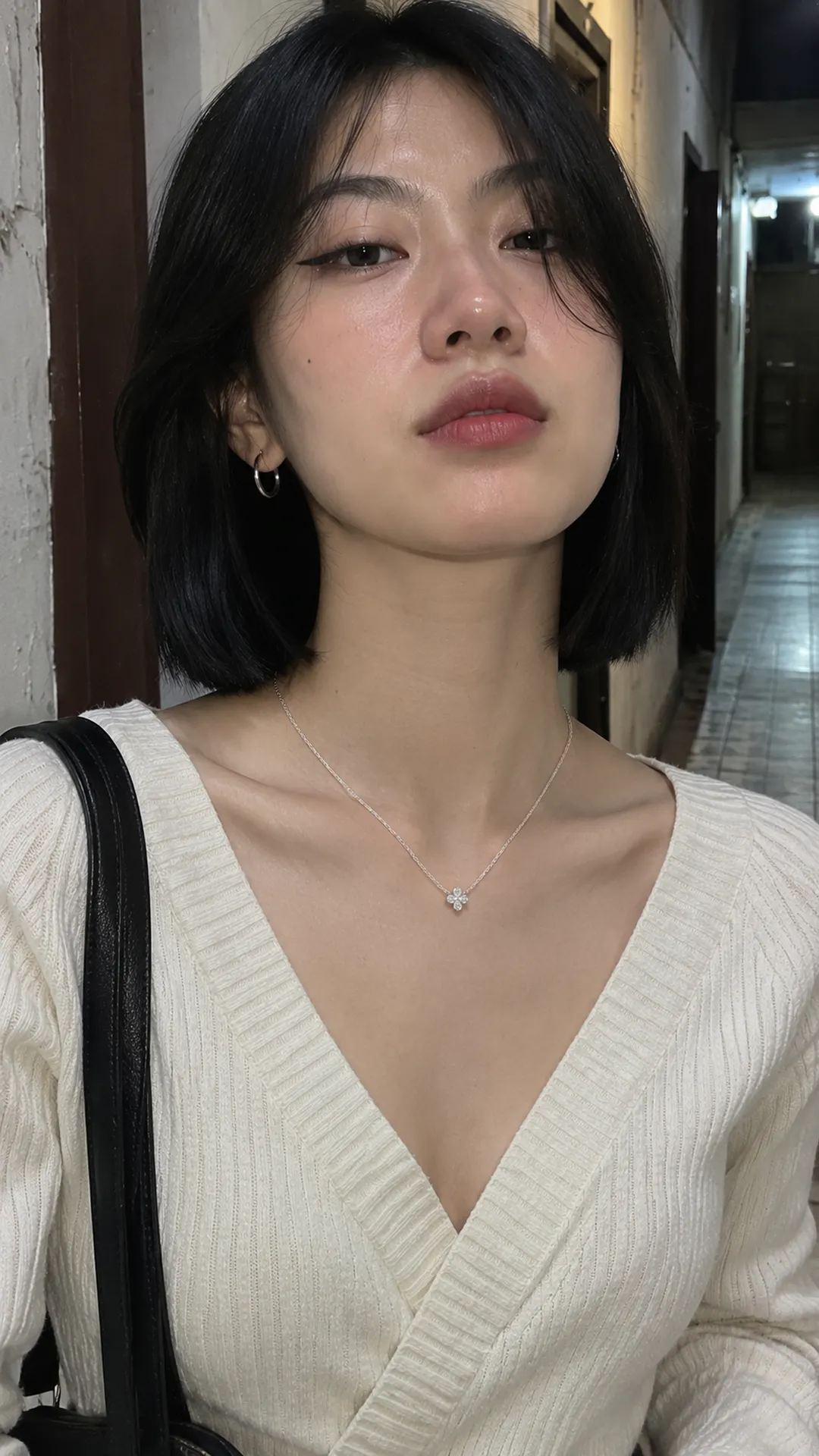
Choose necklaces for crew, V, and square necks and button-ups
Crew neck: Try a chain clearly inside the neckline or below its edge. If it runs along the edge, the two lines can blend. Try another length or pendant shape if you want more separation.
V-neck: A pendant inside the opening can draw the eye down the center. Check the depth when sitting or bending to see whether the fabric pushes the pendant up. A round pendant can work here too.
Square neck: A curved chain contrasts with the straight neckline. A small pendant leaves the neckline visible, while a bolder chain can become the focal point. Reach forward to see whether the chain catches on the corners.
Button-up: Decide whether the necklace will sit inside the open collar or over the shirt. Check whether the buttons hide the pendant. With a bow, embroidery, or a decorative collar, try the shirt on its own to see whether it already has enough detail.
Our guide to statement accessories for women explains how to place accents at the neck, ears, and hands. A silver necklace with a defined shape can take the lead while other accessories stay simple.
Consider chain thickness and pendant size together
A fine chain with a small pendant gives a subtle effect. Check actual dimensions as well as close-up photos. A pendant that looks large on screen can be barely visible in a full-length view. Use a ruler or an object of known size for reference when shopping online.
Distinct chain links already add texture and catch the light. If you want to add a pendant, ask whether its bail fits the chain and whether the chain is designed for the pendant’s weight. Check both before wearing a heavy pendant.
Try pendants with corners, protruding details, or multiple parts against the fabrics you normally wear. Let the piece touch the fabric gently to find potential snags. Ask the seller about any rough edges or loose clasps before use.
Try opening and closing the clasp yourself. Check the extender too. If you need help fastening it each time, factor that into how often you’ll wear the necklace.

Layer two necklaces so both are visible
Start with lengths that fall at clearly different heights. Choose a simple chain as a base and give the other chain the main pendant or texture. If both are thick, bright, and close together, they may read as one cluster. Space them out if you want two distinct layers.
Move around to see whether the chains tangle or pull the clasps forward. Tangling depends on the design as well as spacing. If you’re always untangling them, try a different chain construction or wear one on a busy day.
Mix silver with gold tones if you like and decide which piece will stand out. A different metal on a watch can provide enough contrast.
If you’re wearing bold earrings, try a smaller pendant. Our guide to choosing silver earrings looks at the area around your face and neckline. Give each shape enough room to show even if both pieces are silver.
Care for silver according to the piece’s finish
Tiffany’s sterling silver care guide notes that silver can tarnish and recommends keeping it dry and away from harsh chemicals. Overpolishing can remove intentional oxidation and soften details. Identify the finish before polishing dark areas.
Follow the manufacturer’s guidance for your piece, especially if it has stones, pearls, or plating. Check the other materials before soaking a necklace, even if the chain itself is silver. Ask first if a cleaning method may change an unfamiliar finish.
Store each necklace in a suitable separate compartment or pouch to reduce tangling. Loosen tangles gently, since pulling the ends strains the links and clasp. If a knot is tight or a part has bent, have a jeweler check it.
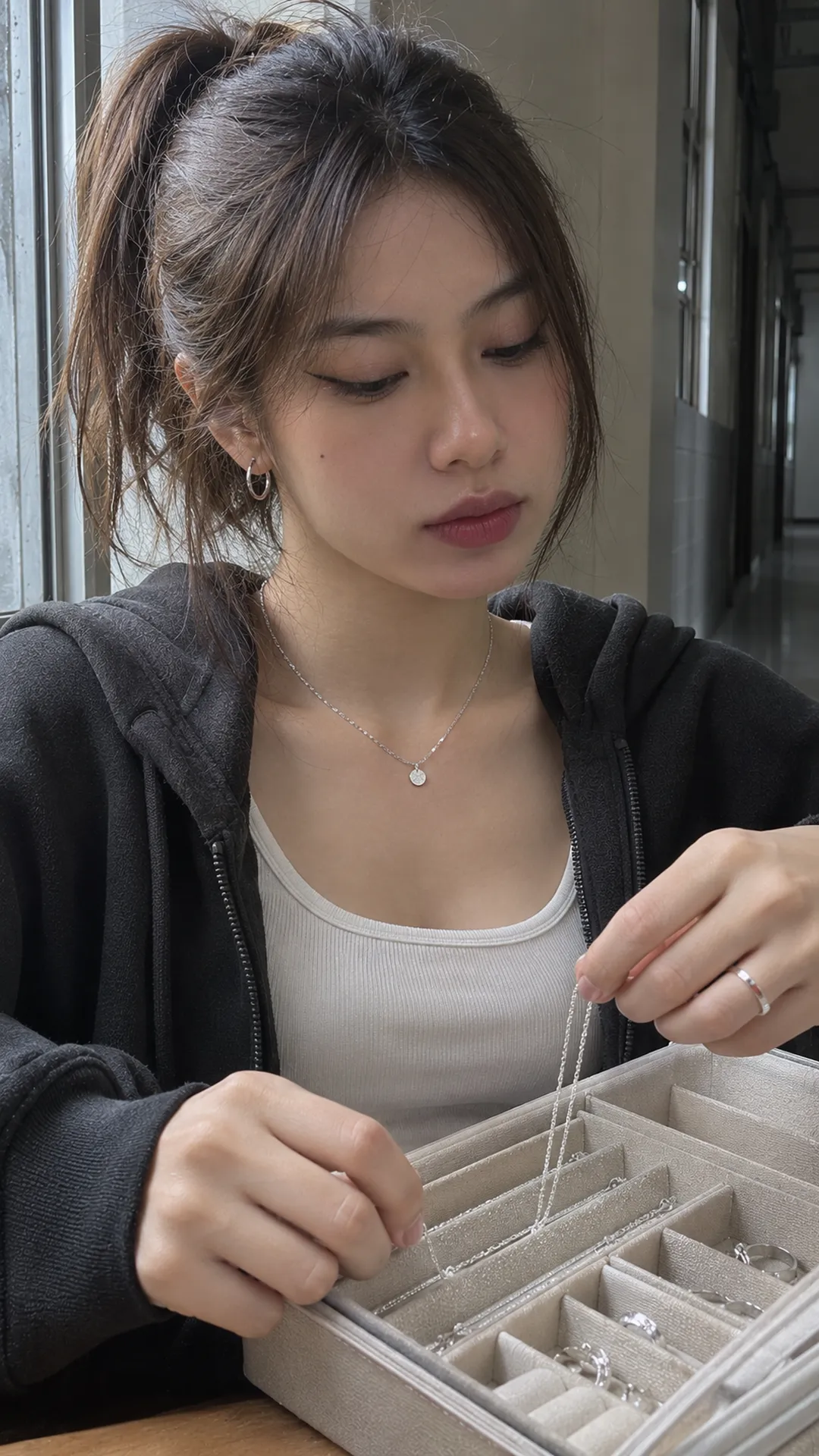
Choose a necklace for the tops you wear regularly
Try it with at least two necklines you own and make the movements you normally do. If it has multiple rings, remember the setting you like. A necklace you can wear both to class and when going out may get more use than one that works with a single outfit.
If you want jewelry on your hands too, our guide to women’s silver rings helps you choose band width and placement. Keep the necklace as your main piece and add one item at a time to see what complements it.
Look for clear material information, a length that falls where you want, and a clasp you can use easily. That gives you a silver necklace you can wear regularly as well as in photos.