Understand the material before choosing a style
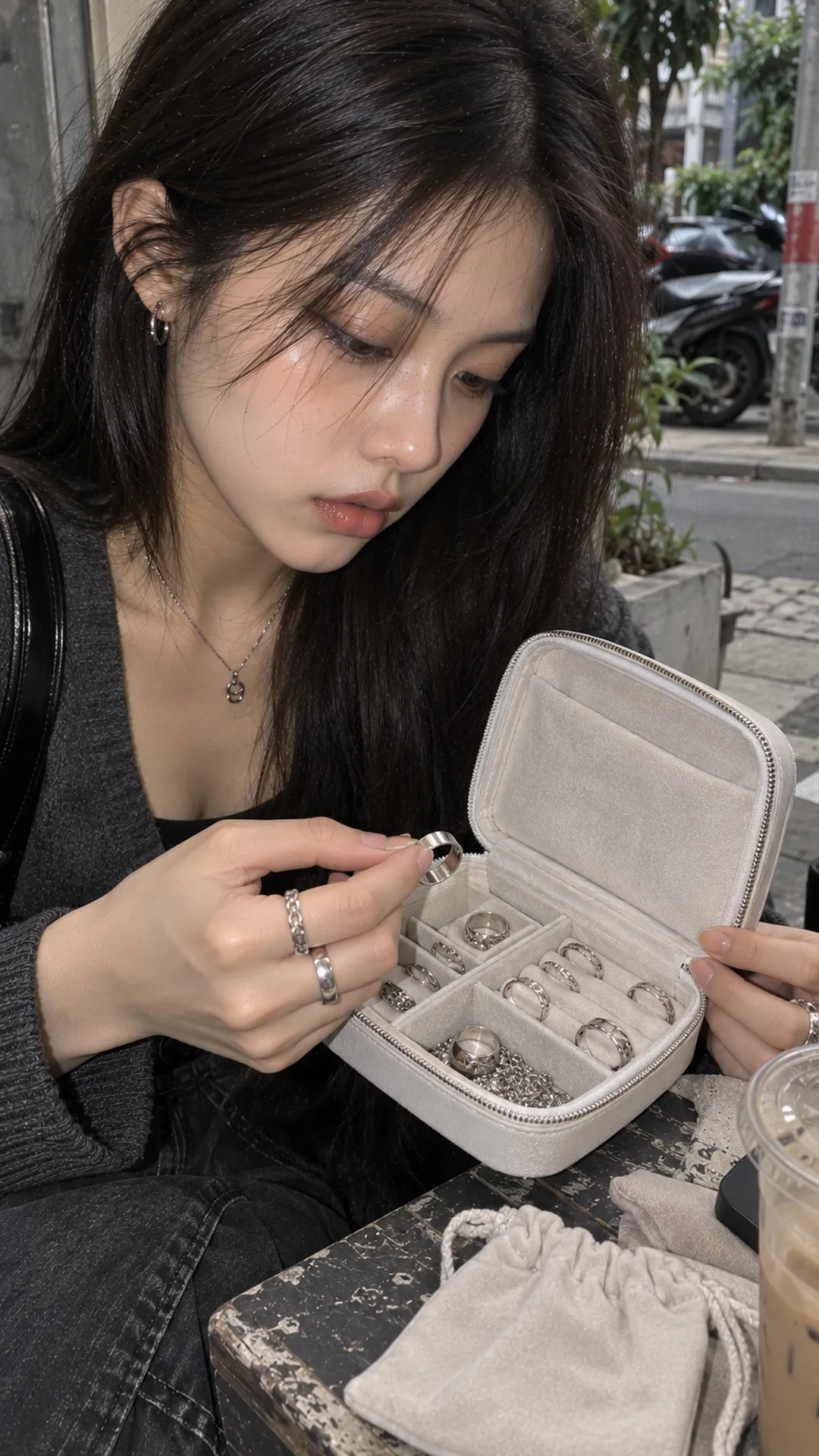
S925 commonly refers to sterling silver with 92.5% silver content. Tiffany's information on silver describes a standard of 925 parts silver per 1,000 parts material. This describes composition, not a score for the ring's design or finish.
A 925 mark in a product photo does not authenticate the item. When buying women's S925 rings, read the material description, seller details and available documentation. If the item has substantial value or the information conflicts, ask how it can be verified rather than relying on a home test.
Distinguish silver from silver-colored. A bright white ring may be silver, another metal or a plated material. Shine in a photo cannot establish this. Ask about the outer finish too, because cleaning and repairs may depend on both the surface and the core.
Decorative stones need their own description: stone type, setting method and care requirements. Do not infer a stone's value from the ring's name or sparkle in a video. 'Premium stones' leaves you without enough information to compare it with a more specifically described ring.
Choose band width for comfort and emphasis
A thin plain band for a small highlight
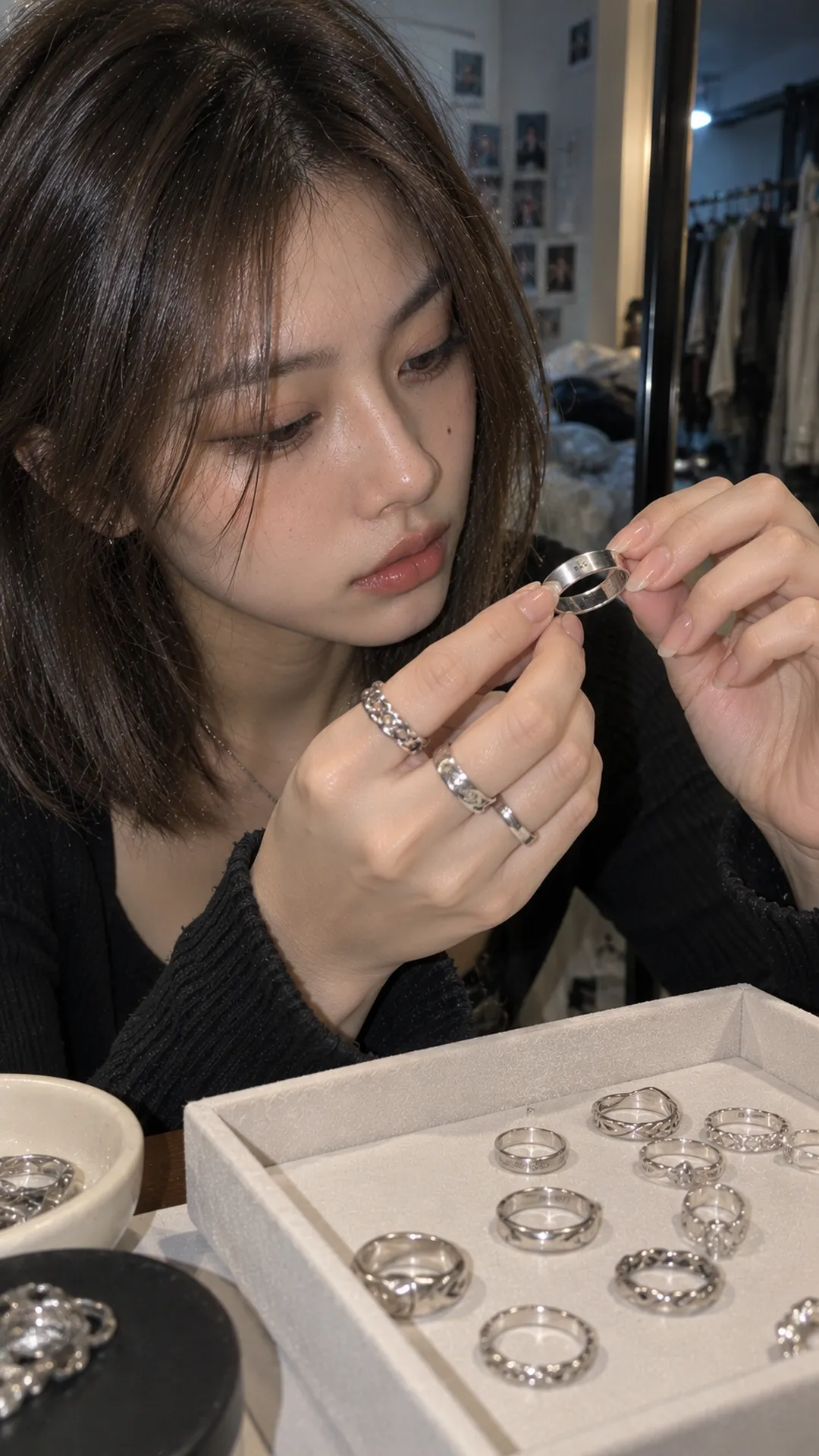
A simple silver ring can be a plain band with few details and a smooth, compact interior. It can sit beside a watch or another ring without taking all the attention. Check the actual thickness: close-up photos often make a band look larger than it does on your hand.
If you want the ring to show more clearly, try more shine or a small ridge before adding more rings. Three extremely thin bands pressed together can become an indistinct bright strip. One ring with a defined profile may give the effect you want while remaining easy to remove and store.
Wide bands and signet rings as the main accent
A wide band or flat-faced ring creates a distinct form on your hand. Check its clearance from your knuckle as you bend your finger, especially if the face extends along it. A design that looks good on a straight hand may press into a crease when you hold a phone or handlebar.
Small fingers do not have to wear only thin rings. Choose a wide band if you like the proportions, provided it stays in place without pressing uncomfortably. To reduce visual bulk, leave neighboring fingers bare or wear a lighter supporting ring on the other hand.
Look at stone-set rings from the side
A low setting often catches less than a raised design, but inspect it rather than relying on a top-down photo. Look at the prongs, edges and how far the stone extends beyond the band. Try putting your hand into a pocket to identify areas that may snag fabric.
If your outfit already has bright buttons or a bag with lots of metal hardware, a small stone may be enough. With a large ring face, reduce nearby bracelets so the design does not disappear among many highlights. The aim is to see the design you like, not to cover every finger.

Measure your size: the right finger and the seller's chart
First decide which finger and hand you will use. Do not assume corresponding fingers on both hands share a size. If you want to switch a ring between fingers, try those positions first; a ring that fits one may be noticeably loose on another.
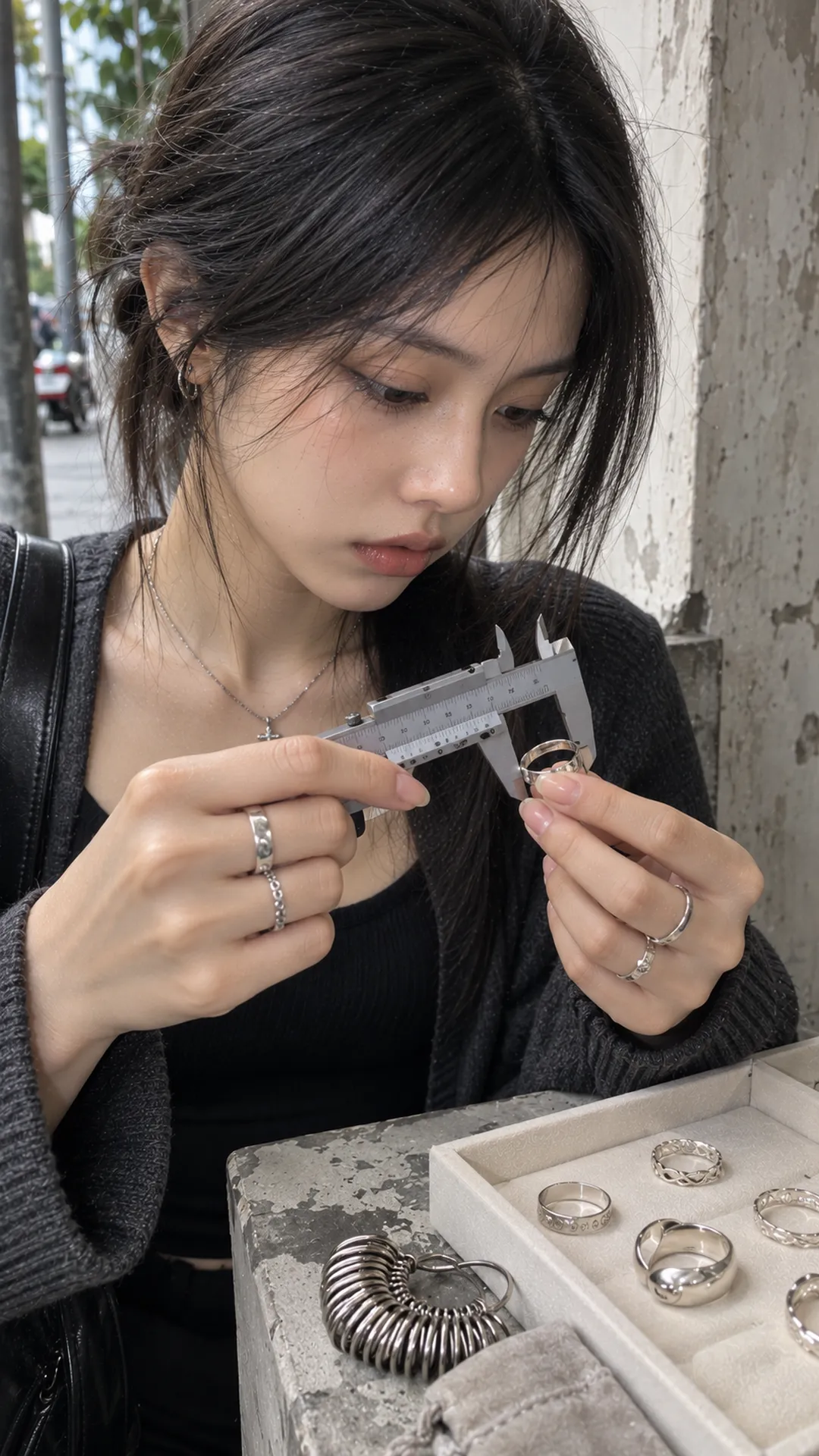
Bring a well-fitting ring to a shop for comparison or use its sizing tools. At home, establish whether the seller's chart uses inner diameter, circumference or a proprietary size number. Mixing systems without using the chart's conversion can lead to the wrong choice.
To measure an existing ring, place it flat and measure the inner opening, excluding the band's thickness. A photo beside a ruler can show the seller what you are reading, though an angled photo can introduce error. Direct checking is more reliable for a ring that is difficult to resize.
If using a paper strip according to the shop's instructions, do not pull it too tightly or use stretchy material. Repeat the measurement to check consistency. Send the exact measurement and ask the seller to confirm, particularly if the chart gives numbers without units.
A wide band can feel different from a thin one with the same diameter. Do not automatically size up or down based on a general tip. Ask about band width and the inner profile, and try a similarly constructed ring. On arrival, bend your hand, remove the ring and put it back on before discarding tags.
The distinction between actual measurements and size labels is also explained in the online sizing guide. For rings, use the chart for the specific design; do not infer size from your height or body weight.
Stacking rings: start with empty space
One main ring and one supporting band
Place a decorative ring on the finger you want to emphasize, then add a plain band some distance away. Space between them makes each shape visible. Your hands need not be symmetrical; a main ring on one hand and a watch on the other can create balance.
Consider your sleeves too. Ruffles, buttons or embroidery at the cuff already add detail near your hand, so rings can be simpler. A T-shirt and bare wrist leave more room for a wide band or two different surfaces.
Stacking rings on one finger
Try two thin rings first, checking whether they rotate or pinch when you bend your finger. Do not stack so high that the rings reach the joint just to match a photo. If one has a stone setting, check where it meets its neighbor to avoid constant rubbing between decorative parts.
Rings in the same color with different finishes can create depth. A polished plain band beside an engraved one may read more clearly than two heavily detailed rings. If the arrangement looks unclear, remove one and compare in everyday light rather than shop lighting.
Combining silver with other accessory colors
Every metal you wear need not match. Silver can dominate at your hands while a gold-colored bag clasp remains a small detail. For a clearer connection, choose a piece containing both metal tones; there is no need for fixed percentage ratios.
The guide to choosing expressive women's accessories explains how to distribute accents. Assess rings alongside your watch, bracelets and bag clasp, which often sits near your hand, rather than treating them as an isolated image.

Three ways to style women's silver rings
A shirt and straight-leg trousers: fewer rings, clear lines
A plain band or small signet works with neat shirt sleeves and a simple watch. If the cuff covers part of your hand, do not compensate with many large rings. Roll sleeves appropriately for the occasion to give accessories room to show.
For a sharper feel, choose clean geometry and minimally patterned surfaces. For softness, try a curved band or low round face. Take inspiration from Office Siren workwear and accessories without copying the entire aesthetic.
A T-shirt, denim and a small bag: contrast surfaces
Denim already has a distinct texture, so a polished plain ring provides clear contrast. With a large T-shirt graphic, one small decorative ring or two thin bands may suffice. If you add a bracelet, check whether it repeatedly knocks against the rings while you hold your bag.
Dark outfits: choose a consistent motif
Silver rings can become highlights on the hands against black clothing. Choose a twist, geometric face or sculptural motif, then keep supporting rings simple. There is no need to combine many different symbols if they obscure your favorite piece.
The ring-styling section in the Alt Fashion accessories guide helps when combining jewelry with belts, chains or bags with hardware. Choose one prominent area first; if your waist already has a large chain, your hands may need only one clearly shaped ring.

Buying silver rings online: compare what you will receive
Women's silver ring prices reflect more than the amount of metal. Compare weight when disclosed, design, stone type, finish, resizing service and warranty terms. Similar photos cannot establish that two items are equivalent or that one seller is necessarily overcharging.
Request photos of the inside, side profile and ring on a hand to understand scale. Ask for band width in millimeters, setting height and resizing range. For an open ring, ask whether the seller permits home adjustment; a gap does not mean it can be bent repeatedly at will.
For a gift, prioritize a discreet way to establish size or a suitable exchange policy. A beautiful ring that does not fit may be less useful than a simple one in the right size. Avoid guessing a popular size and assuming every design can be resized without altering its shape.
Care for silver without losing its details
According to Tiffany's silver-care guide, sterling silver can tarnish; the brand recommends dry storage and notes that overly vigorous polishing may remove intentional darkening in decorative recesses. Discoloration alone is therefore insufficient to conclude that a ring is fake.
For plated rings, stones or glued components, follow the specific product's instructions. Do not use one soaking remedy for every ring. If you cannot tell unwanted tarnish from an intentional finish, send the seller a photo before scrubbing or applying chemicals.
Store rings separately in suitable compartments or pouches to reduce rubbing. When removing one for a task, use a designated spot rather than the edge of a sink. If a stone or connection appears loose, stop wearing it and have it checked; do not keep using it simply because it still stays on your finger.