

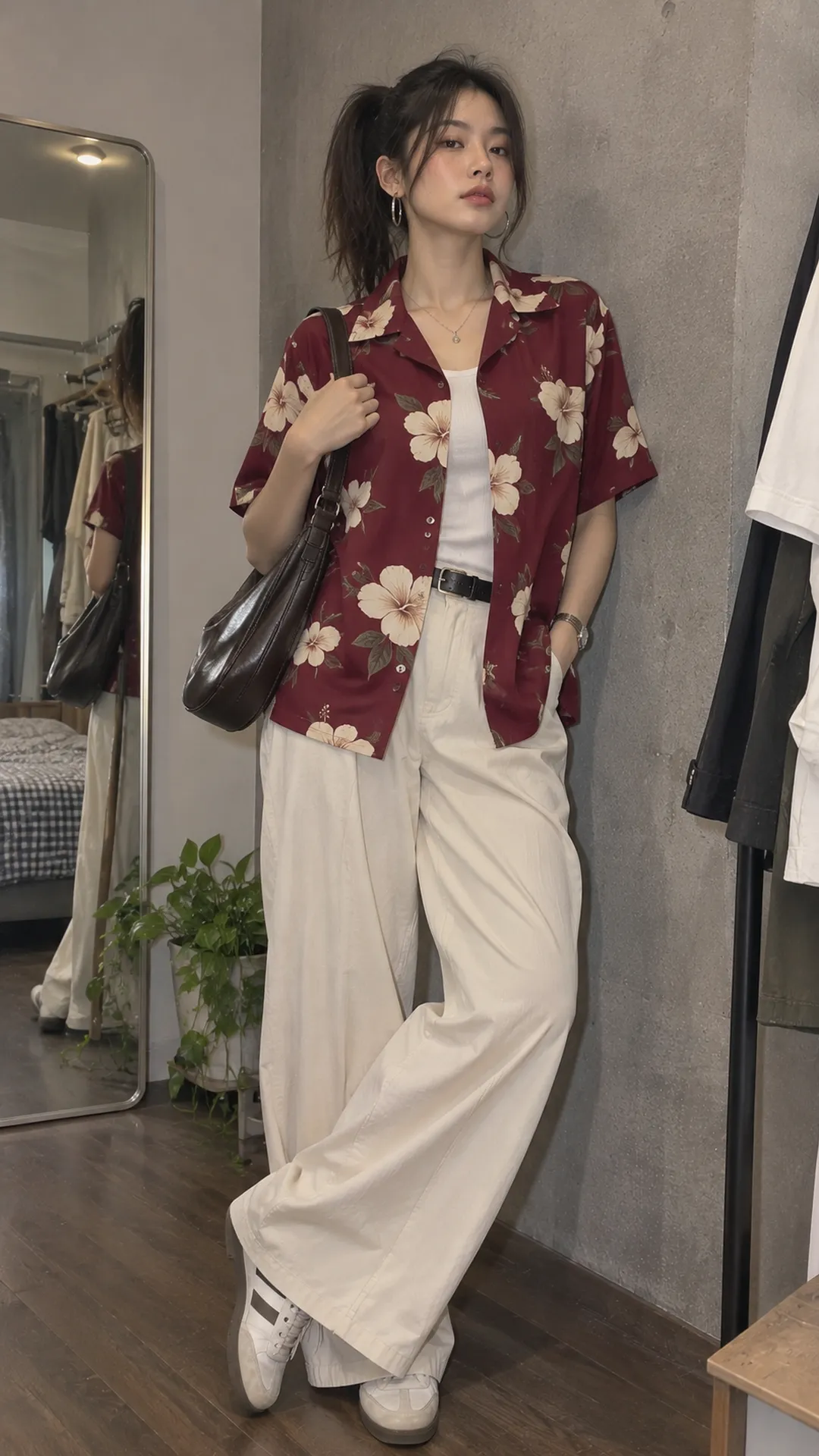
Recognize the actual Cuban collar
The collar opens into a front V with lapels lying down rather than standing near the neck. Inspect fastened and open views. Undoing a conventional shirt's top button does not necessarily create equivalent construction.
Camp collar and revere collar may appear flexibly in listings. Check actual lapel flatness, opening depth and stiffening. Tropical colors are not required.
Neither does the collar require one fabric. For example, Mr P.'s camp-collar model uses cotton terry, a straight body and chest pocket. Read construction, material and fit independently instead of assuming every open collar is thin, draping or beach-only.
Choose fit from shoulder to hem
Shoulders and sleeves create the first volume
Aligned shoulders look neat; dropped ones relax. With wide sleeves, more body width can create an oversized block. Reach forward and inspect the side for armhole bunching.
Short upper-arm sleeves differ from near-elbow lengths in visible fabric. No fixed body rule is needed. Choose the endpoint you like beside your trouser or skirt width.
Short, hip-length or long bodies
Short bodies readily meet high waists. Hip length adapts between untucked and partial tucks. Long shirts work open, but closed over wide trousers need a check for upper-lower division.
Try the intended bottoms directly. The Women's Tops Item Guide compares shapes by role; with Cuban collars, preserve natural opening after hem adjustments.
Drape and surface change outfit direction
Matte structure gives defined volume and an untucked hem that holds shape. Soft drape moves and often tucks easily but may cling to inner layers. Inspect standing and seated rather than assume its fall.
Material names cannot predict everything: thick and thin cotton differ; blends have varied finishes. Read composition, lining, thickness and care for the exact model. Movement footage often reveals more than a pressed flat photo.
In humidity, inspect inside, armhole seams and layering. An extra enclosed base needed for transparency can substantially change the imagined light-shirt outfit. Choose that base and retry before buying.
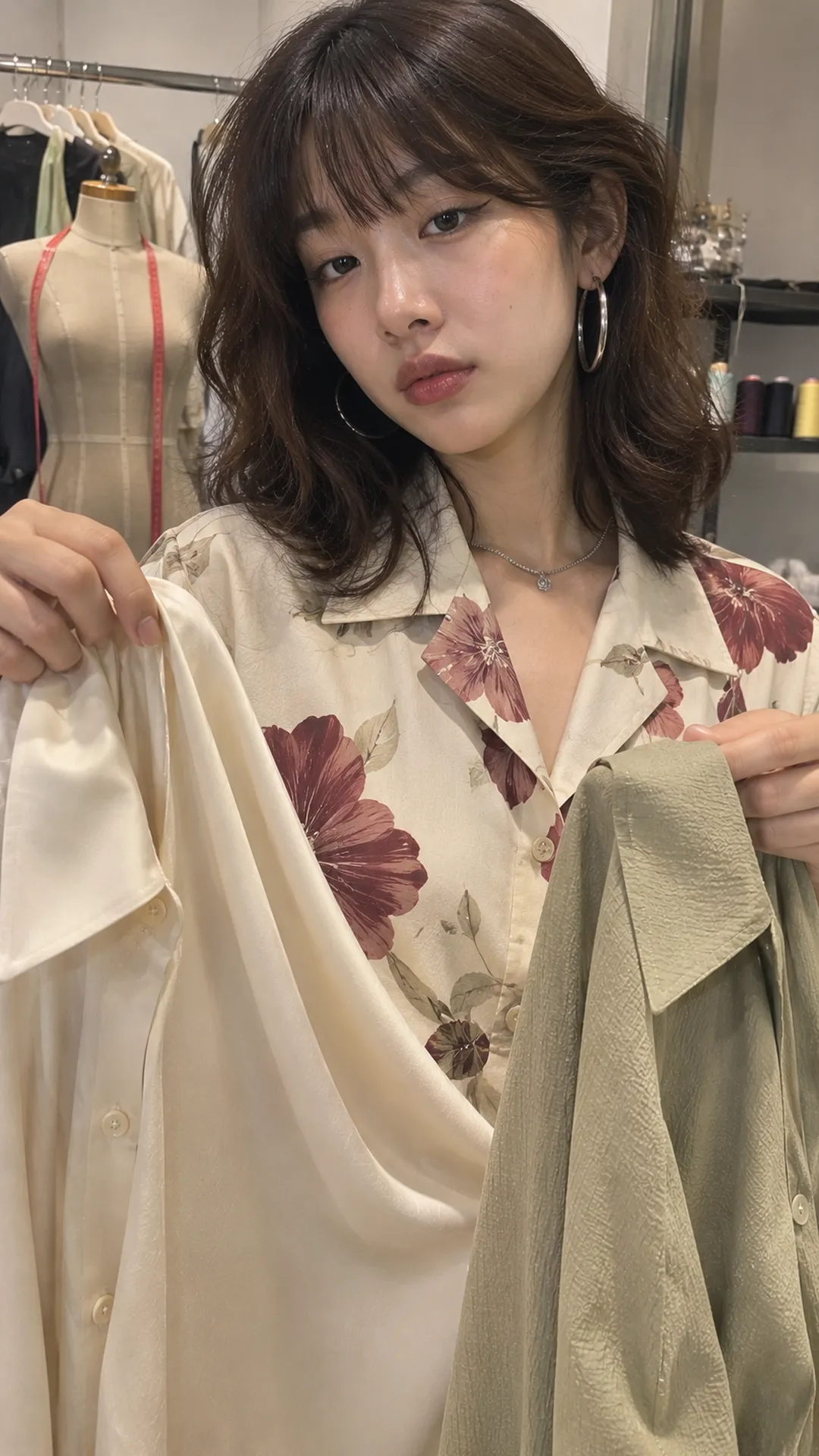
Plain, striped or patterned: choose a visual leader
Plain shirts let collar, buttons and texture lead. Charcoal, deep brown or blue keep a limited palette; cream or pale blue brighten above. Select around frequent trousers for reuse.
With stripes, inspect their route across chest pockets and lapels. Broad stripes show rhythm from afar; fine stripes can read as texture. Vertical stripes need not fix bodies. Choose strong lines or a quieter surface beside other pieces.
All-over patterns readily lead. Repeat one existing color below or in the bag. With many curves and colors, plain trousers give a pause. Do not add accessories solely because each looks striking alone.
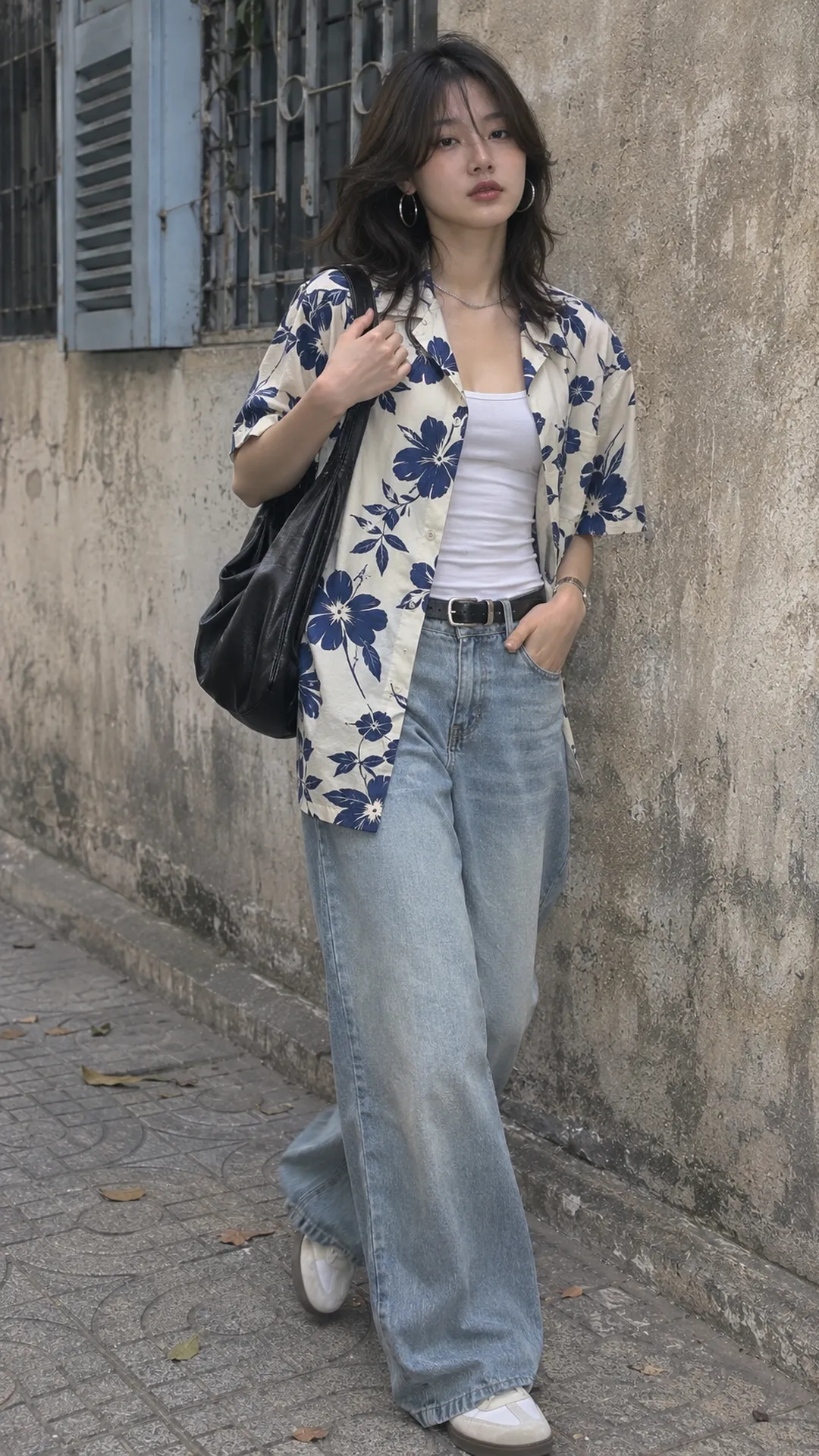
Five proportion-based combinations
A hip-length shirt with straight jeans
Leave out if the hem does not cover too much thigh. Use defined jeans and visible shoes. For waist visibility, front-tuck lightly and check twisting sides. A simple belt can finish the button line.
A short shirt with high-rise wide trousers
Top length divides the outfit while trousers hold most volume. If sleeves are wide too, keep the opening moderate and reduce chest-pocket detail. Reach upward to assess desired coverage beyond standing.
A draping shirt tucked into a straight skirt
Softness moves above a neat skirt outline. Gently ease the tuck to avoid button tension. For waist bulk, tuck less or choose shorter length; a large belt cannot always solve excess fabric.
A patterned shirt open over a plain tank
The base supports vertical outer fronts. Avoid a very wide tank bunching three fabric areas at the waist. Neat shorts or plain trousers follow context. See women's layering techniques for length relationships.
A plain shirt with a pleated skirt and loafers
The open neck relaxes above structured skirt and shoes. A small bag lets skirt movement lead. For all-black, matte fabric and subtly glossy shoes distinguish areas.
To change trousers while retaining the shirt, choosing women's trouser shapes for outfits compares width and length. Neat straight legs and multi-pocket cargos do not share the same visual weight.
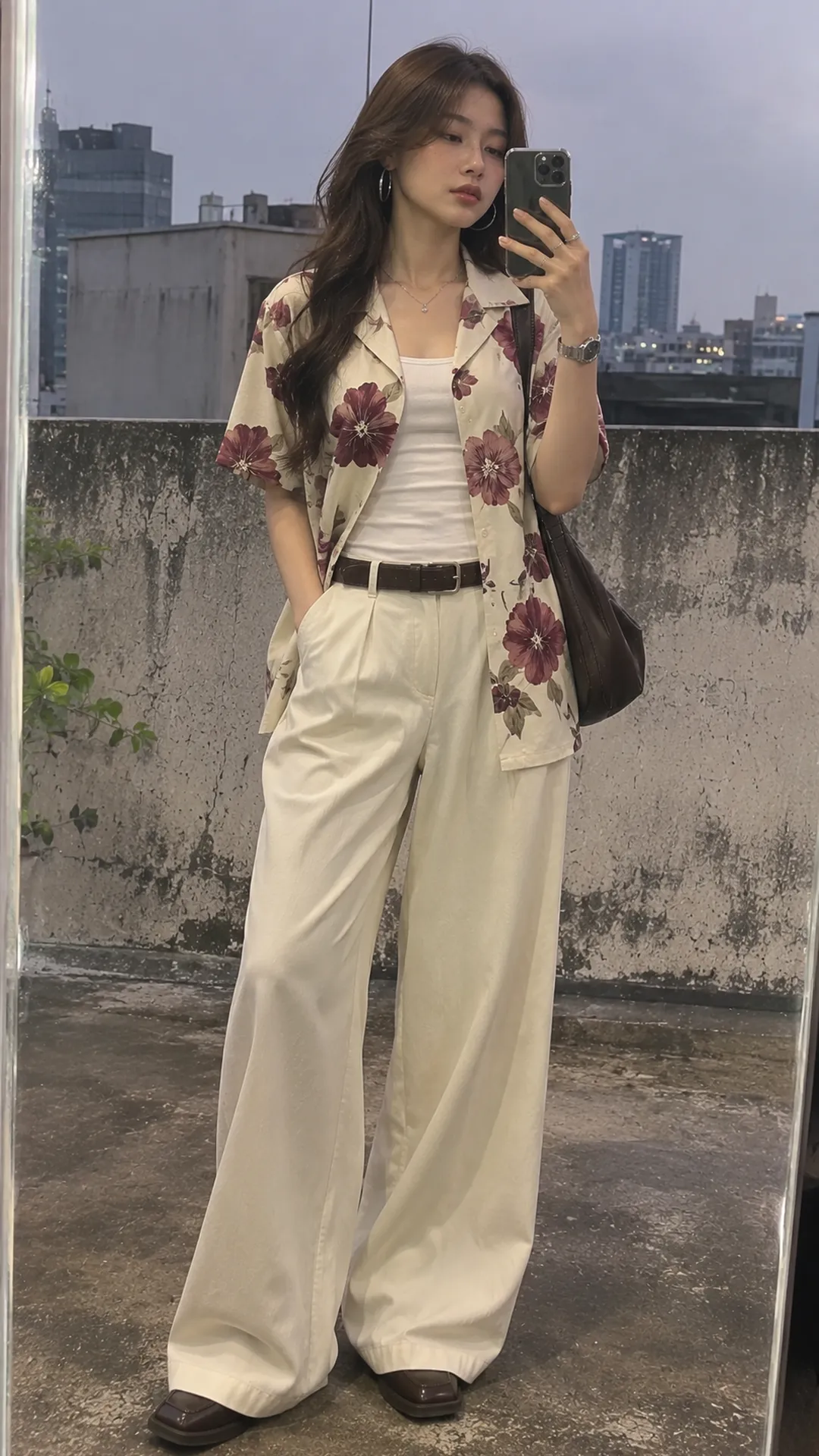
Open or fastened: recheck the collar
Button to the position where the collar lies naturally. Repeatedly pulling lapels forward may signal cut or underlayer interference. Open, check rearward shoulder sliding or rolling collar; a shoulder strap can distort one side.
The collar need not stand like office shirting: open lapels supply relaxation. For polish, use plain color, neat surface and structured bottoms, still checking destination rules rather than assuming every shirt works everywhere.
Place necklaces within the opening without button displacement. Small earrings or glasses may suffice with patterns. The expressive women's accessories guide distributes accents across face, neck and waist.
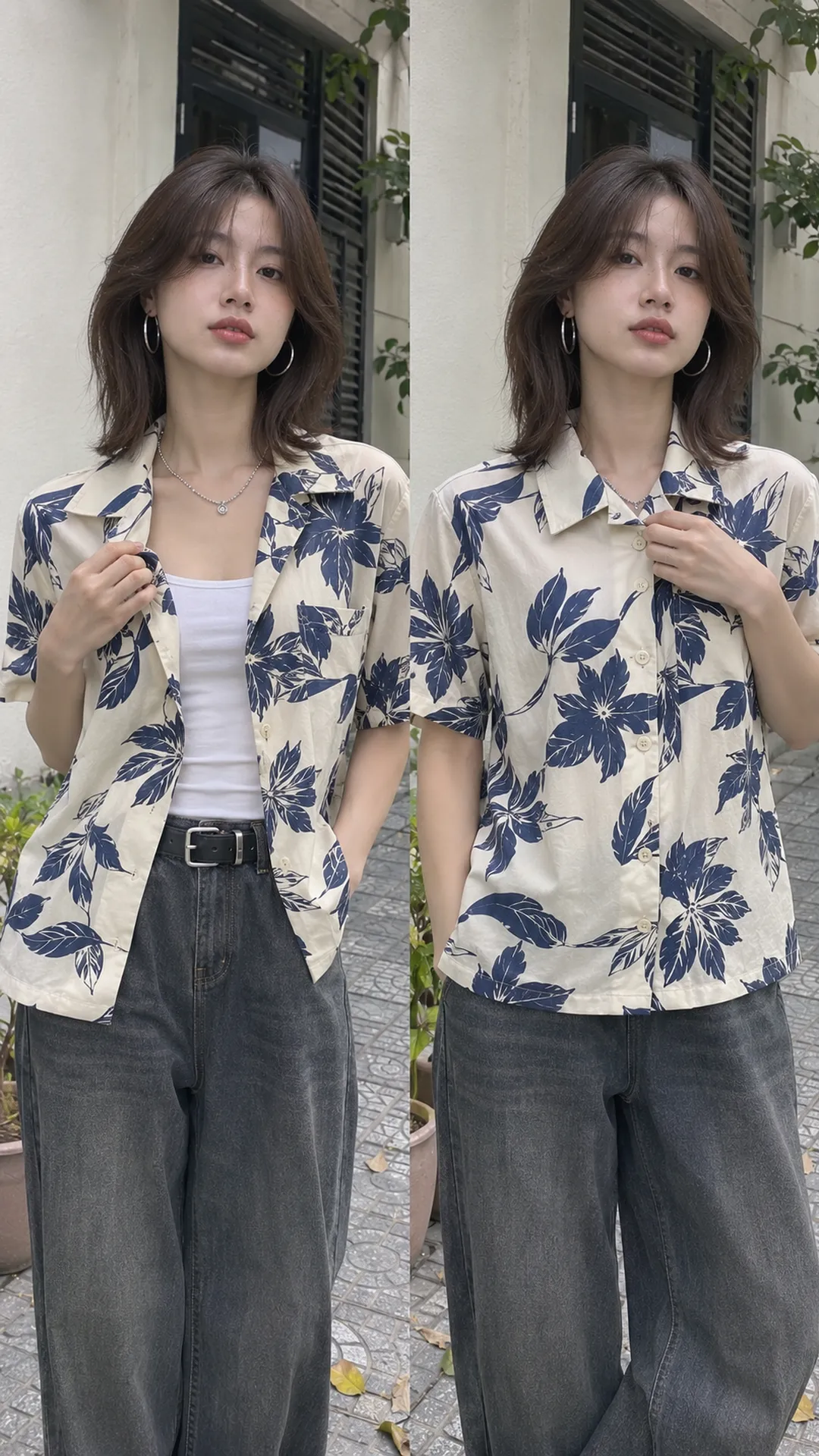
Problems visible during fitting
If you own conventional shirts, identify the missing role first: more neck space, wider sleeves or an untucked option. Styling women's shirts offers broader ideas; a Cuban collar should add something beyond an infrequently worn duplicate.
Compare finished dimensions with a comfortable shirt using equal methods, especially upper-arm width and body length. If every model photo is open, request a fastened view for chest room and button-line drape.
Buttons gape while seated: check chest and body room, not just length. A roomy waist may coexist with insufficient bust space. If sizing up overextends shoulders, seek another proportion.
The hem hides the waistband: compare untucked, full and partial tucks with one trouser. Photograph full-length. If the only workable method needs constant correction, consider another length.
Curved pocket or lapels: distinguish shipping creases from seam problems. Ask label-appropriate ironing rather than maximum heat. Inspect both collar sides and buttons when arranged straight.
Choose a Cuban shirt working with several existing pieces and manageable care. The collar identifies it, but fit, length and surface decide regular reuse.