

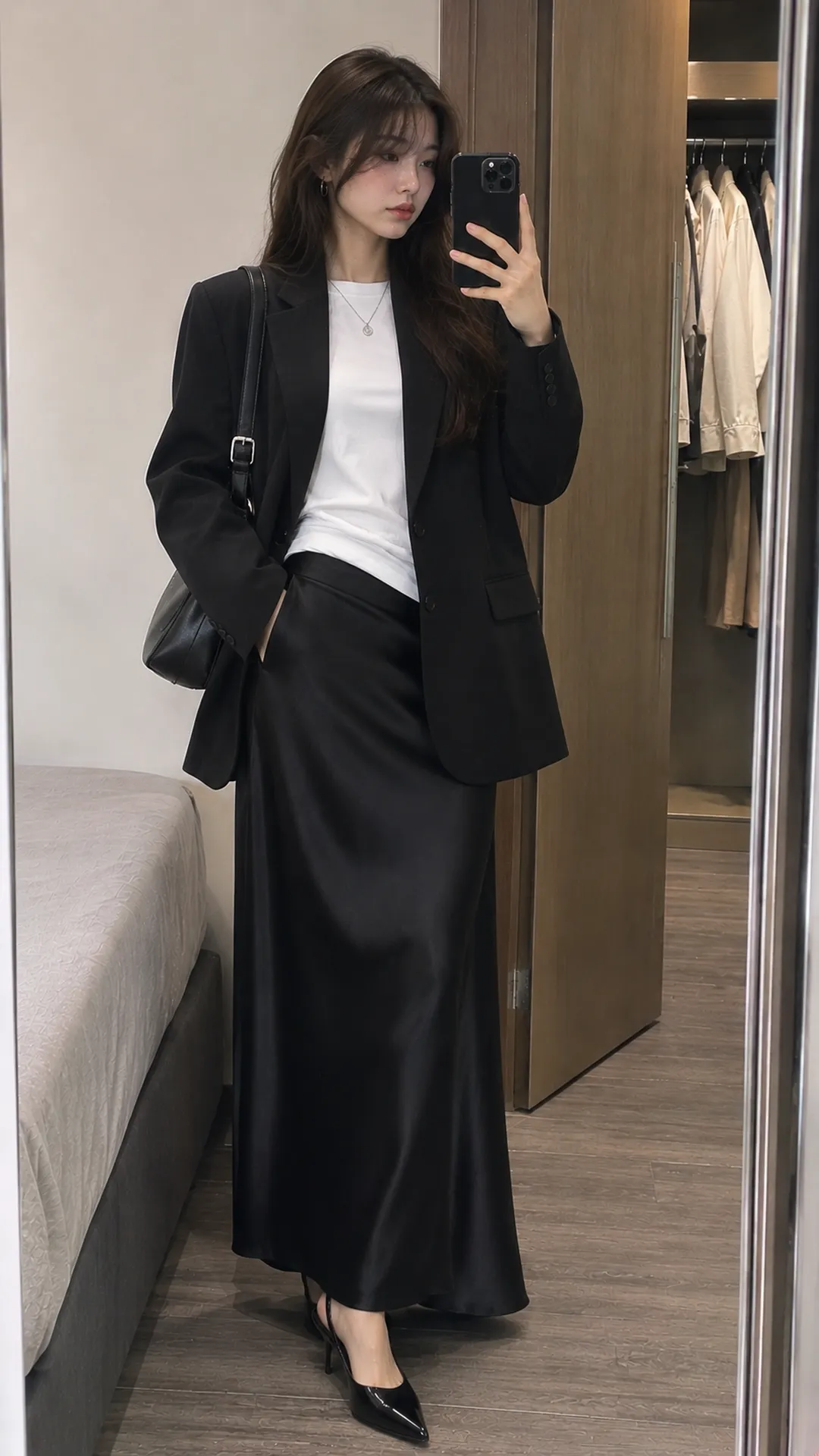
Assess the skirt before choosing a top
First establish whether the skirt follows the hips, falls straight or flares slightly at the hem. A body-skimming style needs a different approach to excess top fabric than a roomier one. Elastic, fixed and zip-fastened waistbands also affect how much fabric you can tuck in without bulk.
Length comes next. A midi reveals some leg and shoe, while an ankle-length skirt creates a longer vertical line. Try it with shoes and walk a few steps; a flattering length while standing may be inconvenient on steps, while riding or when walking quickly.
Then assess color and shine. A highly reflective surface makes folds, tucked-in edges and details beneath more noticeable. Choose a minimally textured top to keep the skirt central, or deliberately contrast a matte top with a lustrous skirt.
For other shapes, our Women's Skirts and Dresses Guide helps you choose by length and silhouette. Do not apply the same formula to every skirt simply because all are sold as “silk.”
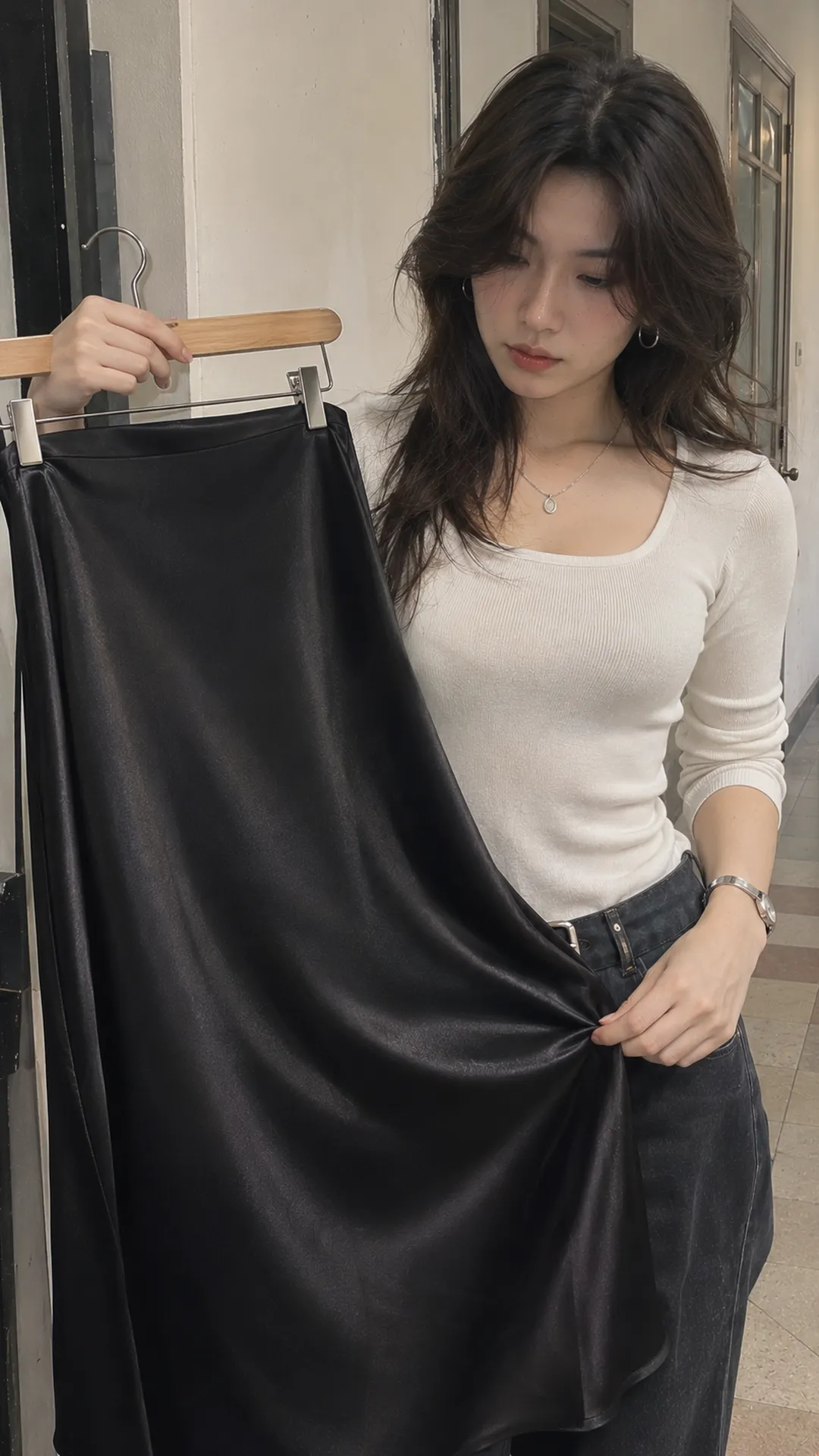
Distinguish silk from a satin surface
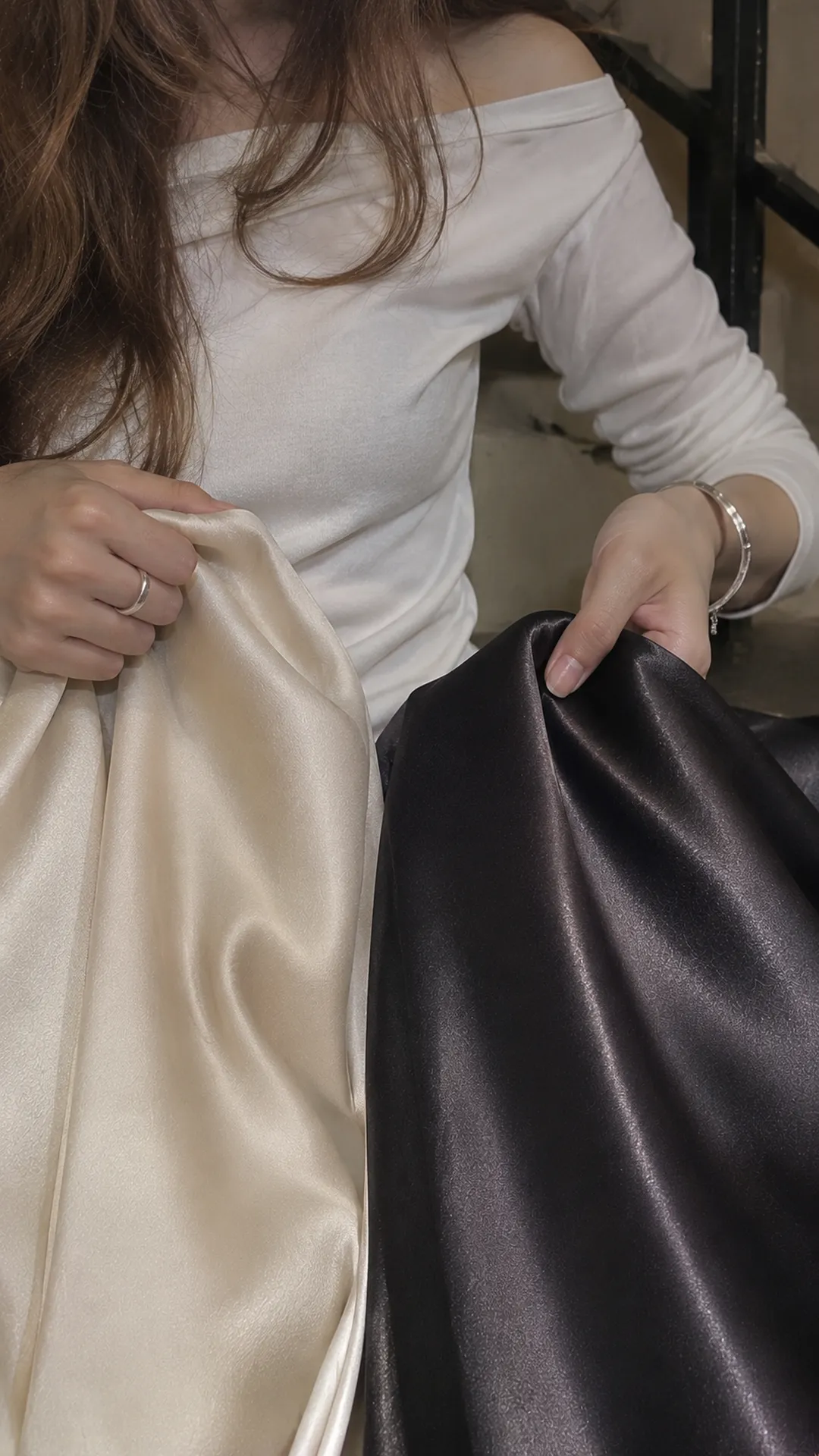
Silk and satin are not interchangeable terms. Silk refers to the fiber material, while CottonWorks describes satin as a weave with floats creating a smooth, lustrous surface. When buying a skirt called “silk satin,” read the composition label to identify the fibers actually used.
This information matters for care and how the garment feels, but styling still depends on the actual skirt: thickness, drape, lining and cut. Do not assume every shiny skirt is breathable, stretchy or washable in the same way.
This guide covers separate skirts with waistbands that need a top. If your item is a one-piece strappy dress, use our slip dress styling guide. Both may be soft and draped, but their outfit divisions and upper layering arrangements differ.
Plain T-shirts: a matte base to simplify the skirt
A regular-fit T-shirt, neither too tight nor too long, is easy to try for coffee or everyday outings. Matte fabric contrasts with a lustrous skirt. Choose a neat crew neck for simplicity; a wider neckline opens space around the face without needing a large necklace.
With a long silk skirt, try a top ending near the waist or a small front tuck. Tucking a long, thick tee fully inside can create ridges beneath the skirt. A shorter top is often neater than continually pulling, hiding and adjusting excess fabric.
One specific formula is a cream tee, draped black skirt and minimally detailed sneakers. The light area above brings attention toward the face while the skirt maintains a dark vertical line. For a graphic tee, choose a moderately sized image and reduce accessories to leave the skirt its own space.
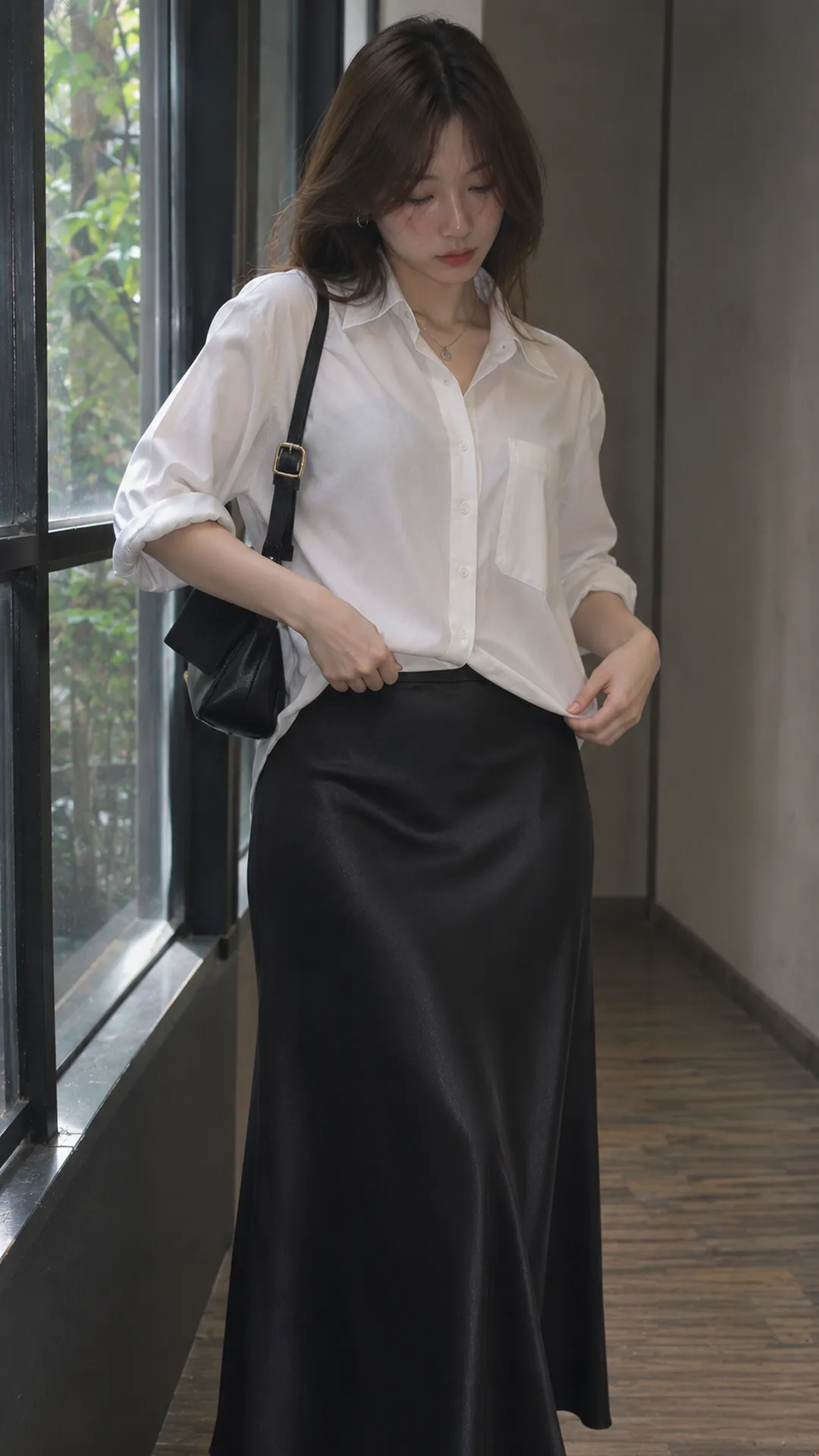
Shirts: adjust the hem without hiding the drape
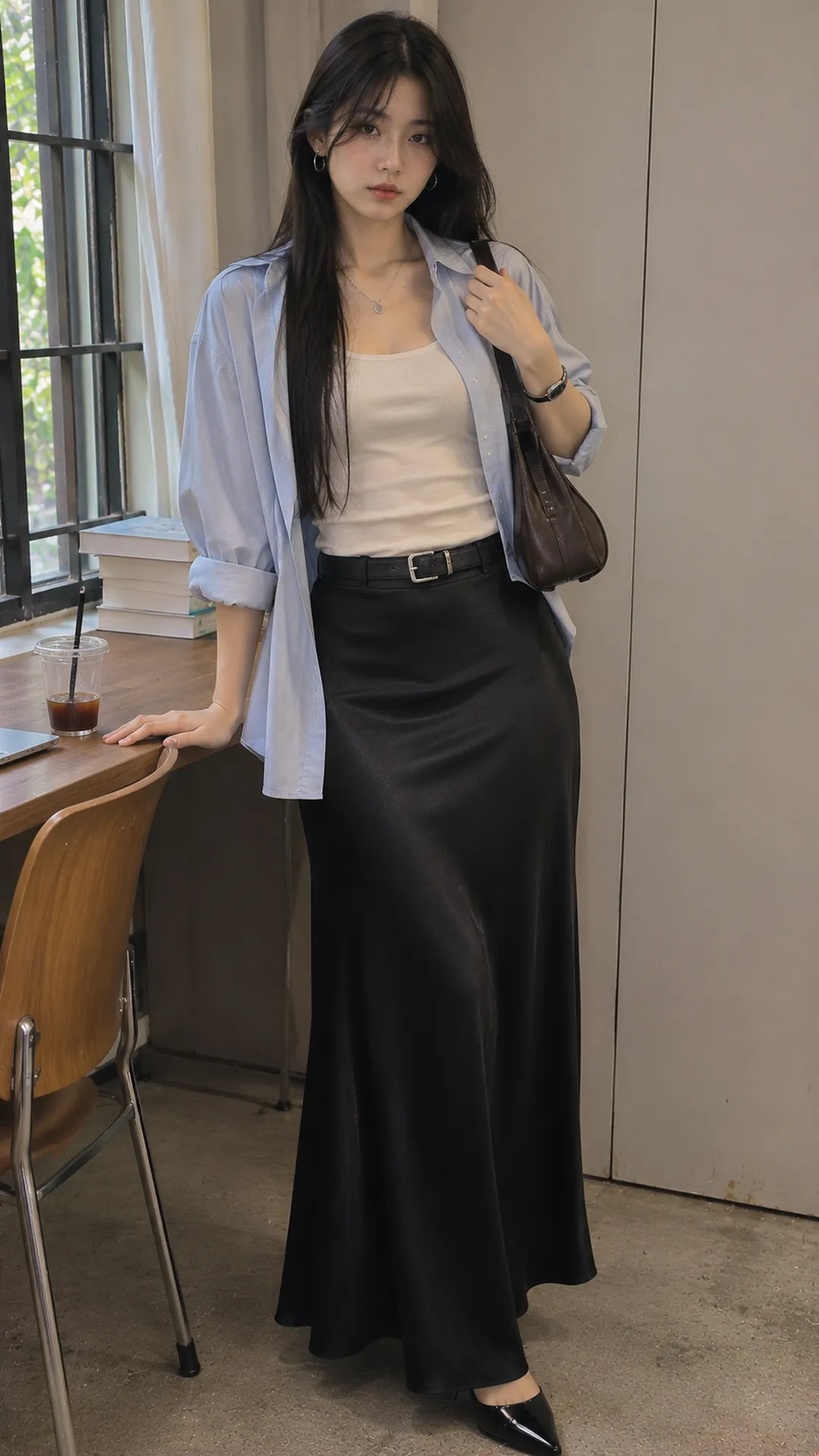
A structured shirt contrasts with a soft skirt. Regular fits tuck neatly; loose fits can be left out or partially tucked depending on length. Do not simply size up for relaxation: an overly long hem may hide nearly all the waistband and turn the outfit into two indistinct blocks.
With a skirt that lightly follows the hips, check a tuck from the side to spot gathered fabric. If leaving it out, choose a defined hem position and test while sitting. A suitably short shirt can maintain a clean line without tucking.
A white shirt and black silk skirt create strong contrast for clear lines. Gray with charcoal is softer in color and needs texture or width differences. Our women's shirt styling guide explains how buttons and hems adjust proportions.
Fine knits and sleeveless tops: choose for the skirt's fit
Fine knits for fewer dividing lines
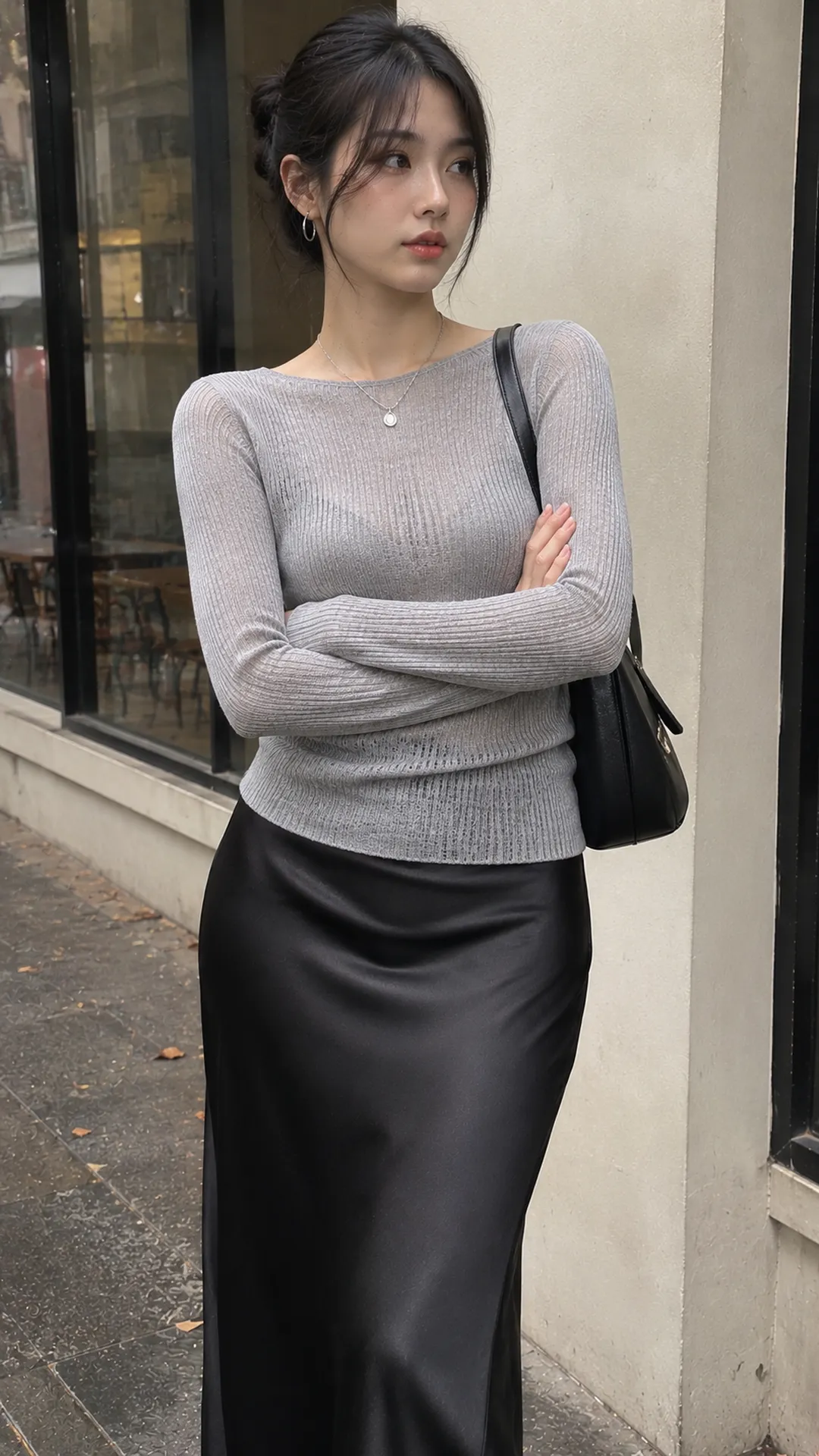
A regular-fit fine knit can contrast in texture without adding many layers. If the skirt is already close-fitting, choose a little room in the top so both pieces do not cling. For an entirely neat silhouette, check the waistband and underlayers sitting as well as standing.
A long untucked knit can be intentional, but assess the total length. If the top covers much of the hips and the skirt reaches the ankles, reveal enough shoe or adjust the top's hem to avoid one uninterrupted elongated block.
Sleeveless tops as a light base
A tank or sleeveless top with a neat neckline keeps the upper half simple. Straps and neckline should stay in position as you move. If adding a blazer, try the outfit without it too, ensuring the base remains suitable for your destination.
You do not need a satin top because the skirt shines. Two shiny surfaces together feel dressier and require closer control of folds. For softness with less of a loungewear feel, keep the top matte and add structured shoes and a clearly shaped bag.
Blazers or short jackets for extra structure
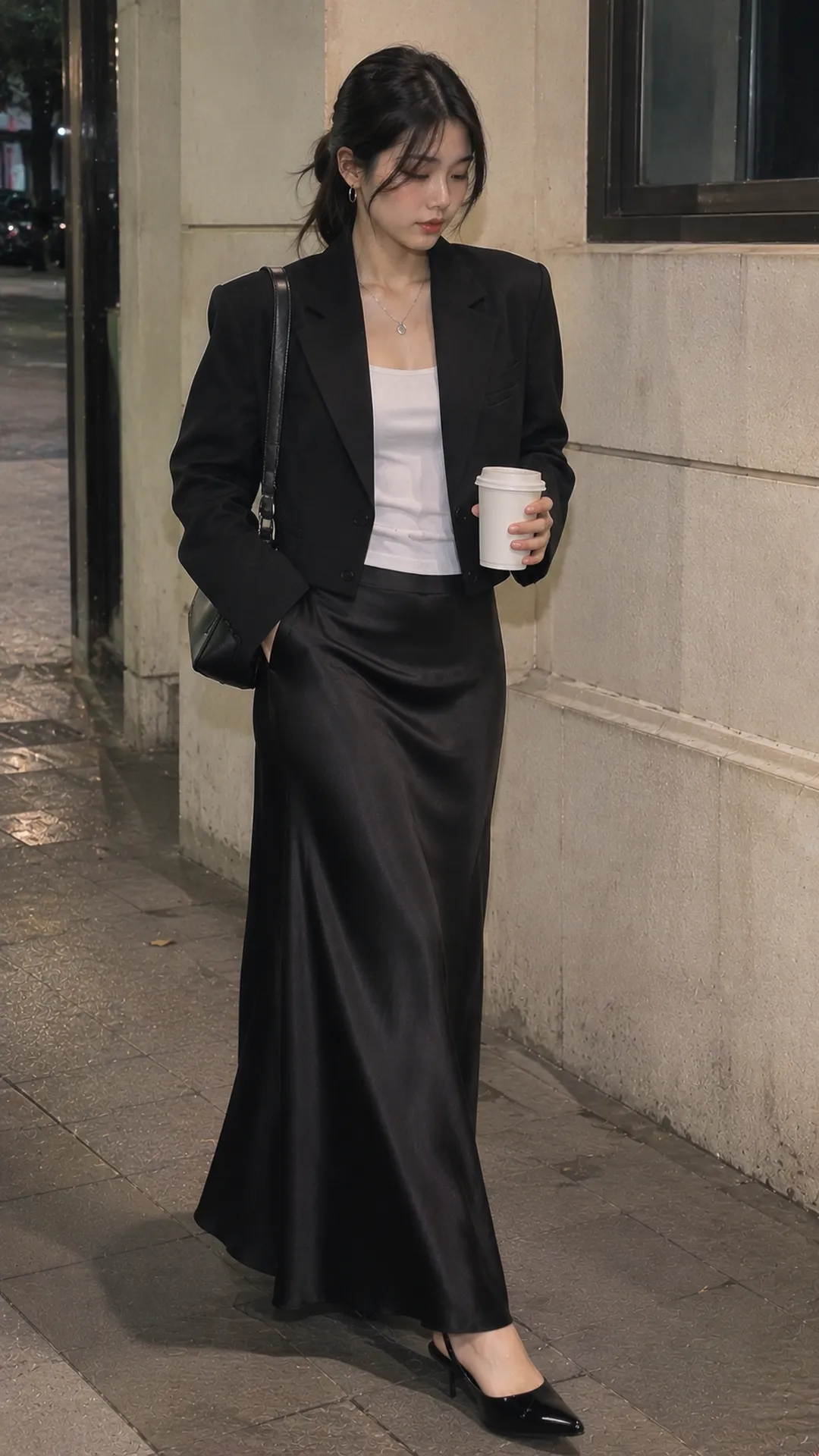
An open blazer creates two vertical lines around the base top. With a long, loose blazer, choose a neat inner layer and let the skirt fall cleanly to avoid excessive fabric around the waist. A cropped blazer ending near the waistband makes the outfit division clearer.
Compare shoulder shape with the skirt's flare. Defined shoulders can balance a wide hem; soft shoulders feel lighter with a straight skirt. This is about choosing emphasis, rather than correcting a body shape. Width above and below can work if intentional and comfortable.
In hot, humid weather, an extra middle layer is not essential if the base and blazer are enough. Our women's layering guide helps give each layer a role. A jacket should address temperature, setting or silhouette, beyond merely increasing the outfit's item count.
Choose shoes by hem length and walking distance
Streamlined sneakers: useful for making the skirt part of everyday life. Check that the hem does not fold beneath the heel or catch on the toe. With chunky soles, try a top with more defined volume so the lower half is not the only visually heavy area.
Loafers or Mary Janes: add a structured point beneath a soft skirt. Observe the exposed leg and the effect of socks. Socks close to the shoe color create continuity; contrasting socks emphasize the ankle. Choose for your intended effect and the destination's formality.
Low heels or sandals: can keep the feet visually light when suitable for your activities. Try them with the actual skirt length and walk normally. Do not choose heels higher than you are used to just to rescue an overly long skirt.
Boots: contrast strongly with a soft surface, but check where the shaft meets the hem. If they repeatedly rub or the skirt catches on a zip, change length or boot style. See our guide to choosing women's shoes for outfits to compare visual weight across shoe types.
Black silk skirts: three ways to avoid a flat dark block
First, use a light top, such as cream, white or light gray, to separate the upper and lower halves. Second, stay dark but vary surfaces: a matte tee, finely ribbed knit or more structured shirt. Third, add a small highlight through earrings, bag or shoes instead of changing the whole top's color.
If you like all-black, photograph it in natural light to see whether the blacks differ. A brown-leaning black top and cool black skirt may create an unwanted mismatch. You can still wear them, but compare directly instead of assuming matching “black” labels mean identical shades.
With light or patterned skirts, keep the top simple and repeat one skirt color in an accessory. You do not need a new top for each skirt. Our women's outfit-by-item hub helps you start with what you own and change one part at a time.
Before leaving and after-wear care
Stand in good light to check transparency, underlayer outlines and the tuck. Choose underwear with seams and color suited to the actual skirt; white is not automatically the least visible choice under every light skirt. Sit and stand to check for a twisting waistband or shifted skirt.
If the skirt clings to your legs or gathers unwanted folds, check fit, lining and underlayers first. Do not spray an unverified solution onto the fabric for a quick fix. With a new skirt, ask the manufacturer about treatment and use label-approved care methods.
Avoid rubbing the skirt against sharp bag edges, fastenings or jewelry when testing the outfit. After wear, check stains before storing; wash and iron by the composition label instead of using one tip for every product called silk. Matching the top is only part of it: fit, movement and care determine whether the skirt stays easy to use.