

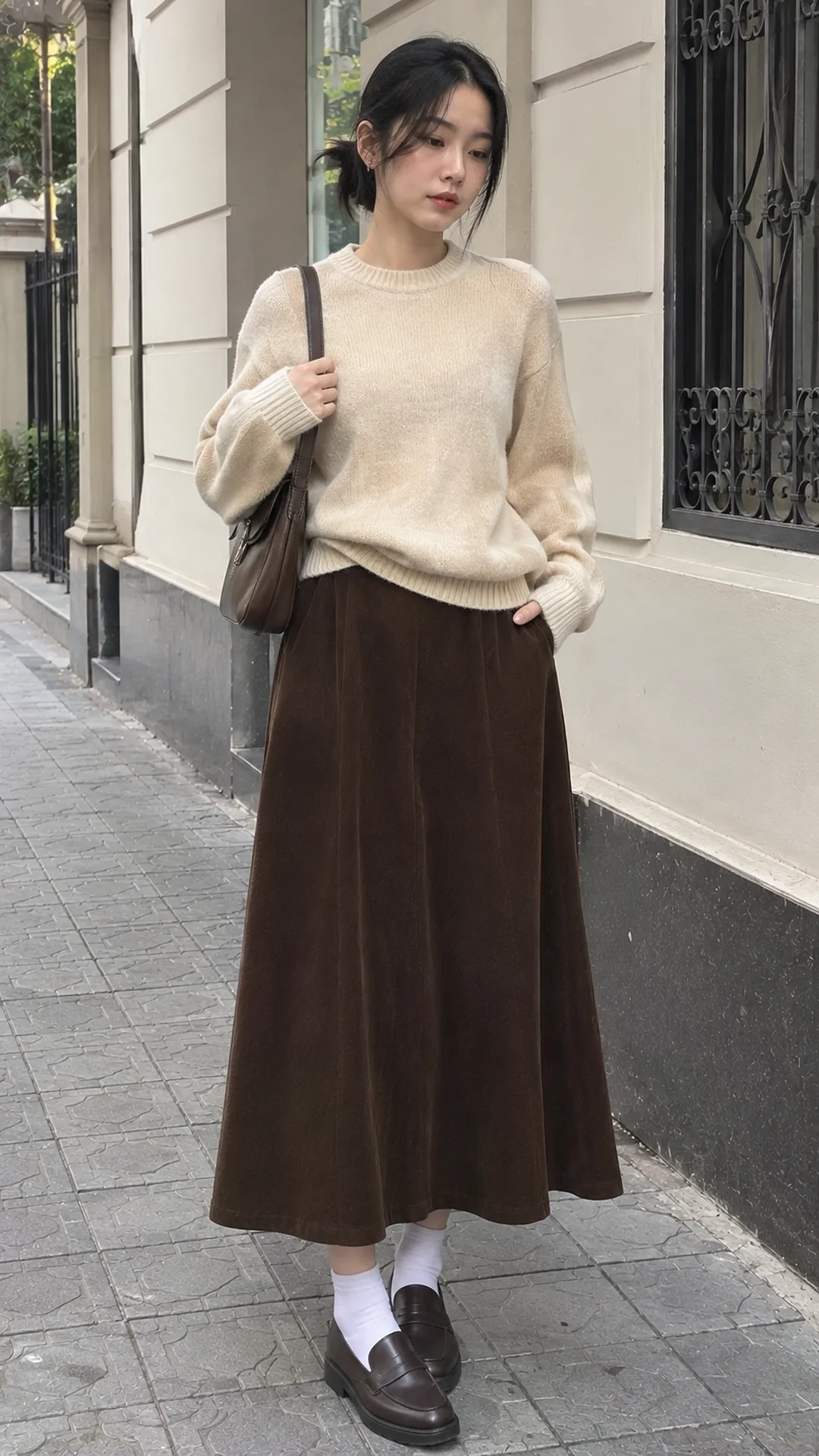
Check the sweater before choosing bottoms
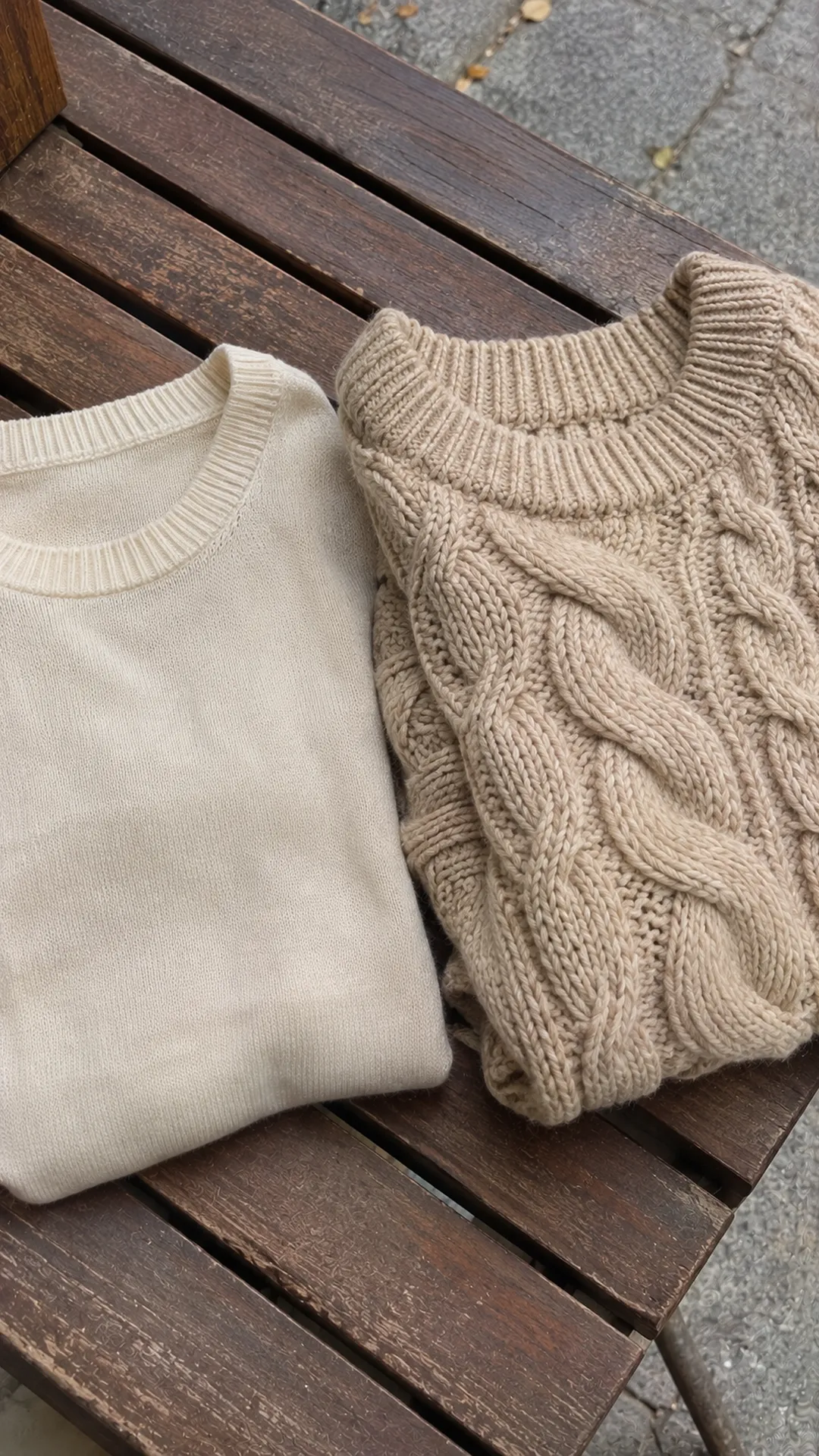
Fine and chunky knits sit differently
A fine knit with a smooth surface usually tucks in flat. Wear it under a blazer or with a structured skirt. Check opacity, fiber content, underlayers, and comfort, since a thin knit can still be sheer or feel warm.
A chunky or textured sweater adds volume even if the cut is close. Cargo pockets or large skirt pleats can add weight below as well. If you like both pieces together, define the waist, neckline, or wrists to give the outfit a clear break.
Shoulders, neckline, and hem shape the outfit
Drop shoulders give a relaxed silhouette, while seams close to the shoulder points look more defined. A turtleneck adds fabric near the face, a V-neck opens that area, and crew necks come in different widths. Choose the coverage and shape you like.
A tight ribbed hem may stop at the waist and puff above it. A straight hem can fall to the hips and lengthen the upper half. Check the side and back for rolling, riding up, or fabric collecting above the waistband.
For help placing sweaters alongside your other tops, see our guide to choosing women’s tops by cut. Knowing the width and hem placement helps you build outfits with pieces you already own.
Four everyday outfits with pants
Fine-knit sweater with straight tailored trousers
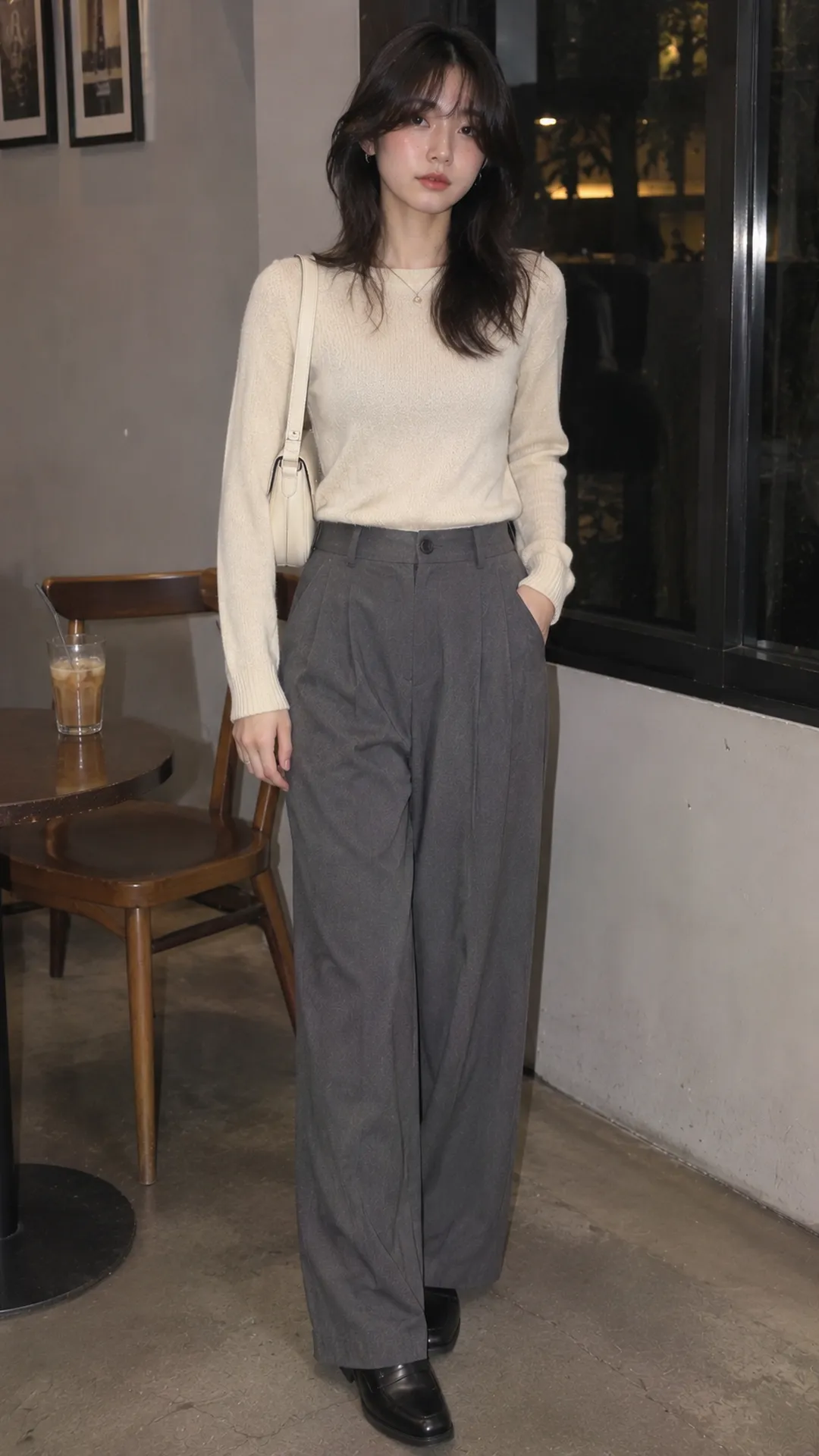
Try a fine cream sweater, pleated gray trousers, and sleek loafers. The slim knit leaves the waistband and drape visible. Tuck it in smoothly if the fabric is thin and long enough, or let a shorter hem sit just above the waistband.
With wide legs, check the length so the shoes still show and the hems clear the ground. For an edgier look, try black or deep brown with a small metallic detail near the neckline.
Fitted sweater with straight-leg jeans
Straight jeans give you a familiar base for color or texture. A muted blue sweater with mid-blue denim and brown shoes gives low contrast. Deep red and dark denim make the top stand out. Keep the hem clear of the waistband if you want the waist visible.
Try an even denim wash with a textured knit, or a plain sweater with detailed jeans. Check that the two pieces work together before adding a jacket.
Cropped sweater with high-rise pants
A short hem near the waistband creates a clear break with straight or wide legs. Choose a length that just meets the waistband if you prefer more coverage. Raise your arms and sit to see how far the hem moves.
With a cropped sweater that puffs out, try pants with a flat waistband and simple hips. A slim top leaves room for pleats or wide legs. Choose the length for the actual pair of pants.
Roomy sweater with dark pants
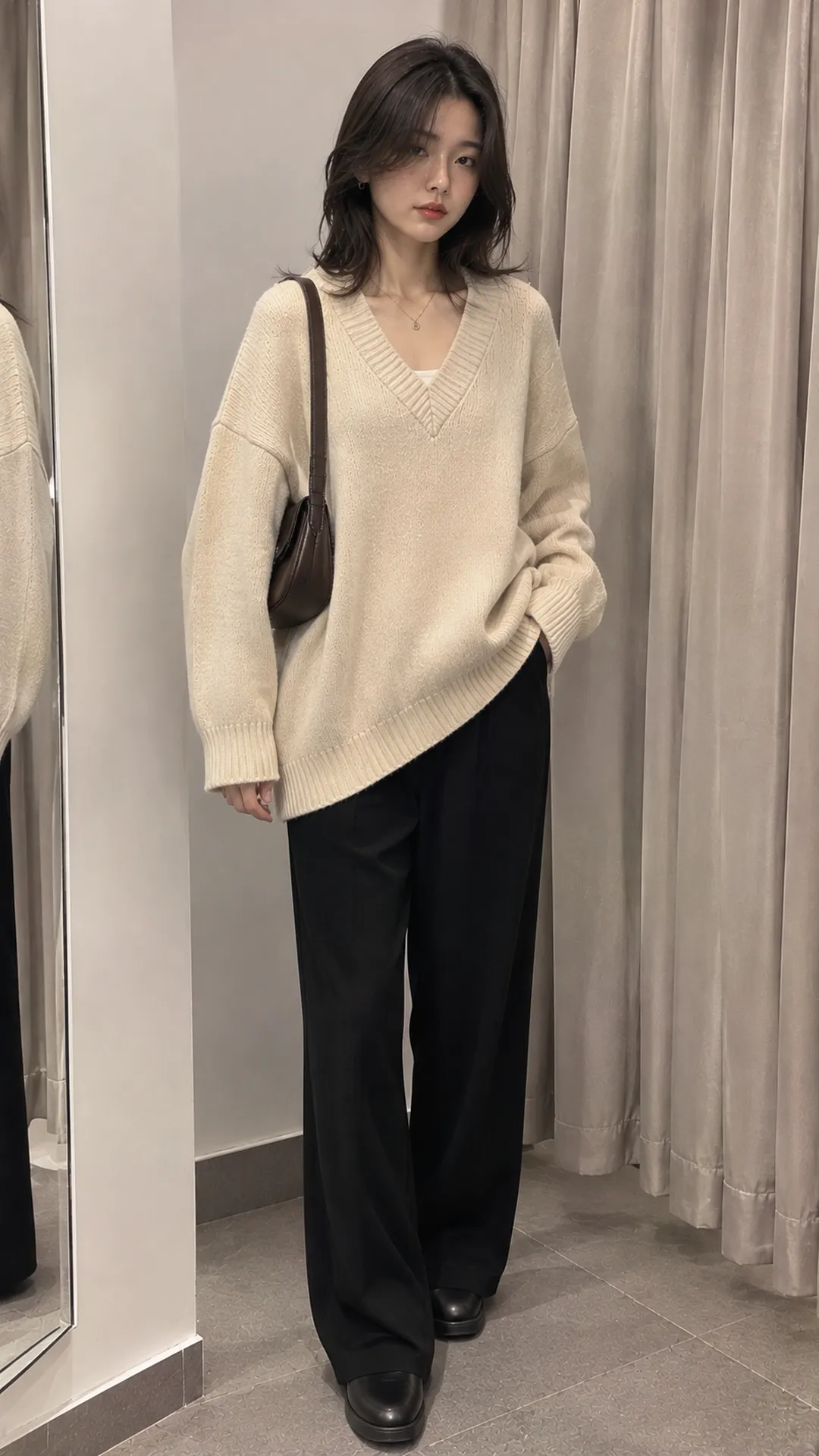
Straight black pants are an easy starting point for a roomy sweater. Look for a clear leg line, which can be slim or straight. Shoes with some visual weight can hold their own against the sweater.
If you wear close-fitting stretch pants, check opacity and whether they suit the occasion. Try a long sweater while moving to see how much coverage it gives beyond standing still.
Style sweaters with long skirts by fabric
Fine-knit sweater with a satin skirt
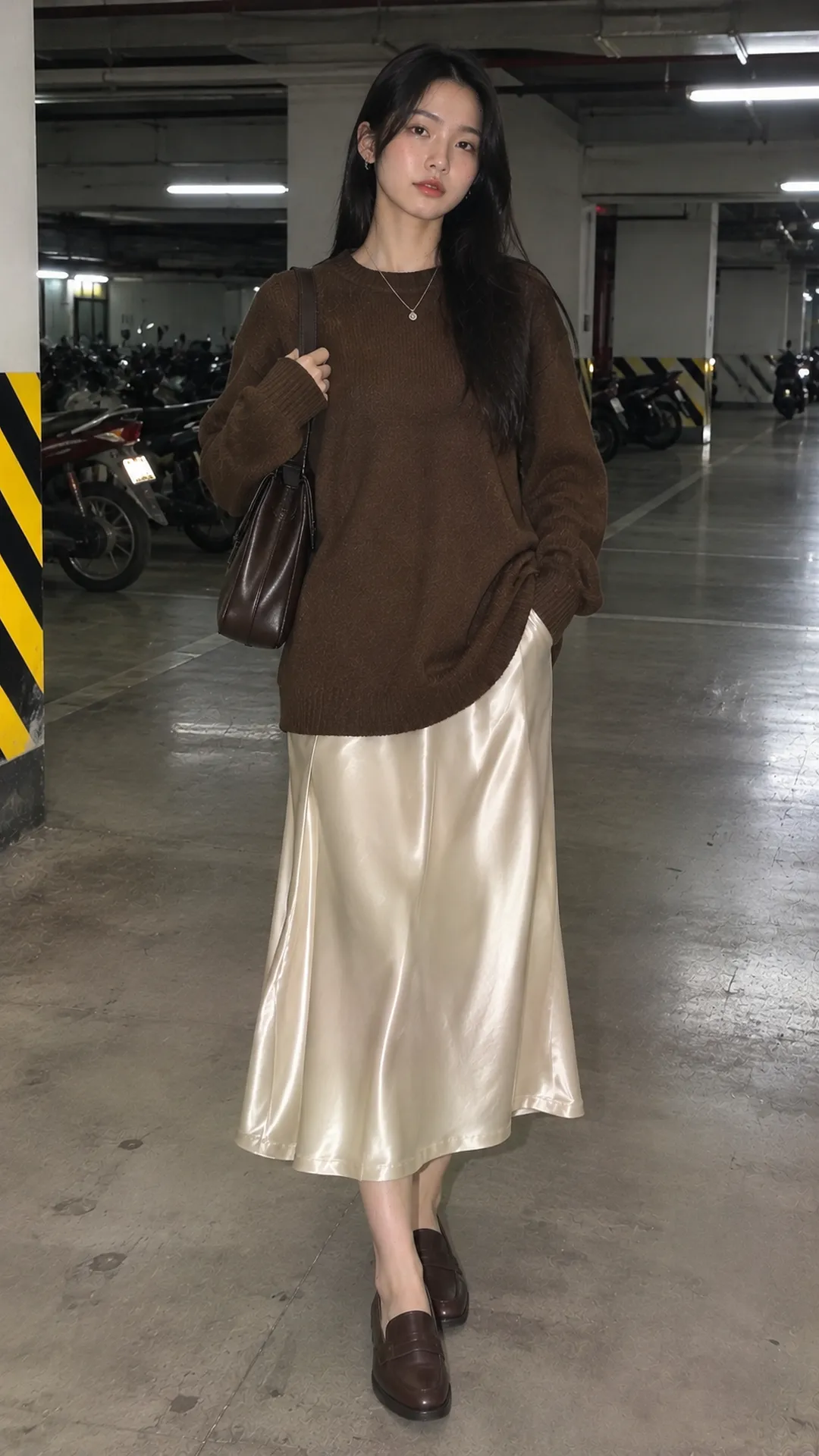
Knit and satin catch light differently, adding depth with a simple palette. Try a fine brown sweater, cream satin skirt, and brown shoes. Keep the tuck smooth so it doesn’t show through the skirt.
If you leave a long sweater untucked, check where the hem falls from the side. Hip length can feel relaxed. With a much longer top, use the neckline and shoes to keep the proportions clear.
Slim sweater with a long pleated skirt
Pleats give the lower half movement and several lines. Try a plain slim sweater in a related tone for continuity or a light top with a dark skirt for contrast. Check whether the ribbed hem covers the start of the pleats.
A small front tuck can show the waistband with a roomy knit if the fabric is thin enough. A bulky tuck can push the pleats open or press at the waist. Try a shorter sweater if that happens.
Sweater with a long denim skirt
Long denim adds structure. A soft, fitted knit balances a crisp skirt, while a chunky knit may work with softer denim or a slit for movement. Step onto a stair before choosing shoes.
Ankle boots, loafers, and sneakers can work with different cuts. A hem that covers most of the shoe looks different from one that shows the ankle. See our women’s skirts and dresses guide to compare shapes before pairing them with a sweater.
Give oversized sweaters deliberate proportions
Check how the shoulders, sleeves, neckline, and hem work together on an oversized design. A sweater that gapes at the neck and pulls at the hips may miss the relaxed shape you want even in a larger size.
When both pieces are roomy, show a bit of wrist, the front waistband, or the neckline. A roomy V-neck, straight pants with a flat waist, and loafers give you a relaxed outfit with clear lines.
A large soft bag at the hips adds volume beside a roomy sweater. If that feels bulky, try a small shoulder bag or a medium structured one. Check that the strap doesn’t pull the sweater sideways as you walk.
Sit in an oversized sweater and long skirt to check for bulk at the waistband or the skirt pulling when you stand. Keep the combination you can move in without constant adjustment.
Choose one focal point with color or accessories
Start with neutral bottoms if the sweater is bright. Try purple with gray, blue with dark denim, or muted yellow with brown. Settle the two large blocks of color before adding a bag or jewelry.
Texture can define a monochrome outfit. Try a fine-rib black sweater with smooth black trousers. If everything is dark and matte, a more open neckline or a small metal detail can brighten one area.
A long necklace can stand out over a turtleneck. Earrings or a neat hairstyle can also draw attention near the face. Check necklaces, bag hardware, and belts for sharp edges that might catch on raised yarn.
For an edgier outfit, start with one main piece as described in our beginner’s guide to alt fashion. Boots or a structured skirt can change the outfit more visibly than several small accessories.
Add layers without bunching
A fine sweater fits under a blazer if there’s room at the shoulders and underarms. Cross your arms and reach forward with both layers on. If the jacket pulls, check how its cut and thickness work with the knit.
A button-up under a sweater adds a collar and hem. Check that the collar stays flat. If you show the shirt hem, compare its length at the front and back and choose which edges you want visible.
A jacket over a chunky sweater needs room in the shoulders and sleeves. Try fastening it and sitting down. See our guide to layering women’s outfits to choose thickness and hem lengths for the weather.
Wear and care for the sweater you own
For warm weather or a busy day on the move, consider whether you need a chunky sweater. A thin knit indoors and a removable outer layer give you more flexibility. Check the fiber content and how the sweater feels on you.
Read the care label before washing. Fiber and knit construction affect whether a sweater can go in a washer or dryer. Handle wet shoulders and hems gently and follow the drying instructions to preserve the shape.
Check four areas before going out: room at the neck and underarms, a hem that stays put, and bottoms that clear the shoes. A full-length photo helps with proportions. Sitting, walking, and adding a jacket tell you how the outfit works through the day.