


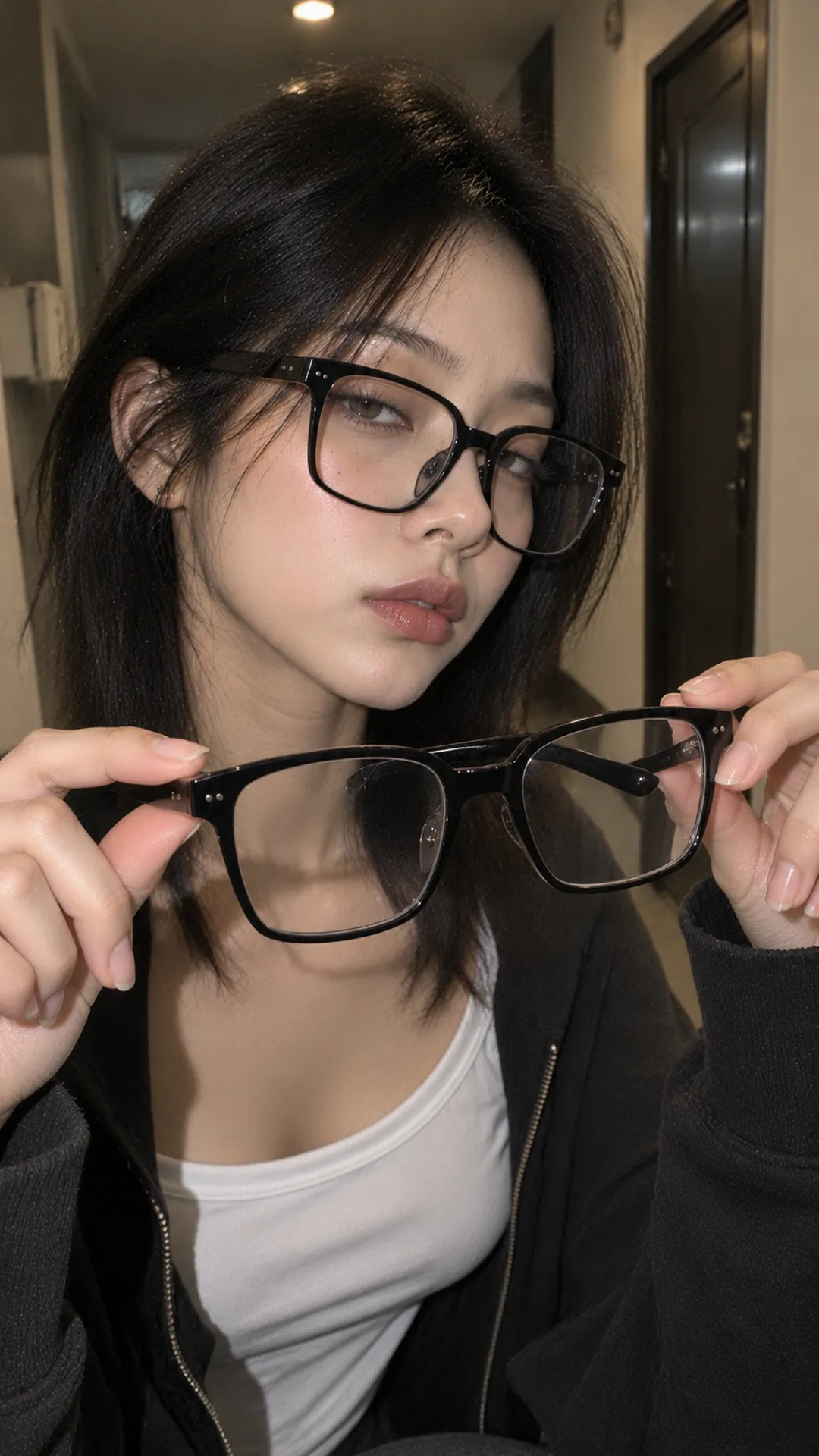
Identify square frames through outline and proportion
Square frames generally have defined top, bottom and side edges. Some are nearly equal-sided; others extend horizontally, round the corners or lift slightly at the ends. Sales labels may not precisely reflect shape. In a front photo, inspect lens depth, straight or curved lower edges and projecting outer corners.
Rectangles are generally shallower and more horizontal; square frames retain clearer lens height. This changes how much face they occupy. Compare height as well as width: a tall square can stand out more than an equally wide rectangle. Rounded corners soften the line while retaining squareness.

Test fit before choosing an aesthetic
According to Warby Parker's eyewear fit guide, frame width should correspond to the temple area, without resting on cheeks or rising when you smile. The bridge should sit steadily and temples should not squeeze. These checks are more useful than face classification alone.
Wear them for a few minutes, look forward, bend gently and smile. Observe sliding, unevenness and cheek contact. Attractive stationary photos may conceal constant pushing during conversation. Ask staff to check pressure points rather than bending temples or forcing the bridge yourself.
Temple numbers commonly describe lens width, bridge and temple length. A comfortable existing pair provides a reference, but matching numbers need not feel identical because bridge, curvature and construction differ. Prescription lenses and alignment require appropriate optical fitting; styling follows.
Thick rims, thin rims and visual weight
Thick black frames: an accent near the face
A thick black outline creates a clear frame, with a plain top sufficient as background. For sharpness, repeat black in a belt or shoes rather than every accessory. If glasses, earrings, necklace and collar pattern all lead, remove one before replacing the entire outfit.
Thin frames: retain square geometry with less weight
Thin metal or pale rims preserve the shape without a large dark area. Try them with ruffled collars, striped shirts or jackets with many seam lines. Choose metal tones from existing accessories without rigid skin-tone rules.
Clear or brown frames: adjust contrast
Clear frames still outline and reflect rather than vanish. Deep brown can connect to a brown bag, dark denim or cream top. Try regular tops: a frame subtle against white may appear stronger with a black collar.
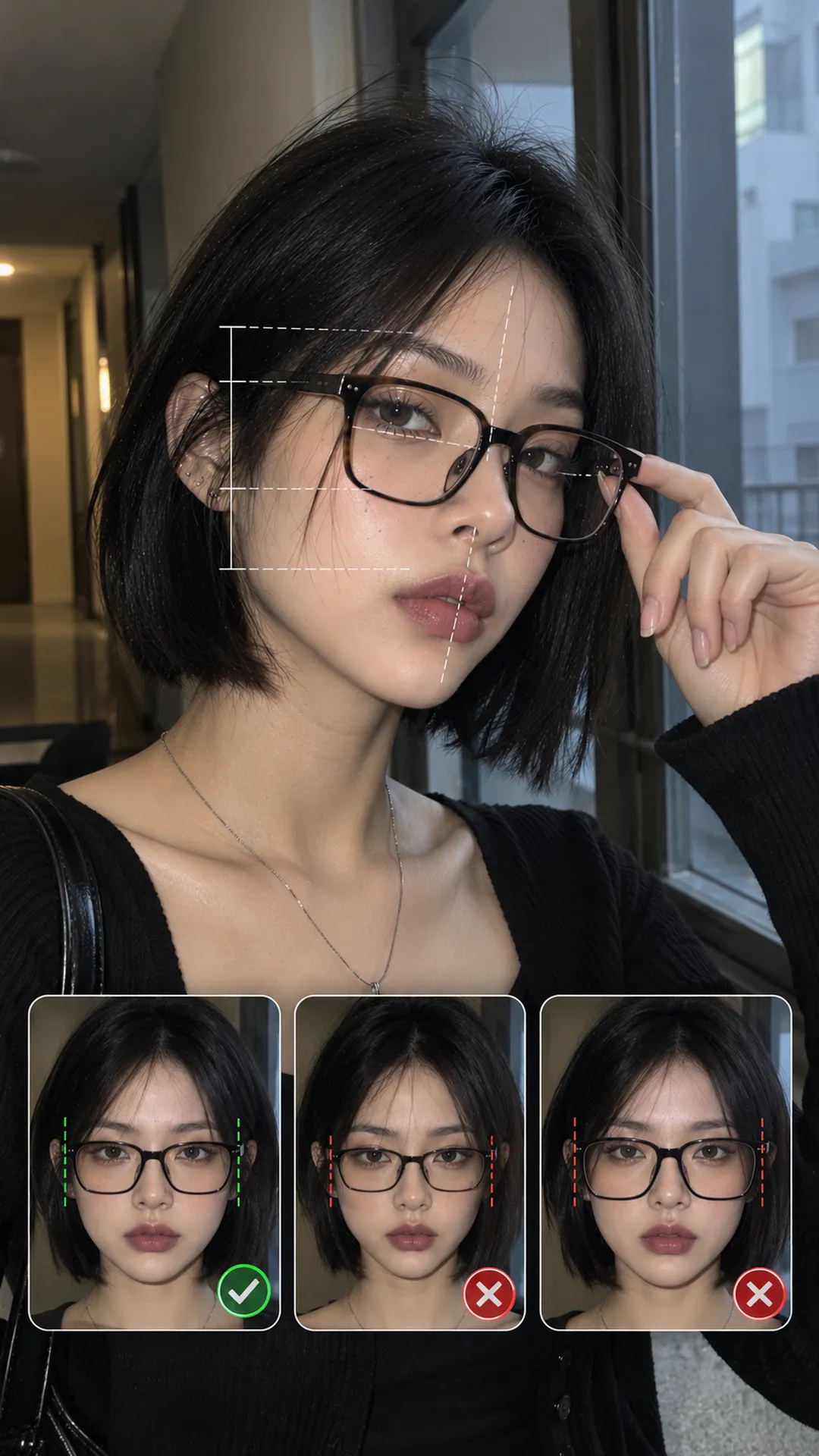
Use facial proportions as suggestions rather than prohibitions
To add definition to curved features, start with a relatively straight top edge and clear outer corners. For softness, try rounded corners or thinner rims. Both can suit one person depending on whether the face should be a strong focal point or quiet part of the outfit.
On angular faces, rounded squares offer an intermediate option, while sharp squares repeat structure. Small faces need not wear only tiny glasses: distinguish total width from rim thickness. A correctly wide frame with bold rims can be prominent without overwide temples.
Close selfies can distort proportions relative to another person's view. Use a mirror at conversational distance and a half-body photo. If you usually have a fringe, keep it as worn daily; sweeping it away for fitting then lowering it afterward changes the result.
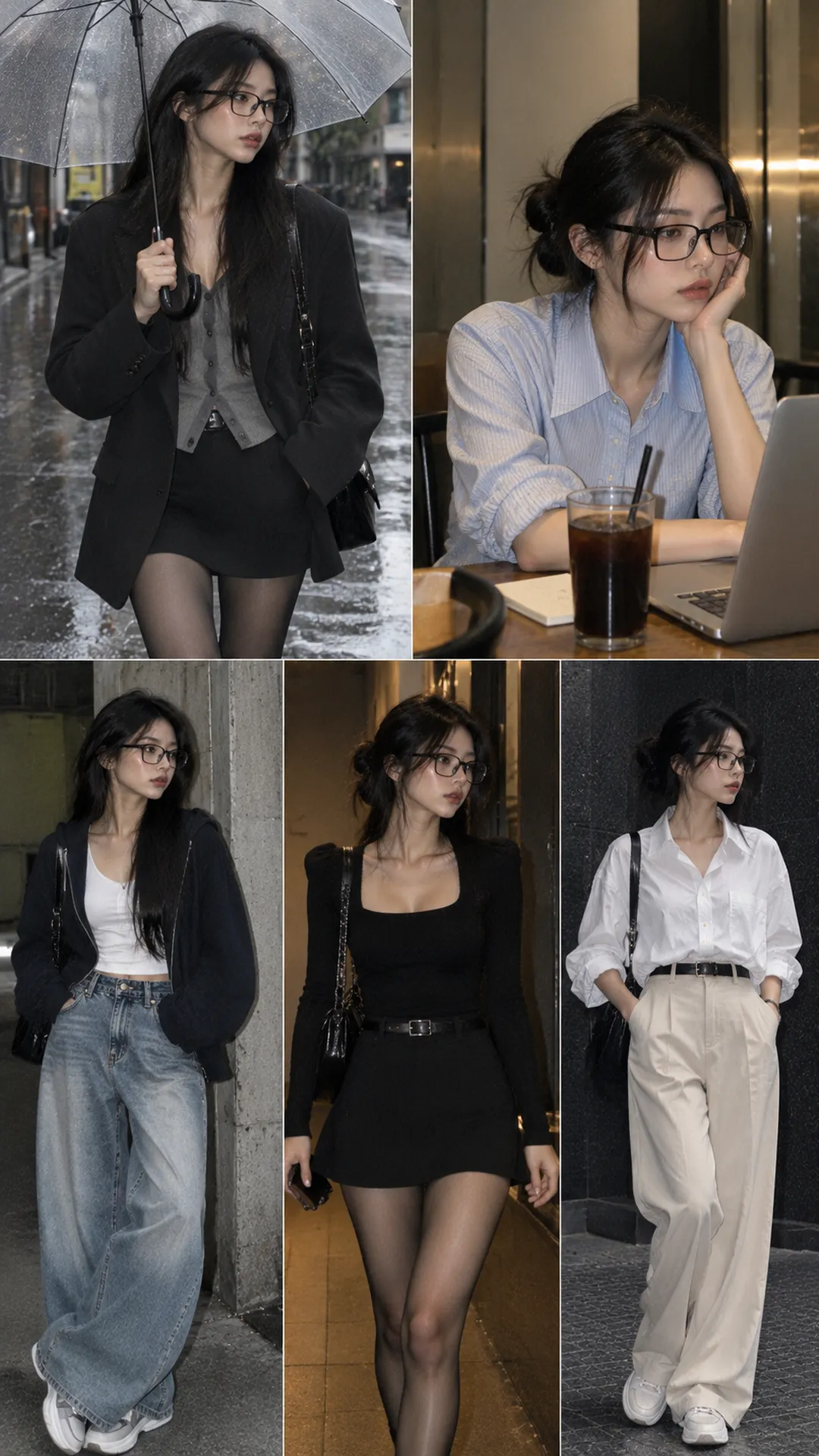
Five square-frame outfits for different settings
School: a plain tee, straight trousers and sneakers
Try black or brown frames with an ivory tee, blue denim trousers and simple sneakers. Minimal top detail draws attention to the face. If both garments are loose, partly tuck or choose a waistband-length top. Glasses need not belong to a complete school-themed aesthetic.
Work: a shirt, structured trousers and neat shoes
Thin squares can pair with pale blue, charcoal trousers and loafers. Keep the collar neat and a glasses cord clear of hair and neckline. For bold rims as the accent, reduce shirt pattern. See neckline and length handling in the women's tops styling guide.
Weekend: a thin cardigan and skirt
Try brown with a cream cardigan and gray skirt. With many pleats, use a plain bag to keep glasses distinct. A loosely draped or thin cardigan suits warmer conditions; extra layers are unnecessary to make the glasses intentional. Low shoes keep walking practical.
Dark clothing: vary surfaces instead of adding colors
Thick black frames, a black tee and deep-gray trousers may merge if every surface is alike. A small belt buckle, textured jacket or different bag texture separates them. When selecting accessories, the essential Alt Fashion accessories guide helps establish which piece actually leads.
Light outfits: retain one connection to the frames
With pale pink and cream trousers, black frames contrast strongly. Repeat a small black detail in shoes or bag strap if you want a connection. For less contrast, try clear or light brown without changing the whole outfit. This helps when one pair serves you daily.
Hair, earrings and collars around the glasses
Do not assess only the head. Thick rims can balance defined shoes, while thin frames accommodate different visual weights. If the outfit feels disconnected, see choosing shoes for the complete outfit and try changing footwear before adding face-area accessories.
Treat forehead to neck as a small composition. Heavy fringe, thick rims and large earrings create several layers. Keep a plain top if that effect is intentional. If heavy, tuck one side or replace long earrings with small ones to leave space.
Every metal need not match, but choose a dominant direction. Silver frames, small silver earrings and a black bag clasp can be clearer than many different metal surfaces added for completeness. The expressive women's fashion accessories guide chooses accents within the whole outfit, useful for building around existing glasses.

Buying online: what to ask beyond model photos
Request front and side photos and actual dimensions; examine bridge, temple width and corner finishing. A model photo shows only one face. Compare a comfortable pair instead of guessing from small, medium or oversized labels. Check exchanges and procedures for poor fit before ordering.
Do not infer weight or material from shine. Thin-looking rims may not feel lighter than every thick frame. For long wearing hours, prioritize trying and adjustment. Check headphones, hair and routine activities, which product photos rarely demonstrate.
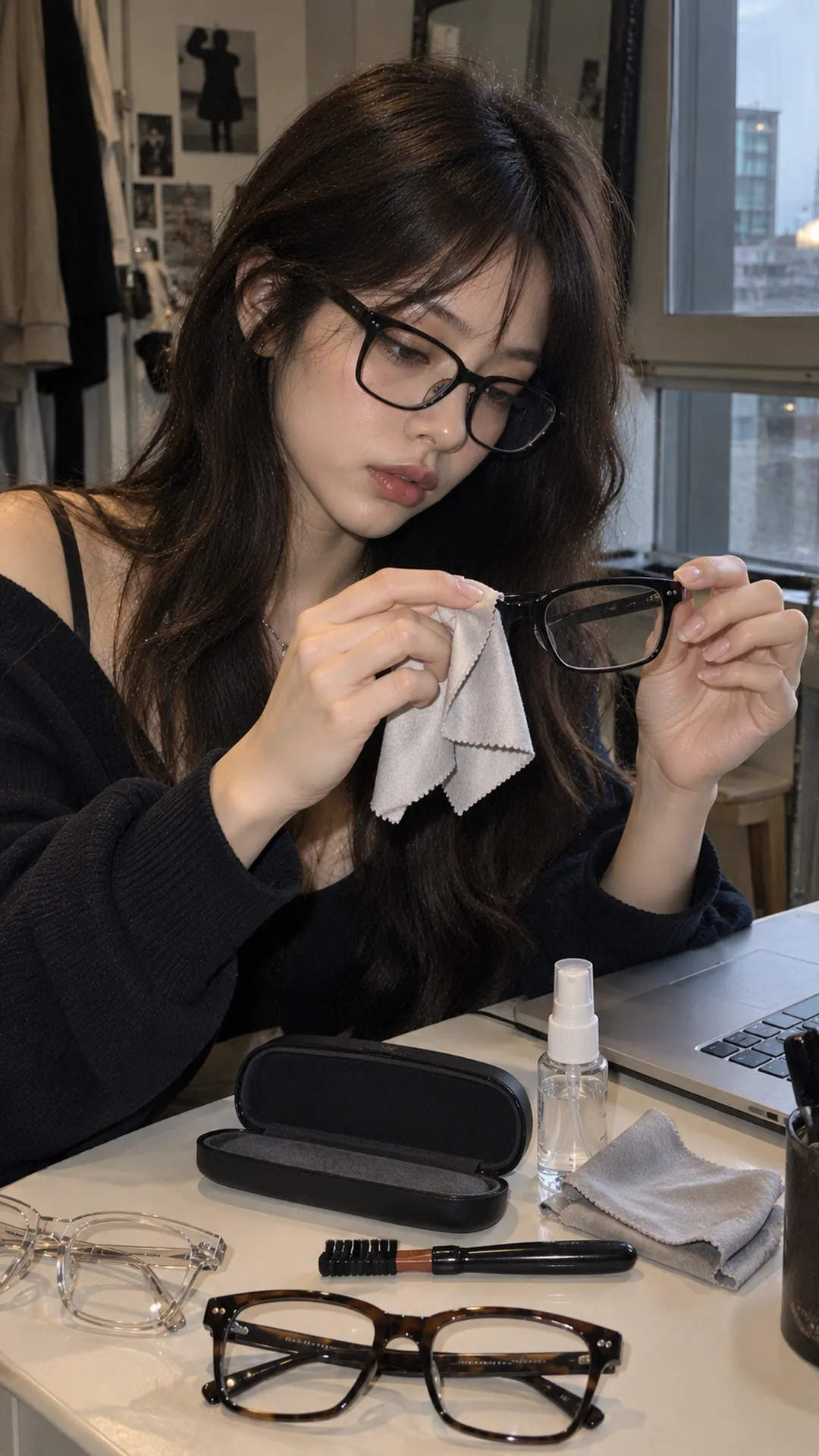
Keep glasses clean and fix common styling issues
Try your actual hat and assess brim clearance. A low brim plus thick fringe can hide most of the brow area. Adjust the hat, move the fringe or choose thinner rims according to your desired effect. For over-ear headphones, wear them with the frames for several minutes to detect temple pressure rather than judging a full-length photo. These small tests support everyday use from study to outings.
Follow the optical provider's and lens-coating cleaning instructions and store in a suitable case. Do not place lenses face down or scrub with dusty clothing. Fingerprints can make even a neat outfit's frame outline look untidy, so check glasses with collar and hair before leaving.
If glasses look heavy, reduce nearby detail first: earrings, one neck layer or the fringe. If disconnected, repeat the frame color in a small item. Sliding or pain concerns fit and adjustment, not styling. Comfort, proportions and then aesthetic make the accessory more versatile.