

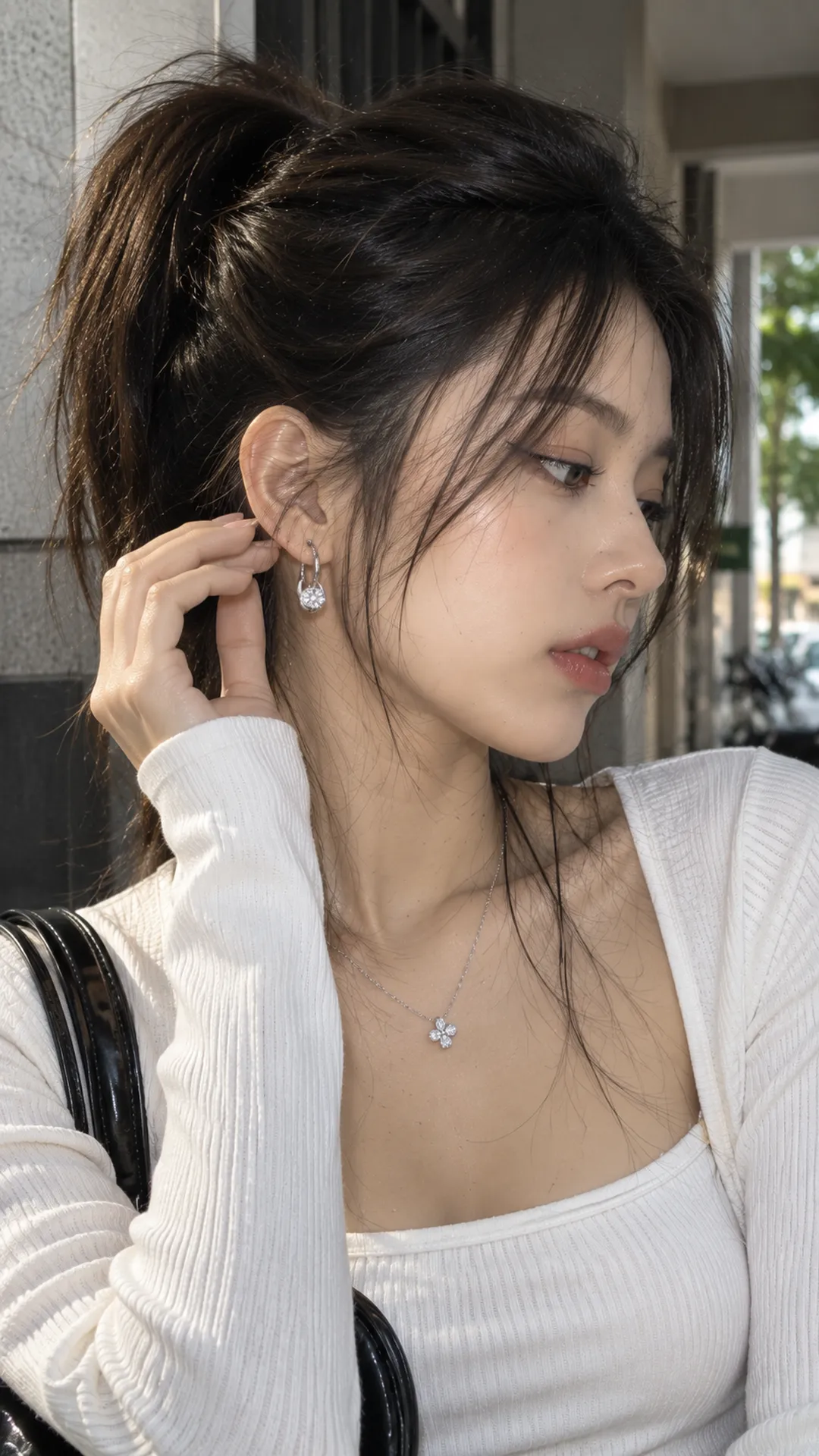
Choose a role before browsing many designs
For a small highlight near the face, start with something close to the ear. For the outfit's main accent, try a clearer shape or length. A specific goal narrows choices without requiring many styles at once.
Elegant does not automatically mean large, heavily jeweled or brightest. Neat finishing, suitable neckline space and easy wear may give your desired effect. A large pair can also work when the rest is deliberately chosen.
Consider headphones, phone calls, helmets and repeated jacket changes. Even a small front can catch behind the ear. Assess front, back and activity rather than only a straight-on photo.
The guide to expressive women's accessories assigns roles to neck, ears, waist and hands. If earrings lead, keep the neck quieter initially and add more only if appropriate.
Recognize types through position and movement
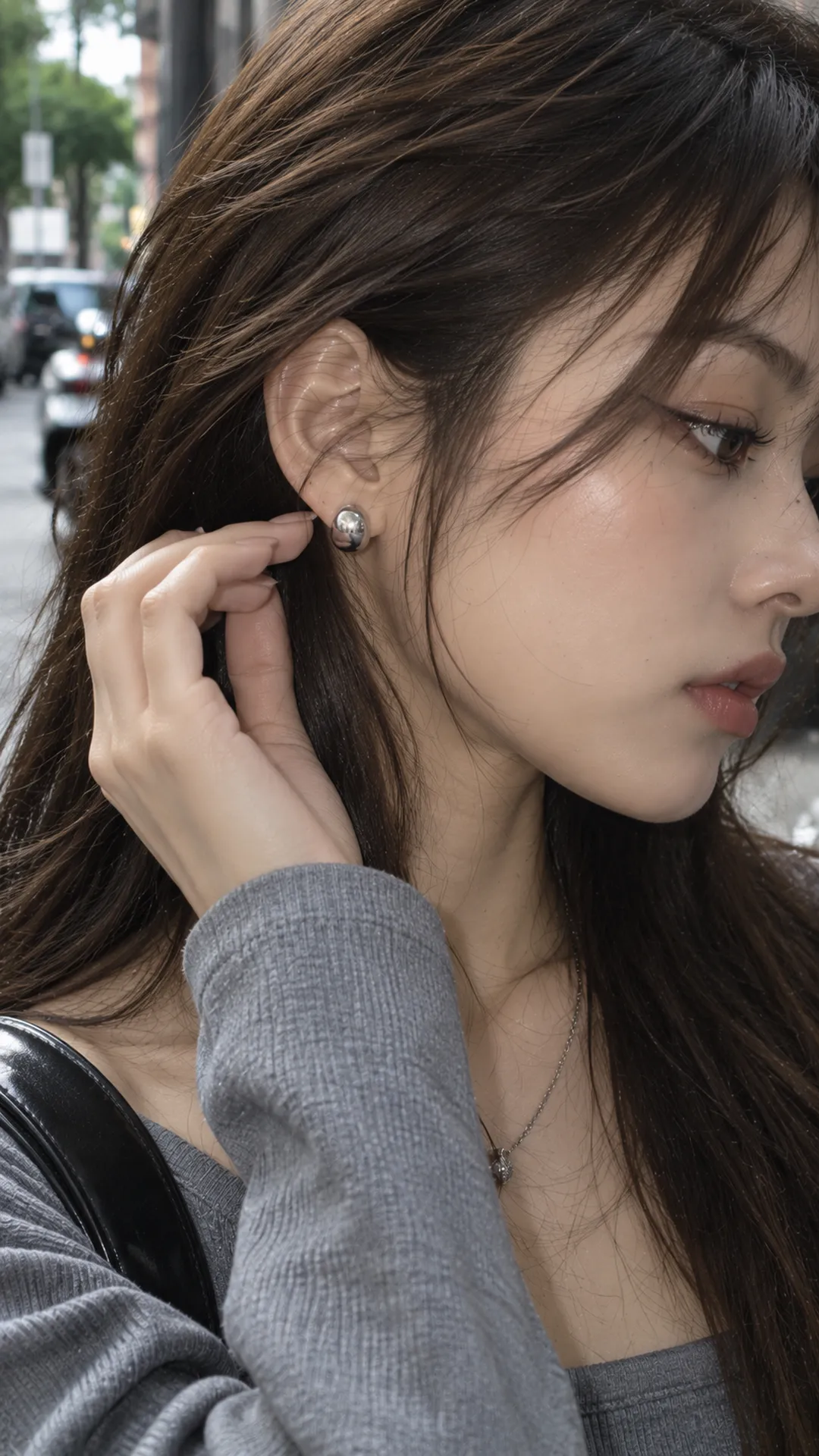
Studs: an accent close to the lobe
Studs generally place decoration near the ear for a neat line, though large or raised faces still create volume. Check depth and backs: a front photo cannot show phone contact.
Small studs may remain discreet beneath thick loose hair. Keep that effect if you like it. For more visibility, tuck one side or try a contrasting surface before increasing size.
Hoops: one curve in many proportions
Hoops form a ring or partial ring beside the ear, but diameter, thickness and orientation change the look. A small close hoop differs from a large thin one, which differs again from a small thick one. Consider profile, not only large versus small.
The guide to round earrings and hoop variations explores dimensions, fastenings and styling. First decide whether you want a delicate curve or a distinct circular volume, then read specifications.
Drop earrings: leave room for movement
Drops extend below the attachment point, adding length and sometimes movement. Measure total length rather than only the decorative face. Even a small connector brings the lowest point closer to the collar when turning.
Try these for vertical lines or movement near the face. Wear your real hairstyle and collar to check contact, catching or concealment. A model's apparently ideal length does not guarantee yours because ear-to-shoulder spacing differs.

Unpierced ears: identify the fastening
Clip-ons grip at the lobe; ear cuffs commonly wrap part of the outer ear. Similar fronts may use different mechanisms. Inspect backs and directions to establish whether a piercing is required.
Not every ear-climber design works without piercings. Some combine several parts. If unclear, ask how each section is secured rather than infer it from the name or model.
The clip-on earring guide distinguishes clips, screw adjustments and cuffs. Use it after selecting the mechanism; one design's opening or bending method does not apply to every accessory.
Prioritize a stable feel and easy removal. If the piece presses or requires hard tightening, reconsider position or design rather than enduring it. A comfort claim cannot replace checking your own ear.
Choose for the visual effect around your face
For a curved face, straight drops or angular shapes add contrast. Round faces can still wear hoops if you enjoy repeated curves. Ask whether you want contrast or repetition, not what is forbidden.
With an angular jaw, curved shapes can soften the overall effect while geometry emphasizes structure. Try both if possible. Hair covering or exposing the jaw changes the result too; a face label alone is insufficient.
For a long face without additional vertical emphasis, try compact or broader shapes. If you like long earrings, choose thickness and collar spacing to taste. Personal preference need not yield to a fixed proportion formula.
Oval or mixed-feature faces still need fitting. One face category does not suit every earring regardless of size and weight. Compare two or three shapes with the same hair and top for clarity.

Hair determines how much of the earring shows
Loose, layered hair
Check front and side views. A small face may show only in movement; bright surfaces or broad shapes appear more easily. Tucking one side is a visibility test requiring no new jewelry.
Inspect hair around hinges, backs and embellishments. Untangle hair before moving a caught earring; do not yank. Repeated catching with your everyday hairstyle is a reason to change designs or reserve the pair for another occasion.
Tied hair, short hair or exposed ears
With ears visible, small details already stand out more. Try studs, hoops or drops without increasing size. Also consider neck space: tied hair with an open top differs from short hair with a high collar.
If using a bright clip or patterned headband, assess competition with earrings. Hair accessories need not disappear; let one area lead or repeat a small color to connect them.
Place earrings beside necklines and necklaces
High necks, ruffles and large bows occupy ear-and-neck space. Compact earrings can clarify lines; drops need a head-turn test for contact. Wear the actual top before deciding accessory length.
Square, V-shaped and open-shoulder necklines leave different spaces. Bold-faced earrings can lead without a necklace. To wear both, begin with one strong and one light piece and check that each remains distinct.
Plain earrings are easy with patterned tops. With plain clothing, shape or texture has more room. Changing neckline can affect the same earrings more than changing a bag far from the face.
Metal color and material are different questions
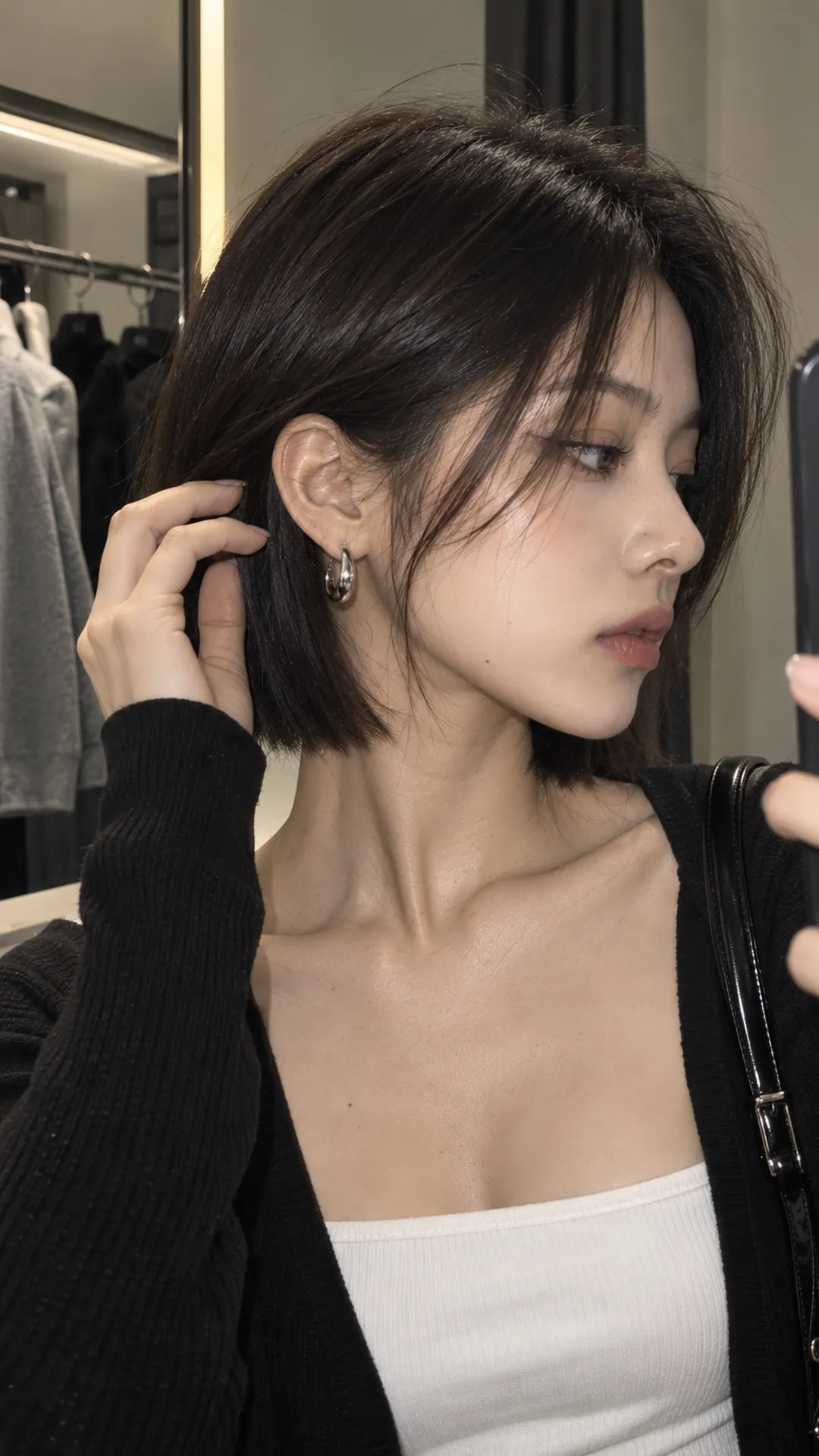
Silver, gold or black color descriptions do not establish composition. Ask about body, post, back and any coating. Stones, beads, enamel and glued details need their own care; similar shine does not justify one cleaning method.
If prioritizing silver, see the guide to choosing silver earrings to distinguish base material from finish. In this overview, material is one check rather than a substitute for shape and fit.
All accessories need not match metal color. Mix if you enjoy it, while considering total highlights. Bold earrings, a large bag clasp and many necklaces may make the upper area busier than intended.
Do not test materials with fire, chemicals or damaging tricks. For unclear information, request documentation or appropriate seller verification. Photo color cannot establish quality or suitability for everyone.
A fitting check before keeping the pair
Check whether sold singly or as a pair, particularly asymmetrical designs and cuffs. Ask whether stated weight covers one piece or the set. Photos of both ears do not guarantee the same delivered quantity.
Operate fastenings as instructed and inspect edges and connections. Ask the seller to demonstrate unfamiliar mechanisms instead of pulling decoration. Once on, turn, speak and try your usual glasses or headphones under appropriate conditions.
Check full-length once before deciding. A striking close-up may look discreet within the outfit, or vice versa. Choose the presence you want in life rather than only an attractive detail photo.
Build a small collection with distinct roles
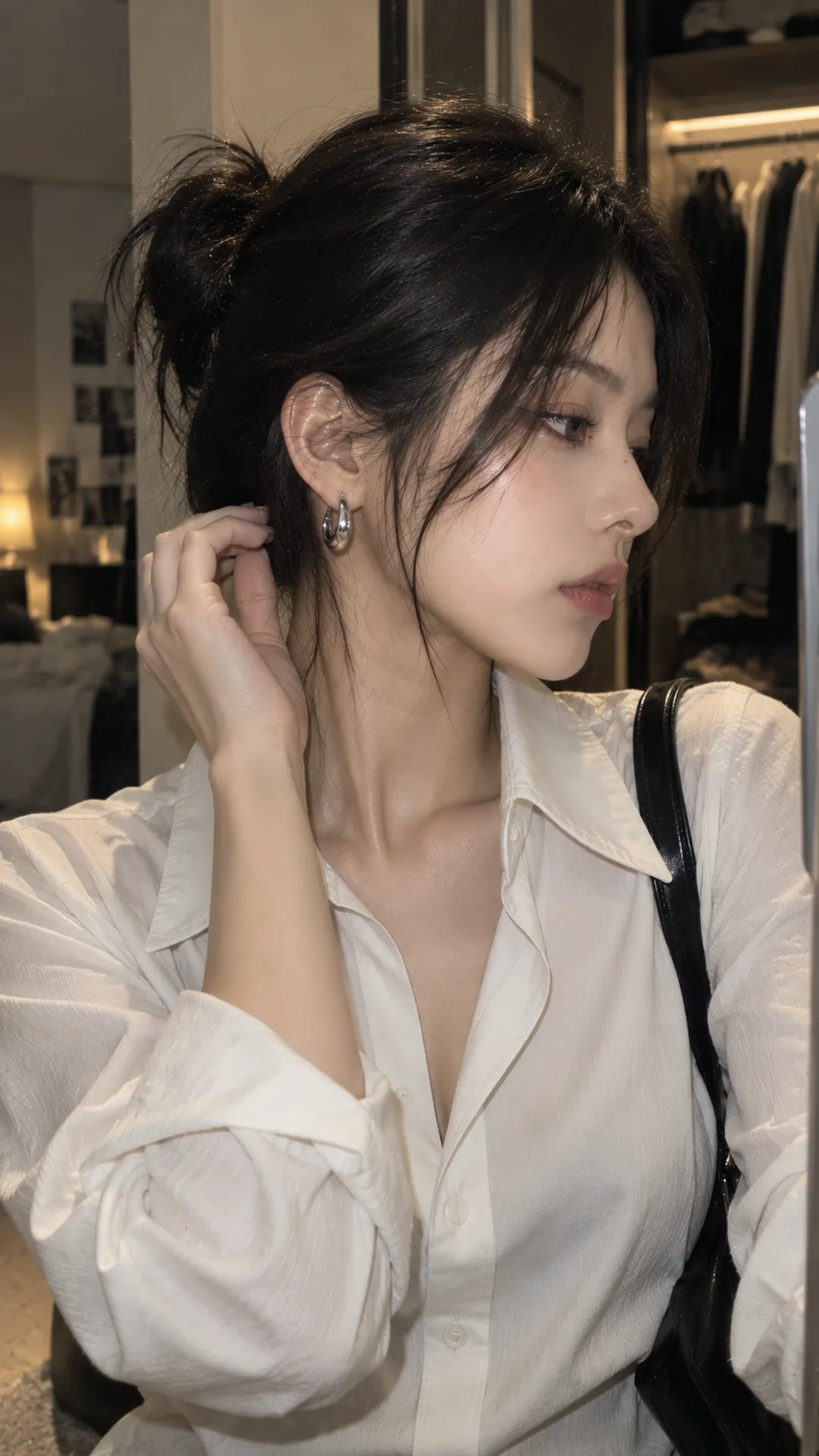
Start with a compact everyday pair and a clearer statement pair for simple outfits. If both serve the same setting and effect, another slightly different shape is not yet necessary.
Store pairs or sets visibly and separately to avoid tangled backs and hanging details. Clean as directed for the materials and inspect before reuse. Address looseness before wearing rather than hoping it lasts the day.
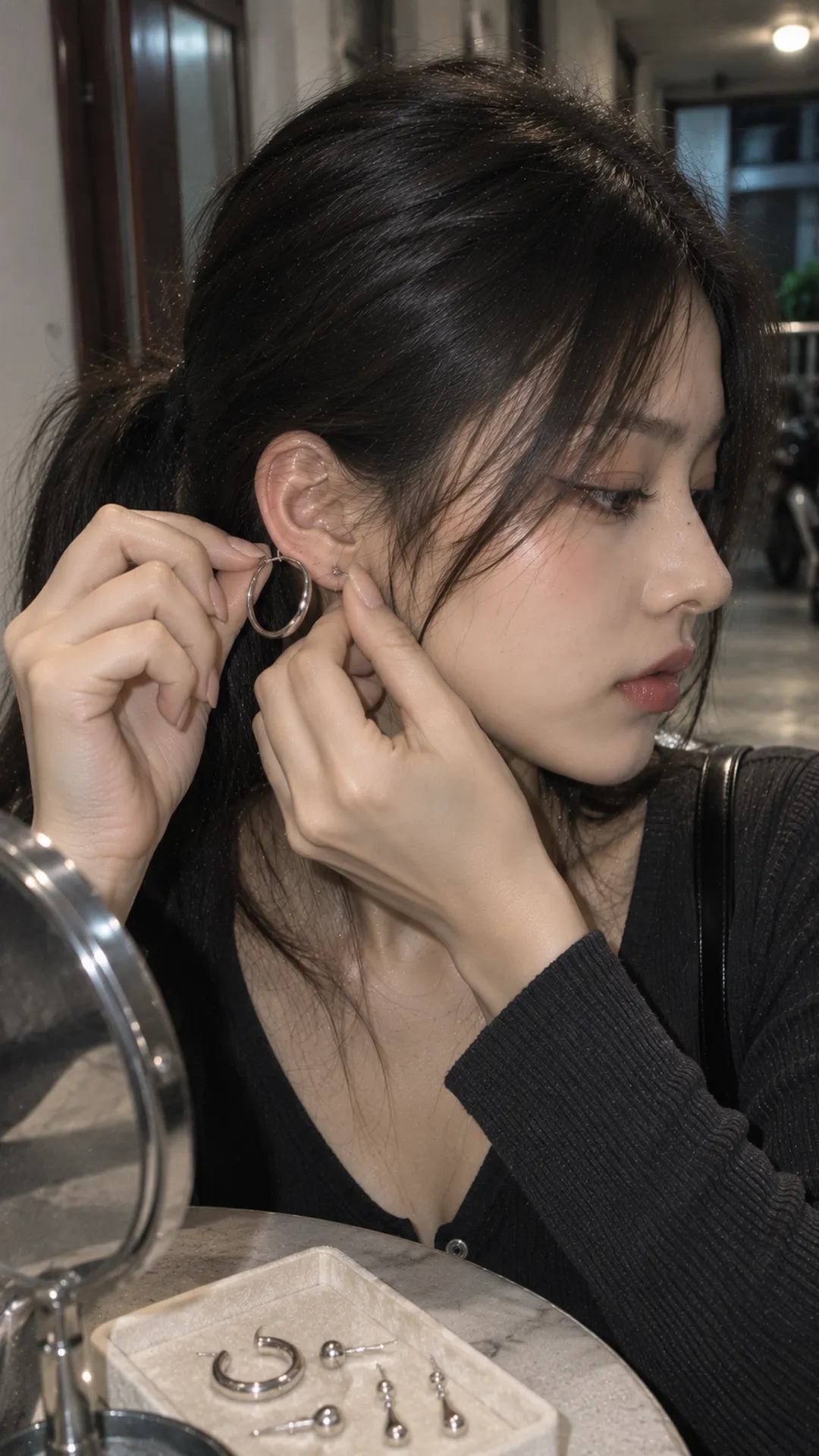
Effective earring choices connect shape with face, hair, neckline and habits. Knowing whether you want a highlight, curve or movement clarifies filtering. Keep pairs comfortable to wear and easy to restyle for your needs.