

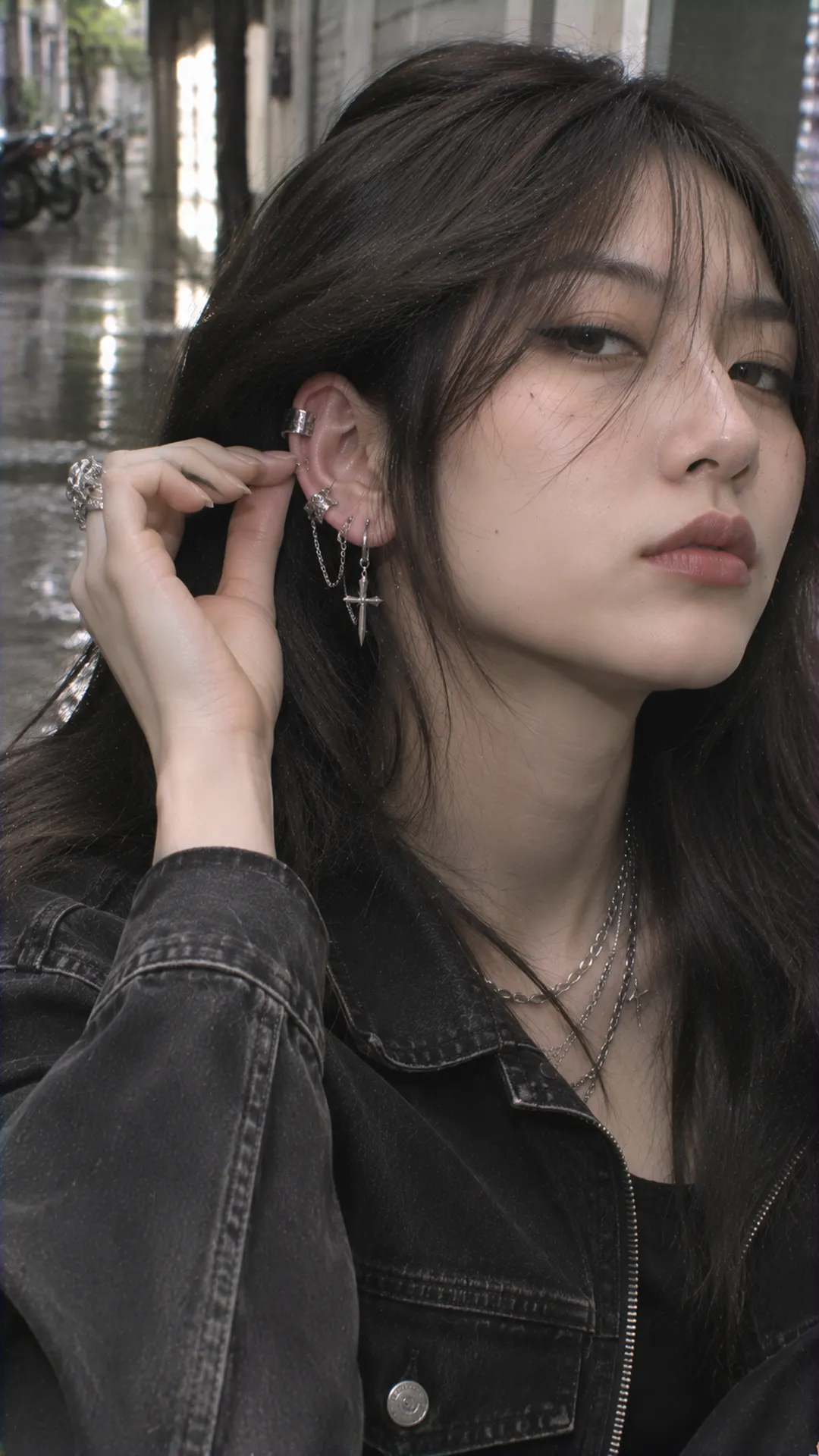
Lobe clips, screw-adjustable clips, and ear cuffs
Lobe clips: The decorative face sits in front and the clip holds it behind the earlobe. Some use a hinge or another pressure mechanism. Look at how the clip opens and closes as well as the front of the earring.
Screw-adjustable clips: An adjuster changes the opening or pressure as designed. “Screw-back” can also describe other closures. Confirm whether a post goes through a piercing or the piece is intended for an unpierced ear.
Ear cuffs: These usually sit around part of the outer ear with an opening in the band. Placement and how to slide one on depend on the shape. Follow the instructions for that cuff and check whether it can be adjusted before bending it.
Ear climbers, earring jackets, and linked pieces may still need a piercing. Some designs combine a cuff with a pierced earring. Ask how each part stays in place if a listing uses a broad term such as “ear clip.”
Choose your first pair for a typical day
For school or work, think about how much you use your phone, headphones, glasses, or a mask. A small earring face can still have a bulky back. Check how the fastener feels as well as what you see from the front.
For a short outing, try a bolder piece if you like it, and turn your head to see what happens. A drop earring can touch your collar or catch in your hair. A wide design can stand out without hanging low.
Ask whether the stated weight is for one earring or a pair. Photos won’t show whether the piece is hollow, solid, or heavy because of its trim. Start with one simple style if the mechanism is new to you.
Check whether ear cuffs and asymmetric styles are sold singly or as a pair. Photos can show both ears even if the listing is for one piece. That affects how you plan to wear it and what you’ll spend.

Put on lobe clips according to their construction
Read the directions for the design and use a mirror somewhere you can find the earring if it drops. Open the clip as directed, put the front where you want it, then close it gently. Avoid using the decoration as a lever unless the mechanism was designed for it.
For screw-adjustable clips for unpierced ears, Miraco Studio advises opening the gap first, placing the earring, and tightening a little at a time. It should hold without pinching the lobe. Check different fasteners against their own instructions.
Check the front and back once it’s on. Make sure it sits evenly and doesn’t press at just one corner. Turn your head, talk, and move as you normally would. If it only stays in place under heavy pressure, try another position or a different design.
Some clips come with pads. Use a replacement made for the mechanism. A pad may help with contact but won’t fix a broken or poorly fitting clip. Ask the seller how to adjust it before trying pliers.
Find the right position for an ear cuff
For an adjustable cuff, check which way it opens and how far it can move. The Astrid & Miyu ear cuff guide shows how to slide a cuff onto a thin area near the top of the ear, then move and rotate it into position. Follow the method that matches your cuff.
Avoid forcing a narrow opening over a thicker part of the ear. If the cuff doesn’t adjust or doesn’t fit, try another design. A model may wear the same shape in a different spot.
Once it’s on, turn your head and move your hair to see whether it stays put. One try-on won’t tell you how it will behave all day. Wear it somewhere you can check it and put it away if you need to.
Take it off by reversing the steps in the instructions. Free any caught hair first so you can remove the cuff without pulling on your ear.
Metal color tells you little about composition
Silver, gold, or black can describe the finish. Ask about the base material, coating, and part that touches your ear. The decoration and clip may use different materials.
For stones, beads, enamel, or pads, check how to care for each part. A cleaner suitable for the metal can affect glued trim or coatings. Check the care guidance before soaking a silver-colored piece.
Comfort depends on the design, fit, and how long you wear it. If it pinches, hurts, or itches, take it off and reassess the fit or material.
For more on silver and finishes, see our silver earrings guide. Check the clip mechanism and materials separately when choosing a pair.
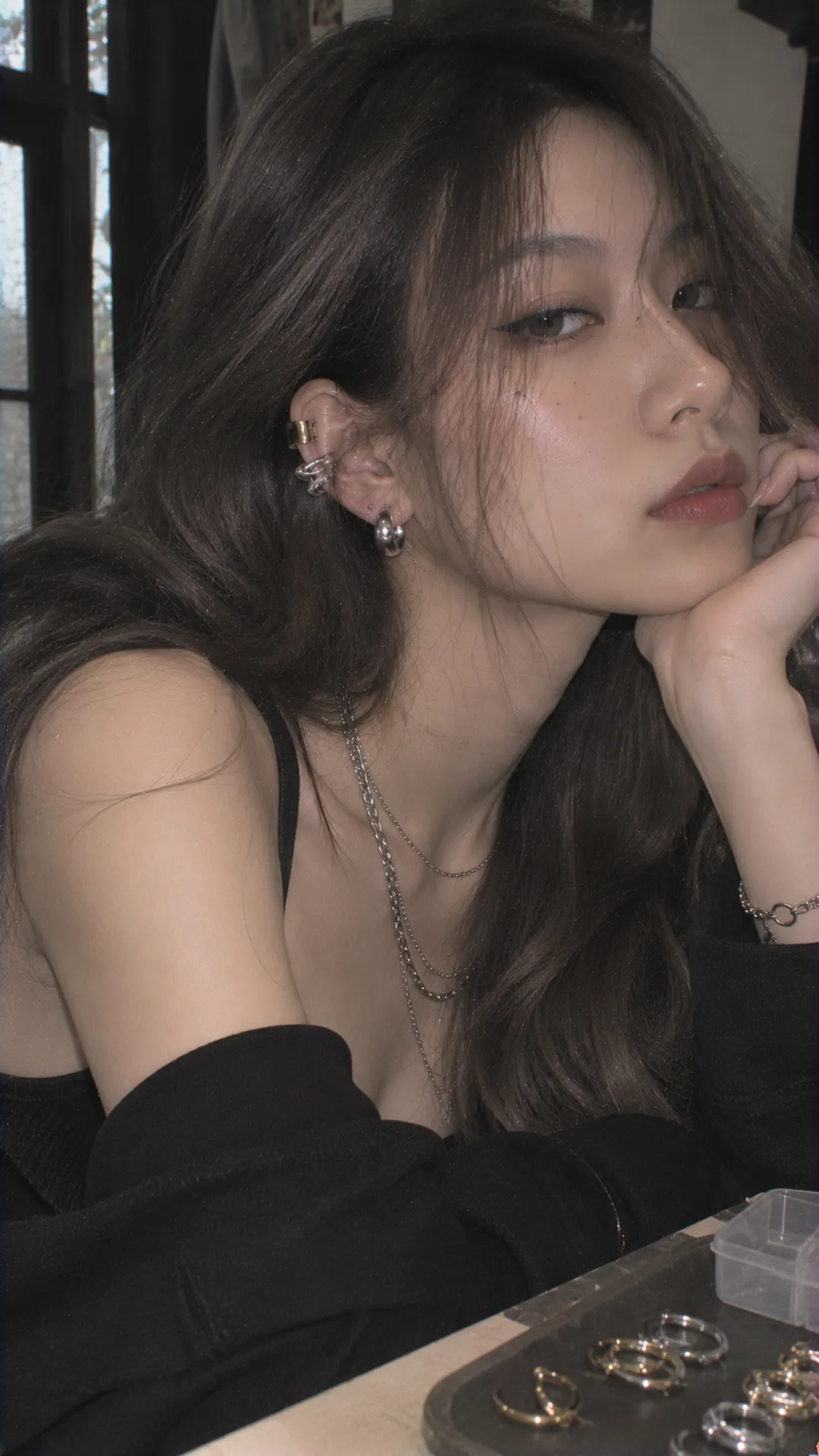
Style earrings with your hair and neckline
Loose or layered hair
Small earrings can disappear behind hair, while a bright or wide design may show. Try tucking your hair behind one ear if you like a small clip. Check whether strands catch in the hinge or trim.
Hair can cover a high cuff. Take a side and front photo to see what’s visible. A piece that stands out in an ear close-up may give a subtle accent in a full outfit.
Hair up and an open neckline
One small clip can stand out with your ears visible. For drop earrings, check the distance to your shoulder and collar as you turn. Choose a length that moves the way you like without repeatedly catching on clothes.
With a detailed neckline, try removing the necklace before changing the earrings. The earrings can be the main accent. Our guide to alternative accessories for women helps you decide where to place it.
Glasses and headphones
Put on your glasses and check whether the temples touch the cuff or clip. Try your usual headphones too. That can reveal points of contact you might miss when fitting the earrings on their own.
Three ways to style clip-ons, from subtle to bold
A plain top and small clips: Choose a metal finish you like and keep the decoration close to the ear for a subtle look. A simple pair makes it easier to judge how the clip feels.
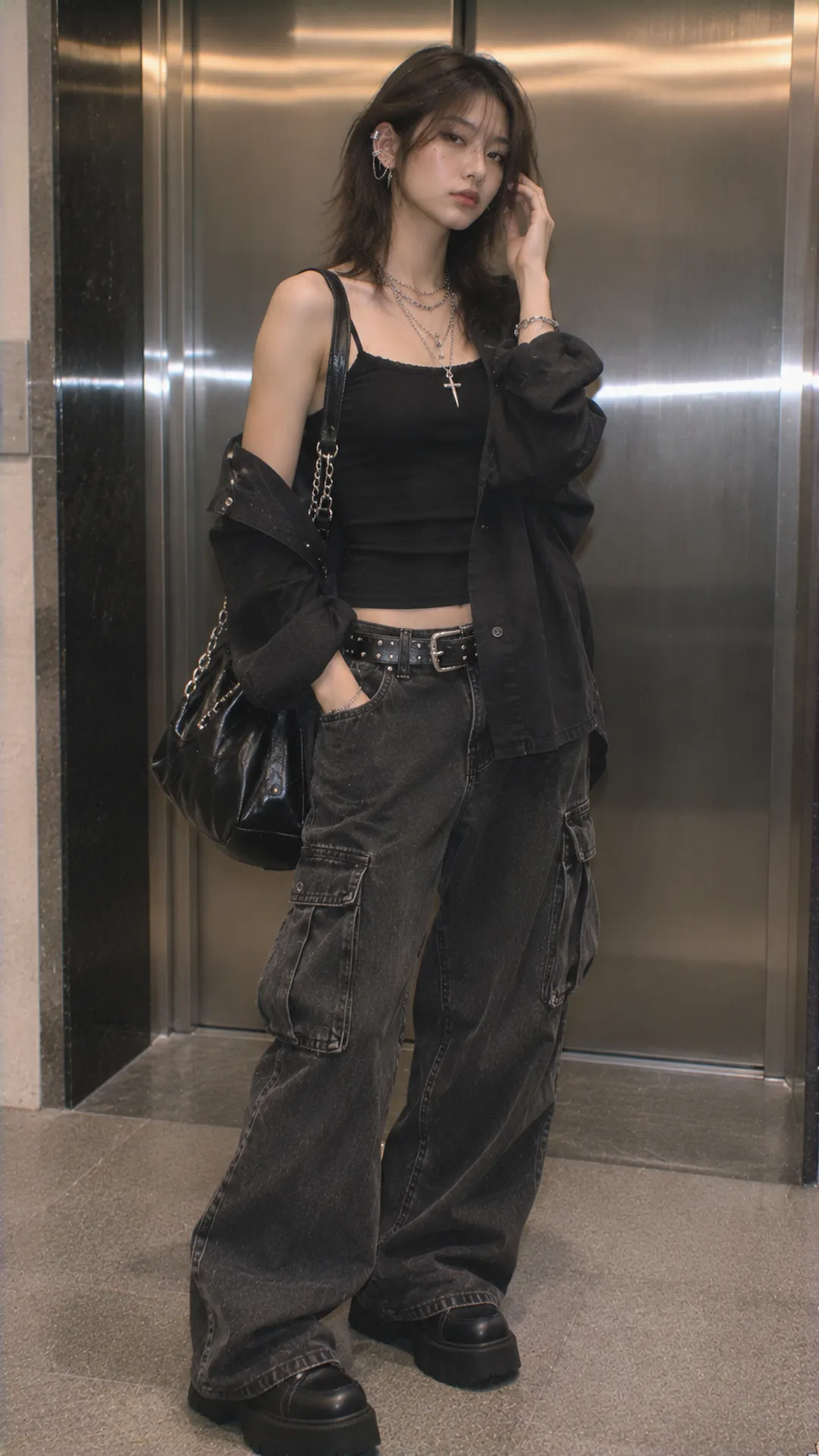
A dark outfit and one cuff: Try a cuff on one side and tuck back enough hair to show it. Check that your collar and glasses leave it visible and don’t press against it.
A plain dress and statement clips: A decorative cluster or hoop can be the main detail. Start with a simple neckline and add another piece if you want. Make sure the clips stay comfortable for the time you’ll wear them.
If you like hoops, our hoop earrings guide covers diameter and thickness. With a clip-on version, check how the back works as well as the hoop shape.
Troubleshoot slipping or pinching before tightening
The earring tilts: Check the placement, front, and contact points. If it only sits straight when you hold it, ask whether the mechanism needs adjustment or the shape is a poor fit. Check the instructions before changing pressure on one side.
The earring keeps falling: Check whether the clip is closed correctly, whether hair or a pad is in the way, and whether the piece is too heavy for the mechanism. If it keeps slipping, set it aside and ask the seller before wearing it somewhere it could get lost.
It presses when you use your phone: Try another position or a smaller design. Choose a piece that works with how often you use your phone.
It catches on the collar: Try a shorter earring or a different neckline. Save the pair for another outfit if you find yourself constantly pulling the collar out of the way.
Shop online and store earrings after wearing
Ask for front and back photos, a view of the opening mechanism, and an image with a ruler if the size is unclear. Check what adjusts, whether pads are replaceable, and whether it’s sold singly or as a pair. Our alt-fashion shopping guide explains what to check about product details and returns.
After use, inspect the clip and clean it according to the material’s instructions. Store each piece so fronts, hooks, and cuffs won’t catch on one another. Fix a loose part or irregular edge before wearing it again.
Clip-ons can add jewelry to unpierced ears or give you an accent along the outer ear. Choose the mechanism and fit for your daily routine, then compare shape, color, and styling.