

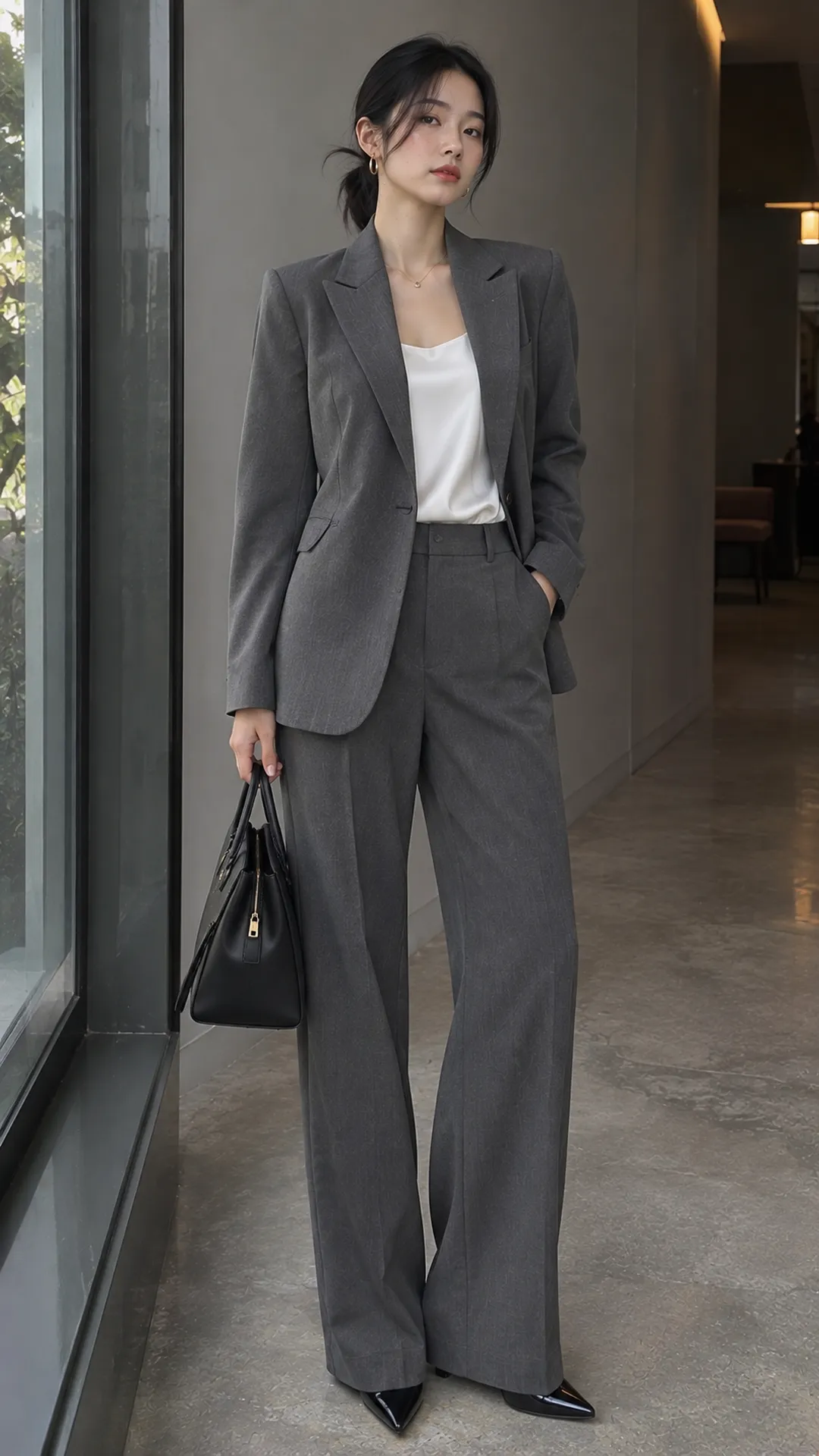
How does a suit differ from a separate blazer?
In common Vietnamese usage, the terms for a women's suit often mean a jacket with matching pants or a skirt. Confirm exactly which pieces are included: a photo showing a waistcoat, inner top and belt does not mean all are included in the price.
A suit is designed as a set with a clear relationship in fabric, color and proportions. Two black pieces with different shades or sheen may not look coordinated in natural light. When buying a full set, view the jacket and lower piece together, beyond separate product photos.
A separate blazer offers flexibility with different pants and skirts. If you already own a jacket and want to use it individually, our women's black blazer outfit guide is more relevant. With a suit, assess the complete line from shoulder to hem before deciding whether each piece looks good alone.
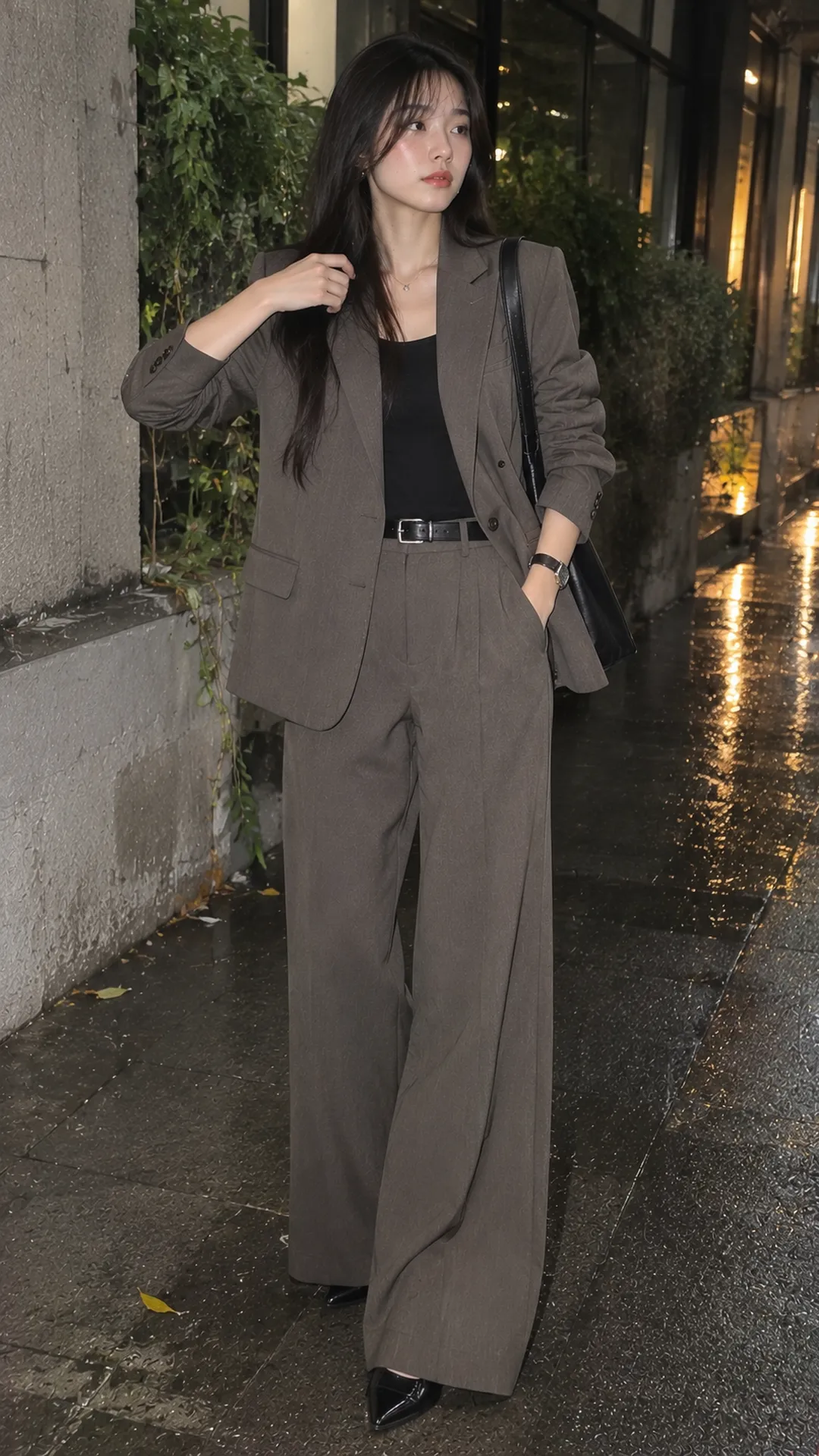
Choose for your most frequent use
Everyday work
Prioritize a set that lets you sit for long periods, stand up and move without constant adjustments. Neutral colors, low-shine surfaces and moderate detailing are often easy to rewear. If you regularly remove the jacket indoors, the base top and lower piece must still make an outfit suitable for work.
Check company culture before deciding jacket width, skirt length or base-top style. Our women's business casual guide helps you read the setting's formality. A suit does not automatically make an overly revealing inner top or unsuitable shoes comply with the dress code.
Client meetings, presentations and events
Try the movements you will actually make: pointing at a screen, sitting in meetings, holding documents or wearing a microphone. Pockets, lapels and buttons should stay neat in these positions. If you must fix the shoulders every time you lift your arms, the cut may be wrong despite looking good while standing.
Parties
A contrasting-texture base layer, streamlined shoes and deliberate jewelry can dress up a suit. But daytime weddings, company parties and events with specific dress requirements differ. Read the event details first; a black suit does not automatically suit every level of formality.
Check four jacket areas where fit problems show
Shoulders and upper sleeves
View the shoulders from the front, back and side. Deliberately extended shoulders are a design choice, different from unwanted collapsing or creasing. Reach forward to test movement room, then relax and see whether the jacket returns to position without pulling it into place.
Collar and lapels
The collar should sit as intended when you stand naturally, without arching to make it look right. Observe the lapels buttoned and open: do they roll, flare or pull unevenly? Try the intended base top, since a shirt collar and inner-layer thickness can affect how the lapels sit.
Chest, waist and buttons
Fasten the buttons intended by the design, then breathe, sit and stand. Strong pulling creases around buttons or unintended gaps suggest reassessing width. Conversely, if you want a moderately fitted jacket but have excess fabric at the back, ask about alterations before buying rather than assuming a tailor can fix it.
Body and sleeve length
A short jacket defines the waistband division; a long jacket creates a larger covering outline. No single length suits every set. Assess it with pant width, skirt length and shoes. Test sleeves while carrying a bag or typing too, instead of choosing solely for a particular amount of wrist shown on a model.
Fit the lower half separately from the jacket size
For pants, check the waist, hips, rise and thighs both standing and sitting. Side pockets designed to lie flat should not gape because of insufficient room. Pleats should fall as designed rather than twisting around the legs. If the jacket fits but the pants are tight, ask whether you can mix sizes within the set.
Test the hem with the shoes you actually plan to wear. Pants that look right with high heels may drag with loafers. For multiple shoe types, choose a length with some flexibility, or decide which shoe category the suit will serve before altering the hem.
For a skirt, sit in a chair and take a long step to test the waistband, slit opening and movement room. A skirt that looks good standing but needs pulling down every time you get up is difficult for all-day wear. When shopping online, read our guide to body versus garment measurements to compare the jacket and lower piece separately.
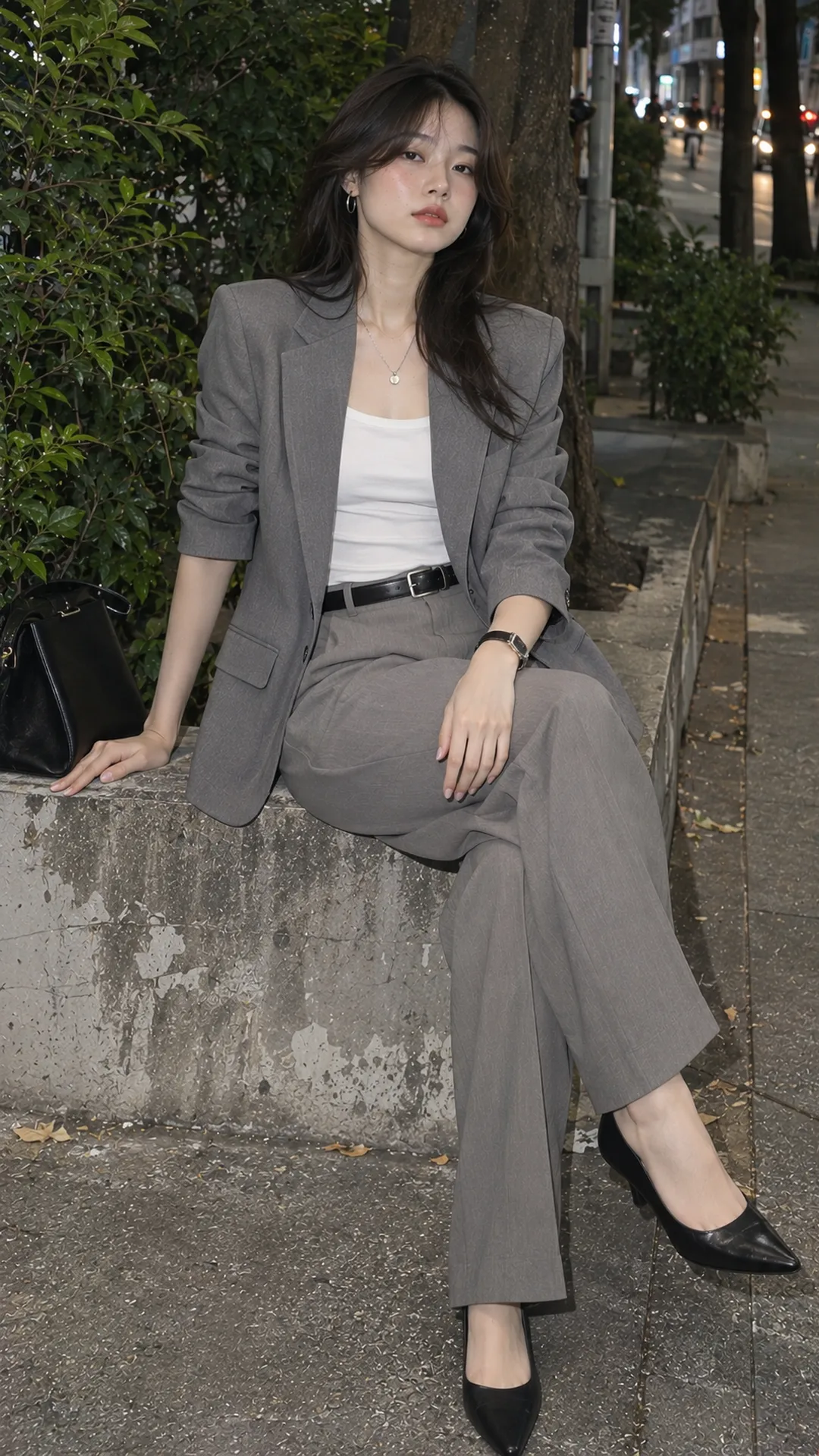
Which details help assess “quality”?
Start with clear composition and care information. No single fiber content guarantees a good suit. A fabric may work for an indoor event but not your outdoor travel schedule. Check thickness, lining and jacket construction too.
Woolmark highlights drape and wrinkle recovery in wool suiting as notable qualities. This does not mean a wool label lets you skip a fitting: blend proportions, weave, fabric weight and the complete suit's structure still need assessment for the specific product.
Turn the garment inside out to inspect tight lining, bulky seams and neatly finished thread ends. Check buttons, buttonholes, the trouser fastening and stress points. If pockets are stitched shut, follow the seller's instructions for opening them; do not cut threads before distinguishing temporary tacking from structural seams.
Names such as “Korean women's office suit” or “latest women's suit” may describe marketing or style without further information. Ask for a specific origin if it matters to your purchase, and assess the actual specifications. There is no need to chase “latest” when the fit does not meet your needs.
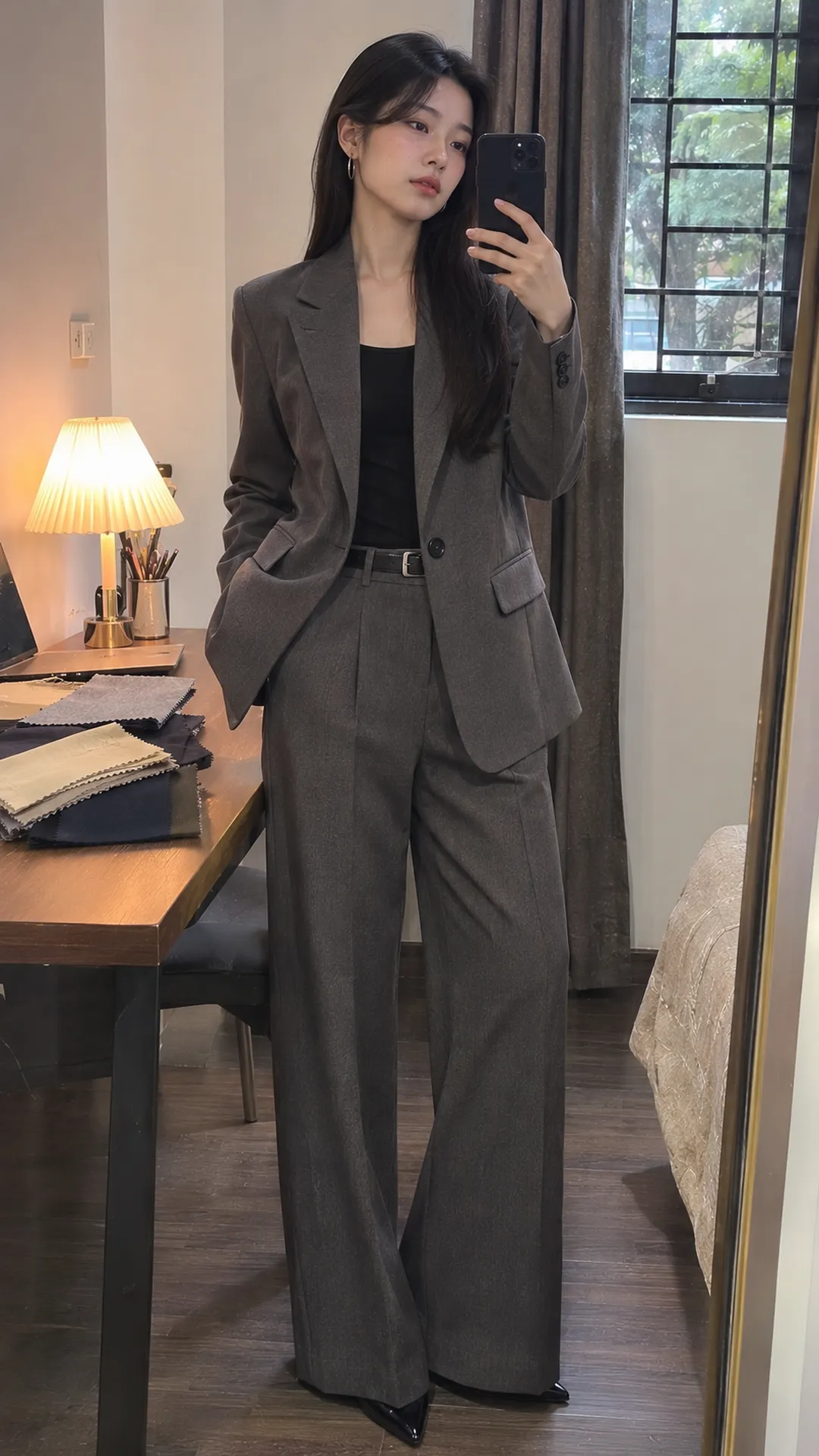
Three ways to style a coordinated suit
For work: a plain shirt and closed-toe shoes
Keep the inner top distinct enough from the suit to define the neckline. Cream gives gentle contrast with charcoal or deep blue; for lower contrast, choose a similar shade with another texture. The shirt collar should sit neatly under the lapels, without needing a large necklace when the two collars already provide interest.
A fresher look with a neat base top
Where the setting allows, replace the shirt with a plain T-shirt or fine knit of a suitable fit. Minimal surface detail makes the suit visually lighter while retaining its structure. Choose shoes for the destination's culture; sneakers are not the default for every office.
For base-layer necklines and lengths, see our Women's Tops Guide. An overly long or thick inner layer can bunch at the waistband and prevent a well-fitting jacket from lying flat.
For parties: one controlled highlight
Use the suit as a base and choose a subtly shiny inner top or earrings as the main accent. If the top already stands out, reduce prominent bag hardware and neck jewelry. With full-length pants, check the hem in your actual party shoes to avoid holding it up as you walk.
Our women's layering guide helps balance thickness and length between layers. A suit already has clear structure, so any extra layer needs a purpose; a waistcoat works only if the full outfit still allows comfortable movement and suits the temperature.
Decide by total cost and repeat wear
When comparing similar suits, use the same inner top and shoes. Photograph them in the same lighting to compare shade, sheen and drape. Do not let more elaborate styling on one set distract you from shoulder or hip fit problems.
Include hemming, waist alterations and label-directed care in your budget. Ask which areas can be altered and how long the work takes before your event. If the suit will fit only after multiple changes a tailor has not assessed, trying another cut may be more practical.
Photograph the full suit with at least two base tops you own. Then try the jacket and pants separately to see whether they add to your wardrobe or serve only one occasion. Wearing them separately is useful, but check for even color and fabric condition when reuniting the set.
After wearing, use a suitable hanger for the jacket, let the suit air and dry, and treat stains according to the material's instructions. Do not use one ironing temperature for every suit. A quality women's suit worth choosing has clear information, fits in motion and remains useful beyond its first wear.