

Baggy Pants for Petite Women: Rise, Inseam and Shape
This guide: focuses on baggy pants for petite women: length, rise, leg width and their relationship in an outfit. For the definition and identifying features, see what baggy pants are.
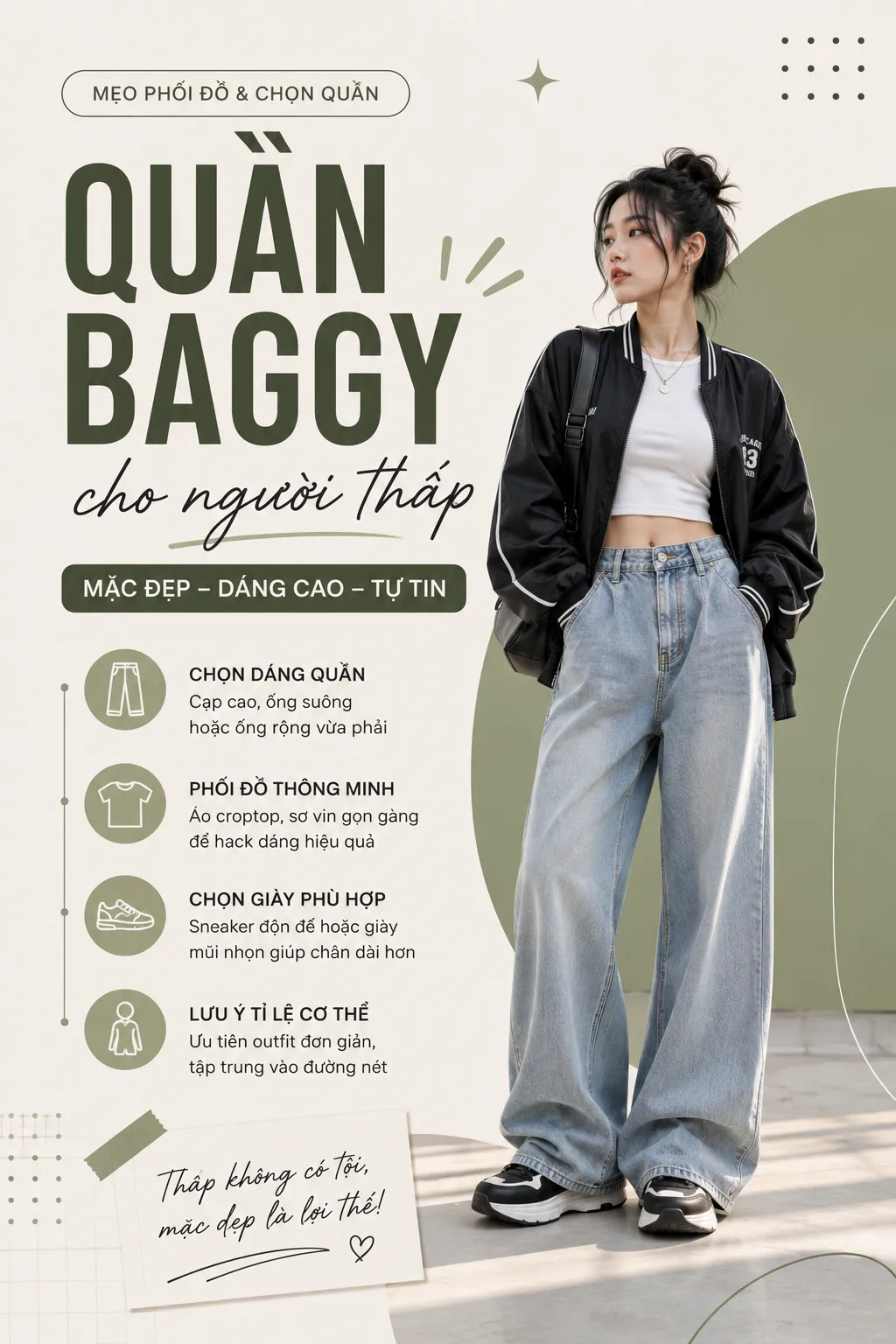
Guide collection: Women’s Trouser Guides: Cut, Rise and Styling
Shorter women can wear baggy pants with a comfortable waistband that stays put, a deliberate crotch depth, controlled leg volume and a chosen hem length. Buy a drafted baggy cut rather than relying on a larger size to create width. These checks serve a clearer line, rather than restrict intentional oversized styling.
Assess where the width sits, rather than height alone
Two trousers labeled baggy can read very differently. One places room at the hips and thighs, then falls straight; another combines a dropping waistband, deep crotch, low pockets and excess hem. On a shorter frame, details sit closer together, so a small placement change can be more apparent.
Before buying, ask where the waistband, crotch, pockets, widest area and hem will sit, rather than whether your height permits the garment. The guide to what baggy pants are explains the basic construction; this article addresses fit decisions for shorter frames. Once fit is established, use the women’s baggy-pants outfit guide for the broader top, shoe and layering combinations.
Compare the cut before ordering
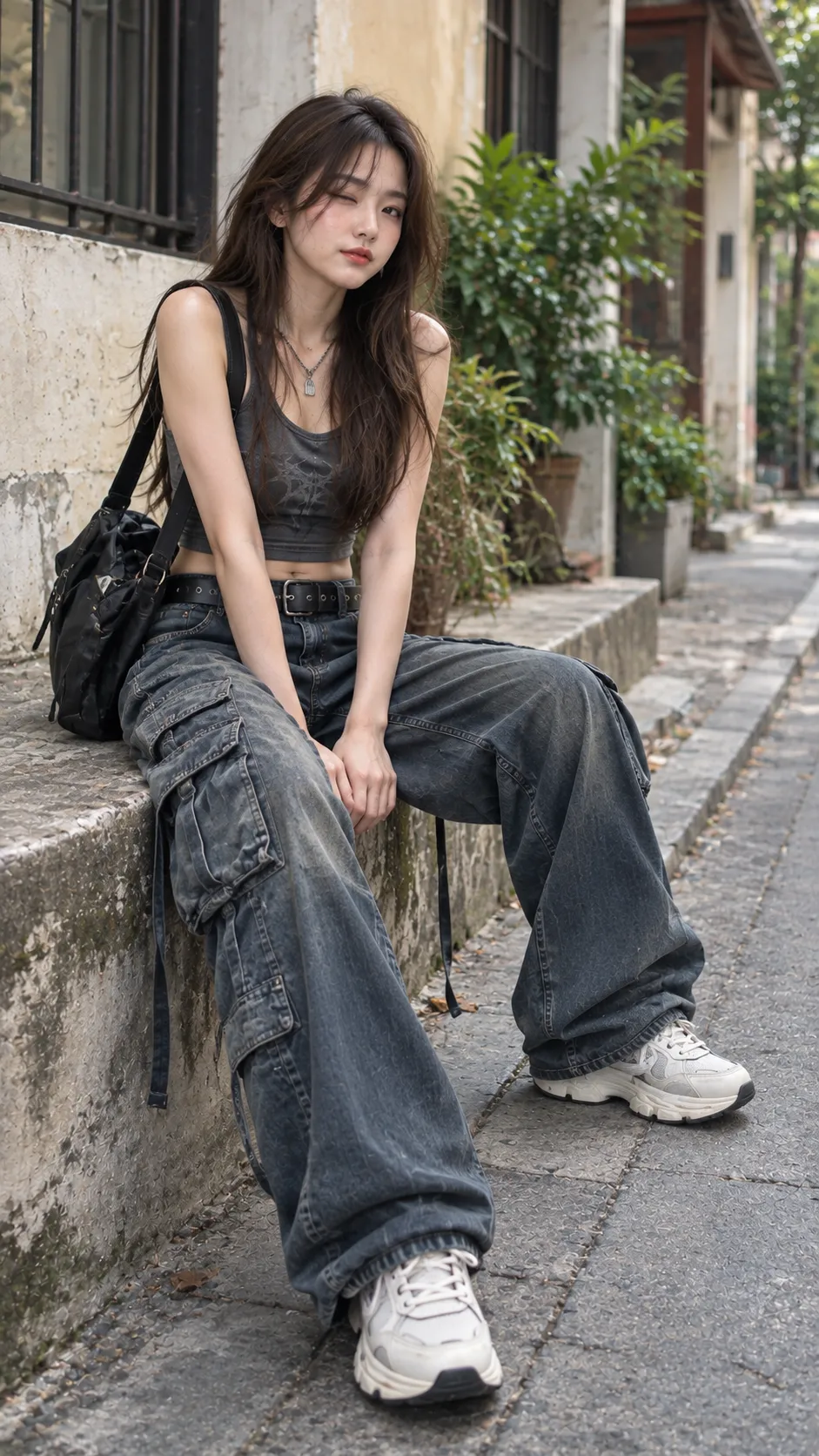
| Detail | For a clearer vertical line | Potential sources of unwanted bulk |
|---|---|---|
| Waistband | A neat mid- or high-rise waistband | A falling waistband held up by a tight belt |
| Front rise | Relaxed, compared with trousers that fit you well | An excessively deep crotch lowering the apparent leg start |
| Hip and thigh volume | A defined roomy area with a consistent side line | Bulging pockets, large pleats and heavy fabric adding width together |
| Leg taper | Straight or gently tapered | A very full leg narrowing abruptly at the ankle |
| Length | Meeting or lightly covering the shoe upper | A hem covering the shoes with several unwanted folds |
| Back pockets | Placed deliberately over the seat | Very low pockets moving visual focus downward |
Choose Trouser Length Beyond Body Height Alone
Two people at 155 cm can need different trouser lengths because leg-to-torso proportions and rise differ. Compare finished measurements with well-fitting trousers instead of relying only on a 160 cm model wearing size S.
Without inseam or rise measurements, an online fit prediction is less certain. A few centimeters at crotch or hem can change the composition, making an existing well-fitting pair a better reference than a letter size.
Three baggy shapes to consider
- Mid-rise, straight baggy cut.
A straightforward starting point: room at hips and thighs with a relatively continuous knee-to-hem line, provided measurements suit you.
- High-rise, gently tapered baggy cut.
An option for a defined outline without a very wide hem. Check for a gradual taper rather than a bulky elastic cuff if that is your goal.
- Moderate barrel cut.
A gentle curve adds shape; for less lower bulk, compare a widest point above the knee and a hem that is not extremely narrow.
After Fit: Avoid Unwanted Breaks from Waist to Shoes
This article complements the guide to what to wear with baggy pants. On a shorter frame, check the horizontal breaks : a hidden waistband, mid-hip top hem and stacked ankle can divide the lower silhouette several times.
- Top: a waistband-length top or tuck makes the apparent leg start clear; oversized tops also work with an intentional finishing point relative to the trousers’ widest area.
- Layer: a cropped jacket or open outer layer can reveal the vertical line more clearly than a closed long layer covering the waistband.
- Shoes: with strong trouser-to-shoe contrast, a clean hem makes the footwear easier to read than folds hiding the upper.
A crop and high waist offer one clear proportion. A moderately short baby tee, tucked shirt or cropped hoodie can create a similar waistband-to-hem relationship without that exact formula.
Related outfits to try
Look #31 is a direct baggy-jeans reference. Look #06 is retained to compare a high waist and leg starting point; it shows shorts rather than baggy pants.


Do not size up automatically
Sizing up straight trousers does not automatically create a drafted baggy fit. It can enlarge the waistband, deepen the crotch and move pockets and knee shaping down. A baggy pattern adds intended hip and thigh ease while keeping the waistband appropriately fitted.
When shopping online, compare finished garment measurements with well-fitting trousers. Useful figures include flat waist, hips and thighs, front rise, outseam and inseam. The alternative-fashion online size guide explains how to measure them.
Read product and customer photographs
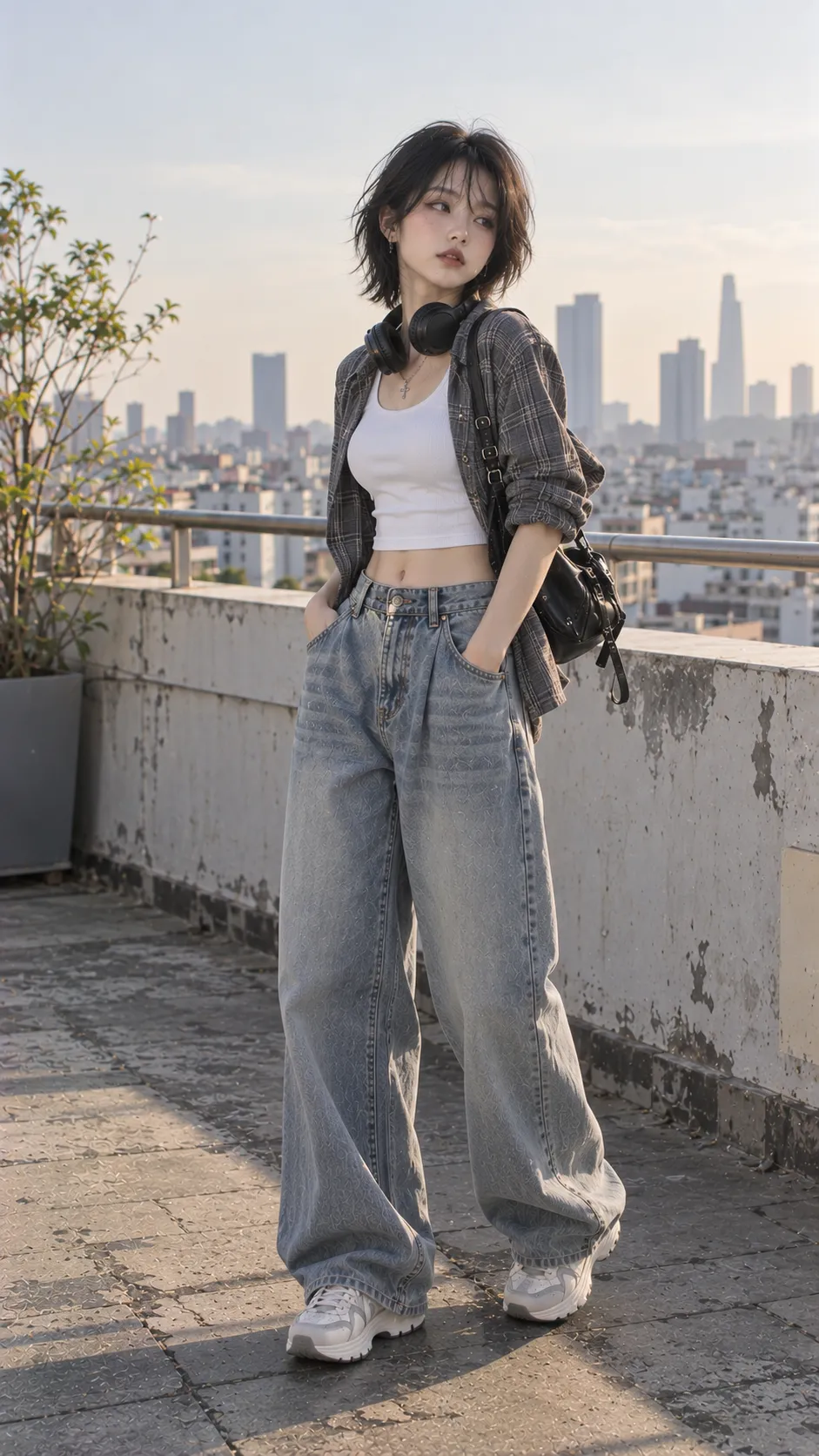
A front photograph is insufficient alone. Look for side views showing crotch and seam lines, back views showing pocket placement, and relaxed standing customer photographs. If every image pulls the waistband, raises the heels or hides the hem behind a bag, the fit evidence is incomplete.
More informative listings include
- Model height, worn size and garment measurements.
- A complete view from waistband to shoes.
- Side and back photographs.
- Fiber composition, stretch information and an indication of weight.
- Clear current size-exchange terms.
- Customer measurements where possible; height and weight alone are only contextual references.
Choose fabric for the intended shape
Moderate-weight denim or supple twill can hold a leg line without excessive hem bulk, depending on construction. Rigid denim with large pockets can add width; very soft denim can collapse and gather. Lightweight nylon can create volume quickly, so inspect length and drawcord placement. Fabric names alone do not predict the result.
For utility-pocket trousers, also see nylon versus twill cargos. A baggy cargo adds pockets and hardware, making detail placement as relevant as fiber type.
Try shoes and hems together
Hem length depends on footwear. A pair lightly covering substantial sneakers may stack over thinner soles. Try the actual shoe category you wear before deciding on alterations.
| Shoes | What to check |
|---|---|
| Chunky sneakers | The hem lightly covers the upper while leaving the shoe shape visible. |
| Ankle boots | The hem does not catch on the shaft and create unwanted puffing. |
| Platforms | A raised sole can accommodate more length; recheck when switching to lower shoes. |
| Thin-soled shoes | Use a clean hem with little unwanted stacking and keep the foot visible. |
If waist, hips and crotch fit and only 1–2 cm is excess, a hem alteration may be practical. If shortening moves the taper, wash detail or barrel curve substantially, the problem involves pattern proportions as well as length.
A 60-second arrival check
- Stand without pulling up the waistband.
The trousers should stay where intended. A falling waist and dropped crotch suggest a size or pattern mismatch.
- Sit down and stand up.
Check for gaping pockets, crotch strain and waistband movement.
- Wear your actual shoes.
See how much upper the hem covers and whether it hides the whole foot.
- Take front, side and back photographs.
Relaxed standing photographs can show proportions more clearly than a posed mirror view. This brief check does not prove all-day comfort.
When to alter the hem
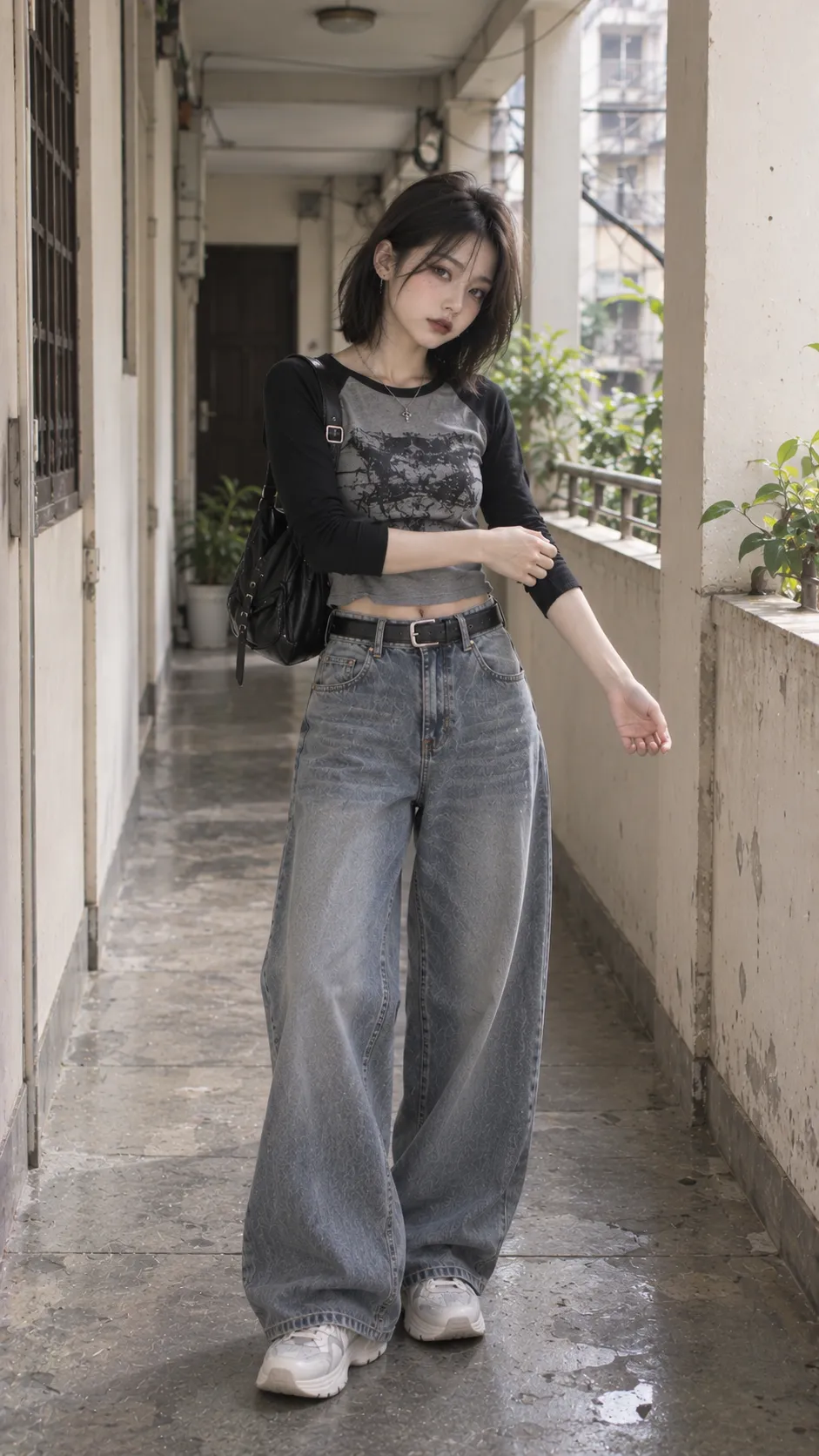
If waist, hips, crotch and leg width fit but length is excessive, hemming can be more useful than changing size. Wash details, drawcords, zips and barrel shaping may complicate it. Ask a tailor or seller whether shortening preserves the design and include the alteration cost in your decision.
See proportions beyond the listing: open Look #17 Baddie Streetwear (Vietnamese) to compare waistband, leg volume and hem in a complete outfit, then save a reference in Closet (Vietnamese).
Conclusion: buy for garment proportions
Petite baggy pants need not become tight, cropped or lose their streetwear character. For a clear vertical line, check waistband stability, crotch depth, the widest point and hem volume. Deliberate width can remain prominent without unwanted fabric buildup.
Before ordering, record measurements from a well-fitting pair. Letter size, model weight and a claim of a roomy fit are secondary signals; finished measurements and clear photographs support the actual comparison.
Frequently Asked Questions
Can petite women wear baggy pants?
Yes. Height does not exclude them. For a clearer line, try a comfortable mid or high rise, a deliberate crotch depth and hem length, and hip–thigh volume rather than unwanted ankle buildup.
Should petite women choose high- or low-rise baggy pants?
Mid and high rises more readily place the apparent leg start higher. Low rises remain an option; compare crotch depth and whether the top covers the waistband if you want a longer-looking lower line.
Should you buy baggy pants one size larger?
Not automatically. A baggy cut already includes intended ease. A larger size can lower the waistband, crotch and pockets and add excess length. Compare finished measurements instead.
What length should petite baggy pants be?
There is no universal figure. For a clean hem, aim to meet or partly cover your shoes without unwanted folds. Use the inseam of well-fitting trousers rather than body height alone.
Which shoes work with petite baggy pants?
High shoes are optional. Match the hem to the footwear: moderate sneakers, platforms or ankle boots can accommodate different lengths. With thin soles, less stacking and a clean hem may be more practical.