Polo is a shirt type, not a generic brand name
Searches for a polo brand or an authentic polo can mix garment and brand names. Read them separately: the product is a polo shirt, while manufacturer, distributor and warranty provider should be identified through the brand, seller and purchase policies.
A collared tee is a broader everyday description. Not every collared top is a polo: shirts generally have full-length button openings, while zipped or buttonless collared designs need closer construction checks. A “German collar” sales description does not establish material or formality.
Lacoste describes its polo range through several variations, from cotton petit piqué to technical materials. The useful shopping lesson is to read each product rather than assigning one fixed fiber content to every polo.
Check collar and placket in the mirror
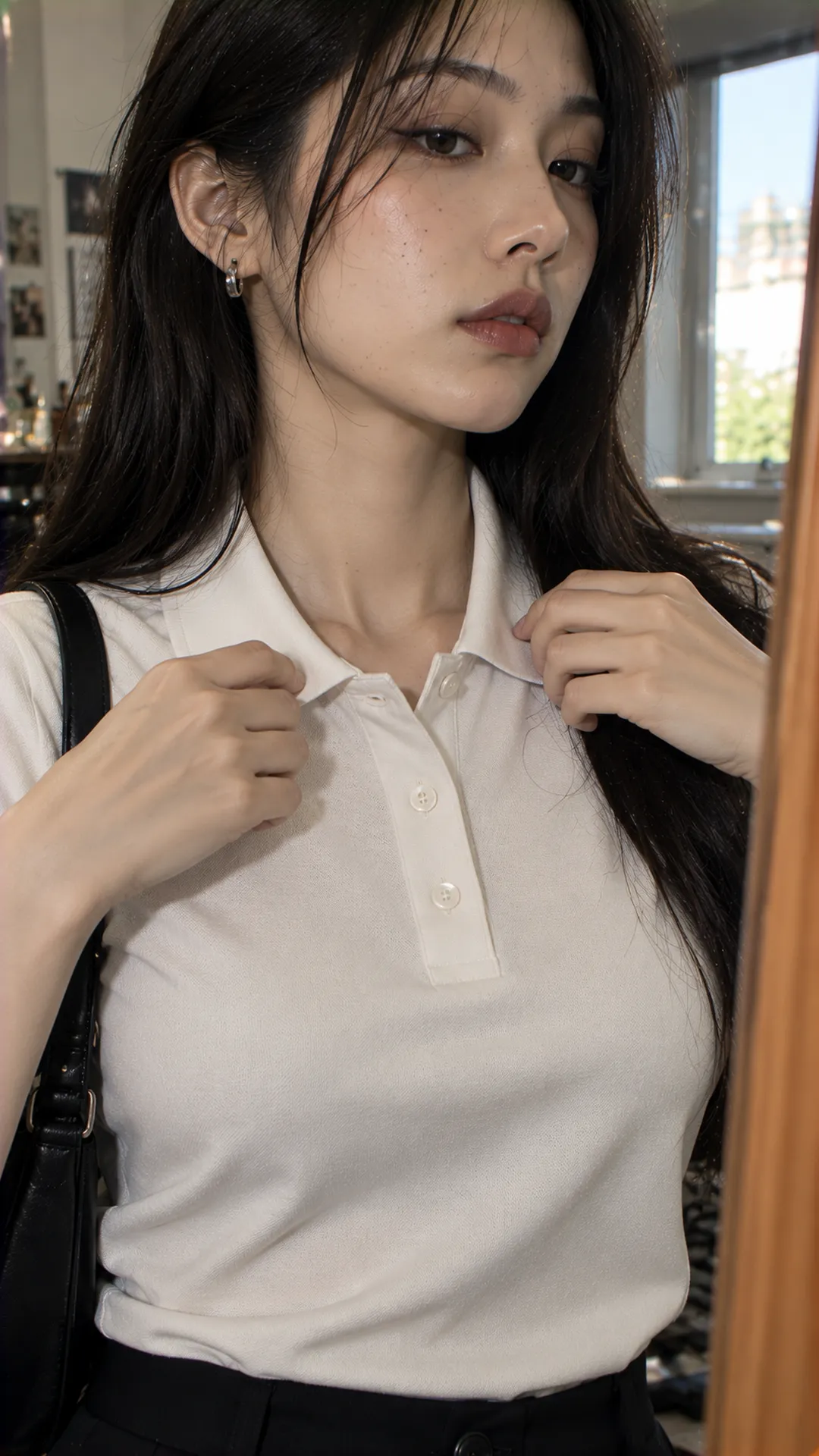
The collar sits near the face and is highly visible. Straighten the shirt and check whether both sides follow the design or one twists or lifts unexpectedly. A soft collar is not automatically inferior; it creates a different effect from a structured one. Check evenness and whether the shape suits your intended look.
Fasten the buttons you would normally use, then reach forward. If the placket gaps or pulls sideways, try another size or cut. Do not judge only standing upright: a shirt may fit with arms down but strain when typing, wearing a backpack or sitting in class.
A contrasting collar trim already supplies an accent. A large necklace immediately beside it may crowd the neckline. Omit it, choose small earrings or open a button when construction and context allow. A white polo with a blue collar can connect that blue to trousers or shoes.
Choose fitted, straight or loose cuts through movement
Fitted cuts: check recovery and thickness
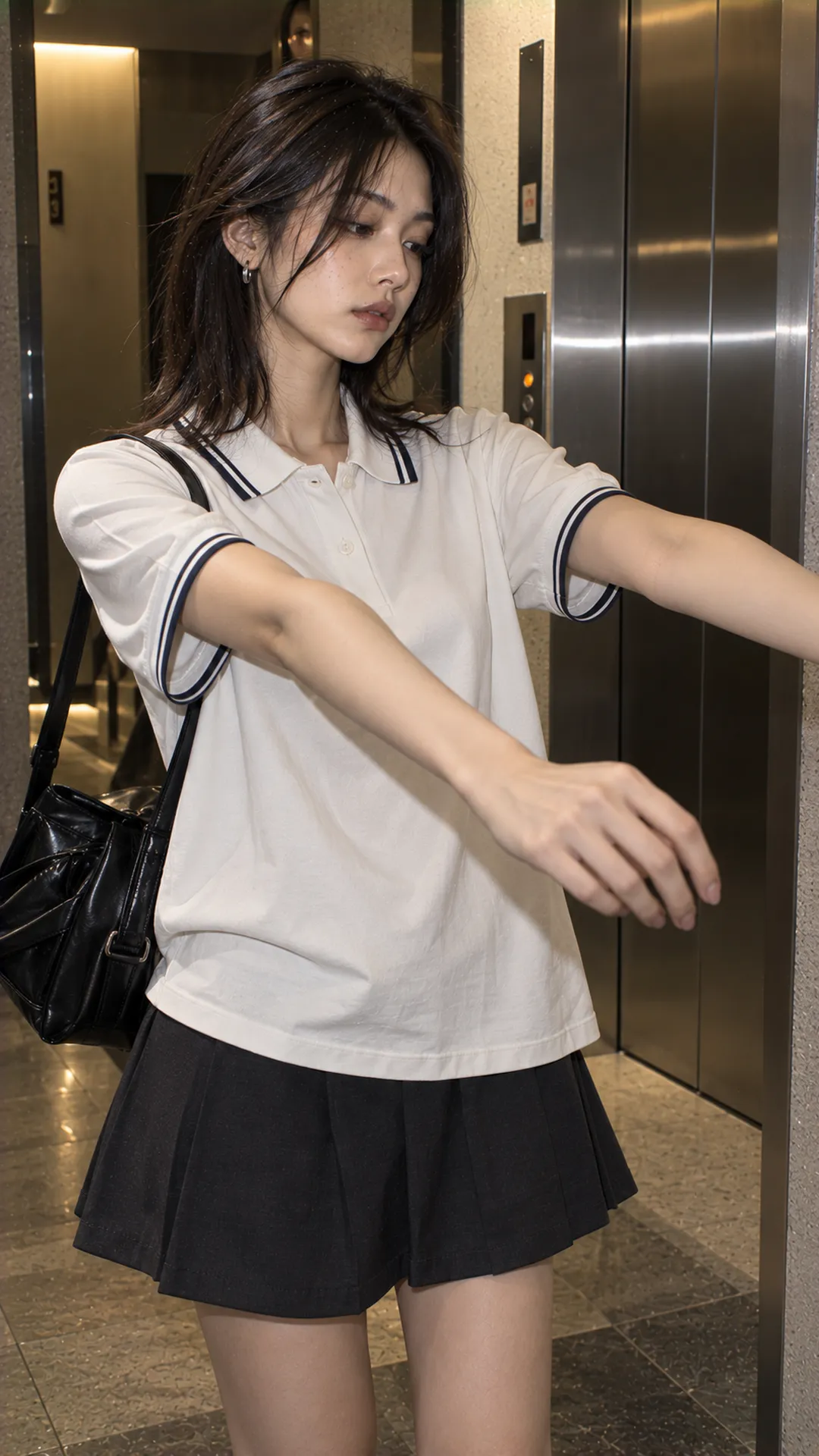
A fitted polo defines the torso and can balance wide trousers or a flared skirt. Turn and raise your arms moderately to see whether the hem rises too far. Stretch does not mean buying smaller; persistent strain at the placket, armholes and shoulders still indicates unsuitable construction.
Straight cuts: consider shoulders and length
A straight cut serves varied plans when there is room at the bust, armholes and stomach. Shoulder seams may align with your shoulders or drop intentionally. Look at sleeves too: long sleeves plus a long body can form a different block from the product image, especially with wide trousers.
Loose cuts: choose an intentional endpoint
A roomy polo can work with straight trousers or a short skirt, but decide where its hem ends. If it hides most of the skirt, distinguishing two garments becomes difficult. Try a shorter top, partial tuck or longer skirt; loose clothing is not forbidden for any body shape.
To compare other tops, the women's tops guide moves from garment names to practical questions of length, width and accompanying layers.
Read fabric information beyond “cool” or “premium”
Piqué commonly describes a fabric structure with a small raised texture; it does not establish full fiber composition. Smooth, ribbed-knit and mesh polos also drape differently. Consider fiber label, thickness, finishing and actual feel together.
For example, Li-Ning's women's P-APLR126-9V polo lists polyester and elastane, showing that polo does not automatically mean cotton. This describes one design, not proof that all garments with those fibers share breathability, stretch or movement performance.
For white or cream polos, check transparency under lighting like your destination's with the intended undergarment. Fabric appearing opaque against a dark photographic background may differ near a window. Check whether seams or underlayer edges show too strongly through the body.
Long sleeves can help when you want arm coverage or spend time in air conditioning, but do not automatically suit heat. Test cuff room, the ability to push sleeves up and overall thickness. If adding a jacket, a light short-sleeved polo may be more adaptable than several thick layers.
School outfits: prioritize sitting and what you carry
Try a straight-cut beige polo, dark-blue straight-leg jeans and simple sneakers. Tuck or leave out according to length; avoid a thick bundle at the waist when sitting. Try the actual tote or backpack to see whether straps keep displacing the collar.
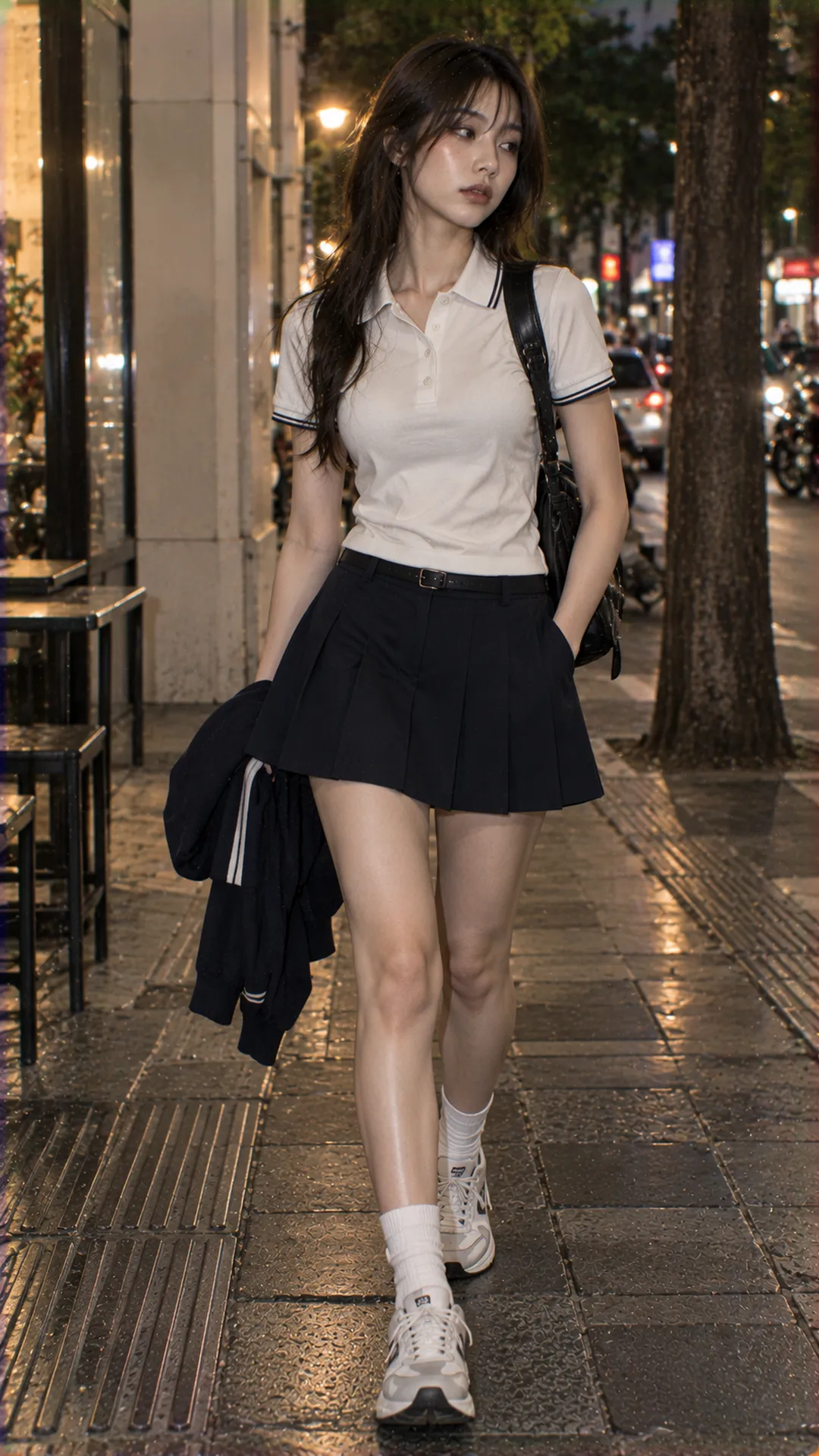
For a skirt, pair a plain white polo with an A-line design of a school-appropriate length. The collar defines the upper half while the skirt opens below. With a fitted ribbed hem, let it sit naturally first; a full tuck may roll the ribbing and create bulk.
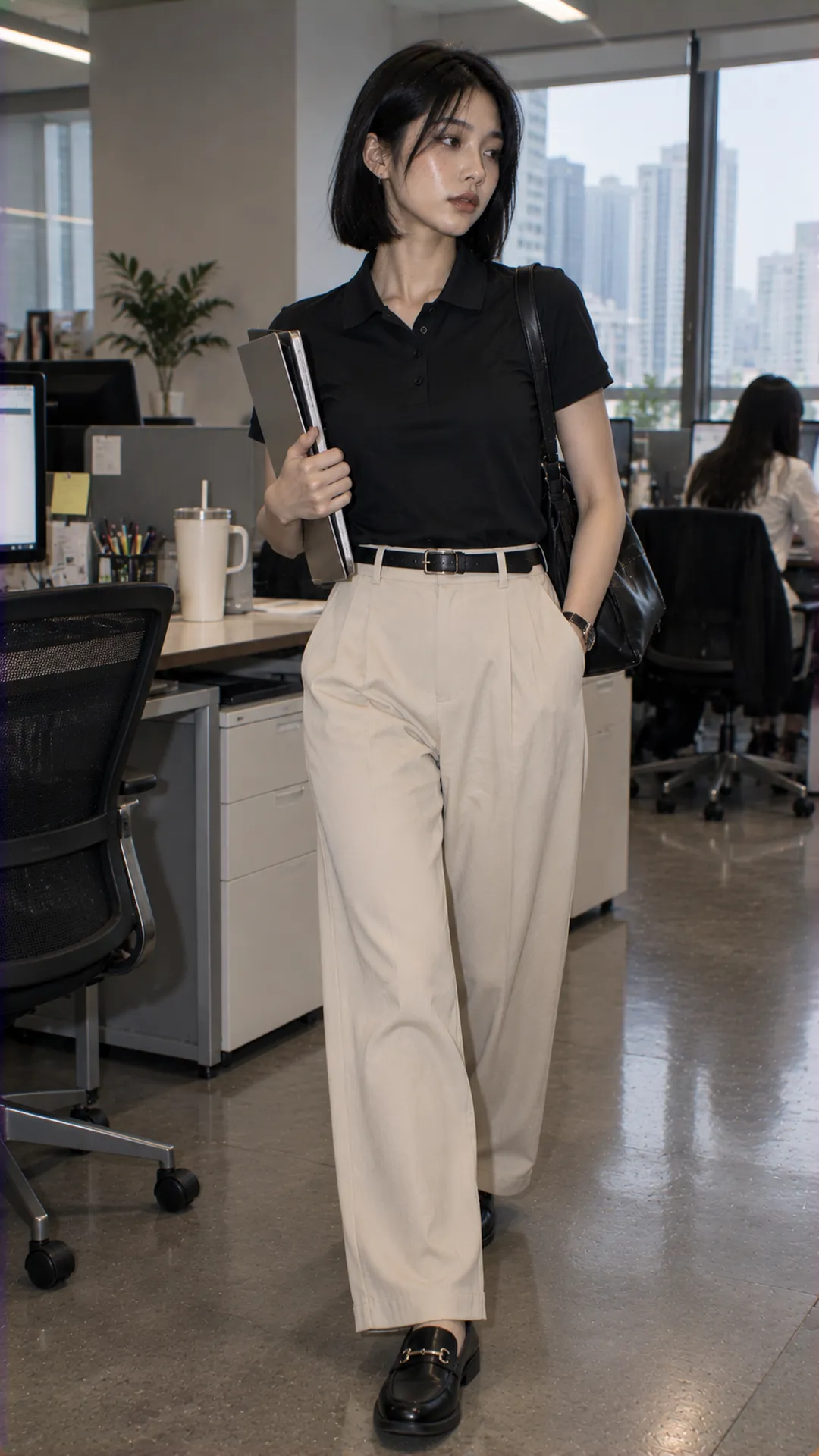
For more edge, try a black polo with light collar trim, straight gray trousers and black shoes. The trim provides a small highlight without many contrasting accessories. Check uniform or school rules before assuming it works every day.

Work outfits: a collar is only part of looking polished
Where polos are permitted, start with a well-fitting plain one, straight tailored trousers and loafers or streamlined flats. A flat placket, intentional hem and clean shoes often matter more than a prominent logo. A polo does not replace a shirt or suit specifically required by work.
For a blazer, try both together and inspect collar and armholes. A thick polo collar can bunch under lapels; stiff sleeve ribbing may show through blazer sleeves. The outer layer needs movement room, not merely a fit with arms down.
The Smart Casual guide helps assess the whole outfit's polish. For a client meeting or special event, read its requirements rather than inferring them from ordinary office clothing.
Change color and proportions to reduce a uniform effect
Color-blocked or striped polos already have visual rhythm. Take one shirt color into the lower garment for simpler coordination. A cream-and-navy striped polo can work with plain navy trousers; the bag need not repeat stripes for coordination.
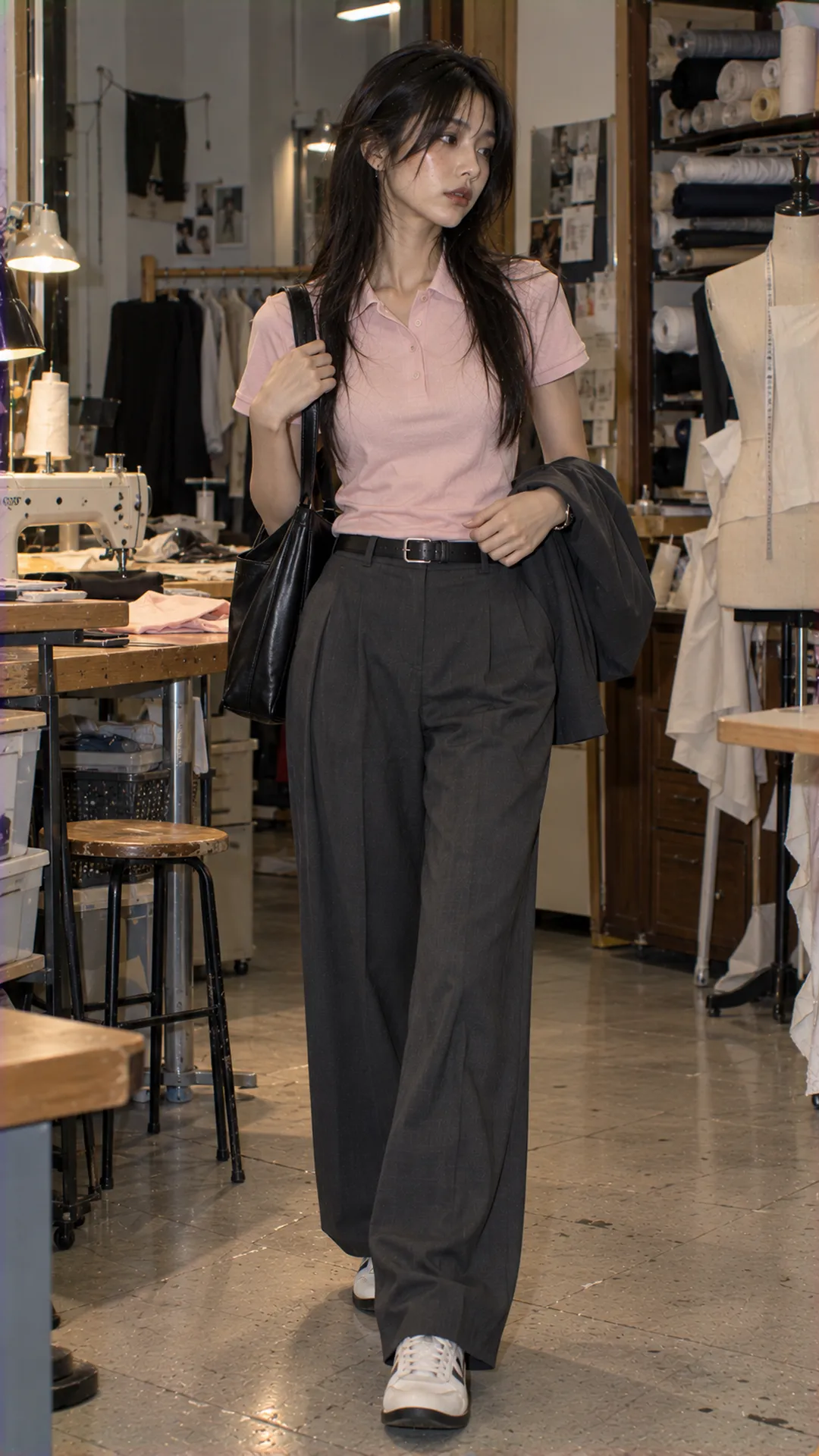
With a pink polo, try charcoal trousers and a small silver shoe accent to retain pink with less sweetness. Yellow can work with dark-blue denim; a plain bag avoids another competing feature. These are accent suggestions, not mandatory color rules.
For fewer details, understanding minimalist style helps focus on shoulders, hems and surfaces. Cream with black can remain interesting through a moderately structured collar, neat sleeves and soft top fabric contrasting with creased trousers.
Without buying another polo, photograph three treatments of one outfit: the natural hem, full tuck and front tuck. Keep the camera at the same level and angle. You can see which proportions work without readjusting after every sit.
Buying online and caring for a polo
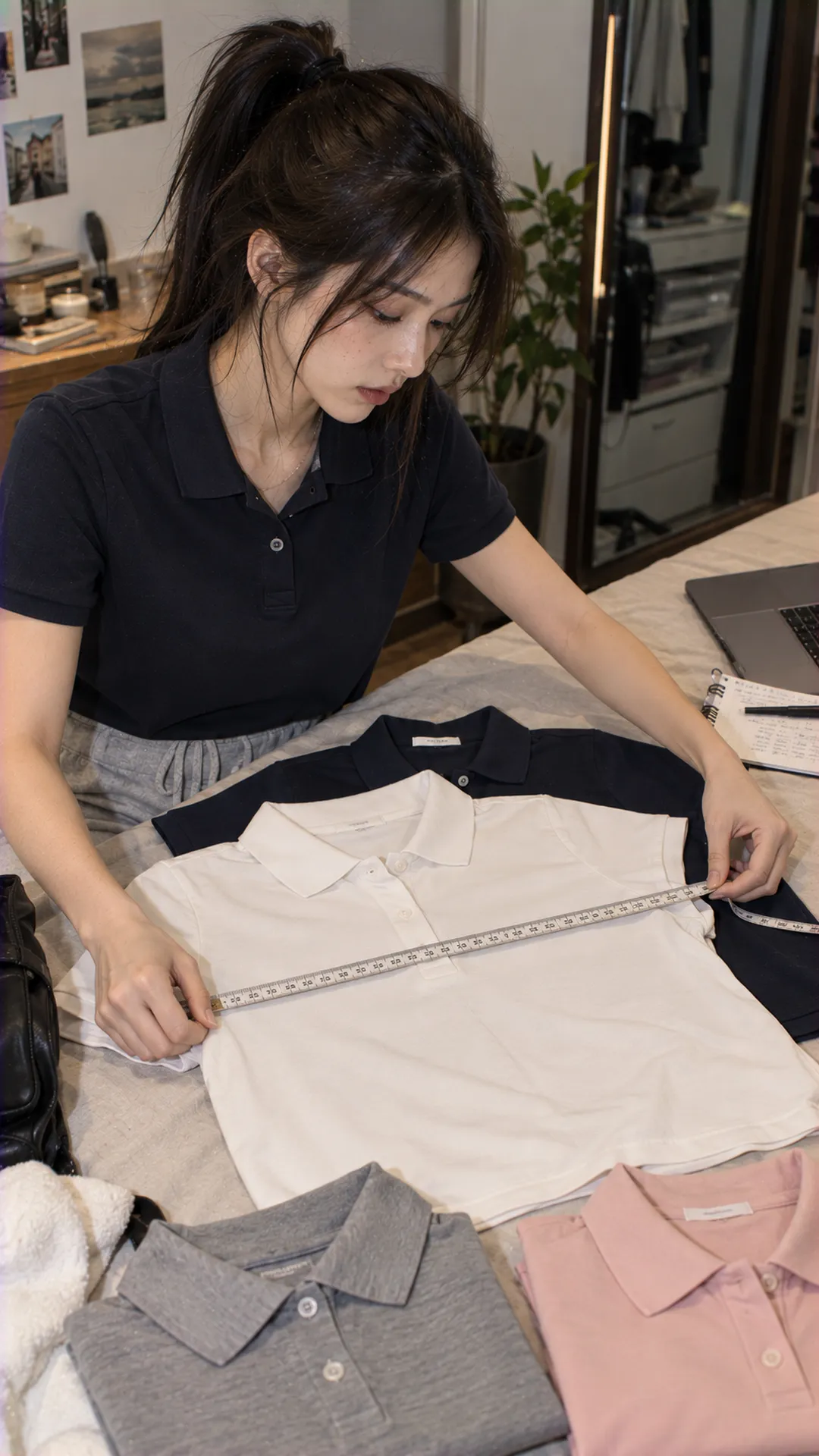
Compare finished measurements with a well-fitting shirt, using matching methods for chest width, shoulders and body length. If a store lists only weight and height, request measurements and stretch information. Equal body weight can require different cuts; a simple conversion chart cannot guarantee fit.
For genuine branded polos, check brand-published retail channels, order information and return policies. A logo, stitch or high price alone does not establish authenticity. “Designer,” “premium” and “American polo” in a sales title cannot replace clear origin information.
Read the care label before washing, especially color-blocked shirts, separately knitted collars or decorative details. Reshape collar and placket according to the product's guidance; do not assume all polos tolerate hot tumble drying. Store fully dry and check whether hanging stretches the shoulders.
If the polo forms an inner layer, explore assigning roles to clothing layers to choose outerwear. A polo worth keeping has a stable collar and body, combines with your existing clothes and lets you study, work and travel without constant adjustment.