

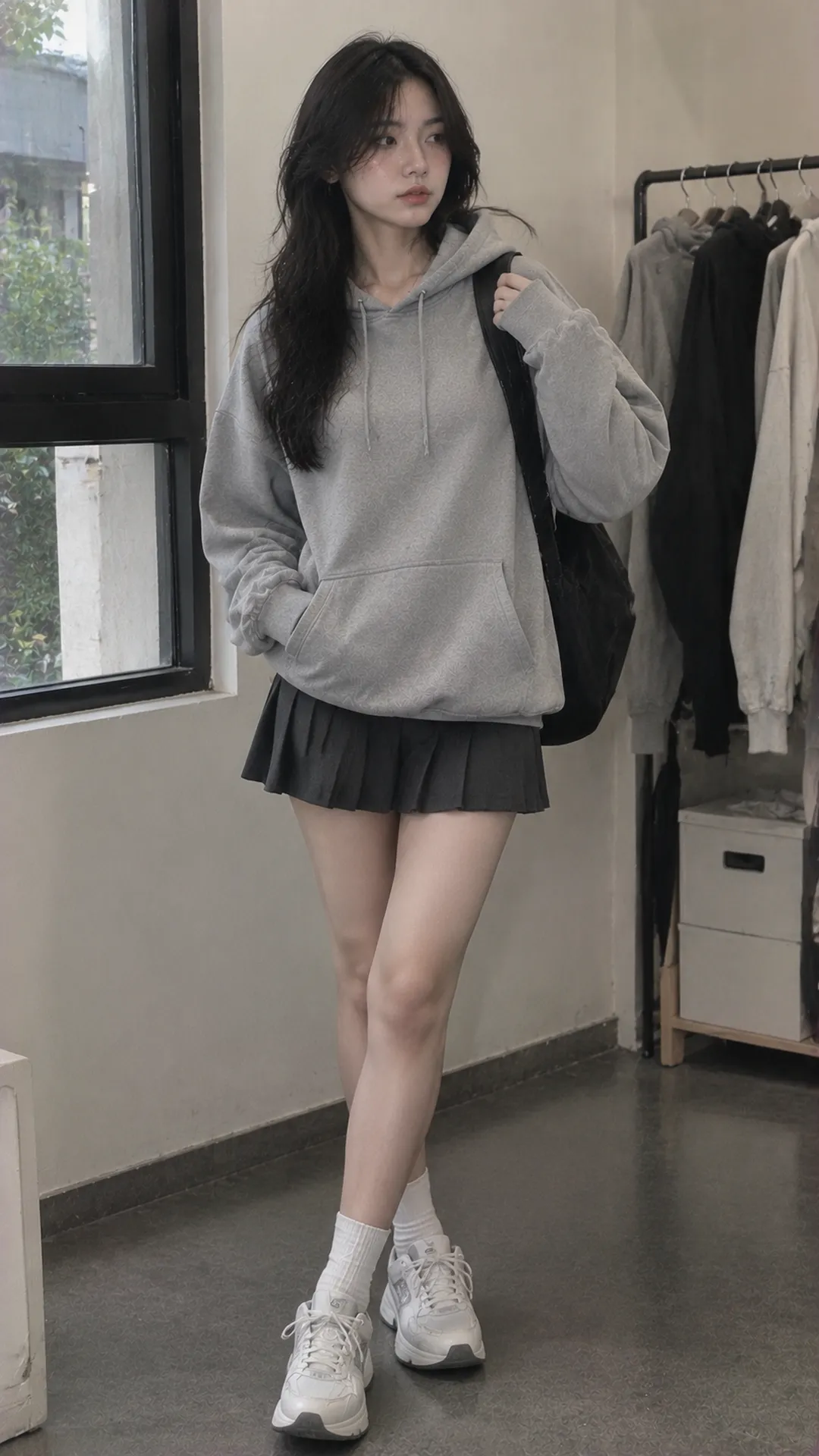
How do áo nỉ, sweatshirts, sweaters, and hoodies differ?
Vietnamese listings often use “áo nỉ” for soft-surfaced or soft-backed tops, including pullovers and zip-front styles. In English, a sweatshirt is usually a substantial casual pullover or similar garment. Product names can overlap, so look at the inside fabric and fiber content separately.
In English, a sweater is usually knitted. Some Vietnamese stores also use “sweater” for a hoodless sweatshirt. Check the actual garment when you see listings such as “women’s sweater” or “American sweater.” The wording alone won’t establish where it was made, what it contains, or how long it will last.
A hoodie adds a hood and extra volume behind the neck. If you want a loose hooded style, see our guide to styling oversized hoodies for women. This guide focuses on hoodless sweatshirts and sweaters, including zip-front and collared options.
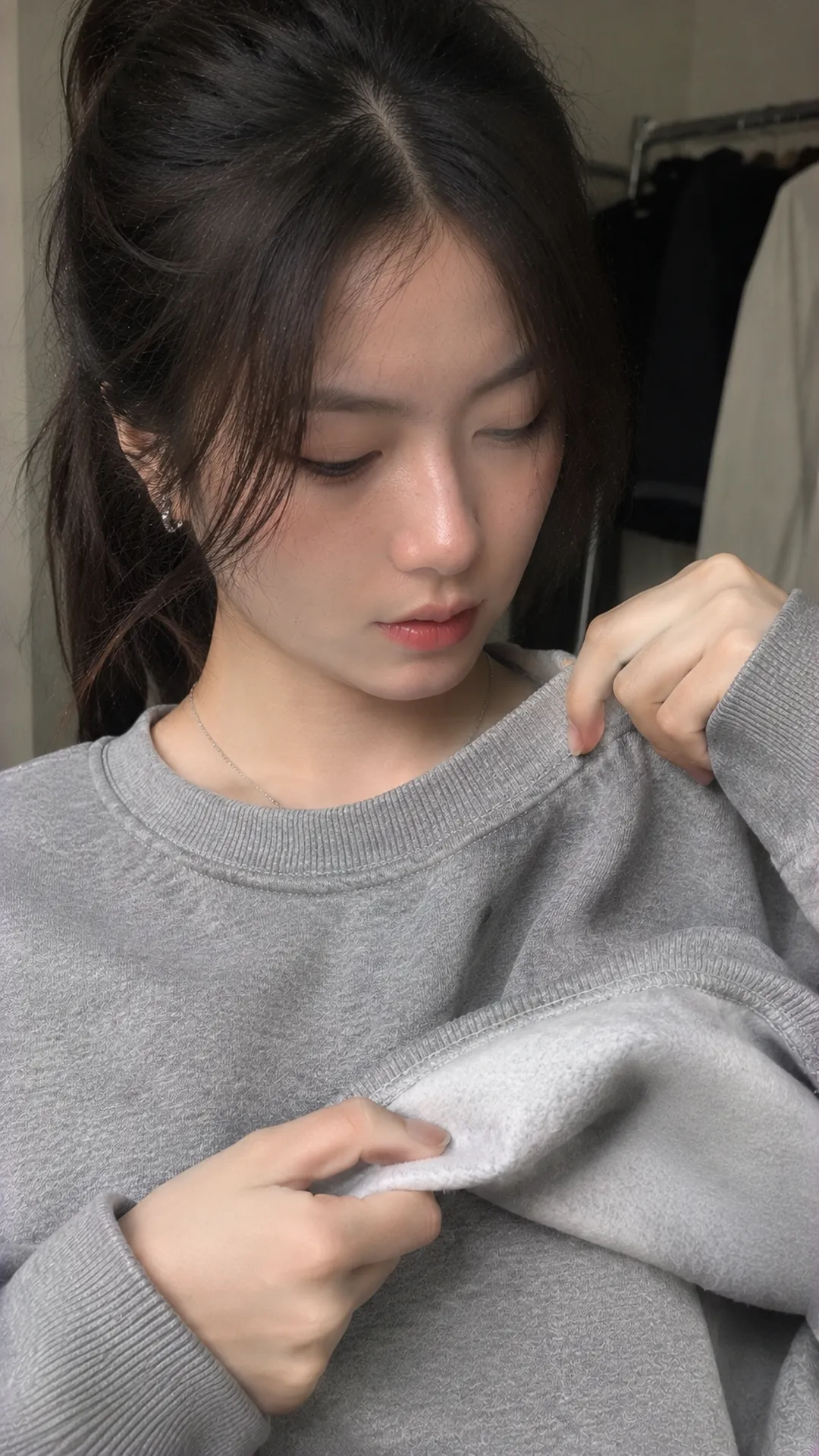
Look at the inside of the fabric
Check whether the inside has visible yarn loops or a brushed surface, then read the fiber label. Texture and fiber content answer different questions. A soft surface can come from several fibers, and a high cotton percentage won’t tell you the fabric’s thickness.
For example, Goodwear’s French terry product is described as having loops on the inside. The listing also gives different fiber contents for some colors. Check the exact color and version before assuming all tops in the same line are alike.
With a brushed interior, feel the neck, cuffs, and seams where they touch your skin. If you shop online, ask for a close-up of the inside and the care label. A listing that says “premium sweatshirt” or shows the top on a hanger won’t establish breathability, wind resistance, or warmth.
Thickness also affects how the sweatshirt sits at the waist and under a jacket. A thick top with a snug hem band can round out the waist. A softer fabric with a free-hanging hem gives a different line. Choose the shape you like and consider the temperature and time you’ll have it on.
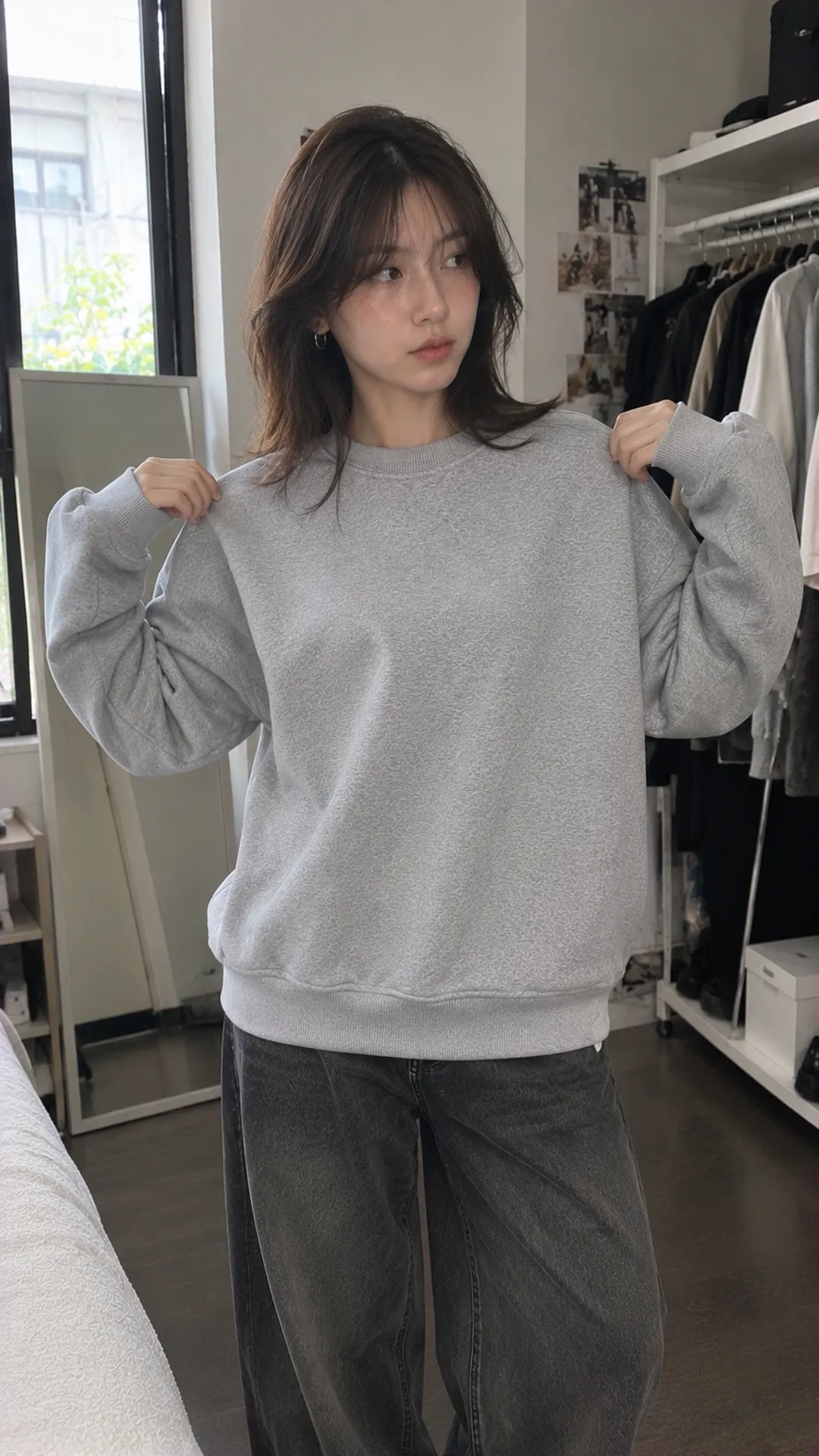
Check the fit in four steps
Stand naturally with your arms relaxed and look at the shoulders, sleeve length, and hem. Dropped shoulders can be intentional. Check whether the fabric under your arms leaves room to move instead of judging the fit by the shoulder seam alone.
Reach both arms forward as if holding handlebars or carrying a bag. If the back pulls, try a different cut or a little more room. If the sleeves fall well past your hands, check sleeve length and cuffs before rolling several folds.
Sit down to see whether the hem bunches at your stomach or rides higher than you want. A banded hem and a loose hem can sit in different places even at the same measured length. Try the top with the waistband you actually plan to wear.
Finally, put on your usual jacket if you’ll wear the sweatshirt underneath it. Check that you still have room at the shoulders, armholes, and elbows. If a sweatshirt fits on its own but feels tight under a slim jacket, try a less bulky inner layer or a roomier jacket.
Crewnecks, high collars, and zip-front sweatshirts
Crewneck for a simple neckline
A crewneck keeps the area around the face simple and works with loose hair, small earrings, or a shirt underneath. Check whether the neckline pulls, curls, or shifts. If you want to show the collar underneath, arrange it deliberately and see how it sits after you move.
A high neck or short zip
A high collar or short zipper adds a vertical detail. Try it open and closed to see whether the collar hits your chin or presses into the base layer. When the collar stands out, a simpler scarf or necklace can keep that area clear.
A front-opening sweatshirt
A zip-front style is easy to remove without pulling it over your head. Check that the zipper runs smoothly and the body doesn’t ripple sharply when closed. Choose a base layer you can wear on its own if you take the sweatshirt off indoors or while moving around.
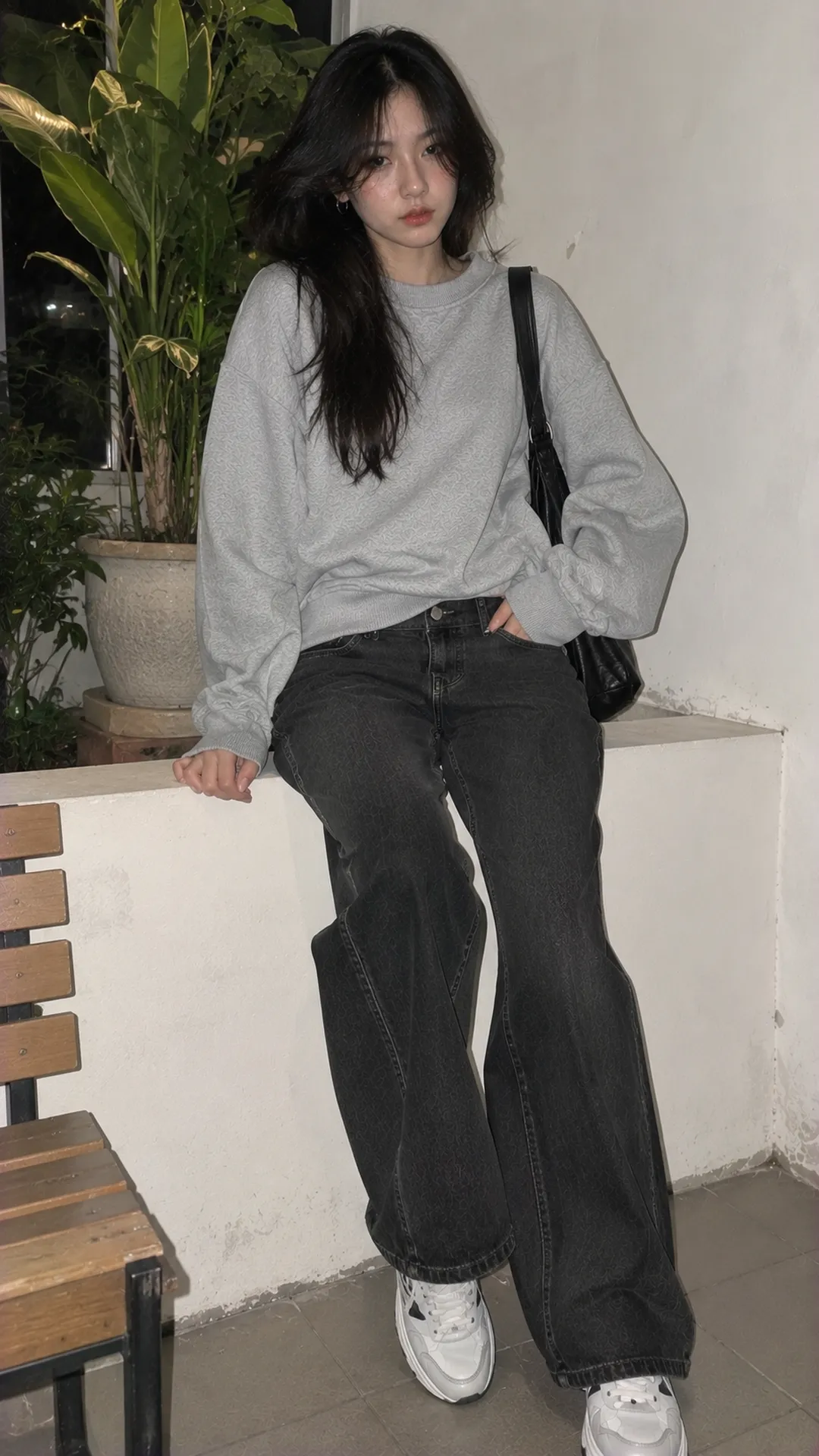
With pants, start where the hem meets the waist
A fitted sweatshirt and straight-leg jeans are an easy combination. Decide where you want the break between the top and bottom. If the top covers the waist and hangs neatly, leave it loose. To show more of the waistband, try a shorter sweatshirt before tucking in thick fabric.
With wide-leg pants, adjust the sweatshirt length before reducing width. Two loose pieces can work together if the hems and shoulders have definition and the shoes are still visible. A moderately cropped sweatshirt or a hem band that stays where you want it can make the proportions clearer.
With slim pants, a longer top gives a different effect from a cropped one. Choose the coverage you like and sit down to check it. Look for proportions and coverage that work in motion instead of applying a rule by body type.
If you’re unsure about the pants shape, see our women’s pants styling guide. Keep the sweatshirt on and compare two cuts so you can see what changes before switching the shoes, bag, or jacket.
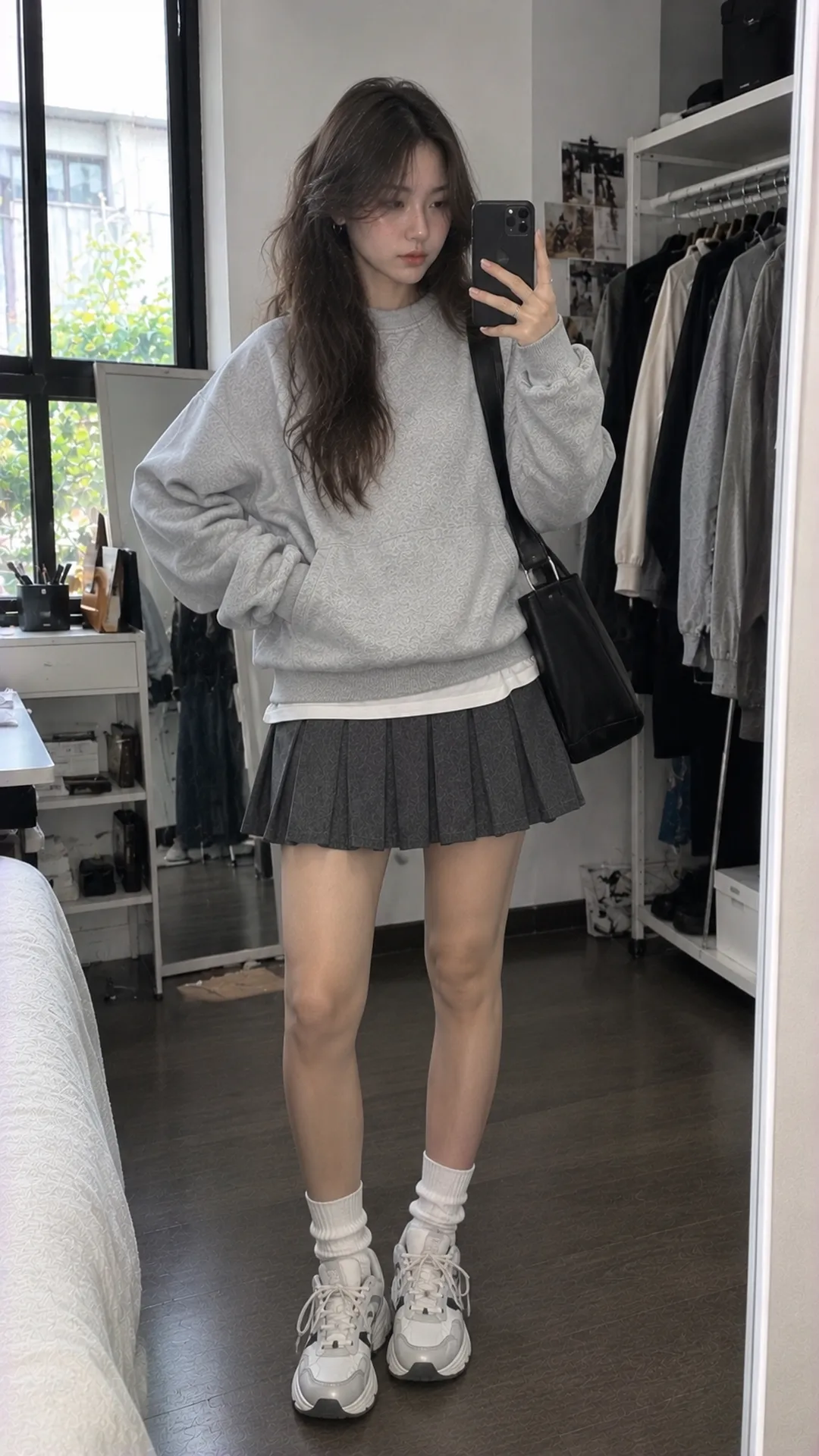
Wear a sweatshirt with a skirt without adding bulk
An A-line or flared skirt gives a contrast between the volume of the sweatshirt and the movement of the skirt. With a long, thick top, try a shorter hem, a small front tuck, or leaving it loose. Check whether you can still see the flare.
A straight or fluid skirt can contrast with the sweatshirt’s texture without more colors. Try a plain gray top and dark skirt as a base for different shoes. If both pieces have busy prints, choose which one should stand out and simplify the other.
Our women’s skirts and dresses guide covers length, flare, and hems. Check where your bag sits too. A bag at the hem band may bunch up the top or hide the waistline you just defined.
Choose colors and outer layers that suit the sweatshirt
Try plain pants or a plain skirt with a large print. Pick up a print color in one small accessory if you like. If the sweatshirt is plain, the bag, shoes, or texture of the bottoms can stand out instead.
A light top with dark bottoms creates a clear break. Similar shades give a more continuous line, so look at textures and hems to keep the shapes distinct. A full-length photo in ordinary light shows which color takes up the most space.
When adding a jacket, see our guide to layering women’s outfits for ways to balance length and width. Keep a thin base layer, sweatshirt, and jacket together if each has a purpose and you can still move comfortably.
Choose a top you’ll wear and can care for
Before buying, decide whether you’ll wear it in air conditioning, in the evening, on trips, or mainly outdoors. Choose the weight and fastening for that setting. In a warm climate, an easy-to-remove layer may get more use than a heavy sweatshirt saved for a few occasions.
Check washing, drying, and print-care instructions before wearing it. Sweatshirts and sweaters can have different fibers and finishes, so follow the label’s heat settings. If ironing is allowed, check how to handle the print before pressing it.
When the top arrives, try it with at least one pair of pants and one outer layer you already have. If you keep adjusting the hem or sleeves, or have to change the rest of the outfit to make it work, reconsider the cut. Our women’s tops guide can help you choose a style that fits the way you dress.
For online orders, compare flat measurements with a top that fits, especially chest width, body length, and sleeve length. Ask how the measurements were taken if the chart is unclear. The room needed for a base layer depends on what you’ll wear underneath. Take a photo before washing and check the return policy if it doesn’t fit. Avoid cutting, stretching, or hot-washing it to force it into shape.