

How to Style an Oversized Hoodie: Nine Women's Outfit Ideas
An oversized hoodie creates a substantial upper-body shape. Styling it does not require the rule that a loose top must meet tight trousers: decide where to balance, repeat or interrupt the volume.
Consider body length, dropped shoulders, hem, bottoms and shoes together. Slim, wide, mini and layered combinations can all work when their endpoints remain clear.
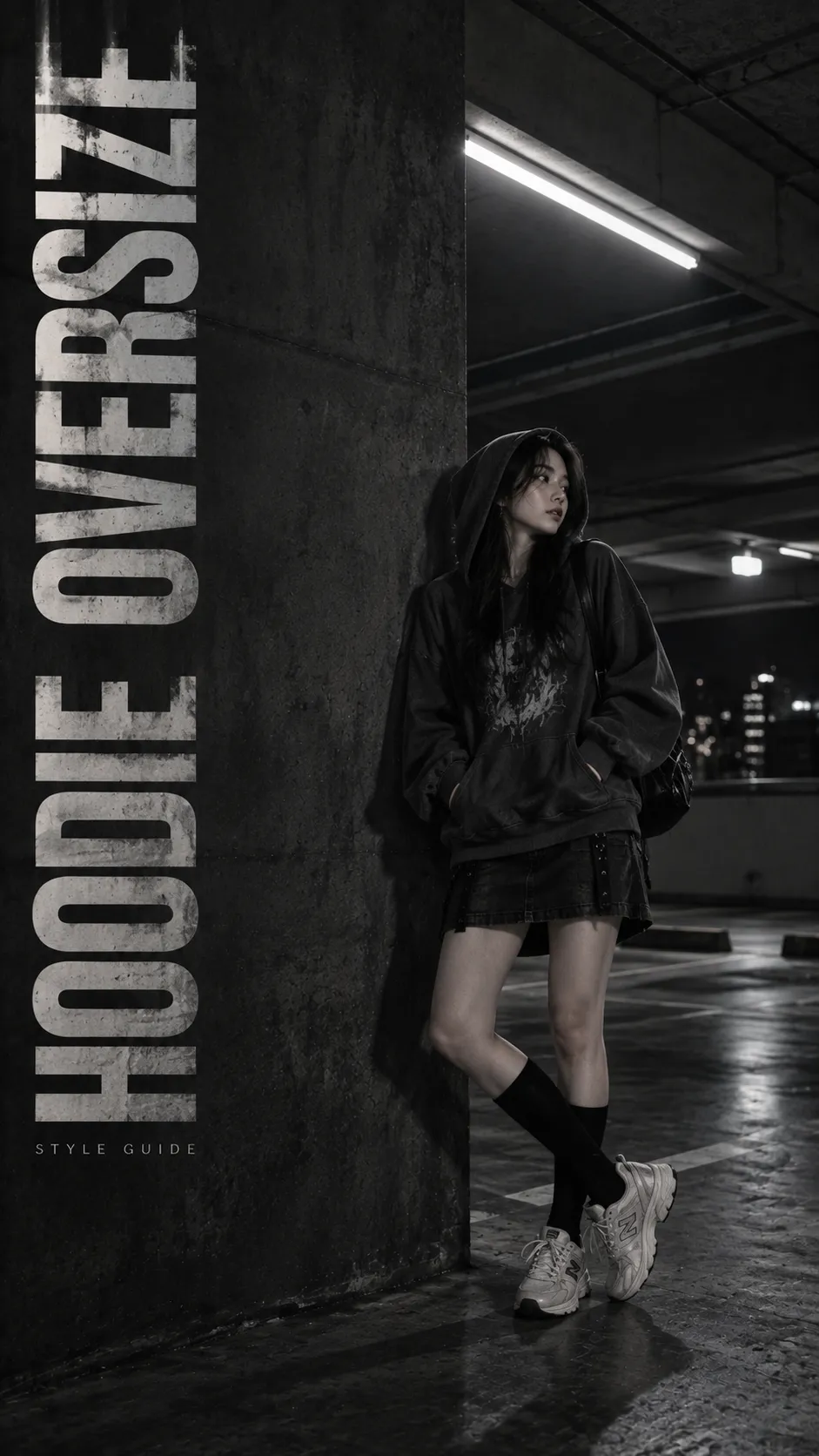
Guide collection: Women's Tops Guide: Fit, Layers and Styling (Vietnamese)
Why Can an Oversized Hoodie Overwhelm the Silhouette?
Dropped shoulders, a boxy body, long sleeves and substantial fabric all increase upper-body volume. When the hem reaches the thighs and conceals most of the bottoms, waist, hip and leg landmarks disappear. That can be deliberate, but may otherwise become one indistinct block.
Skinny trousers are not the only solution. Wide bottoms can work with another anchor: a shorter hoodie hem, visible inner layer, crossbody bag interrupting the torso, defined waistband or substantial shoes.
For the difference between designed oversizing and simply buying several sizes up, read what oversized fit means. That guide addresses fit generally; this one focuses on hoodie outfits.
Read the Hoodie Before Choosing Bottoms
Two garments labelled oversized can behave differently. Broad shoulders with a hip-length hem may work easily with wide trousers; a broad body extending toward mid-thigh behaves more like a mini-dress silhouette. Assess length before width.
Fabric changes the shape. Thick fleece holds volume around shoulders and sleeves; French terry can drape more softly; thinner cotton may fall closer to the body. A firm ribbed hem gathers at the hip, while a straight hem continues the boxy line.
A large hood adds volume behind the neck. With a thick-collared jacket, the shoulder and nape area can become crowded. Under leather jackets or bombers, keep the hood flat and ensure enough room to avoid pushing up the shoulders.
Three Volume Strategies Beyond Loose Top, Tight Bottoms
A roomy hoodie with a compact bottom, such as mini skirt, bike shorts or straight jeans. A clear proportion contrast.
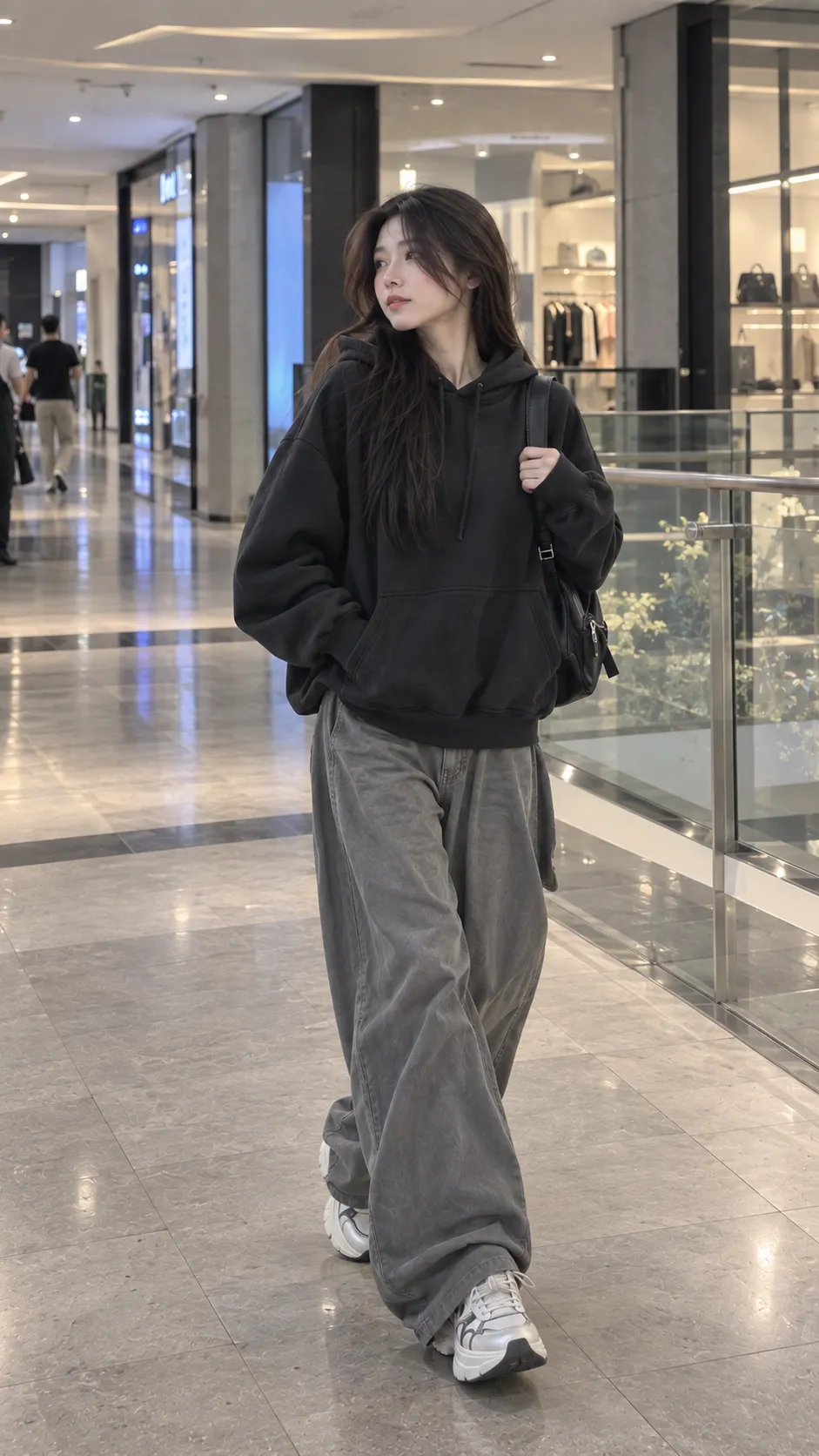
A roomy hoodie with baggy or wide trousers. Repeated volume needs anchors at hem, waistband or shoes.
Use the hoodie as an inner layer, then add a structured coat, vest or jacket to define the outer boundary.
Contrast lets the hoodie lead. Echo feels more relaxed and street-oriented, requiring attention to bunching at hips and trouser hems. Frame suits cooler weather and layered looks, with sufficient outerwear room.
Oversized-on-oversized is familiar in streetwear. Our guide to what streetwear means (Vietnamese) explores its volume and footwear principles more broadly; here we apply them to hoodies.
Layering Without Making the Torso One Block
A compact inner layer lets you unzip or remove the hoodie while keeping an outfit underneath. Beneath a pullover, choose a thin base without bulky folds.
This is the main volume. Establish shoulders and hem before a third layer.
Outerwear needs enough sleeve room. A cropped jacket creates a length contrast; a longer coat frames a vertical line.
A crossbody can interrupt the hoodie's volume. Necklaces may be visible only with an open neckline or zip, so consider whether they contribute at all.
A zip hoodie adds a flexible vertical line: open it to show a fitted top, partly zip it to adjust the neckline, or close it for a stronger graphic surface. A pullover gives a quieter front without a zip line.
Nine Oversized Hoodie Outfit Formulas
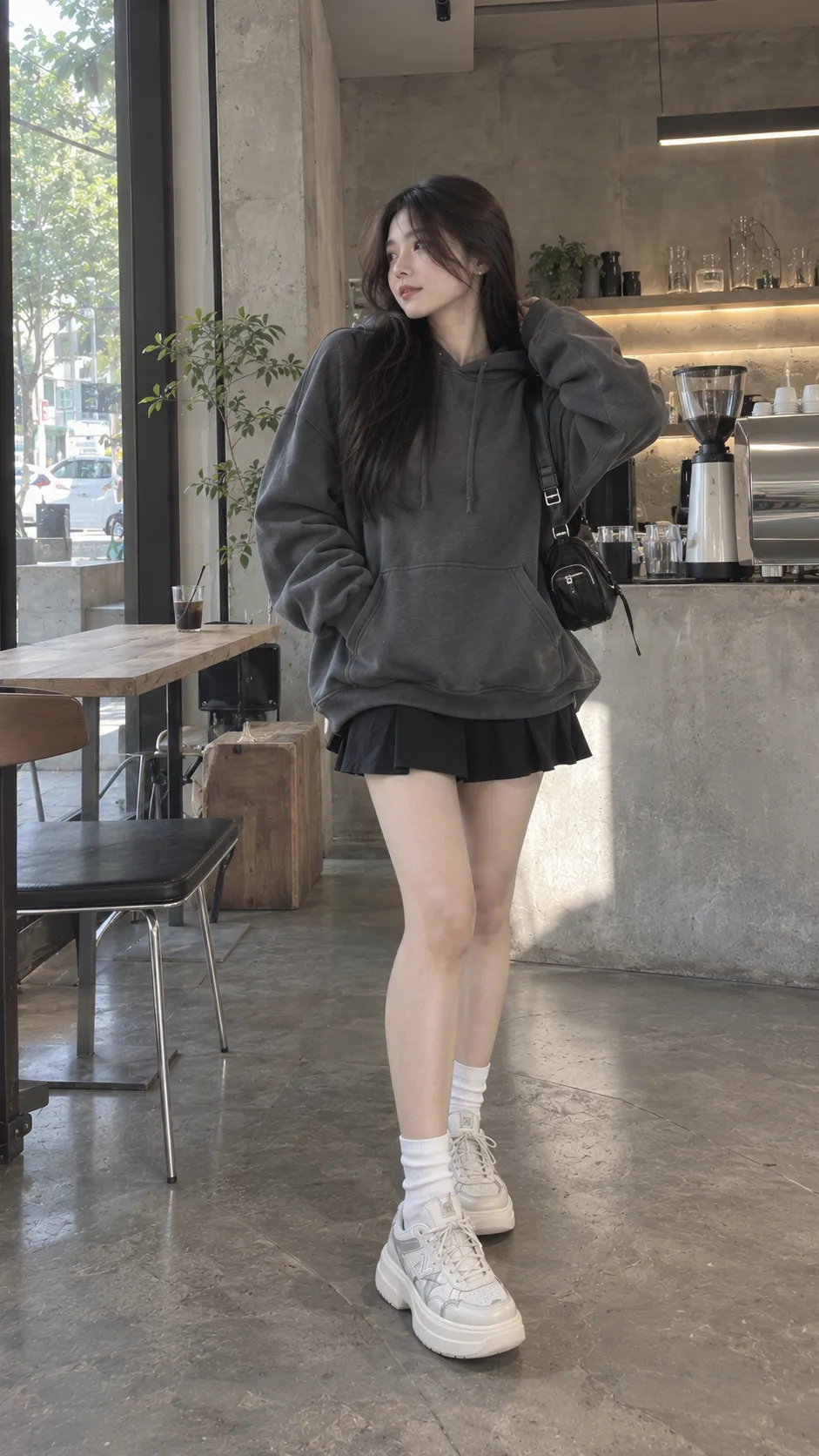
Hoodie + Mini Skirt + Platform Sneakers
The mini creates an open leg line and platforms balance upper-body weight. Taller socks are optional; avoid adding leg warmers automatically if the lower half is already layered.
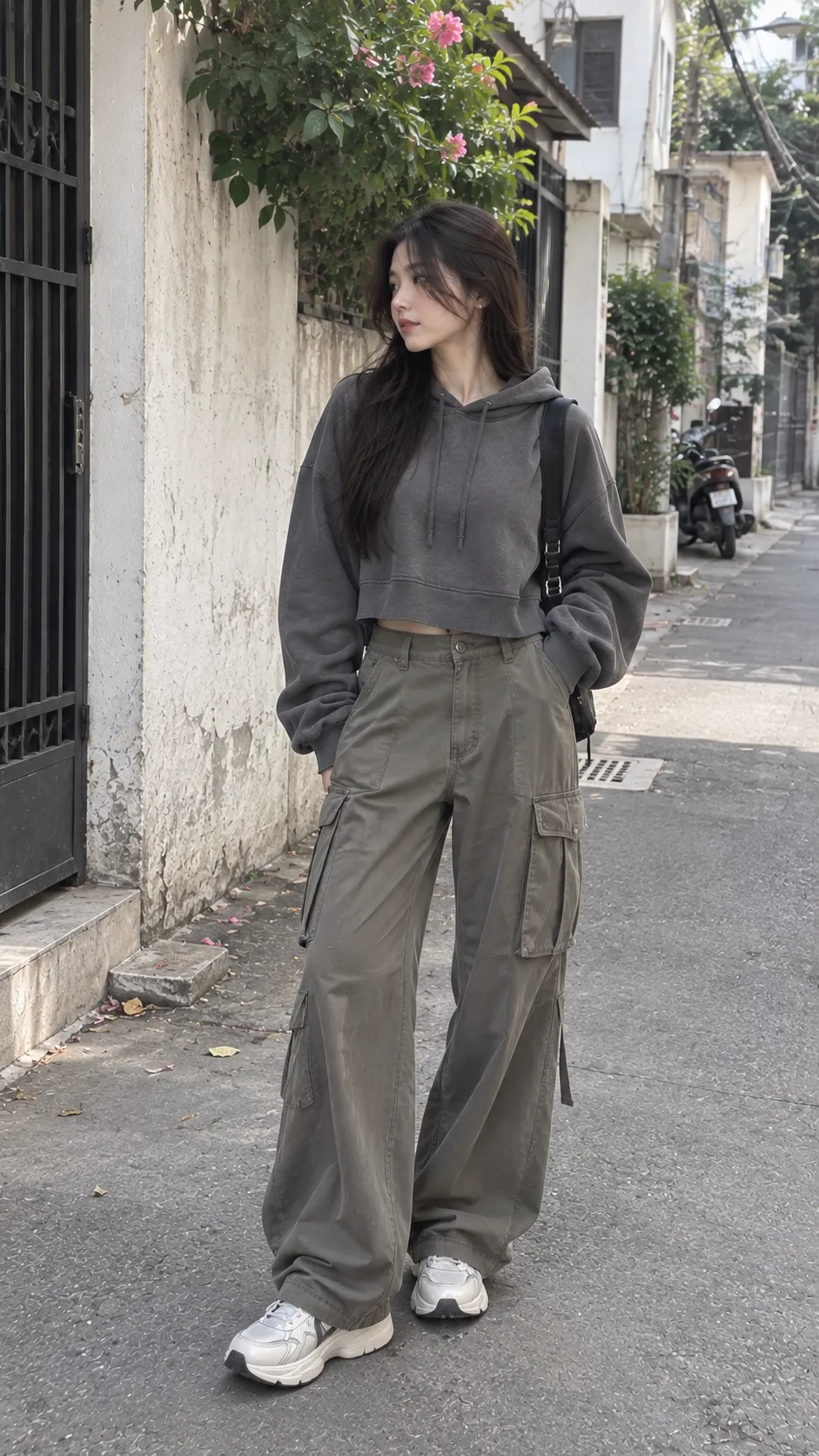
Hoodie + Wide Cargo Pants + Substantial Sneakers
Repeat the volume while leaving some cargo-pocket structure visible. Shoes should have enough presence not to disappear beneath the hem.
Zip Hoodie + Tank + Wide-Leg Trousers
The open zip creates a vertical frame around the fitted tank, useful for a city-streetwear interpretation.
Long Hoodie + Bike Shorts + Sneakers
A near-mini-dress shape, with shorts providing coverage and freedom of movement. A smaller shoulder bag can reduce an entirely sporty emphasis.
Hoodie + Straight Jeans + Loafers
Loafers add more structure than sneakers. Straight denim connects that structure with the casual hoodie.
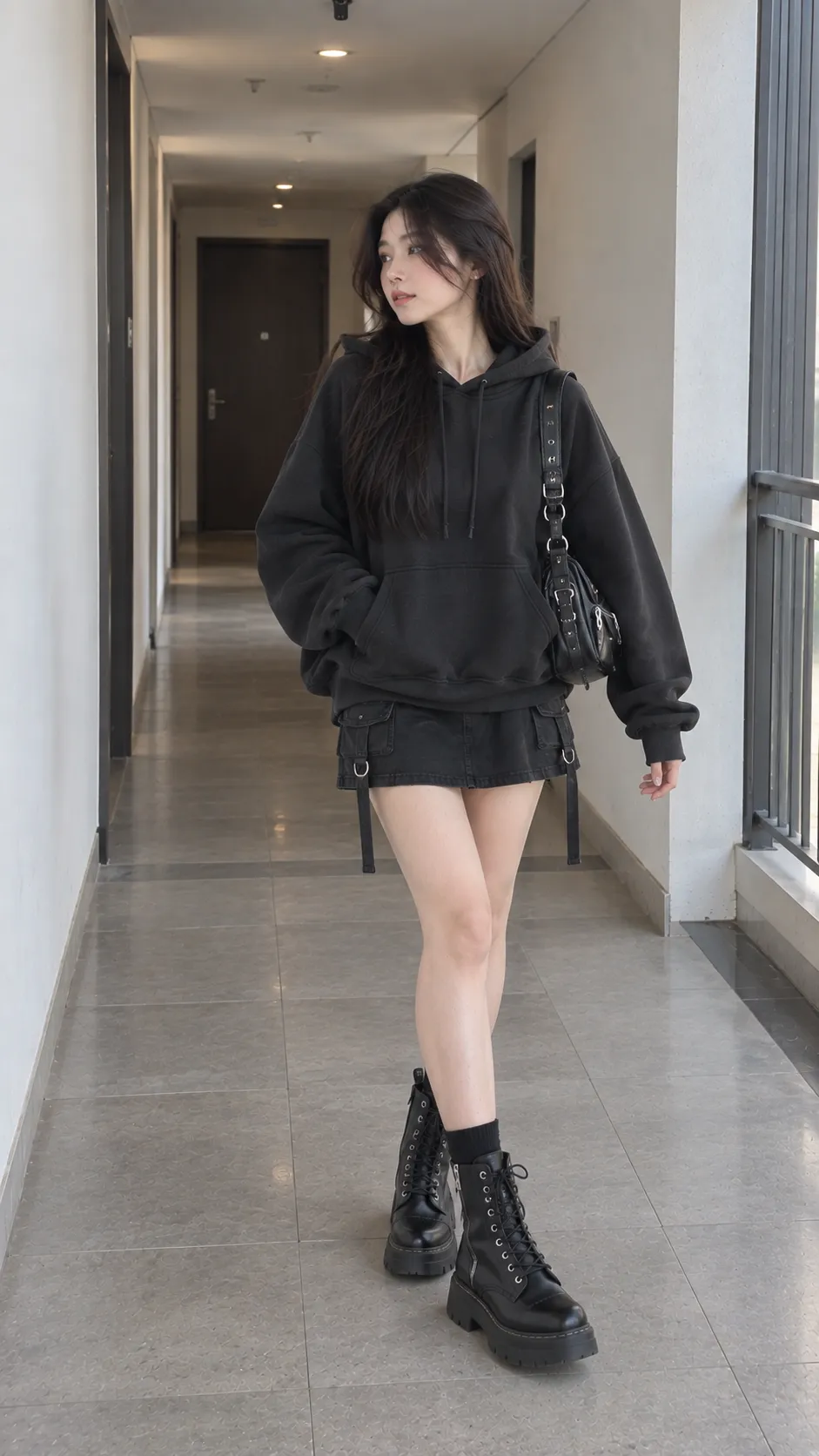
Hoodie + Pleated Mini + Combat Boots
The skirt adds movement and boots introduce an alternative reference. A relatively plain hoodie lets those elements remain clear.
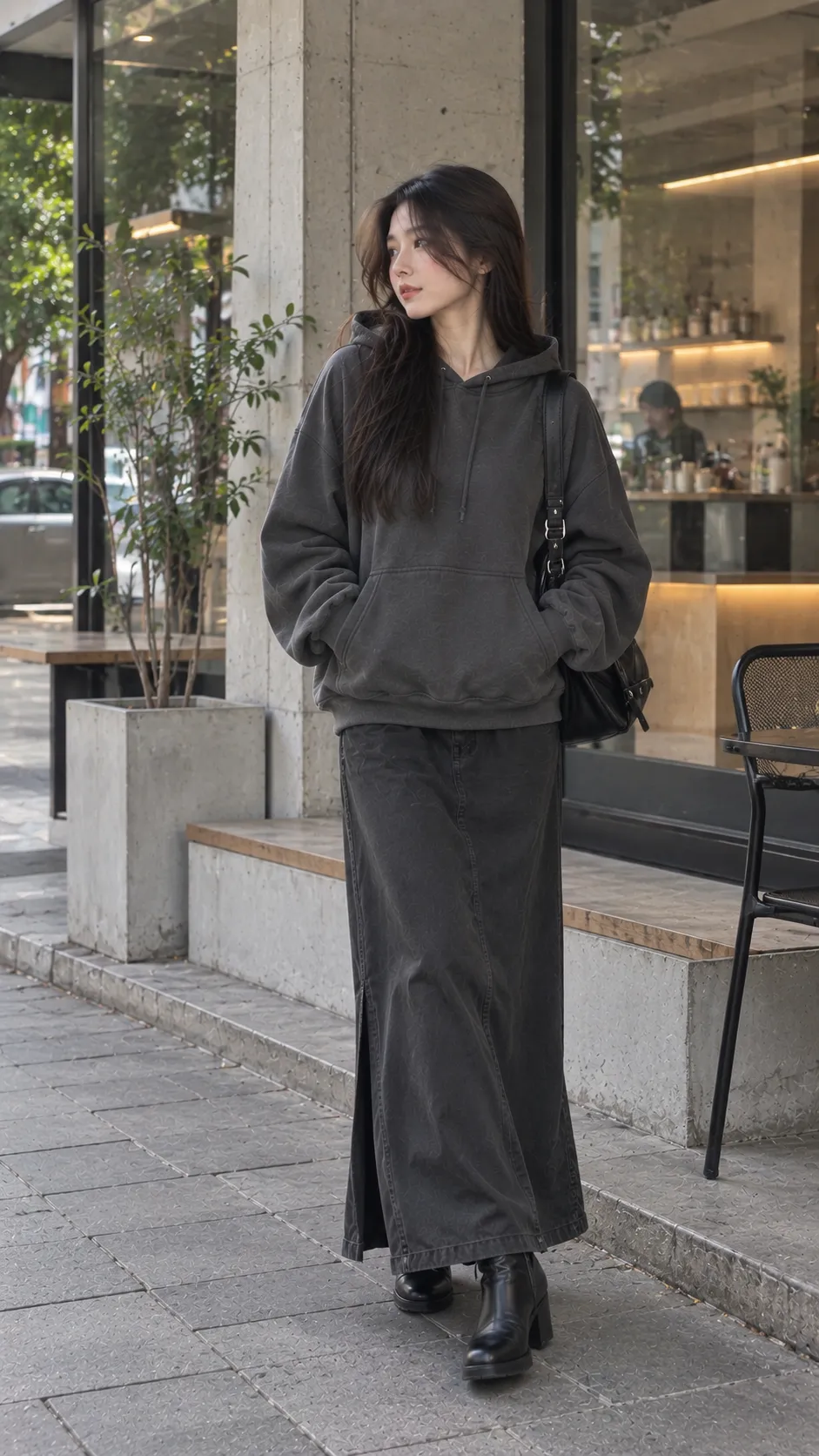
Hoodie + Straight Maxi Skirt
Two longer shapes can work with a fluid skirt or slit providing movement. Defined footwear finishes the vertical line.
Hoodie + Leather Jacket + Baggy Jeans
Leather frames the softer hoodie's shoulders. If the jacket stretches or restricts movement, choose a roomier vest or coat.
Monochrome Hoodie Outfit + Contrasting Bag
Within one color, a distinct bag shape or hardware can provide the focal point without large artwork.
Shoes and Accessories: Placing Weight Deliberately
Substantial sneakers and platforms naturally balance hoodie volume, but slimmer shoes are not forbidden. With loafers, ballet flats or low-profile sneakers, shorter hems or more compact bottoms keep footwear visible.
Combat boots suggest grunge or alternative styling; loafers create a city or preppy contrast; running-inspired sneakers add athleisure; platforms can suggest Y2K or e-girl references. A shoe change alone can redirect the outfit.
A small bag contrasts with a large hoodie. Crossbodies create a diagonal anchor; shoulder bags keep the front clearer. Backpacks add rear volume, so consider their interaction with a thick hood.
Caps, beanies and headphones add emphasis around the head. Assess the hood and hair volume before adding more. An outfit concentrated above the shoulders may need stronger bottoms or footwear to balance it.
Choose for the Day, Not Only the Photograph
School or a flexible workplace: hoodie, straight or wide trousers and sneakers, with a practical bag. Café: hoodie, mini or maxi skirt and shoulder bag. Concert: hoodie, cargos and suitable boots or platforms; keep hems clear for movement. Airport: zip hoodie, tank and soft trousers for easier temperature adjustment.
Heavy hoodies may be uncomfortable in heat. Consider lighter French terry, a removable zip version or use primarily in air-conditioned spaces. A good silhouette should not require overheating.
For a broader top wardrobe, explore the women's tops guide (Vietnamese) to compare the roles of hoodies, tees, tanks, jackets and layers.
Six Common Mistakes
1. Sizing Up Without Considering Shoulders or Hems
Designed oversizing controls proportion. A much larger size may shift neckline, armholes and sleeves away from the shape you want.
2. Concealing the Entire Bottom
Unless a mini-dress effect is intentional, leave some waistband, skirt hem or lower-body shape visible.
3. Very Long Trousers with Tiny-Looking Shoes
Fabric gathering over footwear can overload the lower half. Adjust length or footwear presence.
4. A Jacket Too Tight for the Hoodie
Compressed sleeves, raised shoulders and restricted movement indicate insufficient outerwear room.
5. Statement Artwork, Bag and Accessories Together
Choose a leader. A large hoodie print may not need a complicated bag.
6. Assuming Loose Always Means Untidy
Baggy silhouettes can look clear when hem, shoulders, color and shoes work together.
Length, Height and Torso Proportions Without Fixed Rules
Instead of asking whether shorter people can wear long hoodies, assess where the hem falls on your body. If it ends where the bottom becomes widest, the shapes can merge. Lift the hem slightly, reveal more of the bottom or use more defined footwear without abandoning the style.
A firm ribbed hem at the hip creates a clear landmark on a shorter torso; a straight hem or open zip may extend the visual line if preferred. On a longer torso, a cropped or shorter front hem can emphasize the waistband. These are optional visual effects, not body-shape rules.
Color and Artwork: Foundation or Focal Point?
Large artwork already leads, so washed denim, plain cargos or less detailed skirts can support it. A plain hoodie leaves more room for a belt, bag, skirt pattern or expressive shoes. Competing graphics, pockets, logos and colorful sneakers can obscure hierarchy.
Charcoal or black monochrome connects roomy shapes, while contrasting fleece, nylon, washed denim or a leather bag prevents flatness. With a lighter hoodie, repeat its color once in socks, a bag detail or small graphic if you want connection without rigid matching.
Beyond Mini Skirts: Midi and Maxi Options
A hoodie supplies upper-body volume while a longer skirt adds vertical movement. A fluid bias-cut skirt contrasts with fleece, denim maxi adds structure and pleated midi adds lines. Keep enough of a skirt visible beneath a long hoodie to distinguish the pieces.
A very full skirt can work with clearer footwear and a slightly shorter hoodie. A straighter skirt can support more hoodie length because it contributes less volume. Assess the relationship between the two shapes rather than always demanding tight bottoms.