

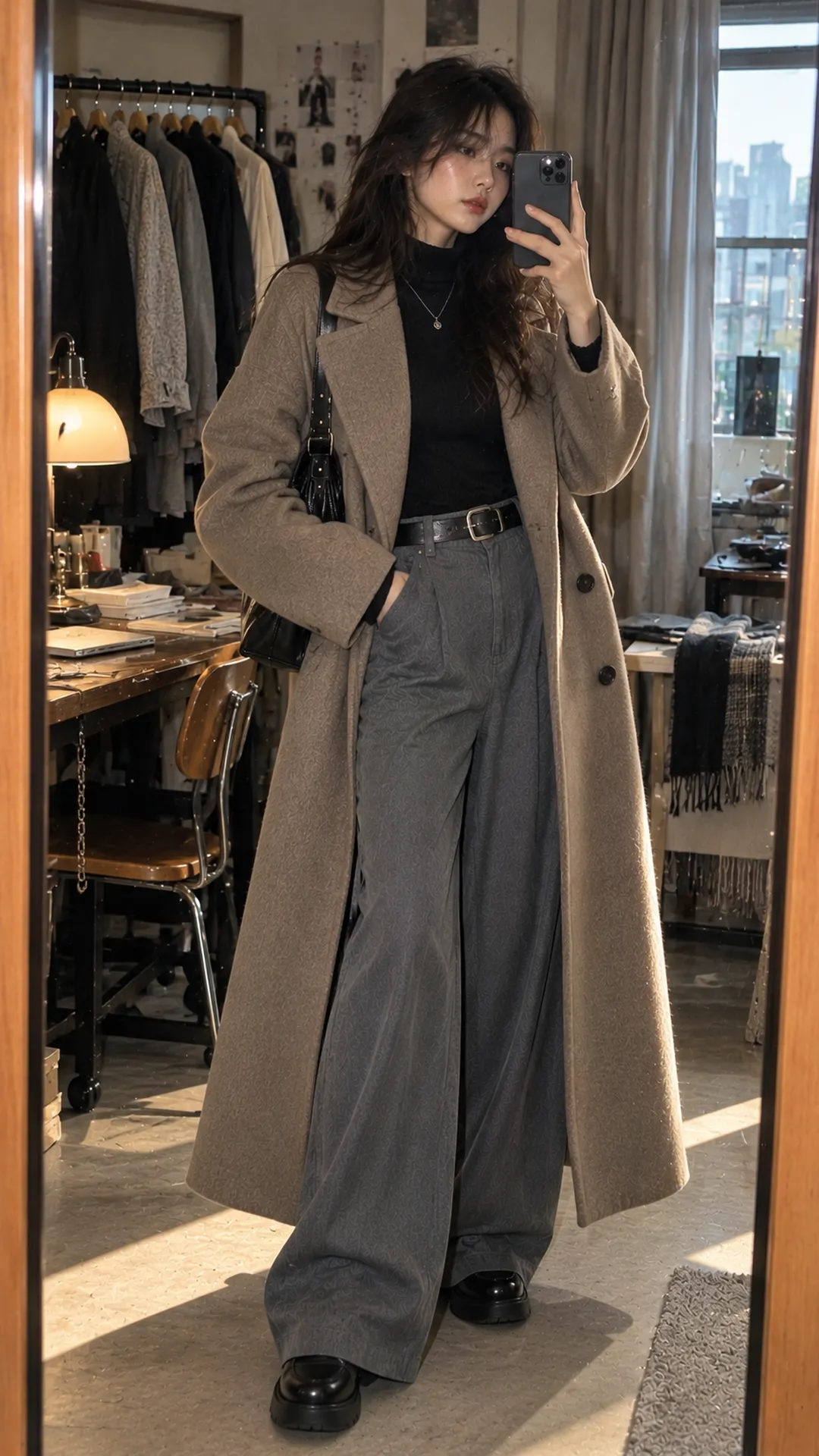
Do not choose by overcoat or Korean-style labels alone
Coats with lapels, buttons and waist belts can look similar in photos but feel completely different. Fabric, lining, shoulders and weight create their own drape. Labels such as Korean-style or premium cannot replace specifications and detail photos.
First establish the situation: traveling outdoors in the cold, sitting in an air-conditioned office or taking photos on a short trip. A very thick coat may be impractical mostly indoors; a thin one does not meet warmth needs simply because it is long.
Check fiber composition, lining construction and care instructions. Do not assume all wool-style coats contain the same fibers or retain the same warmth. Ask for missing information rather than guessing from photographic smoothness or shine.
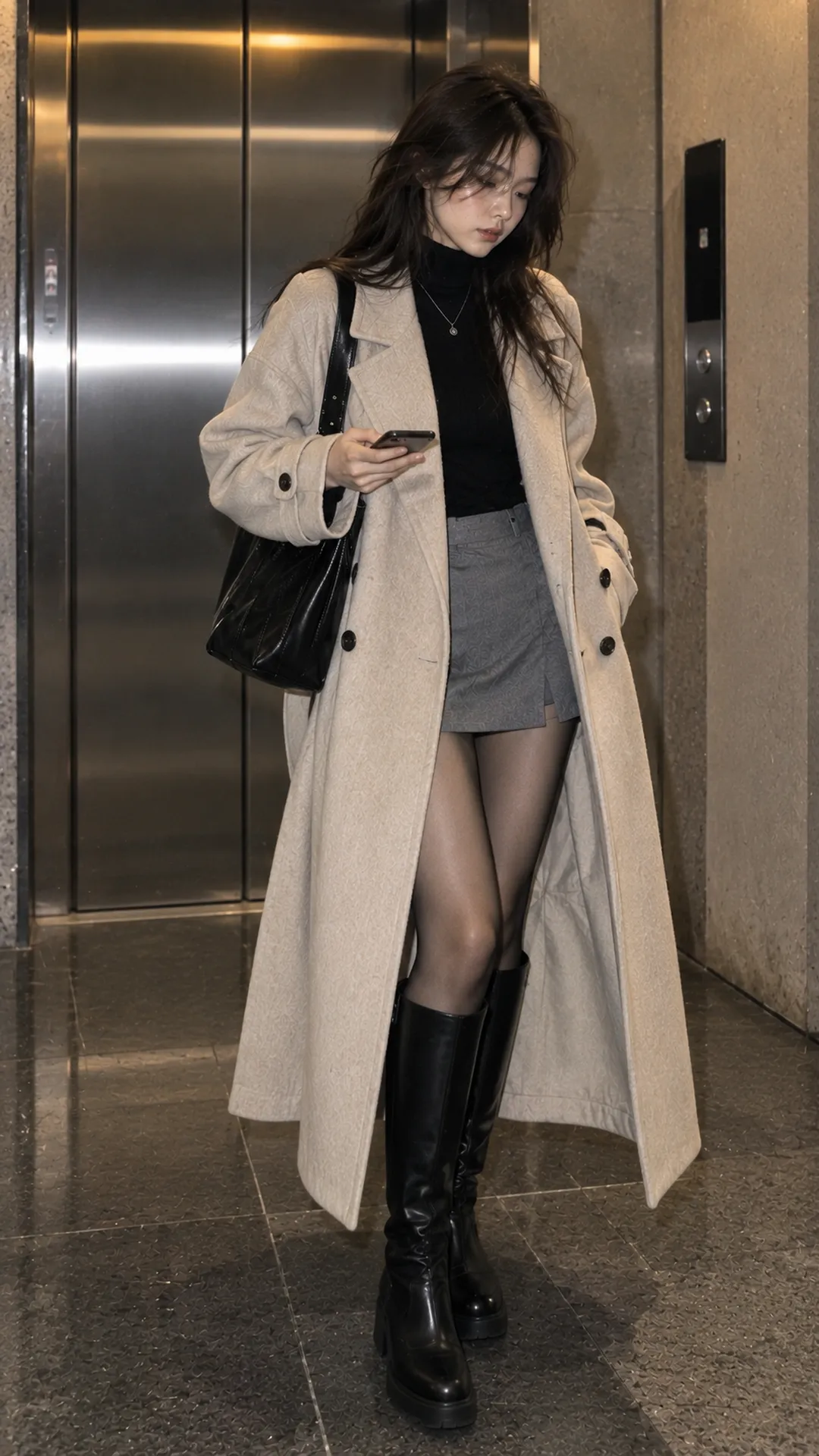
Long or short: choose by the hemline
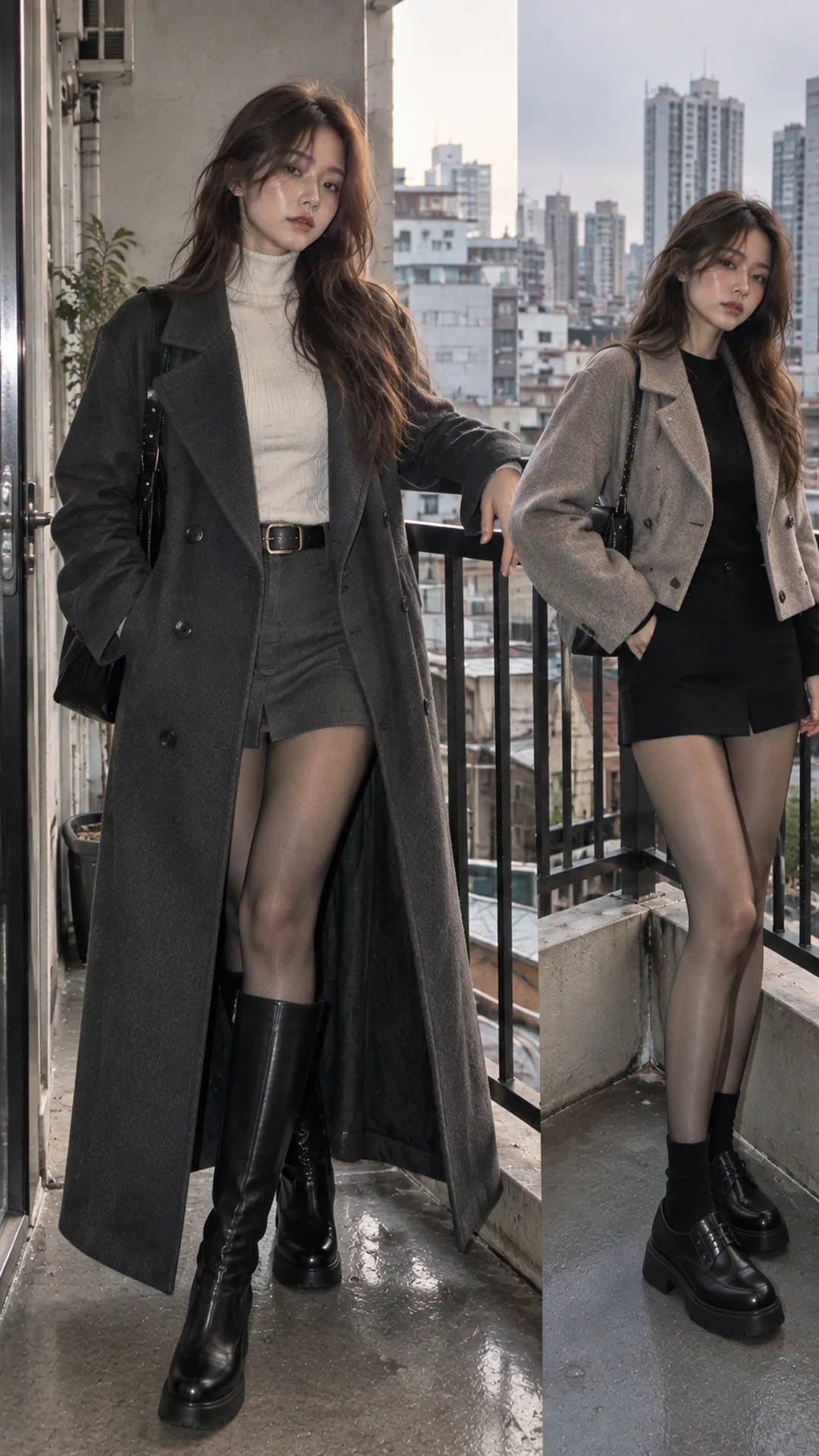
Short overcoats: give the lower half a clear role
Short designs end around the hips or higher depending on the cut, revealing more trousers or skirt. To emphasize a high waist, choose a length that does not entirely hide it when open. With a wide coat body, clearly cut bottoms keep the look from becoming a square block.
Try the widest trousers you intend to wear. If both coat and trousers balloon at the hips, try a shorter coat, neater inner layer or fewer trouser folds. Do not reject short designs after one unsuccessful proportion test.
Long overcoats: assess width as well as length
An open long coat creates two vertical lines. To reveal them, keep the inner outfit readable: related top and trouser colors or a defined waistband. Many inner colors and fabric edges can weaken the visual effect.
Shorter people can wear long coats. Test shoulders, body width and the hem's relation to shoes. A long coat with neat shoulders can be easier to balance than an excessively wide short one. No minimum height applies to every overcoat.
For calf- or near-ankle-length designs, take longer steps and use a low step if fitting conditions allow. The hem should not restrict movement or sweep the floor. If you plan low shoes, try those instead of relying on styling photos with heels.
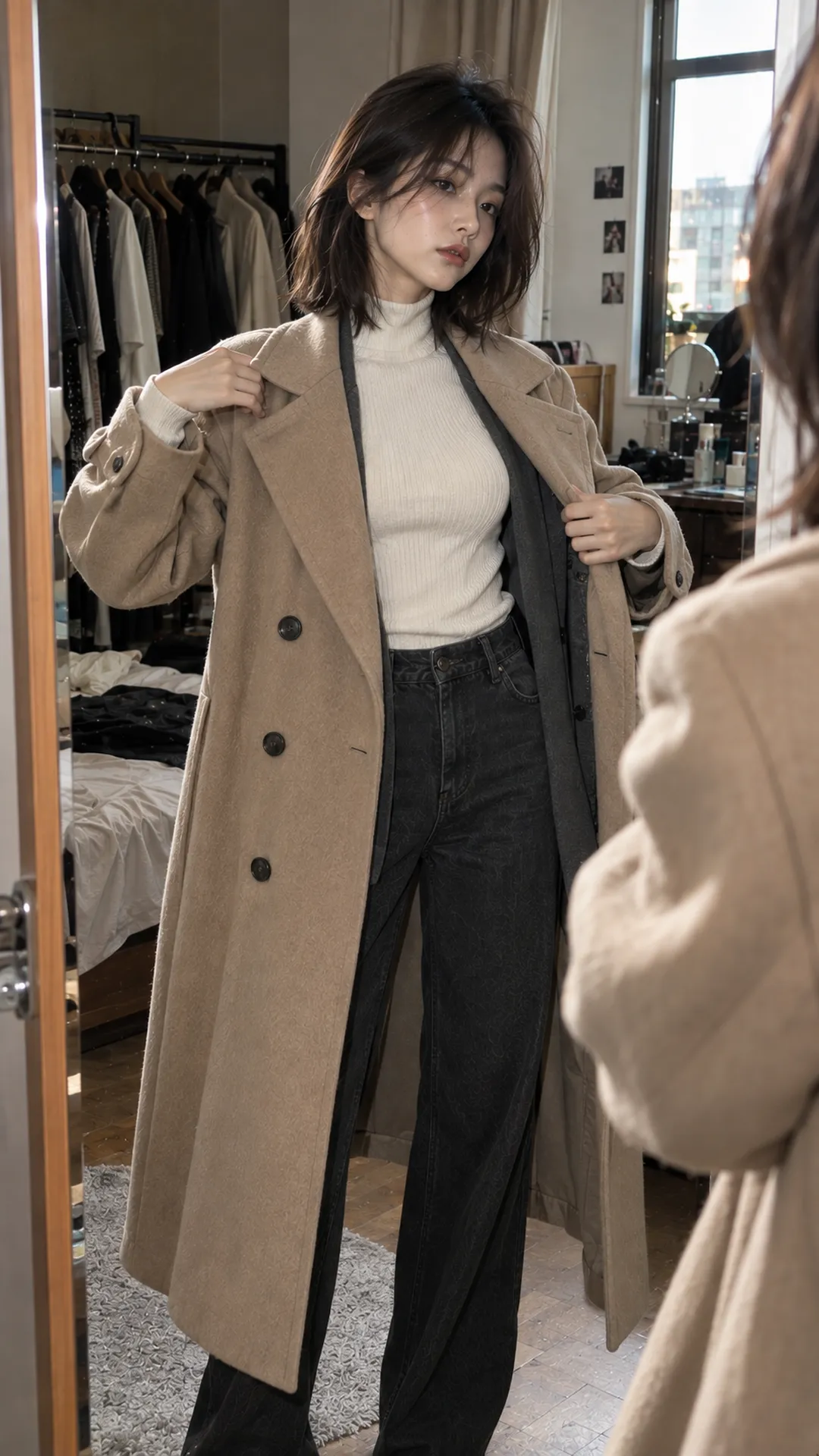
Check shoulders, sleeves and room for inner layers
Wear a knit or base layer similar in thickness to your intended one. Trying over a thin tee can produce a fit that works standing but becomes tight with layers. Excessive sizing up for a very thick sweater can instead overextend shoulders and sleeves.
Button up, reach forward and sit. Check tension at chest, back and armholes. Movement allowance should come from a suitable cut rather than simply choosing a larger size.
Dropped shoulders are intentional on many designs, not automatically a sizing fault. Check whether sleeves drape as intended, the body balances and the collar sits correctly. Even a good dropped-shoulder fit needs a bag test to see whether its strap pulls the coat out of place.
Long sleeves can hide the wrists and make the outfit feel heavy. If considering alterations, inspect sleeve buttons, straps or slits before buying. Not every sleeve can be simply shortened without changing its design.
In women's layering, an overcoat generally provides the shaping outer layer. Three inner layers are unnecessary; add only pieces with a temperature, coverage or proportion role.
Three ways to style a short women's overcoat
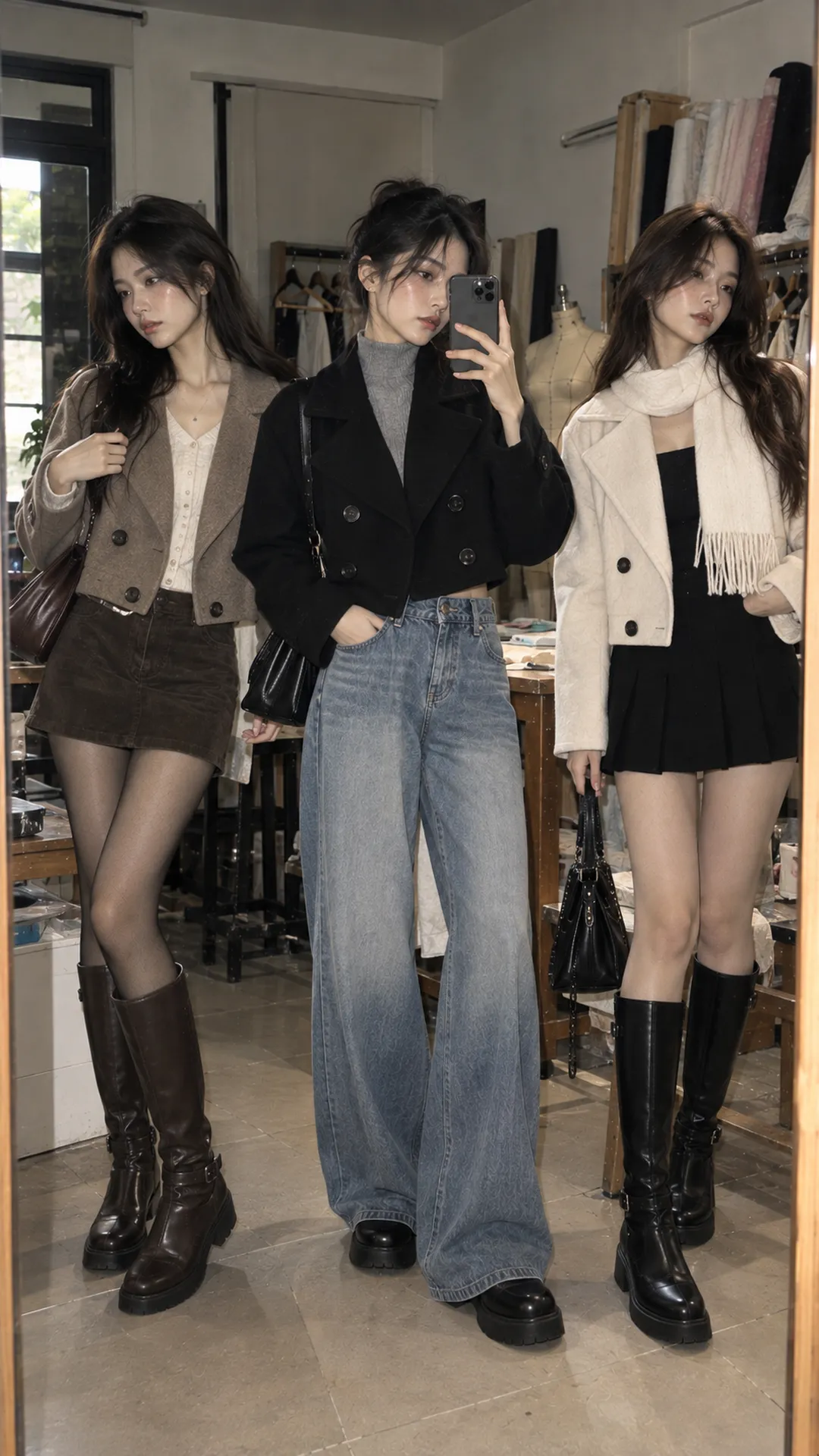
A short coat with a visible waistband and straight trousers
Choose a neat inner top, straight trousers and shoes with toes visible beneath the hem. Open, the coat reveals the waist break; closed, its short body leaves enough leg visible. With two rows of large buttons, reduce belt detail to avoid a crowded middle.
A short coat with a straight skirt
A straight skirt gives a neat lower line to balance lapels and a slightly wide coat body. Check the gap between coat hem and skirt waistband. If the edges sit close without clear intention, change inner length or tuck to distinguish the construction.
Choose loafers, boots or other shoes appropriate for weather and walking distance. Check the exposed gap between skirt and footwear and the boot-shaft width instead of assuming one shoe type always belongs with a short coat.
A short coat with everyday denim
A plain top, straight-leg jeans and short overcoat are easy to repeat. Denim reduces the lapels' formality while the coat supplies structure. With light-washed jeans, dark shoes or a bag can connect back to the coat.
Style a long overcoat without heavy layering
A long coat with straight or wide trousers: keep the inner top close enough to the body and finish trouser hems for your shoes. If both coat and trousers are very wide, lightly fasten the belt or reveal the inner waistband. Do not cinch so tightly that the front wrinkles and lapels distort.
A long coat with a dress: compare the two hems. A dress shorter than the coat differs from a midi visible below it. Both work, but avoid a tiny difference that looks accidental. Walk to check whether the layers wrap or catch together.
A long coat over a related-color base: similar top and trouser colors form a continuous inner line, framed by a contrasting coat. This lets the long coat lead without many accessories.
For a more expressive direction, start with familiar cuts and add shoes or accessories with clear visual weight. The Alt Fashion styling guide for beginners helps choose one accent rather than packing many signals into the outfit.
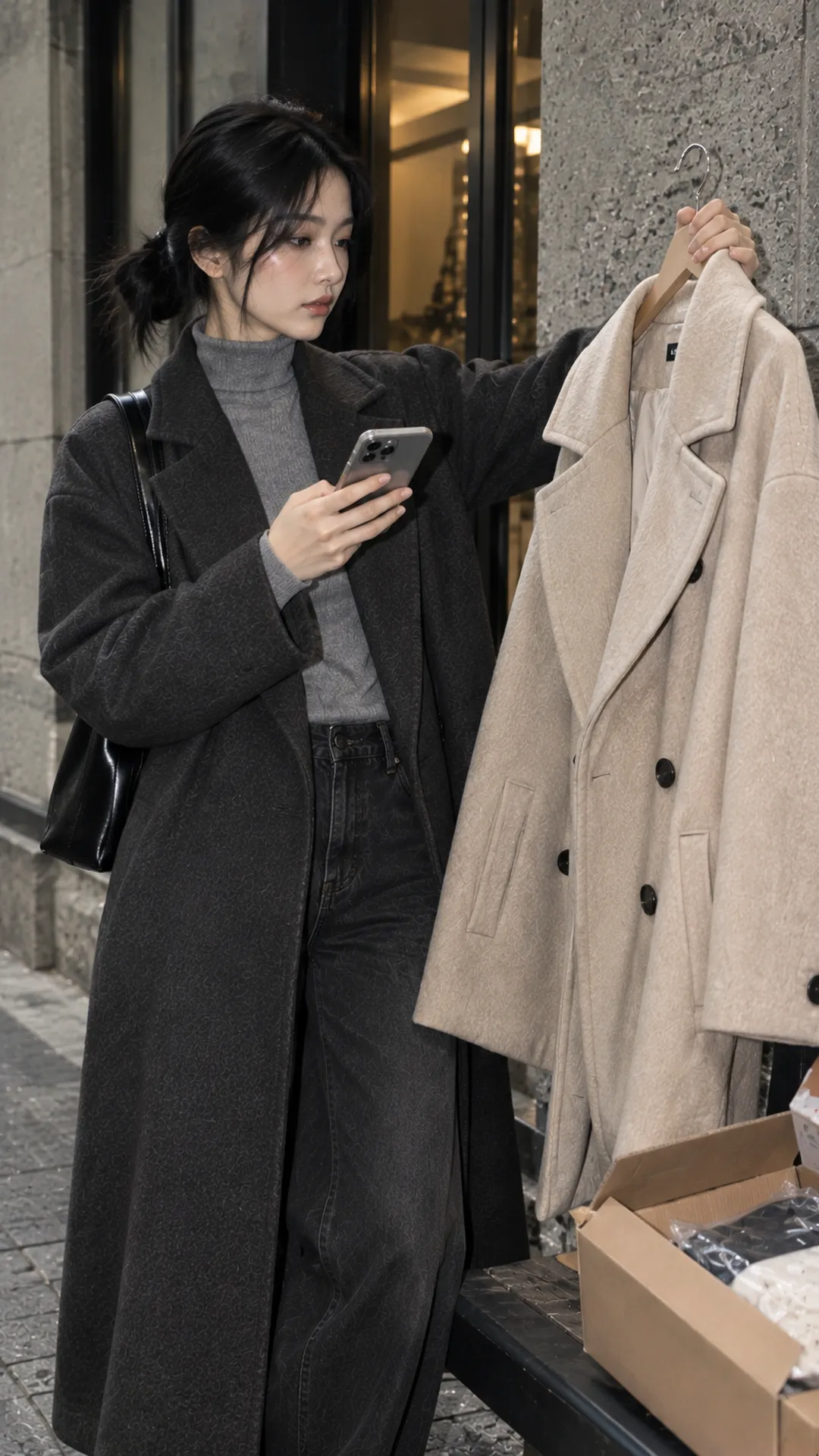
Create depth with a long black coat
Black over black can show clear structure through different surfaces. Try a fine sweater, denim or creased trousers, then the coat outside. Lapels, the front opening and waistband create boundaries without vivid color.
To brighten the face area, try cream or light gray underneath. For a smaller highlight, a compact scarf or earrings may suffice. Avoid a very thick scarf with large lapels and a high inner neck; three crowded neck layers can feel restrictive.
A bag need not be black with a black coat. Deep brown, burgundy or gray can accent the rest. The visual-weight distribution in the guide to expressive women's accessories helps preserve one prominent area rather than making scarf, bag and shoes compete.
Buying online: what else do you need beyond model measurements?
Ask for coat length, shoulder width measured for that design, chest circumference or flat width, sleeve length and lining details. Compare a coat that works well, allowing for inner layers. One measurement cannot describe the cut; inspect front, side and back views.
Videos of opening, closing and walking show drape better than posed photos. Check whether pockets lie flat, buttons pull the front and the belt is long enough for your preferred tie. Video supplements movement evidence, not proof of durability.
If choosing between an overcoat and another jacket, return to the Women's Tops Item Guide to compare outer-layer roles. Actual frequency of use matters more than buying a very long coat solely for a winter photo.
Maintain shape after every wear
Read the specific care label before washing, steaming or stain treatment. With structured lapels, lining and hardware, do not infer care from a wool-style label. Follow specialized instructions rather than experimenting with heat or water.
After wearing, remove heavy belongings from pockets and hang on a shoulder-supporting hanger. Let it air and dry before storing as instructed. When packing, avoid bunching buttons and belt against the coat surface; on unpacking, inspect lapels and hem before wear.
The right overcoat works while walking, sitting, carrying a bag and removing layers indoors. Establish your needs, test fit with inner layers, then choose length and color. That order encourages regular use rather than one attractive photo outfit.