Decide what you need the windbreaker for
For school, work, or carrying as a spare layer, look for something easy to put on, take off, and store. A full zipper may be easier than a pullover if you frequently go indoors and outdoors. Try the opening you’ll use most comfortably.
For more active use, read the information for the exact style. Color blocking, drawstrings, and large pockets tell you little about moisture management, wind resistance, or rain protection. Check the stated features individually.
In its windbreaker guide, Patagonia distinguishes a layer designed to reduce the effects of wind from a rain jacket made for extended wet conditions. Choose the type of jacket for the weather you expect.
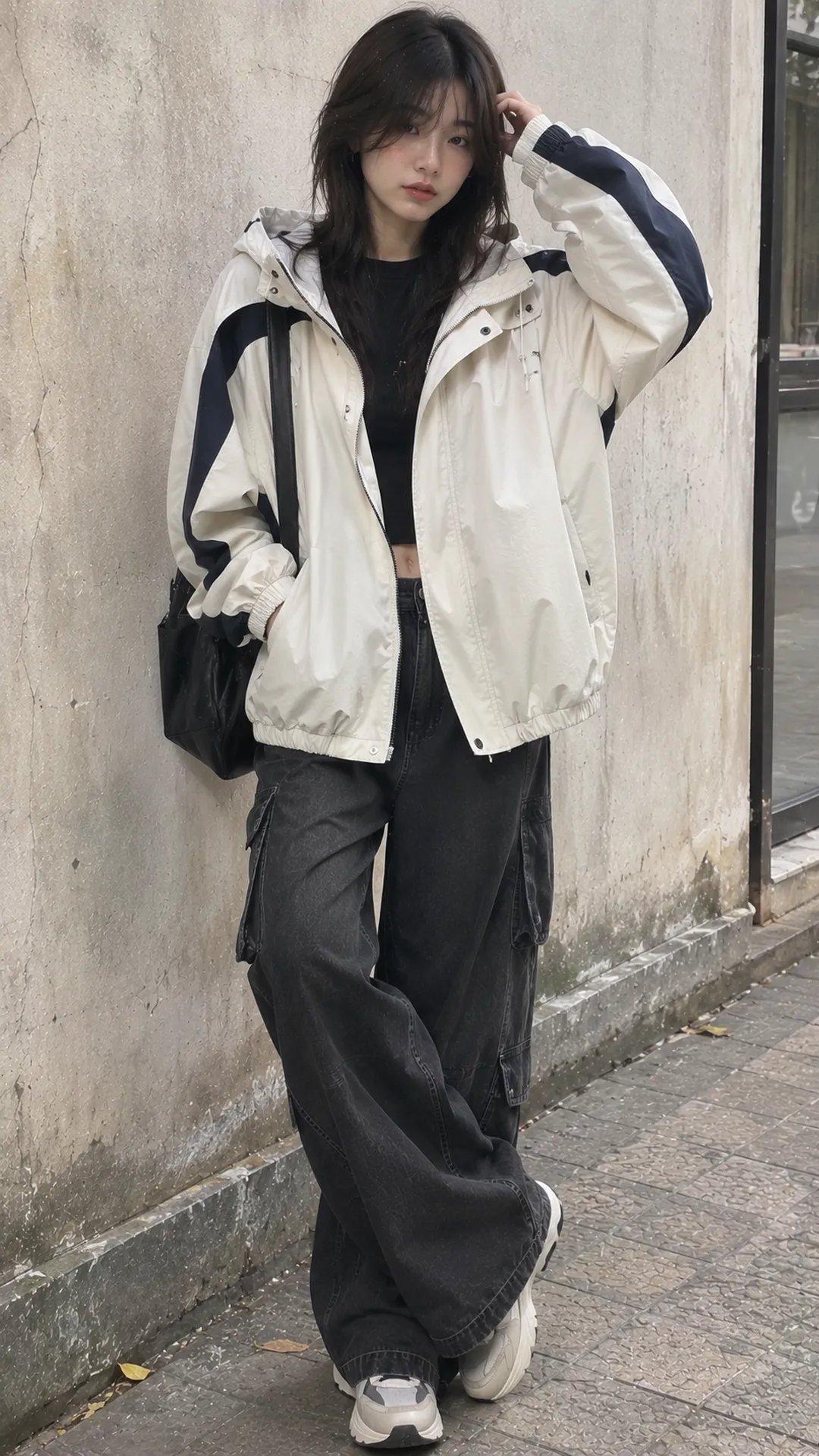
Cropped cuts leave the waistband visible
A jacket that ends near the waistband creates a clear break between the top and pants or skirt. If you wear high-rise pants, try a base layer long enough to stay where you want it when you raise your arms. Check coverage in motion even if you like the proportions while standing.
A cropped windbreaker leaves the volume of wide-leg pants visible. A slim base layer and shoes with a defined shape can finish the outfit. If the jacket already has roomy shoulders, check the fit before sizing up.
A drawstring lets you adjust the hem. Try the setting you’ll actually use. Pulling it too tightly can puff out the body or make the jacket ride up. Compare the relaxed and cinched shapes with your clothes.
Try hip-length and longer cuts zipped up
Hip-length jackets work with several pant cuts. Check where the hem lands. If it meets a large pocket or a wide part of the pants, the two pieces can add bulk at the same point. Try another jacket length or simpler pants.
A longer cut adds coverage. Zip it up, sit, and walk to check for pulling at the hips. A jacket with plenty of room at the chest can still narrow too much at the hem.
Our guide to women’s tops by cut and layer helps you decide whether the jacket will shape the outfit or serve as a spare layer. Use that role to choose among cropped, hip-length, and longer cuts.
Leave room at the shoulders and sleeves for layers
Try it with a top similar in thickness to the one you wear most. Reach forward, lift your arms, and cross them lightly to check the back, underarms, and shoulders. If it only feels comfortable while standing still, try another size or cut.
Drop shoulders look different from seams that sit at the shoulder points. Check the drape and movement according to the design. A wide shoulder can still come with narrow sleeves or armholes.
Long sleeves can bunch at the wrists, while short sleeves may ride up when you reach. Cuffs and adjusters should hold where you want them without squeezing. Try using your phone, opening your bag, and putting on a backpack with the jacket on.
Check the hood, pockets, and zipper
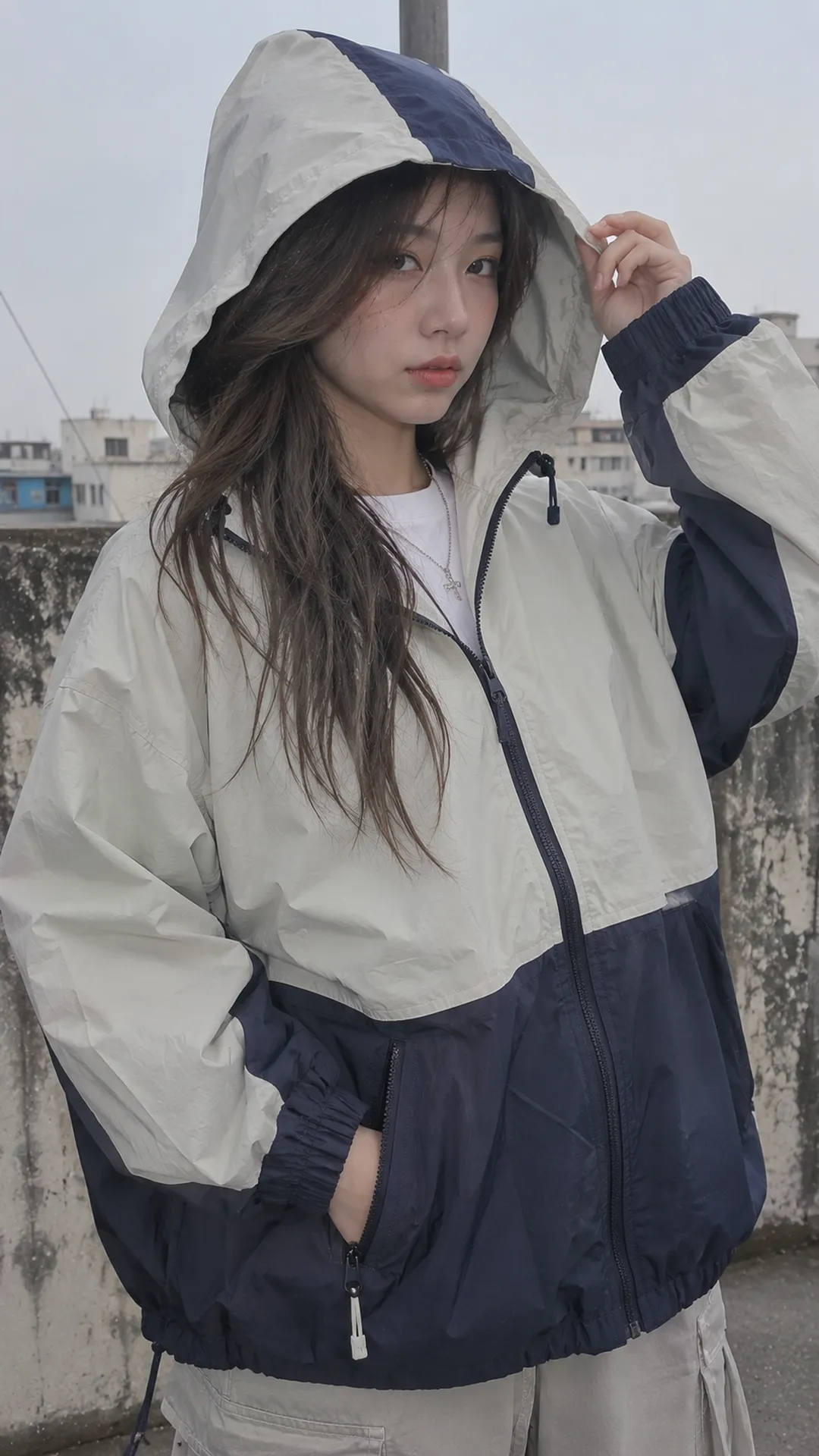
Put the hood up and turn your head to see whether it blocks your view or pulls on the collar. When it’s down, check for bulk at the back of the neck or interference with a bag strap.
Check whether the pockets fit what you actually carry without pulling the jacket out of shape. For a phone or keys, look at pocket depth and the closure. Decorative and shallow pockets may hold very little even if they look large from the outside.
Work the zipper several times and see whether it catches the inner fabric. On a high collar, check the zipper guard near the chin. Walk with any bag or strap you use to check whether drawstrings, zipper pulls, or other details catch.
Choose a single layer or a lined jacket for your plans
Look at inside photos for lining, mesh, or reinforcement. Comfort depends on how the jacket is made, how loosely it fits, the conditions, and how much you move as well as the number of layers.
In hot, humid weather, think about whether you’ll wear the jacket continuously or only when needed. If you’ll be taking it on and off, a jacket that packs easily may be more useful than a thick one. Choose a weight that works for your climate.
Read the fiber label and the product description. Our guide to choosing fabrics and cuts for hot weather explains how color, fabric, and cut affect comfort. Consider both the windbreaker and the clothes underneath.
Three easy ways to wear a windbreaker with pants
A cropped windbreaker, slim tee, and straight-leg pants give a clear line from waist to hem. Try a neutral top and pants with the jacket as the accent. Make sure the base outfit has suitable coverage when you take the jacket off.
A hip-length jacket and straight jeans make an everyday outfit. If the jacket is color-blocked, start with an even denim wash and simple details. With a plain jacket, shoes or a bag can add an accent.
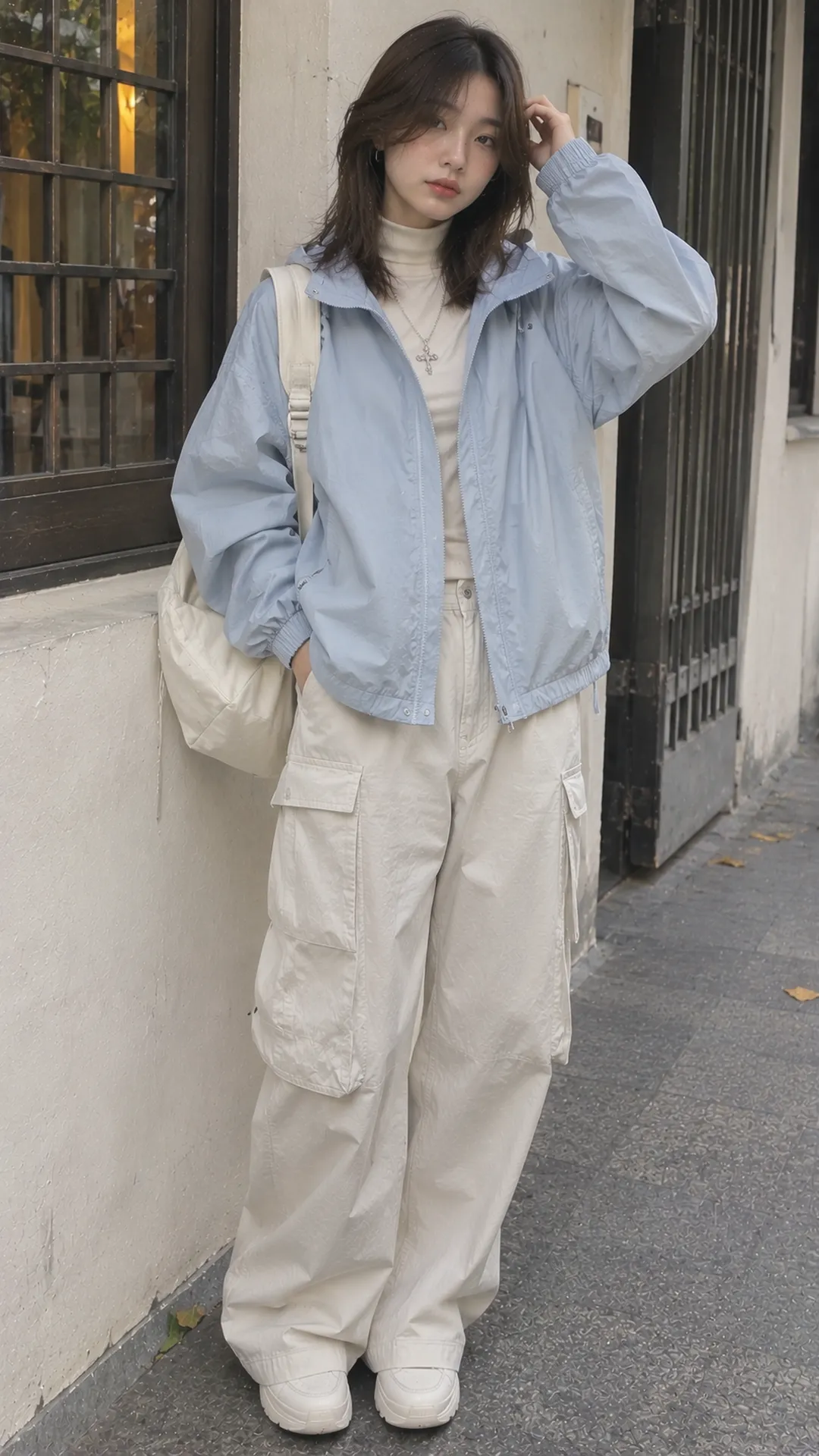
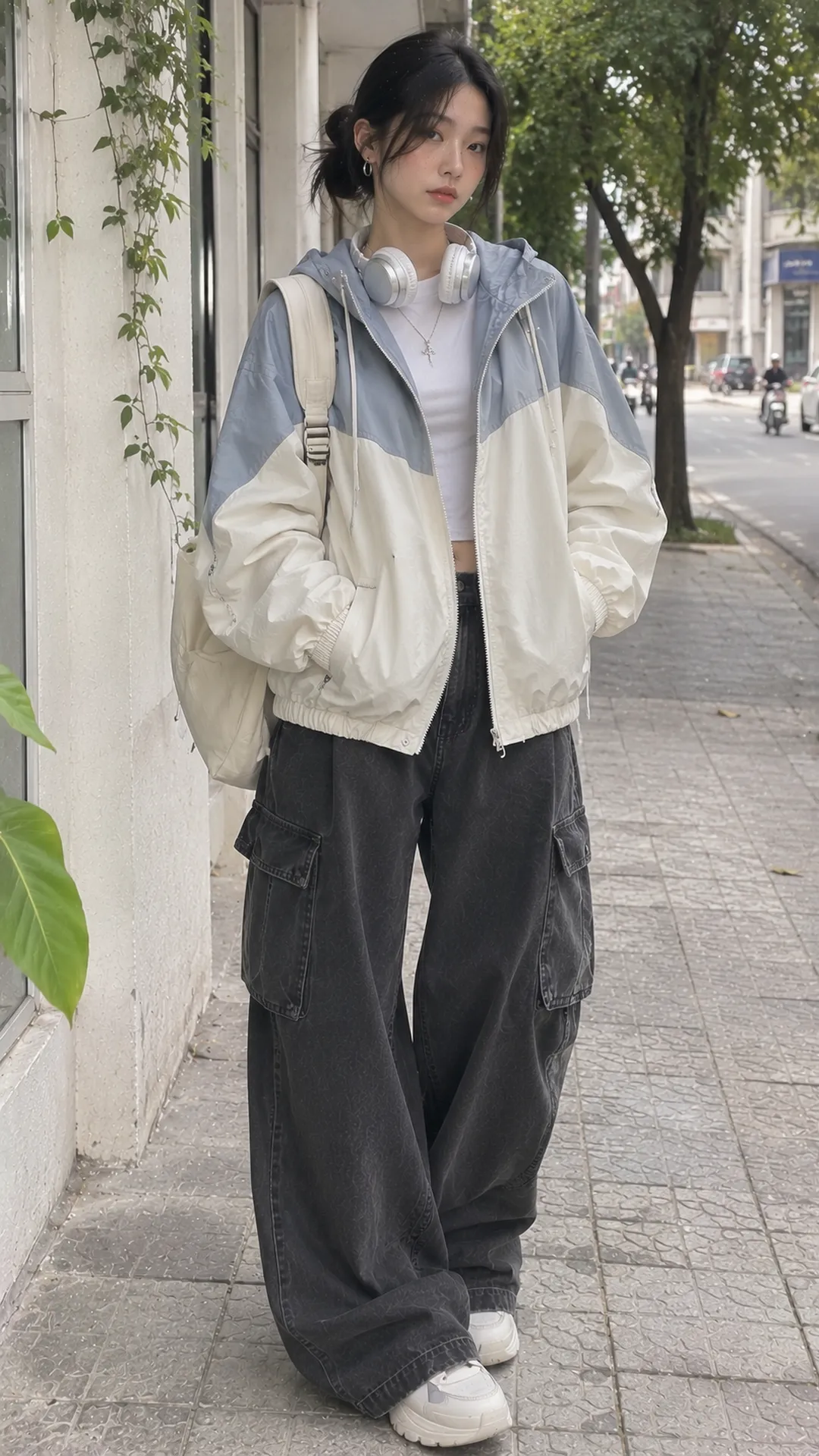
A roomy jacket can work with wide pants when you consider where each piece ends. Check the jacket hem, waistband, and how much of the shoes you see. Our women’s pants styling guide helps you choose the leg shape and rise as a base for the jacket.
Wear a windbreaker with skirts and dresses
A cropped windbreaker can keep the waist visible with an A-line or flared skirt. If the jacket covers the hips, see how much of the skirt shape still shows. Check the full outfit so the two hems meet where you want them.
A lightly cinched jacket hem gives the upper half a different shape over a straight dress. Leave it loose enough to stay in place as you walk. Try the zipper open and see how much dress shows in the center.
Our guide to layering different lengths helps you balance the jacket and dress. The jacket’s surface and zipper already affect the look. Choose shoes for your plans and the shape of the dress.
Choose a jacket color and accessories
Black, gray, cream, and deep blue are easy starting points with a neutral wardrobe. Compare the color and finish. A glossy jacket catches more light than a matte one, so the same color can look different in photos. Check several views when shopping online.
With color blocking, choose a base color that connects the jacket with your pants or shoes. Pick up a smaller color in one accessory if you like. If the jacket has prominent cords, pockets, and zippers, a plain bag gives the details room.
Our guide to balancing accessories around a focal point helps you spot areas with several details. If a high collar, hood, and bag strap already sit near your face, try a small bracelet or ring instead of adding a necklace.
Check the product details before buying
Look up claims about water resistance, wind resistance, or other features for the exact style and intended conditions. Water beading in a short video tells you little about prolonged rain. If rain protection is your priority, choose a jacket with stated features that suit that use.
Check the brand, product code, labels, seller, and return terms. A high price or a logo in a photo offers limited information about origin. Check fit and ease of use separately from brand claims.
Ask for shoulder width, chest width, body length, and sleeve length, and check whether measurements were taken with the hem relaxed or cinched. Our online clothing size guide explains how to compare with a jacket you own. A one-size label can fit differently across wearers.
Care for and inspect the jacket after wearing it
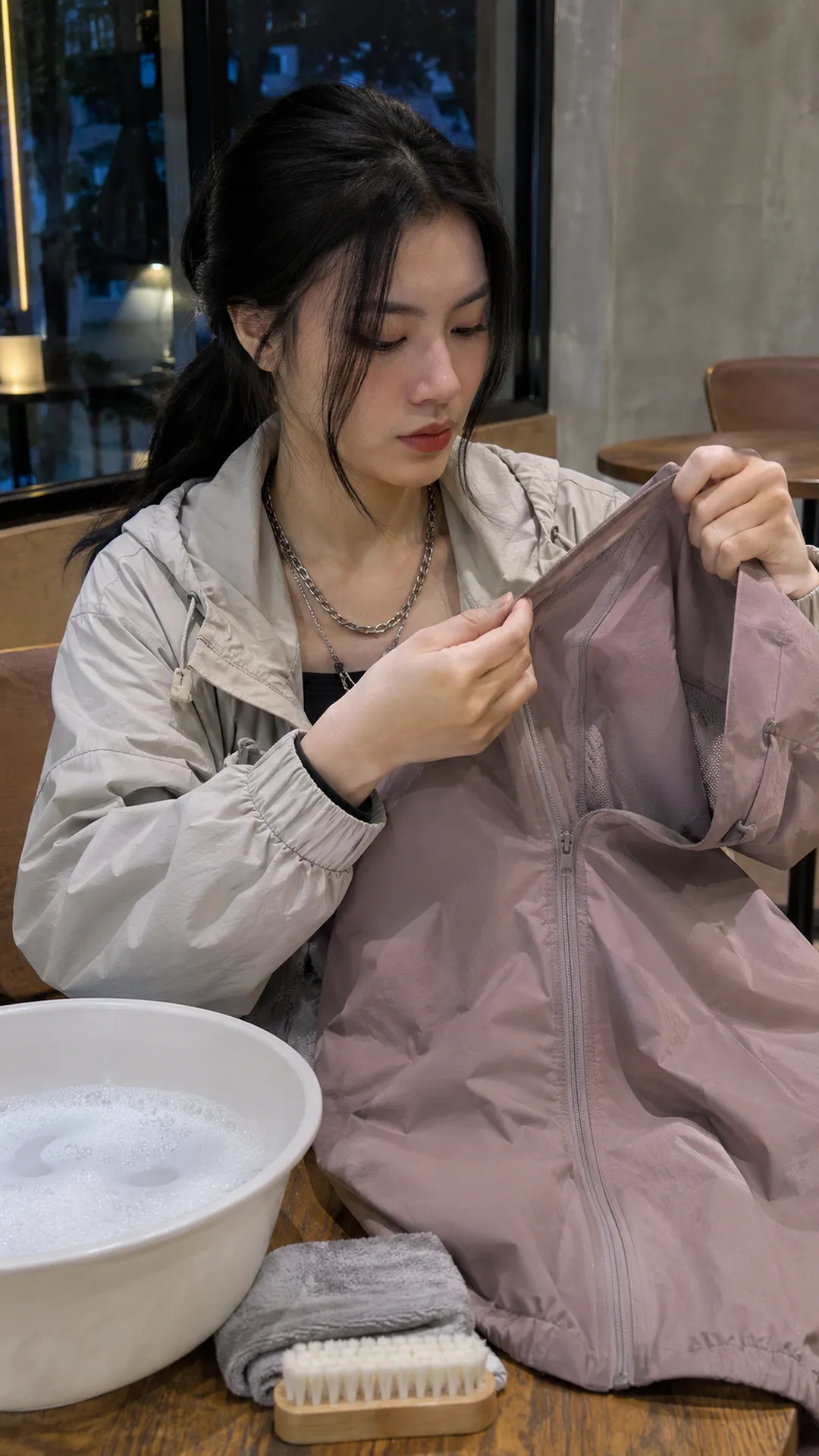
Read the washing, drying, and ironing instructions first. Finishes and construction vary, so check the instructions for the exact style before using heat or cleaning products.
Check pockets, zippers, and the jacket’s condition before putting it away. Let it dry before packing it into a small pouch for storage. If it’s designed to pack into its own pocket, follow the folding instructions for that jacket.
Choose a windbreaker with a cut you like, room for your usual layers, and clear features for your needs. Try one outfit with pants and another with a skirt or dress you own. Check movement and proportions on both before deciding.