

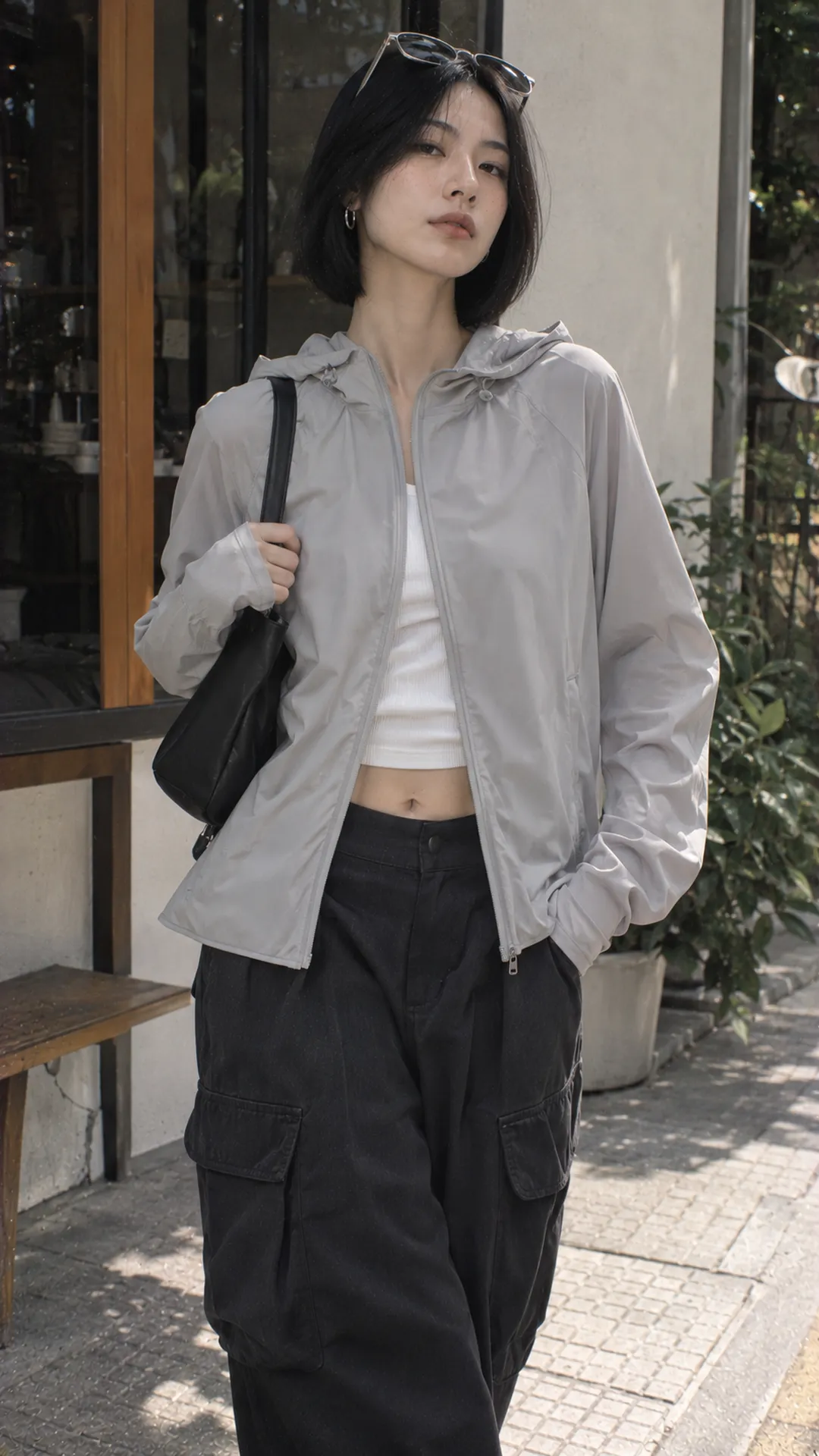
Read protection information before product names
According to the Skin Cancer Foundation's sun-protective clothing guidance, UPF indicates UVA and UVB passing through fabric; UPF 50 corresponds to about 1/50 transmission under assessment conditions. Fabric information does not mean every skin area receives that protection. Stretching and wetness can also alter performance.
Seek specifications tied to the model you are buying. Another range's certificate, generic brand claims or an isolated advertising UPF need comparison. Ask for testing body, applicable standard and manufacturer-stated use conditions.
Do not convert UV-resistant wording into an invented number. Without evidence, treat the claim as unverified. Cool initial touch is not a UV measurement; evaluate the two criteria separately.
Choose a shape for actual plans
Motorbike travel: reach forward during fitting
Wrists covered standing may become exposed reaching. Simulate handlebars, bend elbows and rotate shoulders. Avoid back tension or collar irritation at the chin. Check drawcords, long panels and loose parts for interference getting on and off.
The hood must coexist with your helmet without changing fit or blocking vision. Avoid coverage that limits head turns. For hand-covering designs, test gripping and release so fabric does not impede control.
Walking and short transfers: prioritize easy removal
Front zippers help repeated transitions to air conditioning. Useful key pockets without sagging may serve better than decoration. Actually fold the jacket if bag storage matters: oversized hoods and sleeves occupy space even in thin fabric.
Capes offer broad coverage but need fast walking, sitting and bag tests. They are not automatically preferable to sleeves; choose by how well you control the panels during activity.
Assess material through surface and construction
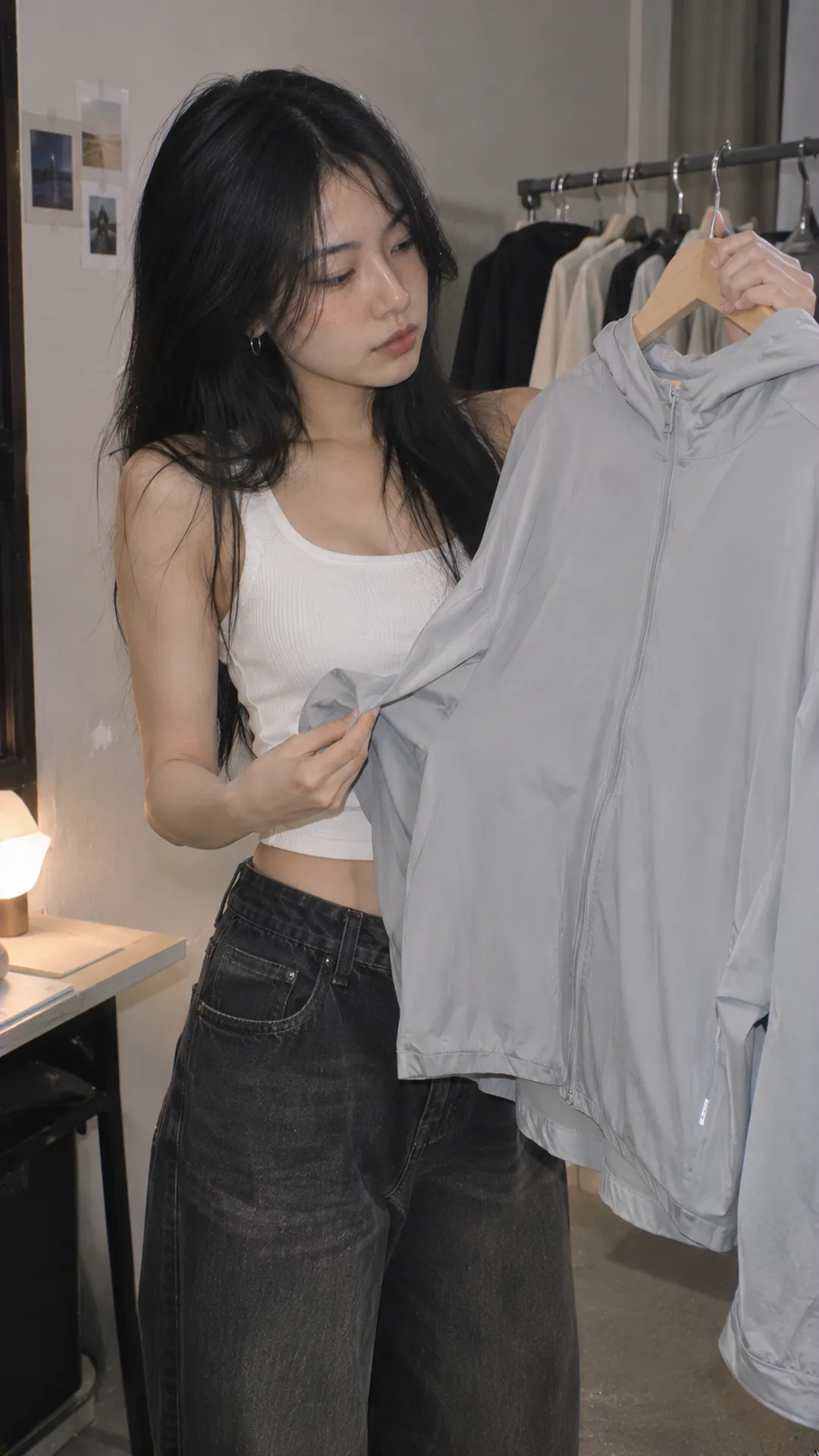
Fiber is only part of the specification. Two polyester jackets may differ in thickness, lining, stretch and interior feel; cotton alone cannot establish drying speed in your conditions. Read composition and care and feel skin-adjacent seams where possible.
Wear for several minutes over your usual base. Check stuffiness, pressure or clinging at underarms, back and neck. For mesh sections, ask whether UV information covers the entire construction or only the main fabric. Do not transfer body-fabric ratings to mesh.
For dark-clothing preferences, wearing black in summer explores color, thickness and cut. Choose actual products through wearing feel and information, not black or light color alone.
Inspect easily overlooked coverage
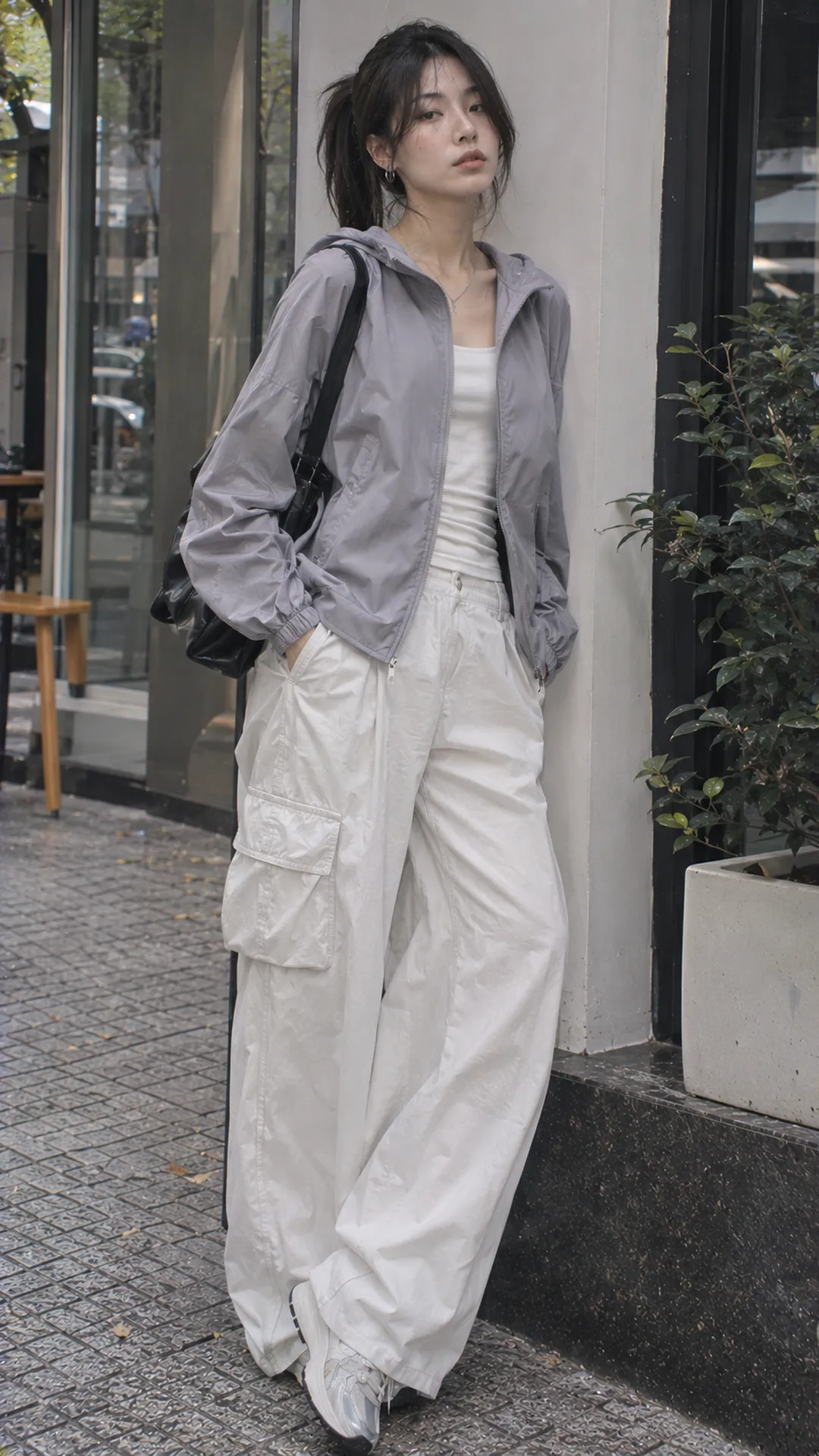
Do not rely on a fully zipped front photo. The jacket is one part of coverage; face, legs and gaps still need appropriate measures. Inspect from behind or photograph movement for areas a front mirror misses.
- Nape and sides of the neck: check whether turning the hood pulls the collar downward.
- Wrists: reach, wear a watch and hold objects instead of judging relaxed sleeve length alone.
- Waist and back: sit, bend and stretch to find gaps between top and trousers.
- Front zipper: check a flat inner covering, slipping zipper or gaps.
Short jackets store compactly and pair with high waists, but need seated coverage checks. A standing waistband-level hem may rise when bending. Another length or inner layer is more practical than repeated pulling.
Choose room for existing clothes
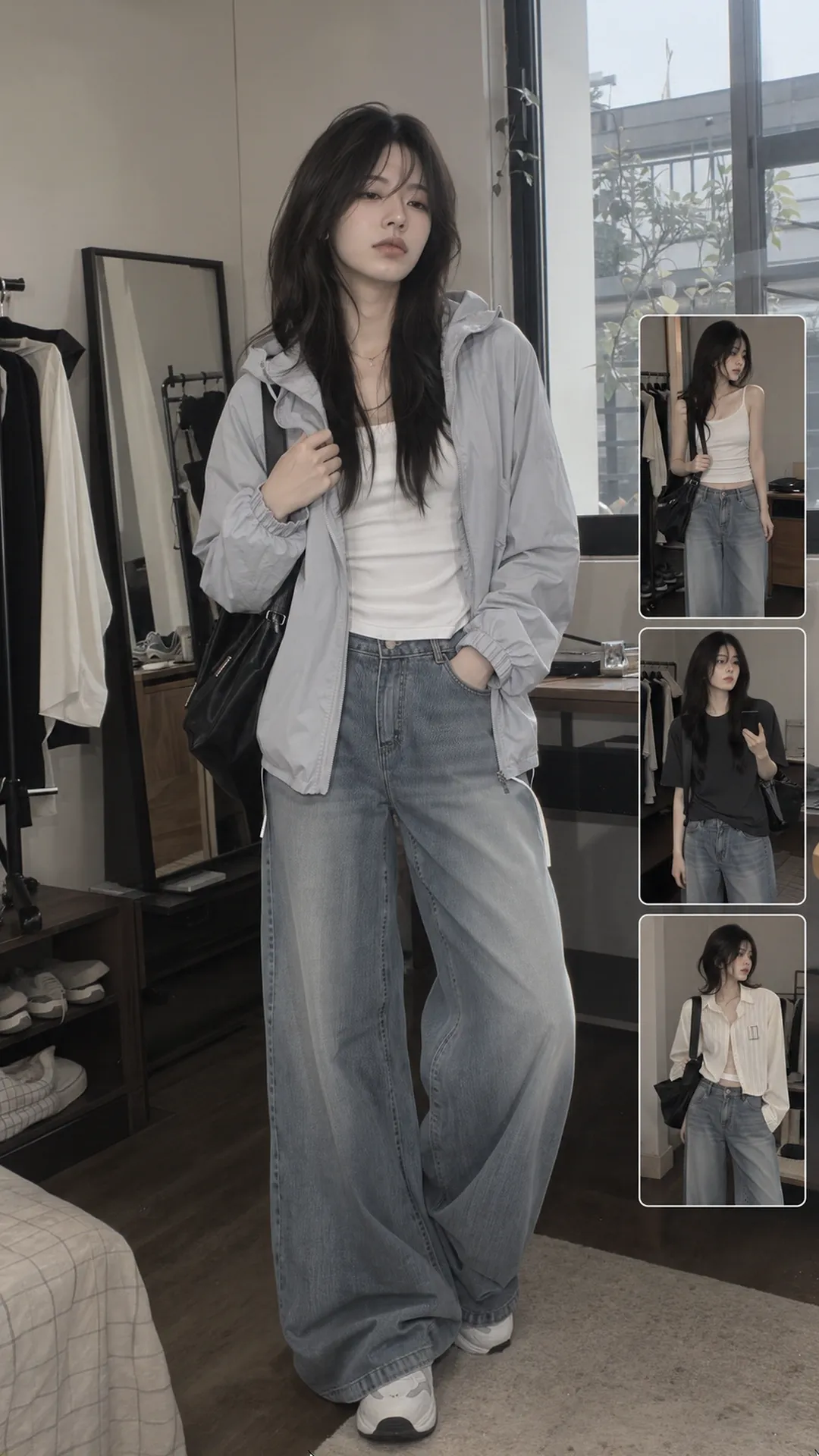
Try your hardest-to-layer outfit: puff sleeves, loose tee or uniform. A thin camisole alone may underestimate upper-arm and shoulder room. A fitting body with tight armholes still inconveniences daily use.
Compare finished chest, shoulders, body and sleeves. Reading online size charts distinguishes body and garment measurements. Include underlayers without automatically sizing up if the design is already roomy.
For neat proportions, choose sufficient body room rather than a tightly cinched waist. Adjustable hems can manage puffing with secured cords. Prioritize shoulders and arms; an attractive photo waist cannot compensate for tension whenever you carry a backpack.
Three outfits complete after jacket removal
Charcoal outerwear, a light tee and black straight trousers
This retains darkness with light near the face indoors and unzipped. Moderate tee sleeves prevent arm bunching. Neat trouser hems clarify lines; one small bag clasp can suffice as an accent.
A moderately short jacket, long skirt and neat shoes
Choose a near-waistband standing hem with enough seated coverage. Straight or gently A-line skirts work; reduce flare if the jacket is already voluminous. Check skirt length with transport before deciding.
A light jacket over a tonal set
Related top and trouser colors reduce fragmentation from an outer layer. With many jacket panels, keep the base plain. The women's layering guide assigns roles without merely increasing clothing quantity.
For base necklines and lengths, see the Women's Tops Item Guide. The sun jacket serves travel; inner clothes must still suit class, office or meeting friends.
Ask useful questions and maintain usable outerwear
Between one fitting shoulder with short-reaching sleeves and another long-sleeved but oversized body, do not automatically accept the latter. Seek a different proportion or neighboring-size measurements. Sizing changes do not solve every ratio problem.
Online, record unpacking and try over clean clothes within return conditions. Inspect zipper, threads, pockets and both sleeves before tag removal. Add your bag, sit and reach upward to reveal sagging pockets, nape pressure or limited armholes omitted from photos.
Include compatibility with existing clothes in total cost. Unusual colors or details may limit everyday use. A color working across several outfits enters the routine more easily.
Premium or Japanese labels cannot replace specifications. Verify manufacturer, model, seller and returns. Clear listings allow size and care checks before paying.
Keep label photos and instructions. Follow temperatures, cleaner and drying requirements rather than one method across fabrics or finishes. Reassess tears, wear or open seams before continued reliance as primary covering.
After use, open and air-dry before storage rather than leave damp overnight in a small bag. For frequent use, choose manageable care and rotation options. Suitable outerwear offers full intended coverage, practical movement and verifiable product information.