

What Are Low-Rise Pants? Rise, Fit, and Measurements
Low-rise pants have a waistband intended to sit below the natural waist, often around the upper hips. Rise describes the waistband position; the legs may still be straight, flared, or roomy.
Compare the waistband on your body with garment measurements from crotch seam to waistband. This guide explains standing, seated, and online-shopping checks so intentionally low-rise construction is not confused with an oversized pair slipping down.
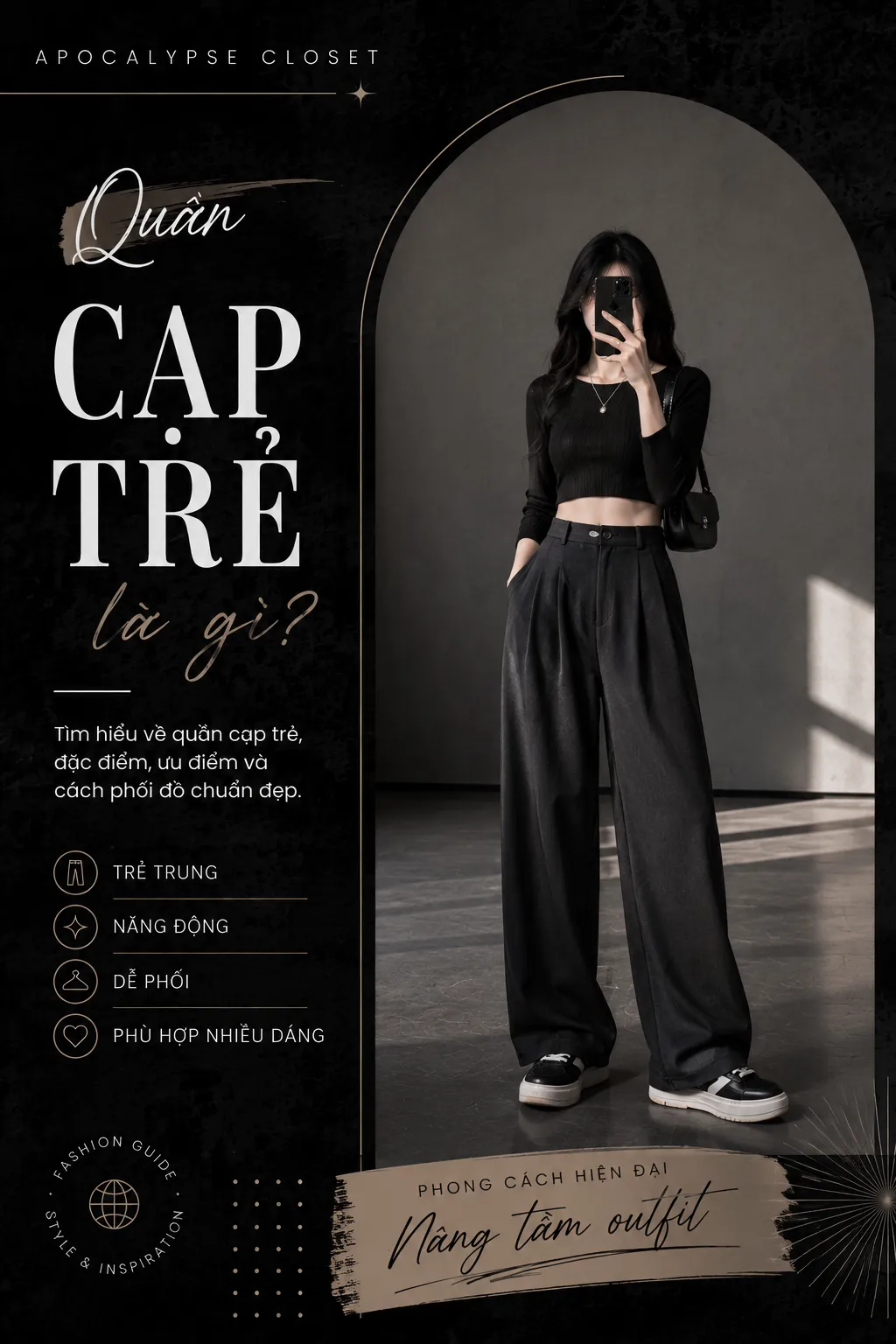
Guide collection: Women's Trouser Guides: Shape, Rise, and Styling
Low-rise pants are designed with a waistband below the natural waist, often toward the upper hips. To compare pairs, examine the front rise measurement from the front crotch-seam intersection to the top of the waistband, using a consistent measuring method rather than the product label alone.
On this page
What Are Low-Rise Pants?

Pants described as low-rise are cut to sit below the natural waist, often toward the upper hips. Bodies vary, so a fixed distance below the navel does not define the same position for everyone.
Low rise is a feature of the garment pattern, rather than simply pulling a mid-rise pair downward. The front and back rise, waistband curve, and hip room work together at the intended position. Lowering a differently cut pair can also lower its crotch, pockets, and fastening beyond their designed placement.
Front and Back Rise: Two Useful Measurements
Front rise is measured from the front crotch-seam intersection to the top of the waistband, according to the seller's stated method. Back rise is the corresponding measurement at the back. The two usually differ to accommodate the body's shape. For online comparisons, consistent measurements can be more informative than low, mid, or high labels without a shared standard.
A measurement can behave differently across sizes, patterns, and bodies. Check the size chart and measuring method; model height provides context rather than a prediction. With rigid denim, differences in hip room and rise can substantially change seated fit.
| Rise | Typical intended position | Possible visual effect | What to check |
|---|---|---|---|
| Low-rise | Below the natural waist, toward the upper hips | A lower waistband may make the upper section appear longer | Hip support, waistband curve, and back rise |
| Mid-rise | An intermediate position, varying by brand and body | A different division between upper and lower sections | Whether the waistband folds or presses while seated |
| High-rise | Closer to or above the natural waist, depending on the design | A higher visual starting point for the lower section | Room at the abdomen and upper waistband while moving |
Low, Mid, and High Rise Have No Universal Boundary
Brands use different size systems, patterns, and labels. Compare garment rise, the actual worn position, and photographs alongside measurements from a pair you know. Reviews from people with similar proportions may add context, but cannot guarantee your fit.
Do not confuse low rise low-rise with a dropped crotch. A dropped-crotch design lowers the crotch while its waistband may remain higher. Boyfriend and baggy also describe different aspects of volume: a pair can be low-rise straight, low-rise flared, or low-rise baggy.
Common Low-Rise Shapes: Similar Waistband Position, Different Legs
Low rise describes the waistband position, not the complete trouser silhouette. Two low-rise pairs can look different when one is straight and another is baggy or flared. Separate the questions: where is the waistband intended to sit? and what shape do the legs create?.
| Variation | Main silhouette | What to check |
|---|---|---|
| Low-rise straight jeans | A comparatively continuous leg width toward the hem | Hip room, front rise, and hem length |
| Low-rise baggy pants | More room around the hips, thighs, or legs | Back rise, crotch placement, and hem stacking; see what baggy pants are |
| Low-rise flares | A closer upper leg that widens below the knee | Leg length against the actual shoes |
| Low-rise tailored trousers | Straight or wide legs in a different fabric and finish from denim | Waistband support and whether pleats pull open |
| Low-rise shorts | A lower waistband combined with a shorter hem | Hip fit and your preferred seated coverage |
Rise alone does not determine the whole visual proportion. A lower waistband moves one dividing line, while trouser length, width, color continuity, and footwear create others. Inspect the complete silhouette rather than assuming low rise always produces one result.
Intentional Fit or Slipping Trousers?
An intentionally low-rise pair should remain at its designed position without a tightly cinched belt compensating for unsuitable fit. Sit and check back coverage, crotch tension, and fastening placement. Repeated slipping, very low pockets, or a folded zipper may indicate a mismatch in size or pattern.
Stretch denim can change during wear; fiber percentage alone does not establish recovery. Rigid cotton denim needs adequate room for sitting and walking. Choosing a painfully tight waistband to prevent slipping does not solve an unsuitable cut.
An Online Low-Rise Measurement Checklist
A model photograph shows the garment on that model's body. It cannot predict the exact position on yours. Compare available garment measurements first, then use photographs as supporting context. Aim to answer these four questions.
- What is the front rise? Compare it with a pair you own, using the same route from crotch seam to waistband and checking whether the seller includes the waistband.
- Is there enough finished hip room? Consider the circumference where this particular waistband will sit, alongside the hip and other relevant measurements; do not rely only on a natural-waist size label.
- Does the back rise work while seated? A strongly dipping back waistband or reports of unwanted seated gaps are reasons to investigate the pattern and size rather than assume the style cannot work.
- Does the fabric stretch and recover? Stretch may assist movement, but poor recovery can affect waistband stability. A rigid fabric needs sufficient room from the start.
A listing containing only letter sizes and body weight offers less information than clear garment dimensions. Do not automatically size down to stop slipping: the waistband shape and intended wearing position must work together without excessive pressure.
A Low-Rise Fit Test: Standing and Sitting
The distinction is an intentionally lower, reasonably stable waistband rather than a pair that simply falls downward. Try these checks before focusing on styling.
Scope of these examples: The following outfits illustrate how short tops reveal waistband placement. Photographs alone do not establish their exact rise category.
Closet Looks for Comparison

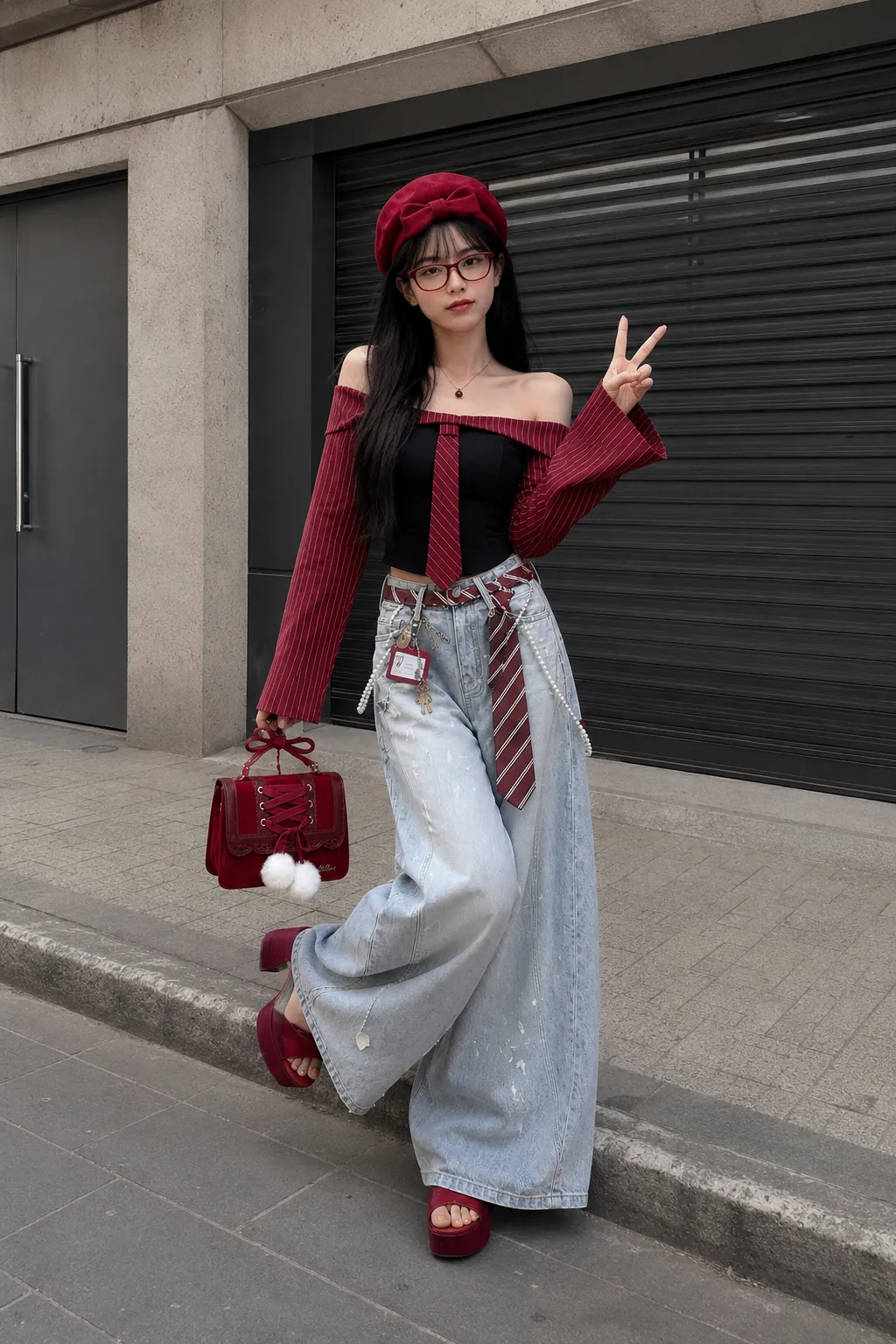

- LOOK #14 (Vietnamese): the defined tank and roomy jeans show how a shorter top makes the waistband visually prominent; this does not confirm a measured low rise.
- LOOK #33 (Vietnamese): a shorter structured top makes the waistband and upper-body length easier to compare within the silhouette.
- LOOK #40 (Vietnamese): the cutout crop and roomy jeans illustrate the space between top and waistband, and why top length changes the effect of a lower rise.
- Standing: is the waistband near its intended position, or does it dip unexpectedly at the back?
- Sitting: does it shift substantially or create a gap beyond your preferred coverage?
- Walking with your bag: does the waistband rotate or require repeated pulling up? Investigate fit before treating this as a styling problem.
Why Is Low Rise Associated with Y2K?
Low-rise jeans were a prominent early-2000s fashion feature, often paired with shorter tops. That period connection helps explain their use in Y2K references. It does not mean every Y2K outfit requires an extremely low waistband: washes, graphics, shoe shapes, and accessories provide other references.
In an alternative interpretation, a lower rise can emphasize torso length, belt details, or the waistband. A darker Y2K palette might use black, gray, or darker denim. Choose the proportions and coverage you enjoy rather than treating any of these as requirements.
Body Proportions and Wearability: Choose an Effect You Enjoy

A lower waistband can make the upper section appear longer. If you want a different balance, compare a shorter top, a longer trouser line, or footwear color continuity without changing the rise. Keep hems clear for movement; platforms are an optional visual choice, not a necessary correction.
Wearability depends on your body, the waistband shape, fabric, and seated posture. One person may prefer less pressure at the natural waist, while another wants a higher anchor point. No rise is best for every body.
Top-Length Starting Points for Low-Rise Pants
A baby tee, fitted tee, tank, or cropped knit ending near the waistband makes its position visible. A longer top offers more coverage; opening an outer layer or partially tucking can reveal the waistband if desired. Match footwear to the actual hem length rather than to the rise label alone.
For straight denim, read the straight-leg jeans outfit guide for more detailed top, shoe, and proportion comparisons. This page remains focused on rise terminology and fit.
Common Misunderstandings
- Low rise means a fixed distance below the navel: bodies, sizes, and patterns differ, so there is no universal centimeter marker.
- Pulling mid-rise pants downward makes them low-rise: it also changes the intended position of the crotch, pockets, and waistband.
- Only one body shape can wear low rise: it is a proportion and fit choice, not a body qualification.
- Low-rise pants always slip: repeated slipping calls for checks of size, pattern, fabric recovery, and waistband position.
- Low rise creates a complete Y2K outfit: rise is one feature; the other clothing and accessories create the overall interpretation.
Frequently Asked Questions
What Are Low-Rise Pants?
Low-rise pants are patterned to sit below the natural waist, often toward the upper hips. This differs from pulling another rise downward.
How do low and mid rise differ?
Low rise generally sits lower, but brand labels have no universal boundary. Compare front and back rise, measuring method, and actual worn placement.
Do low-rise pants slip easily?
Not necessarily. If a pair repeatedly shifts, investigate size, waistband shape, hip room, fabric recovery, and back rise rather than relying on a tighter belt.
Are low-rise pants only for Y2K styling?
No. Their period association does not prevent Grunge, Baddie, or simpler interpretations. Rise describes construction rather than a complete aesthetic.
Are low-rise and baggy the same thing?
No. Low rise describes waistband placement; baggy describes garment volume. A pair may combine both, while other low-rise designs can be straight or flared.