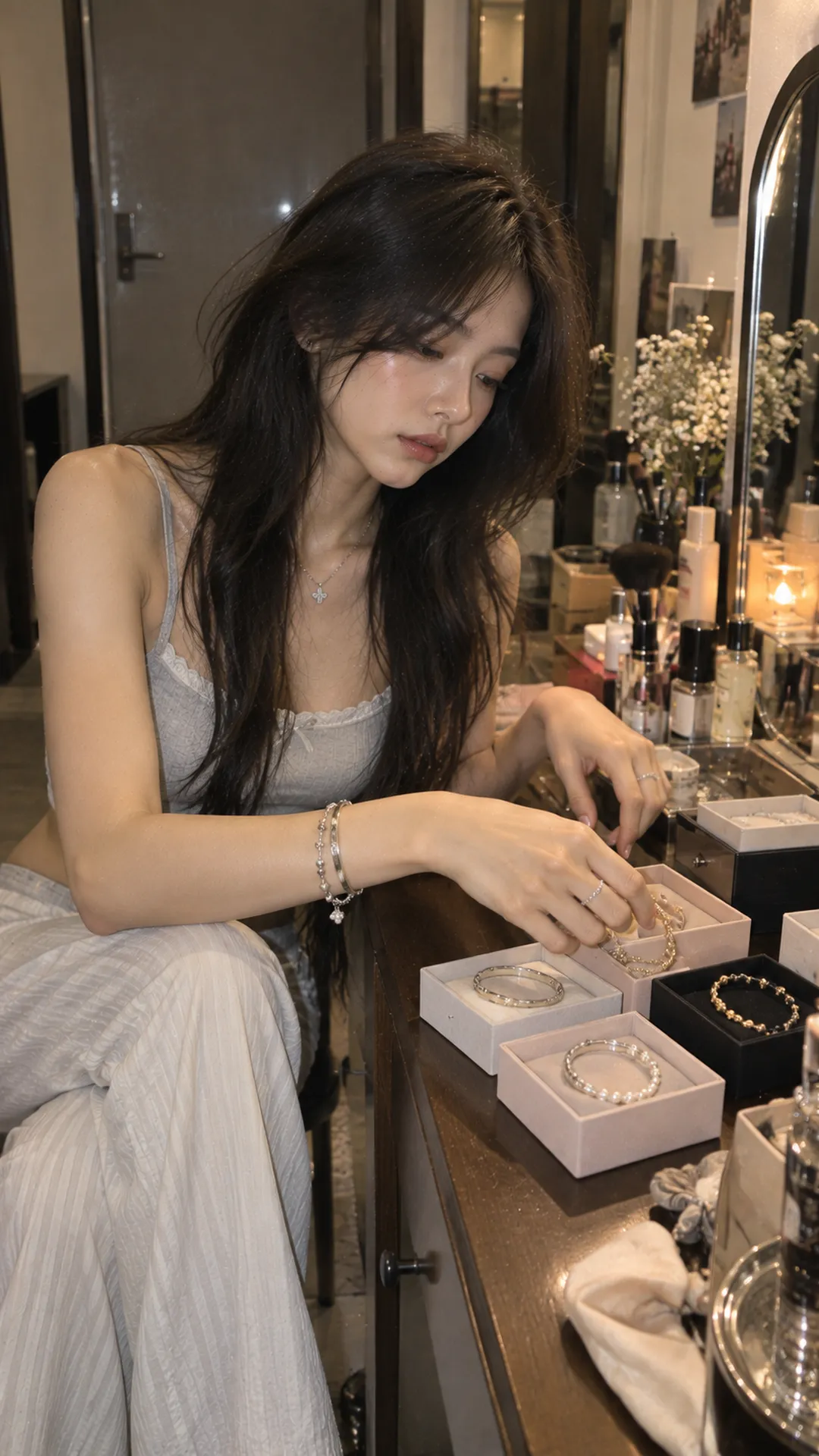
Distinguish bracelet types before buying
Vietnamese product names for bracelets and chain bracelets often overlap. Do not infer rigid versus flexible construction solely from naming. Inspect closures, interior, measurements and wearing method. Structure determines what to measure, how it moves and compatibility with other pieces.
Chains and flexible bracelets
Linked or flexible designs follow the wrist, usually with a clasp. Small and large links differ, as do flat and round chains. Check one-handed fastening and loose ends. For frequent keyboard work, rest the wrist on a table while choosing.
Bangles and cuffs
Rigid bracelets retain their shape: some slide over the hand, others hinge or clasp. Cuffs generally have an opening. Tiffany distinguishes cuffs and bangles through open and closed construction, but inspect the actual mechanism rather than category names alone.
Not every cuff can be squeezed or stretched freely. Ask the manufacturer's adjustment limits, especially with stones, plating or joints. An opening does not mean daily bending is intended. For slip-on bangles, passage over the hand matters as much as room at the wrist.
Beads, woven cords and charms
Beaded bracelets may use elastic or clasps; woven cords may adjust through knots. Inspect actual operation. Charms add accents, changing weight and space according to configuration. For future additions, ask compatibility and the specific bracelet's limits.

Measure and test by construction
Use a flexible tape or cord to record circumference where it will sit, then follow product-specific guidance. Mark where cord ends meet and measure flat. Tiffany's sizing guide also notes measuring each position when stacking up the arm. One brand's chart cannot automatically cover another.
For flexible bracelets, ask whether length includes the clasp and how adjustment works. For rigid pieces, clarify inside diameter, inner circumference or a proprietary sizing system. Identical numbers may fit differently through shape or measuring method.
According to Pandora's guide, sizing depends on bracelet type and the exact design's recommendation. Do not add one fixed centimeter allowance to everything. Width, charm count and preferred closeness matter during fitting.
Rotate the wrist gently, open and close the hand and rest it on a table. Does the bracelet pinch the fold, slide too far over the hand or continually turn its decoration underneath? Try another size or structure. Daily use should not require the other hand to retain it.
For gifts, adjustable designs still need a confirmed range. Without size information, prioritize suitable exchanges and retain product details. Check how engraving or customization changes returns. Do not estimate wrist measurements from a photograph alone.

Choose one focus for a stack
Start with the piece you want noticed first: a broad cuff, large chain, charm or colored beads. Wear it alone before adding another. If both become unclear, change width or surface, or remove one. No particular quantity is necessary for layering.
Repeat one feature: metal color, circular shape, links or bead color. That connects different pieces. For strong opposition, simplify clothing so you can see the contrast without too many competing elements.
Gold-colored and silver-colored metals together are an aesthetic choice, not an error. Favor one tone or use a two-tone bridge piece. Skin color need not dictate a rigid formula; test under ordinary light with your watch, rings and bag clasp.
The stack need not exactly match earrings and necklace. One small shared feature may suffice. With a prominent collar and earrings, a simple bracelet creates breathing room. The women's fashion accessories guide places the wrist in relation to other outfit areas.
Three stacking combinations
Two slim lines for everyday wear
Try a flexible chain with a fine bracelet of another surface. Similar colors stay subtle; a small contrast adds definition. Check twisting during hand use. If pieces continually overlap, change structure or separate wrists.
One broad piece and a supporting item
Let a cuff or chain lead and add a small bracelet only with enough room. The wrist need not be filled. Test sleeves: broad cuffs may work beside neat cuffs but catch or disappear beneath ruffles. Adjust sleeves before buying more bracelets.
Colored beads and metal
Beads with a simple chain contrast surfaces. Take color from a top, bag or small outfit detail for easy connection. You need not assign health or luck benefits to beads; personal meaning and visual preference already give them value.
For Alt taste, test chains, dark cords or geometric details gradually. The essential Alt Fashion accessories guide suggests compatible groups. In photographs, identify the main line and supporting pieces rather than buying every item shown.

Coordinate watches and sleeves
With a watch, test wrist bending, writing and typing. Continually touching rigid pieces can knock surfaces, so try the other wrist or fewer bracelets. Everything need not occupy one side merely to match a reference.
With long sleeves, decide whether bracelets sit beneath or outside the cuff. Raise and release sleeves to check catches on seams, lace or knit fibers. More bare space with short sleeves does not demand more accessories; one clear shape can be enough.
For personal style, photograph several combinations from existing pieces under the same light and angle. Assess the whole outfit, not just the wrist. The fashion mood-board method identifies preferred lines, colors and emphasis before additions.

Material questions before buying
Silver color does not mean silver content; gold color does not establish gold purity. Ask about base material, plating, clasp components and stones or beads. For titanium, stainless or non-tarnishing descriptions, request exact product information rather than treating them as guarantees under all conditions.
For styling, understand that materials affect surfaces and care. Silver quality or alloy composition needs separate data and cannot be concluded from photographs. Nor does an advertised metal name establish comfortable wear for everyone.
Inspect the interior for sharp edges, rough joins and snagging details. Test the clasp as directed for secure and manageable closure. With stones or charms, ask about repair, clasp replacement and warranty limits. These often matter more over time than a trend name.
Budget for the main piece and additions actually needed, not an immediate complete set. The Alt Fashion shopping guide considers combinations, needs and costs, particularly for a bracelet usable with only one outfit.
Care and storage after wear
Follow each product's instructions, especially mixed materials. Pandora separates care guidance for cultured pearls, leather and colored cords, showing that one soak is not suitable for all. With uncertain construction, ask before polishing solutions or cleaners.
Store separately or in suitable compartments to limit impacts and tangling. Check clasps, joins and attachments before reuse; seek support for loose parts. Remove bracelets where impacts or snagging make it appropriate. A stack you like should still allow natural daily hand use.