

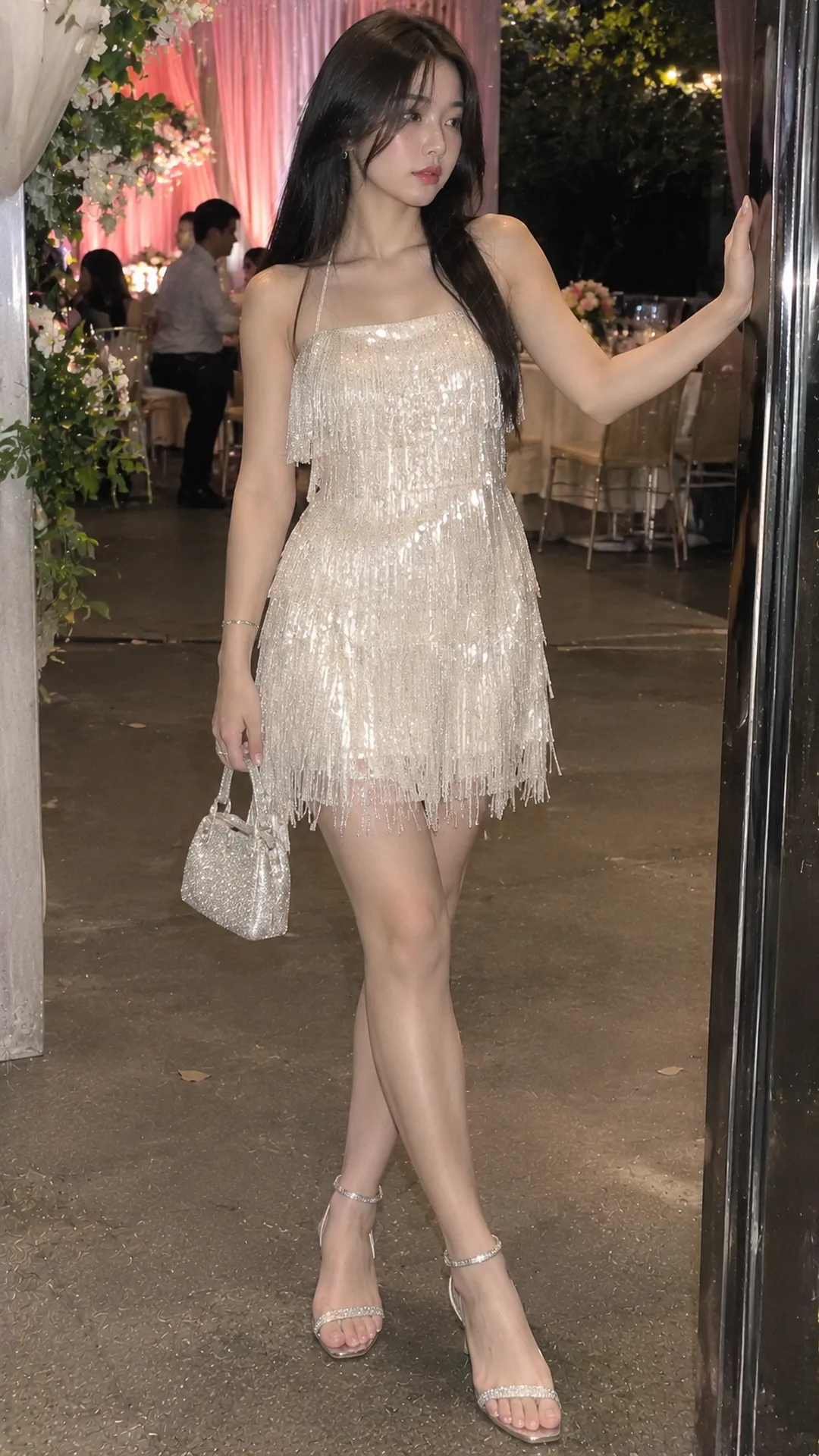
Three things to check on a fringe dress
The base dress determines fit and coverage
Look under the fringe. Check whether the dress is fitted, straight, or flared, how long it is, and whether it has a lining. That layer sits against your body and gives the dress its shape. The longest strand may hang below the actual hem.
Raise your arms, sit down, and turn to see whether the base rides up. Fabric with little stretch needs room at the bust, hips, and back. Even when the fringe moves freely, check that the dress underneath lets you move comfortably.
Fringe placement directs the eye
Fringe at the hem draws attention to the legs, while fringe at the bust or shoulders draws it upward. All-over fringe creates more movement and often works with simpler accessories. Choose the area you want to highlight for the occasion.
If the fringe is sewn in horizontal rows, check the spacing and how much the rows overlap when you stand. Sitting can make them bunch or spread. Look from the side and back as well as the front.
Length and density change the movement
Short fringe stays close to the surface, while longer strands swing farther. Sparse fringe shows more of the base dress, and dense fringe forms a larger block. Walk a few steps to judge the movement on the actual dress.
Choose a dress shape for the occasion
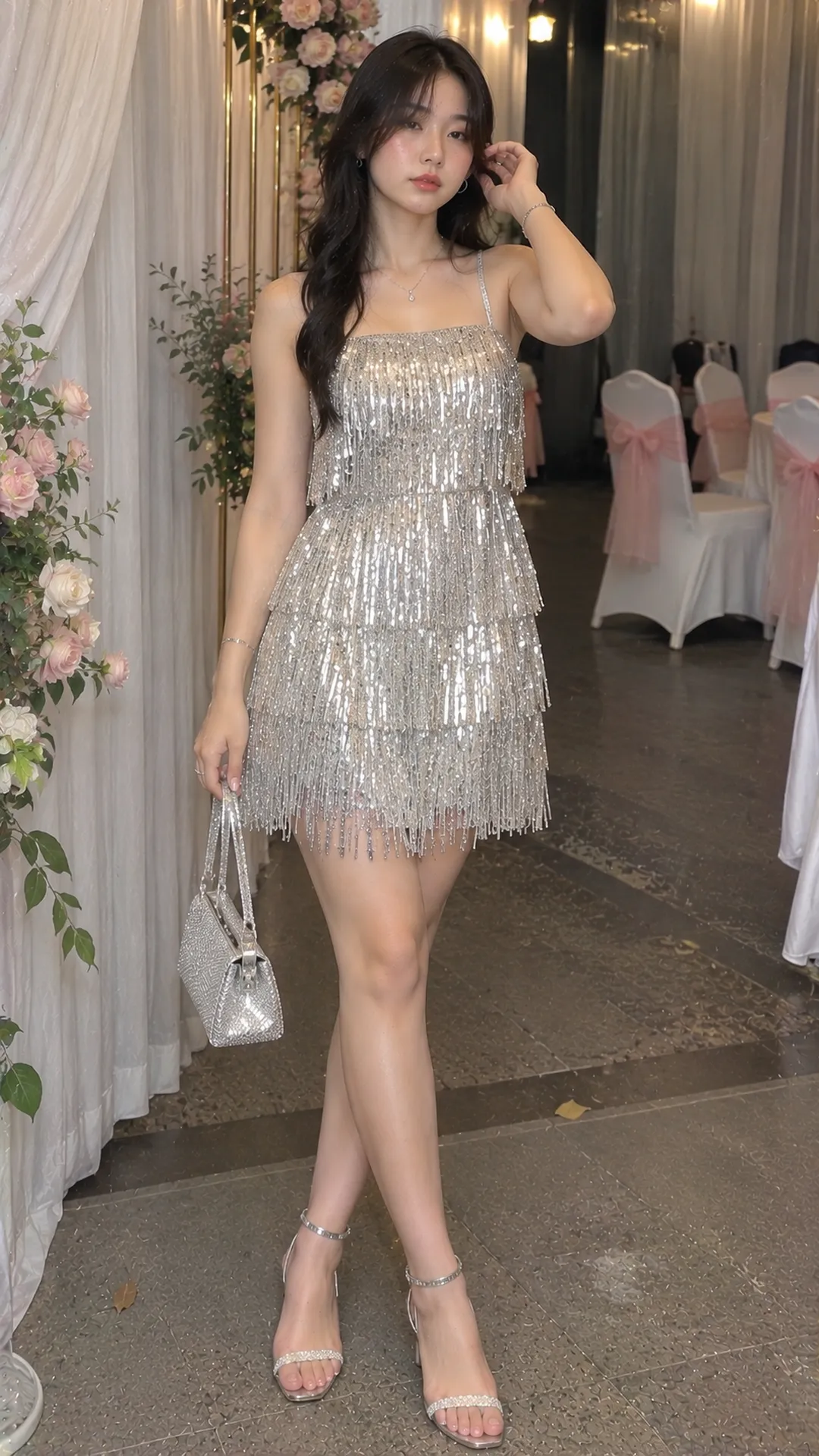
A straight dress with fringe at the hem gives you visible movement and a simple body. Check that the shoulders and bust fit and that the weight of the trim doesn’t pull the dress sideways. If it has thin straps, see whether they stay in place while you move and carry your bag.
A fitted dress with fringe on one side or in one area creates a more concentrated accent. Sit long enough to check the fit at the hips and zipper. If the trim hides the seams, part the strands gently and avoid pulling at the attachment points.
A long dress can create a dramatic swing. Try it with your shoes so the fringe clears the floor and heels. On a short dress, check the base hem when seated. Use those measurements to judge coverage and movement, whether the dress is labeled mini or maxi.
Check the dress code. A seated dinner, an outdoor gathering, and an event with lots of walking call for different choices. Our women’s skirt and dress guide by silhouette offers other options if fringe doesn’t suit your plans.
Three outfits by color and finish
Black fringe with one bright accent
A black fringe dress already adds texture and movement. Try simple black shoes, a plain small bag, and earrings with as much shine as you like. The earrings add a little light near the face while the dress remains the focus below.
For color, try a deep red bag or a pair of bright shoes. Keep the other accessories simple. Check the outfit in lighting similar to the venue to see whether the fringe stays visible or blends into the black fabric.
White fringe with deliberate contrast
Cream or ivory shoes create a soft transition with a white dress, while black shoes give a distinct finish. Choose the effect you want and check the actual white of the dress. Cool white, ivory, and cream can look very different next to light accessories.
Check the base layer and undergarments in bright light. The fringe may cover some lines while you stand and separate as you walk. If the event has rules or customs about wearing white, follow the host’s guidance.
Sequin fringe: keep the other pieces simple
Sequins catch the light and fringe adds movement, so both features stand out on the same dress. Try shoes with a simple finish, a bag with minimal hardware, and one small piece of jewelry. If you like a bold accessory, check whether it shifts the focus away from the dress.
Check sequins near the underarms, neckline, and where your arms brush the dress. If they rub or catch during the fitting, check the lining, trim, and how the details are attached before committing to several hours of wear.

Choose shoes, a bag, and jewelry that won’t catch
Choose shoes that hold your feet securely through the event. Familiar low heels may be easier to stand in than new high heels. With long fringe, walk and turn gently to check for snags at straps, buckles, and heels.
A smooth bag with few protruding edges is easy to try with fringe. With a shoulder bag, check whether the strap crosses the trim at the bust or hips. If you choose a clutch, see whether you can hold it with your phone or other essentials comfortably.
Try necklaces with the dress’s actual neckline. A long chain can overlap the fringe and compete with it. Simple earrings or a bracelet may be enough if the dress already has a detailed neckline.
Our guide to choosing accessories by placement helps you decide what to keep. If the outfit feels busy, remove the accessory nearest the densest fringe first and see what changes.

Add an outer layer for getting there
Choose a jacket with room for the trim to lie smoothly. Put it on, fasten it, and remove it while trying on the dress. If the zipper or sleeves keep catching, try a different jacket.
A short jacket leaves fringe at the hem free to move. With fringe higher up, an open jacket with a smooth lining may be easier to wear. Check the fit and length of the actual pieces together.
Our guide to layering outfits helps you compare where the jacket and dress end. Look at the outfit with and without the jacket. If you only need it in transit, pick one that’s easy to stow and won’t tangle the fringe when the pieces are together.
Try the outfit on before the event
Start by standing to check the base dress, neckline, straps, and zipper. Then walk, sit, and stand again. Check that the base stays in place while the fringe moves.
Next, put on the shoes, bag, and jacket you plan to use. Check where they touch the fringe, especially at the wrists, hips, and feet. A short video can show movement at the back that’s hard to see in a front-facing mirror.
When shopping online, ask for the base hem length separately from the length including fringe, plus the dress measurements and an inside photo. Our guide to reading online size charts explains how to compare measurements. The model’s height and weight alone tell you little about how a fitted dress will sit on you.
Identify the specific issue before buying: a short base, long fringe, a difficult zipper, or trim that rubs against your arm. Another size can change width. Fringe placement and neckline construction may call for a different cut.
Care for the fringe after the party
Read the care label for the entire dress. The base fabric and decorations may need different treatment. Check whether your dress can be machine-washed, hand-washed, or dry-cleaned. Ask the seller or a cleaner familiar with the trim if the instructions are unclear.
If a strand catches, find the snag and ease it free without straining the seam. If a row loosens or a sequin falls off, keep any detached pieces and ask a repair specialist before trimming anything.
Hang or fold the dress as directed for its weight and construction. With heavy trim, check where the weight rests and leave room away from hooks, zippers, and sharp edges. Inspect the fringe and seams before styling it again.
Choose a fringe dress whose base fits well, whose movement you like, and whose construction suits the occasion. Start with the base and the shoes. Once both work, it’s easier to choose fringe density, color, and jewelry.