

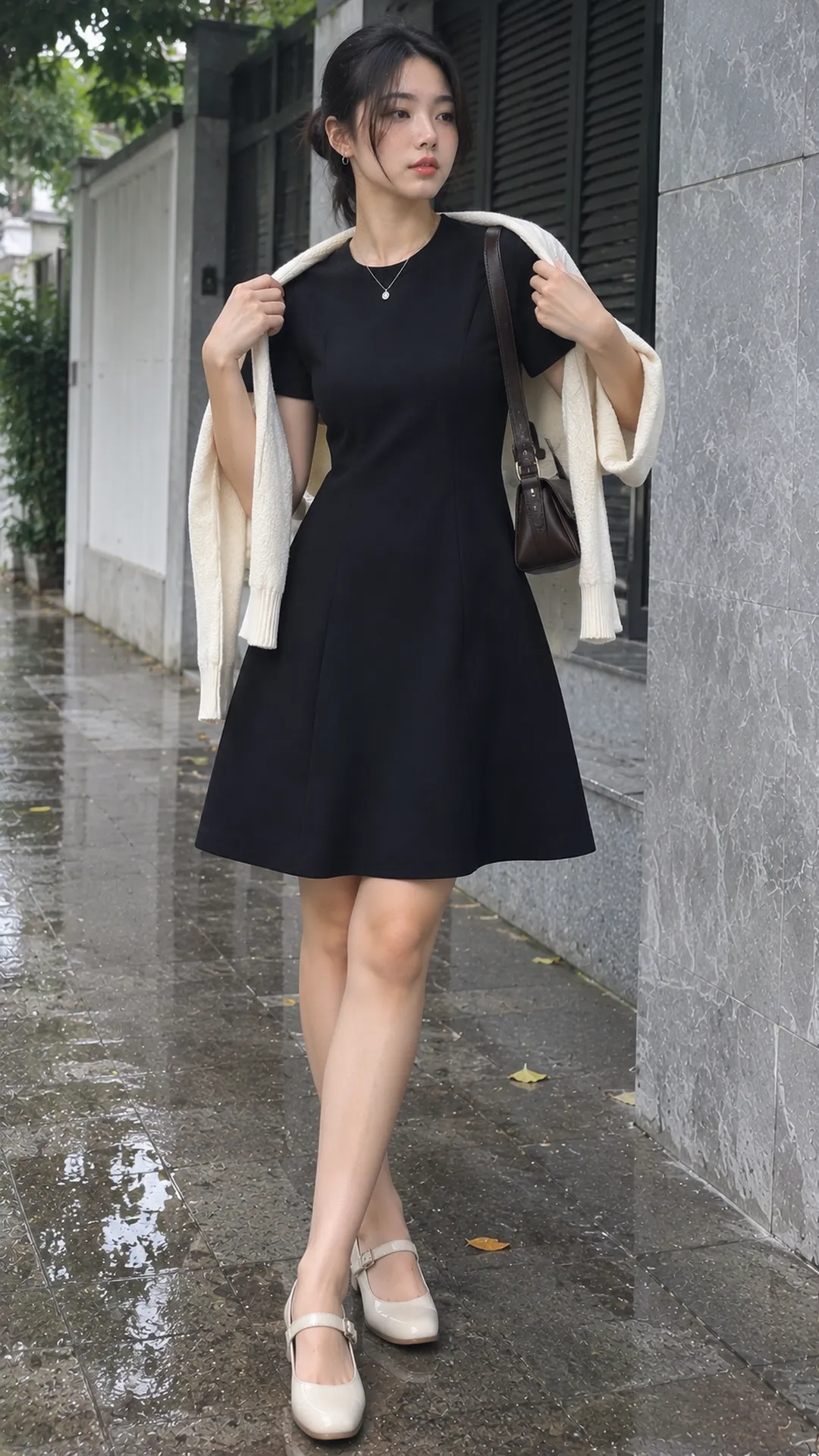
Identify an A-line dress by its outline
From the front, an A-line dress is narrower up top and gradually opens toward the hem. The flare can be subtle or pronounced. Check the outline with the dress hanging naturally. Ruffles, tiers, and a full skirt each create their own shape.
A sewn waist seam creates a visible break between the bodice and skirt. A loose dress that widens can also have an A-line outline with very little waist definition. Since retailers use different names, full-length photos and measurements can tell you more than the label alone.
A circle skirt or gathered dress may have more fabric and movement than a simple A-line. For a cleaner line, check volume at the sides and from the side view. If you prefer more movement, choose a fuller dress with a hem and lining that suit your plans.
Choose a loose A-line dress or a defined waist
A loose A-line dress keeps the outline continuous through the torso. Check the shoulders and bust first, since room around the stomach can coexist with tightness at the underarms or back. Look for a cut that gives room where you want it without sizing up everywhere.
A defined waist separates the bodice and skirt. It may sit high, near your natural waist, or lower, depending on the design. Choose the proportion you like and sit down to check that the seam doesn’t pull.
A belt can add definition. It also gathers extra fabric and can change where the hem falls. Sit down, raise your arms, and look in the mirror again. If the belt needs to feel too tight to create the shape you want, try a dress with a built-in waist seam.

Check the shoulders, neckline, and sleeves first
The shoulder line should follow the design and let you move. A cut-on sleeve or drop shoulder sits differently from a set-in sleeve. Reach forward and check the underarms, back, and neckline to see how much the dress rides up.
A high crew neck makes a clear edge, while a more open neckline leaves room for jewelry. Check the edge when bending and turning. If it gapes where you want it to sit close, try another cut or size.
Short, mid-length, and sleeveless dresses call for different outer layers. For work, consider the dress code and what you’ll do during the day. Try typing or reaching to check for tightness at the sleeves before buying.
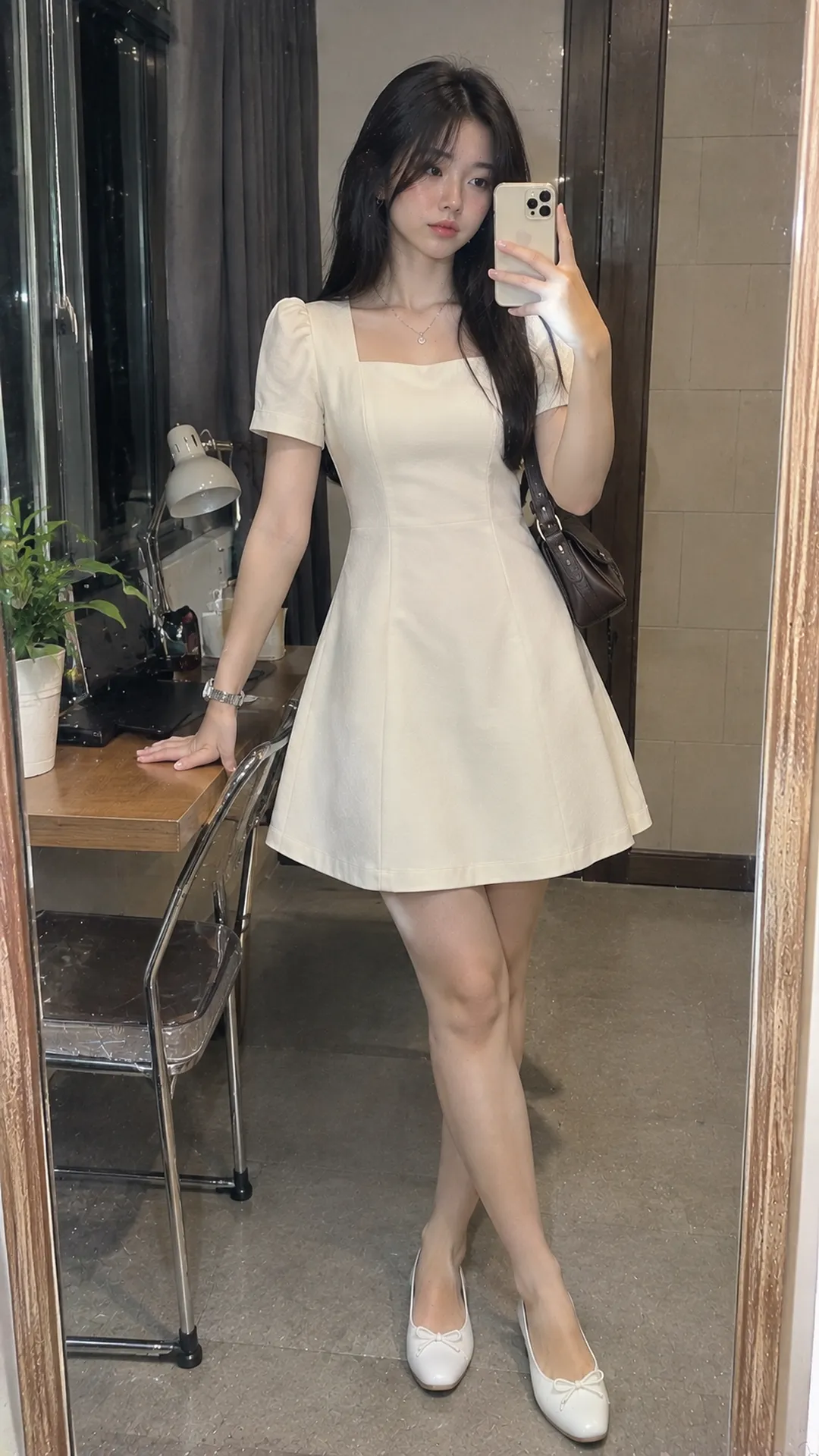
Choose length for your plans and proportions
An above-the-knee hem leaves more of the leg visible and works with a range of shoes. Check the length seated and stepping onto a stair. If you like a short dress and often bend or climb stairs, try those movements before keeping it.
An A-line dress that falls below the knee creates a larger block of fabric below the waist. Check where the hem lands on you, since the same midi dress ends at different points on different people. Try it with your shoes and look at the gap between them and the hem.
For an ankle-length dress, walk in it to see how the hem width and length affect your stride. If you need to lift it frequently, consider hemming it or trying another cut. Choose a length that works with the shoes you want to wear.
Our guide to choosing dress cuts and lengths lets you compare other shapes if you’re unsure about an A-line. A straighter or closer-fitting cut may give you the outline you want with fewer adjustments.
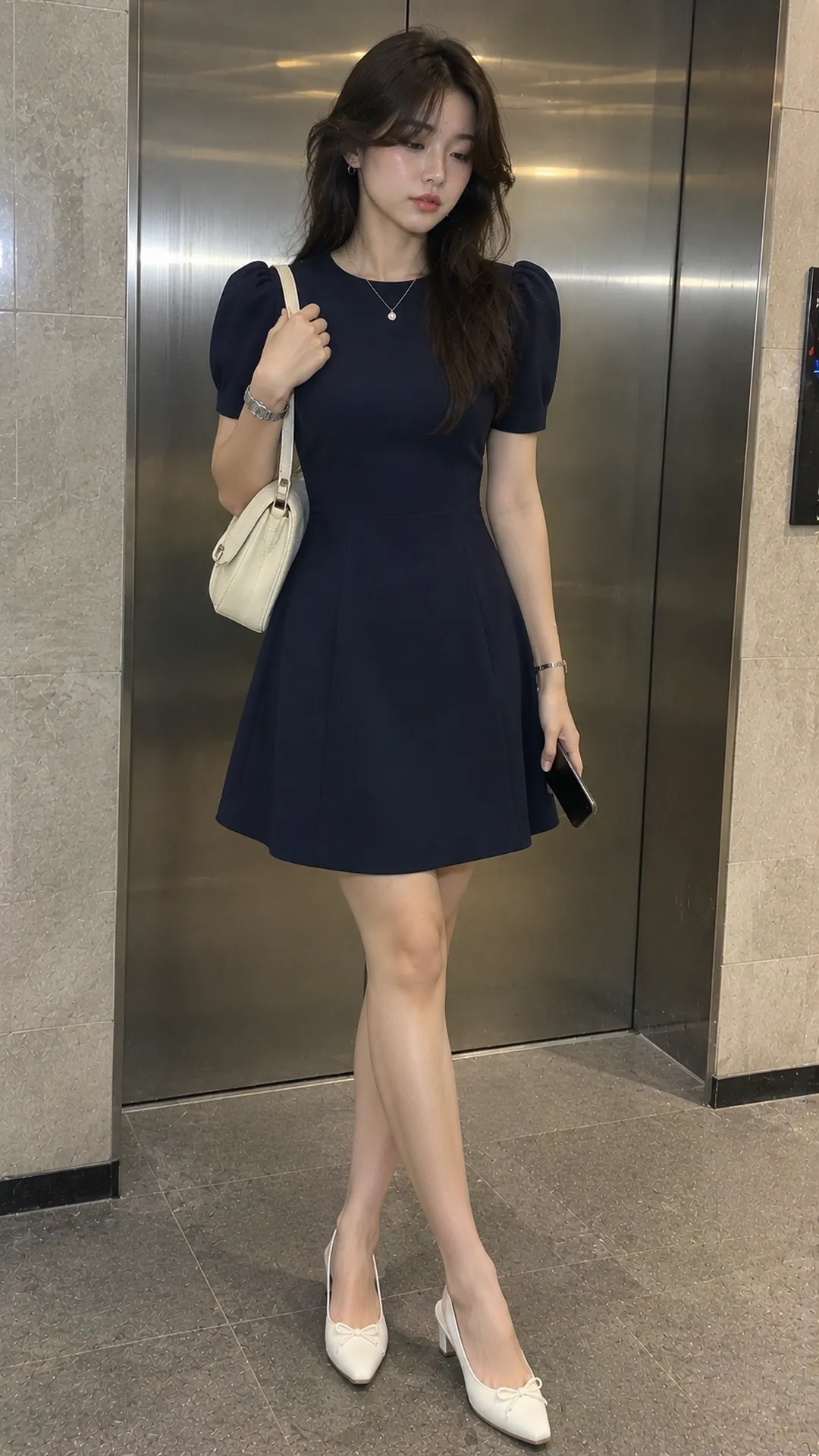
How fabric changes the flare you see
Structured fabric holds a clear outline away from the body. Soft fabric drapes and moves with you. Two dresses with the same hem measurement can look different for that reason. Check the side view and take a few steps to see if the fabric holds the shape you like.
Check thickness, lining, construction, and overall fit as well as fiber content. Several layers may work in a cool room and feel too warm outdoors. Choose for the places you’ll wear the dress most often.
Check light fabrics for coverage at the bust, hips, and skirt with light coming from behind. The lining should cover what you want and lie smoothly without pulling the outer fabric. If its edge shows clearly, decide whether you like that effect.
Shoes for A-line dresses
Simple flats are a good starting point if you’ll be walking. With a below-the-knee dress, look at how much of the shoe and leg show. Straps add a horizontal line, so try them with the actual hem.
Sneakers can make an A-line dress feel more casual where the occasion allows. A simple dress can work with more defined shoes. With tiers, ruffles, or a large print, try sneakers with minimal detail to give the dress room.
Low heels and boots can change the look of the same dress. With boots, decide whether you want a visible gap or the hem to overlap the shaft. Check while walking and sitting, since that gap changes as you move.
Choose a jacket that works with the waist and flare
A short jacket keeps a sewn waist visible. With a loose dress, a jacket with defined shoulders can give the upper half structure. Try each for the proportion you want.
A longer jacket can work too if its hem and the dress hem sit where you want them. Check it open to see the dress line, then closed to see whether the skirt bunches or loses its flare. Choose a roomier layer if the jacket pulls across the hips.
Our guide to layering outfits helps you choose the thickness and hem placement of each layer. Different finishes on the dress and jacket can add depth with very little detail at the waist.
Try on an A-line work dress as you would wear it
Choose coverage, length, and color for your workplace. A plain dress with clean seams can adapt to different shoes and bags. Check the actual dress code when choosing an outfit.
Sit in a chair, lean back, reach as you would at work, and stand again. Check the hem, front buttons, zipper, and waist. If there are pockets, put a lightweight item you usually carry in one and see whether it pulls the fabric out of shape.
For plans after work, swap your bag or earrings while keeping the dress. Keep your walking shoes if you’ll still be on your feet. A small accessory change is easy to manage when you have nowhere to store an extra layer.
Choose accessories around the dress’s existing details
A bold collar, bow, or large buttons already draw attention up top. Try small earrings or a watch with the neckline left clear. A plain open neckline gives you room for a necklace. Check that the pendant sits clear of the fabric edge.
A structured bag can echo the lines of a crisp dress, while a soft bag gives a more relaxed look. Pick a size that fits what you carry and check where it sits when worn. If it lands over the fullest part of the skirt, adjust the strap if possible.
Our guide to choosing accessories around a focal point helps you make space for the details you want to show. One accent is often enough when the dress already has a defined silhouette.
Shop online and adjust a dress that doesn’t fit
Ask for shoulder, bust, waist where applicable, hip, and overall length measurements. For a dress with a waist seam, ask for the bodice length too. Our guide to choosing clothing sizes online explains body and garment measurements. Compare with a dress of similar construction that you already own.
If the bust fits and the waist seam sits in the wrong place, another size may leave the same issue. If the bodice fits but the skirt is long, ask a tailor whether hemming would affect the flare, lining, or print before cutting anything.
Before keeping the dress, try it with shoes and an outer layer you already own. An A-line dress is easy to wear when the top fits, the skirt moves freely, and the length suits what you’ll do. Use the silhouette name to find options, then choose by how the dress works on you.