

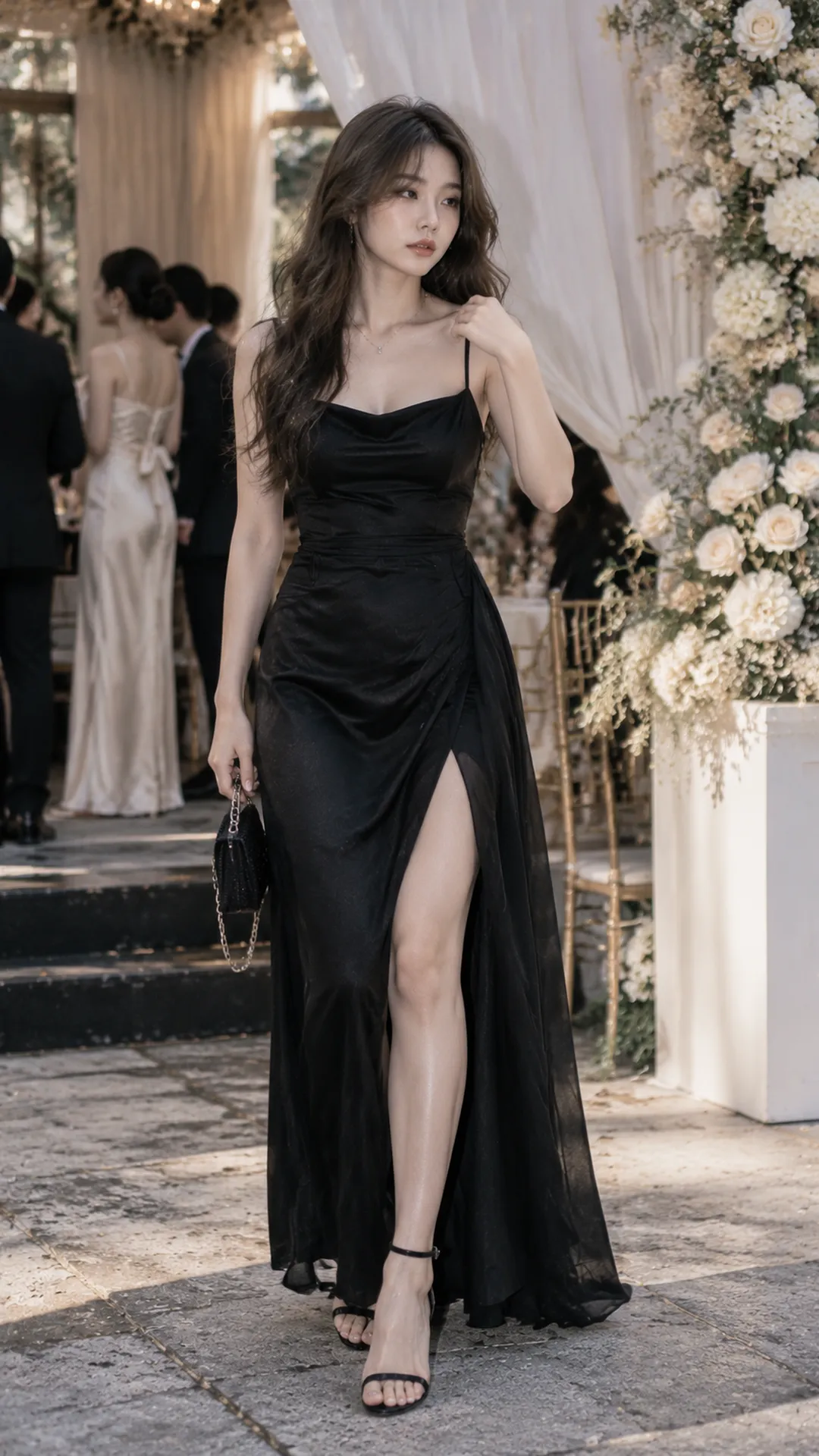
Read the invitation before browsing dresses
The couple's instructions provide the most useful information: formality, palette, venue and activities. Hotels do not always require gowns, nor do gardens always permit very casual clothing. A venue suggests context; the invitation and organizer's guidance establish the choice.
Emily Post distinguishes guest attire by formality and time while acknowledging local customs. Read formal and cocktail labels in context. If unclear, one question to the organizer about formality is more useful than guessing from decoration photos.
For cocktail, start with a structured midi and moderate decoration, then check the event's requirements. For a formal evening, consider long dresses or sufficiently formal cocktail designs according to the hosts. Length alone cannot meet a code if fabric and finish feel everyday.
For religious ceremonies or shoulder-coverage requirements, plan outerwear from the start. It must suit neckline and sleeves rather than be a last-minute addition. For garden or beach weddings, check hems and movement on the actual terrain; a compatible color cannot prevent an overlong dress catching.
This guide focuses on the dress: cut, length, lining and fitting. If still choosing between a dress, suit or jumpsuit, see the expressive women's wedding guest outfit guide to establish the base first. Once you choose a dress, narrowing designs becomes easier.
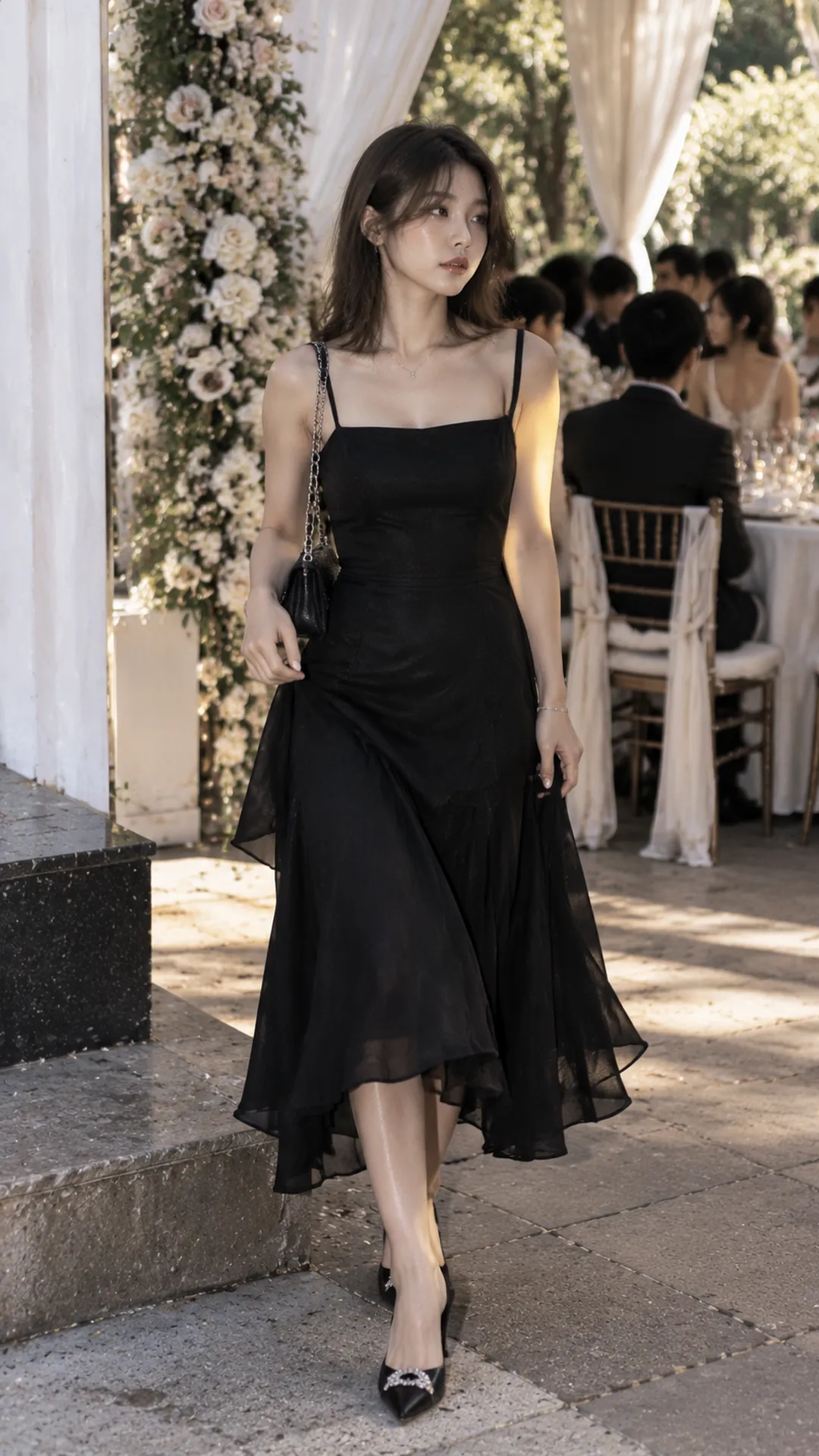
Three observable signs of a polished look
Cut lines sit where intended
Assess waist, bust and shoulder lines on your body, not only a hanger. A waist above or below your preferred position changes the entire proportion. For asymmetry, check the supporting side; for open necks, bend and sit to establish actual coverage.
Do not force your body into a supposedly flattering cut. Choose fitted, straight or flared according to your desired emphasis. Accessories cannot hide every sizing issue: a strained zipper or twisting body usually needs another size or cut adjustment.
Surface and finishing are neat
Inspect zipper edges, neckline, joins and hem. Check whether lining hangs too long or shows, loose threads are manageable and attachments are secure. View glossy fabric in normal light because seam rippling may be clearer than in edited photos.
Price and branding cannot replace inspecting the dress. Simplicity leaves fewer distractions, making good fit and finish especially relevant. Online, request interior close-ups too; an attractive exterior does not establish lining quality or skin-contact comfort.
One clear accent
Choose where attention should go: neckline, back, waist or skirt movement. A large shoulder flower may make layered necklaces unnecessary. With a plain body and simple neck, earrings can provide light. Restraint reveals the main design rather than requiring everyone to dress minimally.
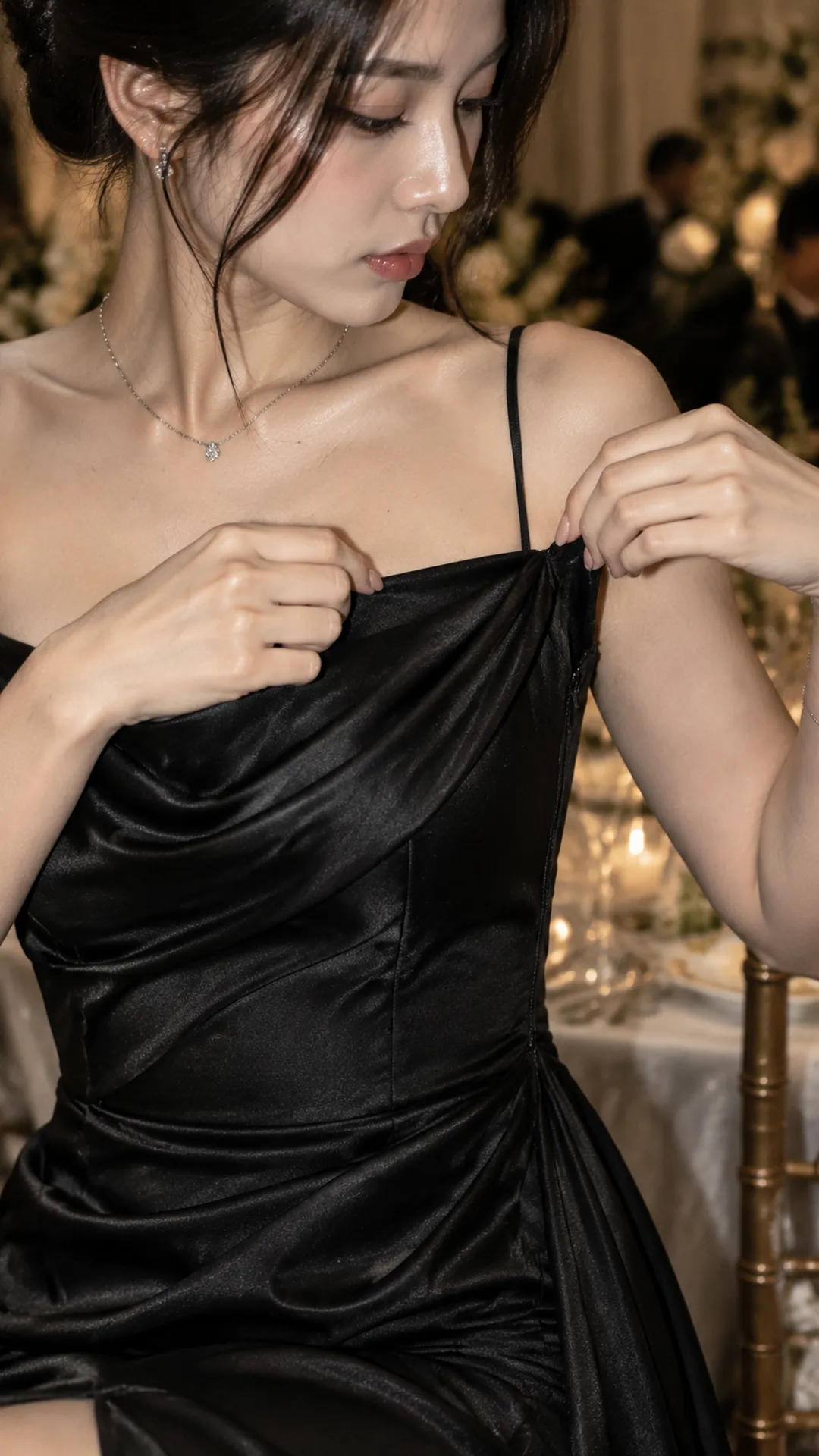
Choose a silhouette for how you want to move
A-line for more lower-body room
A-line dresses widen toward the hem but vary greatly in flare. Take a moderately long step and sit to check hip and thigh movement. For waist emphasis, seek a defined seam; for upper-body ease, try a less restrictive construction rather than merely sizing up a fitted design.
Fabric structure determines outline definition. A shape-holding material differs from soft drape within the same A-line label. Compare front and side views if unsure; the guide to dress shapes and lengths separates these factors.
Fitted silhouettes for continuous lines
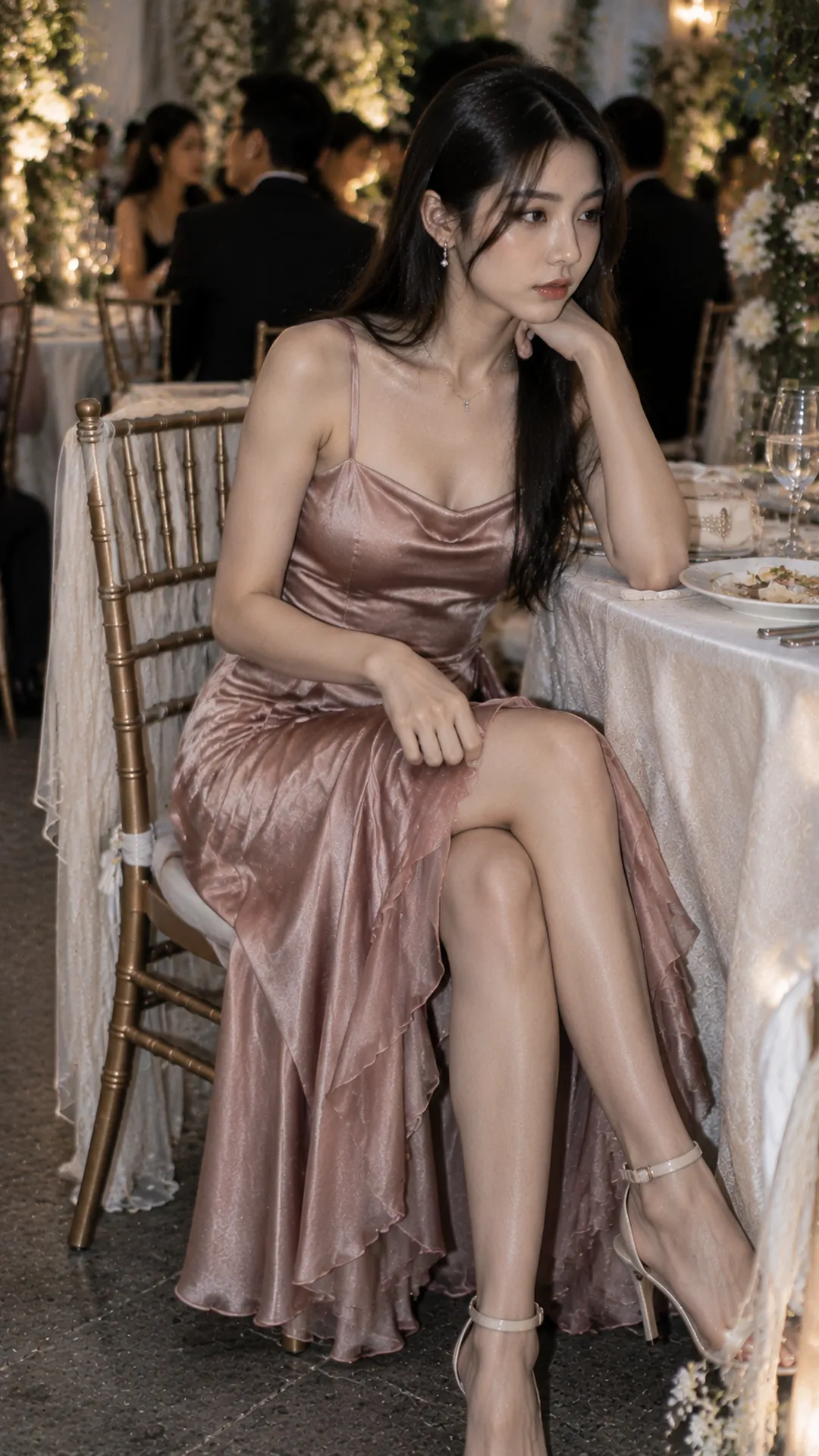
Check fitted dresses both relaxed and seated. Horizontal pulling, a curved zipper or a continually rising hem signals a fit reassessment. Do not judge only a flattering angled pose; you will wear it for hours in many positions.
Test a slit walking and seated with your actual underlayers. Standing coverage can change in motion. A lower slit, roomier cut or different length can reduce holding the dress while preserving lines you enjoy.
Straight or draping shapes for fewer restrictive points
Straight does not mean excessively large. Check shoulders, neckline and sides for clear support. With drape, see where fabric falls and whether it clings to underlayers. Test thin straps with arm movement, especially when carrying a bag or adding outerwear.
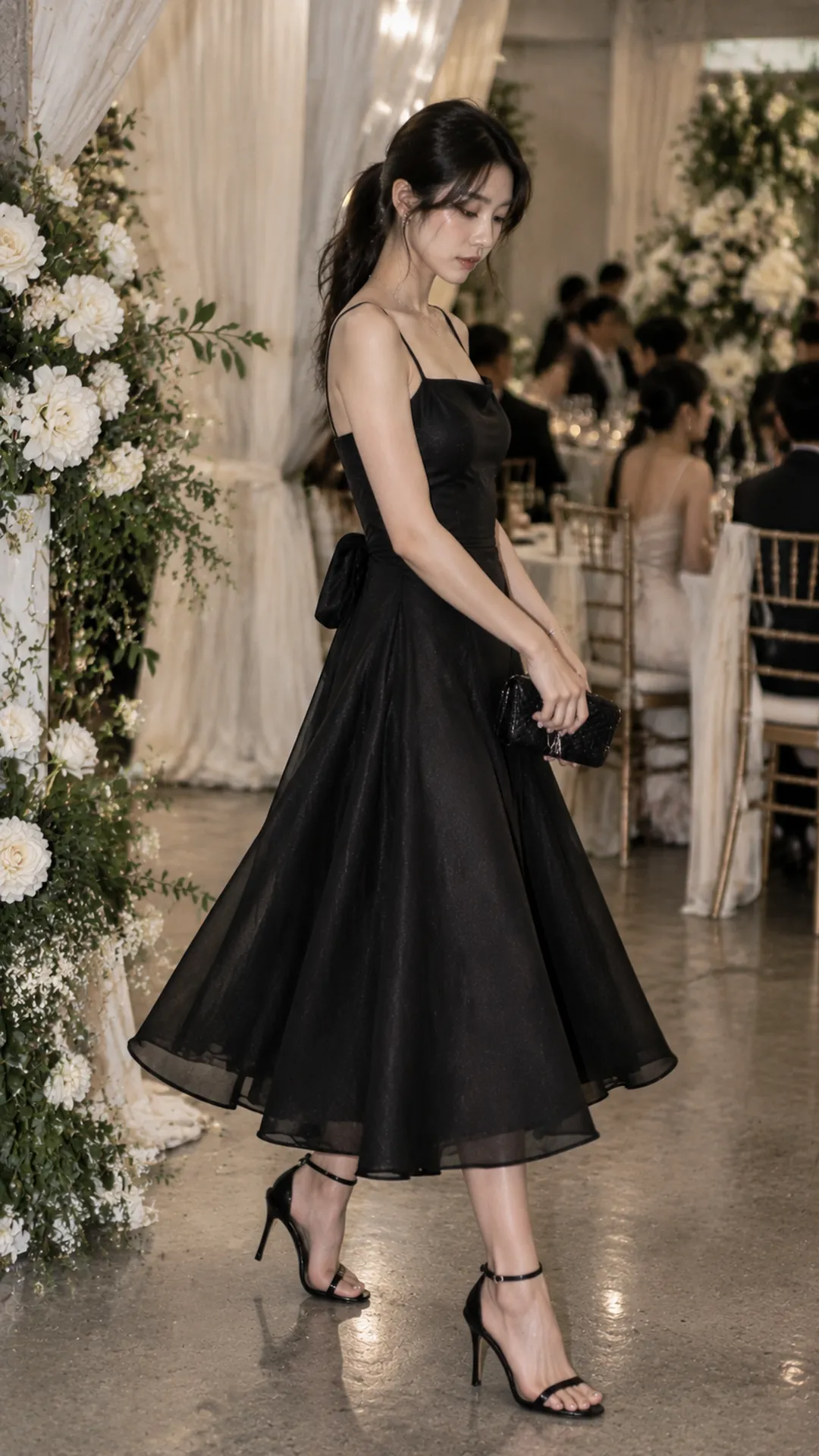
Choose color and surface for the setting
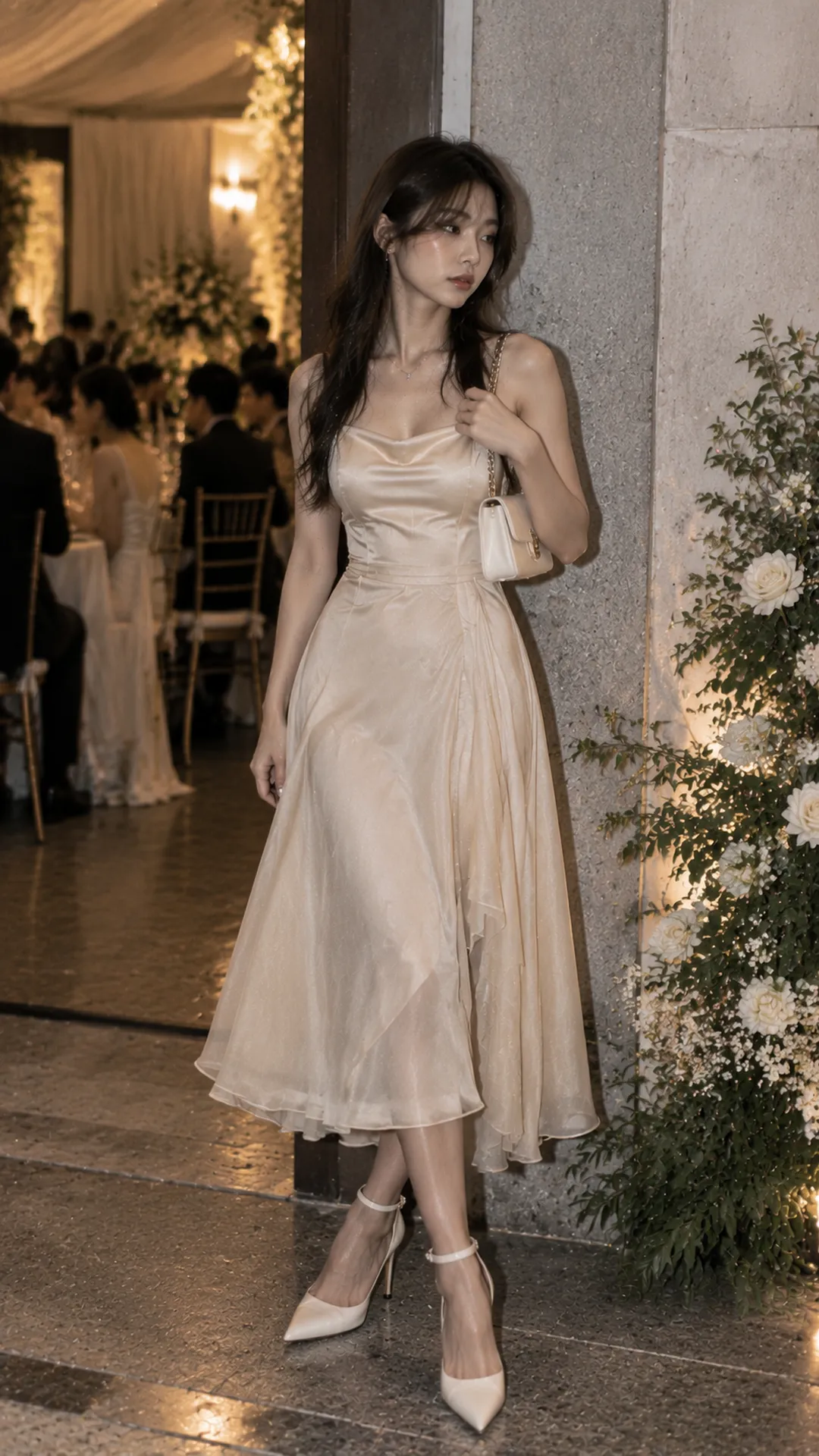
Start with the hosts' palette. Without guidance, consider actual lighting and resemblance to bridal clothing. Very pale colors can read differently under lamps or in photos; assess design, volume and material rather than only a color name.
For daytime, less reflective surfaces and spaced patterns can blend with daylight. At night, some sheen or a small embellishment may show clearly. These are styling options, not bans on daytime shine or requirements for evening sparkle.
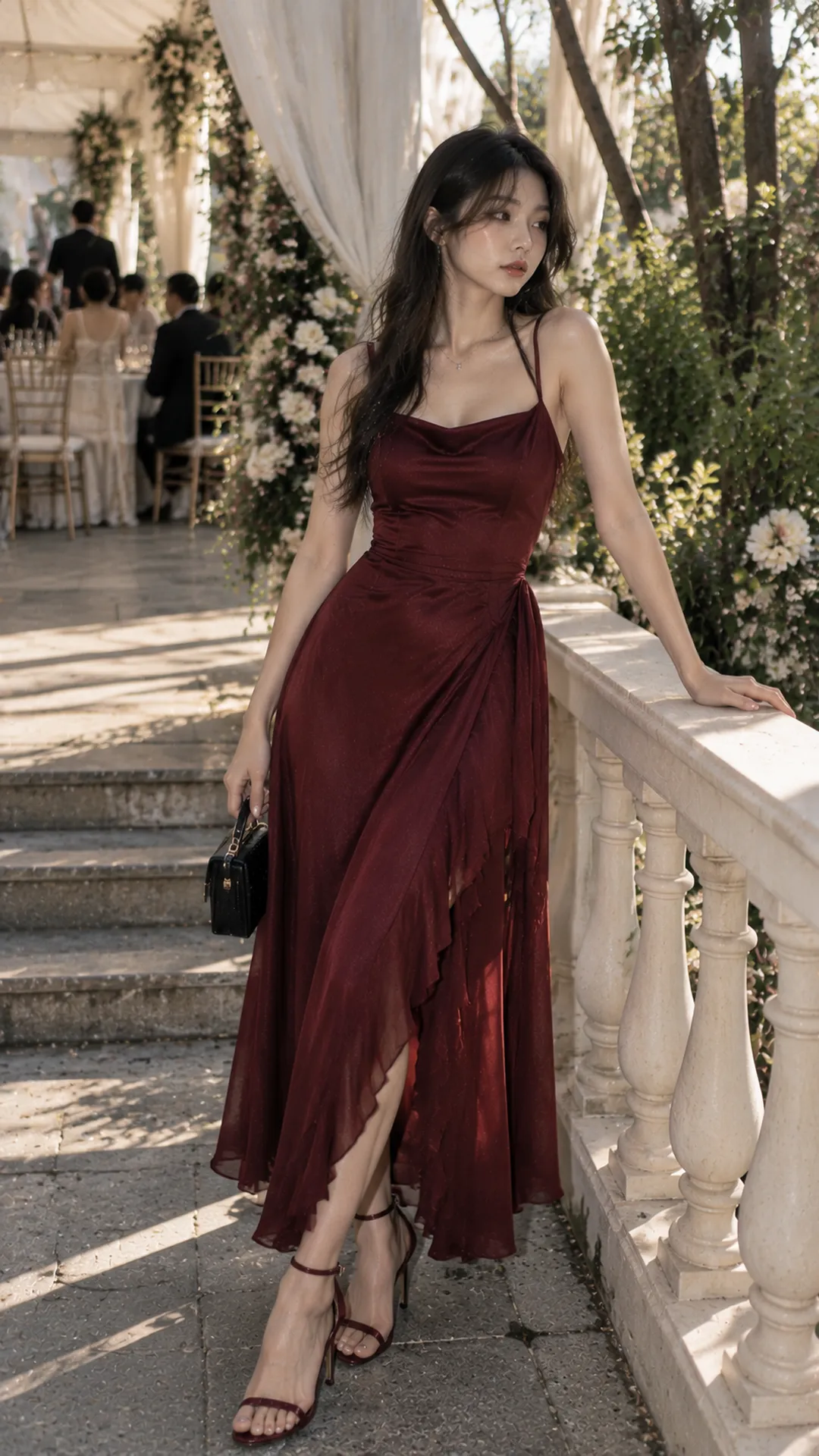
For a dark palette, try burgundy, deep blue or rich brown when compatible with the invitation. Neckline, drape or surface contrast can prevent flatness. Extensive stones are unnecessary; a small construction difference can clarify the dress.
Satin, lace or premium-material labels do not establish coverage or comfort. Inspect lining, thickness and specific care. For humid outdoor events, test waiting time, travel and underlayers too; a light appearance cannot guarantee cool wear.
Finalize length with the actual shoes
Do not alter hems barefoot if wearing different shoes at the event. Try both, walk straight, turn and use a low step if permitted. For long dresses, check stepping on hems or catching heels; for midi, view the hem-to-shoe gap from a distance.
Broad straps create a distinct foot-level break; fewer straps leave more continuous space. Neither always wins: consider hemline and dress volume. The guide to choosing shoes for an outfit balances neat footwear against a more substantial sole.
Terrain matters too. For grass, gravel or many stairs, choose a tested option and practical route. Extra height should not require lifting your skirt or maintaining balance all evening. Polish includes being able to participate comfortably.
How should accessories support the dress?
For elaborate necklines, start with earrings and a small bag, then ask whether a necklace is needed. A simple open neckline can take a neat chain. Compare large hair clips with earrings to avoid crowding the small face area.
The bag should hold your actual essentials rather than look good only empty. Check clasp, strap and handling while standing and talking. The expressive women's accessories guides assign accents by area to add personality without replacing the dress.
Answer six questions during a fitting
Does it suit the invitation? Can you sit comfortably? Do neck and slit maintain preferred coverage? Do shoes catch the hem? Are underlayers unintentionally visible? Must you constantly adjust straps, hem or neckline? Physical testing is more reliable than a generic flattering claim.
Online, compare bust, waist, hips and length with the exact model's chart. Clarify body versus finished measurements and stretch areas. The online sizing guide prepares useful information before contacting a shop, especially between sizes.
For alterations, ask timing and structural feasibility first. Shortening a plain hem differs from changing lace borders or embellishments. Do not buy too close to the date assuming every fit issue can be repaired. Retry the entire outfit afterward, not only the hanging dress.
Choose a dress you will want after the celebration
Imagine another occasion with different styling. Good fit and a clear accent often adapt through jacket, hair or accessories. For one-time use, consider borrowing or renting when hygiene, size and collection/return timing suit.
Elegance need not mean many new purchases. Context, careful fitting and small finishing details give your outfit a clear basis. You can then enjoy the celebration rather than constantly manage the dress.