

Choose shape through shoulders, waist and drape
A straight dress keeps a relatively continuous body-to-hem line. Retain that shape for ease or minimal waist emphasis. A compatible belt can add an optional break; it is not a required step.
A defined waist and flared lower half create two distinct volumes. Check where the actual waist seam sits rather than relying on the cut's name. A belt may not correct an overly long or short bodice.
Try fitted dresses seated and walking for pulling, hem movement and seam tension. Choose closeness for your comfort and activity. No body type is banned from a dress style; seek the cut and size meeting your use.
If unsure of shape names, the women's dress and skirt guide organizes by length and construction. Treat a one-piece dress's upper and lower sections as one design before additions.
The neckline determines accessory space
Strapless and off-shoulder dresses
Both can expose shoulders but retain the garment differently. For strapless designs, check that the body stays secure without repeated lifting. For off-shoulder styles, raise arms and sit to assess unexpected neckline shifts.
A necklace need not fill exposed space. Let earrings lead, leave the neck bare or use a neat necklace according to the opening. Large bust folds or decoration often show more clearly with simple jewelry.
Black halter dresses
Halters lead toward the neck, so test ties or closures and long-wear comfort. The neckline already provides structure without requiring a necklace. Small earrings or a bracelet can place light elsewhere.
With outerwear, check whether it obscures or pulls the neckline. An open layer may preserve the halter more clearly than a closed one. Comfort and destination requirements still lead; every detail need not remain exposed at all costs.
White collars or ruffled necklines
A white collar already creates strong contrast near the face. Simple bags and shoes let it lead. For ruffles, assess size and layers; small earrings or tucked hair can reduce crowding if desired.
Every white-collared dress does not share one aesthetic. Body cut, length, sleeves and shoes change it. A neat dress with loafers differs from tiers with substantial boots despite the same white-on-black collar.
Short, midi and long: try the actual shoes
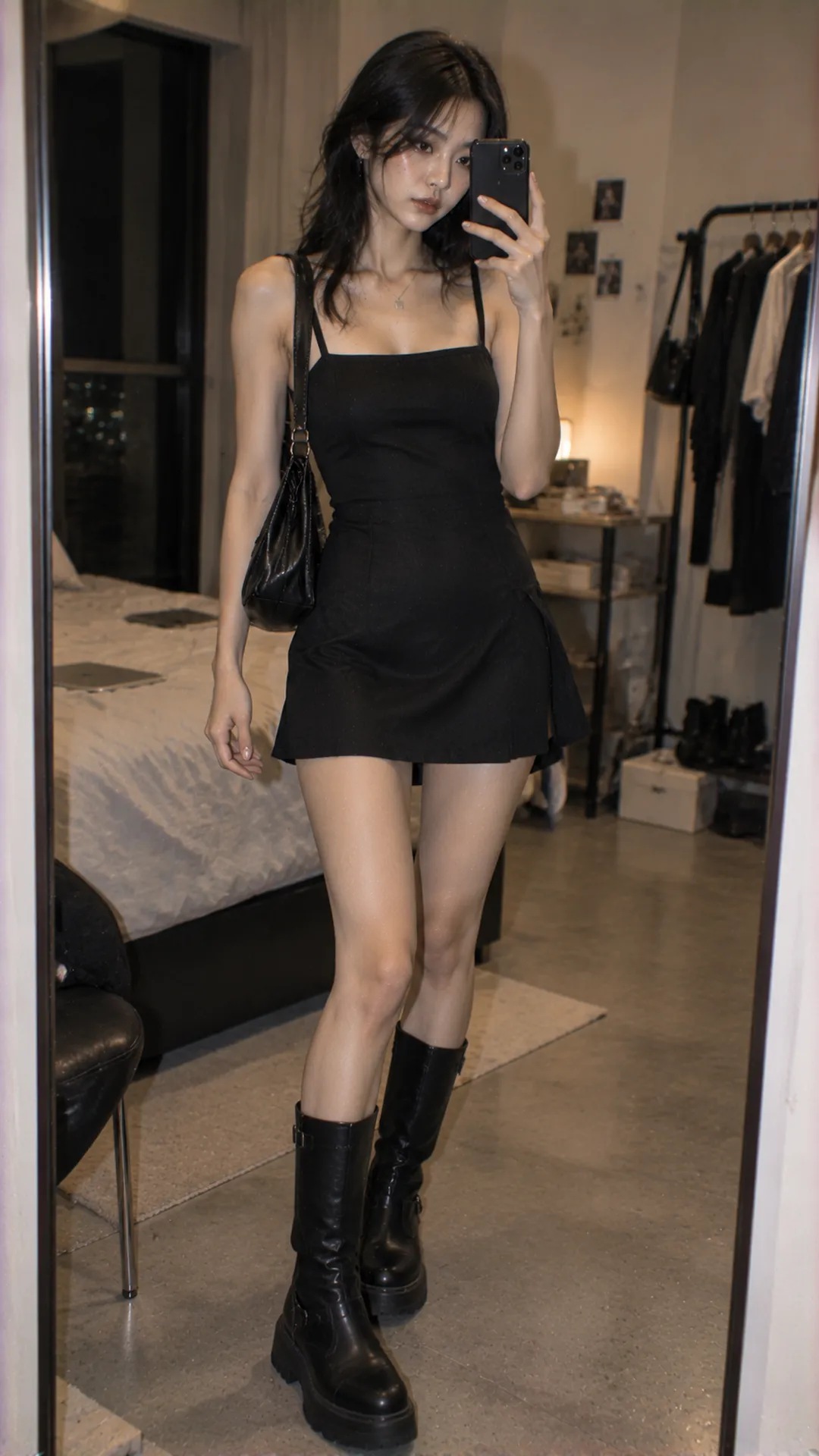
Short dresses leave more space between hem and shoes. Sit and step up to assess length for activity. Tall boots substantially change that gap; test together rather than deciding shoes separately.
Midi can end at several calf positions rather than one fixed length. Small hem or shoe-opening changes affect proportions. Start with neat shoes and increase weight to taste; heels are not required for every midi.
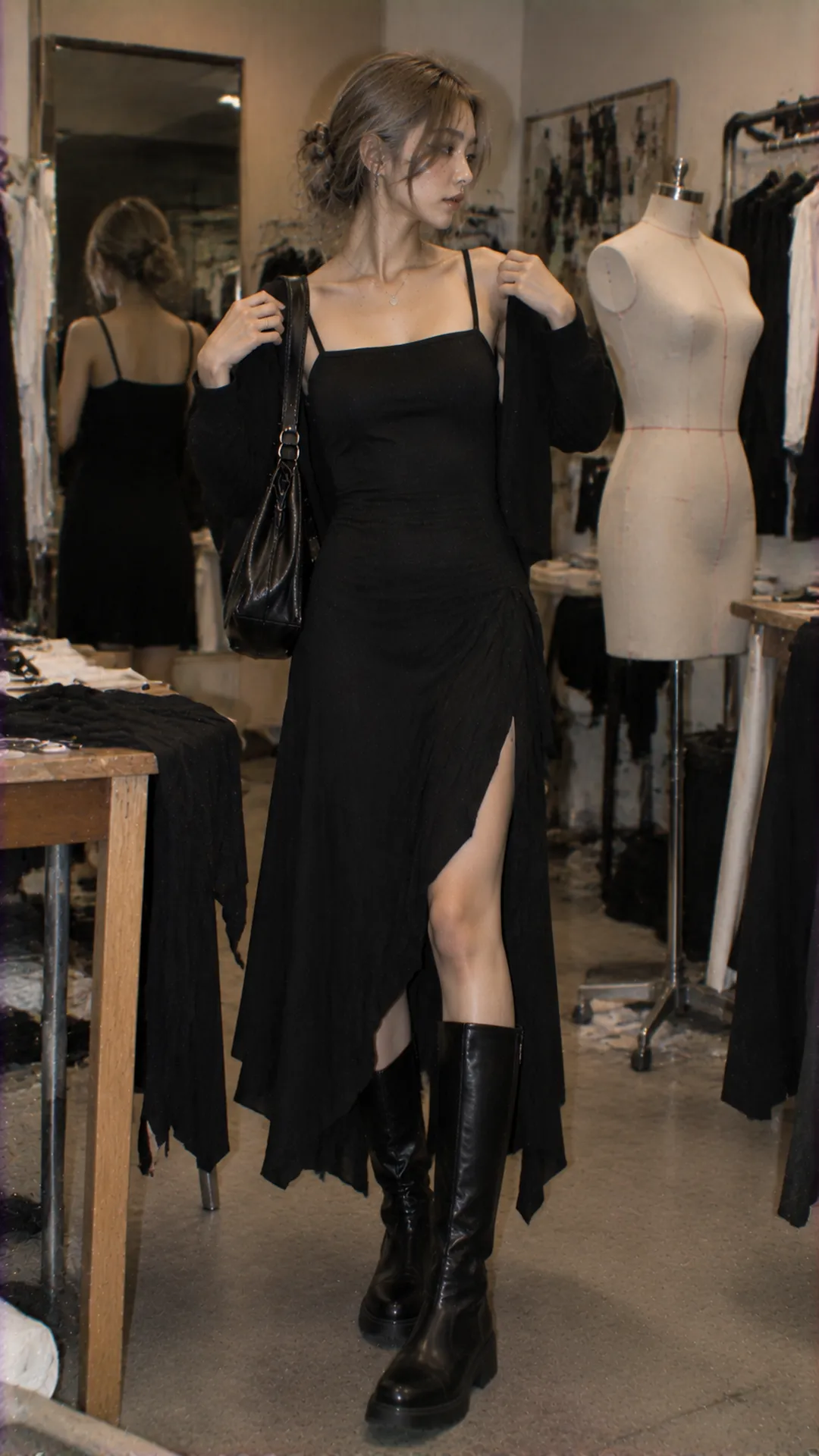
Try long dresses with intended shoe height. Dragging or catching is a usability issue, not something to overlook for a photo. For slits, assess exposure walking and seated, including lining.
Black surfaces create different effects
Matte and reflective fabrics provide different backgrounds. A glossy dress already has highlights along folds, so simple bag and shoes can support it. On matte black, a metal detail or textured bag adds separation without new color.
Inspect lace, sheer layers and patterned surfaces with actual underlayers. Black does not imply opacity. Check clear light and several angles for exposure, lining edges and comfort.
Photo shine cannot identify fibers. Read composition and care, asking where incomplete. Title terms such as silk or velvet need the exact product description; visual impression and construction are different.
Everyday black dress outfits
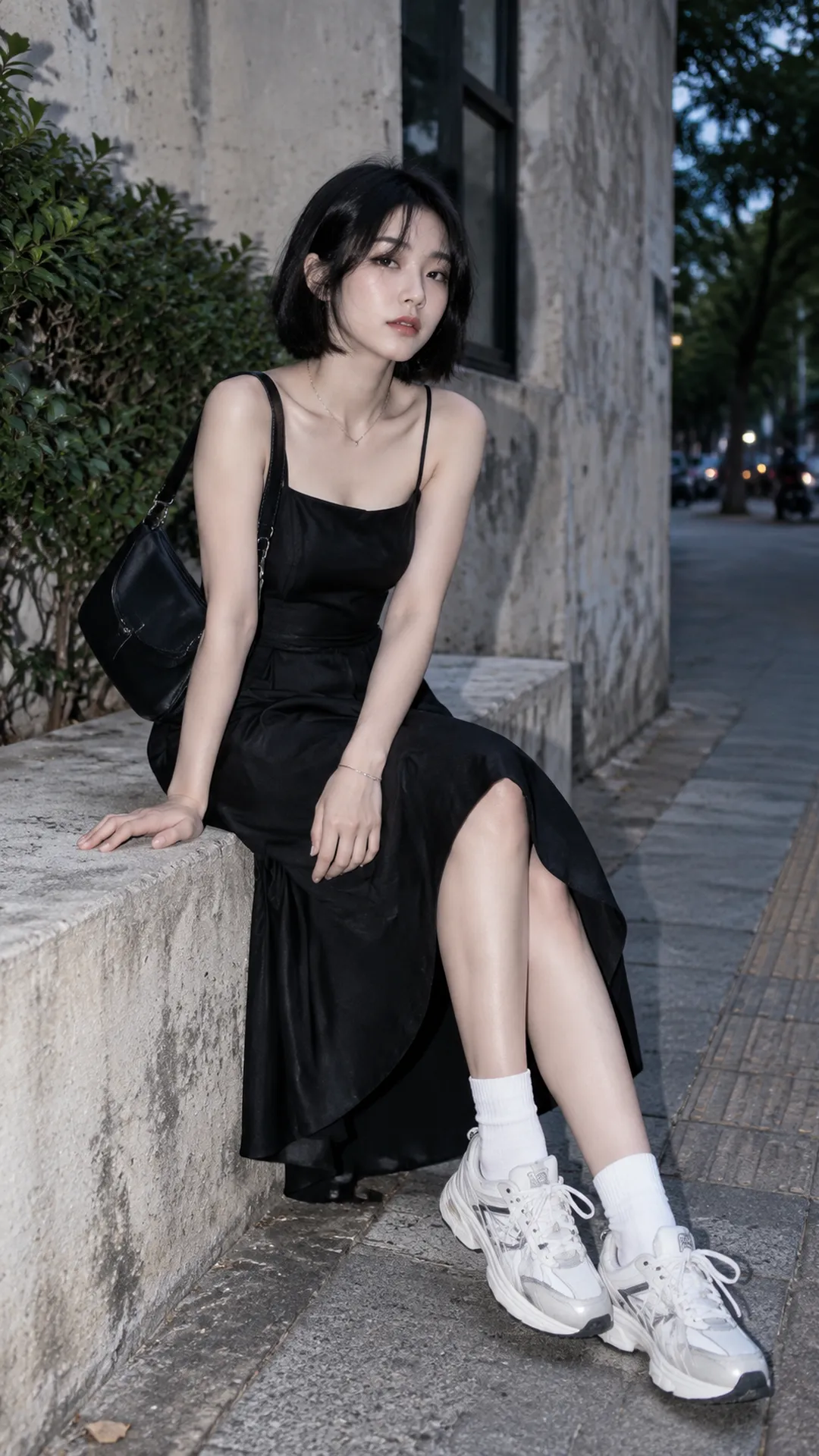
With straight or neat shapes, try simple sneakers and a bag sized for your needs. Cream shoes or a light bag brighten; black keeps a dark base, with sole thickness checked against unintended weight.
An open thin shirt can change the dress's mood, but inspect whether hem edges divide the body excessively. In heat, do not layer only to complete a formula. One purposeful accessory can suffice.
For school or work, follow actual design and coverage rules. Black alone does not make every dress appropriate. Check neckline, sleeves, length, lining and seated comfort. If outerwear is needed, test it worn throughout rather than only held.
Party dresses: choose for setting and activity
Begin with any event dress code, then standing, sitting, walking and outdoor travel needs. A long dress may suit one party and inconvenience another; a partywear label cannot decide.
With puff sleeves, large folds or tiered hems, let accessories support the structure. With a minimal dress, earrings or bag can lead. One clear accent is easier to manage than neck, wrists, bag and shoes all shining.
Try shoes long enough to assess actual standing and walking. Correct height with slipping heels still makes the look impractical. The footwear-by-outfit guide balances visual weight, hem space and mobility rather than color alone.
Classic-inspired and layered flared designs
For a classic direction, identify the actual reference feature: collar, waist, sleeves or flare. Not every long black dress is classic, and historical dates need evidence. Shape descriptions make searching and styling more precise.
Tiered flared designs often called princess dresses already have substantial lower volume. Check seated width, space requirements and whether shoes vanish. A small simple bag can let the dress lead; more accessories do not necessarily clarify it.
For expressive contrast, first try one shoe or accessory with a different structure rather than changing everything. Choosing expressive women's accessories establishes where to emphasize and where to stay light.
Outer layers and bags should serve the dress
A short jacket can reveal the waist; a long open layer creates another line. Outerwear need not always be shorter than the dress. Check whether endpoints form your intended composition and whether inner fabric bunches.
With several layers, inspect shoulder, armhole and waist thickness first. The women's layering guide assigns clear roles to length and texture. Climate- and activity-suitable layers are more useful than photo-only formulas.
A crossbody strap cuts diagonally across the bodice; check pressure over bows or folds. A handheld bag leaves the body uninterrupted but has different practical demands. Choose for composition and belongings together.
Five checks before deciding
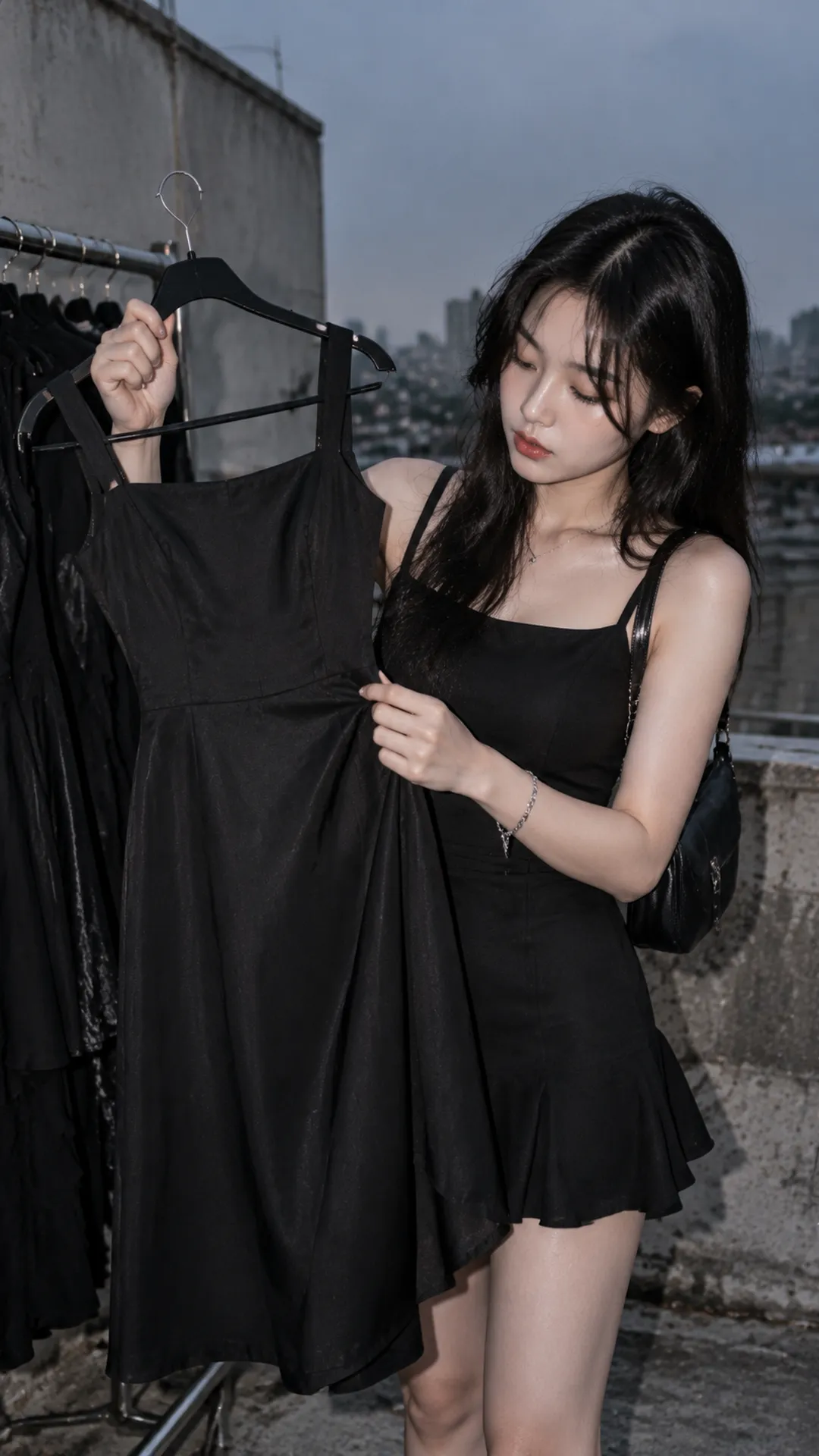
- Shoulders and neckline stay secure while reaching, bending and sitting.
- Waist, hips and zipper avoid unwanted pulling or bulk.
- Underlayers and transparency suit actual lighting.
- The hem does not impede walking in intended shoes.
- Bag, jacket and accessories do not hide or displace the main detail.
Resolve any issue before adding accessories. If unsure whether to start with dress, shoes or outerwear, the item-by-item outfit guide directs you to the right group. A reusable black dress has a shape you understand and several tested combinations, not necessarily the most decoration.