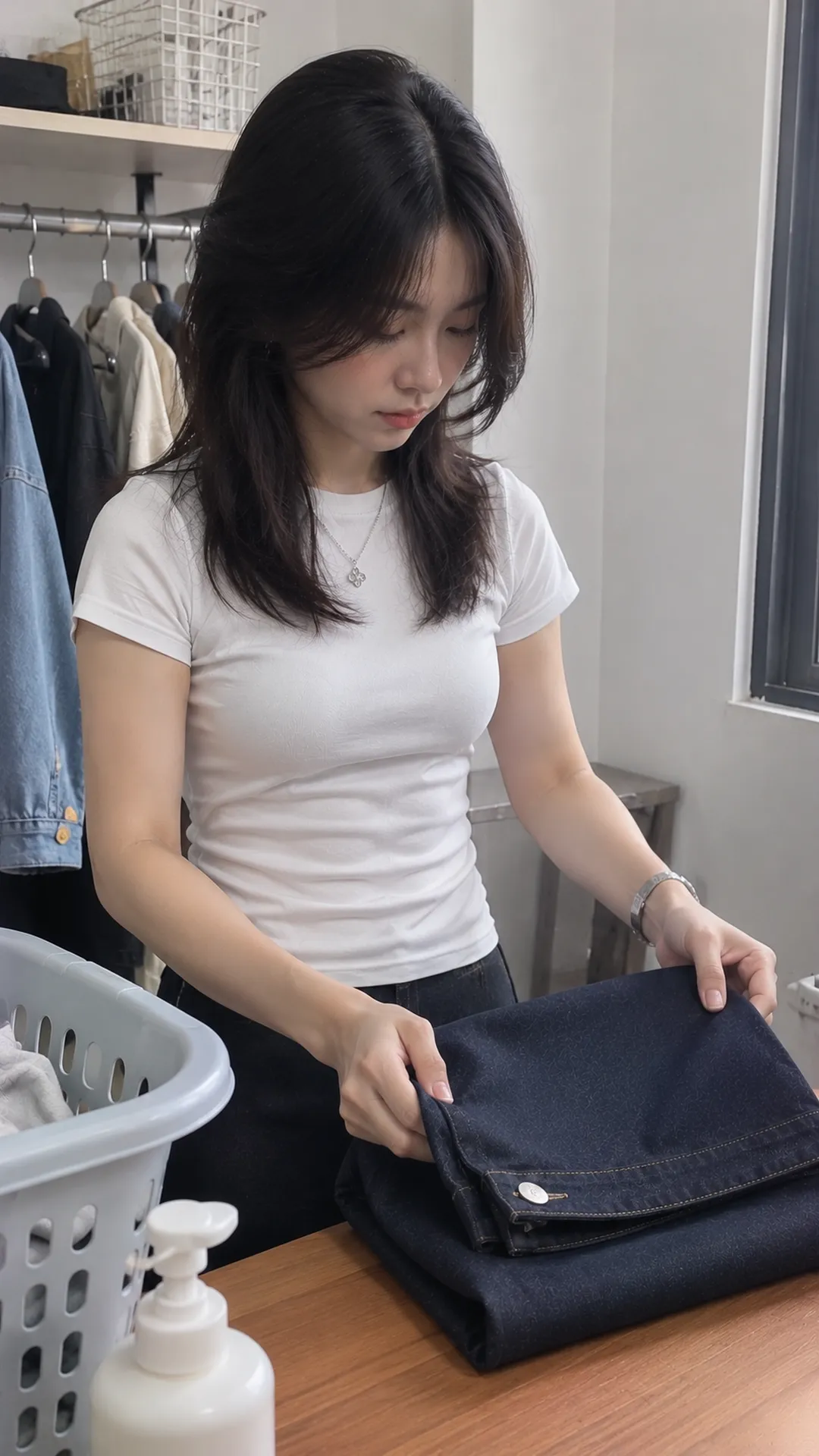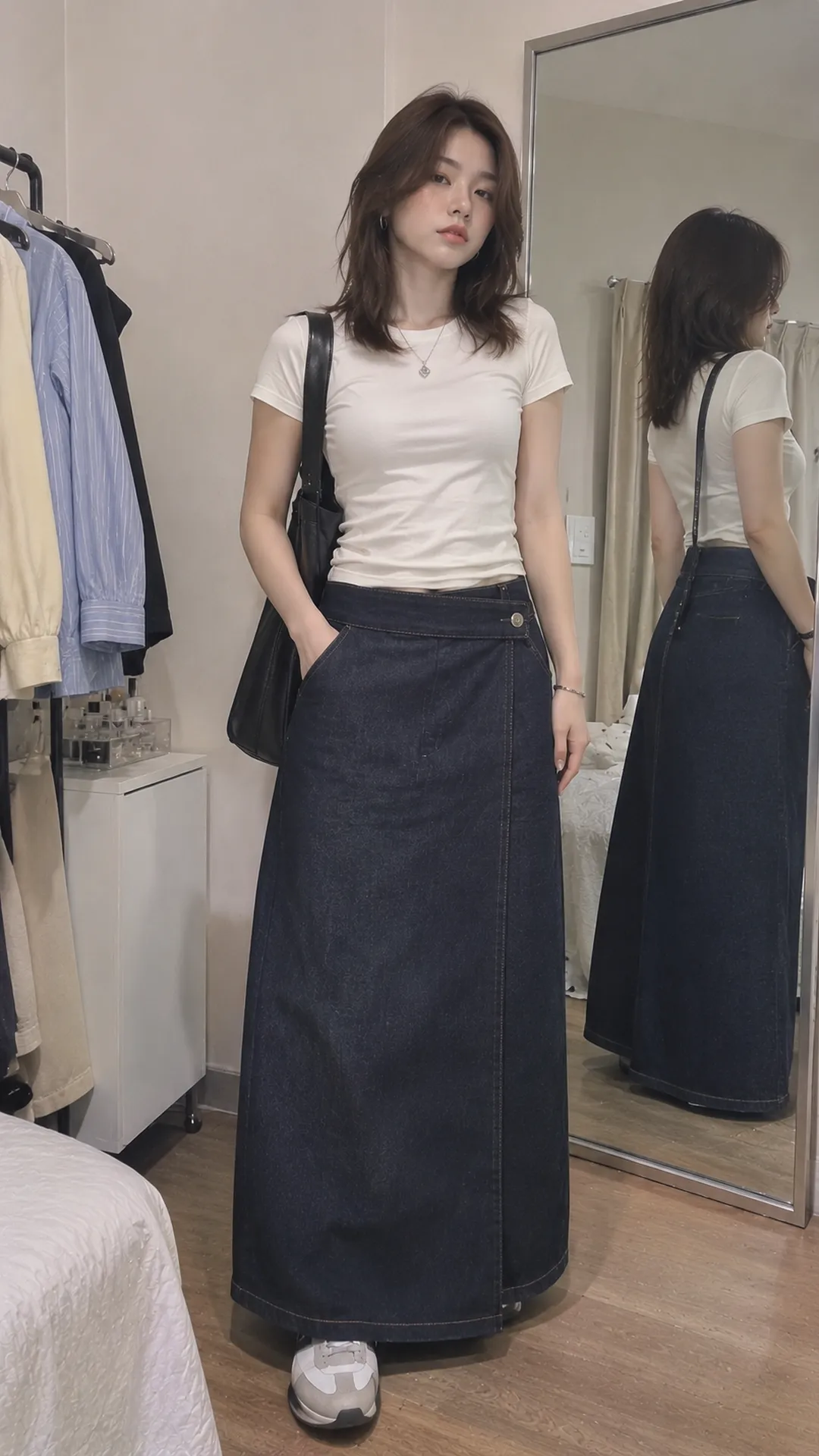
Distinguish a sun skirt from an everyday denim skirt
For a denim skirt you wear as clothing, you might focus on the waist, hip line, slit, and what tops it goes with. Assess a sun skirt as an outer layer: how quickly it goes on, how far it covers while you sit, and how you’ll take it off when you arrive. Similar colors and finishes don’t mean the two garments serve the same purpose.
If you want a skirt to wear all day with a tee or shirt, see our guide to styling a long denim skirt. If you want to add coverage over the clothes you already have on, look at the sun skirt’s wrap, fastenings, width, and hem.
A plain finish usually means little pattern or decoration. It can make colors easy to coordinate. Thickness and protection need separate checks. A plain skirt can still have a slit, gaps, or too little width for the position you’ll wear it in.
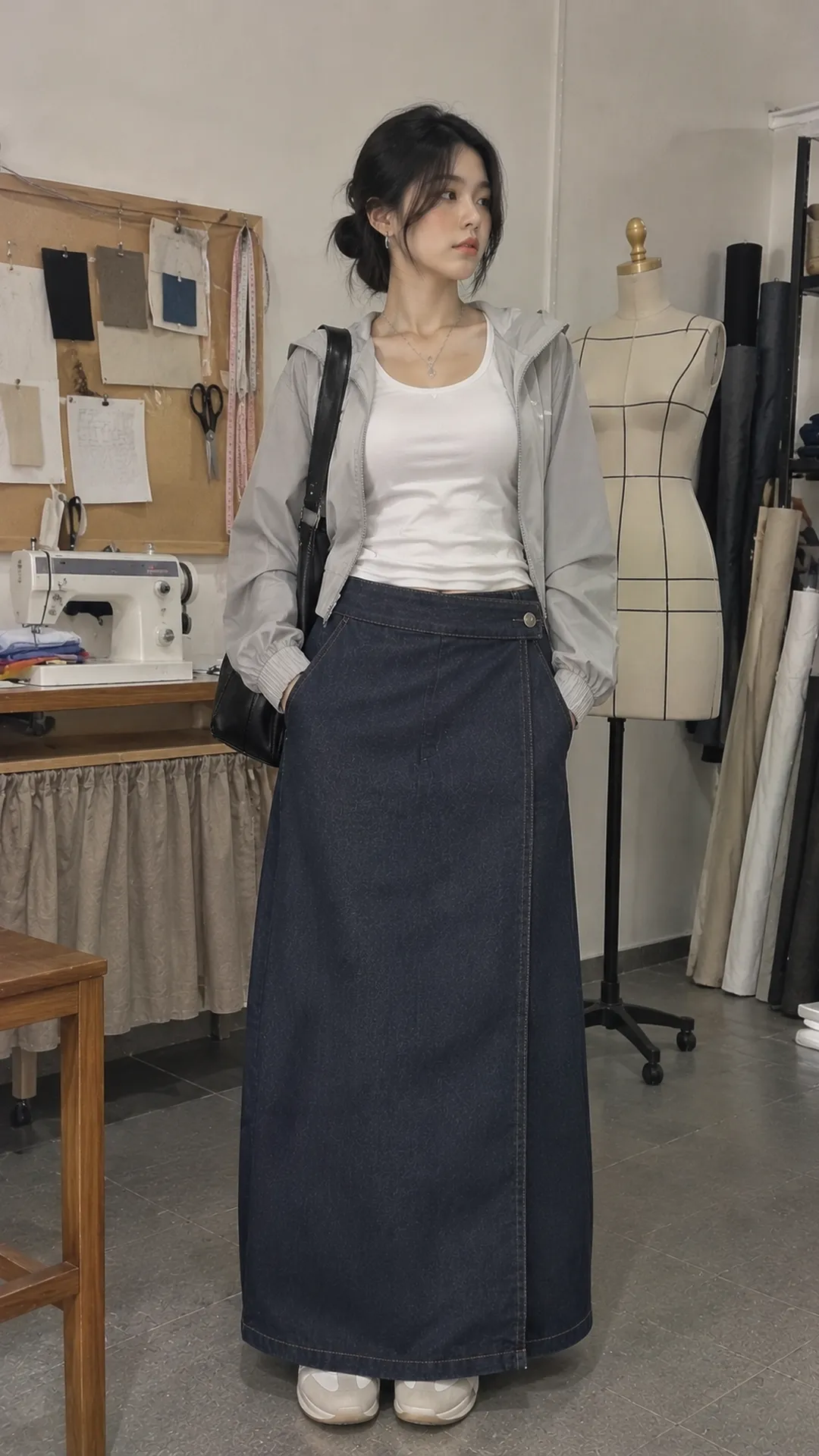
Check the product’s UV protection information
The Skin Cancer Foundation explains that fabric construction, color, coverage, and fit affect how well clothing protects you. UPF indicates how much UV radiation can pass through the fabric. You can’t assign a UPF value to a skirt simply because it’s described as denim.
If a listing gives a UPF rating, check that it applies to the exact model and look for any accompanying use instructions. Without a stated rating, the product information doesn’t establish the level of protection. Fabric thickness and how hard it is to see through are separate from a UV measurement.
Check coverage separately. The fabric can’t cover skin that extends beyond it. The Skin Cancer Foundation recommends combining clothing, sunscreen, eyewear, hats, and shade. When trying on a skirt, look for a fit that keeps the coverage in place in the position you’ll use it in.
Measure the length standing and sitting
Choose the waistband position, then measure from there to the area you want covered while standing. Height alone won’t settle the size. A high waist or a thick pair of pants underneath can change how the outer layer wraps and hangs compared with a fitting over thin clothes.
Next, sit in a stable chair with your knees bent about as far as they would be while traveling. Look at the front and sides of the hem and the fabric over your thighs. The skirt may ride up when you sit, so a good standing length doesn’t guarantee the same coverage in a seated position.
The right length depends on the wearer and vehicle. Look for coverage without a hem that drags or extra fabric you have to manage. If you try the skirt on a vehicle, do it only while the vehicle is stopped, stable, and switched off. Check that the hem stays clear of wheels, moving parts, and hot components.
If one size covers well but drags while you walk and the shorter size leaves too much exposed when seated, try another design. The cut, waistband placement, and width may solve the problem better than changing the length alone.
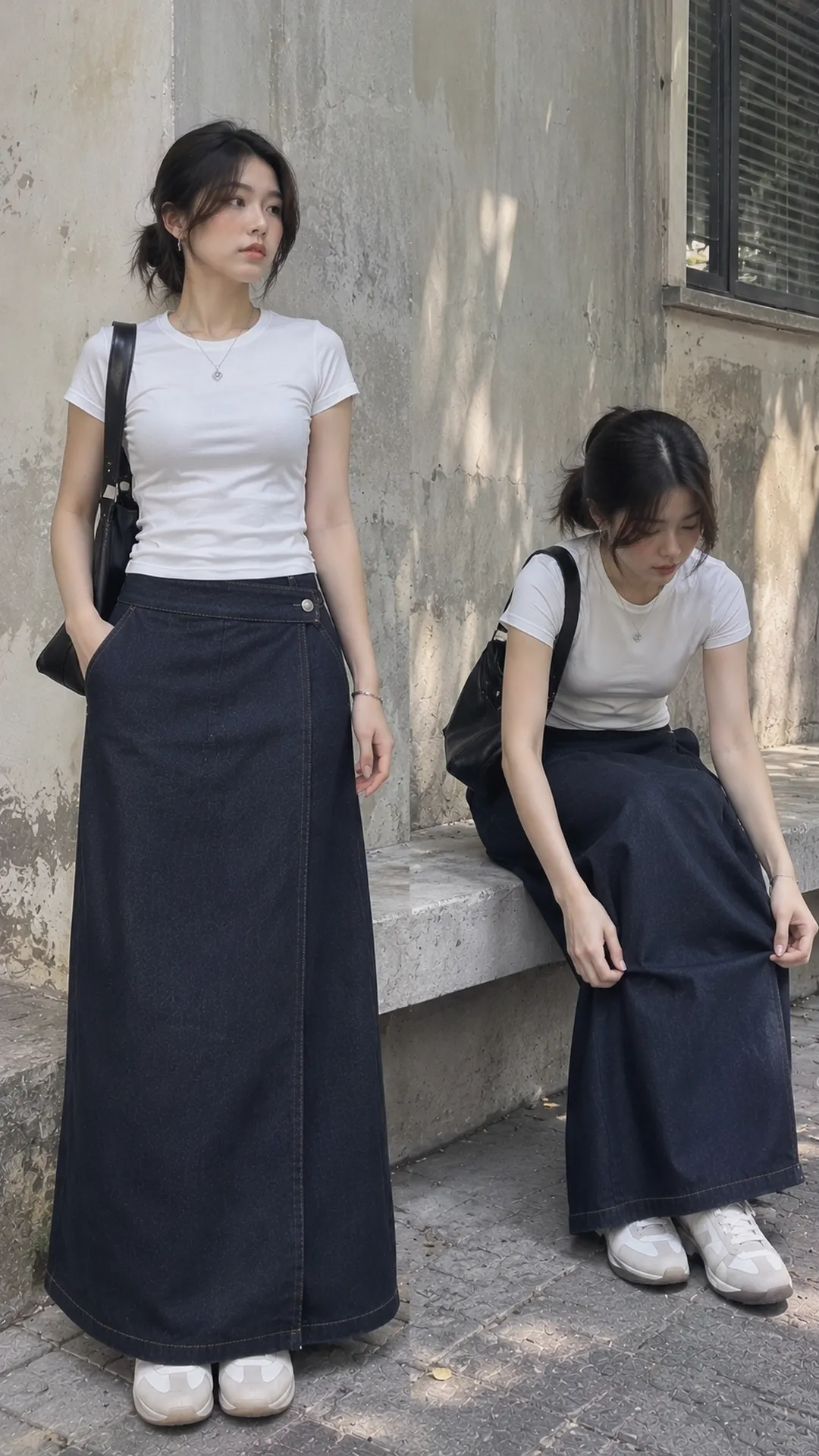
Check the wrap width and fabric overlap
For a wrap skirt, check the width and how far the fabric overlaps when fastened. If the two edges barely meet when standing, they may separate when you sit or step. Try it over the thickest outfit you normally wear and look at the fit across the waist and hips as well as at the fastening.
Check whether the listed figure is the garment’s width laid flat, its wearable waist measurement, or its adjustment range. These numbers tell you different things. If the listing only says one size, ask for the length, width, and tightest and loosest fastening positions.
Our guide to choosing a size online from measurements explains how to distinguish body measurements from garment measurements. Try the sun skirt over the layers you’ll wear. The amount of room you need depends on how the skirt wraps and fastens.
If the skirt has several adjustment positions, try the ones that fit and check whether the fabric pulls to one side. Fastening the waist securely should still leave enough room across the hips to sit and stand normally.
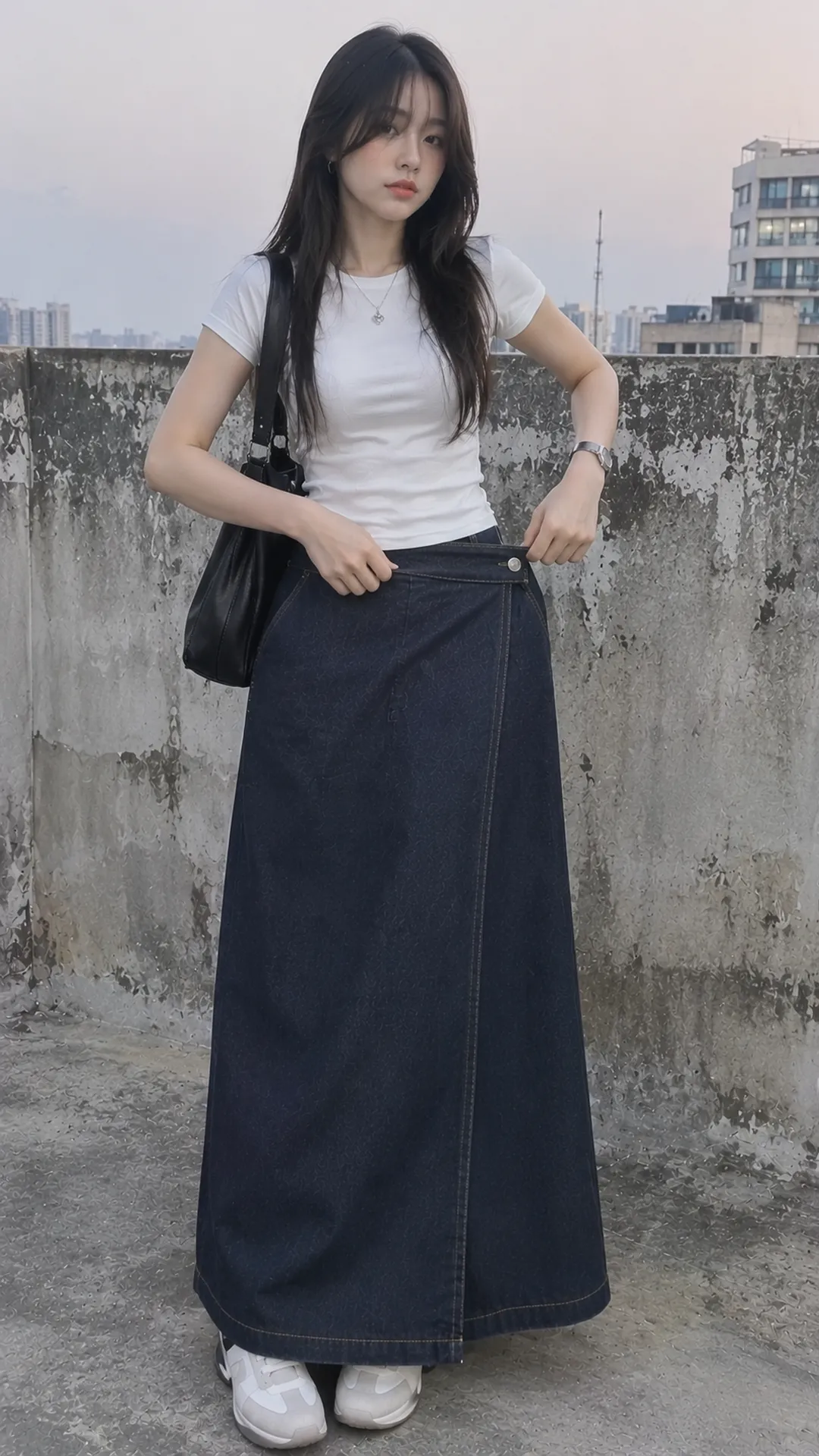
Choose between wrap and split-leg designs
A listing for a denim sun skirt with legs may describe a garment with a split or separate sections for both legs. Sellers use different names, so look at the construction photos. Ask how to put it on, fasten it, and take it off.
A wrap may be easy to open and put on over your clothes. Check the overlapping edge, closure, and any fabric that hangs loose. For a split-leg design, check your range of motion and how easily you can pull it over what you wear underneath. Extra coverage can come with more steps to put it on.
If you make several stops during the day, practice the whole routine: take the skirt out of the bag, put it on, adjust it, take it off, and fold it again. You’re more likely to use a design whose steps fit your routine.
Check fastenings, seams, and fabric feel
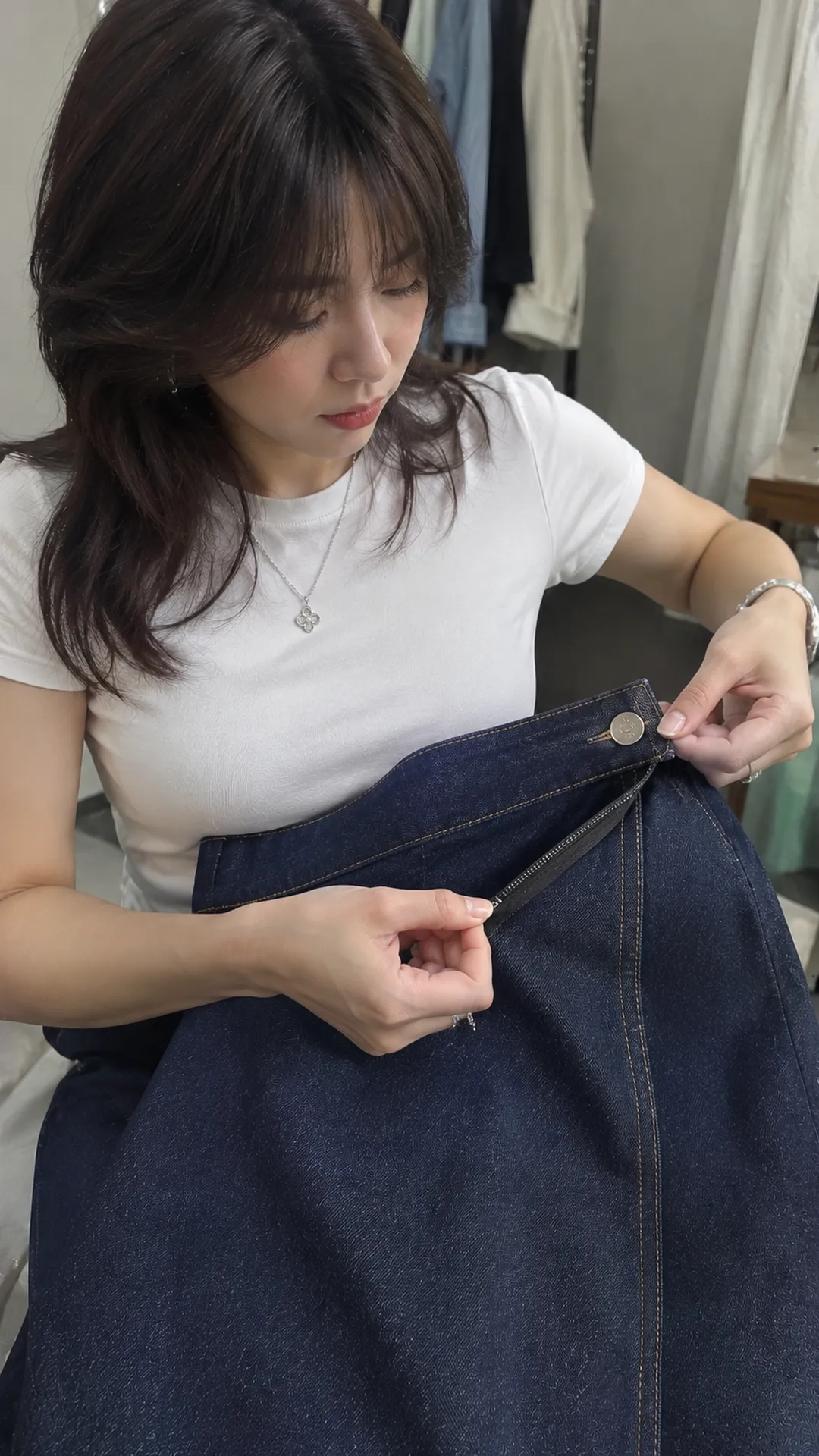
Test hook-and-loop fasteners, snaps, ties, or zippers as you would use them. Check whether you can fasten the layer easily and whether it rubs your skin or snags your clothes. Secure any extra tie length as designed so loose ends don’t dangle.
Look closely at seams that take strain, including the waistband, the ends of the fastening, and the corners of the overlap. Open and close it normally and check for loose thread, fraying edges, or misaligned joins. These details matter in everyday use.
Read the fabric composition and feel both sides if you can. Two denim styles can vary in weight, softness, and thickness. Think about how long you’ll wear it, how big it is folded, and where you’ll store it when you arrive. Make sure it fits in the bag you normally carry.
On a hot day, a tighter skirt can stretch the fabric around your legs without making it feel more comfortable. Reconsider the width, number of layers, and time you’ll be wearing it. Our guide to wearing black in summer looks at how color, fit, and construction affect warmth.
Wear it as part of your travel outfit
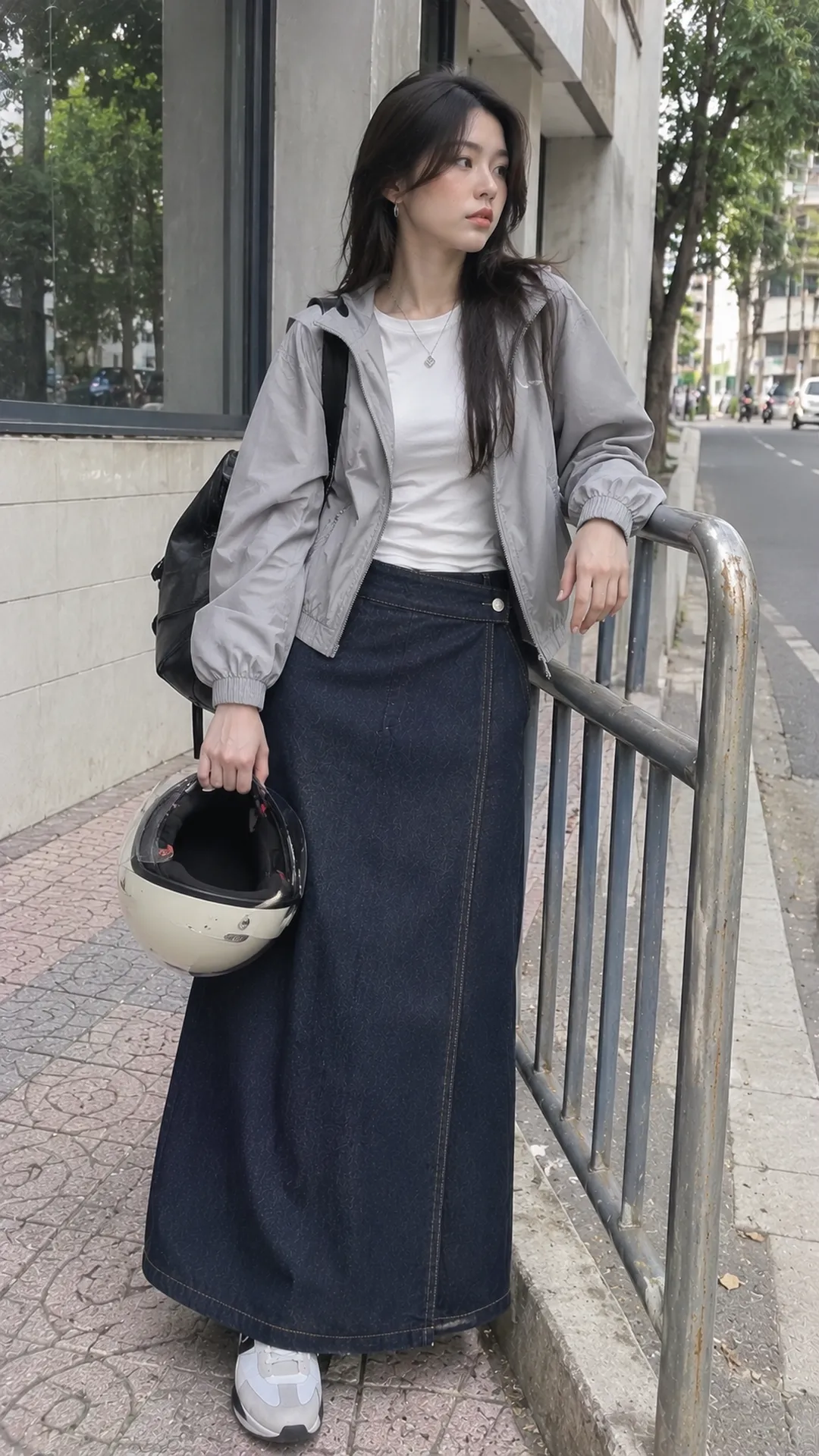
Put the skirt on and adjust it before setting out. Check the hem, fastenings, and loose ends in the position you’ll travel in. If it needs adjusting during the trip, stop somewhere suitable before reaching for the fabric or fastening.
If you have to keep holding a section shut, reconsider the fit, fastening, or way you put the skirt on. Choose a layer that stays in place on its own so you can pay attention to the trip.
Choose a bag and accessories that make changing easy. Long straps or dangling items can get in the way when you take off the outer layer. Our guide to choosing alternative accessories for women helps you keep the outfit practical and add an accent once you know the pieces won’t catch on one another.
Fold, wash, and check it before the next use
Read the care label for the exact skirt before washing it. Denim garments can have different fastenings, finishes, and hook-and-loop closures. Close or protect those parts as instructed so they don’t rub against other clothes.
Let the skirt dry and remove dirt or grit from the hem before storing it. Fold it so the hardware doesn’t press a mark into the fabric. If you normally keep it in a vehicle compartment or bag, choose a clean spot and check the maker’s storage instructions.
After a period of use, check the closures, seams, and worn areas. Follow any product instructions about its usable life or how to maintain its performance. If you replace it, start with the coverage, length, and ease of use you need, then choose the finish or color.