

Support trousers or create an accent?
For support, prioritize fit and passage through loops. The belt should hold trousers without gathering the waistband excessively. If trousers are too wide in several areas, tightening can wrinkle and irritate; review cut or alterations rather than treating belts as a universal sizing fix.
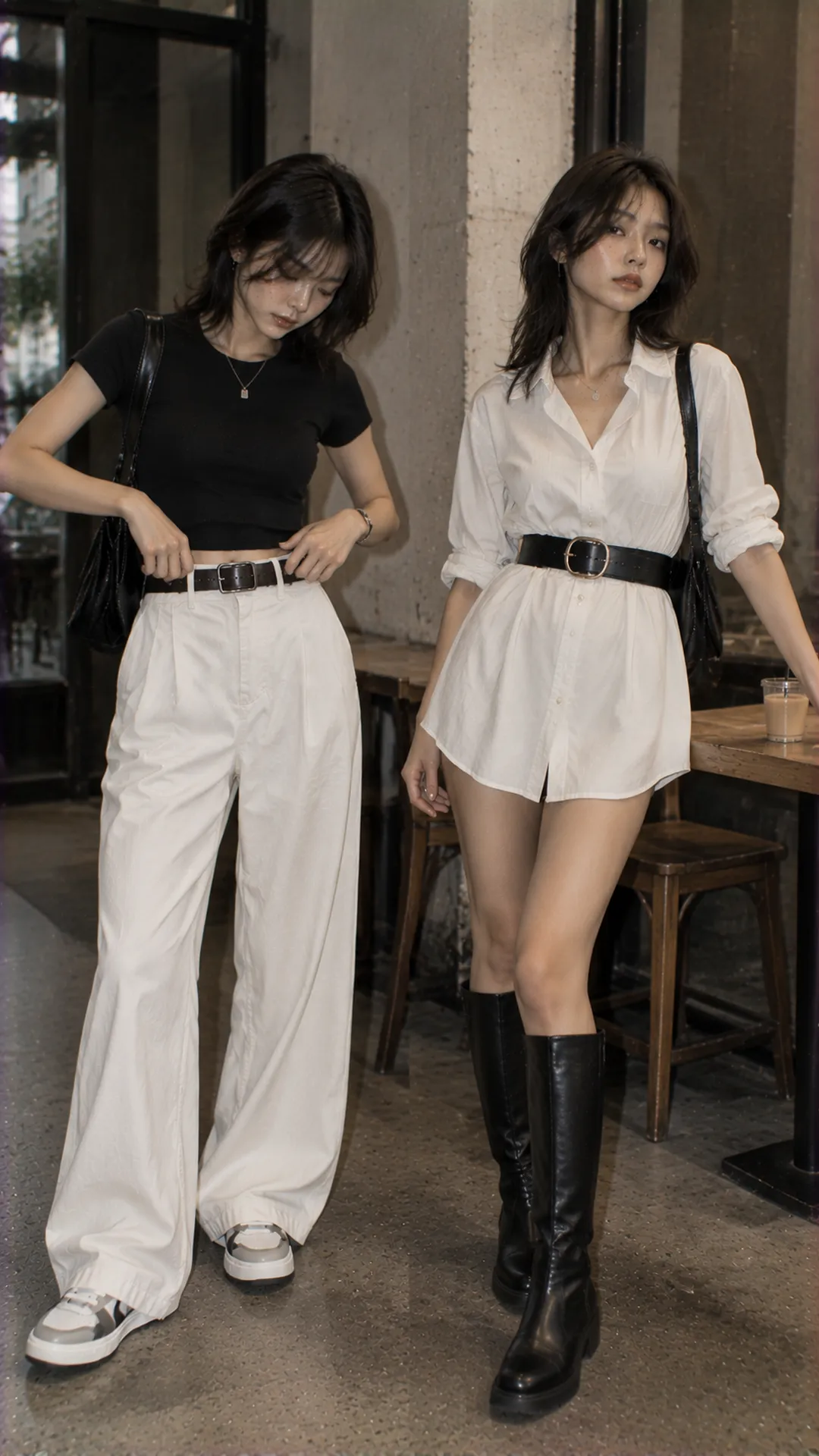
Over dresses, a belt generally creates a horizontal line or changes body volume. Choose position for the design and effect. The narrowest waist point is not obligatory; avoid pulling seams off line or pushing fabric upward unintentionally.
For decoration alone, compare buckle and strap with neckline, bag and shoes. A prominent buckle shows more clearly on plain clothing than a busy outfit. One main role clarifies whether narrow, medium or more pronounced width works.
Choose narrow, medium or wide
Narrow: a subtle dividing line
A slim belt gives a neat dress break or fits narrow loops, but is not universally suitable. On a thick coat or layered dress it may struggle to stay in place and gather fabric.
On soft dresses, fasten just securely enough and gently arrange the body fabric for natural drape. For repeated slipping, review length and support rather than just tighten. Test with the exact dress because surface slipperiness affects placement.
Medium: check loops and thickness first
On jeans or defined-waist trousers, medium width connects top and bottom clearly. Measure the loops' usable opening rather than guess from photos. The strap should pass without compressing edges, and the buckle should not outweigh the waistband.
Wide: an accent area rather than a thin line
Wide belts occupy more space, so assess chest-to-hip distance and garment design. This concerns item proportions rather than body-type bans. If it hides a dress detail or bunches the top, try another position or narrower width.
Read length and hole positions
Measure around the actual wearing position over comparable clothing. A low trouser waist and a dress waist may need different adjustment ranges. One measurement does not establish fit everywhere.
Online, ask what the listed length covers: entire strap, buckle to middle hole or usable fastening range. These differ. Request hole spacing and remaining tail at your expected position.
An overly long tail is hard to manage; a short one may not reach its keeper. Shorten only as designed and instructed, or ask the seller. Do not cut before confirming buckle removal and required edge finishing.
Choose buckles by handling, weight and lines
Prong buckles show usable holes clearly. Sliding, clasp and other mechanisms need separate handling tests. Check easy opening and closing with the actual outfit, especially beneath several layers.
Large or bright buckles emphasize the center. With a prominent collar, necklace and bag, a smaller buckle may clarify the composition. On a plain black dress, a defined buckle can lead without much jewelry.
Inspect backs and fabric-contact edges. Sharp or projecting parts may catch knitwear, lining or bags during movement. Sit and bend for pressure checks. An attractive standing reflection cannot replace daily comfort.
Match flexibility and surface to the garment
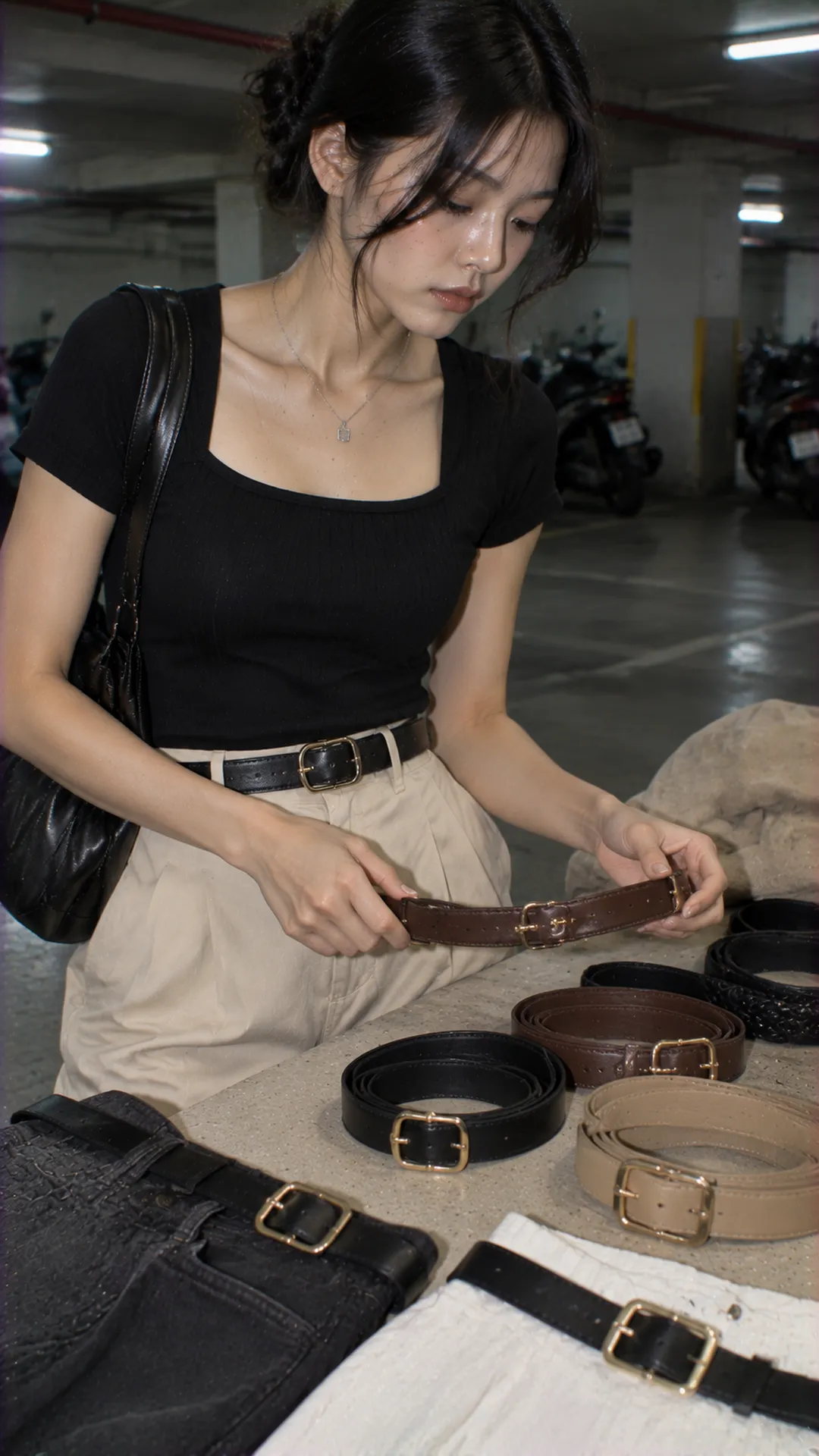
Photo shine cannot establish composition or lifespan. Read materials, strap construction and specific care. For layered straps, inspect edges and holes; for woven belts, check grip and finished tips.
A rigid strap can define structured trousers but may not suit a very soft dress. Softer belts follow fabric but need position checks. No type is best universally; select for role, fabric thickness and frequency.
Gloss creates a highlight; matte generally blends more. To quietly connect garments, use a near-waistband color and subtle buckle. For division, increase contrast. Deliberate roles are more useful than requiring every belt to match shoes.
Style jeans and structured trousers
With jeans, try a neatly tucked plain top and medium belt compatible with loops. Reveal the buckle if it leads; for support alone, partial top coverage is fine. Do not constantly lift the top to display the whole belt if uncomfortable.
With pleats and a firm waistband, oversized buckles can hide the design. Try compact first, checking front and side. If fastening wrinkles the waist, review tension or trouser size. The women's trouser-shape guide addresses waistband and fit before accessories.
Drawstrings, special waists and loopless trousers need separate consideration. Another belt is not always appropriate. If a holding or accent detail already exists, an additional line may only crowd the waist.
Style belts with dresses
A straight dress can gain an optional break. Fasten lightly, distribute excess fabric and inspect the back. Arrange folds before tightening more. Keeping the original straight shape remains valid if preferred.
With an existing waist seam, check whether the belt aligns or sits too close. Two nearby horizontal lines may fragment unintentionally. Try narrow width along the seam or omit the belt. Many bows, ruffles or fasteners need not gain another bold buckle.
With soft drape, check strap and buckle weight. Heavy accessories can pull the garment unexpectedly. For shape comparisons, the women's dress and skirt guide helps identify the cut before belt placement.
Connect bags, shoes and jewelry
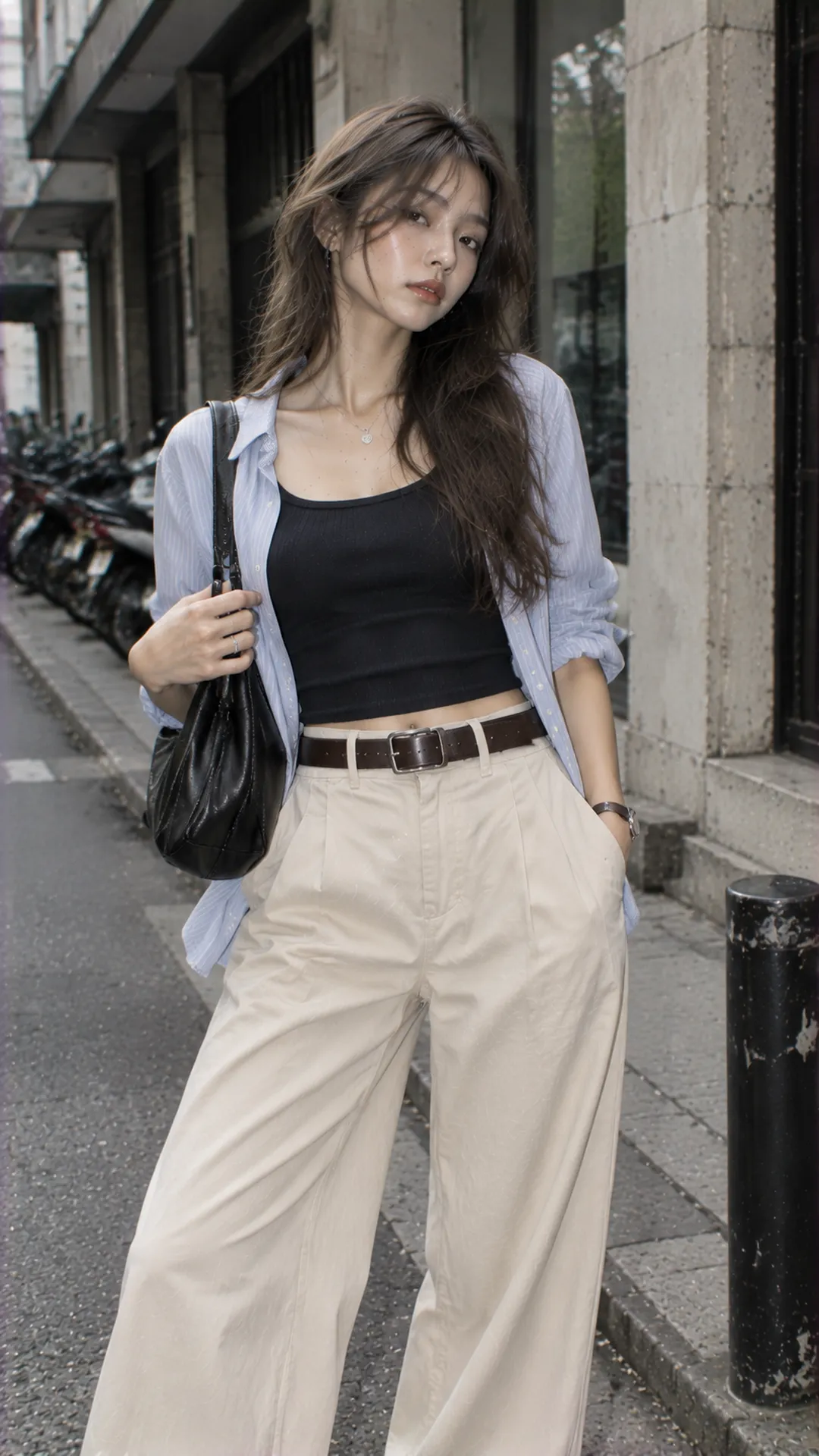
Repeat strap color in bag or shoes if useful without matching all three. Brown over cream trousers can pair with deep-brown shoes and a plain light bag. Black on black may show only through the buckle as a small detail rather than new color area.
For neatness, choose a main metallic direction. A bright buckle, hardware-heavy bag and large necklace create several reflections. The expressive women's accessories guide distributes accents across neck, waist and feet.
For an alt direction, see belts' role in the essential Alt Fashion accessories guide. Once choosing studs specifically, use styling studded belts for metal density and prominence. Plain belts need not follow all studded-belt logic.
Try before use and store after removal
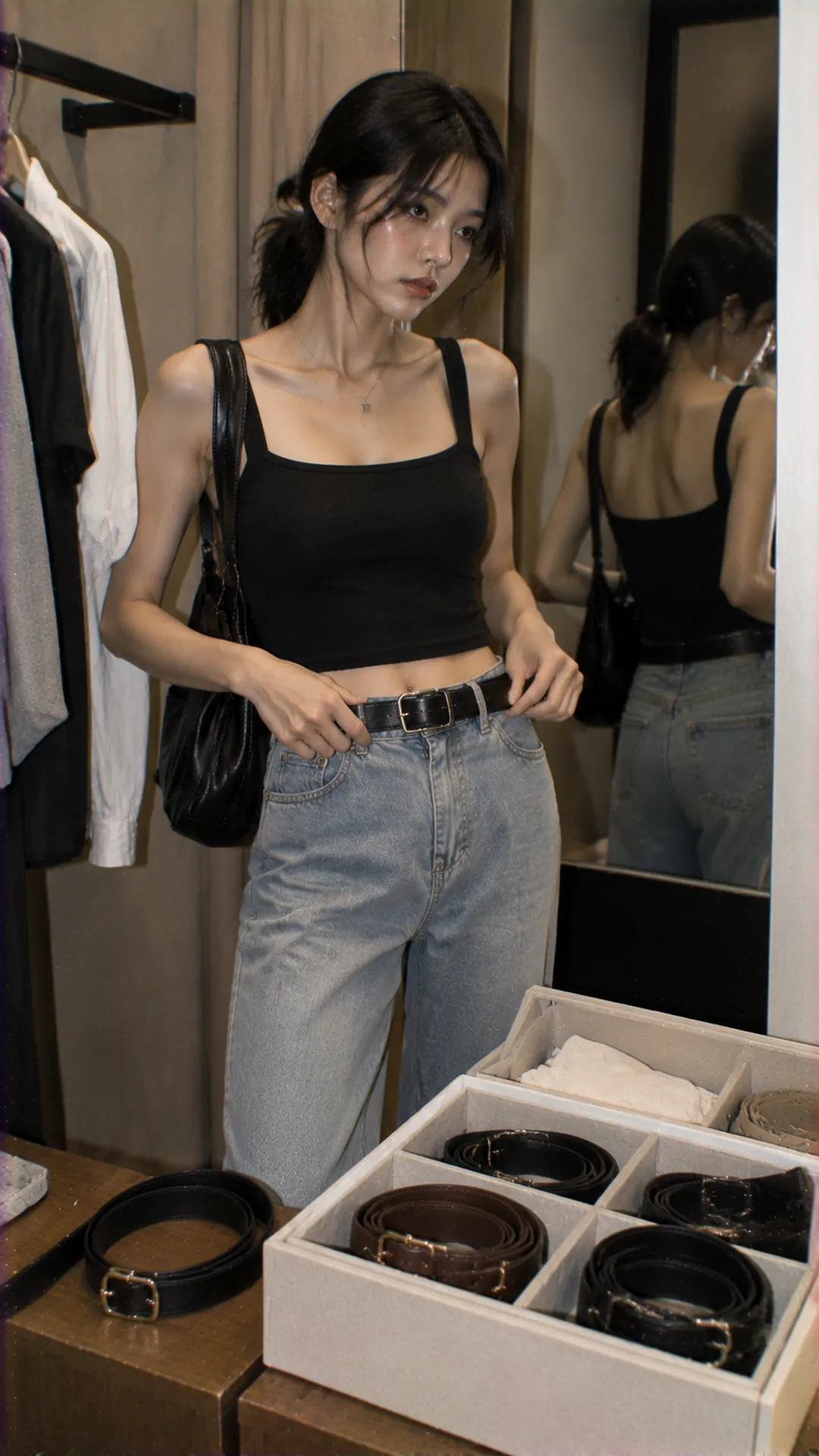
Fasten a prospective belt with at least two intended garments, sit and walk. Check tail, buckle and fabric folds. A belt fitting trousers but not a dress waist may simply have a limited range; do not force clothing into place.
Care follows the specific material and construction. Avoid repeated sharp folds in storage and inspect hole areas and edges in use. A suitable belt performs its role, operates easily and needs little adjustment throughout the occasion.