

How to Style a Studded Belt: Punk, Goth, and Alternative Outfits
A studded belt adds visual weight through a horizontal waist or hip line and reflective hardware. Effective styling depends on whether the belt leads the outfit or connects its details, rather than simply adding more chains, spikes, and buckles.
This guide considers stud density, placement, and the metal already present in your outfit. Those choices can support Punk, Goth, or broader alternative references without making every item a statement.
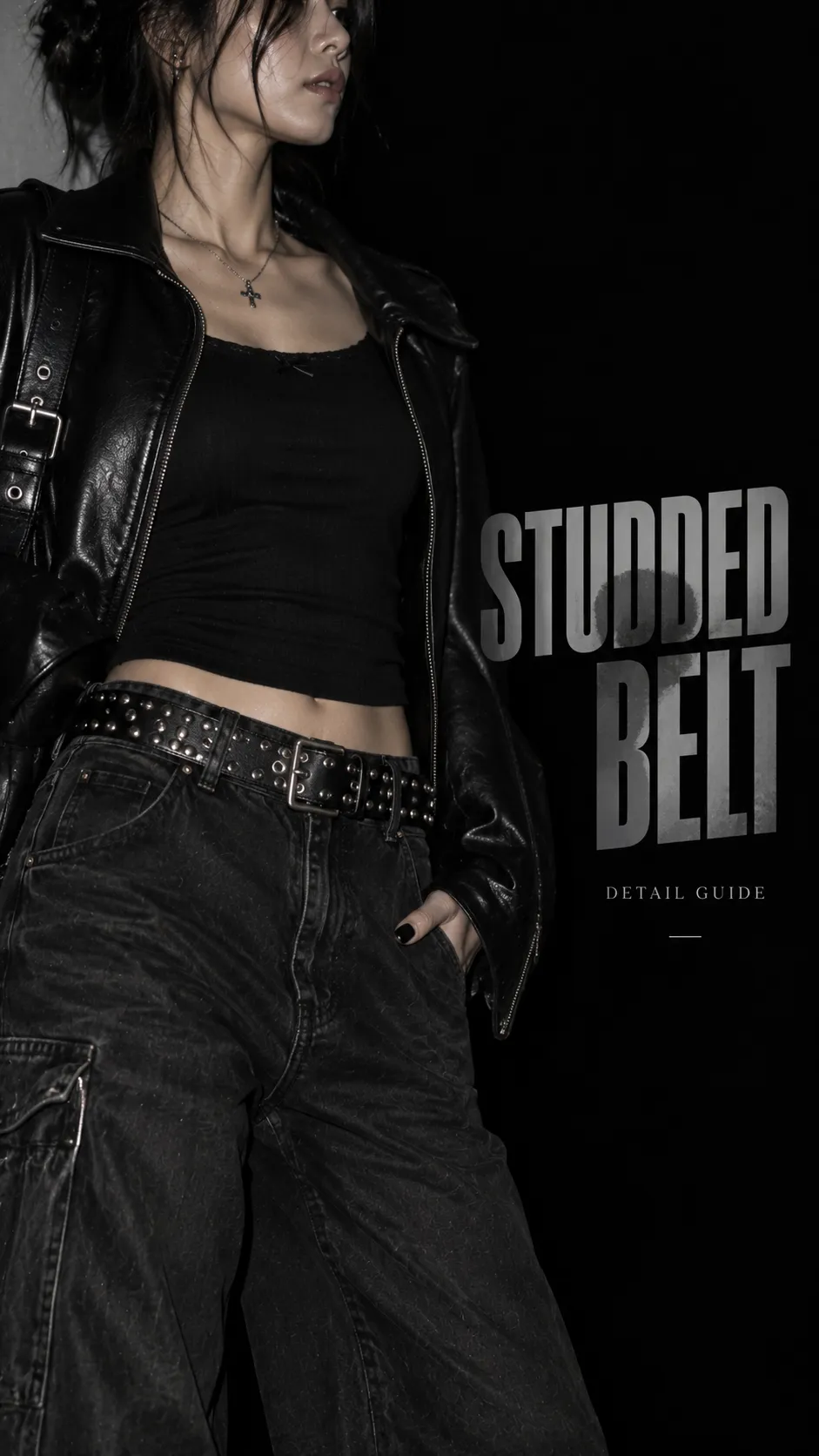
Guide collection: Women's Alternative Fashion Accessories (Vietnamese)
Should the Studded Belt Lead or Connect the Outfit?
A studded belt creates a contrasting horizontal line at the waist or hips. Against plain black, the metal can become the focal point. With trouser zippers, boot buckles, and jacket hardware already present, it joins a denser system of details.
Decide its role first. If the belt leads, simplify other chains and jewelry. If it connects details, smaller or fewer studs can echo a choker, zipper, or bag. The goal is a coherent accessory system rather than wearing every alternative purchase together.
In Alternative Fashion Accessoriestreats belts as part of a wider system. Here, the focus is hardware around the waist.
An Intensity Scale: Dense Hardware Needs Visual Space
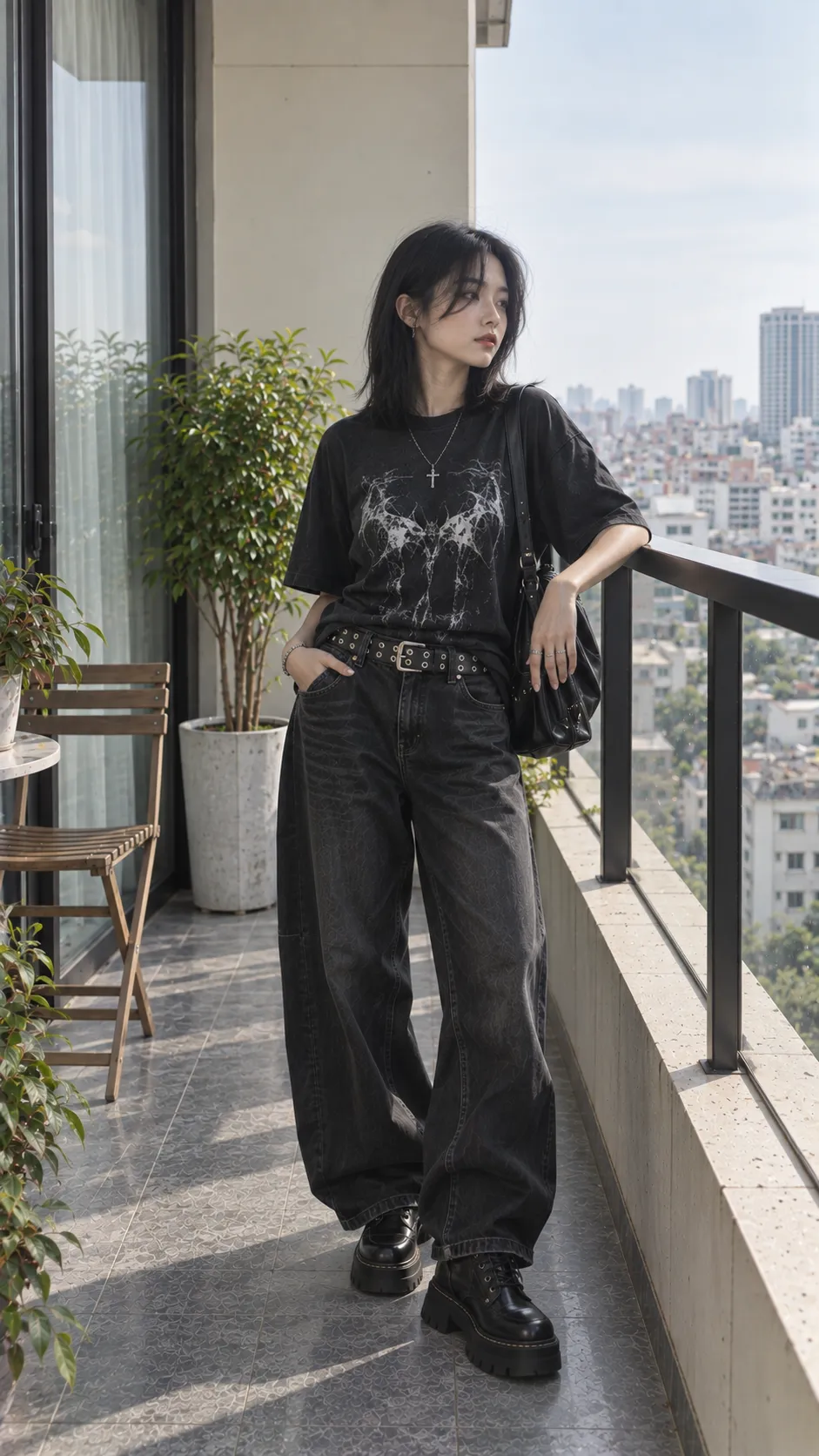
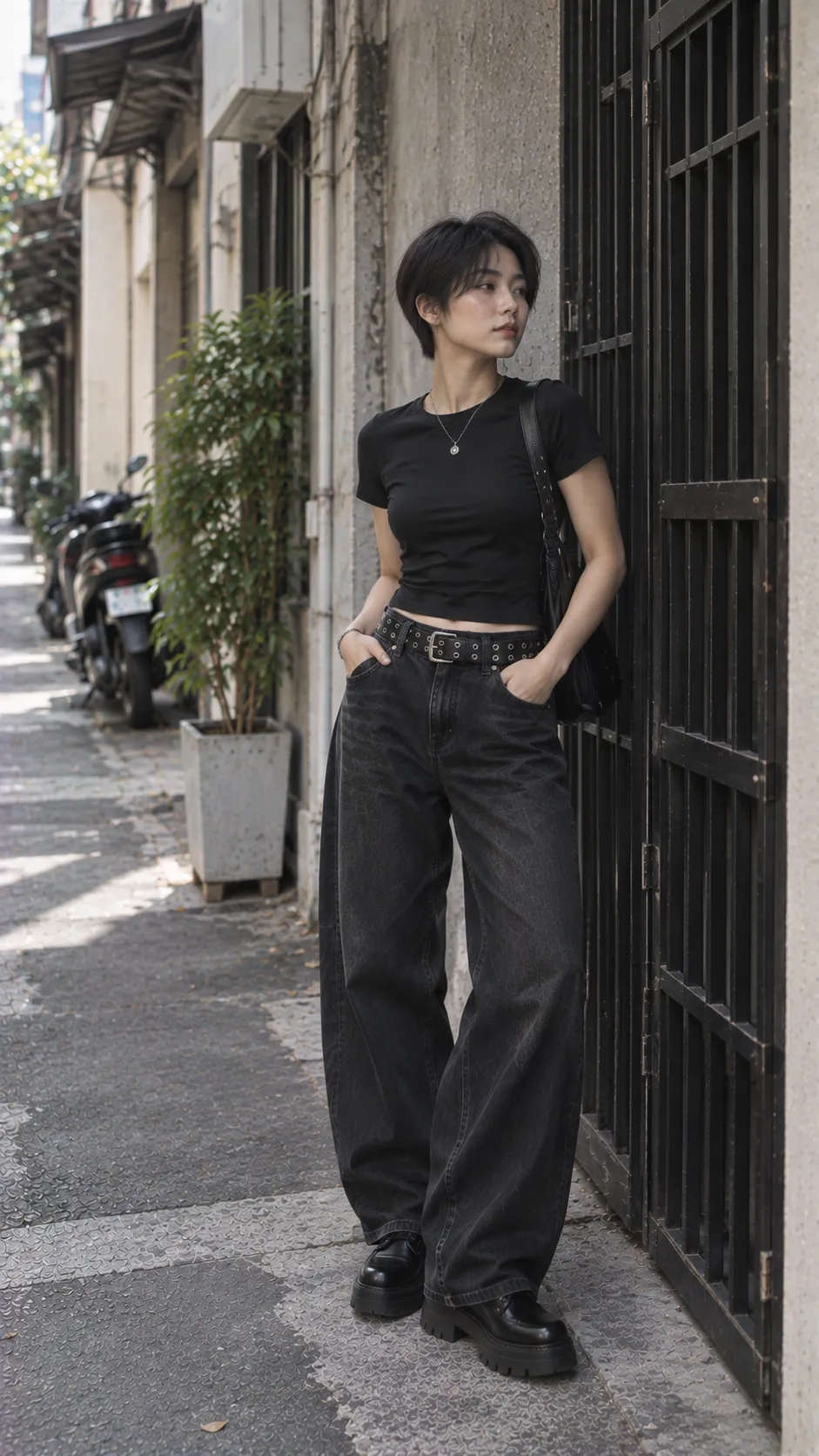
Level 1 can suit everyday jeans, cargos, mini skirts, or trousers. Its narrow metal line leaves room for other jewelry or detailed boots. Level 2 provides a clearer alternative reference and can support casual Punk, E-Girl, or Goth street styling.
Levels 3 and 4 generally act as statements. A large buckle with multiple rows already creates substantial waist contrast. Strong graphics, a heavy bag chain, and buckled boots can compete; quieten the top, trouser pockets, or footwear to retain hierarchy.
Bright metal on black contrasts more than antique silver on washed denim or brown leather. Color and shine influence intensity alongside stud density.
Waist or Hips? How Placement Changes Proportions
The narrowest waist point is not compulsory. Hip placement can deliberately support a low-rise silhouette. If a dress has a defined seam, test the belt above or below it rather than creating two cramped horizontal lines.
Connect Hardware Without Repeating Every Detail
Belt and Boots
Silver boot buckles can echo studs. If the boots have many straps, consider a quieter belt.
Belt and Bag
A zipper or small chain can connect the details without matching stud patterns.
Belt and Choker
Lines at the neck and waist create rhythm. Simpler earrings or necklaces can leave them space.
Hardware need not be an exact silver match. Brushed silver, gunmetal, and chrome can share a cool palette. Conflicts may arise when Western buckles, Punk spikes, pearl charms, and rhinestones all communicate unrelated references.
With a prominent choker, read Choosing a Choker for Your Outfit and Neckline (Vietnamese) to assess whether neck and waist compete. The two guides consider complementary accessory areas.
Eight Studded Belt Outfit Formulas
Graphic Tee, Black Jeans, and Combat Boots
A recognizable Punk foundation. The belt connects the graphic and boots; use moderate studs with a large print.
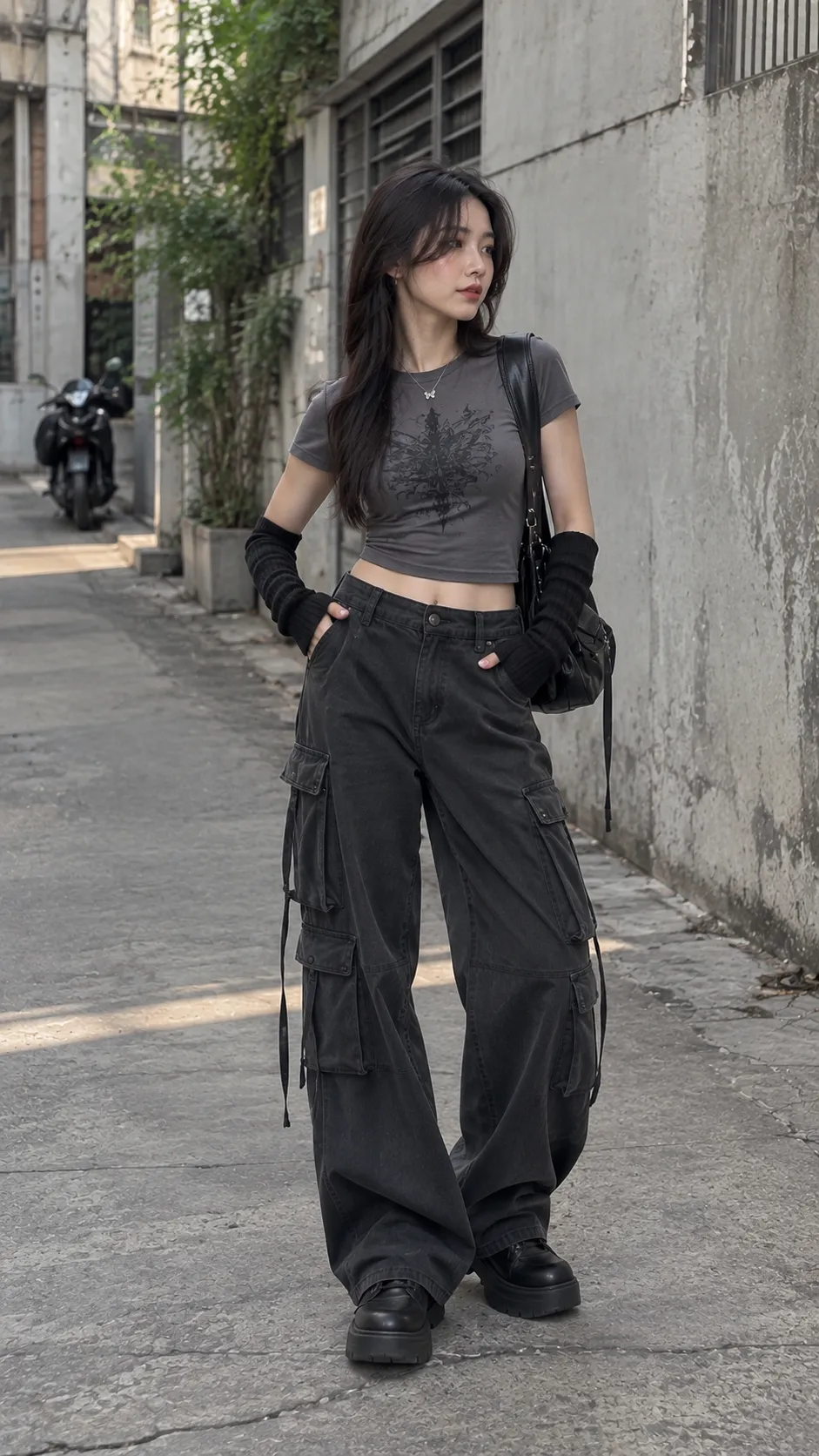
Fitted Tank, Low-Rise Cargos, and Platforms
A Y2K or alternative direction, with the lower belt making the waistband the main detail.
Slip Dress, Studded Belt, and Ankle Boots
Soft satin contrasts with hardware. The belt establishes an optional waist break and shifts the dress away from conventional eveningwear.
Mesh Top, Mini Skirt, and Simple Boots
Mesh already provides texture; the belt adds reflection while restrained boots avoid further pattern.
Oversized Tee, Mini Skirt, and a Partly Visible Belt
A front tuck or uneven hem can reveal just part of the belt as a detail rather than a continuous horizontal line.
Blazer, Tank, and Straight Trousers
Small studs can reduce formality in a creative workplace where the dress code permits it.
Corset Top and Wide Trousers
The corset already has strong structure, so a simpler belt can connect it to footwear hardware.
Simple All Black with a Statement Belt
A restrained foundation leaves room for a level 3 or 4 belt to lead.
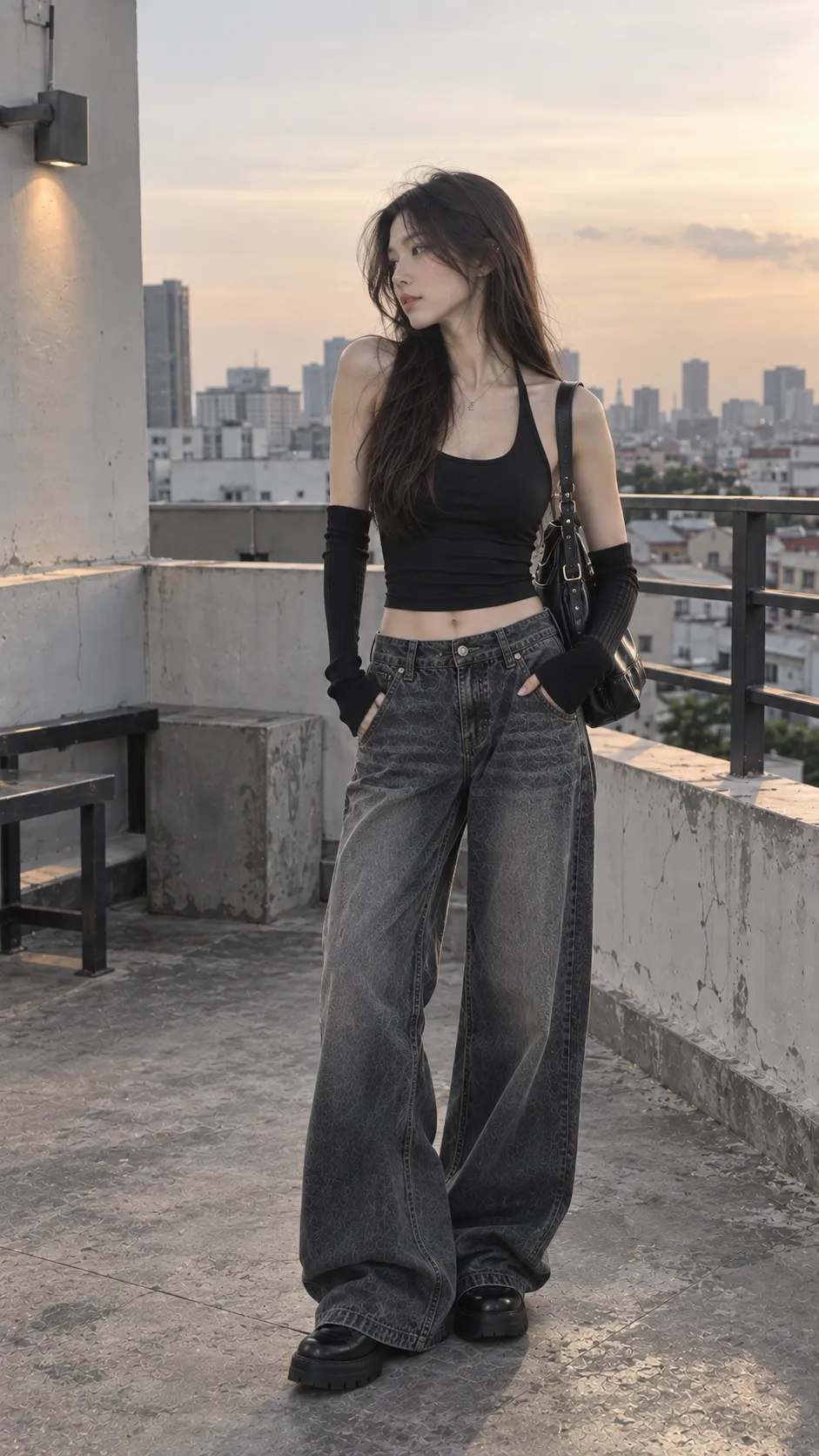
Punk, Goth, and Alternative: One Belt, Different References
In Punk / Grunge (Vietnamese), a studded belt can connect graphics, distressed denim, leather, combat boots, and DIY texture. Slightly angled or low placement can reinforce an irregular outline.
In Goth, it can sit over a dress, long skirt, or tailored black outfit, contrasting with lace, velvet, sheer fabric, or dark shapes. Distressing is optional.
Alternative is broader than either category. A tank, cargos, studded belt, and sneakers can suggest an alternative direction without enough specific references to establish Punk or Goth. Avoid adding unrelated pieces simply to qualify for a label.
For Punk, consider worn textures, denim or leather, and substantial footwear. For Goth, connect dark palettes with deliberate shapes and textured layers. A level 1 or 2 belt can add a smaller alternative accent to casual clothing.
Fit, Weight, and Comfort
Studded belts can be heavy. On thin fabric, the weight may pull a waistband downward or wrinkle a dress. Test the belt with the actual garment rather than only with sturdy denim.
Metal edges can rub against knits, bags, or chairs. Check the inner surface, stud tips, and buckle. Frequent snagging makes an attractive accessory less practical.
A decorative belt need not be tight. Leave room to sit with hip placement, and test bending and breathing comfortably when wearing it over a dress.
Check three areas: neck, waist, and feet. If all contain strong hardware, consider reducing one. This is an optional hierarchy check, not a prohibition on maximalism.
Six Common Studded Belt Styling Mistakes
1. Studs on Every Accessory
The belt, choker, bag, and boots do not need the same motif.
2. Hiding the Bottom's Existing Detail
A complex cargo waistband or buckled skirt may not need another belt.
3. Placement Based Only on Body-Shaping Rules
Choose waist or hip placement for your preferred silhouette rather than a body-type requirement.
4. Ignoring Existing Texture
Lace, mesh, and distressing may leave room for a quieter belt.
5. Ignoring Weight
Heavy belts can distort soft fabric.
6. Calling Every Studded Outfit Punk
One accessory does not establish the whole aesthetic; shape, texture, and other references matter.
Belt Width and Space Around the Waistband
A narrow belt on a wider waistband leaves fabric around the metal accent. A broad belt occupies more of the area and becomes a block. If the top also ends there, its hem, belt, and waistband may crowd together; adjust top length to separate them.
A very narrow belt can disappear in large loops, while a heavy broad belt may slip on a loop-free skirt. The garment's actual construction matters more than the accessory's style label.
Silver, Gunmetal, or Black Hardware?
Bright silver strongly contrasts with black and can lead the eye. Darker gunmetal can blend into textured outfits. Black studs or matte hardware provide surface texture rather than a metallic highlight, useful for restrained monochrome Goth styling.
Silver studs can coexist with gold hardware when their relationship is deliberate. Repeat both selectively or make one dominant. Unrelated finishes at every buckle, zipper, necklace, and bag may be harder to connect.
Studded Belts and Outerwear
A long closed jacket hides the belt until removed. A cropped jacket or open blazer leaves it visible when it is the focal point. A suitable belt worn over a long coat becomes a larger structural element rather than a small accent.
Check layered outfits from the front and side. Projecting studs or chains can catch knitwear, bag straps, or linings. Practical wear matters alongside the visual reference.
A Quick Composition Check
Look at the full outfit and cover the belt in the mirror. If the outfit loses its focal point, the belt is leading. If little changes, you may omit it or choose quieter hardware. If removing it improves clarity, the waist may be overloaded.
This assesses the composition without assuming a Punk or Goth outfit must include a studded belt.
For full-body photographs, check whether the belt sits where you intend or is accidentally half hidden. If partial visibility is the goal, use a deliberate front tuck or open jacket.