

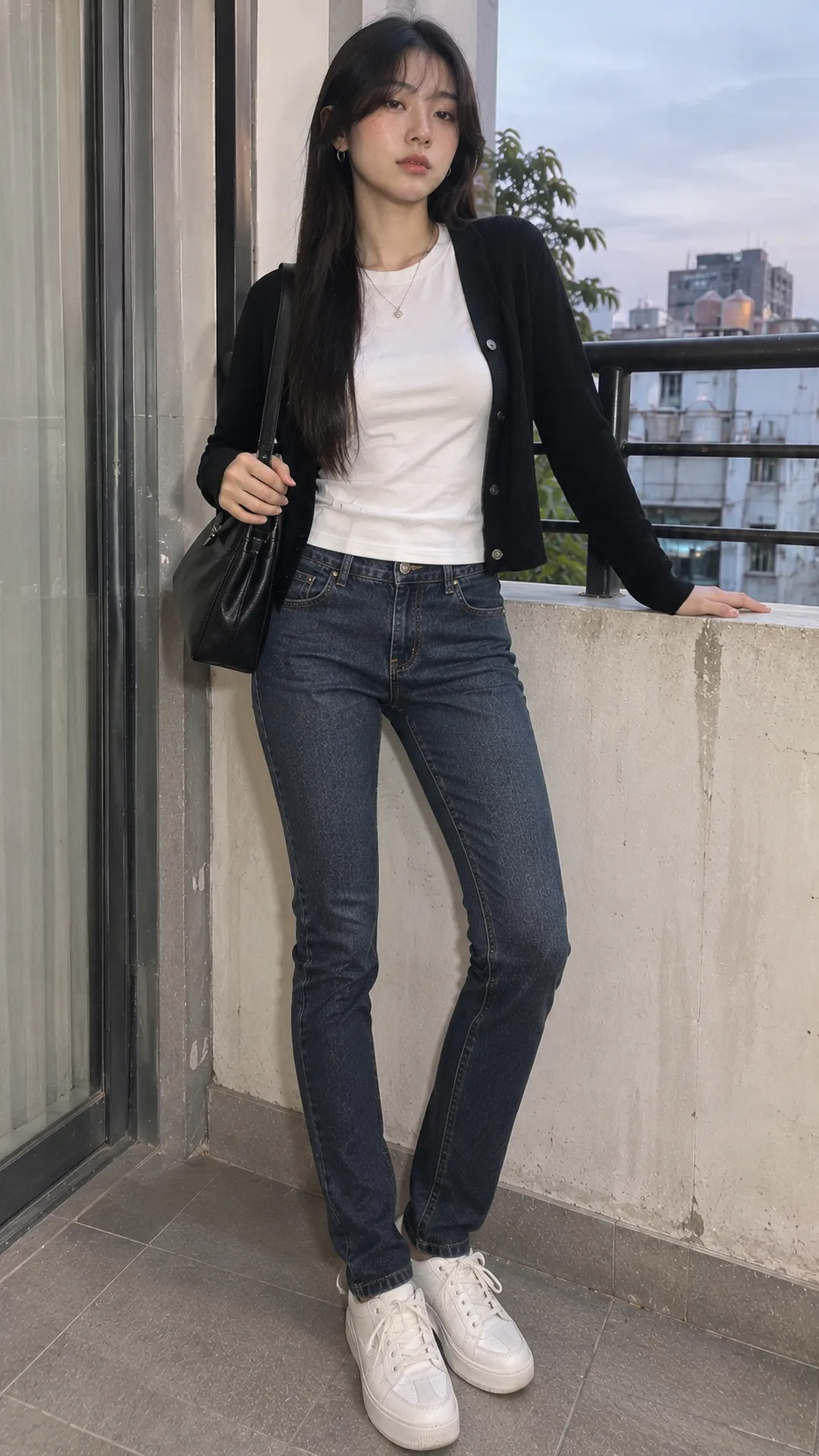
What does slim fit describe?
In its fit guide, Levi’s distinguishes slim and skinny jeans by how closely they fit, with slim cuts leaving more room through the leg. That’s one brand’s fit guide. Check how the maker of the garment you want defines its cuts.
On trousers, slim often means a narrower cut through the hips, thighs, or legs. On shirts, it usually means a closer cut at the bust and waist. Look at the actual pattern and measurements to see which areas are narrower.
Anyone can try a slim silhouette. Choose the shape and feel you want, then check whether the garment has the measurements and proportions to give you that fit.
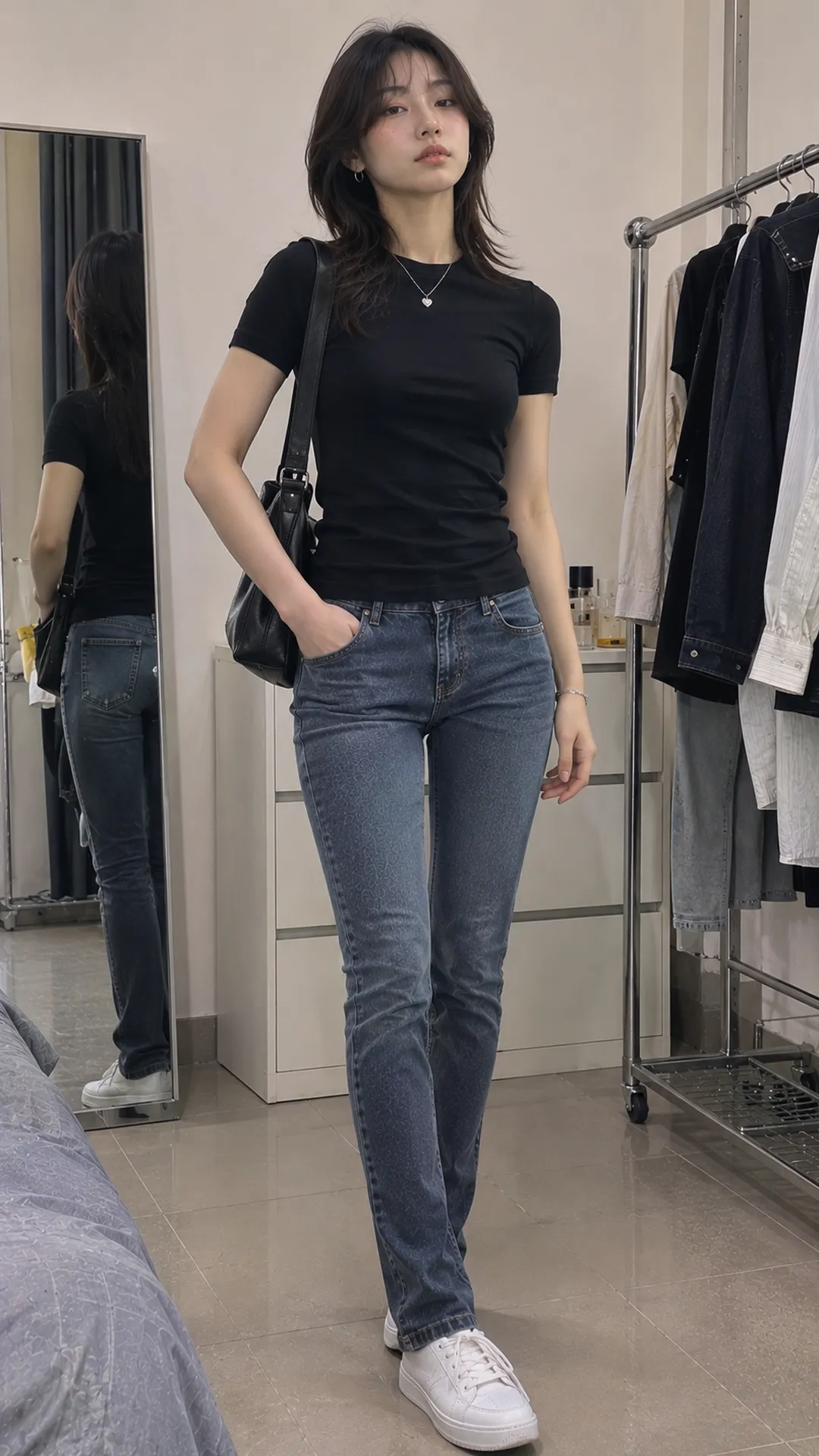
Fit, size, and stretch are separate details
Size identifies a set of measurements within a brand’s system. Fit describes the shape and room built into the cut. A medium slim top and a medium relaxed top can differ at the body and sleeves. A larger size in a slim cut may still have different proportions from a regular cut.
Slim trousers can be made with stretch fibers or fabric with little give. That affects how much room you’ll need. A stretchy panel can still feel restrictive if the seams, waistband, or rise limit movement.
Record the cut, measurements, and composition separately. If a listing says “stretch slim fit” without a size chart, ask for the garment measurements you need. Height and weight alone can miss important differences in fit.
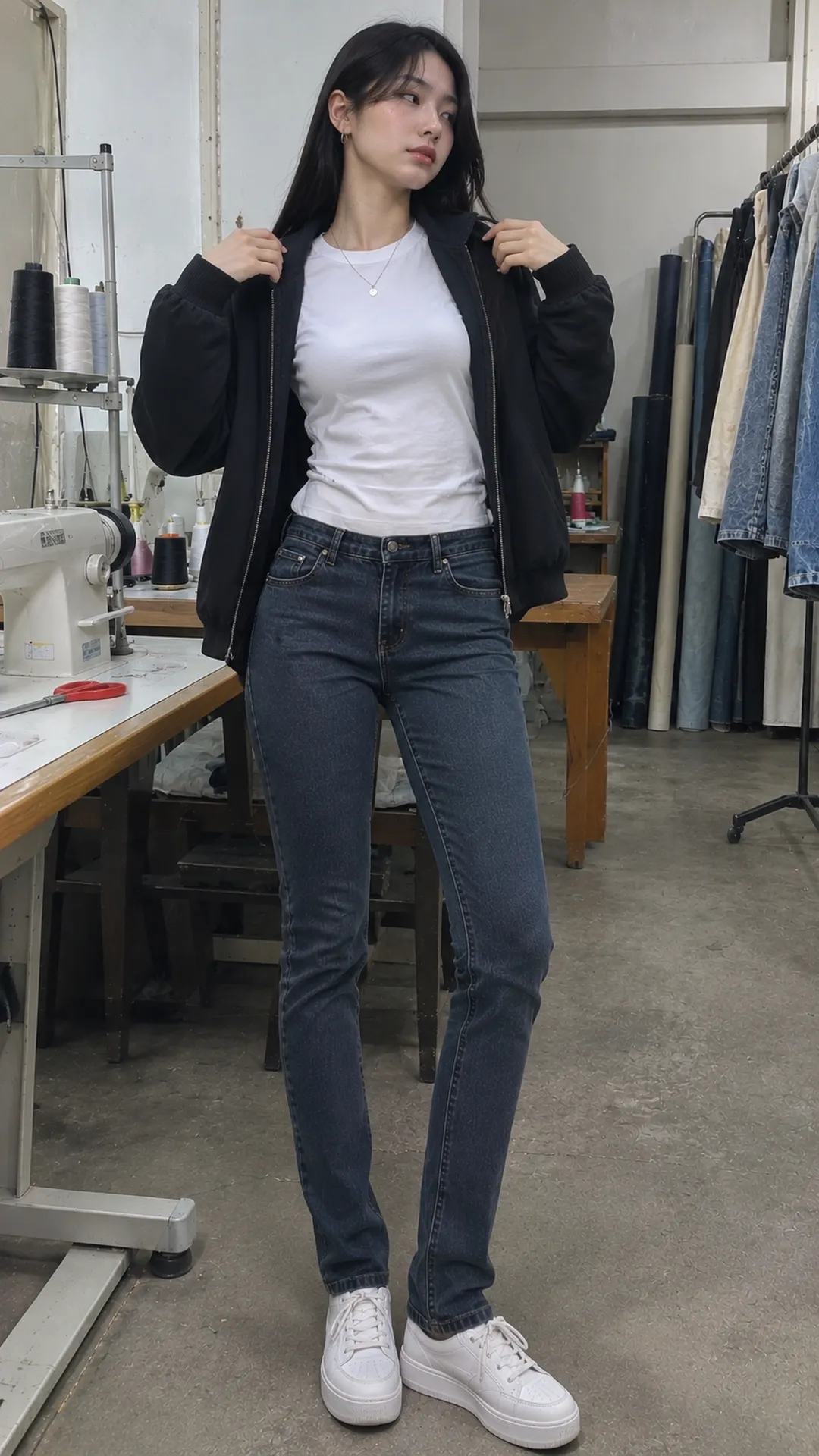
Do body fit, body slim fit, and slim mean the same thing?
Retailers often use “body fit” for clothes that follow the body closely. Terms such as “body slim fit” don’t tell you how much ease is built in. Check the brand’s definition and photos of the exact garment being worn.
If two garments have different labels but similar measurements, compare the fabric and cut. A knit top can sit quite differently from a woven shirt with the same flat chest width.
Ask which features matter to you. Does the shirt narrow at the waist? Do the trousers taper below the knee? Where does the waistband sit? These details help you compare garments across brands.
Compare skinny, regular, and oversized fits
Skinny trousers usually follow the leg closely, while slim cuts can leave more room. To compare two pairs of jeans, look at thigh and knee widths and the leg opening. Photos at different angles can obscure those differences.
Regular usually means a brand’s standard cut. Compare it with other fits in the same line or size chart if you can. If you want more room at the hips and a narrow leg, check the cut itself before assuming a switch from regular to slim will give you both.
An oversized garment has extra room designed into specific areas. Our guide to oversized fit explains why a larger size doesn’t always give you that shape. Similarly, a smaller regular-fit top can change the shoulder, sleeve, and body lengths in ways you didn’t want.
Check slim-fit trousers from waistband to hem
Put the waistband where you plan to wear it, fasten it, sit down, and stand again. If you keep pulling the trousers up or tightening a belt until the fabric bunches, check both the size and the rise.
At the hips and thighs, look for pulling and take a moderately long step. Slim trousers should leave enough room for normal movement. If the waist fits but the thighs feel tight, another cut may work better than sizing up.
Check whether the fabric catches at the knees or calves after you sit and stand. A close fit at the calf can keep the hem from falling back into place. Try both legs and wear your usual shoes to see where the hems end.
Check length separately. Long trousers can stack on the shoes, while short ones can leave a larger gap than you want. If the other measurements work, ask whether you can alter the hem before changing sizes.
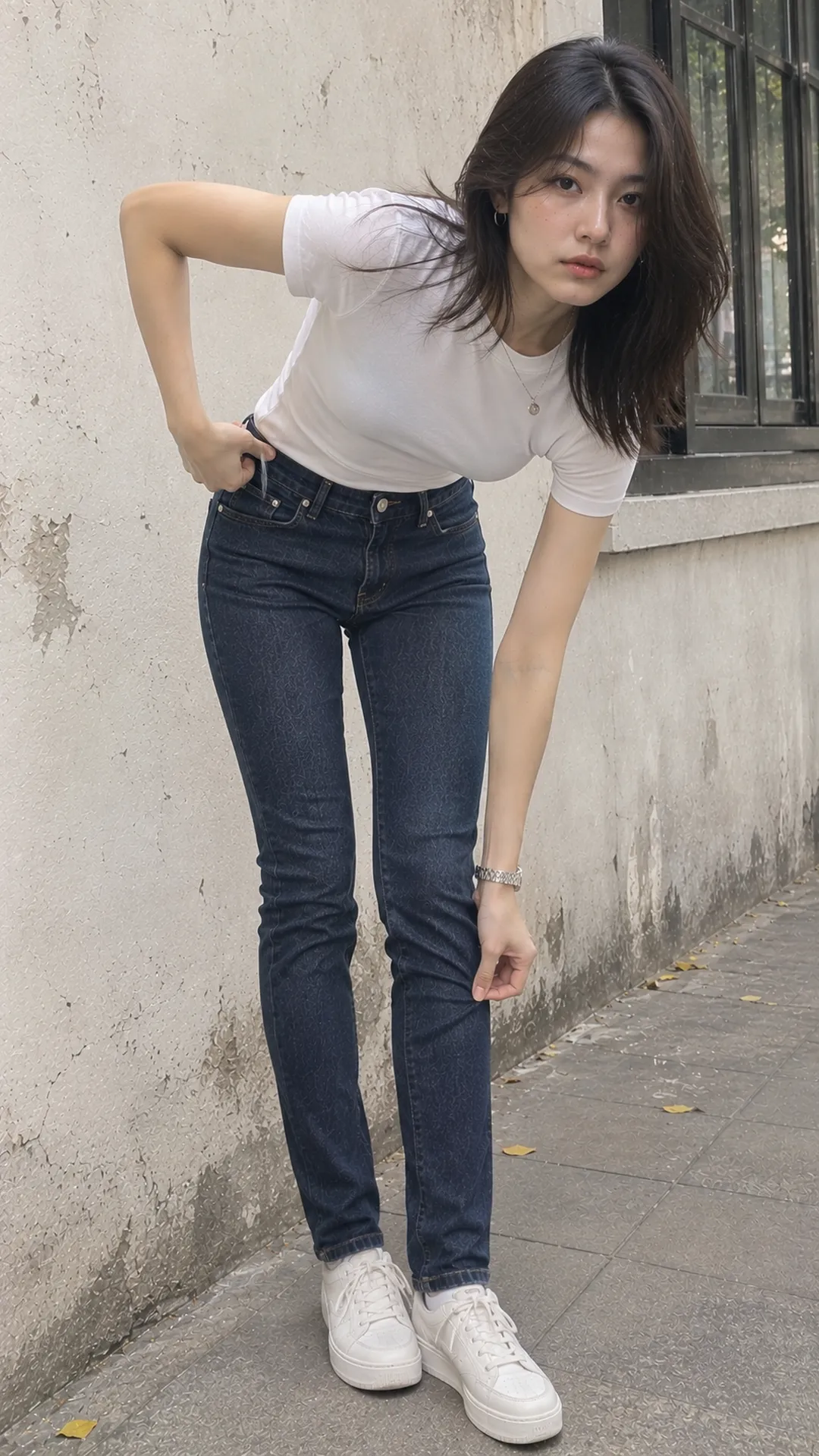
Check slim-fit tops at the shoulders and through the body
For a shirt, look at the shoulders, button front, and waist while standing naturally. Reach forward as you would at work. If the buttons gape, check the body width and construction before changing the underlayer or tuck.
For a T-shirt, check the neckline, armholes, and hem after moving. Even if you want a close fit, you should be able to sit and raise your arms without adjusting the hem every time.
For a slim jacket, try your actual base layer underneath and fasten the jacket. A coat that fits over a thin tee may not leave enough room for a thick layer. Our women’s tops guide by fit and layering helps you choose how close a fit you need.
Read the size chart before ordering online
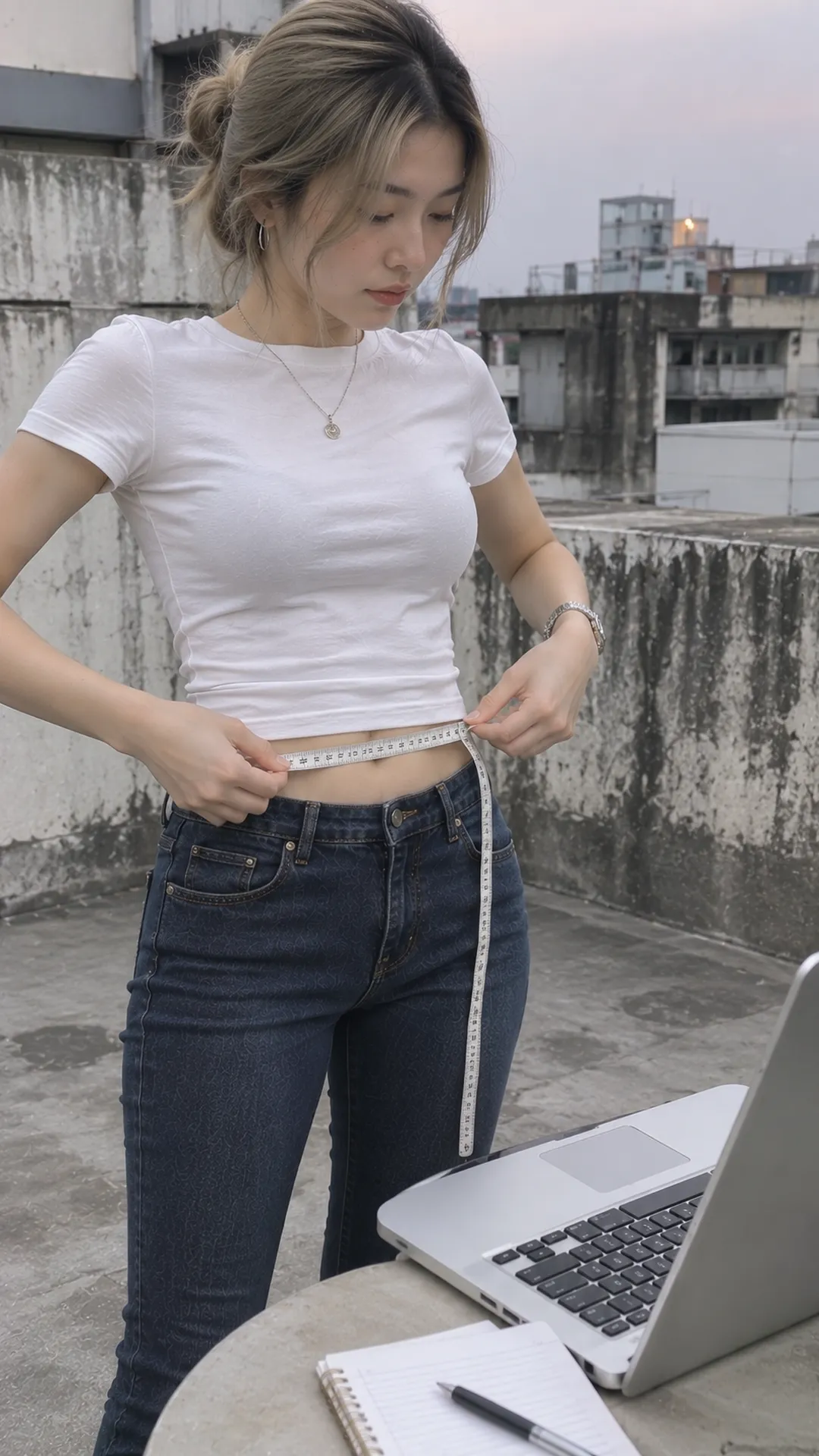
Check whether the chart gives body measurements or garment measurements. A flat width and a body circumference are measured differently. If the chart uses body measurements, follow the brand’s instructions for that model.
Our online sizing guide shows how to use a garment you already own as a reference. For a slim cut, compare fabrics and shapes that are similar. A stretchy tee can give a misleading reference for a woven shirt.
Ask for missing measurements, such as rise, thigh width, leg opening, or upper sleeve width. Those numbers are clearer than asking whether the garment runs tight. Save measurements from garments that fit and use the new chart whenever you change styles.
Style a slim cut by balancing proportions
A loose top gives slim trousers contrast. Check where the top ends and how much of the shoes show. For a lighter silhouette, try less width or a shorter top.
A slim top gives you a defined upper half over wide trousers. Try it at the waist or tuck it in if it lies flat. Our women’s trousers styling guide compares rises and leg shapes so you can choose the amount of volume you want.
A slim top and slim trousers can also work together. Try a different texture, neckline, or shoe to give the outfit definition. If you add a jacket, leave room to move and check the outfit without it.
Turn sideways in the mirror to see whether the pockets gape or the waist tilts. Sit the way you normally do. Small creases can form when you bend. Look for pressure, strained seams, or a waistband you can only fasten by holding your breath. Walk a few steps to see whether the trousers slip or twist.
If a listing says both “body fit” and “one size,” ask for measurements and the stretch range. A garment that stretches around the body can still sit differently from the way it does in the listing photo. Check how you’ll wear it in practice.
Pinpoint the fit issue before changing sizes
Name the issue clearly: the waist is loose but the thighs are tight, the shoulders fit but the bust needs room, or the sleeves fit but the body is too long. That gives you a more useful way to compare cuts or ask the seller for help.
Avoid trying to resize a garment through hot washing or forceful stretching. Ask a tailor what can be changed without affecting the construction. Shortening a hem is different from rebuilding shoulders or changing a trouser rise.
Try the garment in everyday movements and with one outfit you already own. Choose the slim cut that gives you the shape you want and enough room to move without constant adjustments.