

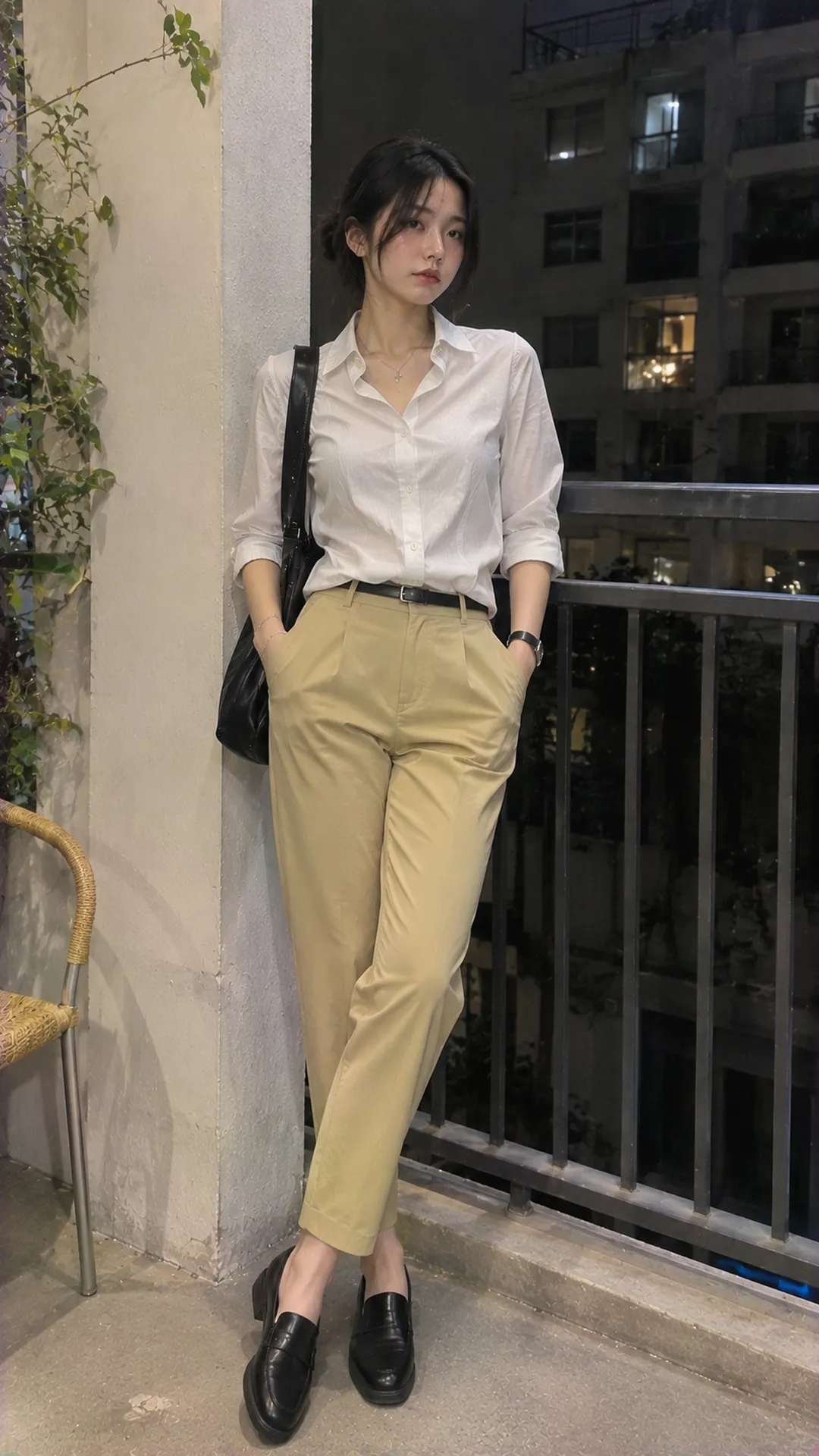
Taper describes how the leg narrows
Lay the pants flat and look at how the lower leg narrows toward the opening. The degree of taper varies. Your proportions, fabric stiffness, and the amount of room in the cut affect how it looks on. Flat photos and photos on a person can show different details.
Levi’s jeans fit guide includes tapered cuts with more room up top and slim tapers with less room around the hips and thighs. Tapered pants can be loose or fitted elsewhere. The examples are men’s jeans, but reading the direction of the leg works for women’s pants too.
Tailored trousers, twill pants, and jeans can all taper. Check whether the waist is elasticated or has a fly and whether the hems are plain or cuffed. If a listing only says “women’s tapered pants,” ask for a side photo and garment measurements.
The same opening measurement can give a different effect on two lengths or on two people. Compare the hem with the upper leg and check whether your foot passes through comfortably.
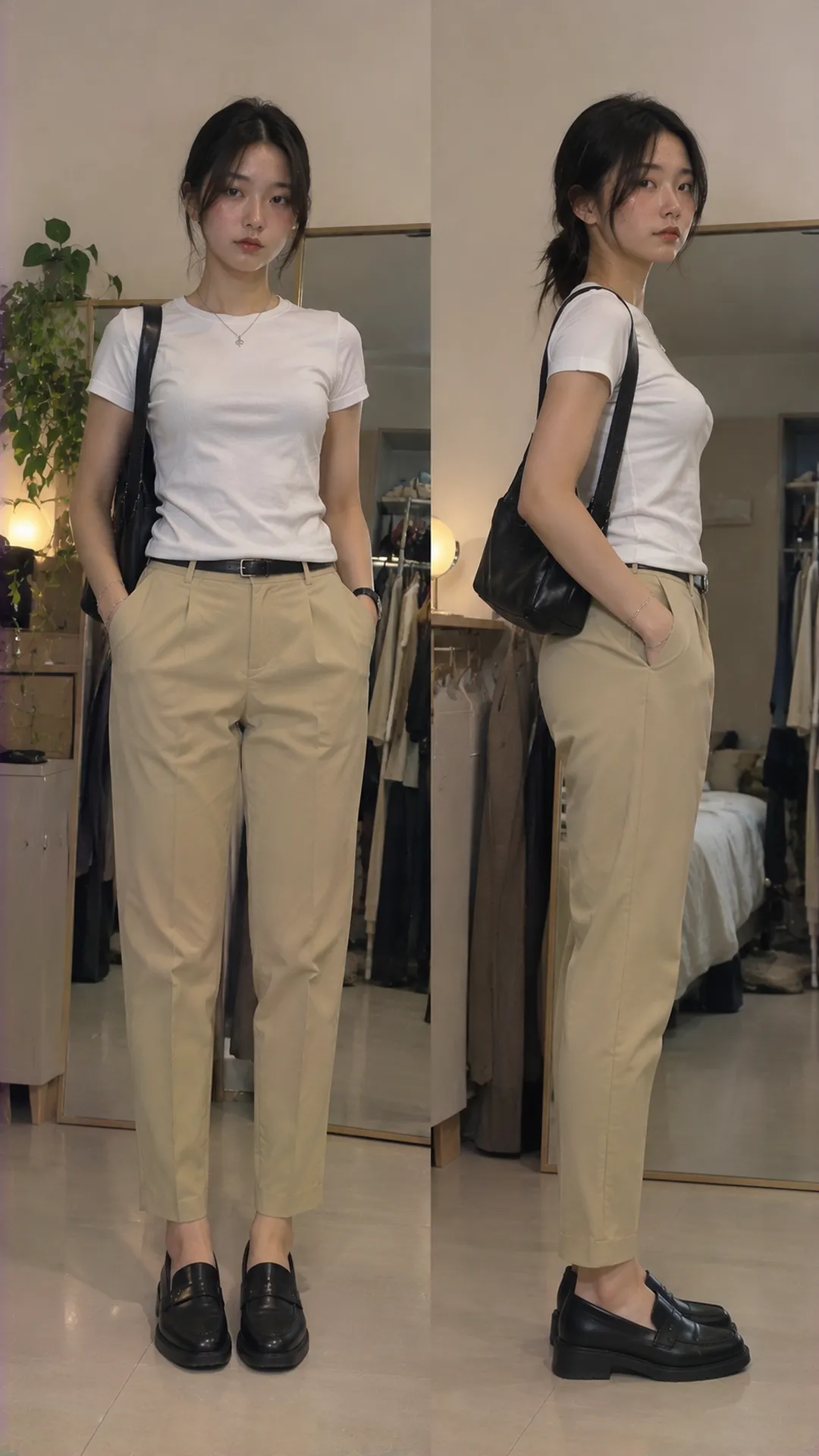
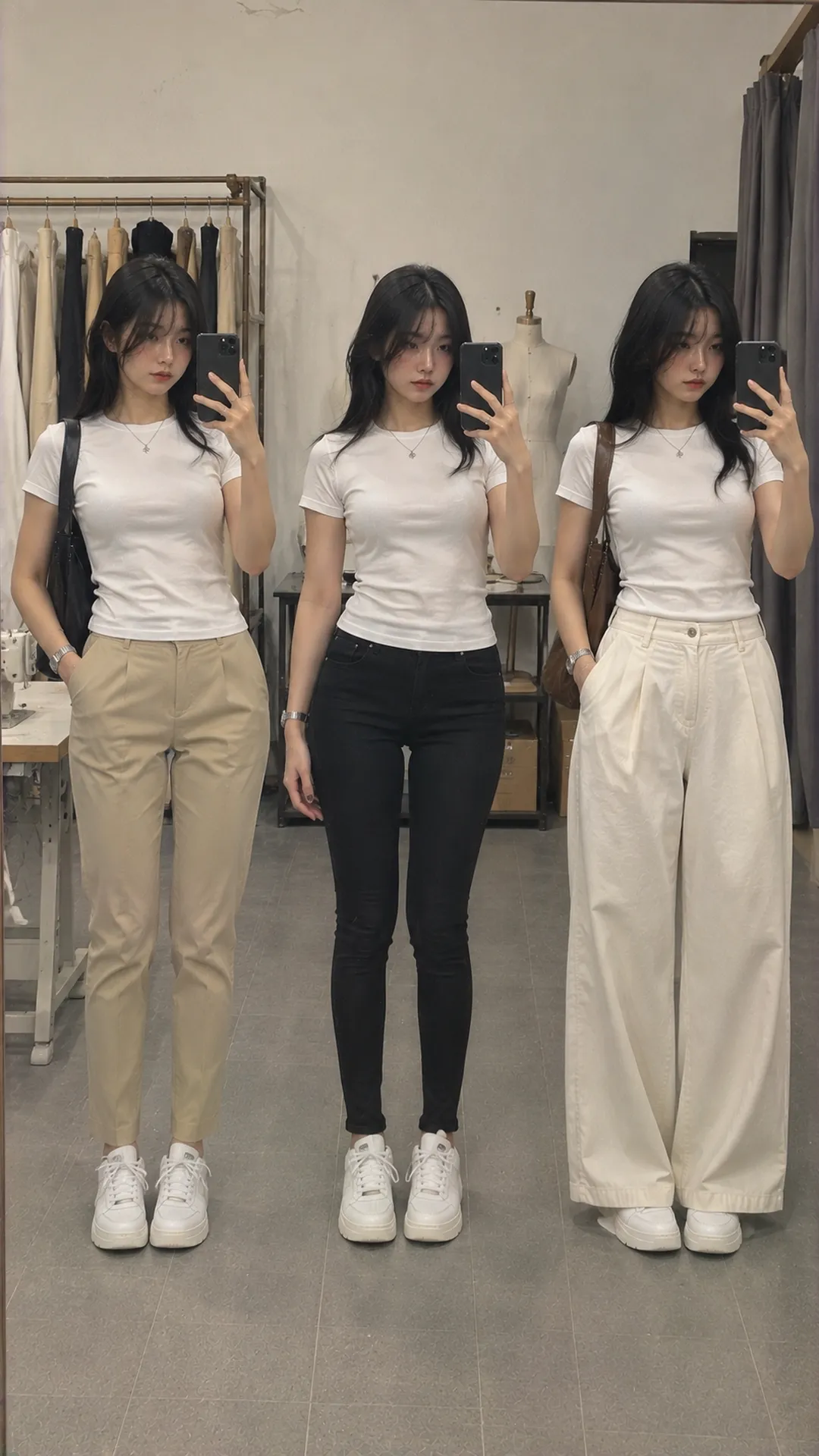
Compare tapered, skinny, and straight-leg pants
| Cut | What to look for | What to check when you try them on |
|---|---|---|
| Tapered | Narrows toward the hem. The upper leg may be roomy or fitted. | Do the pants catch at the calves after you sit and stand? |
| Skinny | Fits closely along the leg. | Is there enough room through the thighs, knees, and calves? |
| Straight-leg | The leg line stays fairly straight, with less narrowing at the hem. | Do the width and length work with your shoes? |
These terms can overlap. Skinny pants can narrow at the hem, and a slim taper describes both a close fit and a narrowing leg. Look at how the pants are made before trying to fit them into one category.
Straight-leg pants can be slim or roomy. The direction of the leg line and the amount of fabric are separate details. Our women’s pants guide compares cuts, rises, and styling options.
Joggers often have a cuff or another distinct ankle finish. Tailored trousers can still taper with pleats and a plain hem. Look at the cut of the leg as well as the trim.
Check the fit from the waist to the hem
Start with the waistband and rise
Wear the pants at the waist position you intend. Pulling them much higher to shorten the hems changes how the rise and hips fit. Check the length separately so the waistband can stay where it belongs.
Sit down and check whether the waist presses, the rise pulls, or the pockets gape. Hems that look good standing up are less useful if you can’t sit comfortably. A belt can hold up the waist, but it won’t add room at the hips or thighs.
Leave room at the thighs and knees
Take a moderately long stride, sit in a chair, and stand up. See whether you have to pull up the pants to sit or tug the hems down afterward. Some movement is normal. If you need several adjustments each time, try another size or cut.
Give stretch fabric enough room to sit as designed. Constant tension can shift seams and pull pockets open. Check how the pants fit as you move naturally.
Check the calves and hems
Because the leg narrows, tapered pants can catch at the calves after you sit. The hem may then stay higher than you intended. Check the leg width before adding length to compensate.
Take the pants off and put them back on without shoes. Check that your feet pass through without forcing them. If the opening feels too narrow, try a gentler taper and see whether it still gives you the shape you want.
Fabric changes the way the taper looks
Structured denim: It defines the leg line and can make extra fabric around the knees and ankles more visible. Sit, walk, and bend to see how it behaves. Check the fiber content and care instructions before expecting denim to stretch enough to relieve tight spots.
Tailoring fabric: Look at the drape, pleats, and side seams. If the pleats pull out of line or the pockets gape, check the fit at the hips and thighs before adjusting the hem. Room up top helps the taper below fall as intended.
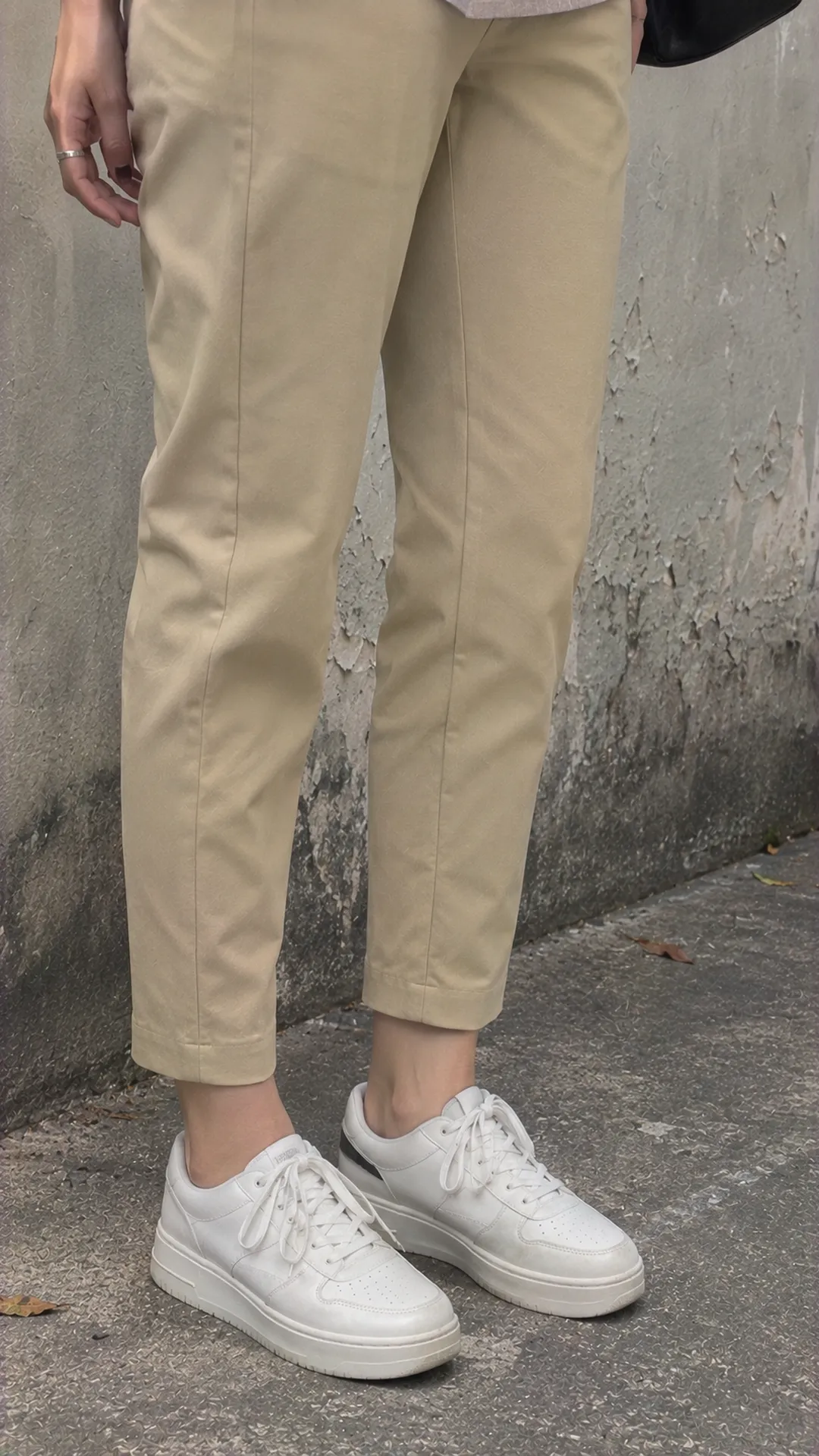
Khaki twill: Check the actual thickness and the amount of fabric around the knees. A stiff fabric can form large creases when you bend your leg, while a softer fabric may drape differently from the photo. Thickness, construction, and lining affect how warm the pants feel.
In hot, humid weather, choose for comfort and what you’ll do. If you sit indoors for a long time and walk outside later, try both kinds of movement and see how the pants feel when they get warm or damp. A narrow leg is useful only if you like wearing it.
Choose the length with your shoes on
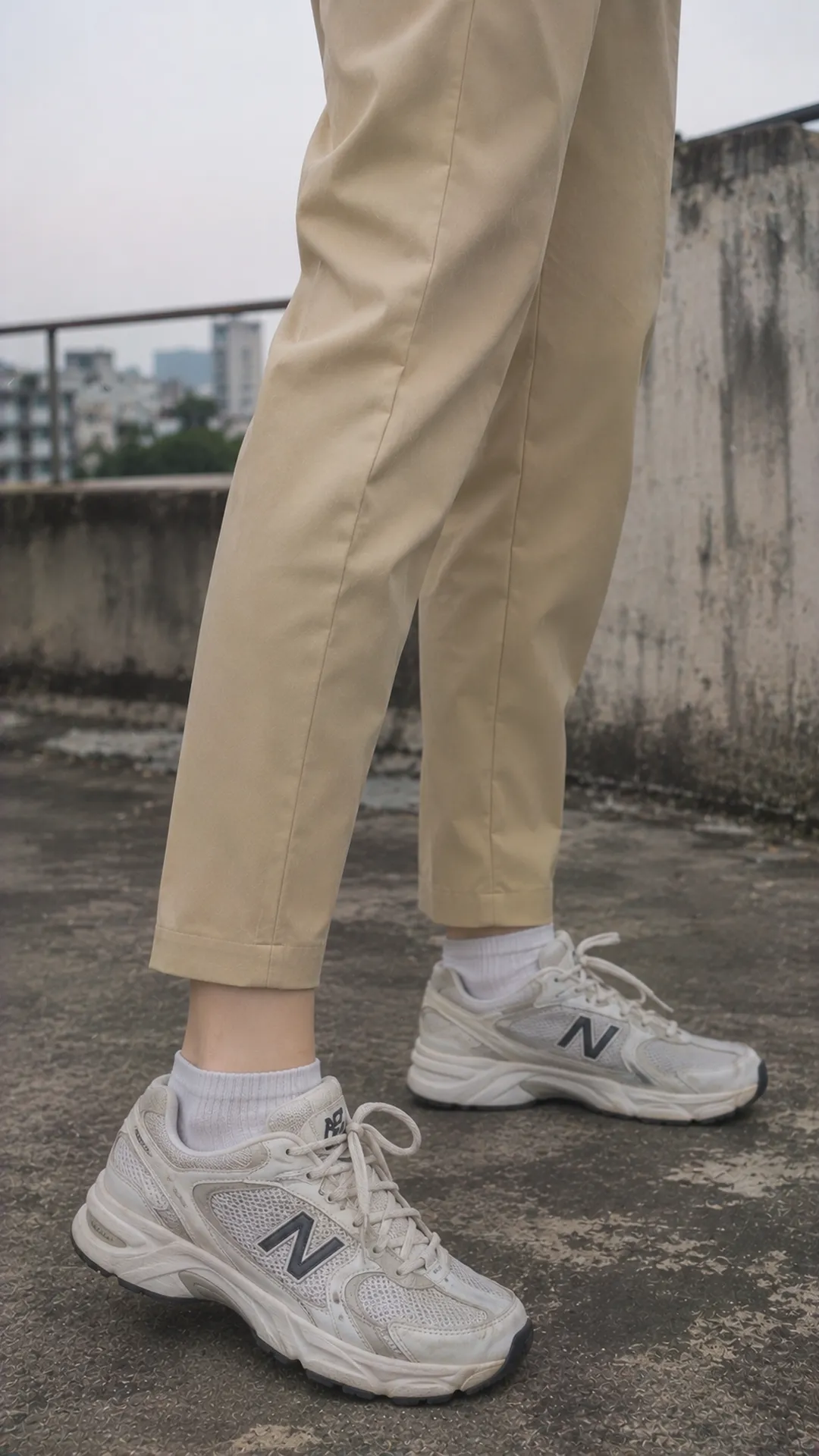
Long tapered legs can stack around the ankle, especially when a narrow hem catches on the shoe. Try the pants with the exact shoes before cutting anything. Look from the front, side, and back, then walk to see whether the fabric only creases or actually gets in the way.
If you want to show your ankle, choose a shorter length you like. The hem moves when you sit, so try the pants with your socks and see how much of them shows.
With bulky sneakers, a narrow hem may rest above the upper. Low loafers or flats can leave more of the instep visible. Our women’s footwear guide helps you compare upper shape and sole volume before altering the trousers.
If you plan to shorten the pants, have the tailor measure the opening at the new hem. Cutting a tapered leg higher can make the opening wider than the original. Discuss both finished length and taper if you want to keep the same shape.
Pick a top that shows as much of the cut as you want
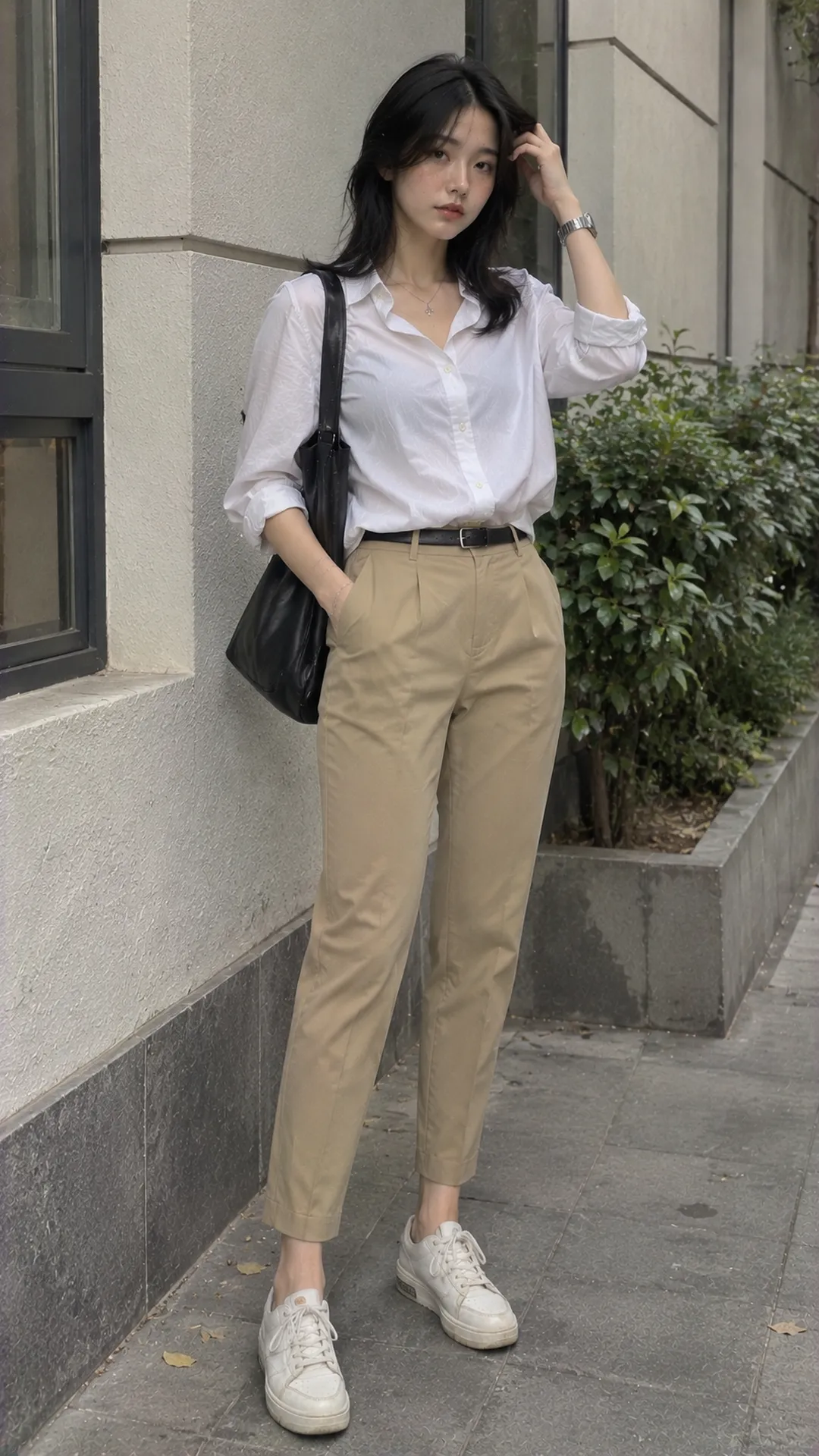
A fitted tee: Try it with tapered jeans and sneakers for a casual outfit. A waist-length tee or a slight tuck makes the hip line visible. If you leave it untucked, choose a length that works with the room in the upper leg.
A soft shirt: Wear it with tapered tailored trousers for a defined look. Smooth the tails before tucking and ease a little fabric out so you can move. If a thick shirt makes the waist bulky, try changing the shirt before sizing up the trousers.
A loose top: A loose top can work with a narrower lower leg. Leave it untucked and look from the side to see whether it bunches around the hips. If you want a clearer line, try a partial tuck or a different length.
An outer layer: A cropped jacket makes the waist visible, while a longer one frames the hips differently. Keep the base outfit and swap jackets to compare. Our guide to layering women’s outfits explains how to balance layer lengths without adding many details.
What measurements to ask for online
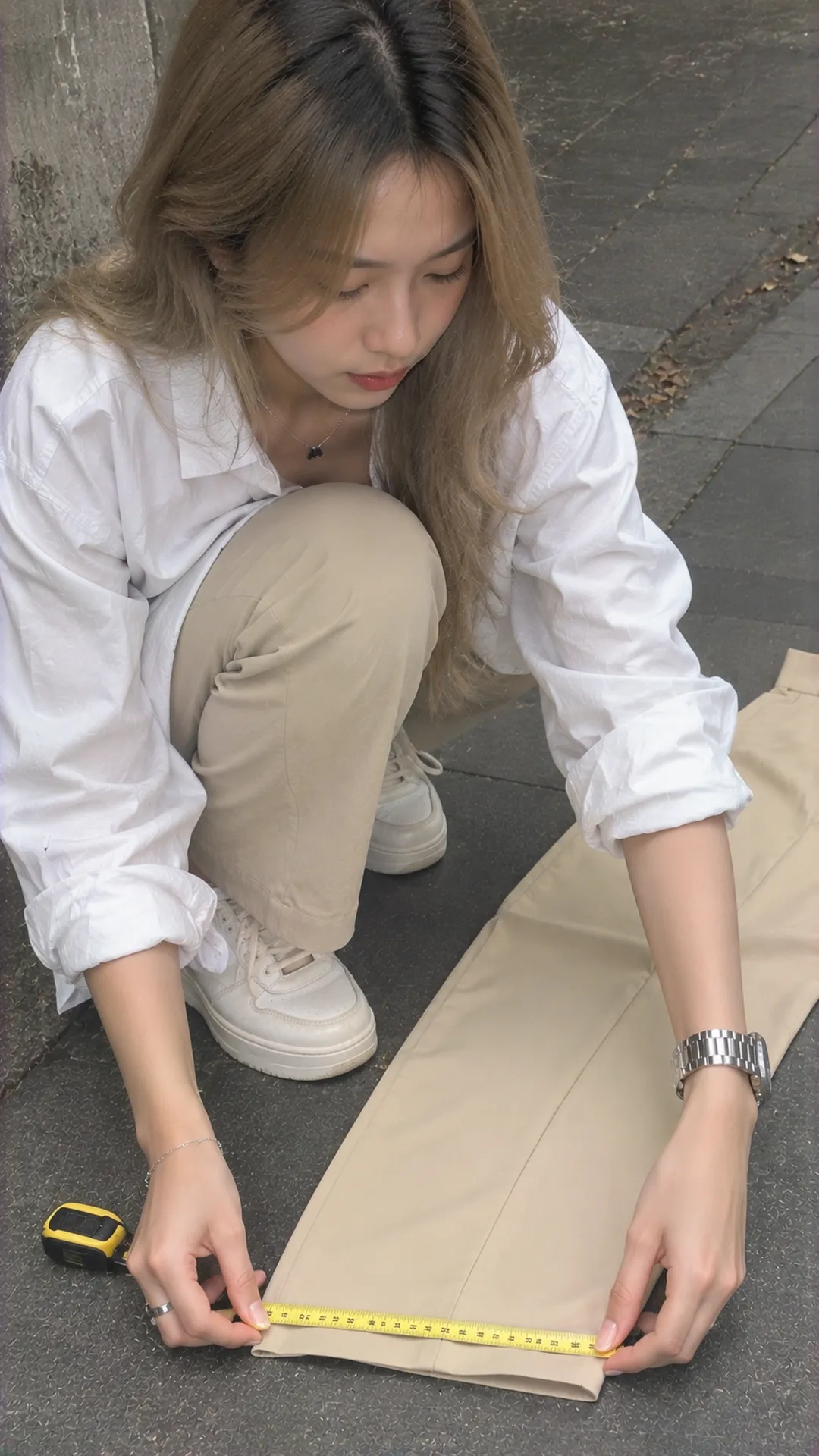
Use a pair that fits as a reference. Lay it flat and measure it the same way the seller does. Record whether the size chart shows body or garment measurements. The comparison depends on how much room the design allows.
- Waistband circumference and where you expect it to sit on your body.
- Hip and thigh measurements and rise for the upper part of the pants.
- Knee or calf width if either area usually feels tight.
- Leg opening, inseam, and total length, measured as the seller specifies.
- Stretch, lining, care instructions, and return policy.
A flat width differs from a circumference. Ask where the seller puts the tape, especially at the thigh and knee. Measurements taken at different points can make two styles hard to compare.
Our online sizing guide lists what to compare before ordering. On a budget, one pair with the right fit that works with your shoes may be more useful than several almost-right pairs.
When to keep, alter, or try a different cut
If the waist, hips, and thighs fit and only the length is wrong, ask how hemming will affect the taper. If the calves feel tight even though there’s plenty of room up top, try a gentler taper before sizing up the whole pair.
If the pants fit but the outfit feels off, try another top or shoe before altering them. If sitting or walking feels restricted, solve the fit first. Separating fit from styling helps you change the right thing.
Tapered pants are useful when you want a narrower lower leg with enough room above it. Choose the degree of taper, length, and construction for your comfort and the look you want.