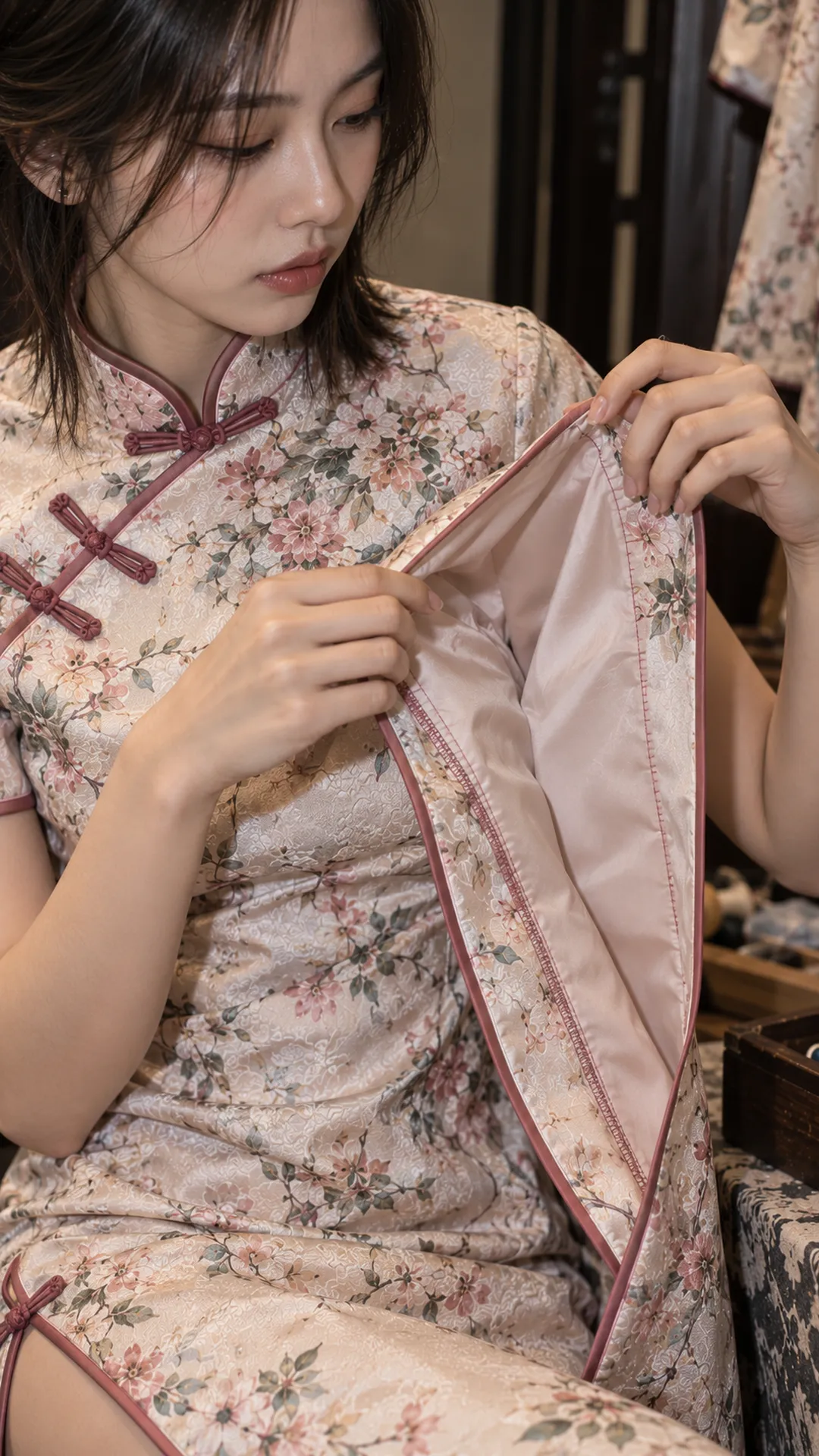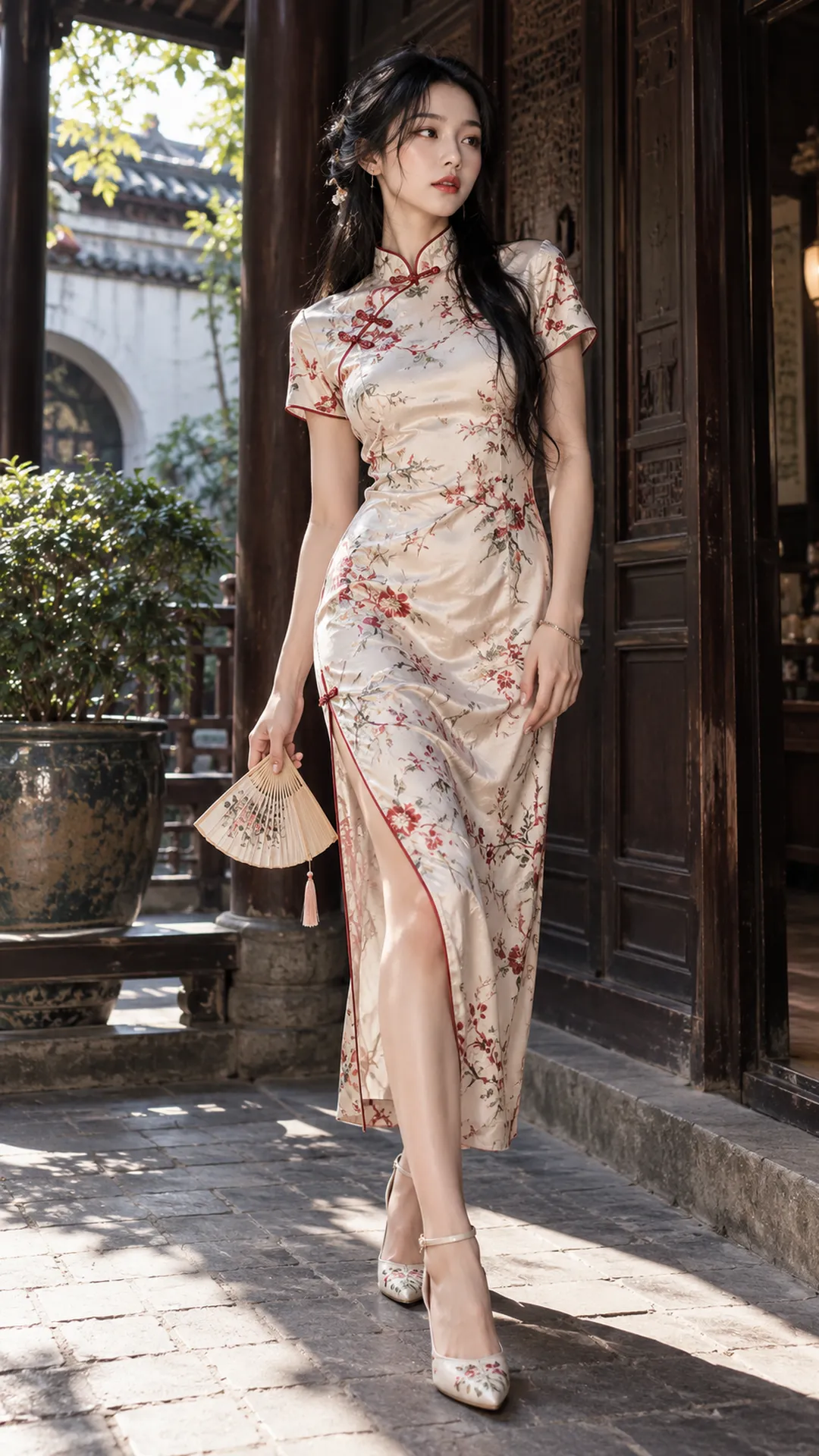
What is a qipao? Recognizing the construction
Wiktionary records qipao as a word of Mandarin origin for a type of Chinese women's dress. Common details include a standing collar around the base of the neck, a diagonal fastening, knotted frog buttons and a relatively streamlined body.
Not every design includes all those features. Modern adaptations may use a concealed zipper, a lower collar, puff sleeves or a straight cut. When looking at a qipao dress, consider the overall construction rather than identifying it solely through dragon or floral prints or shiny fabric.
The document Chinese Qipao on the Chinese Consulate General in Chicago website describes changes from looser shapes to a more defined waist, alongside adjustments to sleeve and hem lengths. A fitted cheongsam today should therefore not be treated as an unchanged copy of an ancient garment.
A qipao is first a garment with its own cultural context. It does not automatically become an aesthetic because it is styled in black or appears in a fashion photograph. To distinguish garment names from style names, explore Apocalypse Closet's Aesthetic Dictionary.
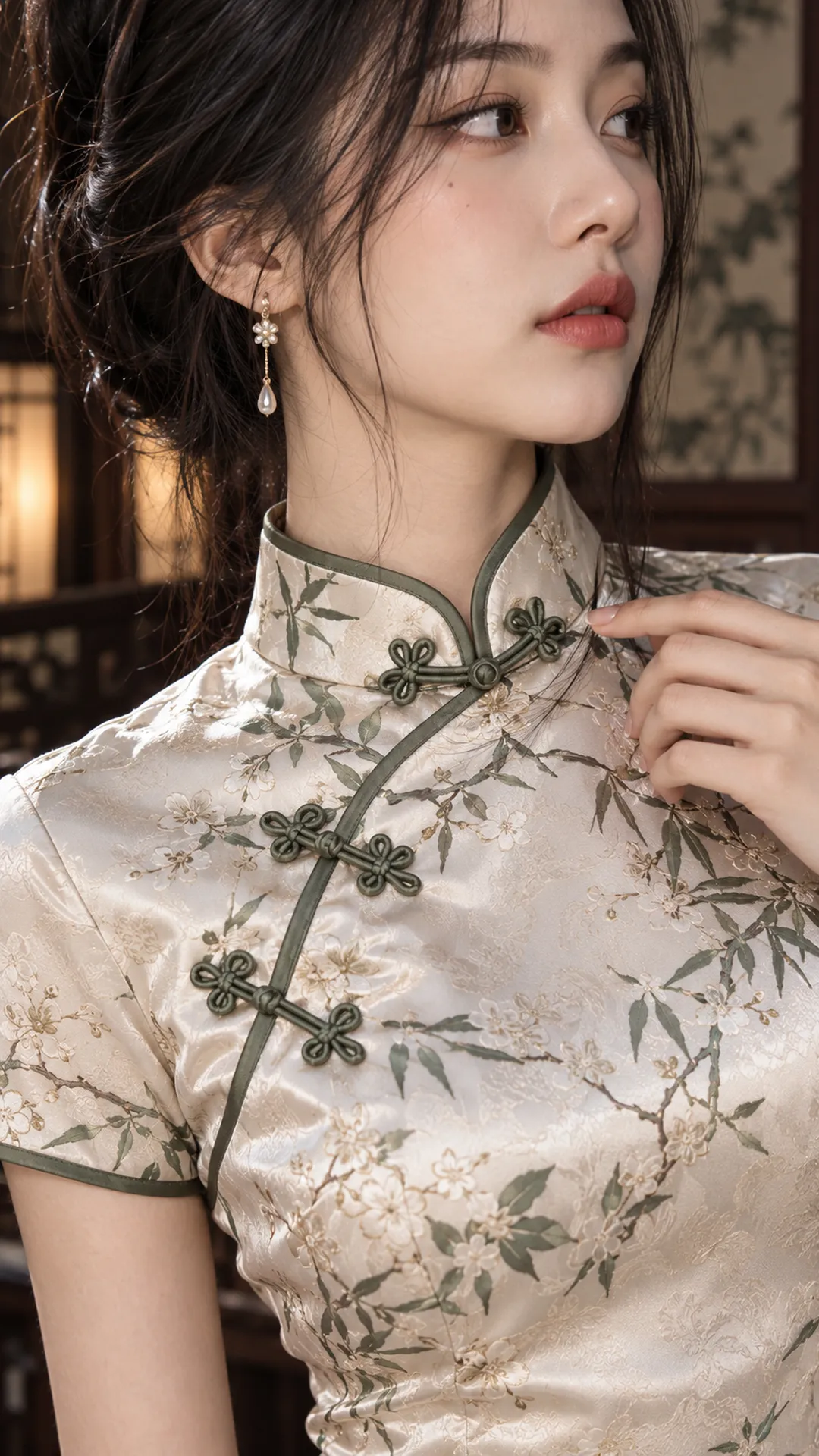
Qipao vs cheongsam: what is the difference between the names?
In contemporary women's fashion, qipao and cheongsam often refer to the same type of dress. Qipao is a romanization of the Mandarin term; cheongsam entered English from Cantonese, as noted in the entry in Oxford Learner’s Dictionaries.
When searching for “qipao vs cheongsam,” you do not need to impose rules that qipao is always short and cheongsam always long, or that one is for parties and the other for everyday wear. A product name cannot replace information about length, collar, sleeves and fit.
Two shops may use different names for the same dress style. Conversely, two products labeled qipao may have very different cuts. Before buying, compare front and back photographs, measurements and fiber composition rather than just the labels.
Choose the fit by moving in the dress
Check the shoulders, bust and waist before the slit
When trying on the dress, relax your shoulders, breathe normally and reach forward as if holding your phone. The bust should not pull the fastening out of alignment or open gaps between buttons. If it only fits when you hold your stomach in, the dress is demanding a fixed pose rather than supporting your activities.
The waistline should sit where you want the emphasis, without necessarily fitting tightly. With a ready-made dress, a good bust fit and loose waist may call for alterations; going up or down a whole size may not solve both. Ask a tailor about alterations before buying a complicated design.
Try sitting, taking longer steps and turning
Sit on a chair and stand up, walk a few steps and turn in front of a mirror. Look for tight horizontal pulling at the hips, a hem that keeps riding up or a back that feels strained when seated. A few natural folds differ from persistent tension lines in the same place.
Judge the slit while moving. If you need to pull the skirt down after every step, try a lower slit, a roomier skirt or ask a tailor whether it can be adjusted. An underlayer can add coverage, but it cannot correct a dress that is too tight.
Choose the collar and length for comfort
A standing collar frames the face clearly, but should not dig in when you lower your head. If you prefer an open neckline, try a lower or adapted collar. This is a matter of comfort and proportion, not a rule excluding particular neck or face shapes from wearing a cheongsam.
An above-knee dress leaves more of the leg visible; a midi gives a longer line; an ankle-length dress needs careful walking tests. Try it with the shoes you plan to wear, because heel height changes the relationship between the hem, ankle and ground.
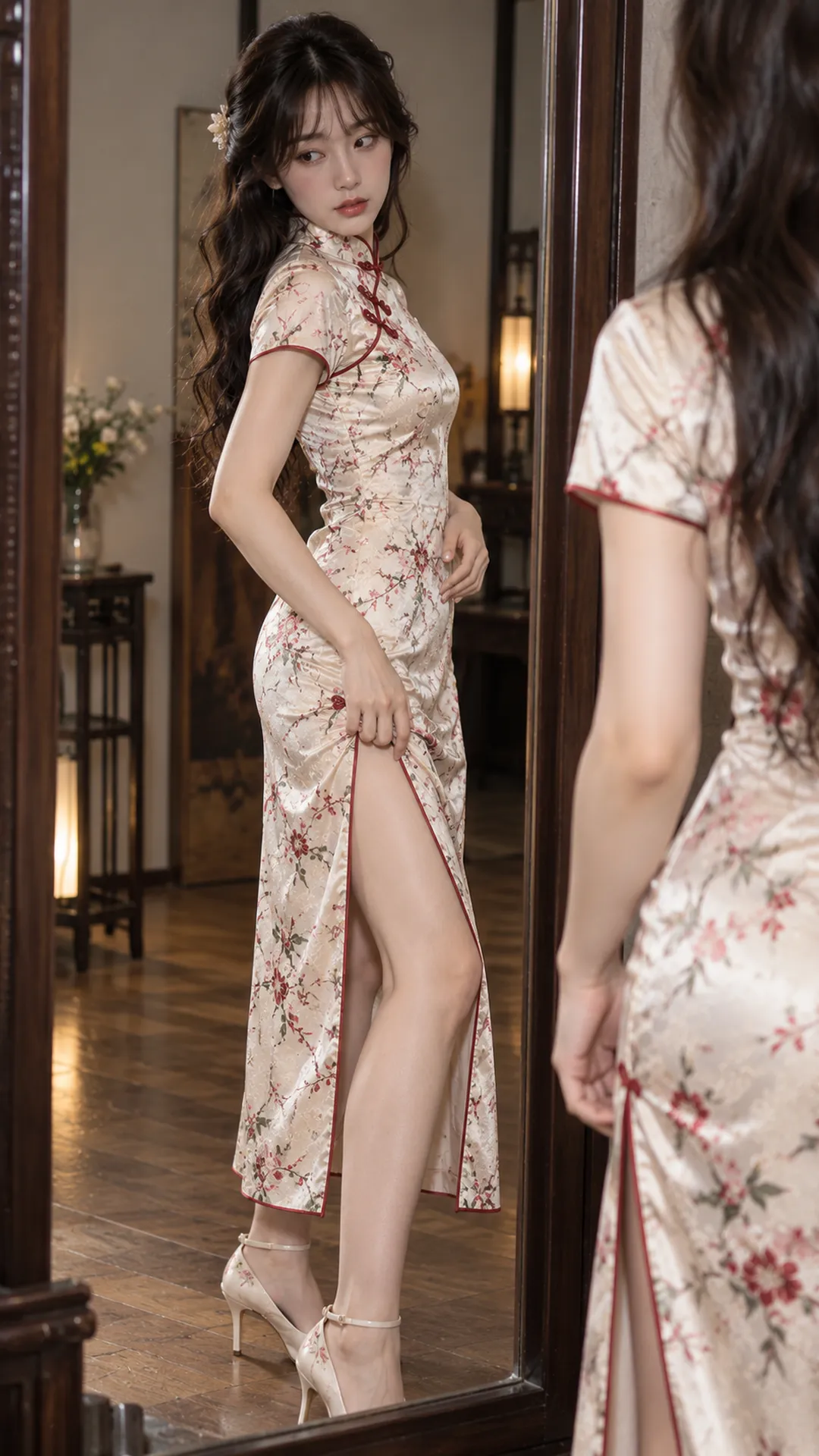
Choose fabric, color and print for warm days
Do not infer fiber composition from shine alone. When a seller says “silk” or “satin,” check the fiber label, lining and care instructions rather than assuming all versions are alike. Two similar-looking surfaces can differ greatly in weight and feel against the skin.
In hot, humid weather, handling the fabric, checking the lining and wearing the dress for a few minutes helps more than photographs alone. A short-sleeved dress with a thick lining, high collar and close fit may feel less practical than a longer but roomier design. Check it under strong light for transparency too.
Choose colors around items you already own. A black qipao pairs easily with dark shoes; a deep blue with silver accessories feels quieter; cream or a light base can work with tonal shoes. These are styling ideas, not compulsory palettes based on skin tone.
A large print draws attention wherever it sits. In the mirror, check whether the main flower falls on the bust, waist or hip, and whether you like that emphasis. For a quieter effect, choose smaller flowers, a plain background or a lower-contrast print rather than using accessories to hide a motif you dislike.
Four modern qipao outfits for different occasions
Coffee dates: a streamlined dress, flat shoes and a small bag
Try a short or knee-length qipao with a moderate print, ballet flats or sandals with slim straps. A small shoulder bag leaves the dress and waistline visible. If you will walk a lot, prioritize familiar shoes and test the whole outfit while walking.
The idea is to keep the collar and fastening as the main details. You do not need a large necklace right beside the buttons; small earrings or a bracelet may be enough. In hot weather, skip the outer layer instead of completing the outfit with something unnecessary.
Parties: a midi, refined shoes and one highlight
A neatly constructed midi qipao can work with low-heeled sandals or closed-toe shoes. A small clutch avoids a strap crossing the print. If the dress is already shiny or has raised embroidery, reduce sparkle in the bag and jewelry so the garment remains the focus.
Before deciding, try sitting as if eating and reaching for something. An uncomfortable collar, pulling sleeves or an awkward slit often only become apparent in motion. For an event with a dress code, check the host's requirements before choosing length and coverage.
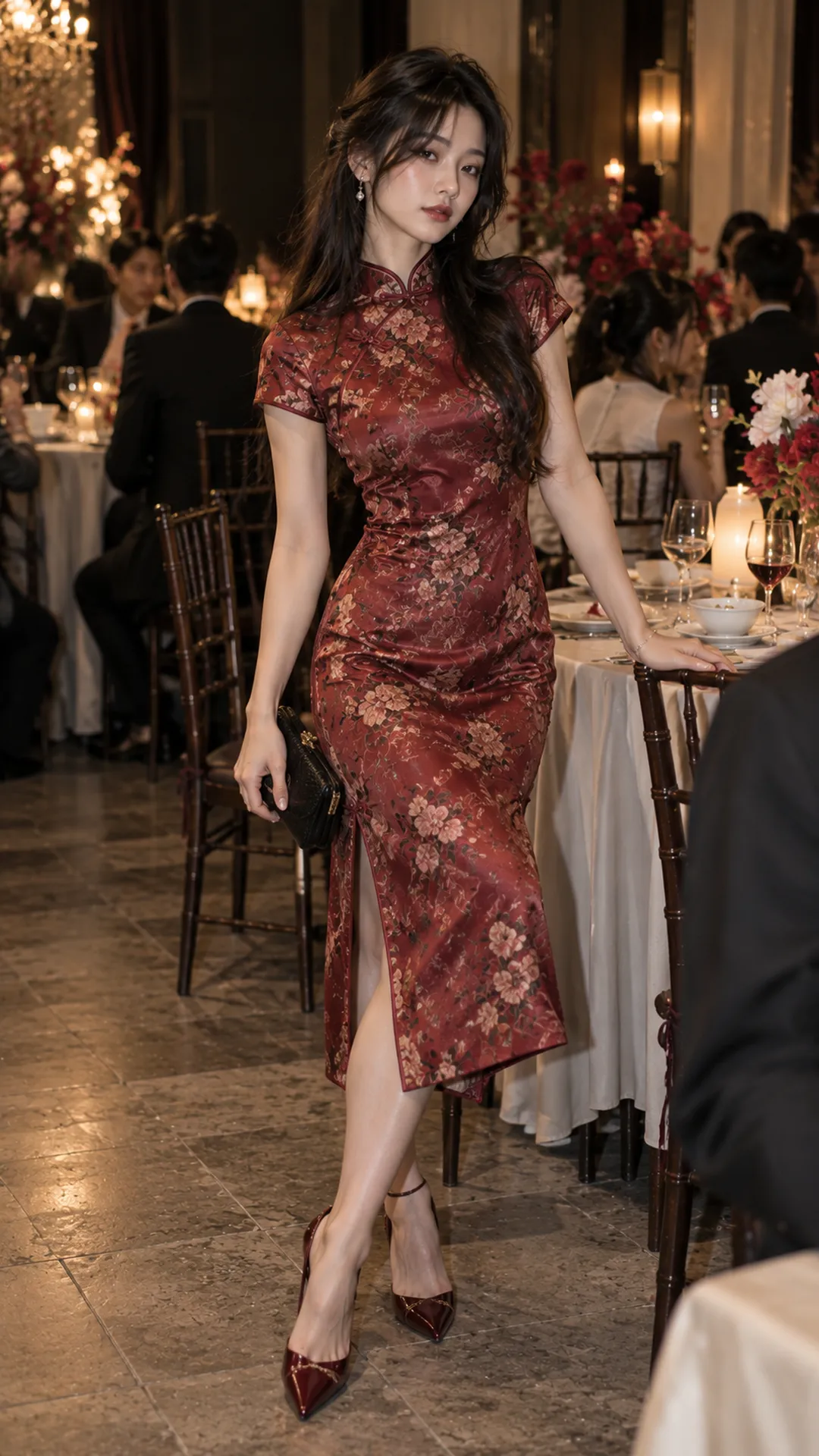
Dark outfits: a black cheongsam with contrasting textures
A black qipao, black shoes and a tonal bag can still have depth through different surfaces: a slightly glossy dress, a matte bag and one small silver detail. If every piece is highly shiny and heavily decorated, the result can feel busy even in one color.
The guide to adding depth to black outfits explains textures and highlights in more detail. With a qipao, apply those ideas to shoes, bags and accessories first; you do not need a belt if the dress already defines the waist.
If you want an alternative direction, streamlined boots or metal accessories can shift the mood. A black qipao is not automatically Goth or Alt, however. Read more about Alt Fashion and recognizing a style to distinguish the base garment from the way you style it.
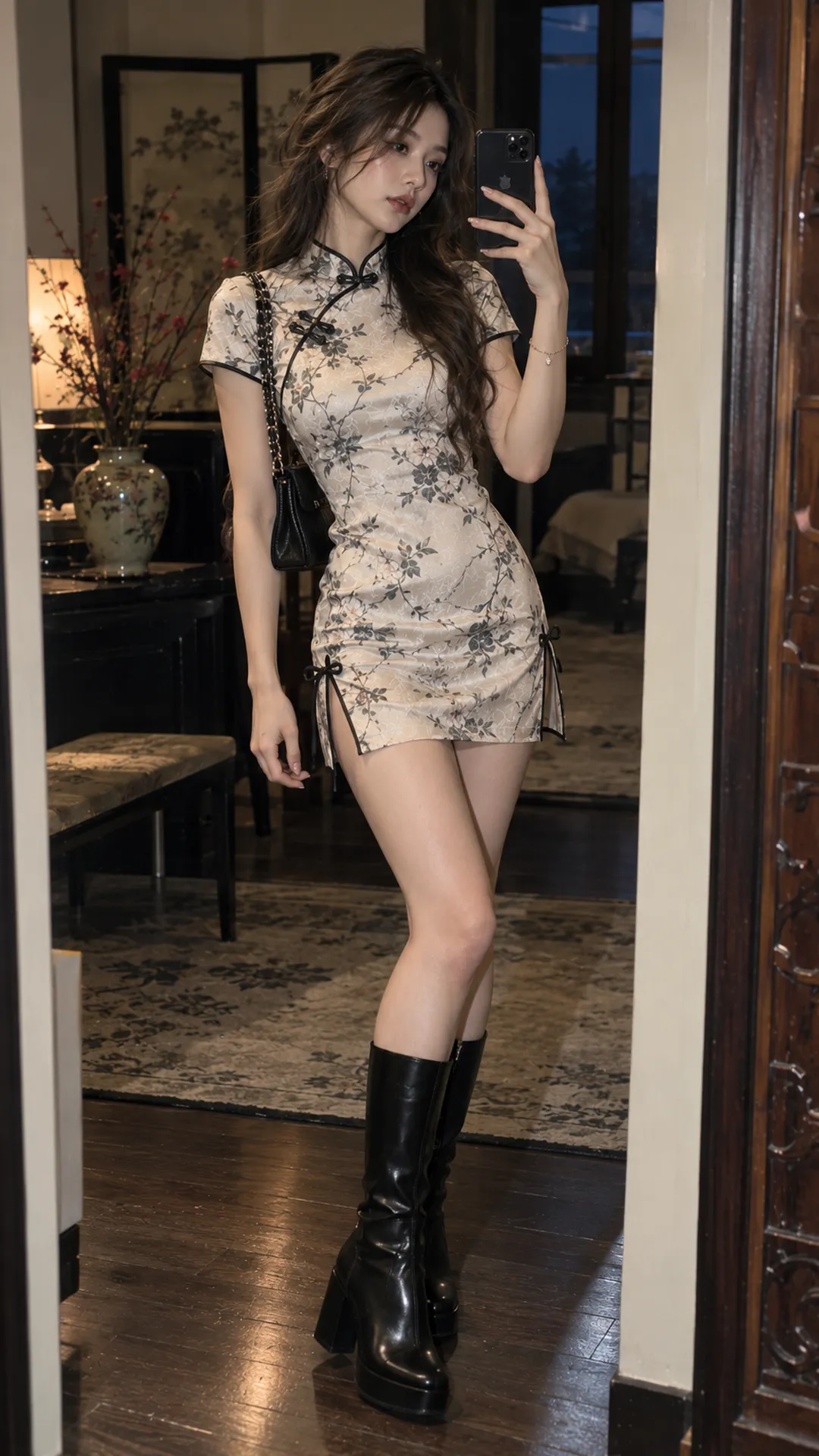
More edge: a short qipao and well-proportioned boots
An above-knee qipao with ankle boots contrasts a streamlined dress with a more defined shoe shape. Choose boots with fewer buckles, studs or laces if the dress has a dense print. Check the visible leg between the hem and boot opening to decide whether you want continuity or strong contrast.
With a midi dress, a close-fitting boot shaft is often easier to manage than a wide one meeting the hem. The guide to women's boot outfits gives more examples of how dress hems, shaft height and sole weight interact. You do not need a higher heel simply to add character.
Mistakes that make a cheongsam harder to wear
- Buying your usual size without checking: size charts vary. Compare bust, waist, hip and length measurements, and ask whether they describe the body or the finished garment.
- Buying only because of a posed photograph: a standing pose does not show how you will sit or walk. Ask for back views and a movement video when shopping online.
- Crowding the neckline with accessories: a standing collar, frog buttons, necklace and long earrings can all compete for attention. Remove one item and compare in the mirror.
- Covering the entire silhouette with a jacket: a loose jacket may hide the waistline you want to keep. Try a short open-front layer or one with a softer drape.
- Choosing a slit that does not suit your plans: a dress that works for a photo shoot may not suit dinner or a full day of travel. Choose for your actual schedule.
You do not need to force your body toward a particular ideal to wear a qipao. If a dress does not fit, the issue may be its pattern, waist placement or the room allowed in different areas. Trying another design is often more useful than tolerating discomfort because you like the color.
Before buying: inspect the details and consider wearing it again
Turn the dress inside out to inspect seams, lining and the ends of the slits. Test the zipper several times; check whether the buttons fasten the garment or are decorative. With embroidery or raised embellishment, check for rubbing inside and whether a bag strap might catch on the details.
When shopping online, save the size chart, ask about size exchanges and request real photographs of that exact design. Do not add the same fixed number of centimeters for every fabric: movement allowance depends on stretch, cut and your fit preferences. Asking how the finished garment is measured is more useful than asking what body weight a size fits.
Finally, picture at least two occasions when you would wear the dress again, and shoes you already own that would go with it. Follow the care label after wearing; do not use the same washing or ironing temperature for every qipao. Embroidery, frog buttons and lining also affect how it should be cleaned.